From Surf Wiki (app.surf) — the open knowledge base
Antibody
Protein(s) forming a major part of an organism's immune system
Protein(s) forming a major part of an organism's immune system
the class of proteins
An antibody (Ab), or immunoglobulin (Ig), is a large protein belonging to the immunoglobulin superfamily which is used by the immune system to identify and neutralize antigens such as bacteria and viruses, including those that cause disease. Each individual antibody recognizes one or more specific antigens, and antigens (a portmanteau of "antibody generator") of virtually any size and chemical composition can be recognized. Each of the branching chains comprising the "Y" of an antibody contains a paratope (the antigen-binding site) that specifically binds to one particular epitope (a specific part of an antigen bound by the paratope) on an antigen, allowing the two molecules to bind together with precision. Using this mechanism, antibodies can effectively "tag" the antigen (or a microbe or an infected cell bearing such an antigen) for attack by cells of the immune system, or can neutralize it directly (for example, by blocking a part of a virus that is essential for its ability to invade a host cell).
Antibodies may be borne on the surface of an immune cell, as in a B cell receptor, or they may exist freely by being secreted into the extracellular space. The term antibody generally refers to the free (secreted) form, while the term immunoglobulin can refer to either forms. Since they are, broadly speaking, the same protein, the terms are often treated as synonymous.
To allow the immune system to recognize millions of different antigens, the antigen-binding paratopes at each tip of the antibody come in an equally wide variety. The rest of an antibody's structure is much less variable; in humans, antibodies occur in five classes or isotypes: IgA, IgD, IgE, IgG, and IgM. Human IgG and IgA antibodies are also divided into discrete subclasses (IgG1, IgG2, IgG3, and IgG4; IgA1 and IgA2). The class refers to the functions triggered by the antibody (also known as effector functions), in addition to some other structural features. Antibodies from different classes also differ in where they are released in the body and at what stage of an immune response. Between species, while classes and subclasses of antibodies may be shared (at least in name), their function and distribution throughout the body may be different, which complicates the use of animal models in studying antibodies. For example, mouse IgG1 is closer to human IgG2 than to human IgG1 in terms of its function.
The term humoral immunity is often treated as synonymous with the antibody response, describing the function of the immune system that exists in the body's humors (fluids) in the form of soluble proteins, as distinct from cell-mediated immunity, which generally describes the responses of T cells (especially killer T cells). In general, antibodies are considered part of the adaptive immune system, though this classification can become complicated. For example, natural IgM, which are made by B-1 cells that have properties more similar to innate immune cells than adaptive, refers to IgM antibodies made independently of an immune response that demonstrate polyreactivity—i.e. they recognize multiple distinct (unrelated) antigens. These can work with the complement system in the earliest phases of an immune response to help facilitate clearance of the offending antigen and delivery of the resulting immune complexes to the lymph nodes or spleen for initiation of an immune response. Hence in this capacity, the functions of antibodies are more akin to that of innate immunity than adaptive. Nonetheless, in general, antibodies are regarded as part of the adaptive immune system because they demonstrate exceptional specificity (with some exceptions), are produced through genetic rearrangements (rather than being encoded directly in the germline), and are a manifestation of immunological memory.
Sources of antibodies
Antibodies arise from antibody-secreting cells, a term that encompasses plasmablasts and plasma cells. B cells themselves are not able to secrete antibody and can only present immunoglobulins on their surface because they do not express the critical transcription factor BLIMP-1, which establishes the antibody-secreting cell transcriptional program (including altering alternative splicing and polyadenylation to generate the secreted form of the immunoglobulin heavy chain rather than the membrane-bound one; secretion of antibody is not protease-dependent).
In the course of an immune response, B cells can progressively differentiate into antibody-secreting cells or into memory B cells. Plasmablasts and plasma cells differ mainly in the degree to which they secrete antibodies, their lifespan, metabolic adaptations, and surface markers. Plasmablasts are rapidly proliferating, short-lived cells produced in the early phases of the immune response (classically described as arising from extrafollicular reactions rather than from a germinal center) which have the potential to differentiate further into plasma cells. Occasionally plasmablasts are mis-described as short-lived plasma cells; formally this is incorrect because plasma cells do not divide (they are terminally differentiated), and rely on survival niches comprising specific cell types and cytokines to persist. It is commonly said that plasma cells do not express surface immunoglobulin (whereas plasmablasts do), but this depends on the class of antibody that the plasma cell generates (IgG-secreting plasma cells do not, but IgM, IgA, and IgE plasma cells do). Plasma cells will secrete huge quantities of antibody regardless of whether or not antigen is present, ensuring that antibody levels to the antigen in question do not fall to zero, provided the plasma cell stays alive. The rate of antibody secretion, however, can be regulated, for example, by the presence of adjuvant molecules that stimulate the immune response such as toll-like receptor ligands. Long-lived plasma cells can live for potentially the entire lifetime of the organism. Classically, the survival niches that house long-lived plasma cells reside in the bone marrow, though it cannot be assumed that any given plasma cell in the bone marrow will be long-lived. However, other work indicates that survival niches can readily be established within the mucosal tissues, though the classes of antibodies involved show a different hierarchy from those in the bone marrow.
B cells can also differentiate into memory B cells which can persist for decades, similarly to long-lived plasma cells. These cells can be rapidly recalled in a secondary immune response, undergoing class switching, affinity maturation, and differentiating into antibody-secreting cells.
Structure
CDRs, Fv, Fab and Fc Regions

Antibodies are heavy (~150 kDa) proteins of about 10 nm in size, arranged in three globular regions that roughly form a Y shape.
In humans and most other mammals, an antibody unit consists of four polypeptide chains; two identical heavy chains and two identical light chains connected by disulfide bonds. Each chain is a series of domains: somewhat similar sequences of about 110 amino acids each. These domains are usually represented in simplified schematics as rectangles. Light chains consist of one variable domain VL and one constant domain CL, while heavy chains contain one variable domain VH and three to four constant domains CH1, CH2, ...
Structurally an antibody is also partitioned into two antigen-binding fragments (Fab), containing one VL, VH, CL, and CH1 domain each, as well as the crystallisable fragment (Fc), forming the trunk of the Y shape. In between them is a hinge region of the heavy chains, whose flexibility allows antibodies to bind to pairs of epitopes at various distances, to form complexes (dimers, trimers, etc.), and to bind effector molecules more easily.
In an electrophoresis test of blood proteins, antibodies mostly migrate to the last, gamma globulin fraction. Conversely, most gamma-globulins are antibodies, which is why the two terms were historically used as synonyms, as were the symbols Ig and γ. This variant terminology fell out of use due to the correspondence being inexact and due to confusion with γ (gamma) heavy chains which characterize the IgG class of antibodies.
Antigen-binding site
The variable domains can also be referred to as the FV region. It is the subregion of Fab that binds to an antigen. More specifically, each variable domain contains three hypervariable regions – the amino acids seen there vary the most from antibody to antibody. When the protein folds, these regions give rise to three loops of β-strands, localized near one another on the surface of the antibody. These loops are referred to as the complementarity-determining regions (CDRs), since their shape complements that of an antigen. Three CDRs from each of the heavy and light chains together form an antibody-binding site whose shape can be anything from a pocket to which a smaller antigen binds, to a larger surface, to a protrusion that sticks out into a groove in an antigen. Typically though, only a few residues contribute to most of the binding energy.
The existence of two identical antibody-binding sites allows antibody molecules to bind strongly to multivalent antigen (repeating sites such as polysaccharides in bacterial cell walls, or other sites at some distance apart), as well as to form antibody complexes and larger antigen-antibody complexes.
The structures of CDRs have been clustered and classified by Chothia et al. and more recently by North et al. and Nikoloudis et al. However, describing an antibody's binding site using only one single static structure limits the understanding and characterization of the antibody's function and properties. To improve antibody structure prediction and to take the strongly correlated CDR loop and interface movements into account, antibody paratopes should be described as interconverting states in solution with varying probabilities.
In the framework of the immune network theory, CDRs are also called idiotypes. According to immune network theory, the adaptive immune system is regulated by interactions between idiotypes.
Fc region
Main article: Fragment crystallizable region
The Fc region (the trunk of the Y shape) is composed of constant domains from the heavy chains. Its role is in modulating immune cell activity: it is where effector molecules bind to, triggering various effects after the antibody Fab region binds to an antigen.
Another role of the Fc region is to selectively distribute different antibody classes across the body. In particular, the neonatal Fc receptor (FcRn) binds to the Fc region of IgG antibodies to transport it across the placenta, from the mother to the fetus. In addition to this, binding to FcRn endows IgG with an exceptionally long half-life relative to other plasma proteins of 3-4 weeks. IgG3 in most cases (depending on allotype) has mutations at the FcRn binding site which lower affinity for FcRn, which are thought to have evolved to limit the highly inflammatory effects of this subclass.
Antibodies are glycoproteins, that is, they have carbohydrates (glycans) added to conserved amino acid residues. These conserved glycosylation sites occur in the Fc region and influence interactions with effector molecules.
Protein structure
The N-terminus of each chain is situated at the tip. Each immunoglobulin domain has a similar structure, characteristic of all the members of the immunoglobulin superfamily: it is composed of between 7 (for constant domains) and 9 (for variable domains) β-strands, forming two beta sheets in a Greek key motif. The sheets create a "sandwich" shape, the immunoglobulin fold, held together by a disulfide bond.
Antibody complexes
Secreted antibodies can occur as a single Y-shaped unit, a monomer. However, some antibody classes also form dimers with two Ig units (as with IgA), tetramers with four Ig units (like teleost fish IgM), or pentamers with five Ig units (like shark IgW or mammalian IgM, which occasionally forms hexamers as well, with six units). IgG can also form hexamers, though no J chain is required. IgA tetramers and pentamers have also been reported.
Antibodies also form complexes by binding to antigen: this is called an antigen-antibody complex or immune complex. Small antigens can cross-link two antibodies, also leading to the formation of antibody dimers, trimers, tetramers, etc. Multivalent antigens (e.g., cells with multiple epitopes) can form larger complexes with antibodies. An extreme example is the clumping, or agglutination, of red blood cells with antibodies in blood typing to determine blood groups: the large clumps become insoluble, leading to visually apparent precipitation.
B cell receptors
Main article: B-cell receptor
The membrane-bound form of an antibody may be called a surface immunoglobulin (sIg) or a membrane immunoglobulin (mIg). It is part of the B cell receptor (BCR), which allows a B cell to detect when a specific antigen is present in the body and triggers B cell activation. The BCR is composed of surface-bound IgD or IgM antibodies and associated Ig-α and Ig-β heterodimers, which are capable of signal transduction. A typical human B cell will have 50,000 to 100,000 antibodies bound to its surface. Upon antigen binding, they cluster in large patches, which can exceed 1 micrometer in diameter, on lipid rafts that isolate the BCRs from most other cell signaling receptors. These patches may improve the efficiency of the cellular immune response. In humans, the cell surface is bare around the B cell receptors for several hundred nanometers, which further isolates the BCRs from competing influences.
Classes
Antibodies can come in different varieties known as isotypes or classes. In humans there are five antibody classes known as IgA, IgD, IgE, IgG, and IgM, which are further subdivided into subclasses such as IgA1, IgA2. The prefix "Ig" stands for immunoglobulin, while the suffix denotes the type of heavy chain the antibody contains: the heavy chain types α (alpha), γ (gamma), δ (delta), ε (epsilon), μ (mu) give rise to IgA, IgG, IgD, IgE, IgM, respectively. The distinctive features of each class are determined by the part of the heavy chain within the hinge and Fc region.
The classes differ in their biological properties, functional locations and ability to deal with different antigens, as depicted in the table. For example, IgE antibodies are responsible for an allergic response consisting of histamine release from mast cells, often a sole contributor to asthma (though other pathways exist as do symptoms very similar to yet not technically asthma). The variable region of these antibodies bind to allergic antigen, for example house dust mite particles, while its Fc region (in the ε heavy chains) binds to Fc receptor ε on a mast cell, triggering its degranulation: the release of molecules stored in its granules.
| Class | Subclasses | Description |
|---|---|---|
| IgA | 2 | Found in mucosal areas, such as the gut, respiratory tract and urogenital tract, and prevents colonization by pathogens. Also found in saliva, tears, and breast milk. Early clinical studies suggest that IgA isotype antibodies have potential as anti-cancer therapeutics, demonstrating the ability to reduce tumor growth. |
| IgD | 1 | Functions mainly as an antigen receptor on B cells that have not been exposed to antigens. It has been shown to activate basophils and mast cells to produce antimicrobial factors. In addition, IgD has also been reported to induce the release of immunoactivity and pro-inflammatory mediators. |
| IgE | 1 | IgE antibodies are the least abundant class of immunoglobulin. They can engage Fc receptors on monocytes and macrophages to activate various effector cell populations. |
| IgG | 4 | In its four forms, provides the majority of antibody-based immunity against invading pathogens. The only antibody capable of crossing the placenta to give passive immunity to the fetus. IgG is the most commonly used molecular format in current antibody drugs because it neutralizes infectious agents and activates the complement system to engage immune cells. |
| IgM | 1 | Expressed on the surface of B cells (monomer) and in a secreted form (pentamer) with very high avidity. Eliminates pathogens in the early stages of B cell-mediated (humoral) immunity before there is sufficient IgG. IgM also is a pro-inflammatory antibody that serves as the primary defense and effectively stimulates the complement system with specialized immune functions, including higher avidity and steric hindrance, allowing it to neutralize viruses. |
The antibody isotype of a B cell changes during cell development and activation. Immature B cells, which have never been exposed to an antigen, express only the IgM isotype in a cell surface bound form. The B lymphocyte, in this ready-to-respond form, is known as a "naive B lymphocyte." The naive B lymphocyte expresses both surface IgM and IgD. The co-expression of both of these immunoglobulin isotypes renders the B cell ready to respond to antigen. B cell activation follows engagement of the cell-bound antibody molecule with an antigen, causing the cell to divide and differentiate into an antibody-producing cell called a plasma cell. This requires cytokines from T helper cells, unless antigen cross-links B cell receptors. In this activated form, the B cell starts to produce antibody in a secreted form rather than a membrane-bound form. Activated B cells that encounter certain signaling molecules undergo immunoglobulin class switching, also known as isotope switching, which causes the production of antibodies to change from IgM or IgD to the other antibody isotypes, IgE, IgA, or IgG.
Light chain types
In mammals there are two types of immunoglobulin light chain, which are called lambda (λ) and kappa (κ). However, there is no known functional difference between them, and both can occur with any of the five major types of heavy chains.
Though there is no known functional significance to the different choice of light chain class, the ratio of light chains can be diagnostically useful. For example, humans normally have a ratio of 2:1 of κ:λ light chains, and significant deviation from this ratio can indicate the presence of a monoclonal gammopathy (in which there is a proliferation of a plasma cell which may or may not be pre-malignant or malignant).
In non-mammalian animals
In most placental mammals, the structure of antibodies is generally similar. Jawed fish appear to be the most primitive animals that are able to make antibodies similar to those of mammals, although many features of their adaptive immunity appeared somewhat earlier.
Cartilaginous fish (such as sharks) produce heavy-chain-only antibodies (i.e., lacking light chains) which moreover feature longer chain pentamers (with five constant units per molecule). Camelids (such as camels, llamas, alpacas) are also notable for producing heavy-chain-only antibodies.
| Class | Types | Description |
|---|---|---|
| IgY | Found in birds and reptiles; related to mammalian IgG. | |
| IgW | Found in sharks and skates; related to mammalian IgD. | |
| IgT/Z | Found in teleost fish |
Antibody–antigen interactions
The antibody's paratope interacts with the antigen's epitope. An antigen usually contains different epitopes along its surface arranged discontinuously, and dominant epitopes on a given antigen are called determinants.
Antibody and antigen interact by spatial complementarity (lock and key). The molecular forces involved in the Fab-epitope interaction are weak and non-specific – for example electrostatic forces, hydrogen bonds, hydrophobic interactions, and van der Waals forces. This means binding between antibody and antigen is reversible, and the antibody's affinity towards an antigen is relative rather than absolute. Relatively weak binding also means it is possible for an antibody to cross-react with different antigens of different relative affinities.
Function
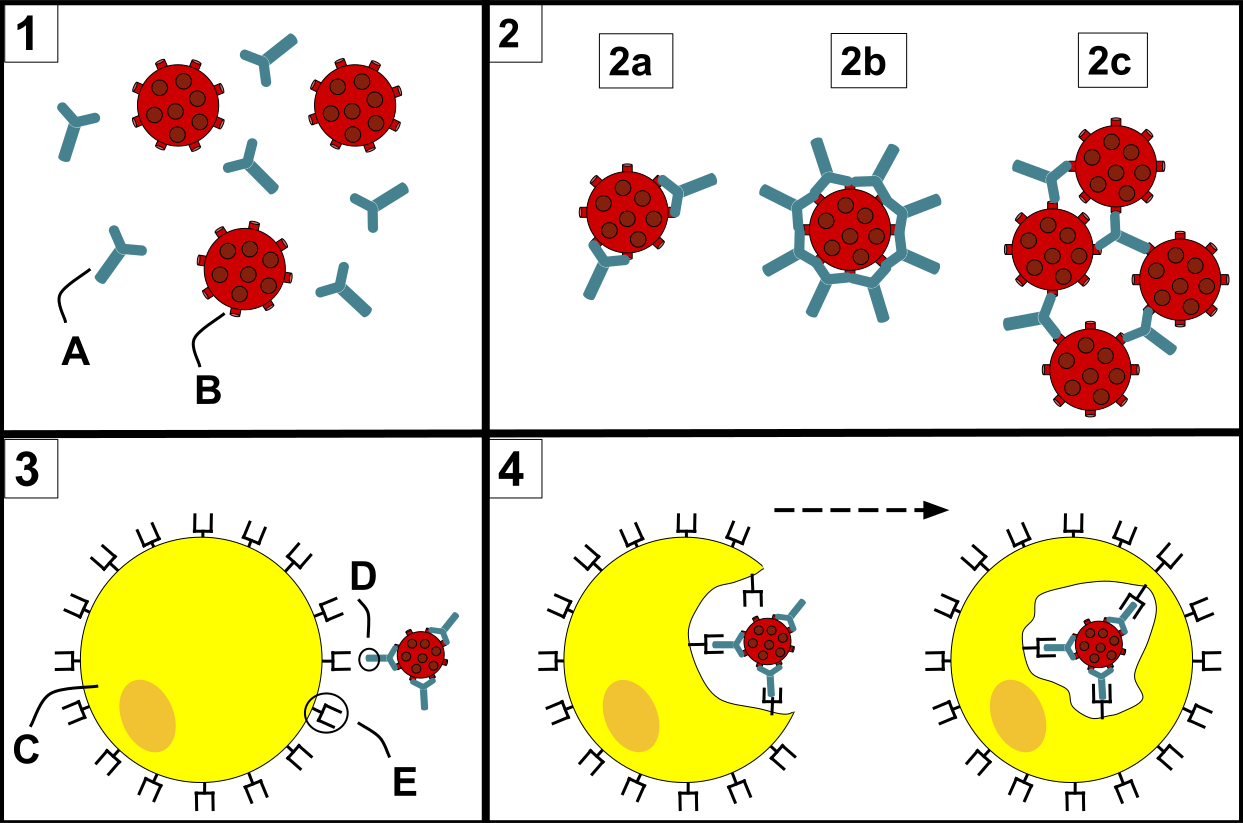
| Antibodies (A) and pathogens (B) free roam in the blood. | The antibodies bind to pathogens, and can do so in different formations such as:{{ordered list | list-style-type=lower-alpha | opsonization, | neutralisation, and | agglutination. | A phagocyte (C) approaches the pathogen, and the Fc region (D) of the antibody binds to one of the Fc receptors (E) of the phagocyte. | Phagocytosis occurs as the pathogen is ingested.
The main categories of antibody action include the following:
- Neutralisation, in which neutralizing antibodies block parts of the surface of a bacterial cell or virion to render its attack ineffective
- Agglutination, in which antibodies "glue together" foreign cells into clumps that are attractive targets for phagocytosis
- Precipitation, in which antibodies "glue together" serum-soluble antigens, forcing them to precipitate out of solution in clumps that are attractive targets for phagocytosis
- Complement activation (fixation), in which antibodies that are latched onto a foreign cell encourage complement to attack it with a membrane attack complex, which leads to the following:
- Lysis of the foreign cell
- Encouragement of inflammation by chemotactically attracting inflammatory cells
More indirectly, an antibody can signal immune cells to present antibody fragments to T cells, or downregulate other immune cells to avoid autoimmunity.
Activated B cells differentiate into either
- antibody-producing cells called plasma cells that secrete soluble antibody or
- memory cells that survive in the body for years afterward in order to allow the immune system to remember an antigen and respond faster upon future exposures.
At the prenatal and neonatal stages of life, the presence of antibodies is provided by passive immunity from the mother through transplacental transfer of IgG antibodies and breastmilk antibodies (predominantly secretory IgA in humans). There are significant differences across species regarding both the composition of breastmilk antibodies by isotype and the ability of these antibodies to be absorbed from the infant gastrointestinal tract (i.e., humans do not appear to absorb breastmilk antibodies and instead they seem to function mainly as protection from gastrointestinal infections rather than other types of infections e.g., respiratory). There are also important species-specific differences in the structure of the placenta, which complicates interpretations of how placental transfer of antibody works in humans. Presently, there is a controversy in the field about whether receptors other than FcRn contribute to placental transfer of antibody in humans and the role of glycosylation of antibody in this process, as paired maternal and infant cord show identical compositions by glycoform (which vary in their ability to engage FcγR's) but other species show clear biases.
Early endogenous antibody production varies for different kinds of antibodies, and usually appear within the first years of life. Since antibodies exist freely in the bloodstream, they are said to be part of the humoral immune system. Circulating antibodies (other than natural IgM) are produced by clonal B cells that specifically respond to only one antigen (unless the antibodies recognize an epitope with structural similarity across many different antigens). Antibodies contribute to immunity in three ways: They prevent pathogens from entering or damaging cells by binding to them; they stimulate removal of pathogens by macrophages and other cells by coating the pathogen; and they trigger destruction of pathogens by stimulating other immune responses such as the complement pathway. Antibodies will also trigger vasoactive amine degranulation to contribute to immunity against certain types of antigens (helminths, allergens).
Activation of complement
Antibodies that bind to surface antigens (for example, on bacteria) will attract the first component of the complement cascade with their Fc region and initiate activation of the "classical" complement system.
Activation of effector cells
To combat pathogens that replicate outside cells, antibodies bind to pathogens to link them together, causing them to agglutinate. Since an antibody has at least two paratopes, it can bind more than one antigen by binding identical epitopes carried on the surfaces of these antigens. By coating the pathogen, antibodies stimulate effector functions against the pathogen in cells that recognize their Fc region.
Those cells that recognize coated pathogens have Fc receptors, which, as the name suggests, interact with the Fc region of IgA, IgG, and IgE antibodies. The engagement of a particular antibody with the Fc receptor on a particular cell triggers an effector function of that cell; phagocytes will phagocytose, mast cells and neutrophils will degranulate, natural killer cells will release cytokines and cytotoxic molecules; that will ultimately result in destruction of the invading microbe. The activation of natural killer cells by antibodies initiates a cytotoxic mechanism known as antibody-dependent cell-mediated cytotoxicity (ADCC) – this process may explain the efficacy of monoclonal antibodies used in biological therapies against cancer. The Fc receptors are isotype-specific, which gives greater flexibility to the immune system, invoking only the appropriate immune mechanisms for distinct pathogens.
Natural antibodies
Humans and higher primates also produce "natural antibodies" that are present in serum before viral infection. Natural antibodies have been defined as antibodies that are produced without any previous infection, vaccination, other foreign antigen exposure or passive immunization. These antibodies can activate the classical complement pathway leading to lysis of enveloped virus particles long before the adaptive immune response is activated. Antibodies are produced exclusively by B cells in response to antigens where initially, antibodies are formed as membrane-bound receptors, but upon activation by antigens and helper T cells, B cells differentiate to produce soluble antibodies. Many natural antibodies are directed against the disaccharide galactose α(1,3)-galactose (α-Gal), which is found as a terminal sugar on glycosylated cell surface proteins, and generated in response to production of this sugar by bacteria contained in the human gut. These antibodies undergo quality checks in the endoplasmic reticulum (ER), which contains proteins that assist in proper folding and assembly. Rejection of xenotransplantated organs is thought to be, in part, the result of natural antibodies circulating in the serum of the recipient binding to α-Gal antigens expressed on the donor tissue.
Role in vaccine-induced protection
Antibodies are central to the immune protection elicited by most vaccines (although other components of the immune system certainly participate and for some diseases are considerably more important than antibodies in generating an immune response, such as in the case of shingles). Durable protection from infections (that is, the ability of the microbe to enter the body and begin to replicate, though not necessarily to cause disease) depends on sustained production of large quantities of antibodies, meaning that effective vaccines ideally elicit persistent high levels of antibody, which relies on long-lived plasma cells. At the same time, many microbes of medical importance have the ability to mutate to escape antibodies elicited by prior infections, and long-lived plasma cells cannot undergo affinity maturation or class switching. This is compensated for through memory B cells: novel variants of a microbe that still retain structural features of previously encountered antigens can elicit memory B cell responses that adapt to those changes. It has been suggested that long-lived plasma cells secrete B cell receptors with higher affinity than those on the surfaces of memory B cells, but findings are not entirely consistent on this point.
Immunoglobulin diversity
Virtually all microbes can trigger an antibody response. Successful recognition and eradication of many different types of microbes requires diversity among antibodies; their amino acid composition varies allowing them to interact with many different antigens. It has been estimated that humans generate about 10 billion different antibodies, each capable of binding a distinct epitope of an antigen. Although a huge repertoire of different antibodies is generated in a single individual, the number of genes available to make these proteins is limited by the size of the human genome. Several complex genetic mechanisms have evolved that allow vertebrate B cells to generate a diverse pool of antibodies from a relatively small number of antibody genes.
Domain variability

The chromosomal region that encodes an antibody is large and contains several distinct gene loci for each domain of the antibody—the chromosome region containing heavy chain genes (IGH@) is found on chromosome 14, and the loci containing lambda and kappa light chain genes (IGL@ and IGK@) are found on chromosomes 22 and 2 in humans. One of these domains is called the variable domain, which is present in each heavy and light chain of every antibody, but can differ in different antibodies generated from distinct B cells. Differences between the variable domains are located on three loops known as hypervariable regions (HV-1, HV-2 and HV-3) or complementarity-determining regions (CDR1, CDR2 and CDR3). CDRs are supported within the variable domains by conserved framework regions. The heavy chain locus contains about 65 different variable domain genes that all differ in their CDRs. Combining these genes with an array of genes for other domains of the antibody generates a large cavalry of antibodies with a high degree of variability. This combination is called V(D)J recombination and discussed below.
V(D)J recombination

Somatic recombination of immunoglobulins, also known as V(D)J recombination, involves the generation of a unique immunoglobulin variable region. The variable region of each immunoglobulin heavy or light chain is encoded in several pieces—known as gene segments (subgenes). These segments are called variable (V), diversity (D) and joining (J) segments. The rearrangement of several subgenes (i.e. V2 family) for lambda light chain immunoglobulin is coupled with the activation of microRNA miR-650, which further influences biology of B-cells.
RAG proteins play an important role with V(D)J recombination in cutting DNA at a particular region. Without the presence of these proteins, V(D)J recombination would not occur.
After a B cell produces a functional immunoglobulin gene during V(D)J recombination, it cannot express any other variable region (a process known as allelic exclusion) thus each B cell can produce antibodies containing only one kind of variable chain.
Somatic hypermutation and affinity maturation
Following activation with antigen, B cells begin to proliferate rapidly. In these rapidly dividing cells, the genes encoding the variable domains of the heavy and light chains undergo a high rate of point mutation, by a process called somatic hypermutation (SHM). SHM results in approximately one nucleotide change per variable gene, per cell division. As a consequence, any daughter B cells will acquire slight amino acid differences in the variable domains of their antibody chains.
This serves to increase the diversity of the antibody pool and impacts the antibody's antigen-binding affinity. Some point mutations will result in the production of antibodies that have a weaker interaction (low affinity) with their antigen than the original antibody, and some mutations will generate antibodies with a stronger interaction (high affinity). B cells that express high affinity antibodies on their surface will receive a strong survival signal during interactions with other cells, whereas those with low affinity antibodies will not, and will die by apoptosis.
Class switching

Isotype or class switching is a biological process occurring after activation of the B cell, which allows the cell to produce different classes of antibody (IgA, IgE, or IgG).
Class switching occurs in the heavy chain gene locus by a mechanism called class switch recombination (CSR). This mechanism relies on conserved nucleotide motifs, called switch (S) regions, found in DNA upstream of each constant region gene (except in the δ-chain). The DNA strand is broken by the activity of a series of enzymes at two selected S-regions. The variable domain exon is rejoined through a process called non-homologous end joining (NHEJ) to the desired constant region (γ, α or ε). This process results in an immunoglobulin gene that encodes an antibody of a different isotype.
Specificity designations
valenceAn antibody can be called monospecific if it has specificity for a single antigen or epitope,p. 22 in: or bispecific if it has affinity for two different antigens or two different epitopes on the same antigen. A group of antibodies can be called polyvalent (or unspecific) if they have affinity for various antigens Intravenous immunoglobulin, if not otherwise noted, consists of a variety of different IgG (polyclonal IgG). In contrast, monoclonal antibodies are identical antibodies produced by a single B cell.
Asymmetrical antibodies
Heterodimeric antibodies, which are also asymmetrical antibodies, allow for greater flexibility and new formats for attaching a variety of drugs to the antibody arms. One of the general formats for a heterodimeric antibody is the "knobs-into-holes" format. This format is specific to the heavy chain part of the constant region in antibodies. The "knobs" part is engineered by replacing a small amino acid with a larger one. It fits into the "hole", which is engineered by replacing a large amino acid with a smaller one. What connects the "knobs" to the "holes" are the disulfide bonds between each chain. The "knobs-into-holes" shape facilitates antibody dependent cell mediated cytotoxicity. Single-chain variable fragments (scFv) are connected to the variable domain of the heavy and light chain via a short linker peptide. The linker is rich in glycine, which gives it more flexibility, and serine/threonine, which gives it specificity. Two different scFv fragments can be connected together, via a hinge region, to the constant domain of the heavy chain or the constant domain of the light chain. This gives the antibody bispecificity, allowing for the binding specificities of two different antigens. The "knobs-into-holes" format enhances heterodimer formation but does not suppress homodimer formation.
To further improve the function of heterodimeric antibodies, many scientists are looking towards artificial constructs. Artificial antibodies are largely diverse protein motifs that use the functional strategy of the antibody molecule, but are not limited by the loop and framework structural constraints of the natural antibody. Being able to control the combinational design of the sequence and three-dimensional space could transcend the natural design and allow for the attachment of different combinations of drugs to the arms.
Heterodimeric antibodies have a greater range in shapes they can take and the drugs that are attached to the arms do not have to be the same on each arm, allowing for different combinations of drugs to be used in cancer treatment. Pharmaceuticals are able to produce highly functional bispecific, and even multispecific, antibodies. The degree to which they can function is impressive given that such a change of shape from the natural form should lead to decreased functionality.
Interchromosomal DNA Transposition
Antibody diversification typically occurs through somatic hypermutation, class switching, and affinity maturation targeting the BCR gene loci, but on occasion more unconventional forms of diversification have been documented. For example, in the case of malaria caused by Plasmodium falciparum, some antibodies from those who had been infected demonstrated an insertion from chromosome 19 containing a 98-amino acid stretch from leukocyte-associated immunoglobulin-like receptor 1, LAIR1, in the elbow joint. This represents a form of interchromosomal transposition. LAIR1 normally binds collagen, but can recognize repetitive interspersed families of polypeptides (RIFIN) family members that are highly expressed on the surface of P. falciparum-infected red blood cells. In fact, these antibodies underwent affinity maturation that enhanced affinity for RIFIN but abolished affinity for collagen. These "LAIR1-containing" antibodies have been found in 5-10% of donors from Tanzania and Mali, though not in European donors. European donors did show 100-1000 nucleotide stretches inside the elbow joints as well, however. This particular phenomenon may be specific to malaria, as infection is known to induce genomic instability.
History
The first use of the term "antibody" occurred in a text by Paul Ehrlich. The term Antikörper (the German word for antibody) appears in the conclusion of his article "Experimental Studies on Immunity", published in October 1891, which states that, "if two substances give rise to two different Antikörper, then they themselves must be different". However, the term was not accepted immediately and several other terms for antibody were proposed; these included Immunkörper, Amboceptor, Zwischenkörper, substance sensibilisatrice, copula, Desmon, philocytase, fixateur, and Immunisin. The word antibody has formal analogy to the word antitoxin and a similar concept to Immunkörper (immune body in English). As such, the original construction of the word contains a logical flaw; the antitoxin is something directed against a toxin, while the antibody is a body directed against something.

The study of antibodies began in 1890 when Emil von Behring and Kitasato Shibasaburō described antibody activity against diphtheria and tetanus toxins. Von Behring and Kitasato put forward the theory of humoral immunity, proposing that a mediator in serum could react with a foreign antigen. His idea prompted Paul Ehrlich to propose the side-chain theory for antibody and antigen interaction in 1897, when he hypothesized that receptors (described as "side-chains") on the surface of cells could bind specifically to toxins – in a "lock-and-key" interaction – and that this binding reaction is the trigger for the production of antibodies. Other researchers believed that antibodies existed freely in the blood and, in 1904, Almroth Wright suggested that soluble antibodies coated bacteria to label them for phagocytosis and killing; a process that he named opsoninization.

In the 1920s, Michael Heidelberger and Oswald Avery observed that antigens could be precipitated by antibodies and went on to show that antibodies are made of protein. The biochemical properties of antigen-antibody-binding interactions were examined in more detail in the late 1930s by John Marrack. The next major advance was in the 1940s, when Linus Pauling confirmed the lock-and-key theory proposed by Ehrlich by showing that the interactions between antibodies and antigens depend more on their shape than their chemical composition. In 1948, Astrid Fagraeus discovered that B cells, in the form of plasma cells, were responsible for generating antibodies.
Further work concentrated on characterizing the structures of the antibody proteins. A major advance in these structural studies was the discovery in the early 1960s by Gerald Edelman and Joseph Gally of the antibody light chain, and their realization that this protein is the same as the Bence-Jones protein described in 1845 by Henry Bence Jones. Edelman went on to discover that antibodies are composed of disulfide bond-linked heavy and light chains. Around the same time, antibody-binding (Fab) and antibody tail (Fc) regions of IgG were characterized by Rodney Porter. Together, these scientists deduced the structure and complete amino acid sequence of IgG, a feat for which they were jointly awarded the 1972 Nobel Prize in Physiology or Medicine. While most of these early studies focused on IgM and IgG, other immunoglobulin isotypes were identified in the 1960s: Thomas Tomasi discovered secretory antibody (IgA); David S. Rowe and John L. Fahey discovered IgD; and Kimishige Ishizaka and Teruko Ishizaka discovered IgE and showed it was a class of antibodies involved in allergic reactions. In a landmark series of experiments beginning in 1976, Susumu Tonegawa showed that genetic material can rearrange itself to form the vast array of available antibodies.
Medical applications
Disease diagnosis
Detection of antibody
Detection of particular antibodies is a very common form of medical diagnostics, and applications such as serology depend on these methods. For example, in biochemical assays for disease diagnosis, a titer of antibodies directed against Epstein–Barr virus or Lyme disease is estimated from the blood. If those antibodies are not present, either the person is not infected or the infection occurred a very long time ago, and the B cells generating these specific antibodies have naturally decayed.
In clinical immunology, levels of individual classes of immunoglobulins are measured by nephelometry (or turbidimetry) to characterize the antibody profile of patient. Elevations in different classes of immunoglobulins are sometimes useful in determining the cause of liver damage in patients for whom the diagnosis is unclear.
Autoimmune disorders can often be traced to antibodies that bind the body's own epitopes; many can be detected through blood tests. Antibodies directed against red blood cell surface antigens in immune mediated hemolytic anemia are detected with the Coombs test. The Coombs test is also used for antibody screening in blood transfusion preparation and also for antibody screening in antenatal women.
Detection of antigen
Practically, several immunodiagnostic methods based on detection of complex antigen-antibody are used to diagnose infectious diseases, for example ELISA, immunofluorescence, Western blot, immunodiffusion, immunoelectrophoresis, and magnetic immunoassay.
Over-the-counter home pregnancy tests rely on human chorionic gonadotropin (hCG)-directed antibodies.
New dioxaborolane chemistry enables radioactive fluoride (18F) labeling of antibodies, which allows for positron emission tomography (PET) imaging of cancer.
Disease therapy
Targeted monoclonal antibody therapy is employed to treat diseases such as rheumatoid arthritis, multiple sclerosis, psoriasis, and many forms of cancer including non-Hodgkin's lymphoma, colorectal cancer, head and neck cancer and breast cancer.
Some immune deficiencies, such as X-linked agammaglobulinemia and hypogammaglobulinemia, result in partial or complete lack of antibodies. These diseases are often treated by inducing a short-term form of immunity called passive immunity. Passive immunity is achieved through the transfer of ready-made antibodies in the form of human or animal serum, pooled immunoglobulin or monoclonal antibodies, into the affected individual.
Prenatal therapy
Rh factor, also known as Rh D antigen, is an antigen found on red blood cells; individuals that are Rh-positive (Rh+) have this antigen on their red blood cells and individuals that are Rh-negative (Rh–) do not. During normal childbirth, delivery trauma or complications during pregnancy, blood from a fetus can enter the mother's system. In the case of an Rh-incompatible mother and child, consequential blood mixing may sensitize an Rh- mother to the Rh antigen on the blood cells of the Rh+ child, putting the remainder of the pregnancy, and any subsequent pregnancies, at risk for hemolytic disease of the newborn.
Rho(D) immune globulin antibodies are specific for human RhD antigen. Anti-RhD antibodies are administered as part of a prenatal treatment regimen to prevent sensitization that may occur when a Rh-negative mother has a Rh-positive fetus. Treatment of a mother with Anti-RhD antibodies prior to and immediately after trauma and delivery destroys Rh antigen in the mother's system from the fetus. This occurs before the antigen can stimulate maternal B cells to "remember" Rh antigen by generating memory B cells. Therefore, her humoral immune system will not make anti-Rh antibodies, and will not attack the Rh antigens of the current or subsequent babies. Rho(D) Immune Globulin treatment prevents sensitization that can lead to Rh disease, but does not prevent or treat the underlying disease itself.
Research applications
Specific antibodies are produced by injecting an antigen into a mammal, such as a mouse, rat, rabbit, goat, sheep, horse, or human for large quantities of antibody. Blood isolated from these animals contains polyclonal antibodies—multiple antibodies that bind to the same antigen—in the serum, which can now be called antiserum. (For medical products, the horse and the human are most commonly used: the former for its large blood volume and high antibody titers, the latter for a higher compatibility with other humans.) Antigens are also injected into chickens for generation of polyclonal antibodies in egg yolk. To obtain antibody that is specific for a single epitope of an antigen, antibody-secreting lymphocytes are isolated from the animal and immortalized by fusing them with a cancer cell line. The fused cells are called hybridomas, and will continually grow and secrete antibody in culture. Single hybridoma cells are isolated by dilution cloning to generate cell clones that all produce the same antibody; these antibodies are called monoclonal antibodies. Polyclonal and monoclonal antibodies are often purified using Protein A/G or antigen-affinity chromatography.
In research, purified antibodies are used in many applications. Antibodies for research applications can be found directly from antibody suppliers, or through use of a specialist search engine. Research antibodies are most commonly used to identify and locate intracellular and extracellular proteins. Antibodies are used in flow cytometry to differentiate cell types by the proteins they express; different types of cells express different combinations of cluster of differentiation molecules on their surface, and produce different intracellular and secretable proteins. They are also used in immunoprecipitation to separate proteins and anything bound to them (co-immunoprecipitation) from other molecules in a cell lysate, in Western blot analyses to identify proteins separated by electrophoresis, and in immunohistochemistry or immunofluorescence to examine protein expression in tissue sections or to locate proteins within cells with the assistance of a microscope. Proteins can also be detected and quantified with antibodies, using ELISA and ELISpot techniques.
Antibodies used in research are some of the most powerful, yet most problematic reagents with a tremendous number of factors that must be controlled in any experiment including cross reactivity, or the antibody recognizing multiple epitopes and affinity, which can vary widely depending on experimental conditions such as pH, solvent, state of tissue etc. Multiple attempts have been made to improve both the way that researchers validate antibodies and ways in which they report on antibodies. Researchers using antibodies in their work need to record them correctly in order to allow their research to be reproducible (and therefore tested, and qualified by other researchers). Less than half of research antibodies referenced in academic papers can be easily identified. Papers published in F1000 in 2014 and 2015 provide researchers with a guide for reporting research antibody use. The RRID paper, is co-published in 4 journals that implemented the RRIDs Standard for research resource citation, which draws data from the antibodyregistry.org as the source of antibody identifiers (see also group at Force11).
Antibody regions can be used to further biomedical research by acting as a guide for drugs to reach their target. Antibodies and Fc‑based constructs provide highly specific binding to cell-surface receptors and are used as targeting moieties in antibody–drug conjugates (ADCs), bispecifics, and Fc‑fusion drugs for cancer and other diseases.
Regulations
Production and testing
There are several ways to obtain antibodies, including in vivo techniques like animal immunization and various in vitro approaches, such as the phage display method. Traditionally, most antibodies are produced by hybridoma cell lines through immortalization of antibody-producing cells by chemically induced fusion with myeloma cells. In some cases, additional fusions with other lines have created "triomas" and "quadromas". The manufacturing process should be appropriately described and validated. Validation studies should at least include:
- The demonstration that the process is able to produce in good quality (the process should be validated)
- The efficiency of the antibody purification (all impurities and virus must be eliminated)
- The characterization of purified antibody (physicochemical characterization, immunological properties, biological activities, contaminants, ...)
- Determination of the virus clearance studies
Before clinical trials
- Product safety testing: Sterility (bacteria and fungi), in vitro and in vivo testing for adventitious viruses, murine retrovirus testing..., product safety data needed before the initiation of feasibility trials in serious or immediately life-threatening conditions, it serves to evaluate dangerous potential of the product.
- Feasibility testing: These are pilot studies whose objectives include, among others, early characterization of safety and initial proof of concept in a small specific patient population (in vitro or in vivo testing).
Preclinical studies
- Testing cross-reactivity of antibody: to highlight unwanted interactions (toxicity) of antibodies with previously characterized tissues. This study can be performed in vitro (reactivity of the antibody or immunoconjugate should be determined with a quick-frozen adult tissues) or in vivo (with appropriates animal models).
- Preclinical pharmacology and toxicity testing: preclinical safety testing of antibody is designed to identify possible toxicity in humans, to estimate the likelihood and severity of potential adverse events in humans, and to identify a safe starting dose and dose escalation, when possible.
- Animal toxicity studies: Acute toxicity testing, repeat-dose toxicity testing, long-term toxicity testing
- Pharmacokinetics and pharmacodynamics testing: Use for determinate clinical dosages, antibody activities, evaluation of the potential clinical effects
Structure prediction and computational antibody design
The importance of antibodies in health care and the biotechnology industry demands knowledge of their structures at high resolution. This information is used for protein engineering, modifying the antigen binding affinity, and identifying an epitope, of a given antibody. X-ray crystallography is one commonly used method for determining antibody structures. However, crystallizing an antibody is often laborious and time-consuming. Computational approaches provide a cheaper and faster alternative to crystallography, but their results are more equivocal, since they do not produce empirical structures. Online web servers such as Web Antibody Modeling (WAM) and Prediction of Immunoglobulin Structure (PIGS) enable computational modeling of antibody variable regions. Rosetta Antibody is a novel antibody FV region structure prediction server, which incorporates sophisticated techniques to minimize CDR loops and optimize the relative orientation of the light and heavy chains, as well as homology models that predict successful docking of antibodies with their unique antigen. However, describing an antibody's binding site using only one single static structure limits the understanding and characterization of the antibody's function and properties. To improve antibody structure prediction and to take the strongly correlated CDR loop and interface movements into account, antibody paratopes should be described as interconverting states in solution with varying probabilities.
The ability to describe the antibody through binding affinity to the antigen is supplemented by information on antibody structure and amino acid sequences for the purpose of patent claims. Several methods have been presented for computational design of antibodies based on the structural bioinformatics studies of antibody CDRs.
There are a variety of methods used to sequence an antibody including Edman degradation, cDNA, etc.; albeit one of the most common modern uses for peptide/protein identification is liquid chromatography coupled with tandem mass spectrometry (LC-MS/MS). High volume antibody sequencing methods require computational approaches for the data analysis, including de novo sequencing directly from tandem mass spectra and database search methods that use existing protein sequence databases. Many versions of shotgun protein sequencing are able to increase the coverage by utilizing CID/HCD/ETD fragmentation methods and other techniques, and they have achieved substantial progress in attempt to fully sequence proteins, especially antibodies. Other methods have assumed the existence of similar proteins, a known genome sequence, or combined top-down and bottom up approaches. Current technologies have the ability to assemble protein sequences with high accuracy by integrating de novo sequencing peptides, intensity, and positional confidence scores from database and homology searches.
Antibody mimetic
Antibody mimetics are organic compounds, like antibodies, that can specifically bind antigens. They consist of artificial peptides or proteins, or aptamer-based nucleic acid molecules with a molar mass of about 3 to 20 kDa. Antibody fragments, such as Fab and nanobodies are not considered as antibody mimetics. Common advantages over antibodies are better solubility, tissue penetration, stability towards heat and enzymes, and comparatively low production costs. Antibody mimetics have been developed and commercialized as research, diagnostic and therapeutic agents.
{{anchor|BAU}}Binding antibody unit
BAU (binding antibody unit, often as BAU/mL) is a measurement unit defined by the WHO for the comparison of assays detecting the same class of immunoglobulins with the same specificity.
References
References
- (2001). "Immunobiology". Garland Publishing.
- (January 1993). "Phylogenetic diversification of immunoglobulin genes and the antibody repertoire". Molecular Biology and Evolution.
- (3 May 2021). "50 Years of structural immunology". The Journal of Biological Chemistry.
- (2002). "Human Physiology". Thomson Learning.
- (2010-10-15). "The importance of natural IgM: scavenger, protector and regulator". Nature Reviews Immunology.
- (March 2016). "Blimp-1 controls plasma cell function through the regulation of immunoglobulin secretion and the unfolded protein response". Nature Immunology.
- (April 2020). "B cell memory: building two walls of protection against pathogens". Nature Reviews Immunology.
- (2018-10-15). "Plasma cells: The programming of an antibody-secreting machine". European Journal of Immunology.
- (2015). "B Cell Memory and Plasma Cell Development". Elsevier.
- (2012-12-19). "The establishment of the plasma cell survival niche in the bone marrow". Immunological Reviews.
- (2013-05-16). "A functional BCR in human IgA and IgM plasma cells". Blood.
- (2023-04-03). "B cell receptor ligation induces IgE plasma cell elimination". The Journal of Experimental Medicine.
- (2009-11-06). "Plasma cell toll-like receptor (TLR) expression differs from that of B cells, and plasma cell TLR triggering enhances immunoglobulin production". Immunology.
- (March 2022). "Generation of human long-lived plasma cells by developmentally regulated epigenetic imprinting". Life Science Alliance.
- (July 2015). "Long-Lived Plasma Cells Are Contained within the CD19−CD38hiCD138+ Subset in Human Bone Marrow". Immunity.
- (2024-01-03). "Unraveling the diversity and functions of tissue-resident plasma cells". Nature Immunology.
- (February 2017). "Antibody-secreting plasma cells persist for decades in human intestine". The Journal of Experimental Medicine.
- (August 2013). "Matching cellular dimensions with molecular sizes". Nature Immunology.
- (August 2003). "Membrane proteins with immunoglobulin-like domains—a master superfamily of interaction molecules". Seminars in Immunology.
- (April 1979). "Primary structure of a human IgA1 immunoglobulin. IV. Streptococcal IgA1 protease, digestion, Fab and Fc fragments, and the complete amino acid sequence of the alpha 1 heavy chain". The Journal of Biological Chemistry.
- (2017). "Roitt's essential immunology".
- "MeSH Browser – gamma-Globulins".
- (June 1972). "Recommendations for the nomenclature of human immunoglobulins". Journal of Immunology.
- (February 2011). "A new clustering of antibody CDR loop conformations". Journal of Molecular Biology.
- (2014). "A complete, multi-level conformational clustering of antibody complementarity-determining regions". PeerJ.
- (2021). "Ensembles in solution as a new paradigm for antibody structure prediction and design". mAbs.
- (8 January 2016). "Antibody Structure".
- (2011). "Structure and function relationships in IgA". [[Mucosal Immunology (journal).
- (March 2019). "Role of IgG3 in Infectious Diseases". Trends in Immunology.
- (January 1998). "The glycosylation and structure of human serum IgA1, Fab, and Fc regions and the role of N-glycosylation on Fcα receptor interactions". The Journal of Biological Chemistry.
- (February 2015). "Glycans in the immune system and The Altered Glycan Theory of Autoimmunity: a critical review". Journal of Autoimmunity.
- (March 2020). "The history of IgG glycosylation and where we are now". Glycobiology.
- (2004-01-01). "Molecules, Cells, and Tissues of Immunity". Academic Press.
- Bajorath, Jürgen. (1998-01-01). "Cell Surface Receptors and Adhesion Molecules, Three-Dimensional Structures". Elsevier.
- (October 1999). "Immunoglobulin structure and function as revealed by electron microscopy". International Archives of Allergy and Immunology.
- (2014-03-14). "Complement Is Activated by IgG Hexamers Assembled at the Cell Surface". Science.
- (2020-02-28). "Structure of the secretory immunoglobulin A core". Science.
- (2012). "Elsevier's Integrated Review Immunology and Microbiology". Elsevier.
- . ["Immunology Laboratory: Hemagglutination"](https://www.medicine.mcgill.ca/physio/vlab/immun/hemag.htm). *The McGill Physiology Virtual Lab*.
- (3 February 2017). "Mapping the distribution of specific antibody interaction forces on individual red blood cells". Scientific Reports.
- (1993). "T cell-dependent B cell activation". Annual Review of Immunology.
- (2004). "Wintrobe's clinical hematology". Lippincott Williams & Wilkins.
- (February 2008). "Viewing the antigen-induced initiation of B-cell activation in living cells". Immunological Reviews.
- (February 2004). "Human antibody-Fc receptor interactions illuminated by crystal structures". Nature Reviews. Immunology.
- (May 2000). "The diverse potential effector and immunoregulatory roles of mast cells in allergic disease". The Journal of Allergy and Clinical Immunology.
- (1986). "Immunoglobulin A: strategic defense initiative at the mucosal surface". Annual Review of Immunology.
- (2022-11-01). "Expression of mammalian proteins for diagnostics and therapeutics: a review". Molecular Biology Reports.
- (August 2006). "The riddle of the dual expression of IgM and IgD". Immunology.
- (August 2009). "Immunoglobulin D enhances immune surveillance by activating antimicrobial, proinflammatory and B cell-stimulating programs in basophils". Nature Immunology.
- (2004). "Immunology, Infection, and Immunity". ASM Press.
- (1978). "Contemporary Topics in Immunobiology".
- (2001). "General principles of transmembrane signaling". Garland Science.
- (2019-07-04). "Current insights into the mechanism of mammalian immunoglobulin class switch recombination". Critical Reviews in Biochemistry and Molecular Biology.
- (2012-01-01). "1 - Introduction to mechanisms of allergic disease". W.B. Saunders.
- Xia, Zhinan. (2016). "Structure, Classification, and Naming of Therapeutic Monoclonal Antibodies". John Wiley & Sons, Ltd.
- (August 2010). "The origins of vertebrate adaptive immunity". Nature Reviews. Immunology.
- (2006). "Immunoglobulins of the non-galliform birds: antibody expression and repertoire in the duck". Developmental and Comparative Immunology.
- (April 1996). "A new high molecular weight immunoglobulin class from the carcharhine shark: implications for the properties of the primordial immunoglobulin". Proceedings of the National Academy of Sciences of the United States of America.
- Salinas, I., & Parra, D. (2015). Fish mucosal immunity: Intestine. In Mucosal Health in Aquaculture. Elsevier Inc. https://doi.org/10.1016/B978-0-12-417186-2.00006-6
- (2020). "Antigen–Antibody Complexes". Springer International Publishing.
- (2007). "Factors affecting the antigen-antibody reaction". Blood Transfusion = Trasfusione Del Sangue.
- (2006). "From B cell to plasma cell: regulation of V(D)J recombination and antibody secretion". Immunologic Research.
- (2020-06-09). "FcRn, but not FcγRs, drives maternal-fetal transplacental transport of human IgG antibodies". Proceedings of the National Academy of Sciences.
- (2023-03-22). "Evidence for the Role of a Second Fc-Binding Receptor in Placental IgG Transfer in Nonhuman Primates". mBio.
- (2001). "IgG Fc receptors". Annual Review of Immunology.
- (2005). "The role of the complement system in innate immunity". Immunologic Research.
- Racaniello, Vincent. (6 October 2009). "Natural antibody protects against viral infection".
- (December 2006). "ABO blood group and related antigens, natural antibodies and transplantation". Tissue Antigens.
- Plotkin, Stanley A.. (2022). "Recent updates on correlates of vaccine-induced protection". Frontiers in Immunology.
- (2024-01-12). "Lack of affinity signature for germinal center cells that have initiated plasma cell differentiation". Immunity.
- (January 1991). "Structure, function and properties of antibody binding sites". Journal of Molecular Biology.
- (April 1996). "Development of the immunoglobulin repertoire". Clinical Immunology and Immunopathology.
- (October 2006). "Receptor editing in lymphocyte development and central tolerance". Nature Reviews. Immunology.
- Peter Parham. ''The Immune System''. 2nd ed. Garland Science: New York, 2005. pg.47–62
- (October 2003). "V(D)J recombination and the evolution of the adaptive immune system". PLOS Biology.
- (April 2002). "Somatic immunoglobulin hypermutation". Current Opinion in Immunology.
- (1985). "Origin of immune diversity: genetic variation and selection". Annual Review of Biochemistry.
- (April 2007). "Recirculation of germinal center B cells: a multilevel selection strategy for antibody maturation". Immunological Reviews.
- (March 2000). "Memory in the B-cell compartment: antibody affinity maturation". Philosophical Transactions of the Royal Society of London. Series B, Biological Sciences.
- (August 2004). "Evolution of isotype switching". Seminars in Immunology.
- (August 2003). "Activation-induced cytidine deaminase: a dual role in class-switch recombination and somatic hypermutation". European Journal of Immunology.
- (November 2004). "Class switching and Myc translocation: how does DNA break?". Nature Immunology.
- (September 2006). "Roles of nonhomologous DNA end joining, V(D)J recombination, and class switch recombination in chromosomal translocations". DNA Repair.
- (October 2015). "Alternative molecular formats and therapeutic applications for bispecific antibodies". Molecular Immunology.
- or microorganisms.[https://medical-dictionary.thefreedictionary.com/polyvalent Farlex dictionary > polyvalent] Citing: The American Heritage Medical Dictionary. 2004
- Nelson, P N. (2000-06-01). "Demystified ...: Monoclonal antibodies". Molecular Pathology.
- (June 2010). "Enhancing antibody Fc heterodimer formation through electrostatic steering effects: applications to bispecific molecules and monovalent IgG". The Journal of Biological Chemistry.
- (1998). "The first constant domain (CH1 and CL) of an antibody used as heterodimerization domain for bispecific miniantibodies". FEBS Letters.
- (May 1999). "Making artificial antibodies: a format for phage display of combinatorial heterodimeric arrays". Proceedings of the National Academy of Sciences of the United States of America.
- (June 2019). "Breaking the law: unconventional strategies for antibody diversification". Nature Reviews Immunology.
- (August 2017). "Public antibodies to malaria antigens generated by two LAIR1 insertion modalities". Nature.
- (August 2015). "Plasmodium Infection Promotes Genomic Instability and AID-Dependent B Cell Lymphoma". Cell.
- (April 1984). "Origin of the terms 'antibody' and 'antigen'". Scandinavian Journal of Immunology.
- (February 1994). "Anatomy of the antibody molecule". Molecular Immunology.
- (10 November 2018). "New Sculpture Portraying Human Antibody as Protective Angel Installed on Scripps Florida Campus". The Scripps Research Institute.
- (22 October 2008). "Protein sculpture inspired by Vitruvian Man".
- Emil von Behring – Biographical. NobelPrize.org. Nobel Media AB 2020. Mon. 20 January 2020. https://www.nobelprize.org/prizes/medicine/1901/behring/biographical/
- (August 1931). "The Late Baron Shibasaburo Kitasato". Canadian Medical Association Journal.
- (July 2004). "Paul Ehrlich—in search of the magic bullet". Microbes and Infection.
- (May 2003). "Cellular versus humoral immunology: a century-long dispute". Nature Immunology.
- (January 2006). "Michael Heidelberger and the demystification of antibodies". The Journal of Experimental Medicine.
- (1938). "Chemistry of antigens and antibodies". His Majesty's Stationery Office.
- "The Linus Pauling Papers: How Antibodies and Enzymes Work".
- (December 2004). "Labeled antigens and antibodies: the evolution of magic markers and magic bullets". Nature Immunology.
- (August 1962). "The nature of Bence-Jones proteins. Chemical similarities to polypetide chains of myeloma globulins and normal gamma-globulins". The Journal of Experimental Medicine.
- (July 1991). "Bence Jones proteins: a powerful tool for the fundamental study of protein chemistry and pathophysiology". Biochemistry.
- (September 1999). "The Nobel chronicles. 1972: Gerald M Edelman (b 1929) and Rodney R Porter (1917–85)". Lancet.
- (March 1973). "An active antibody fragment (Fv) composed of the variable portions of heavy and light chains". Biochemistry.
- (October 1992). "The discovery of secretory IgA and the mucosal immune system". Immunology Today.
- (October 2000). "Structural and functional properties of membrane and secreted IgD". Molecular Immunology.
- (2006). "The discovery of immunoglobulin E". Allergy and Asthma Proceedings.
- (October 1976). "Evidence for somatic rearrangement of immunoglobulin genes coding for variable and constant regions". Proceedings of the National Academy of Sciences of the United States of America.
- "Animated depictions of how antibodies are used in ELISA assays".
- "Animated depictions of how antibodies are used in ELISPOT assays".
- Stern P. (2006). "Current possibilities of turbidimetry and nephelometry". Klin Biochem Metab.
- (June 1984). "Value of serum immunoglobulins in the diagnosis of liver disease". Liver.
- (January 1987). "Characteristics of serum IgA and liver IgA deposits in alcoholic liver disease". Hepatology.
- (2005). "Blood Groups and Red Cell Antigens". National Library of Medicine (US).
- (26 February 2021). "Green synthesis as a simple and rapid route to protein modified magnetic nanoparticles for use in the development of a fluorometric molecularly imprinted polymer-based assay for detection of myoglobin". Nanotechnology.
- (2014-08-01). "Strips of Hope: Accuracy of Home Pregnancy Tests and New Developments". Geburtshilfe und Frauenheilkunde.
- (May 2016). "New Dioxaborolane Chemistry Enables [(18)F]-Positron-Emitting, Fluorescent [(18)F]-Multimodality Biomolecule Generation from the Solid Phase". Bioconjugate Chemistry.
- (2001). "Anti-TNF alpha therapy of rheumatoid arthritis: what have we learned?". Annual Review of Immunology.
- (June 2003). "Is natalizumab a breakthrough in the treatment of multiple sclerosis?". Expert Opinion on Pharmacotherapy.
- (February 2007). "A human interleukin-12/23 monoclonal antibody for the treatment of psoriasis". The New England Journal of Medicine.
- (2003). "Rituximab: a review of its use in non-Hodgkin's lymphoma and chronic lymphocytic leukaemia". Drugs.
- (2001). "First-line Herceptin monotherapy in metastatic breast cancer". Oncology.
- (July 2000). "Fates of human B-cell precursors". Blood.
- Ghaffer A. (26 March 2006). "Immunization". University of South Carolina School of Medicine.
- (March 2000). "RhD haemolytic disease of the fetus and the newborn". Blood Reviews.
- (September 2003). "Prevention of Rh alloimmunization". Journal of Obstetrics and Gynaecology Canada.
- (March 2002). "Generation and application of chicken egg-yolk antibodies". Comparative Biochemistry and Physiology. Part A, Molecular & Integrative Physiology.
- (June 1984). "Human monoclonal antibodies". Molecular and Cellular Biochemistry.
- (2002). "Immunoglobulin purification by affinity chromatography using protein A mimetic ligands prepared by combinatorial chemical synthesis". Immunological Investigations.
- (September 2004). "Single-cell microbiology: tools, technologies, and applications". Microbiology and Molecular Biology Reviews.
- (2000). "Methods in Cell Biology Volume 62". San Diego, CA : Academic Press.
- (April 2006). "Western blotting". Methods.
- (1998). "Mycoplasma Protocols". Totowa, N.J. : Humana Press.
- (1994). "Basic Protein and Peptide Protocols".
- (2005). "Handbook of ELISPOT".
- (December 2005). "An open letter to our readers on the use of antibodies". The Journal of Comparative Neurology.
- "NOT-OD-16-011: Implementing Rigor and Transparency in NIH & AHRQ Research Grant Applications".
- (2 September 2013). "On the reproducibility of science: unique identification of research resources in the biomedical literature". PeerJ.
- (2015). "The Resource Identification Initiative: A cultural shift in publishing". F1000Research.
- (23 August 2013). "Reporting research antibody use: how to increase experimental reproducibility". F1000Research.
- "The Antibody Registry".
- (14 August 2013). "Resource Identification Initiative".
- Jäger, Sebastian. (2021-08-18). "Generation and Biological Evaluation of Fc Antigen Binding Fragment-Drug Conjugates as a Novel Antibody-Based Format for Targeted Drug Delivery". Bioconjugate Chemistry.
- Eberle, Christian. (February 20, 2023). "Antibody Production simply explained". evitria -.
- {{webarchive. link. (17 July 2011
[http://antibody.bath.ac.uk/abmod.html WAM]) - (26 November 2010). "PIGS: automatic prediction of antibody structures". Bioinformatics.
- {{webarchive. link. (19 July 2011
[http://antibody.graylab.jhu.edu RosettaAntibody]) - "Written Description Problems of the Monoclonal Antibody Patents after Centocor v. Abbott".
- (April 2018). "RosettaAntibodyDesign (RAbD): A general framework for computational antibody design". PLOS Computational Biology.
- (August 2015). "AbDesign: An algorithm for combinatorial backbone design guided by natural conformations and sequences". Proteins.
- (2014). "OptMAVEn--a new framework for the de novo design of antibody variable region models targeting specific antigen epitopes". PLOS ONE.
- (May 2006). "De novo proteomic sequencing of a monoclonal antibody raised against OX40 ligand". Analytical Biochemistry.
- (2003). "PEAKS: powerful software for peptide de novo sequencing by tandem mass spectrometry". Rapid Communications in Mass Spectrometry.
- (April 2012). "PEAKS DB: de novo sequencing assisted database search for sensitive and accurate peptide identification". Molecular & Cellular Proteomics.
- (December 1999). "Probability-based protein identification by searching sequence databases using mass spectrometry data". Electrophoresis.
- (December 2004). "Shotgun protein sequencing by tandem mass spectra assembly". Analytical Chemistry.
- (September 2009). "Automated protein (re)sequencing with MS/MS and a homologous database yields almost full coverage and accuracy". Bioinformatics.
- (June 2010). "Template proteogenomics: sequencing whole proteins using an imperfect database". Molecular & Cellular Proteomics.
- (July 2014). "De novo protein sequencing by combining top-down and bottom-up tandem mass spectra". Journal of Proteome Research.
- (August 2016). "Complete De Novo Assembly of Monoclonal Antibody Sequences". Scientific Reports.
- (June 2009). "Engineered protein scaffolds as next-generation antibody therapeutics". Current Opinion in Chemical Biology.
- (2021-04-10). "WHO International Standard for anti-SARS-CoV-2 immunoglobulin". [[World Health Organization]] / [[Elsevier]].
- (2021-10-26). "WHO International Standard for evaluation of the antibody response to COVID-19 vaccines: call for urgent action by the scientific community". [[World Health Organization]] / [[Elsevier]].
- (2021-11-10). "Training webinar for the calibration of quantitative serology assays using the WHO International Standard for anti-SARS-CoV-2 immunoglobulin".
This article was imported from Wikipedia and is available under the Creative Commons Attribution-ShareAlike 4.0 License. Content has been adapted to SurfDoc format. Original contributors can be found on the article history page.
Ask Mako anything about Antibody — get instant answers, deeper analysis, and related topics.
Research with MakoFree with your Surf account
Create a free account to save articles, ask Mako questions, and organize your research.
Sign up freeThis content may have been generated or modified by AI. CloudSurf Software LLC is not responsible for the accuracy, completeness, or reliability of AI-generated content. Always verify important information from primary sources.
Report