From Surf Wiki (app.surf) — the open knowledge base
Anti-ship missile
Missile used to attack ships
.jpg)
Missile used to attack ships

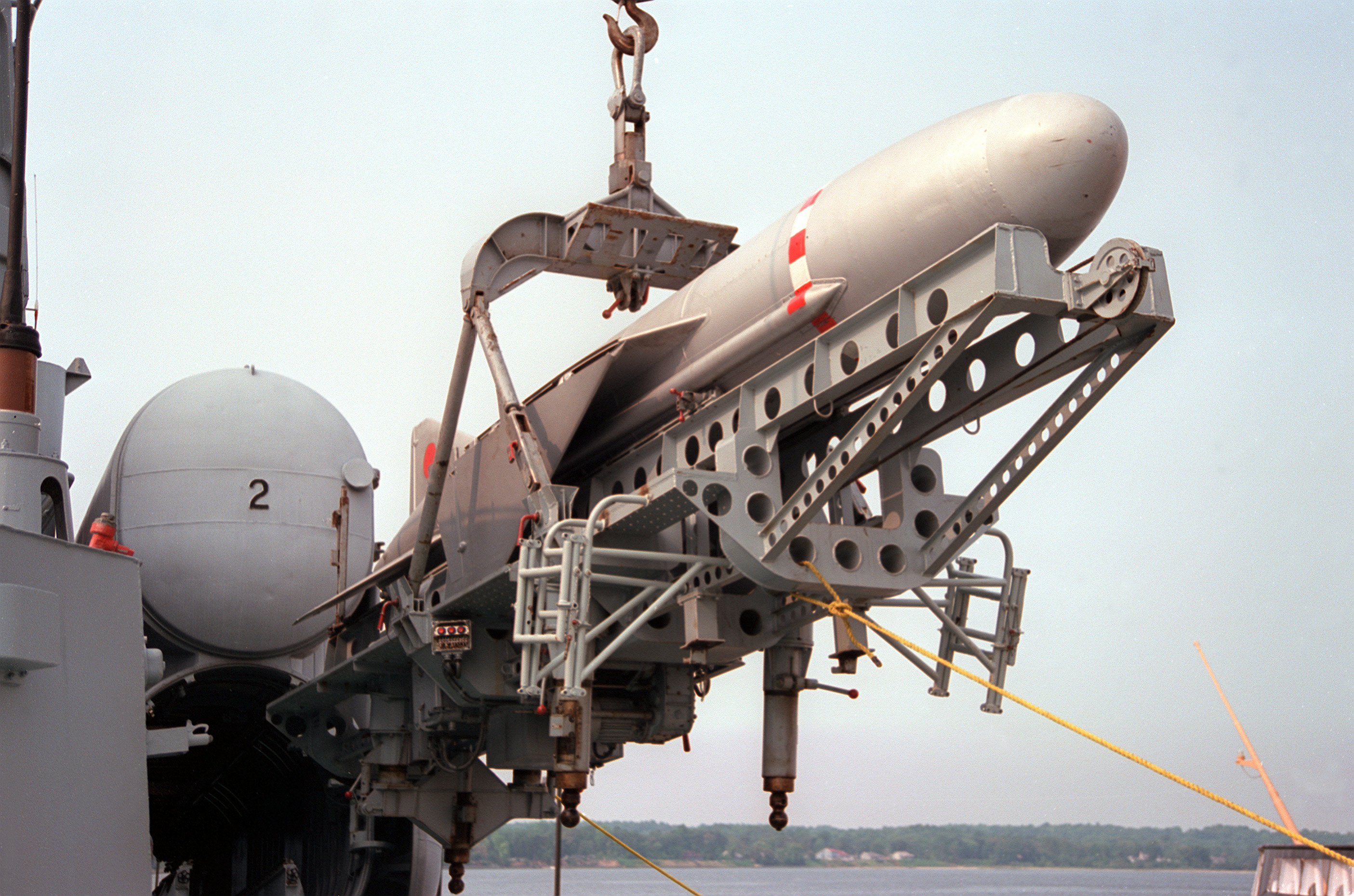
An anti-ship missile (AShM{{cite web | archive-url= https://web.archive.org/web/20230705013815/https://crsreports.congress.gov/product/pdf/RL/RL33153/263#page18 | archive-date=5 July 2023 | url-status=live | access-date=2024-04-30 | archive-url=https://web.archive.org/web/20230528140343/https://www.navalnews.com/naval-news/2021/08/will-the-u-s-navy-replace-the-destroyers-harpoon-anti-ship-missiles-with-naval-strike-missiles/ | archive-date=28 May 2023 | url-status=live | access-date=2024-04-30
Many anti-ship missiles can be launched from a variety of weapons systems including surface warships (also referred to as ship-to-ship missiles), submarines, bombers, fighter planes, patrol planes, helicopters, shore batteries, land vehicles, and, conceivably, even infantrymen firing shoulder-launched missiles. The term surface-to-surface missile (SSM) is used when appropriate. The longer-range anti-ship missiles are often called anti-ship cruise missiles. Several countries are also developing anti-ship ballistic missiles.
Etymology

Both "AShM" and "ASM" are utilized interchangeably as an acronym for "anti-ship missile." "AShM" may be the preferred acronym when confusion with "air-to-surface missile" (commonly abbreviated as "ASM") may occur.
History
During the Cold War, the Soviet Union turned to a sea denial strategy concentrating on submarines, naval mines and the AShM. One of the first products of the decision was the SS-N-2 Styx missile. Further products were to follow, and they were soon loaded onto the Soviet Air Force's Tu-95 Bear and Tu-22 Blinder bombers, in the case of the air-launched KS-1 Komet.
In 1967, the Israeli Navy's destroyer was the first ship to be sunk by a ship-launched missile—a number of Styx missiles launched by Egyptian s off the Sinai Peninsula.
In the Indo-Pakistani War of 1971 the Indian Navy conducted two raids using s employing the Styx on the Pakistani naval base at Karachi. These raids resulted in the destruction or crippling of approximately two thirds of the Pakistani Navy. Major losses included two destroyers, a fleet oiler, an ammunition ship, approximately a dozen merchant ships, and numerous smaller craft. Major shore-based facilities, including fuel storage tanks and naval installations were also destroyed. The Osas returned to base without loss.
The Battle of Latakia in 1973 (during the Yom Kippur/Ramadan War) was the scene of the world's first combat between missile boats. In this battle, the Israeli Navy destroyed Syrian warships without suffering any damage, using electronic countermeasures and ruses for defense. After defeating the Syrian Navy the Israeli missile boats also sank a number of Egyptian warships, again without suffering any damage in return, thus achieving total naval supremacy for the rest of the war.
Anti-ship missiles were used in the 1982 Falklands War. The British warship , a Type 42 destroyer, was struck by a single air-launched Exocet and later sank as a result of the damage. The container ship was hit by two Exocets and burnt out and subsequently sank while under tow. was damaged when she was struck by an MM38, a ship-launched version of the Exocet, fired from a launcher taken from the Argentine Navy destroyer ARA Comodoro Seguí and mounted on a trailer by Navy technicians, but she had taken evasive action that limited the damage.
In 1987, a US Navy guided-missile frigate, , was hit by an Exocet anti-ship missile fired by an Iraqi Mirage F-1 fighter plane. Stark was damaged, but she was able to steam to a friendly port for temporary repairs.
In October 1987, Sungari, an American-owned tanker steaming under the Liberian flag, and , a Kuwaiti tanker steaming under the American flag, were hit by Iranian HY-2 missiles.
In 1988 AShMs were fired by both American and Iranian forces in Operation Praying Mantis in the Persian Gulf. During this naval battle, several Iranian warships were hit by American AShMs (and by the US Navy's Standard missiles—surface-to-air missiles which were doing double-duty in the anti-ship role). The US Navy hit the Iranian Navy frigate Sahand with three Harpoon missiles, four AGM-123 Skipper rocket-propelled bombs, a Walleye TV-guided bomb, and several 1,000 lb "iron bombs". Despite the large number of munitions and successful hits, Sahand did not sink until fire reached her ammunition magazine, causing it to detonate, sinking the vessel. In the same engagement, American warships fired three Standard missiles at an Iranian Navy corvette. This corvette had such a low profile above the water that a Harpoon missile that arrived several minutes later could not lock onto it with its targeting radars.
In 2006, Lebanese Hezbollah fighters fired an AShM at the Israeli corvette , inflicting battle damage, but the warship managed to return to Israel in one piece and under its own power. A second missile in the same salvo struck and sank an Egyptian merchant ship.

On 13 April 2022, the Ukrainian government claimed to have hit the Russian cruiser Moskva with two R-360 Neptune missiles, resulting in its sinking. The Russian government did not confirm the attack, but admitted that the ship sank after a fire. If Ukrainian claims are true, Moskva might be the largest warship ever disabled or destroyed by a missile, according to Carl Schuster, a retired US Navy captain and former director of operations at the US Pacific Command's Joint Intelligence Center.
Threat posed

Anti-ship missiles are a significant threat to surface ships, which have large radar, radio, and thermal signatures that are difficult to suppress. Once acquired, a ship cannot outrun or out-turn a missile, the warhead of which can inflict significant damage. To counter the threat posed, the modern surface combatant has to either avoid being detected, destroy the missile launch platform before it fires its missiles, or decoy or destroy all of the incoming missiles.
Modern navies have spent much time and effort developing counters to the threat of anti-ship missiles since the Second World War. Anti-ship missiles have been the driving force behind many aspects of modern ship design, especially in navies that operate aircraft carriers.
The first layer of antimissile defense by a modern, fully equipped aircraft carrier task force is always the long-range missile-carrying fighter planes of the aircraft carrier itself. Several fighters are kept on combat air patrol (CAP) 24 hours a day, seven days a week when at sea, and many more are put aloft when the situation warrants, such as during wartime or when a threat to the task force is detected.
These fighters patrol up to hundreds of miles away from the task force and they are equipped with airborne radar systems. When spotting an approaching aircraft on a threatening flight profile, it is the responsibility of the CAP to intercept it before any missile is launched. If this cannot be achieved in time, the missiles themselves can be targeted by the fighters's own weapons systems, usually their air-to-air missiles, but in extremis, by their rapid-fire cannon.
However, some AShMs might "leak" past the task force's fighter defenses. In addition, many modern warships operate independently of carrier-based air protection and they must provide their own defenses against missiles and aircraft. Under these circumstances, the ships themselves must utilize multilayered defenses which have been built into them.
For example, some warships, such as the US Navy's guided missile cruisers, the guided missile destroyers, and the Royal Navy's Type 45 guided missile destroyer, use a combination of radar systems, integrated computer fire-control systems, and agile surface-to-air missiles (SAM) to simultaneously track, engage, and destroy several incoming anti-ship missiles or hostile warplanes at a time.
The primary American defensive system, called the Aegis Combat System, is also used by the navies of Japan, Spain, Norway, South Korea, and Australia. The Aegis system has been designed to defend against mass attacks by hostile anti-ship missiles or warplanes.
Any missiles that can elude the interception by medium-ranges SAM missiles can then be either deceived with electronic countermeasures or decoys; shot down by short-range missiles such as the Sea Sparrow or the Rolling Airframe Missile (RAM); engaged by the warship's main gun armament (if present); or, as a last resort, destroyed by a close-in weapon system (CIWS), such as the American Phalanx CIWS, Russian Kashtan CIWS, or the Dutch Goalkeeper CIWS.
Current threats and vulnerabilities
To counter these defense systems, countries such as Russia are developing or deploying missiles that slowly cruise at a very low level (about five meters above sea level) to within a short range of their target and then, at the point when radar detection becomes inevitable, initiate a supersonic, high-agility sprint (potentially with anti-aircraft missile detection and evasion) to close the terminal distance. Missiles, such as the SS-N-27 Sizzler, that incorporate this sort of threat modality are regarded by US Navy analysts as potentially being able to penetrate the US Navy's defensive systems.
Recent years have seen a growing amount of attention being paid to the possibility of ballistic missiles being re-purposed or designed for an anti-ship role. Speculation has focused on the development of such missiles for use by China's People's Liberation Army Navy. Such an anti-ship ballistic missile would approach its target extremely rapidly, making it very difficult to intercept. In response to China's development of anti-ship missiles and other anti-access/area denial capabilities, the United States has developed the AirSea Battle doctrine.
Countermeasures and defenses
Countermeasures against anti-ship missiles include
- Surface-to-air missiles
- Close-in weapon systems (CIWS), including the Soviet-or Russian-made AK-630 or Kashtan, Turkish Aselsan GOKDENIZ, German Millennium Gun or the Phalanx and Goalkeeper. These are automated gun systems mounted on the deck of a ship that use radar to track the approaching missile, and then attempt to shoot it down during its final approach to the target.
- Anti-aircraft guns such as the Mk 45 5 in naval gun or the AK-130
- Electronic warfare equipment (such as AN/SLQ-32 Electronic Warfare Suite)
- Decoy systems (such as chaff, the US Navy's Mark 36 SRBOC system), and flares, or more active decoys such as the Nulka
Ships that employ some stealth technology can reduce the risk of detection and make themselves a harder target for the missile through the use of passive countermeasures including:
- reduction of their radar cross section (RCS) and hence radar signature.
- limiting the ship's infrared and acoustic signature.
History of combat interceptions
Gulf War
On February 25, 1991, during the first Gulf War, the Phalanx-equipped was a few miles from and the destroyer . The ships were attacked by an Iraqi Silkworm missile (often referred to as the Seersucker), at which Missouri fired its SRBOC chaff. The Phalanx system on Jarrett, operating in the automatic target-acquisition mode, fixed upon Missouris chaff, releasing a burst of rounds. From this burst, four rounds hit Missouri which was 2 to from Jarrett at the time. There were no injuries. A Sea Dart missile was then launched from HMS Gloucester, which destroyed the Iraqi missile, achieving the first successful engagement of a missile by a missile during combat at sea.
2016 attacks off the coast of Yemen
On 9 October 2016, , operating near the Bab-el-Mandeb strait, was targeted by two missiles fired from Houthi-controlled territory. Both missiles fell short and crashed into the water. The Houthi insurgency denied launching the attack on the warship. The United States Naval Institute reported that Mason fired two SM-2 Standard missiles and one RIM-162 ESSM missile to intercept the two missiles, and deployed her Nulka missile decoy. One of two U.S. defense officials cited anonymously added that it was not clear whether the incoming missiles had been shot down or crashed into the water on their own. This marked the first recorded instance of ship-based anti-air missiles being fired from vertical launching cells in combat in response to an actual inbound missile threat.
On 12 October 2016 was again targeted by missiles fired from Yemeni territory, while it was operating in the Bab el-Mandeb strait. Mason was not hit by the two missiles, which were fired from near the southern Yemen city of Al Hudaydah. While the Navy was not certain whether the first incoming missile was intercepted or instead just fell into the sea, officials said Mason successfully intercepted the second missile at a distance of about 8 mi, marking the first time in history a warship destroyed an inbound anti-ship missile with a SAM in actual self-defense. On 13 October 2016, the U.S. attacked three radar sites in Houthi-held territory which had been involved in the earlier missile attacks, with cruise missiles launched from Nitze. The Pentagon assessed that all three sites were destroyed.
On 15 October 2016, was targeted in a third attack by Houthi rebels based in Yemen, by five anti-ship cruise missiles while operating in the Red Sea north of the Bab el-Mandeb strait. Mason fired a radar decoy, an infrared decoy, and several SM-2 Standard missiles in response, either neutralizing or intercepting four of the five incoming missiles. The Navy reported the fifth incoming missile as neutralized by a radar decoy launched from Nitze, after Mason alerted her to the threat.
2023 Houthi missile attacks
On 26 December 2023, the USS Laboon shot down three ASBMs in the Red Sea fired by Houthi rebels with multiple SM-6s. This was its first intercept of a ballistic missile in combat.
On 30 December 2023, Danish container ship Maersk Hangzhou issued a distress call after coming under fire from four small ships commanded by Iranian-backed Houthi rebels from Yemen. Attempts were also made to board Maersk Hangzhou by force, while a contracted security team defended the ship. and aircraft carrier responded to a distress call from the container ship. Verbal commands were radioed to the Houthi ships, while helicopters from Eisenhower were dispatched. After taking small arms fire, U.S. Navy helicopters returned fire, sinking three of the four Houthi ships. There was no damage to U.S. equipment or personnel. In the process of responding to the distress call, Gravely shot down two anti-ship ballistic missiles fired from Yemen.
On Jan. 9, at approximately 9:15 p.m. (Sanaa time), Iranian-backed Houthis launched a complex attack of Iranian designed one-way attack UAVs (OWA UAVs), anti-ship cruise missiles, and an anti-ship ballistic missile from Houthi-controlled areas of Yemen into the Southern Red Sea, towards international shipping lanes where dozens of merchant vessels were transiting. Eighteen OWA UAVs, two anti-ship cruise missiles, and one anti-ship ballistic missile were shot down by a combined effort of F/A-18s from , , USS Laboon (DDG 58), USS , and the United Kingdom’s . This is the 26th Houthi attack on commercial shipping lanes in the Red Sea since Nov. 19. There were no injuries or damage reported.
On 14 January 2024, an anti-ship missile was fired in the direction of Laboon from a Houthi-controlled portion of Yemen, according to CENTCOM. Two weeks later, on 30 January 2024, the USS Carney shot down an ASBM in the Gulf of Aden fired by Houthi rebels with an SM-6.
On 30 January 2024, USS Gravely used its Phalanx CIWS to shoot down an incoming anti-ship cruise missile fired by the Houthis. U.S. officials said that the missile came within a mile of the destroyer. No damage or injuries were reported.
On February 6, 2024 at 4:30 p.m., while patrolling in the Gulf of Aden, USS Laboon (DDG 58), operating near M/V Star Nasia, intercepted and shot down an anti-ship ballistic missile fired by the Iranian-backed Houthis. Later in the month, on 20 February 2024 at 12:30 a.m., while operating in the Gulf of Aden, Laboon detected and shot down one anti-ship cruise missile fired by the Houthis.
Comparison
| Name | Year | Weight | Warhead | Range | Speed | Propulsion | Launch platform | Guidance | Force | Comments | |||
|---|---|---|---|---|---|---|---|---|---|---|---|---|---|
| Zircon | Expected for (2018- 2020) | Size 4 pcs instead of 1 P-700 for 1 launcher | 300 - | ||||||||||
| conventional or nuclear | 400 km (export) | ||||||||||||
| 1000 km (domestic) | url=http://www.vesti.ru/doc.html?id=2877959 | title=На испытаниях российская ракета "Циркон" достигла восьми скоростей звука | website=vesti.ru | access-date=2017-04-15 | language=ru | archive-url=https://web.archive.org/web/20170415204539/http://www.vesti.ru/doc.html?id=2877959 | archive-date=2017-04-15 | url-status=live}} | Liquid fuel scramjet | Surface, submarine | Russia | ||
| [3M-54E Klub](3m-54-kalibr) (SS-N-27 "Sizzler") | 2006 | 2300 kg | 200 kg | 220 km | 0.8 M, 2.5/2.9M | Turbojet | Surface, sub, shipping container | Inertial, active radar | Russia | ||||
| [3M-54E1 Klub](3m-54-kalibr) (SS-N-27 "Sizzler") | 2006 | 1780 kg | 400 kg | 300 km | 0.8 M, 2.5/2.9M | Turbojet | Surface, sub, shipping container | Inertial, active radar | Russia | ||||
| [3M-54 Kalibr](3m-54-kalibr) (SS-N-27 "Sizzler") | 1993 | 1300 kg | 200 kg | 660 km | 0.8 M, 2.5/2.9M | Turbojet | Surface, sub, shipping container | Inertial, active radar | Russia | Used in combat | |||
| P-1000 Vulkan | 1987 | 6300 kg | 500 kg | 700 and 1000 (appx.) km (or 800 km) | 3825 km/h | Solid-fuel ramjet | Surface | Inertial, active radar homing/anti radar, mid course correction | USSR/Russia | ||||
| P-800 Oniks (SS-N-26) | 2002 | 3000 kg | 250 kg | 800 km (Oniks-M) | |||||||||
| 600 km (Domestic version for Russia) | 3600 km/h | Ramjet | Surface, air | Active-passive, radar | Russia | ||||||||
| P-700 Granit | 1983 | 7000 kg | 750 kg | 625 km | 2550 km/h | Solid-fuel ramjet | Surface | Inertial, active radar homing/anti radar, mid course correction | USSR/Russia | ||||
| P-500 Bazalt (SS-N-12 SANDBOX) | 1975 | 4500 kg | 1000 kg / 350 kt nuclear | 550 km | 3060 km/h | Liquid fuel rocket | Surface, submarine | Semi-active, terminal active radar | USSR | ||||
| P-270 Moskit (SS-N-22 SUNBURN) | 1984 | 4500 kg | 320 kg | 120 km | 3600 km/h | Ramjet | Surface, air | Active radar, infrarred | USSR | ||||
| P-120 Malakhit (SS-N-9 SIREN) | 1972 | 2953 kg | 500 kg | 110 km | Mach 0.9 | Turbojet, solid fuel | Surface | Inertial, mid course correction, active radar | USSR | Used in combat | |||
| P-70 Ametist (SS-N-7 STARBRIGHT) | 1967 | 3500 kg | 500 kg | 65 km | 1050 km/h | Solid rocket | Sub | Inertial, terminal homing | USSR | ||||
| P-15 Termit (SS-N-2 STYX) | 1960 | 3100 kg | 454 kg | 80 km | 1100 km/h | Liquid fuel rocket | Surface | Active radar, infrarred | USSR | Used in combat | |||
| P-5 Pyatyorka (SS-N-3 "Shaddock") | 1959 | 5000 kg | 1000 kg | 750 km | 1000 km/h | Turbojet | Surface | Inertial, mid course correction, active radar | USSR | ||||
| Kh-15 (AS-16 Kickback) | 1980 | 1200 kg | 150 kg conventional/nuclear | 300 km | 6125 km/h | Solid-fuel rocket | Air | Inertial/Active radar | USSR/Russia | ||||
| Kh-35 (AS-20 KAYAK) | 2003 | 520 kg | 145 kg | 130 km | 970 km/h | Turbofan | Surface, air | Inertial, active radar | USSR/Russia/North Korea | ||||
| Kh-22 (AS-4 Kitchen) | 1968 | 5820 kg | 1000 kg conventional/nuclear | 400 km | 4000 km/h | Liquid-fuel rocket | Air | Inertial | USSR/Russia | ||||
| KSShch (SS-N-1 "Scrubber") | 1958 | 2300 kg | Nuclear | 40 km | 1150 km/h | Liquid-fuel rocket | Surface | Inertial | USSR | ||||
| SM-6 | 2013 | 1500 kg | 64 kg | 370 km | 4287.7 km/h | two stage/solid rocket booster | surface ships, transporter erector launcher | Inertial guidance, active radar homing, semi active radar homing | United States | (The anti-ship version will enter service in 2023.) | |||
| AGM-158C LRASM | 2013 / 2018 | ~900 kg | 450 kg | 370 - | High subsonic | Turbojet | Air, ship | Passive radar and infrared homing | United States | ||||
| AGM-123 Skipper II | 1985 | 582 kg | 450 kg | 25 km | 1100 km/h | Solid-fueled | Air | Laser-guided | United States | Used in combat | |||
| BGM-109 Tomahawk | 1983 | 1200 kg | 450 kg | 1666 km (Block V) | 880 km/h | Turbofan | Air, surface, submarine | GPS, TERCOM, DSMAC | United States | (Previous anti-ship version withdrawn from service in 1994, new anti-ship version will enter service in 2023.) | |||
| Harpoon | 1977 | 691 kg | 221 kg | 280 km | 864 km/h | Turbojet engine | Air, surface, submarine | Radar (B3: midcourse update) | United States | Used in combat | |||
| AGM-65F Maverick | 1972 | 300 kg | 140 kg | 30 km | 1,150 km/h | Solid propellant | Air | Laser, infrarred | United States | Used in combat | |||
| Bat | 1944 | 1000 kg | 727 kg | 37 km | 260 – | None | Air | Active radar | United States | Used in combat | |||
| MMP | 2017 | 15 kg | 5 km | Solid propellant | Surface | Infrared | France | ||||||
| ANL/Sea Venom | 2017 | 120 kg | 30 kg | 20 km | 1040.4 km/h) | Two-stage solid-propellant rocket motor | Air (helicopter), Surface | Infrared | France/United Kingdom | ||||
| AS.34 Kormoran | 1991 | 630 kg | 220 kg | 35 km | 1101 km/h | Rocket | Air | Inertial, active radar | France/Germany | ||||
| AS.15TT/MM.15 | 1985 | 96 kg | 30 kg | 15 km | 1008 km/h | Solid propellant | Air | Inertial | France | ||||
| ARMAT | 1984 | 550 kg | 160 kg | 120 km | 1100 km/h | Solid propellant | Air | Passive radar | France | ||||
| Otomat/Milas | 1977 | 770 kg | 210 kg | 360 km (min.) | 1116 km/h | Turbojet | Surface, air | Inertial, GPS, active radar | France/Italy | ||||
| Exocet | 1975 | 670 kg | 165 kg | 180 km | 1134 km/h | Solid propellant (Block 1, block 2), turbojet (Block 3) | Air, surface, submarine | Inertial, active radar | France | Used in combat | |||
| AS.37/AJ.168 Martel | 1970 | 550 kg | 150 kg | 60 km | 1070 km/h | Solid propellant | Air | Passive radar, TV | France/United Kingdom | Used in combat | |||
| Malafon | 1966 | 1330 kg | 13 km | 808 km/h | Solid propellant | Ship, surface | MCLOS (radio link) | France | |||||
| SS.12/AS.12 | 1960 | 76 kg | 28 kg | 7 km | 370 km/h | Solid-fueled | Air, surface | Wire-guided MCLOS | France | Used in combat | |||
| Malaface | 1954 | 1430 kg | 700 kg | 40 km | 808 km/h | Solid propellant | Surface | MCLOS (radio link) | France | ||||
| BHT-38 | 1940 | 160 kg | None (glide bomb) | Air | MCLOS (radio link) | France | |||||||
| Sea Eagle | 1985 | 580 kg | 230 kg | 110 km (min.) | 1000 km/h | Turbojet | Air | Inertial, active radar | United Kingdom | ||||
| Sea Skua | 1983 | 145 kg | 28 kg | 25 km | 950 km/h | Solid fuel | Air | Semi-active radar | United Kingdom | Used in combat | |||
| RBS-15 | 1985 | 800 kg | 200 kg | 200 km | 1101 km/h | Turbojet | Air, surface | Inertial, GPS, radar | Sweden | ||||
| RB 08 | 1966 | 70 km | Subsonic | Turbojet | Surface | Radio link active radar | Sweden/France | ||||||
| RB 04 | 1962 | 600 kg | 300 kg | 32 km | Subsonic | Solid propellant | Air | Active radar | Sweden | ||||
| Naval Strike Missile | 2009 | 410 kg | 125 kg | 250 km | High subsonic | Turbojet and solid fuel booster | Air, surface | Inertial, GPS, terrain-reference, imaging IR, target database | Norway | ||||
| Penguin | 1972 | 385 kg | 130 kg | 55 km (min.) | 1468 km/h | Solid propellant | Air, surface, submarine | Inertial, laser, infrarred | Norway | ||||
| Fritz X | 1943 | 1362 kg | 320 kg | 5 km | 1235 km/h | None (glide bomb) | Air | Manual (radio link) | Germany | Used in combat | |||
| Henschel Hs 293 | 1943 | 1045 kg | 295 kg | 5 km | 828 km/h | Liquid-propellant, then gliding | Air | MCLOS (radio link) | Germany | Used in combat | |||
| Blohm & Voss BV 246 | 1943 | 730 kg | 435 kg | 210 km | 450 km/h | None (glide bomb) | Air | Manual (radio link) | Germany | ||||
| RK-360MC Neptune | 2021 | 870 kg | 150 kg | 300 km | Subsonic | Turbofan | Ground based TEL | Ukraine | Used in combat | ||||
| BrahMos-II | 2030s | 1000 km | |||||||||||
| 400 km(export version) | 6125 – | Scramjet | Ship, surface, air, submarine | India/Russia | |||||||||
| BrahMos | 2006 | 2500 kg (air), 3000 kg (ground) | 300 kg | 800 km or 290 km(Export version) | 3675 km/h | Ramjet | Ship, surface, air, submarine | INS, SatNav, ARH | India/Russia | ||||
| Çakır (missile) | 2023 | 275 - | 70 kg | 150 - | 919 - | Turbojet | Ship, surface, air | Inertial, IIR, RF, Hybrid (IIR+RF) | Turkey | ||||
| Atmaca | 2017 | 750 kg | 220 kg | 250 km | |||||||||
| +280 km (KARA Atmaca) | 1042 km/h | Turbojet | Ship, surface, air | Inertial/GPS+RA+DL+IIR | Turkey | ||||||||
| SOM (missile) | 2006 | 600 kg | 230 kg | SOM-A:250 km SOM-J:185 km | 1153 km/h | Turbojet | Air | Inertial / GPS, terrain referenced navigation, automatic target recognition, imaging infrared | Turkey | ||||
| XASM-3 | 2016 | 940 kg | 150 km(original version) | ||||||||||
| 400 km(extended range) | 3707 km/h | Ramjet | Air | Inertial / GPS, mid-course correction, active/passive radar | Japan | ||||||||
| Type 12 | 2015 | 700 kg | ? | 200 km(original version) | |||||||||
| 400 km(ship/air-launched and improved version) | |||||||||||||
| 900 km(upgrade in development) | |||||||||||||
| 1500 km(future version) | ? | Turbojet | Ship, TEL, Air | Inertial, GPS, AESA | Japan | ||||||||
| Type 93 | 1993 | 530 kg | 170 km | Turbojet | Air | Inertial and IR Image | Japan | ||||||
| Type 91 | 1991 | 510 kg | 260 kg | 150 km | Turbojet | Air | Inertial, mid course correction, active radar | Japan | |||||
| Type 80 | 1982 | 600 kg | 150 kg | 50 km | Turbojet | Air | Infarred | Japan | |||||
| Ohka | 1943 | 2140 kg | 1200 kg | 36 km | 630 km/h | Solid-propellant | Air | Manned (suicide attack) | Japan | Used in combat | |||
| Hsiung Feng III | 2007 | 1470 kg | 400 km | 3,062 km | Ramjet | Ship, surface, air | Inertial / Active radar | Taiwan | Proven in mishap | ||||
| Hsiung Feng IIE | 2011 | 1600 kg | 600-2,000 km | 1,041 km | Solid-fuel rocket | Ship, surface, air | Inertial/GPS/TERCOM | Taiwan | |||||
| Hsiung Feng II | 1990 | 685 kg | 180 kg | 20-250 km | 1,041 km | Solid-fuel rocket | Ship, surface, air | Inertial midflight / Dual active radar plus infrared homing | Taiwan | ||||
| Hsiung Feng I | 1978-2012 | 537.5 kg | 150 kg | 40 km | 833 km | Solid-fuel rocket | Ship, surface, air | Inertial / Radar beam riding plus terminal semi-active homing | Taiwan | ||||
| Gabriel | 1962 | 522 kg | 150 kg | 60 km | 840 km/h | Solid-fuel rocket | Air, surface | Active radar | Israel | Used in combat | |||
| Hae Sung-I (SSM-700K) | 2005 | 718 kg | 300 kg | 150 km | 1013 km/h | Turbojet | Ship, surface | Inertial, active radar | South Korea | ||||
| Noor | 2005 | 750 kg | 165 kg | 30-220 km | 1110-1728 km/h | Turbojet engine | Air, Surface, Ship | Inertial, Active radar homing | Iran | Used in combat | |||
| Zafar | 2012 | 120 kg | 30 kg | 25 km | 0.8 M | Turbojet | Surface, Ship | Active radar | Iran | ||||
| P15 & Silkworm KN1 | Turbofan | Surface, coastal | Inertial, active radar | North Korea/USSR/Russia | |||||||||
| MANSUP | 2009 | 380 kg | 150 kg | 74-100 km | 870 km/h | Solid-fuel rocket | Ship, surface | Inertial, active radar | Brazil | ||||
| MANSUP-ER | 2023 | 380 kg | 150 kg | 200 km | 950 km/h | Turbofan | Ship, surface | Inertial, active radar | Brazil | ||||
| NASM-SR | Expected for 2024 | 375 kg | 100 kg | 55 km | 980 km/h | Solid-fuel rocket | Air | INS, SatNav, IIR | India | ||||
| NASM-MR | Expected for 2025 | 750 kg | 150 kg | 150-250 km | 980 km/h | Solid-fuel rocket | Air | INS, SatNav, IIR | India | ||||
| LR-AShCM | 2023 | 1450 kg | 200-300 kg | 1000 km | 1110 km/h | Turbofan | Ship, Surface, Air, Submarine | INS, SatNav, Hybrid (ARH, EO + IIR) | India | ||||
| LRAShM | 1500 km | 8 Mach | Solid-fuel rocket | Ship, Surface | India |
References
References
- "Ship-based Weapon Complex System - BrahMos.com".
- "An interview with CL (R) Ing. Julio Pérez, chief designer of Exocet trailer-based launcher".
- Bradley Peniston. "Photos of Sahand on fire". Navybook.com.
- (15 April 2022). "Russian warship: Moskva sinks in Black Sea". [[BBC News]].
- (14 April 2022). "Russian navy evacuates badly damaged flagship in Black Sea. Ukraine claims it was hit by a missile". CNN.
- "Navy Lacks Plan to Defend Against 'Sizzler' Missile". Bloomberg.
- David Crane. (6 April 2009). "Chinese Anti-Ship Ballistic Missile (ASBM) 'Kill Weapon' Flummoxes U.S. Navy". DefenseReview.com (DR): An online tactical technology and military defense technology magazine with particular focus on the latest and greatest tactical firearms news (tactical gun news), tactical gear news and tactical shooting news..
- "Tab-H Friendly-fire Incidents". Gulflink.osd.mil.
- (9 October 2016). "US Navy ship targeted in failed missile attack from Yemen".
- (10 October 2016). "Missiles Fired From Yemen Target U.S. Navy Ship in Failed Attack". Bloomberg.
- (10 October 2016). "Yemen: Missiles target U.S. warship, Pentagon says". [[CNN]].
- LaGrone, Sam. (11 October 2016). "USS Mason Fired 3 Missiles to Defend From Yemen Cruise Missiles Attack". U.S. Naval Institute.
- (11 October 2016). "U.S. Navy Successfully Thwarts Attack With First Engagement of Missile Defense System". Foxtrot Alpha.
- LaGrone, Sam. (12 October 2016). "Pentagon Pledges to Respond in 'Appropriate Manner' After New Yemen Missile Attack on USS Mason". U.S. Naval Institute.
- Copp, Tara. (13 October 2016). "Aegis defense system helped stop missile attack on USS Mason". Stars and Stripes.
- Stewart, Phil. (12 October 2016). "U.S. military strikes Yemen after missile attacks on U.S. Navy ship". Reuters.
- (13 October 2016). "Yemen conflict: U.S. strikes radar sites after missile attack on ship". BBC News.
- Ziezulewicz, Geoff. (3 November 2017). "Four ship crews receive Combat Action Ribbon".
- (December 26, 2023). ""Massive One-Day Barrage of Houthi Attacks on Shipping Fended Off by Navy Destroyer, Fighter"". [[Military.com]].
- US Central Command. (31 December 2023). "Iranian-backed Houthi small boats attack merchant vessel and U.S. Navy helicopters in Southern Red Sea".
- Tanyos, Faris. (30 December 2023). "Missile fired from Houthi-controlled Yemen strikes merchant vessel in Red Sea, Pentagon says".
- "US CENTCOM Statement on 26th Houthi attack on commercial shipping lanes in the Red Sea".
- (14 January 2024). "Yemen Houthi rebels fire missile at US warship in Red Sea in first attack after American-led strikes". Associated Press.
- (February 1, 2024). ""Navy's SM-6 Missile Used In Combat: Report"". The War Zone.
- (31 January 2024). "US warship had close call with Houthi missile in Red Sea".
- (31 January 2024). "A Houthi missile got so close to a US destroyer the warship turned to a last resort gun system to shoot it down: report".
- "Iranian-Backed Houthi Terrorists conduct Multiple Anti-Ship Ballistic Missile Attacks in the Southern Red Sea and Gulf of Aden".
- (20 February 2024). "Feb. 19 and early morning Feb. 20 Red Sea Update". U.S. Central Command.
- (26 October 2015). "Крейсер "Адмирал Нахимов" получит гиперзвуковые ракеты".
- (27 March 2017). "Russia has created an 'unstoppable' 4,600mph missile".
- "Russia's hypersonic Zircon missile to go into serial production in 2018".
- "Для гиперзвуковых крылатых ракет в России создано принципиально новое топливо".
- "На испытаниях российская ракета "Циркон" достигла восьми скоростей звука".
- (2018-01-01). "Никому в мире и не снилось: почему ракете "Вулкан" до сих пор нет равных на планете". Tvzvezda.ru.
- "LRASM / Long Range Anti-Ship Missile".
- "Arming New Platforms Will Push Up Value Of Missiles Market".
- "About the FlightGlobal Group - Blogs Announcement - flightglobal.com".
- (15 December 2015). "US Navy's New Anti-Ship Missile Makes Progress".
- (15 November 2016). "A Bridgehead Too Far? CSBA's Aggressive, risky Strategy For Marines".
- (17 March 2021). "US Navy set to receive latest version of the Tomahawk missile".
- (15 April 2022). "A Russian warship in the Black Sea was sunk by Ukrainian missiles, U.S. Official says".
- "Roketsan - KARA ATMACA Surface-To-Surface Cruise Missile".
- "ATMACA ANTI-SHIP MISSILE – Roketsan".
- (14 November 2023). "Grupo EDGE apresenta o míssil antinavio MANSUP-ER no Dubai Air Show".
- Paul George, Justin. (18 May 2022). "Smaller, slower than BrahMos, but deadly: Why desi anti-ship missile matters".
This article was imported from Wikipedia and is available under the Creative Commons Attribution-ShareAlike 4.0 License. Content has been adapted to SurfDoc format. Original contributors can be found on the article history page.
Ask Mako anything about Anti-ship missile — get instant answers, deeper analysis, and related topics.
Research with MakoFree with your Surf account
Create a free account to save articles, ask Mako questions, and organize your research.
Sign up freeThis content may have been generated or modified by AI. CloudSurf Software LLC is not responsible for the accuracy, completeness, or reliability of AI-generated content. Always verify important information from primary sources.
Report