From Surf Wiki (app.surf) — the open knowledge base
Anti-flash white
Paint designed to reflect some of the thermal radiation from a nuclear explosion
Paint designed to reflect some of the thermal radiation from a nuclear explosion
| Field | Value |
|---|---|
| title | Anti-flash white |
| hex | F2F3F4 |
| source | ColorHexa |
Anti-flash white is a white colour commonly seen on British, Soviet, and U.S. nuclear bombers.{{cite journal |archive-url=https://web.archive.org/web/20160803132810/https://www.flightglobal.com/pdfarchive/view/1955/1955%20-%201624.html |archive-date=3 August 2016
China
Some variants of the Xian H-6 had the underside of the fuselage painted anti-flash white.
Soviet Union/Russia
Some nuclear bombers had the underside of the fuselage painted anti-flash white with the upper surfaces painted light silver-gray. This was true for the specially fitted, single Soviet Tu-95V bomber that test-deployed the most powerful bomb of any kind – the 50+ MT-rating Tsar Bomba on 30 October 1961 – as it had the anti-flash white on all its undersurfaces and sides.
The Tupolev Tu-160 of the 1980s was the first series-built Soviet/Russian bomber aircraft to be painted anti-flash white all over, leading to its Beliy Lebed ("White Swan") Russian nickname.
United Kingdom
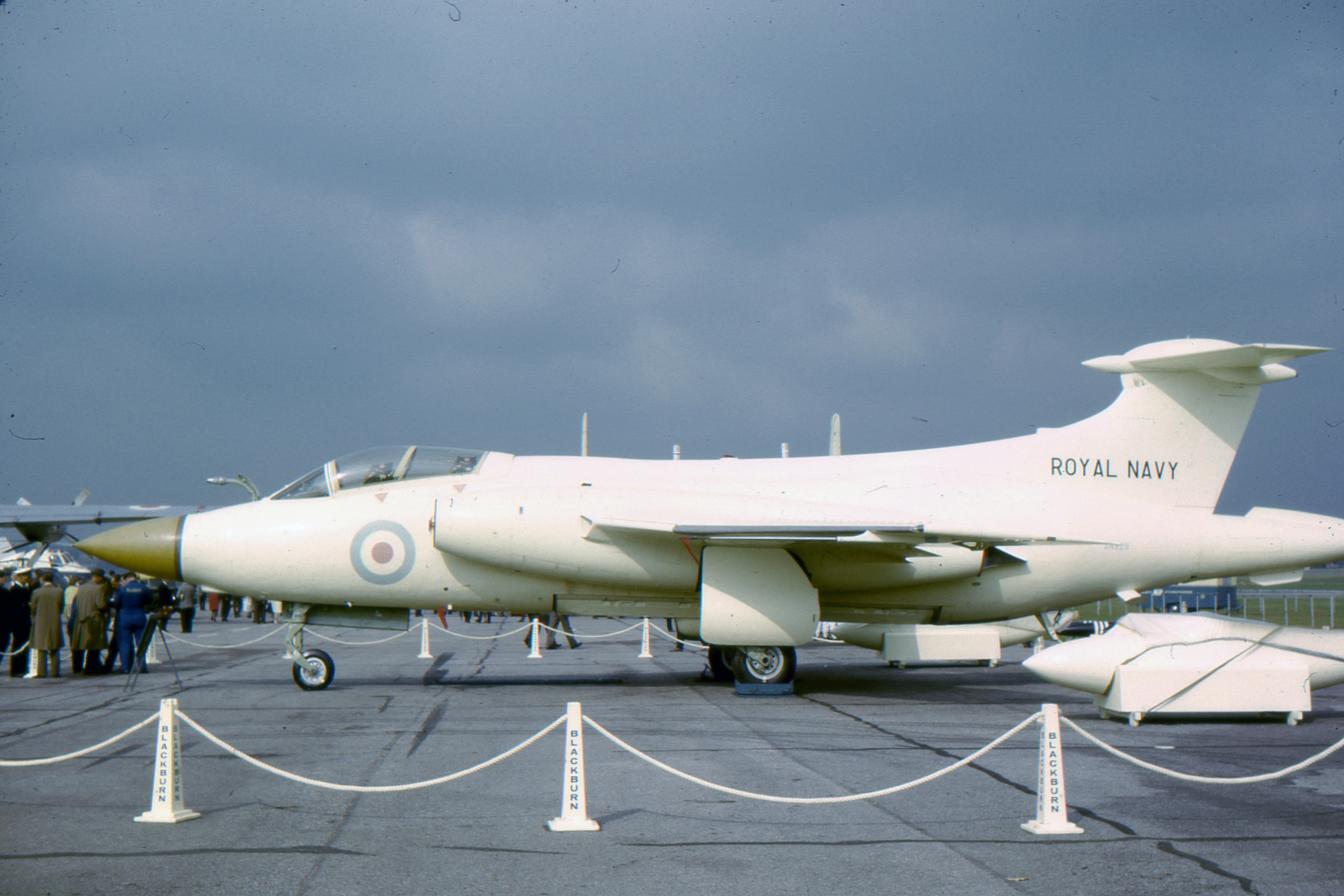
Anti-flash white was used on the Royal Air Force V bombers force and the Royal Navy Blackburn Buccaneer when used in the nuclear strike role. Nuclear bombers were given – though not at first, until the problem was considered – salmon pink and baby blue roundels and fin flash rather than the traditional dark red, white and blue.
Anti-flash white was applied to several prototype aircraft, including the British Aircraft Corporation TSR-2. Paint used on the Avro Vulcan was manufactured by Cellon, and that on the Handley Page Victor by Titanine Ltd.{{Cite journal
United States
Many Strategic Air Command nuclear bombers carried anti-flash white without insignia on the underside of the fuselage with light silver-gray or natural metal (later light camouflage) on the upper surfaces.
United States Navy E-6 Mercury remain painted in anti-flash white, as of October 2023.
Other aircraft
In addition to these military aircraft, Concorde was painted white to reduce the additional heating effect on the aluminium skin caused by the sun whilst the aircraft was flying at high altitudes, the skin temperature already being raised to over 90 C at Mach 2 by aerodynamic heating.
Aircraft with at least part of the fuselage painted anti-flash white on nuclear delivery variants:
- CF-105 Arrow prototypes
- Xian H-6 /
- Myasishchev M-4
- Tupolev Tu-16
- Tupolev Tu-95
- Tupolev Tu-22M
- Tupolev Tu-160
- V bombers
- Avro Vulcan
- Handley Page Victor
- Vickers Valiant
- Blackburn Buccaneer
- English Electric Canberra (experimental)
- BAC TSR-2 prototype
- Saunders-Roe SR.53 interceptor prototype
- Convair B-36
- Boeing B-47 Stratojet
- Boeing B-52 Stratofortress
- North American A-5 Vigilante
- North American XB-70 Valkyrie prototype
- Rockwell B-1 Lancer prototype
References
- {{cite journal
References
- (11 October 2022). "[2.0] Reconnaissance & Special-Mission Tu-16s / Xian H-6".
- (17 July 2009). "RDS 202: Tsar Bomb, The Biggest Bomb Ever". Youtube.
- (2009). "'White swan' – Russian supersonic aircraft". Moscow Top News.
- "Munsell / #f2f3f4 hex color".
- Lake ''International Air Power Review'' Spring 2003, p. 121.
- Philip J. R. Moyes. (1964). "Bomber Squadrons of the R.A.F. And Their Aircraft". MacDonald.
This article was imported from Wikipedia and is available under the Creative Commons Attribution-ShareAlike 4.0 License. Content has been adapted to SurfDoc format. Original contributors can be found on the article history page.
Ask Mako anything about Anti-flash white — get instant answers, deeper analysis, and related topics.
Research with MakoFree with your Surf account
Create a free account to save articles, ask Mako questions, and organize your research.
Sign up freeThis content may have been generated or modified by AI. CloudSurf Software LLC is not responsible for the accuracy, completeness, or reliability of AI-generated content. Always verify important information from primary sources.
Report