From Surf Wiki (app.surf) — the open knowledge base
Animal
Kingdom of life
Kingdom of life
File:Animal diversity b.png |300px
rect 0 0 118 86 Echinoderm rect 0 86 118 172 Cnidaria rect 0 172 118 258 Tardigrade rect 0 258 118 344 Flatworm
rect 118 0 236 86 Sponge rect 118 86 236 172 Arthropod rect 118 172 236 258 Bryozoa rect 118 258 236 344 Acanthocephalan
rect 236 0 354 86 Mollusc rect 236 86 354 172 Annelid rect 236 172 354 258 Vertebrate rect 236 258 354 344 Tunicate
- Cnidaria
- Ctenophora
- Placozoa
- Porifera
- Choanoblastaea
- Gastrobionta
- Zooaea
- Euanimalia Animals are multicellular, eukaryotic organisms belonging to the biological kingdom Animalia (). With few exceptions, animals consume organic material, breathe oxygen, have myocytes and are able to move, can reproduce sexually, and grow from a hollow sphere of cells, the blastula, during embryonic development. Animals form a clade, meaning that they arose from a single common ancestor. Over 1.5 million living animal species have been described, of which around 1.05 million are insects, over 85,000 are molluscs, and around 65,000 are vertebrates. It has been estimated there are as many as 7.77 million animal species on Earth. Animal body lengths range from 8.5 μm to 33.6 m. They have complex ecologies and interactions with each other and their environments, forming intricate food webs. The scientific study of animals is known as zoology, and the study of animal behaviour is known as ethology.
The animal kingdom is divided into five major clades, namely Porifera, Ctenophora, Placozoa, Cnidaria and Bilateria. Most living animal species belong to the clade Bilateria, a highly proliferative clade whose members have a bilaterally symmetric and significantly cephalised body plan, and the vast majority of bilaterians belong to two large clades: the protostomes, which includes organisms such as arthropods, molluscs, flatworms, annelids and nematodes; and the deuterostomes, which include echinoderms, hemichordates and chordates, the latter of which contains the vertebrates. The much smaller basal phylum Xenacoelomorpha have an uncertain position within Bilateria.
Animals first appeared in the fossil record in the late Cryogenian period and diversified in the subsequent Ediacaran period in what is known as the Avalon explosion. Nearly all modern animal phyla first appeared in the fossil record as marine species during the Cambrian explosion, which began around 539 million years ago (Mya), and most classes during the Ordovician radiation 485.4 Mya. Common to all living animals, 6,331 groups of genes have been identified that may have arisen from a single common ancestor that lived about 650 Mya during the Cryogenian period.
Historically, Aristotle divided animals into those with blood and those without. Carl Linnaeus created the first hierarchical biological classification for animals in 1758 with his Systema Naturae, which Jean-Baptiste Lamarck expanded into 14 phyla by 1809. In 1874, Ernst Haeckel divided the animal kingdom into the multicellular Metazoa (now synonymous with Animalia) and the Protozoa, single-celled organisms no longer considered animals. In modern times, the biological classification of animals relies on advanced techniques, such as molecular phylogenetics, which are effective at demonstrating the evolutionary relationships between taxa.
Humans make use of many other animal species for food (including meat, eggs, and dairy products), for materials (such as leather, fur, and wool), as pets and as working animals for transportation, and services. Dogs, the first domesticated animal, have been used in hunting, in security and in warfare, as have horses, pigeons and birds of prey; while other terrestrial and aquatic animals are hunted for sports, trophies or profits. Non-human animals are also an important cultural element of human evolution, having appeared in cave arts and totems since the earliest times, and are frequently featured in mythology, religion, arts, literature, heraldry, politics, and sports.
Etymology
The word animal comes from the Latin noun of the same meaning, which is itself derived from Latin 'having breath or soul'. The biological definition includes all members of the kingdom Animalia. In colloquial usage, the term animal is often used to refer only to nonhuman animals. The term metazoa is derived from Ancient Greek μετα 'after' (in biology, the prefix meta- stands for 'later') and ζῷᾰ 'animals', plural of ζῷον 'animal'. A metazoan is any member of the group Metazoa.
Characteristics
Animals have several characteristics that they share with other living things. Animals are eukaryotic, multicellular, and aerobic, as are plants and fungi. Unlike plants and algae, which produce their own food, animals cannot produce their own food, a feature they share with fungi. Animals ingest organic material and digest it internally.
Structural features
Animals have structural characteristics that set them apart from all other living things:
- cells surrounded by an extracellular matrix composed of
- collagen and
- elastic glycoproteins
- motility i.e. able to spontaneously move their bodies during at least part of their life cycle.
- a blastula stage during embryonic development
Typically, there is an internal digestive chamber with either one opening (in Ctenophora, Cnidaria, and flatworms) or two openings (in most bilaterians).
Development
Animal development is controlled by Hox genes, which signal the times and places to develop structures such as body segments and limbs.
During development, the animal extracellular matrix forms a relatively flexible framework upon which cells can move about and be reorganised into specialised tissues and organs, making the formation of complex structures possible, and allowing cells to be differentiated. The extracellular matrix may be calcified, forming structures such as shells, bones, and spicules. In contrast, the cells of other multicellular organisms (primarily algae, plants, and fungi) are held in place by cell walls, and so develop by progressive growth.
Reproduction
Nearly all animals make use of some form of sexual reproduction. They produce haploid gametes by meiosis; the smaller, motile gametes are spermatozoa and the larger, non-motile gametes are ova. These fuse to form zygotes, which develop via mitosis into a hollow sphere, called a blastula. In sponges, blastula larvae swim to a new location, attach to the seabed, and develop into a new sponge. In most other groups, the blastula undergoes more complicated rearrangement. It first invaginates to form a gastrula with a digestive chamber and two separate germ layers, an external ectoderm and an internal endoderm. In most cases, a third germ layer, the mesoderm, also develops between them. These germ layers then differentiate to form tissues and organs.
Repeated instances of mating with a close relative during sexual reproduction generally leads to inbreeding depression within a population due to the increased prevalence of harmful recessive traits. Animals have evolved numerous mechanisms for avoiding close inbreeding.
Some animals are capable of asexual reproduction, which often results in a genetic clone of the parent. This may take place through fragmentation; budding, such as in Hydra and other cnidarians; or parthenogenesis, where fertile eggs are produced without mating, such as in aphids.
Ecology
Animals are categorised into ecological groups depending on their trophic levels and how they consume organic material. Such groupings include carnivores (further divided into subcategories such as piscivores, insectivores, ovivores, etc.), herbivores (subcategorised into folivores, graminivores, frugivores, granivores, nectarivores, algivores, etc.), omnivores, fungivores, scavengers/detritivores, and parasites. Interactions between animals of each biome form complex food webs within that ecosystem. In carnivorous or omnivorous species, predation is a consumer–resource interaction where the predator feeds on another organism, its prey, who often evolves anti-predator adaptations to avoid being fed upon. Selective pressures imposed on one another lead to an evolutionary arms race between predator and prey, resulting in various antagonistic/competitive coevolutions. Almost all multicellular predators are animals. Some consumers use multiple methods; for example, in parasitoid wasps, the larvae feed on the hosts' living tissues, killing them in the process, but the adults primarily consume nectar from flowers. Other animals may have very specific feeding behaviours, such as hawksbill sea turtles which mainly eat sponges.
Most animals rely on biomass and bioenergy produced by plants and phytoplanktons (collectively called producers) through photosynthesis. Herbivores, as primary consumers, eat the plant material directly to digest and absorb the nutrients, while carnivores and other animals on higher trophic levels indirectly acquire the nutrients by eating the herbivores or other animals that have eaten the herbivores. Animals oxidise carbohydrates, lipids, proteins and other biomolecules in cellular respiration, which allows the animal to grow and to sustain basal metabolism and fuel other biological processes such as locomotion. Some benthic animals living close to hydrothermal vents and cold seeps on the dark sea floor consume organic matter produced through chemosynthesis (via oxidising inorganic compounds such as hydrogen sulfide) by archaea and bacteria.
Animals originated in the ocean; all extant animal phyla, except for Micrognathozoa and Onychophora, feature at least some marine species. However, several lineages of arthropods begun to colonise land around the same time as land plants, probably between 510 and 471 million years ago, during the Late Cambrian or Early Ordovician. Vertebrates such as the lobe-finned fish Tiktaalik started to move on to land in the late Devonian, about 375 million years ago. Other notable animal groups that colonized land environments are Mollusca, Platyhelmintha, Annelida, Tardigrada, Onychophora, Rotifera, Nematoda.
Animals occupy virtually all of earth's habitats and microhabitats, with faunas adapted to salt water, hydrothermal vents, fresh water, hot springs, swamps, forests, pastures, deserts, air, and the interiors of other organisms. Animals are however not particularly heat tolerant; very few of them can survive at constant temperatures above 50 °C or in the most extreme cold deserts of continental Antarctica.
The collective global geomorphic influence of animals on the processes shaping the Earth's surface remains largely understudied, with most studies limited to individual species and well-known exemplars.
Diversity
Size
The blue whale (Balaenoptera musculus) is the largest animal that has ever lived, weighing up to 190 tonnes and measuring up to 33.6 m long. The largest extant terrestrial animal is the African bush elephant (Loxodonta africana), weighing up to 12.25 tonnes and measuring up to 10.67 m long. Several animals are microscopic; some Myxozoa (obligate parasites within the Cnidaria) never grow larger than 20 μm, and one of the smallest species (Myxobolus shekel) is no more than 8.5 μm when fully grown.
File:Anim1754 - Flickr - NOAA Photo Library (1).jpg|The blue whale is the largest animal that has ever lived; it can be up to 33.6 m long. File:Fdl17-9-grey.jpg|Myxozoans such as Myxobolus cerebralis are single-celled parasites, never more than 20 μm across.
Numbers and habitats of major phyla
The following table lists estimated numbers of described extant species for the major animal phyla, along with their principal habitats (terrestrial, fresh water, and marine), and free-living or parasitic ways of life. Species estimates shown here are based on numbers described scientifically; much larger estimates have been calculated based on various means of prediction, and these can vary wildly. For instance, around 25,000–27,000 species of nematodes have been described, while published estimates of the total number of nematode species include 10,000–20,000; 500,000; 10 million; and 100 million. Using patterns within the taxonomic hierarchy, the total number of animal species—including those not yet described—was calculated to be about 7.77 million in 2011.
| Phylum | Example | Species | Land | Sea | Freshwater | Free-living | Parasitic | **Arthropoda** | **Mollusca** | **Chordata** | **Platyhelminthes** | **Nematoda** | **Annelida** | **Cnidaria** | **Porifera** | **Echinodermata** | **Bryozoa** | **Rotifera** | **Nemertea** | **Tardigrada** | |
|---|---|---|---|---|---|---|---|---|---|---|---|---|---|---|---|---|---|---|---|---|---|
| [[File:European wasp white bg02.jpg | alt=wasp | 100px]] | 1,257,000 | last=Stork | first=Nigel E. | s2cid=23755007 | title=How Many Species of Insects and Other Terrestrial Arthropods Are There on Earth? | journal=Annual Review of Entomology | volume=63 | issue=1 | date=January 2018 | doi=10.1146/annurev-ento-020117-043348 | pmid=28938083 | pages=31–45 | doi-access=free}} Stork notes that 1m insects have been named, making much larger predicted estimates. | Yes 40,000 | |||||
| (Malac- | |||||||||||||||||||||
| ostraca) | Yes 94,000 | Yes | Yes 45,000 | ||||||||||||||||||
| [[File:Grapevinesnail 01.jpg | alt=snail | 100px]] | 85,000 | ||||||||||||||||||
| 107,000 | last=Nicol | first=David | title=The Number of Living Species of Molluscs | journal=Systematic Zoology | volume=18 | issue=2 | date=June 1969 | pages=251–254 | doi=10.2307/2412618 | jstor=2412618 | jstor-access=free}} | 60,000 | 5,000 | ||||||||
| 12,000 | Yes | 5,600 | |||||||||||||||||||
| [[File:Lithobates pipiens.jpg | alt=green spotted frog facing right | 100px]] | 70,000 | last1=Reaka-Kudla | first1=Marjorie L. | last2=Wilson | first2=Don E. | last3=Wilson | first3=Edward O. | author3-link=E. O. Wilson | title=Biodiversity II: Understanding and Protecting Our Biological Resources | url= | year=1996 | publisher=Joseph Henry | isbn=978-0-309-52075-1 | page=90}} | 13,000 | 18,000 | |||
| 9,000 | Yes | 40 | |||||||||||||||||||
| (catfish) | |||||||||||||||||||||
| [[File:Pseudoceros dimidiatus.jpg | 100px]] | 29,500 | Yes | Yes | 1,300 | Yes | |||||||||||||||
| 40,000 | |||||||||||||||||||||
| [[File:CelegansGoldsteinLabUNC.jpg | 100px]] | 25,000 | Yes (soil) | 4,000 | 2,000 | 11,000 | 14,000 | ||||||||||||||
| [[File:Nerr0328.jpg | 100px]] | 17,000 | Yes (soil) | Yes | 1,750 | Yes | 400 | ||||||||||||||
| [[File:FFS Table bottom.jpg | alt=Table coral | 100px]] | 16,000 | Yes | Few | Yes | 1,350 | ||||||||||||||
| (Myxozoa) | |||||||||||||||||||||
| [[File:A colourful Sponge on the Fathom.jpg | 100px]] | 10,800 | Yes | 200–300 | Yes | Yes | |||||||||||||||
| [[File:Starfish, Caswell Bay - geograph.org.uk - 409413.jpg | 100px]] | 7,500 | 7,500 | Yes | |||||||||||||||||
| [[File:Bryozoan at Ponta do Ouro, Mozambique (6654415783).jpg | 100px]] | 6,000 | Yes | 60–80 | Yes | ||||||||||||||||
| [[File:20090730 020239 Rotifer.jpg | 100px]] | 2,000 | 400 | 2,000 | Yes | Yes | |||||||||||||||
| [[File:Némerte.jpg | 100px]] | 1,350 | Yes | Yes | Yes | ||||||||||||||||
| [[File:Tardigrade (50594282802).jpg | 100px]] | 1,335 | title=Animal Diversity | first1=Cleveland P. | last1=Hickman | first2=Susan L. | last2=Keen | first3=Allan | last3=Larson | first4=David J. | last4=Eisenhour | edition=8th | publisher=McGraw Hill | year=2018 | isbn=978-1-260-08427-6}} | ||||||
| (moist plants) | Yes | Yes | Yes |
Evolutionary origin
Evidence of animals is found as long ago as the Cryogenian period. 24-Isopropylcholestane (24-ipc) has been found in rocks from roughly 650 million years ago; it is only produced by sponges and pelagophyte algae. Its likely origin is from sponges based on molecular clock estimates for the origin of 24-ipc production in both groups. Analyses of pelagophyte algae consistently recover a Phanerozoic origin, while analyses of sponges recover a Neoproterozoic origin, consistent with the appearance of 24-ipc in the fossil record.
The first body fossils of animals appear in the Ediacaran, represented by forms such as Charnia and Spriggina. It had long been doubted whether these fossils truly represented animals, but the discovery of the animal lipid cholesterol in fossils of Dickinsonia establishes their nature. Animals are thought to have originated under low-oxygen conditions, suggesting that they were capable of living entirely by anaerobic respiration, but as they became specialised for aerobic metabolism they became fully dependent on oxygen in their environments.
Many animal phyla first appear in the fossil record during the Cambrian explosion, starting about 539 million years ago, in beds such as the Burgess Shale. Extant phyla in these rocks include molluscs, brachiopods, onychophorans, tardigrades, arthropods, echinoderms and hemichordates, along with numerous now-extinct forms such as the predatory Anomalocaris. The apparent suddenness of the event may however be an artefact of the fossil record, rather than showing that all these animals appeared simultaneously. That view is supported by the discovery of Auroralumina attenboroughii, the earliest known Ediacaran crown-group cnidarian (557–562 mya, some 20 million years before the Cambrian explosion) from Charnwood Forest, England. It is thought to be one of the earliest predators, catching small prey with its nematocysts as modern cnidarians do.
Some palaeontologists have suggested that animals appeared much earlier than the Cambrian explosion, possibly as early as 1 billion years ago. Early fossils that might represent animals appear for example in the 665-million-year-old rocks of the Trezona Formation of South Australia. These fossils are interpreted as most probably being early sponges. Trace fossils such as tracks and burrows found in the Tonian period (from 1 gya) may indicate the presence of triploblastic worm-like animals, roughly as large (about 5 mm wide) and complex as earthworms. However, similar tracks are produced by the giant single-celled protist Gromia sphaerica, so the Tonian trace fossils may not indicate early animal evolution. Around the same time, the layered mats of microorganisms called stromatolites decreased in diversity, perhaps due to grazing by newly evolved animals. Objects such as sediment-filled tubes that resemble trace fossils of the burrows of wormlike animals have been found in 1.2 gya rocks in North America, in 1.5 gya rocks in Australia and North America, and in 1.7 gya rocks in Australia. Their interpretation as having an animal origin is disputed, as they might be water-escape or other structures.
File:DickinsoniaCostata.jpg|Dickinsonia costata from the Ediacaran biota (c. 635–542 mya) is one of the earliest animal species known. File:Auroralumina attenboroughii reconstruction.jpg|Auroralumina attenboroughii, an Ediacaran predator (c. 560 mya) File:20191203 Anomalocaris canadensis.png|Anomalocaris canadensis is one of the many animal species that emerged in the Cambrian explosion, starting some 539 mya, and found in the fossil beds of the Burgess Shale.
Phylogeny
External phylogeny
Animals are monophyletic, meaning they are derived from a common ancestor. Animals are the sister group to the choanoflagellates, with which they form the Choanozoa. Ros-Rocher and colleagues (2021) trace the origins of animals to unicellular ancestors, providing the external phylogeny shown in the cladogram. Uncertainty of relationships is indicated with dashed lines. The animal clade had certainly originated by 650 mya, and may have come into being as much as 800 mya, based on molecular clock evidence for different phyla.
Internal phylogeny
basal
The relationships at the base of the animal tree have been debated. Other than Ctenophora, the Bilateria and Cnidaria are the only groups with symmetry, and other evidence shows they are closely related. In addition to sponges, Placozoa has no symmetry and was often considered a "missing link" between protists and multicellular animals. The presence of hox genes in Placozoa shows that they were once more complex.
The Porifera (sponges) have long been assumed to be sister to the rest of the animals, but there is evidence that the Ctenophora may be in that position. Molecular phylogenetics has supported both the sponge-sister and ctenophore-sister hypotheses. In 2017, Roberto Feuda and colleagues, using amino acid differences, presented both, with the following cladogram for the sponge-sister view that they supported (their ctenophore-sister tree simply interchanging the places of ctenophores and sponges):
Conversely, a 2023 study by Darrin Schultz and colleagues uses ancient gene linkages to construct the following ctenophore-sister phylogeny:
Non-bilaterians
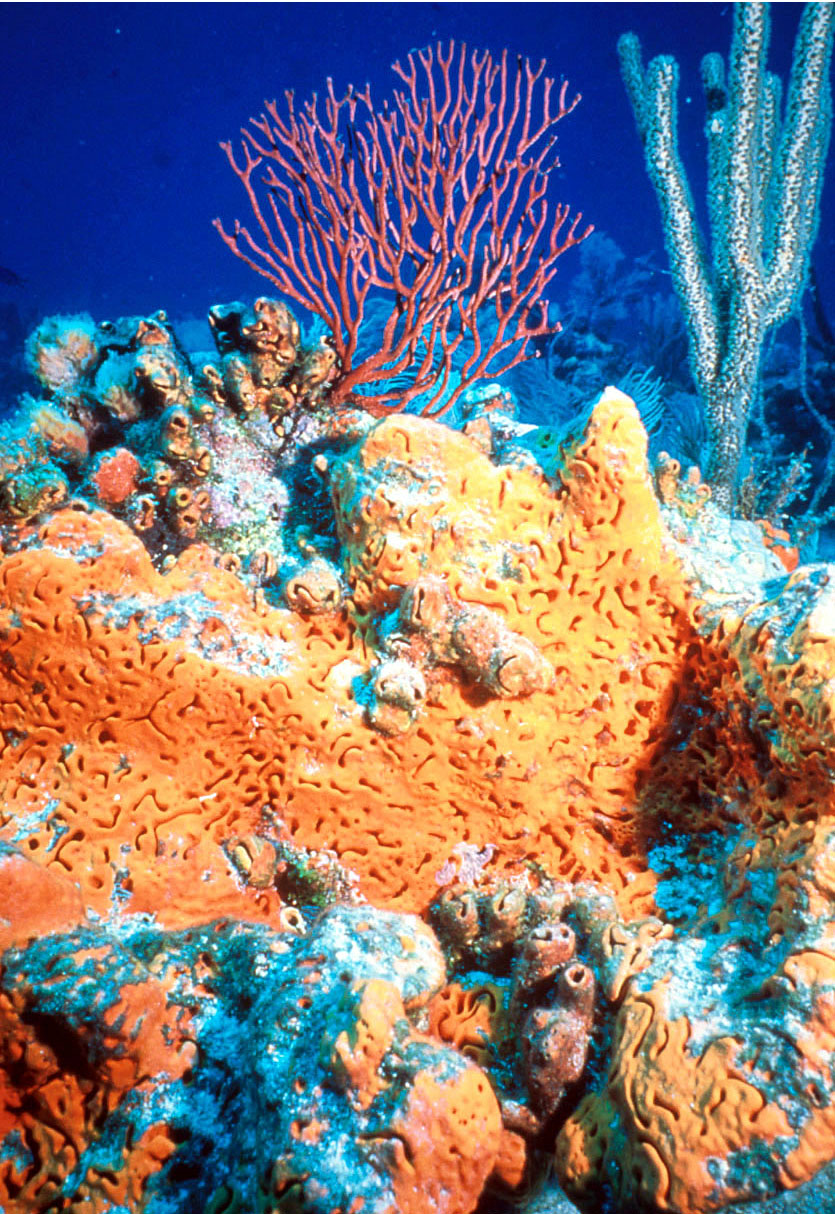
Sponges are physically very distinct from other animals, and were long thought to have diverged first, representing the oldest animal phylum and forming a sister clade to all other animals. Despite their morphological dissimilarity with all other animals, genetic evidence suggests sponges may be more closely related to other animals than the comb jellies are. Sponges lack the complex organisation found in most other animal phyla; their cells are differentiated, but in most cases not organised into distinct tissues, unlike all other animals. They typically feed by drawing in water through pores, filtering out small particles of food.
The Ctenophora and Cnidaria are radially symmetric and have digestive chambers with a single opening, which serves as both mouth and anus. Animals in both phyla have distinct tissues, but these are not organised into discrete organs. They are diploblastic, having only two main germ layers, ectoderm and endoderm.
The tiny placozoans have no permanent digestive chamber and no symmetry; they superficially resemble amoebae. Their phylogeny is poorly defined, and under active research.
Bilateria
Main article: Bilateria, Symmetry (biology)#Bilateral symmetry
The remaining animals, the great majority—comprising some 29 phyla and over a million species—form the Bilateria clade, which have a bilaterally symmetric body plan. The Bilateria are triploblastic, with three well-developed germ layers, and their tissues form distinct organs. The digestive chamber has two openings, a mouth and an anus, and in the Nephrozoa there is an internal body cavity, a coelom or pseudocoelom. These animals have a head end (anterior) and a tail end (posterior), a back (dorsal) surface and a belly (ventral) surface, and a left and a right side.
Having a front end means that this part of the body encounters stimuli, such as food, favouring cephalisation, the development of a head with sense organs and a mouth. Many bilaterians have a combination of circular muscles that constrict the body, making it longer, and an opposing set of longitudinal muscles, that shorten the body; They also have a gut that extends through the basically cylindrical body from mouth to anus. Many bilaterian phyla have primary larvae which swim with cilia and have an apical organ containing sensory cells. However, over evolutionary time, descendant spaces have evolved which have lost one or more of each of these characteristics. For example, adult echinoderms are radially symmetric (unlike their larvae), while some parasitic worms have extremely simplified body structures.
Genetic studies have considerably changed zoologists' understanding of the relationships within the Bilateria. Most appear to belong to two major lineages, the protostomes and the deuterostomes. It is often suggested that the basalmost bilaterians are the Xenacoelomorpha, with all other bilaterians belonging to the subclade Nephrozoa. However, this suggestion has been contested, with other studies finding that xenacoelomorphs are more closely related to Ambulacraria than to other bilaterians.
Protostomes and deuterostomes
Main article: Protostome, Deuterostome
Protostomes and deuterostomes differ in several ways. Early in development, deuterostome embryos undergo radial cleavage during cell division, while many protostomes (the Spiralia) undergo spiral cleavage. Animals from both groups possess a complete digestive tract, but in protostomes the first opening of the embryonic gut develops into the mouth, and the anus forms secondarily. In deuterostomes, the anus forms first while the mouth develops secondarily. Most protostomes have schizocoelous development, where cells simply fill in the interior of the gastrula to form the mesoderm. In deuterostomes, the mesoderm forms by enterocoelic pouching, through invagination of the endoderm.
The main deuterostome taxa are the Ambulacraria and the Chordata. Ambulacraria are exclusively marine and include acorn worms, starfish, sea urchins, and sea cucumbers. The chordates are dominated by the vertebrates (animals with backbones), which consist of fishes, amphibians, reptiles, birds, and mammals.
The protostomes include the Ecdysozoa, named after their shared trait of ecdysis, growth by moulting, Among the largest ecdysozoan phyla are the arthropods and the nematodes. The rest of the protostomes are in the Spiralia, named for their pattern of developing by spiral cleavage in the early embryo. Major spiralian phyla include the annelids and molluscs.
History of classification
In the classical era, Aristotle divided animals, based on his own observations, into those with blood (roughly, the vertebrates) and those without. The animals were then arranged on a scale from man (with blood, two legs, rational soul) down through the live-bearing tetrapods (with blood, four legs, sensitive soul) and other groups such as crustaceans (no blood, many legs, sensitive soul) down to spontaneously generating creatures like sponges (no blood, no legs, vegetable soul). Aristotle was uncertain whether sponges were animals, which in his system ought to have sensation, appetite, and locomotion, or plants, which did not: he knew that sponges could sense touch and would contract if about to be pulled off their rocks, but that they were rooted like plants and never moved about.
In 1758, Carl Linnaeus created the first hierarchical classification in his Systema Naturae. In his original scheme, the animals were one of three kingdoms, divided into the classes of Vermes, Insecta, Pisces, Amphibia, Aves, and Mammalia. Since then, the last four have all been subsumed into a single phylum, the Chordata, while his Insecta (which included the crustaceans and arachnids) and Vermes have been renamed or broken up. The process was begun in 1793 by Jean-Baptiste de Lamarck, who called the Vermes une espèce de chaos ('a chaotic mess') and split the group into three new phyla: worms, echinoderms, and polyps (which contained corals and jellyfish). By 1809, in his Philosophie Zoologique, Lamarck had created nine phyla apart from vertebrates (where he still had four phyla: mammals, birds, reptiles, and fish) and molluscs, namely cirripedes, annelids, crustaceans, arachnids, insects, worms, radiates, polyps, and infusorians.
In his 1817 Le Règne Animal, Georges Cuvier used comparative anatomy to group the animals into four embranchements ('branches' with different body plans, roughly corresponding to phyla), namely vertebrates, molluscs, articulated animals (arthropods and annelids), and zoophytes (radiata) (echinoderms, cnidaria and other forms). This division into four was followed by the embryologist Karl Ernst von Baer in 1828, the zoologist Louis Agassiz in 1857, and the comparative anatomist Richard Owen in 1860.
In 1874, Ernst Haeckel divided the animal kingdom into two subkingdoms: Metazoa (multicellular animals, with five phyla: coelenterates, echinoderms, articulates, molluscs, and vertebrates) and Protozoa (single-celled animals), including a sixth animal phylum, sponges. The protozoa were later moved to the former kingdom Protista, leaving only the Metazoa as a synonym of Animalia.
In human culture
Practical uses
Main article: Human uses of animals
The human population exploits a large number of other animal species for food, both of domesticated livestock species in animal husbandry and, mainly at sea, by hunting wild species. Humans and their livestock make up more than 90% of the biomass of all terrestrial vertebrates, and almost as much as all insects combined.
Invertebrates including cephalopods, crustaceans, insects—principally bees and silkworms—and bivalve or gastropod molluscs are hunted or farmed for food, fibres. Chickens, cattle, sheep, pigs, and other animals are raised as livestock for meat across the world. Animal fibres such as wool and silk are used to make textiles, while animal sinews have been used as lashings and bindings, and leather is widely used to make shoes and other items. Animals have been hunted and farmed for their fur to make items such as coats and hats. Dyestuffs including carmine (cochineal), shellac, and kermes have been made from the bodies of insects. Working animals including cattle and horses have been used for work and transport from the first days of agriculture.
Animals such as the fruit fly Drosophila melanogaster serve a major role in science as experimental models. Animals have been used to create vaccines since their discovery in the 18th century. Some medicines such as the cancer drug trabectedin are based on toxins or other molecules of animal origin.
People have used hunting dogs to help chase down and retrieve animals, and birds of prey to catch birds and mammals, while tethered cormorants have been used to catch fish. Poison dart frogs have been used to poison the tips of blowpipe darts. A wide variety of animals are kept as pets, from invertebrates such as tarantulas, octopuses, and praying mantises, reptiles such as snakes and chameleons, and birds including canaries, parakeets, and parrots all finding a place. However, the most kept pet species are mammals, namely dogs, cats, and rabbits. There is a tension between the role of animals as companions to humans, and their existence as individuals with rights of their own.
A wide variety of terrestrial and aquatic animals are hunted for sport.
Symbolic uses
The signs of the Western and Chinese zodiacs are based on animals. In China and Japan, the butterfly has been seen as the personification of a person's soul, and in classical representation the butterfly is also the symbol of the soul.

Animals have been the subjects of art from the earliest times, both historical, as in ancient Egypt, and prehistoric, as in the cave paintings at Lascaux. Major animal paintings include Albrecht Dürer's 1515 The Rhinoceros, and George Stubbs's horse portrait Whistlejacket. Insects, birds and mammals play roles in literature and film, such as in giant bug movies.
Animals including insects and the cow is sacred in Hinduism. Among other mammals, deer, horses, lions, bats, bears, and wolves are the subjects of myths and worship.
Notes
References
References
- (2020). "Phylonyms: A Companion to the PhyloCode". [[CRC Press]].
- (2008). "Six major steps in animal evolution: are we derived sponge larvae?". Evolution & Development.
- (1951). "Die Abteilungen und Klassen der Pflanzen". Feddes Repertorium.
- {{Cite Merriam-Webster. animalia
- {{cite dictionary. Cresswell. Julia. (2010). [[Oxford University Press]]
- (2006). "Animal". [[Houghton Mifflin]].
- "Animal".
- (2013). "Consciousness in humans and non-human animals: recent advances and future directions". [[Frontiers in Psychology]].
- "The use of non-human animals in research".
- "Nonhuman".
- (30 July 2022 }} and [https://www.collinsdictionary.com/ko/dictionary/english/zoa -zoa] {{Webarchive). "Metazoa".
- "Metazoan".
- Avila, Vernon L.. (1995). "Biology: Investigating Life on Earth". Jones & Bartlett.
- Davidson, Michael W.. "Animal Cell Structure".
- "Palaeos:Metazoa".
- Bergman, Jennifer. "Heterotrophs".
- (January 2003). "Genomes at the interface between bacteria and organelles". [[Philosophical Transactions of the Royal Society B]].
- (2002). "Molecular Biology of the Cell". [[Garland Science]].
- (February 2009). "Evolution of collagen-based adhesion systems". The International Journal of Biochemistry & Cell Biology.
- Saupe, S. G.. "Concepts of Biology".
- Minkoff, Eli C.. (2008). "Barron's EZ-101 Study Keys Series: Biology". Barron's Educational Series.
- (1983). "Fossil Invertebrates". [[Cambridge University Press]] Archive.
- (24 January 2007). "Pre-Bilaterian Origins of the Hox Cluster and the Hox Code: Evidence from the Sea Anemone, Nematostella vectensis". PLOS ONE.
- (1999). "Hox genes in brachiopods and priapulids and protostome evolution". Nature.
- Sangwal, Keshra. (2007). "Additives and crystallization processes: from fundamentals to applications". John Wiley & Sons.
- Becker, Wayne M.. (1991). "The world of the cell". [[Benjamin Cummings]].
- Knobil, Ernst. (1998). "Encyclopedia of reproduction". Academic.
- Schwartz, Jill. (2010). "Master the GED 2011". Peterson's.
- Hamilton, Matthew B.. (2009). "Population genetics". [[Wiley-Blackwell]].
- (1984). "General zoology". Saunders College.
- (1945). "Human embryology: (prenatal development of form and function)". [[Williams & Wilkins]].
- Philips, Joy B.. (1975). "Development of vertebrate anatomy". Mosby.
- (1918). "The Encyclopedia Americana".
- (1998). "The science of entomology". WCB McGraw-Hill.
- (2009). "The genetics of inbreeding depression". [[Nature Reviews Genetics]].
- (1987). "Molecular Genetics of Development".
- (1996). "Inbreeding avoidance in animals". Trends Ecol. Evol..
- (July 2002). "Reproductive Biology of Invertebrates". Wiley.
- "Concepts of Biology: How Animals Reproduce". OpenStax College.
- (2001). "Geomorphology and environmental impact assessment". Taylor & Francis.
- Levy, Charles K.. (1973). "Elements of Biology". [[Appleton-Century-Crofts]].
- (1996). "Ecology: Individuals, populations and communities". Blackwell.
- (2006). "Ecology of marine fishes: California and adjacent waters". [[University of California Press]].
- Caro, Tim. (2005). "Antipredator Defenses in Birds and Mammals". [[University of Chicago Press]].
- (2004). "The real 'kingdoms' of eukaryotes". Current Biology.
- Stevens, Alison N. P.. (2010). "Predation, Herbivory, and Parasitism". Nature Education Knowledge.
- (November 1986). "Host-Feeding Strategies in Hymenopteran Parasitoids". Biological Reviews.
- Meylan, Anne. (22 January 1988). "Spongivory in Hawksbill Turtles: A Diet of Glass". Science.
- Clutterbuck, Peter. (2000). "Understanding Science: Upper Primary". Blake.
- (2010). "Biochemistry". Cengage.
- (2007). "Marine Biology". McGraw Hill.
- (2013). "Molecular Timetrees Reveal a Cambrian Colonization of Land and a New Scenario for Ecdysozoan Evolution". Current Biology.
- (6 April 2006). "A Devonian tetrapod-like fish and the evolution of the tetrapod body plan". [[Nature (journal).
- Clack, Jennifer A.. (21 November 2005). "Getting a Leg Up on Land". [[Scientific American]].
- Margulis, Lynn. (1999). "Diversity of Life: The Illustrated Guide to the Five Kingdoms". Jones & Bartlett.
- Clarke, Andrew. (2014). "The thermal limits to life on Earth". International Journal of Astrobiology.
- "Land animals". [[British Antarctic Survey]].
- (2025-02-25). "Global diversity and energy of animals shaping the Earth's surface". Proceedings of the National Academy of Sciences of the United States of America.
- Wood, Gerald. (1983). "The Guinness Book of Animal Facts and Feats". Guinness Superlatives.
- (20 April 2016). "The longest animal alive may be one you never thought of". BBC Earth.
- (2004). "Giants and Bizarres: Body Size of Some Southern South American Cretaceous Dinosaurs". Historical Biology.
- Curtice, Brian. (2020). "Dinosaur Systematics, Diversity, & Biology".
- Fiala, Ivan. (10 July 2008). "Myxozoa". Tree of Life Web Project.
- (2011). "Two new species of Myxobolus (Myxozoa: Myxosporea: Bivalvulida) infecting an Indian major carp and a cat fish in wetlands of Punjab, India". Journal of Parasitic Diseases.
- Zhang, Zhi-Qiang. (30 August 2013). "Animal biodiversity: An update of classification and diversity in 2013". [[Magnolia Press]].
- (2008). "Freshwater Animal Diversity Assessment". Springer.
- "There are only 35 kinds of animal and most are really weird". BBC Earth.
- Poulin, Robert. (2007). "Evolutionary Ecology of Parasites". [[Princeton University Press]].
- (2009). "Gulf of Mexico Origin, Waters, and Biota: Biodiversity". Texas A&M University Press.
- (24 August 2011). "How many species on Earth? About 8.7 million, new estimate says".
- (23 August 2011). "How Many Species Are There on Earth and in the Ocean?". PLOS Biology.
- (1 August 2016). "Counting animal species with DNA barcodes: Canadian insects". Philosophical Transactions of the Royal Society B: Biological Sciences.
- Stork, Nigel E.. (January 2018). "How Many Species of Insects and Other Terrestrial Arthropods Are There on Earth?". Annual Review of Entomology.
- Poore, Hugh F.. (2002). "Crustacea: Malacostraca". [[CSIRO Publishing]].
- Nicol, David. (June 1969). "The Number of Living Species of Molluscs". Systematic Zoology.
- Uetz, P.. "A Quarter Century of Reptile and Amphibian Databases". Herpetological Review.
- (1996). "Biodiversity II: Understanding and Protecting Our Biological Resources". Joseph Henry.
- (2017). "Essential Fish Biology: Diversity, Structure and Function". Oxford University Press.
- Sluys, R.. (1999). "Global diversity of land planarians (Platyhelminthes, Tricladida, Terricola): a new indicator-taxon in biodiversity and conservation studies". Biodiversity and Conservation.
- Pandian, T. J.. (2020). "Reproduction and Development in Platyhelminthes". CRC Press.
- (2015). "Parasite Diversity and Diversification". Cambridge University Press.
- Fontaneto, Diego. "Marine Rotifers: An Unexplored World of Richness". JMBA Global Marine Environment.
- May, Linda. (1989). "Epizoic and parasitic rotifers". Springer.
- (September 2021). "An updated classification of the phylum Nemertea". Invertebrate Zoology.
- (2022). "Molecular Phylogeny of the Genus Nipponnemertes (Nemertea: Monostilifera: Cratenemertidae) and Descriptions of 10 New Species, With Notes on Small Body Size in a Newly Discovered Clade". Frontiers in Marine Science.
- (2018). "Animal Diversity". McGraw Hill.
- (22 February 2016). "Sterol and genomic analyses validate the sponge biomarker hypothesis". PNAS.
- (5 February 2009). "Fossil steroids record the appearance of Demospongiae during the Cryogenian period". Nature.
- (2008). "The Avalon Explosion: Evolution of Ediacara Morphospace". Science.
- (1 June 2018). "Late Ediacaran trackways produced by bilaterian animals with paired appendages". Science Advances.
- Schopf, J. William. (1999). "Evolution!: facts and fallacies". Academic Press.
- (2019). "Energy metabolism in anaerobic eukaryotes and Earth's late oxygenation". Free Radical Biology and Medicine.
- (February 2022). "Stratigraphic Chart 2022". International Stratigraphic Commission.
- (2010). "The earliest Cambrian record of animals and ocean geochemical change". Geological Society of America Bulletin.
- (10 November 2010). "New Timeline for Appearances of Skeletal Animals in Fossil Record Developed by UCSB Researchers". The Regents of the University of California.
- Conway-Morris, Simon. (2003). "The Cambrian "explosion" of metazoans and molecular biology: would Darwin be satisfied?". The International Journal of Developmental Biology.
- (29 June 2006). "Darwin's dilemma: the realities of the Cambrian 'explosion'.". Philosophical Transactions of the Royal Society of London. Series B, Biological Sciences.
- (10 June 2011). "The Tree of Life". [[Royal Ontario Museum]].
- (25 July 2022). "A crown-group cnidarian from the Ediacaran of Charnwood Forest, UK". Nature Ecology & Evolution.
- (2005). "Biology". Pearson, Benjamin Cummings.
- (17 August 2010). "Possible animal-body fossils in pre-Marinoan limestones from South Australia". Nature Geoscience.
- (2 October 1998). "Triploblastic animals more than 1 billion years ago: trace fossil evidence from india". Science.
- (9 December 2008). "Giant Deep-Sea Protist Produces Bilaterian-like Traces". Current Biology.
- Reilly, Michael. (20 November 2008). "Single-celled giant upends early evolution". NBC News.
- Bengtson, S.. (2002). "The fossil record of predation". [[The Paleontological Society]].
- Seilacher, Adolf. (2007). "Trace fossil analysis". Springer.
- Breyer, J. A.. (1995). "Possible new evidence for the origin of metazoans prior to 1 Ga: Sediment-filled tubes from the Mesoproterozoic Allamoore Formation, Trans-Pecos Texas". [[Geology (journal).
- (20 September 2018). "Ancient steroids establish the Ediacaran fossil Dickinsonia as one of the earliest animals". Science.
- (2017). "The origin of the animals and a 'Savannah' hypothesis for early bilaterian evolution". [[Biological Reviews]].
- (2021). "The origin of animals: an ancestral reconstruction of the unicellular-to-multicellular transition". The Royal Society.
- (2020). "A Screen for Gene Paralogies Delineating Evolutionary Branching Order of Early Metazoa". G3: Genes, Genomes, Genetics.
- (11 December 2020). "Topology-dependent asymmetry in systematic errors affects phylogenetic placement of Ctenophora and Xenacoelomorpha". Science Advances.
- (2020). "The Invertebrate Tree of Life". [[Princeton University Press]].
- Wanninger, Andreas. (2024). "Hox, homology, and parsimony: An organismal perspective". Seminars in Cell & Developmental Biology.
- (2017). "Improved Modeling of Compositional Heterogeneity Supports Sponges as Sister to All Other Animals". Current Biology.
- (2023-05-17). "Ancient gene linkages support ctenophores as sister to other animals". Nature.
- (2003). "An Introduction to Porifera". Anmol Publications.
- (17 May 2023). "Ancient gene linkages support ctenophores as sister to other animals". Nature.
- (9 October 2017). "Ctenophore relationships and their placement as the sister group to all other animals". Nature Ecology & Evolution.
- Sumich, James L.. (2008). "Laboratory and Field Investigations in Marine Life". Jones & Bartlett Learning.
- Jessop, Nancy Meyer. (1970). "Biosphere; a study of life". [[Prentice-Hall]].
- Sharma, N. S.. (2005). "Continuity And Evolution Of Animals". Mittal Publications.
- (2000). "A Living Bay: The Underwater World of Monterey Bay". University of California Press.
- Safra, Jacob E.. (2003). "The New Encyclopædia Britannica". Encyclopædia Britannica.
- Kotpal, R.L.. (2012). "Modern Text Book of Zoology: Invertebrates". Rastogi Publications.
- Barnes, Robert D.. (1982). "Invertebrate Zoology". Holt-Saunders International.
- . ["Introduction to Placozoa"](https://www.ucmp.berkeley.edu/phyla/placozoa/placozoa.html). *UCMP Berkeley*.
- (1 August 2008). "The Trichoplax genome and the nature of placozoans". Nature.
- (23 November 2014). "Animal Phylogeny and Its Evolutionary Implications". Annual Review of Ecology, Evolution, and Systematics.
- Minelli, Alessandro. (2009). "Perspectives in Animal Phylogeny and Evolution". [[Oxford University Press]].
- Brusca, Richard C.. (2016). "Invertebrates". [[Sinauer Associates]].
- Telford, Maximilian J.. (2008). "Resolving Animal Phylogeny: A Sledgehammer for a Tough Nut?". Developmental Cell.
- (2011). "Acoelomorph flatworms are deuterostomes related to ''Xenoturbella''". [[Nature (journal).
- (August 2007). "The mitochondrial DNA of Xenoturbella bocki: genomic architecture and phylogenetic analysis". Theory Biosci.
- (3 February 2016). "Xenacoelomorpha is the sister group to Nephrozoa". [[Nature (journal).
- (19 March 2021). "Lack of support for Deuterostomia prompts reinterpretation of the first Bilateria". Science Advances.
- Valentine, James W.. (July 1997). "Cleavage patterns and the topology of the metazoan tree of life". PNAS.
- (2005). "The Biomarker Guide: Biomarkers and isotopes in petroleum systems and Earth history". Cambridge University Press.
- (2009). "Animal Evolution – Genomes, Fossils, and Trees". Oxford University Press.
- Safra, Jacob E.. (2003). "The New Encyclopædia Britannica, Volume 1; Volume 3". Encyclopædia Britannica.
- Hyde, Kenneth. (2004). "Zoology: An Inside View of Animals". [[Kendall Hunt]].
- Alcamo, Edward. (1998). "Biology Coloring Workbook". [[The Princeton Review]].
- Holmes, Thom. (2008). "The First Vertebrates". Infobase.
- Rice, Stanley A.. (2007). "Encyclopedia of evolution". Infobase.
- (2005). "Asking about life". Cengage.
- (26 November 2015). "Hemichordate genomes and deuterostome origins". [[Nature (journal).
- Dawkins, Richard. (2005). "The Ancestor's Tale: A Pilgrimage to the Dawn of Evolution". [[Houghton Mifflin Harcourt]].
- (2003). "BioInquiry: making connections in biology". John Wiley.
- (2000). "Evolution of the bilaterian body plan: What have we learned from annelids?". Proceedings of the National Academy of Sciences.
- Leroi, Armand Marie. (2014). "The Lagoon: How Aristotle Invented Science". Bloomsbury.
- Linnaeus, Carl. (1758). "Systema naturae per regna tria naturae: secundum classes, ordines, genera, species, cum characteribus, differentiis, synonymis, locis.". Holmiae (Laurentii Salvii).
- "Espèce de".
- Gould, Stephen Jay. (2011). "The Lying Stones of Marrakech". Harvard University Press.
- de Wit, Hendrik C. D.. (1994). "Histoire du développement de la biologie". Presses polytechniques et universitaires Romandes.
- (1874). "Anthropogenie oder Entwickelungsgeschichte des menschen". W. Engelmann.
- Valentine, James W.. (2004). "On the Origin of Phyla". University of Chicago Press.
- (2003). "Grzimek's Animal Life Encyclopedia". Gale.
- "Fisheries and Aquaculture". [[Food and Agriculture Organization]].
- Helfman, Gene S.. (2007). "Fish Conservation: A Guide to Understanding and Restoring Global Aquatic Biodiversity and Fishery Resources". Island.
- "World Review of Fisheries and Aquaculture". FAO.
- Eggleton, Paul. (17 October 2020). "The State of the World's Insects". Annual Review of Environment and Resources.
- (January 2002). "Shellfish climbs up the popularity ladder". Seafood Business.
- (2024-09-17). "Western honeybee".
- (27 July 2011). "Graphic detail Charts, maps and infographics. Counting chickens". The Economist.
- "Breeds of Cattle at Cattle Today". Cattle-today.com.
- "Rabbit project development strategies in subsistence farming systems". [[Food and Agriculture Organization]].
- "Ancient fabrics, high-tech geotextiles". Natural Fibres.
- "Major colourants and dyestuffs, mainly produced in horticultural systems". FAO.
- "Guidance for Industry: Cochineal Extract and Carmine". FDA.
- (18 December 1937). "How Shellac Is Manufactured". The Mail.
- (2003). "Pharmaceutical applications of shellac: moisture-protective and taste-masking coatings and extended-release matrix tablets". Drug Development and Industrial Pharmacy.
- Barber, E. J. W.. (1991). "Prehistoric Textiles". Princeton University Press.
- Munro, John H.. (2003). "The Cambridge History of Western Textiles". Cambridge University Press.
- Pond, Wilson G.. (2004). "Encyclopedia of Animal Science". CRC Press.
- "Genetics Research". Animal Health Trust.
- "Drug Development". Animal Research.info.
- "Animal Experimentation". BBC.
- (2013). "EU statistics show decline in animal research numbers". Speaking of Research.
- (10 June 2013). "Vaccines and animal cell technology". Animal Cell Technology Industrial Platform.
- "Medicines by Design". National Institute of Health.
- Fergus, Charles. (2002). "Gun Dog Breeds, A Guide to Spaniels, Retrievers, and Pointing Dogs". The Lyons Press.
- "History of Falconry". The Falconry Centre.
- King, Richard J.. (2013). "The Devil's Cormorant: A Natural History". University of New Hampshire Press.
- "Dendrobatidae". AmphibiaWeb.
- Heying, H.. (2003). "Dendrobatidae". Animal Diversity Web.
- (18 February 2011). "Other bugs". Keeping Insects.
- Kaplan, Melissa. "So, you think you want a reptile?". Anapsid.org.
- "Pet Birds". PDSA.
- (2012). "Animals in Healthcare Facilities".
- [[Humane World for Animals. "U.S. Pet Ownership Statistics".
- "U.S. Rabbit Industry profile". [[United States Department of Agriculture]].
- Plous, S.. (1993). "The Role of Animals in Human Society". Journal of Social Issues.
- Hummel, Richard. (1994). "Hunting and Fishing for Sport: Commerce, Controversy, Popular Culture". Popular Press.
- Lau, Theodora. (2005). "The Handbook of Chinese Horoscopes". Souvenir.
- Tester, S. Jim. (1987). "A History of Western Astrology". Boydell & Brewer.
- Hearn, Lafcadio. (1904). "Kwaidan: Stories and Studies of Strange Things". Dover.
- De Jaucourt, Louis. (January 2011). "Butterfly". Encyclopedia of Diderot and d'Alembert.
- Hutchins, M., Arthur V. Evans, Rosser W. Garrison and Neil Schlager (Eds) (2003), ''Grzimek's Animal Life Encyclopedia'', 2nd edition. Volume 3, Insects. Gale, 2003.
- (27 June 2014). "The top 10 animal portraits in art". [[The Guardian]].
- (29 October 2013). "Animals in Film and Media". Oxford Bibliographies.
- (2016). "Animal Horror Cinema: Genre, History and Criticism". Springer.
- (2009). "Keep Watching the Skies!: American Science Fiction Movies of the Fifties, The 21st Century Edition". [[McFarland & Company]].
- Crouse, Richard. (2008). "Son of the 100 Best Movies You've Never Seen". ECW Press.
- Ben-Tor, Daphna. (1989). "Scarabs, A Reflection of Ancient Egypt". Israel Museum.
- Biswas, Soutik. (15 October 2015). "Why the humble cow is India's most polarising animal". BBC.
- "Deer". [[Trees for Life (Scotland).
- van Gulik, Robert Hans. "Hayagrīva: The Mantrayānic Aspect of Horse-cult in China and Japan". Brill Archive.
- (24 June 2012). "Lion Depiction across Ancient and Modern Religions". Alert.
- (2000). "Mesoamerican Mythology". [[Oxford University Press]].
- Wunn, Ina. (January 2000). "Beginning of Religion". Numen.
- McCone, Kim R.. (1987). "Studien zum indogermanischen Wortschatz". Institut für Sprachwissenschaft der Universität Innsbruck.
This article was imported from Wikipedia and is available under the Creative Commons Attribution-ShareAlike 4.0 License. Content has been adapted to SurfDoc format. Original contributors can be found on the article history page.
Ask Mako anything about Animal — get instant answers, deeper analysis, and related topics.
Research with MakoFree with your Surf account
Create a free account to save articles, ask Mako questions, and organize your research.
Sign up freeThis content may have been generated or modified by AI. CloudSurf Software LLC is not responsible for the accuracy, completeness, or reliability of AI-generated content. Always verify important information from primary sources.
Report