From Surf Wiki (app.surf) — the open knowledge base
Alexander Nevsky
Grand Prince of Vladimir from 1252 to 1263
Grand Prince of Vladimir from 1252 to 1263
| Field | Value |
|---|---|
| name | Alexander Nevsky |
| image | AlexanderNevskyTitul.jpg |
| caption | Portrait in the *Tsarsky titulyarnik*, 1672 |
| succession | Prince of Novgorod |
| reign1 | 1236–1240 |
| predecessor1 | Yaroslav V |
| successor1 | Andrey I |
| reign2 | 1241–1256 |
| predecessor2 | Andrey I |
| successor2 | Vasily I |
| reign3 | 1258–1259 |
| predecessor3 | Vasily I |
| successor3 | Dmitry I |
| house | Rurik |
| spouse | Alexandra of Polotsk |
| issue | Dmitry Alexandrovich |
| Andrey Alexandrovich | |
| Daniil Alexandrovich | |
| issue-link | #Family |
| issue-pipe | more... |
| father | Yaroslav II of Vladimir |
| birth_date | 13 May 1221 |
| death_date | |
| birth_place | Pereslavl-Zalessky, Vladimir-Suzdal |
| death_place | Gorodets, Vladimir-Suzdal |
| burial_place | Alexander Nevsky Lavra, Saint Petersburg, Russia |
| succession5 | Grand Prince of Vladimir |
| reign5 | 1252–1263 |
| predecessor5 | Andrey II |
| successor5 | Yaroslav III |
| succession4 | Grand Prince of Kiev |
| reign4 | 1249–1263 |
| predecessor4 | Yaroslav II Vsevolodovich |
| successor4 | Yaroslav III Yaroslavich |
| religion | Eastern Orthodox |
Andrey Alexandrovich Daniil Alexandrovich | issue-link = #Family | issue-pipe = more...
Alexander Yaroslavich Nevsky (; ; monastic name: Aleksiy; 13 May 1221 – 14 November 1263)
A grandson of Vsevolod the Big Nest, Nevsky rose to legendary status after victories over Swedish invaders in the Battle of the Neva (1240), which earned him the title "Nevsky" in the 15th century, and over German crusaders in the Battle on the Ice (1242). He agreed to pay tribute to the Golden Horde, which allowed him to preserve the Eastern Orthodox Church, while fighting against foreign powers to the west and the south. Macarius, Metropolitan of Moscow canonized Alexander Nevsky as a saint of the Russian Orthodox Church in 1547.
Regarded long after his death as "one of the great heroes of Russian history", Nevsky is credited with having "saved the Russian people from Catholicism and being enslaved by the Germans". Nevsky's successes led his image to be used by Peter the Great in the construction of Saint Petersburg. His image was also used to promote patriotism in the Soviet Union, especially during World War II. The 1938 film Alexander Nevsky cemented Nevsky's reputation as a Russian savior. Critics of his legacy argue that the size and importance of his military victories were exaggerated for political purposes, and that he helped ensure the Golden Horde's dominance over Russia.
Early life
Born in Pereslavl-Zalessky on 13 May 1221, or 30 May 1220 based on the old historiographic tradition,
One of the first known references to Alexander Yaroslavich is in Tales of the Life and Courage of the Pious and Great Prince Alexander in the Pskov Chronicles ():
...He was taller than others and his voice reached the people as a trumpet, and his face was like the face of Joseph, whom the Egyptian Pharaoh placed as next to the king after him of Egypt. His power was a part of the power of Samson and God gave him the wisdom of Solomon... this Prince Alexander: he used to defeat but was never defeated...}}
Reign
Prince of Novgorod (1236–1240; 1241–1256; 1258–1259)
In 1236, Alexander was appointed by the Novgorod Republic as the prince of Novgorod (knyaz), where he had already served as his father's governor in Novgorod. He was chosen for the position by his father, but the decision was approved by the veche, which needed his armies. The Novgorod chronicle describes how Yaroslav left his son, Alexander, in Novgorod and took with him "senior Novgorodians" and a hundred men from Torzhok and "sat in Kiev upon the throne". When his father was called away in 1238 because of a Mongol invasion of Northeastern Russia, Alexander began to rule on his own.
In the Battle of the Sit River (1238), in which the Mongols effectively conquered the Grand Principality of Vladimir, reigning prince Yuri II of Vladimir was killed. His younger brother, Yaroslav II of Vladimir (Alexander's father), requested and received from the Mongol khan his permission to become the new prince. As prince, he assigned Novgorod to his son Alexander.
Alexander continued to enforce the anti-Western views of his family, which made him unpopular among the veche.
Second Swedish Crusade and the Battle of the Neva (1240)
In 1240, three years after obtaining papal authorization, the Swedes launched the Second Swedish Crusade in the easternmost part of the Baltic region. The Finnish mission's eastward expansion led to a clash between Sweden and the city-state of the Novgorod Republic, since the Karelians had been allies and tributaries of Novgorod since the mid-12th century. The Swedish army was led by Birger Jarl and consisted of Norwegians and Finnish tribes. After a successful campaign into Tavastia, the Swedes advanced further east. According to Russian sources, the Swedish army landed at the confluence of the rivers Izhora and Neva in northwestern Russia, when Alexander and his small army suddenly attacked the Swedes on 15 July 1240 and defeated them in the Battle of the Neva.
The battle is not mentioned in any Swedish sources; all accounts of the battle are from two Russian sources, which are largely inadequate. Although some Russian sources written centuries later describe its as a very large battle, it is not clear if it was a huge battle or just part of periodic clashes between Sweden and Novgorod that was exaggerated for political purposes. Soviet-era historian Igor Pavlovich Shaskol'skii suggested that the attack was coordinated, referring to the Life of Alexander Nevsky, the only Russian source besides the First Novgorod Chronicle that mentions the battle, in which it is stated that the Swedes intended to conquer Novgorod. However, according to John Lister Illingworth Fennell: "there is no evidence of any coordination of action between the Swedes, the Germans and the Danes, nor is there anything to show that this was more than a continuation of the Russo-Swedish conflict for mastery over Finland and Karelia".
The event was later depicted as being of national importance, and in the 15th century, Alexander received the sobriquet Nevsky ("of the Neva").
1240 Izborsk and Pskov campaign
In the September 1240 Izborsk and Pskov campaign, troops of the Bishopric of Dorpat, the Livonian Order, and the exiled pretender-prince overthrew the pro-Suzdal faction which supported Alexander.
In late 1240 or early 1241, fearing the undue influence of Alexander over the veche and amid fears of him becoming a sole ruler, the Novgorodians banished Alexander to Pereslavl-Zalessky.
1240–1241 Votia campaign
In the winter 1240–1241 Votia campaign, the Bishopric of Ösel–Wiek, the Livonian Order, as well as Estonians (Chud') with support from local Votian leaders attacked Votia. It is unclear whether or not Votia was a tributary of Novgorod at this time. According to Anti Selart, the allies likely only intended to acquire pagan lands and convert them to Catholicism, rather than attacking Novgorod, which was already Christianized. On the other hand, the campaign was "a purely political undertaking which had nothing to do with conversion of pagans". Although the Northern Crusades were aimed at pagan Balts and Baltic Finnic peoples, rather than Orthodox Russians, several unsuccessful attempts were made to persuade Novgorod to convert to Catholicism, which were resisted by Alexander.
Battle on the Ice (1242)
The Novgorodian authorities recalled Alexander, and in the spring of 1241, he returned from exile and assembled an army. Alexander conquered Pskov and Koporye from the crusaders, executing the Votians that cooperated with the invaders. He then continued into Estonian-German territory. The crusaders defeated a detachment of the Novgorodian army. As a result, Alexander set up a position at Lake Peipus. On 5 April 1242, in the Battle on the Ice, Alexander and his men faced the Livonian heavy cavalry led by Hermann of Dorpat, brother of Albert of Buxhoeveden. Alexander's army defeated the enemy, halting the eastward expansion of the Teutonic Order. Later in 1242, the Germans agreed to relinquish control of any Russian territory still occupied and to exchange prisoners of war. Later Russian sources elevated the importance of the battle and portray it as one of the great Russian victories of the Middle Ages.
The Livonian Rhymed Chronicle narrates the events of the battle:
There is a city in Russia called Novgorod, and when its king [Alexandre] heard what had happened he marched towards Pskov with many troops. He arrived there with a mighty force of many Russians to free the Pskovians and these latter heartily rejoiced. When he saw the Germans he did not hesitate long. They drove away the two Brothers, removed them from their governorship and routed their troops. The Germans fled and allowed the land to revert to the Russians. Thus it went for the Teutonic Knights, but if Pskov had been protected it would have benefited Christianity until the end of the world. It is a mistake to take a fair land and fail to occupy it properly. It is deplorable, for the result is sure to be disastrous. The king of Novgorod then returned home.
A Soviet evaluation presented Alexander's victories as having "saved the Russian people from sharing the fate of the Baltic tribes and the Slavs of the Elbe who were enslaved by the Germans". Igor Shaskovsky called the offensive the largest during the feudal period. On the other hand, historians like Fennell have doubted that this victory was a turning point in Russian history. He notes that the chronicle of Suzdal downplays the event to the point that Alexander's brother Andrey is seen as the hero.
After the Livonian invasion, Nevsky continued to strengthen the Republic of Novgorod. He sent envoys to Norway and, as a result, a first peace treaty between Novgorod and Norway was signed in 1251. Alexander defeated the Swedes in Finland after they made another attempt to block the Baltic Sea from the Novgorodians in 1256. In 1261, Alexander also made a treaty with Lithuanian king Mindaugas against the Livonian Order, but the planned attack failed as Alexander was summoned to Sarai by the khan.
Grand Prince of Vladimir (1252–1263)
Yaroslav was summoned to Karakorum, after which he fell ill and died on 30 September 1246. At a council in Vladimir held the following year, it was decided that Yaroslav's brother Svyatoslav would become grand prince, while Alexander would receive the Principality of Tver in addition to remaining as the prince of Novgorod. The Rurikid princes were obliged to appear before the khans in person, pay homage to them and receive their jarlig (patent) to be affirmed in their principalities. Svyatoslav did not go to the khan for confirmation, which caused Mikhail Khorobrit to expel his brother from Vladimir and claim the throne. Mikhail later died in a battle against the Lithuanians in 1248, which led to Moscow being without a prince.
Alexander's older brother Andrey was dissatisfied with the decision made at the council and he went to the khan, along with Alexander. In 1248, Andrey received the title of grand prince of Vladimir, while Alexander received Kiev, Chernigov, and "the entire Russian land". The two returned in the autumn of 1249. Andrey began to act independently in relation to the Mongols, and after creating an anti-Mongol coalition, a high-ranking official was sent to punish the princes. Andrey fled to Novgorod, but was not accepted there, so he was exiled to Sweden. Alexander assumed the title of grand prince of Vladimir in 1252, and was therefore the most senior of the princes at the time following the fall of Kiev.
Alexander faithfully supported Mongol rule within his own domains. In 1259, he led an army to the city of Novgorod and forced it to pay tribute it had previously refused to the Golden Horde. The chronicles say that Alexander had the help of nobles who "thought [the tax] would be easy for themselves, but fall hard on the lesser men". It then says that "the accursed ones," meaning the Mongols, "began to ride through the streets, writing down the Christian houses". According to Fennell: "the Tatar yoke began not so much during the invasion of Batu into Russia, but from the moment Alexander Nevsky betrayed his brothers".
Some historians see Alexander's choice of subordination to the Golden Horde as an important reaffirmation of East Slavs' Orthodox orientation (which begun under Vladimir the Great and his grandmother Olga of Kiev). Orlando Figes mentioned that "Nevsky's collaboration was no doubt motivated by his distrust of the West, which he regarded as a greater threat to Orthodox Russia than the Golden Horde (...) But Nevsky's realpolitik caused a problem for the chroniclers, particularly after he was made a saint by the Russian Church in 1547, for in their terms he had colluded with the infidel."
Family
In 1239, to consolidate power, Alexander married Aleksandra, a daughter of Bryacheslav Vasilkovich, the prince of the Principality of Polotsk. They had five children:
- Vasily, prince of Novgorod (c. 1239 – 1271), betrothed to Princess Kristina of Norway in 1251 before the marriage contract was broken;
- Eudoxia Alexandrovna, married Konstantin Rostislavich of Smolensk;
- Dmitry of Pereslavl (c. 1250 – 1294), prince of Pereslavl and grand prince of Vladimir;
- Andrey of Gorodets (c. 1255 – 1304), prince of Gorodets and grand prince of Vladimir;
- Daniel of Moscow (1261–1303), prince of Moscow.
Death and burial
In 1263, Nevsky visited Berke, leader of the Golden Horde, in a diplomatic mission. On 14 November 1263, while returning from Sarai, Alexander died in the town of Gorodets-on-the-Volga. On 23 November 1263, he was buried in the church of the Monastery of the Nativity of the Holy Mother of God in Vladimir.
From the Second Pskovian Chronicle:
Great Prince Alexander, who was always firm in his faith in God, gave up this worldly kingdom ... And then he gave up his soul to God and died in peace on 12 November [1263], on the day when the Holy Apostle Philip is remembered...
At this burial Metropolitan Archbishop Cyril said, 'Mychildren, you should know that the sun of the Suzdalian land has set. There will never be another prince like him in the Suzdalian land.'
And the priests and deacons and monks, the poor and the wealthy, and all the people said: 'It is our end.'}}
Veneration and sainthood
2 May (Synaxis of the Saints of Rosand Yaroslavl) 30 August (Translation of relics) The veneration of Alexander began almost immediately after his burial, when he reportedly extended his hand for the prayer of absolution.
According to the Eastern Orthodox Church, on his death bed, Alexander took the Great Schema, strict monastic vows, and took the name Alexey.
In 1380, Alexander's remains were uncovered in response to a vision before the Battle of Kulikovo and found to be incorrupt. The relics were then placed in a shrine in the church. Alexander was canonized as a saint of the Russian Orthodox Church by Macarius, Metropolitan of Moscow in 1547.
In 1695, a wooden reliquary was made in Moscow, and the relics were placed in it in 1697. By order of Peter the Great, the relics were removed from Vladimir on 11 August 1723 and transported to Shlisselburg, arriving there on 20 September. They were kept there until 1724, when they were brought to Saint Petersburg and installed in the Annunciation Church of the Alexander Nevsky Lavra on 30 August 1724.
In 1753, a silver shrine with sarcophagus for the relics, made from 90 pounds of silver, was donated by Empress Elizabeth of Russia. With the completion of the Holy Trinity Cathedral of the Alexander Nevsky Lavra in 1790, the shrine and relics were translated there at its consecration on 30 August, one of the saint's feast days.

During the 1922 seizure of church valuables in Russia, the sarcophagus was opened and the relics were removed. The elaborate silver shrine was transferred to the Hermitage Museum. On 12 September 2023, Patriarch Kirill of Moscow returned the relics into the silver sarcophagus.
Alexander's principal feast day is 23 November (Old Style Calendar) or December 6 (New Style Calendar). A secondary feast day was instituted on 30 August (Old Style Calendar) or September 12 (New Style Calendar) in commemoration of his relics being placed in the Annunciation Church.
In February 2024, the memorial of Saint Alexander Nevsky was deleted from the synaxarion of the Orthodox Church of Ukraine. The exaltation of Alexander Nevsky has been used as religious justification of the Russian invasion of Ukraine.
Legacy
Life of Alexander Nevsky (Житие Александра Невского) is a chronicle compiled in the late 13th century, in which Nevsky is depicted as an ideal prince-soldier and defender of Russia.
Life of Alexander Nevsky is a Russian illuminated manuscript of the 1560s that includes 83 illuminations and text that describe the life and achievements of Alexander Nevsky.
On 21 May 1725, Catherine I of Russia introduced the imperial Order of Saint Alexander Nevsky as one of the highest decorations in Russia. In 1942, during World War II, Soviet Union authorities introduced a Soviet Order of Alexander Nevsky to revive the memory of Nevsky's battles with the Germans.
In 1938, Sergei Eisenstein made one of his most acclaimed films, Alexander Nevsky, about Alexander's victory over the Teutonic Knights. The film is an instructive parable on German aggression and the struggle to protect Russia; the film cemented the storyline of Nevsky as the savior of Russia. The soundtrack for the film was written by Sergei Prokofiev, who also reworked the score into a concert cantata. The film is renowned for its depiction of the Battle on the Ice, which has served as inspiration for many other films. In the film, Nevsky used Russian proverbs, tying him firmly to Russian tradition. The proverbial phrase (paraphrasing Matthew 26:52), "Whoever will come to us with a sword, from a sword will perish," is a phrase that came from Eisenstein's film, where it was said by actor Nikolay Cherkasov, who played Nevsky.
During World War II, many Soviet historians portrayed Nevsky as a Russian bastion against both German and papal aggression. The government sought historical continuity by referring to the Soviet struggle as the Great Patriotic War. Joseph Stalin used the film to mobilize feelings of Russian patriotism.
There have been several Russian naval vessels named after Nevsky including:
- the 19th-century propeller frigate Alexander Nevsky
- Russian submarine Alexander Nevsky (K-550), a nuclear powered ballistic missile submarine currently in service with the Russian Navy
- The U.S. S.S. Henry W. Corbett, launched in 1943 in Portland, Oregon, which was lent to the U.S.S.R. during World War II and never returned; instead it was renamed the Alexander Nevsky.
In 2008, Nevsky was declared the main hero of the history of Russia by popular vote. In December 2008, he was voted the greatest Russian in the Name of Russia television poll.
In September 2022, an all-volunteer battalion tactical group to support the Russian invasion of Ukraine was named after Nevsky.
Alexander Beglov, governor of Saint Petersburg erected a statue of Nevsky in Mariupol after the city was devastated during the Russian invasion of Ukraine.
Notable places
- Alexander Nevsky Bridge in Saint Petersburg
- Nevsky District, district of Saint Petersburg, Russia
- Nevsky Prospect, the main street of Saint Petersburg
- Nevskoye Microdistrict, a part of Kaliningrad, Russia
Buildings
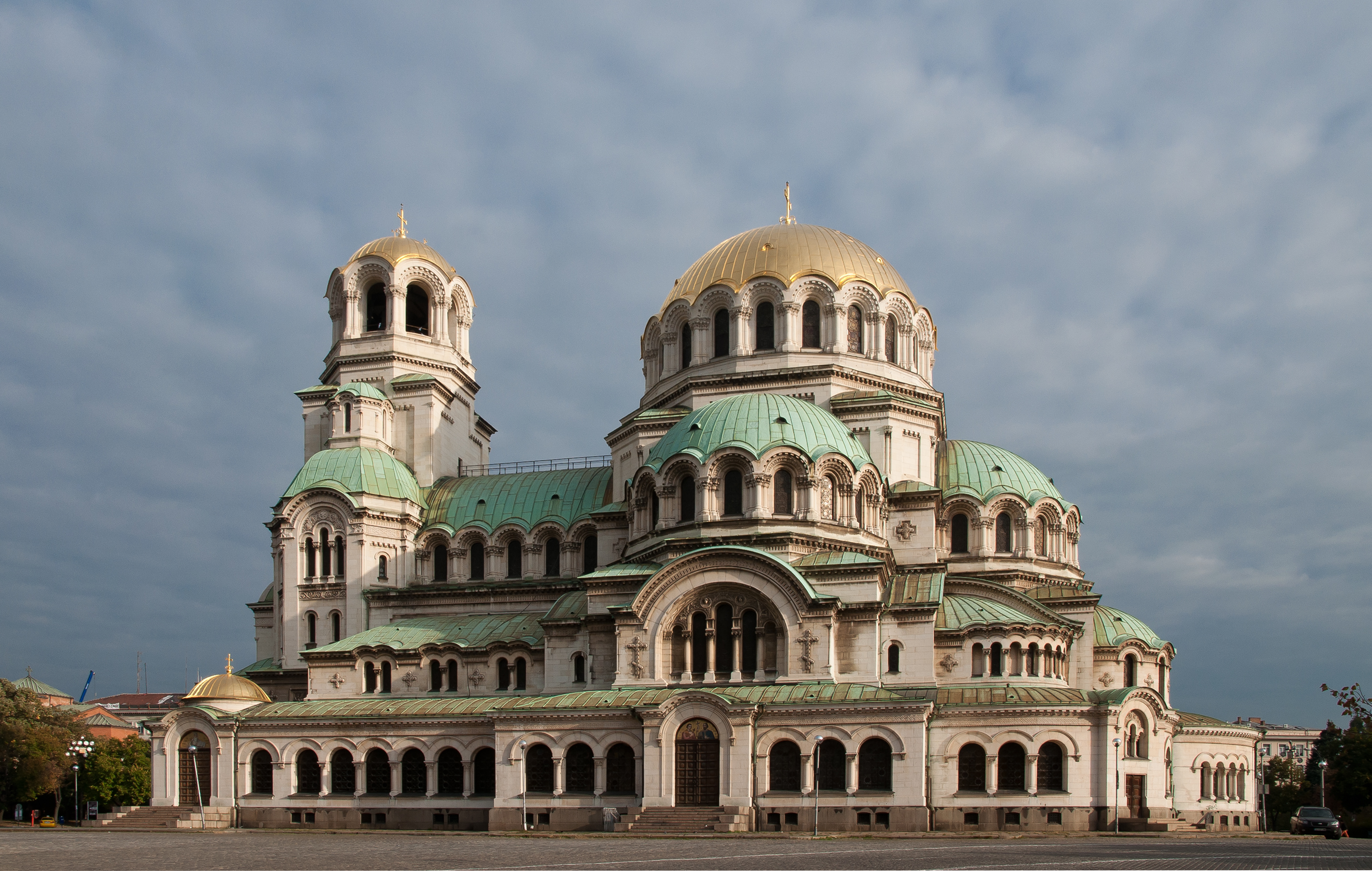
There are notable buildings named after Nevsky, mostly in places where the Russian Orthodox Church had a strong influence, as follows:
- Alexander Nevsky Lavra, Saint Petersburg, founded by Peter the Great in 1710
- Alexander Nevsky Cathedral, Sofia
- Alexander Nevsky Cathedral, Tallinn
- Alexander Nevsky Cathedral, Paris
- Cathedral of Alexander Nevsky (Volgograd)
- Alexander Nevsky Cathedral, Yalta
- Saint Alexander Nevsky Cathedral, Sofia
- Alexander Nevsky Cathedral, Allison Park
- Alexander Nevsky Cathedral, Howell
Gallery
Alexander nevskiy archangelskiy sobor.jpg|Saint Alexander Nevsky, 1666 fresco in the Cathedral of the Archangel, Moscow Moscow 1812 War museum asv2019-06 img9.jpg|Prince Alexander Nevsky receiving Papal legates, painting by Henryk Siemiradzki (1870s) Александр Невский (2010.06.26) - panoramio.jpg|A statue of Alexander Nevsky in Gorodets Александр Невский икона.jpg|Icon of Alexander Nevsky with scenes from his life - Nevyansk, Bogatyrev Workshop (1820s-30s) Alexander Nevsky vita icon.jpg|Icon of Alexander Nevsky with scenes - Pokrovsky Cathedral, Moscow (16th Century) Mosaic Icon (Iconostase of the Saviour on the Blood) 03.JPG|Mosaic icon on the iconostasis of the Savior on Spilled Blood "Alexander Nevsky" - Mikhail Nesterov (1894-1895)
Notes
References
Bibliography
Primary sources
- Livonian Rhymed Chronicle (LRC, 1290s).
- (Reprint: Hildesheim 1963). Verses 2235–2262.
Synod Scroll (Older Redaction) of the Novgorod First Chronicle (NPL, 1315).
Literature
References
- "Благоверный князь Алекса́ндр (в схиме Алекси́й) Невский".
- (1988). "Православные храмы Москвы". Изд. Московской Патриархии.
- "Grand Prince of Novgorod Alexander Nevsky was born". Presidential Library of Russia.
- (2002). "Dynasties of the world: a chronological and genealogical handbook". Oxford University Press.
- "Metropolitan Hilarion: Alexander Nevsky combined wisdom of a state ruler with personal holiness". [[Russian Orthodox Church]].
- (17 December 2024). "Should the name of Alexander Nevsky be changed?". Fakti.
- Begunov, K., translator, ''Second Pskovian Chronicle'', ("Isbornik", Moscow, 1955) pp. 11–15.
- Murray, Alan V.. (2006). "The Crusades [4 volumes]: An Encyclopedia [4 volumes]". [[Bloomsbury Publishing]].
- (2014). "The reign of Alexander Nevsky". Medieval Warfare.
- Feldbrugge, Ferdinand J. M.. (2017). "A History of Russian Law: From Ancient Times to the Council Code (Ulozhenie) of Tsar Aleksei Mikhailovich of 1649". [[Brill Publishers]].
- Line, Philip. (31 March 2007). "Kingship and State Formation in Sweden 1130-1290". [[Brill Publishers]].
- (24 November 2015). "Battle of the Neva, (1240)". War History.
- (6 December 2024). "December 6 - Alexander Nevsky Memorial Day: history and traditions of the holiday". [[Izvestia]].
- Riley-Smith Jonathan Simon Christopher. (1987). "The Crusades: a History". [[Yale University Press]].
- Figes, Orlando. (2022). "The Story of Russia". [[Metropolitan Books]].
- Tarkiainen, Kari. (2008). "Sveriges Österland. Från forntiden till Gustav Vasa". [[Society of Swedish Literature in Finland]].
- "History of the hotel". St. Danilovsky Monastery.
- "Repose of St Alexander Nevsky". Pravoslavie.
- "Translation of the relics of St Alexander Nevsky". The [[Orthodox Church in America]].
- "Святой благоверный великий князь Александр Невский — в схиме Алексий + Православный Церковный календарь".
- Guzeva, Alexandra. (18 May 2023). "Alexander Nevsky's shrine: Why Petersburg relic is leaving the Hermitage". [[Russia Beyond]].
- (13 September 2023). "Patriarch Kirill Places Relics of St. Alexander Nevsky in Newly Returned Sarcophagus".
- (6 December 2024). "Alexander Nevsky Memorial Day: what he did for Russia, what to pray for today". [[Izvestia]].
- "Presidential Library tells about transfer of relics of Holy Prince Alexander Nevsky to St. Petersburg". Presidential Library of Russia.
- (13 February 2024). "Alexander Nevsky ejected from the liturgical calendar of the Ukrainian Orthodox Church".
- Haughton, Tim. (23 March 2016). "Aftermath: Legacies and Memories of War in Europe, 1918–1945–1989". [[Routledge]].
- "The Order of St. Alexander Nevsky established". Presidential Library of Russia.
- Baumann, Robert F.. (November 2019). "Mobilizing History to Promote Patriotism and a New Past".
- Harty, Kevin J.. (13 August 2015). "The Reel Middle Ages: American, Western and Eastern European, Middle Eastern and Asian Films About Medieval Europe". [[McFarland & Company]].
- Donskis, L.. (25 May 2009). "Troubled Identity and the Modern World". [[Springer Science+Business Media]].
- (28 December 2008). "Stalin voted third-best Russian". [[BBC News]].
- (27 October 2022). "Alexander Nevsky of Russia, Reanimated and Repurposed". [[Woodrow Wilson International Center for Scholars]].
This article was imported from Wikipedia and is available under the Creative Commons Attribution-ShareAlike 4.0 License. Content has been adapted to SurfDoc format. Original contributors can be found on the article history page.
Ask Mako anything about Alexander Nevsky — get instant answers, deeper analysis, and related topics.
Research with MakoFree with your Surf account
Create a free account to save articles, ask Mako questions, and organize your research.
Sign up freeThis content may have been generated or modified by AI. CloudSurf Software LLC is not responsible for the accuracy, completeness, or reliability of AI-generated content. Always verify important information from primary sources.
Report