From Surf Wiki (app.surf) — the open knowledge base
Albania
Country in Southeast Europe
Country in Southeast Europe
| Field | Value | ||
|---|---|---|---|
| conventional_long_name | Republic of Albania | ||
| native_name | sq | ||
| common_name | Albania | ||
| image_flag | Flag of Albania.svg | ||
| alt_flag | Red flag with a black double-headed eagle in the centre | ||
| image_coat | [[File:Coat of arms of Albania.svg | 60px]] | |
| national_motto | |||
| "You Albania, you give me honour, | |||
| you give me the name Albanian" | |||
| national_anthem | "Himni i Flamurit" | ||
| "Hymn to the Flag" | |||
| [[File:Hymni i Flamurit instrumental.ogg]] | |||
| image_map | [[File:Location Albania Europe.png | 225px | frameless]] |
| map_caption | Location of Albania (green) | ||
| in Europe (dark grey) | |||
| capital | Tirana | ||
| largest_city | Tirana | ||
| coordinates | |||
| official_languages | Albanian | ||
| languages2_type | Recognised minority languages | ||
| languages2 | |||
| ethnic_groups | {{unbulleted list | ||
| ethnic_groups_ref | |||
| ethnic_groups_year | 2023 | ||
| religion | {{ublist | item_style=white-space:nowrap; | |
| religion_year | 2023 | ||
| religion_ref | |||
| demonym | Albanian | ||
| government_type | Unitary parliamentary republic | ||
| leader_title1 | President | ||
| leader_name1 | Bajram Begaj | ||
| leader_title2 | Prime Minister | ||
| leader_name2 | Edi Rama | ||
| legislature | Kuvendi | ||
| leader_title3 | Parliament Speaker | ||
| leader_name3 | Niko Peleshi | ||
| sovereignty_type | Establishment history | ||
| established_event1 | Principality of Arbanon | ||
| established_date1 | 1190 | ||
| established_event2 | Albanian principalities | ||
| established_date2 | 12th–15th centuries | ||
| established_event3 | Kingdom of Albania | ||
| established_date3 | February 1272 | ||
| established_event4 | Principality of Albania | ||
| established_date4 | 1359 | ||
| established_event5 | League of Lezhë | ||
| established_date5 | 2 March 1444 | ||
| established_event6 | Pashalik of Scutari/Janina/Berat | ||
| established_date6 | 1757/1787 | ||
| established_event7 | League of Prizren | ||
| established_date7 | 10 June 1878 | ||
| established_event8 | Independent Albania | ||
| established_date8 | 28 November 1912 | ||
| established_event9 | Principality of Albania | ||
| established_date9 | 29 July 1913 | ||
| established_event10 | 1st Republic of Albania | ||
| established_date10 | 31 January 1925 | ||
| established_event11 | Kingdom of Albania | ||
| established_date11 | 1 September 1928 | ||
| established_event12 | 2nd Republic of Albania | ||
| established_date12 | 10 January 1946 | ||
| established_event13 | 3rd Republic of Albania | ||
| established_date13 | 28 December 1976 | ||
| established_event14 | 4th Republic of Albania | ||
| established_date14 | 29 April 1991 | ||
| established_event15 | Current constitution | ||
| established_date15 | 28 November 1998 | ||
| area_km2 | 28,748 | ||
| area_sq_mi | 11,100 | ||
| area_rank | 140th | ||
| percent_water | 4.7 | ||
| population_census | 2,402,113 | ||
| population_census_year | 2023 | ||
| population_census_rank | 142nd | ||
| population_density_km2 | 83.6 | ||
| GDP_PPP | $66.290 billion | ||
| GDP_PPP_rank | 118th | ||
| GDP_PPP_year | 2026 | ||
| GDP_PPP_per_capita | $24,840 | ||
| GDP_PPP_per_capita_rank | 80th | ||
| GDP_nominal | $32.410 billion | ||
| GDP_nominal_rank | 125th | ||
| GDP_nominal_year | 2026 | ||
| GDP_nominal_per_capita | $12,150 | ||
| GDP_nominal_per_capita_rank | 79th | ||
| Gini_year | 2021 | ||
| Gini | 29.4 | ||
| Gini_change | decrease | ||
| Gini_ref | |||
| HDI_year | 2023 | ||
| HDI_change | increase | ||
| HDI | 0.810 | ||
| HDI_ref | |||
| HDI_rank | 71st | ||
| currency | Lek | ||
| currency_code | ALL | ||
| patron_saint | Our Lady of Good Counsel | ||
| time_zone | CET | ||
| utc_offset | +1 | ||
| time_zone_DST | CEST | ||
| utc_offset_DST | +2 | ||
| drives_on | right | ||
| calling_code | +355 | ||
| cctld | .al |
the country
"You Albania, you give me honour, you give me the name Albanian" "Hymn to the Flag" in Europe (dark grey) |97.7% Albanians |1.0% Greeks |1.3% others |
- 50.67% Islam
- 45.86% Sunni
- 4.81% Bektashism |
- 16.02% Christianity
- 8.39% Catholicism
- 7.23% Orthodoxy
- 0.40% Protestantism |
- 17.37% Irreligion
- 13.83% Believers without religion
- 3.55% Atheism | 15.92% Undeclared}}
Albania, officially the Republic of Albania, is a country in Southeast Europe. It is located in the Balkans, on the Adriatic and Ionian Seas within the Mediterranean Sea, and shares land borders with Montenegro to the northwest, Kosovo to the northeast, North Macedonia to the east and Greece to the south. With an area of 28748 sqkm, it has a varied range of climatic, geological, hydrological and morphological conditions. Albania's landscapes range from rugged snow-capped mountains in the Albanian Alps and the Korab, Skanderbeg, Pindus and Ceraunian Mountains, to fertile lowland plains extending from the Adriatic and Ionian seacoasts. Tirana is the capital and largest city in the country, followed by Durrës, Vlorë, and Shkodër.
Albania was inhabited by several Illyrian tribes, among them the Ardiaei, Bylliones, Dassaretii, Enchele, and Taulantians, with the Chaonians settled in the southwest. Several colonies were founded by the Ancient Greeks along the Albanian coast, most notably Apollonia. The Illyrians were the dominant power in Albania before the rise of Macedon. Following the Illyrian Wars, Albania was integrated into the Roman Empire and remained in the Byzantine Empire after its partition. During the Middle Ages, several Albanian principalities emerged, most notably the Principality of Arbanon, Kingdom of Albania, Principality of Albania and Albania Veneta. In the 15th century, Albania became a center of resistance against Ottoman expansion under the leadership of Gjergj Kastrioti Skanderbeg, whose military campaigns repelled Ottoman advances for over two decades. Although incorporated into the Ottoman Empire, Albania retained distinct cultural and social identities throughout four centuries of foreign rule, culminating in the Albanian Renaissance in the 19th century. Albania declared independence in 1912, followed by a turbulent 20th century marked by monarchy, foreign occupation during both World Wars, and a communist regime under Enver Hoxha.
Since its independence in 1912, Albania has undergone a number of political changes, transitioning from a monarchy to a communist regime before becoming a sovereign parliamentary constitutional republic. Governed by a constitution prioritising the separation of powers, the country's political structure includes a parliament, a ceremonial president, a functional prime minister and a hierarchy of courts. Albania is a developing country with an upper-middle income economy driven by the service sector, with manufacturing and tourism, which attracted over 11 million visitors in 2024, also playing significant roles. After the dissolution of its communist system the country shifted from centralised planning to an open market economy. Albanian citizens have universal health care access and free primary and secondary education. The country is an official candidate for membership in the European Union and has been negotiating accession since 2022. Etymology
Etymology
Main article: Names of the Albanians and Albania
The origin of the name "Albania" can be traced back to medieval Latin and the association with the Illyrian tribe of the Albani. This connection is further supported by the writings of the Ancient Greek geographer Ptolemy during the 2nd century AD, where he included the settlement of Albanopolis situated to the northeast of Durrës. The presence of a medieval settlement named Albanon or Arbanon hints at the possibility of historical continuity. The precise relationship between these historical references and the question of whether Albanopolis was synonymous with Albanon remain subjects of scholarly debate.
The Byzantine historian Michael Attaliates, in his 11th-century historical account, provides the earliest undisputed reference to the Albanians, when he mentions them as participants in a revolt against Constantinople in 1079. He also identifies the Arbanitai as subjects of the Duke of Dyrrachium. In the Middle Ages, Albania was denoted as Arbëri or Arbëni by its inhabitants, who identified themselves as Arbëreshë or Arbëneshë. Albanians employ the terms Shqipëri or Shqipëria for their nation, designations that trace their historical origins to the 14th century. But only in the late 17th and early 18th centuries did these terms gradually supersede Arbëria and Arbëreshë among Albanians. These two expressions are widely interpreted to symbolise "Children of the Eagles" and "Land of the Eagles".
History
Main article: History of Albania
Prehistory
Main article: Prehistoric Albania
Mesolithic habitation in Albania has been evidenced in several open-air sites which were close to the Adriatic coastline and in caves. Mesolithic objects found in a cave near Xarrë include flint and jasper objects along with fossilised animal bones, while those discoveries at Mount Dajt comprise bone and stone tools similar to those of the Aurignacian culture. The Neolithic era in Albania began around 7000 BC and is evidenced in finds which indicate domestication of sheep and goats and small-scale agriculture. A part of the Neolithic population may have been the same as the Mesolithic population of the southern Balkans, like in the Konispol cave, where the Mesolithic stratum co-exists with Pre-Pottery Neolithic finds. Cardium pottery culture appears in coastal Albania and across the Adriatic after 6500 BC, while the settlements of the interior took part in the processes that formed the Starčevo culture. The Albanian bitumen mines of Selenicë provide early evidence of bitumen exploitation in Europe, dating to Late Neolithic Albania (from 5000 BC), when local communities used it as pigment for ceramic decoration, waterproofing, and adhesive for repairing broken vessels. The bitumen of Selenicë circulated towards eastern Albania from the early 5th millennium BC. First evidence of its overseas trade export comes from the Neolithic and Bronze Age southern Italy. The high-quality bitumen of Selenicë has been exploited throughout all the historical ages since the Late Neolithic era until today.
The Indo-Europeanisation of Albania in the context of the IE-isation of the western Balkans began after 2800 BC. The presence of the Early Bronze Age tumuli in the vicinity of later Apollonia dates to 2679±174 calBC (2852–2505 calBC). These burial mounds belong to the southern expression of the Adriatic-Ljubljana culture (related to the later Cetina culture), which moved southwards along the Adriatic from the northern Balkans. The same community built similar mounds in Montenegro (Rakića Kuće) and northern Albania (Shtoj). The first archaeogenetic find related to the IE-isation of Albania involves a man with predominantly Yamnaya ancestry buried in a tumulus of northeastern Albania, which dates to 2663–2472 calBC. During the Middle Bronze Age, Cetina culture sites and finds appear in Albania. Cetina culture moved southwards across the Adriatic from the Cetina valley of Dalmatia. In Albania, Cetina finds are concentrated around southern Lake Shkodër and appear typically in tumulus cemeteries, such as in Shkrel and Shtoj, and hillforts like Gajtan (Shkodër), as well as cave sites like Blaz, Nezir, and Keputa (central Albania) and lake basin sites like Sovjan (southeastern Albania).
Antiquity
Main article: History of Albania#Antiquity
The incorporated territory of Albania was historically inhabited by Indo-European peoples, amongst them numerous Illyrian and Epirote tribes. There were also several Greek colonies. The territory referred to as Illyria corresponded roughly to the area east of the Adriatic Sea in the Mediterranean Sea, extending in the south to the mouth of the Vjosë. The first account of the Illyrian groups comes from the Periplus of the Euxine Sea, a Greek text written in the 4th century BC. Other colonies, such as Apollonia and Epidamnos, were established by Greek city-states on the coast by the 7th century BC.
The Illyrian Taulanti were a powerful Illyrian tribe among the earliest recorded tribes in the area. They lived in an area that corresponds with much of present-day Albania. Together with the Dardanian ruler Cleitus, Glaucias, the ruler of the Taulantian kingdom, fought against Alexander the Great at the Battle of Pelium in 335 BC. As time passed, the ruler of Ancient Macedonia, Cassander of Macedon, captured Apollonia and crossed the river Genusus () in 314 BC. A few years later, Glaucias laid siege to Apollonia and captured the Greek colony of Epidamnos.
The Illyrian Ardiaei tribe, centred in Montenegro, ruled over most of the territory of northern Albania. Their Ardiaean Kingdom reached its greatest extent under King Agron, the son of Pleuratus II. Agron extended his rule over other neighbouring tribes as well. Following Agron's death in 230 BC, his wife, Teuta, inherited the Ardiaean kingdom. Teuta's forces extended their operations further southwards to the Ionian Sea. In 229 BC, Rome declared war on the kingdom for extensively plundering Roman ships. The war ended in an Illyrian defeat in 227 BC. Teuta was eventually succeeded by Gentius in 181 BC. Gentius clashed with the Romans in 168 BC, initiating the Third Illyrian War. The conflict resulted in the Roman conquest of the region by 167 BC. The Romans split the region into three administrative divisions.
Middle Ages
Main article: Albania in the Middle Ages
The Roman Empire was split in 395 upon the death of Theodosius I into an Eastern and Western Roman Empire, in part because of the increasing pressure from threats during the Barbarian Invasions. From the 6th century into the 7th century, the Slavs crossed the Danube and largely absorbed the indigenous Greeks, Illyrians, and Thracians in the Balkans; thus, the Illyrians were mentioned for the last time in historical records in the 7th century.
In the 11th century, the Great Schism formalised the break of communion between the Eastern Orthodox and Western Catholic Church, which is reflected in Albania through the emergence of a Catholic north and Orthodox south. The Albanian people inhabited the west of Lake Ochrida and the upper valley of the River Shkumbin and established the Principality of Arbanon in 1190 under the leadership of Progon of Kruja. The realm was succeeded by his sons Gjin Progoni and Demetrio Progoni.
Upon the death of Dhimiter, the territory came under the rule of the Albanian-Greek Gregorios Kamonas and subsequently under the Golem of Kruja. In the 13th century, the principality was dissolved. Arbanon is considered to be the first sketch of an Albanian state, which retained a semi-autonomous status as the western extremity of the Byzantine Empire, under the Byzantine Doukai of Epirus or Laskarids of Nicaea.
Towards the end of the 12th and beginning of the 13th centuries, Serbs and Venetians began to take possession of the territory. The ethnogenesis of the Albanians is uncertain; however, the first undisputed mention of Albanians dates back in historical records from 1079 or 1080 in a work by Michael Attaleiates, who referred to the Albanoi as having taken part in a revolt against Constantinople. At this point, the Albanians were fully Christianised.
After the dissolution of Arbanon, Charles I of Anjou concluded an agreement with the Albanian rulers, promising to protect them and their ancient liberties. In 1272, he established the Kingdom of Albania and conquered regions back from the Despotate of Epirus. The kingdom claimed all of central Albania territory from Dyrrhachium along the Adriatic Sea coast down to Butrint. A Catholic political structure was a basis for the papal plans of spreading Catholicism in the Balkan Peninsula. This plan also found the support of Helen of Anjou. Around 30 Catholic churches and monasteries were built during her rule, mainly in northern Albania. Internal power struggles within the Byzantine Empire in the 14th century enabled Serbs' most powerful medieval ruler, Stefan Dušan, to establish a short-lived empire that included all of Albania except Durrës.
.png)
In 1367, Albanian rulers established the Despotate of Arta. During that time, several Albanian principalities were established, notably the Principality of Albania, the Principality of Kastrioti, the Lordship of Berat, and the Principality of Dukagjini. In the first half of the 15th century, the Ottoman Empire invaded most of Albania, and the League of Lezhë was organized under Skanderbeg as a ruler, who became the national hero of the Albanian medieval history.
Ottoman Empire
Main article: Albania under the Ottoman Empire
With the fall of Constantinople, the Ottoman Empire entered an extended period of military conquest and expansion, with its borders gradually expanding deep into Southeast Europe. In 1385, they reached the Albanian Ionian Sea Coast, while in 1415, they established their garrisons across Southern Albania, eventually occupying most of Albania in 1431. Thousands of Albanians consequently fled to Western Europe, particularly to Calabria, Naples, Ragusa, and Sicily, while numerous others sought protection at the often inaccessible Mountains of Albania. Since the vast majority of Albanians were adherents of Christianity, they were considered an inferior class of people, resulting in them being discriminated against in various forms, including being subjected to heavy taxes. Additionally, the Devshirme system allowed the Sultan to collect a requisite percentage of Christian adolescents from their families to compose the Janissary. The Ottoman conquest was also accompanied by the gradual process of Islamisation and the rapid construction of mosques.
A prosperous and longstanding revolution erupted after the formation of the League of Lezhë until the fall of Shkodër under the leadership of Gjergj Kastrioti Skanderbeg, who consistently defeated major Ottoman armies led by Sultans Murad II and Mehmed II. Skanderbeg managed to unite several of the Albanian principalities, amongst them the Arianitis, Dukagjinis, Zaharias, and Thopias, and establish a centralised authority over most of the non-conquered territories, becoming the Lord of Albania. The Ottoman Empire's expansion ground to a halt during the time that Skanderbeg's forces resisted, and he has been credited with being one of the main reasons for the delay of Ottoman expansion into Western Europe, giving the Italian principalities more time to better prepare for the Ottoman arrival. However, the failure of most European nations, with the exception of Naples, to adequately support him, along with the failure of Pope Pius II's plans to organise a promised crusade against the Ottomans, signified that none of Skanderbeg's victories permanently hindered the Ottomans from invading the Western Balkans.
Despite his competence as a military leader, Skanderbeg's victories over the Ottoman Empire's military had only a short-term impact, as his forces were unable to halt the Ottomans' advancement permanently; therefore, they successfully delayed the final conquest of Albanian lands only temporarily. The constant Ottoman invasions caused enormous destruction to Albania, greatly reducing the population and destroying flocks of livestock and crops. Besides surrender, there was no possible way Skanderbeg would be able to halt the Ottoman invasions despite his military forces achieving several consecutive victories against them. Among other factors, his manpower and resources were insufficient for a prolonged war, preventing him from expanding the war efforts and driving the Turks from the Albanian borders. Albania was therefore doomed to face an unending series of Ottoman attacks until it eventually fell years after his death.
When the Ottomans were gaining a firm foothold in the region, Albanian towns were organised into four principal sanjaks. The government fostered trade by settling a sizeable Jewish colony of refugees fleeing persecution in Spain. The city of Vlorë saw passing through its ports imported merchandise from Europe, such as velvets, cotton goods, mohairs, carpets, spices, and leather from Bursa and Constantinople. Some citizens of Vlorë even had business associates throughout Europe.
The phenomenon of Islamisation among the Albanians became primarily widespread from the 17th century and continued into the 18th century. Islam offered them equal opportunities and advancement within the Ottoman Empire. However, according to some scholars, motives for conversion were diverse depending on the context; although the lack of source material significantly hampers efforts to investigate such issues. As a result of the Ottomans' increasing suppression of Catholicism, most Catholic Albanians converted in the 17th century, while Orthodox Albanians followed suit mainly in the following century.
Since the Albanian-inhabited regions were considered strategically important, Albanians made up a significant proportion of the Ottoman Empire's military and bureaucracy. Consequently, many Muslim Albanians attained important political and military positions, while their work made a significant cultural contribution to the broader Muslim world. Enjoying this privileged position, they held various high administrative positions, which, among others, included over two dozen Albanians serving as Grand viziers of the Ottoman Empire. Additionally, other distinguished Albanians included members of the prominent Köprülü family, Zagan Pasha, Muhammad Ali of Egypt, and Ali Pasha of Tepelena. Furthermore, two Ottoman sultans, Bayezid II and Mehmed III, were born to mothers of Albanian ethnic backgrounds.
Rilindja
Main article: Albanian Renaissance
The Albanian Renaissance was a period with its roots in the late 18th century and continuing into the 19th century, during which the Albanian people gathered spiritual and intellectual strength for an independent cultural and political life within an independent nation. Modern Albanian culture flourished too, especially Albanian literature and arts, and was frequently linked to the influences of the Romanticism and Enlightenment principles. Prior to the rise of nationalism, Ottoman authorities suppressed any expression of national unity or conscience by the Albanian people.
The victory of Russia over the Ottoman Empire following the Russian-Ottoman Wars resulted the execution of the Treaty of San Stefano which assigned Albanian-populated lands to their Slavic and Greek neighbours. However, the United Kingdom and Austro-Hungarian Empire consequently blocked the arrangement and caused the Treaty of Berlin. From this point, Albanians started to organise themselves with the goal to protect and unite the Albanian-populated lands into a unitary nation, leading to the formation of the League of Prizren. The league had initially the assistance of the Ottoman authorities whose position was based on the religious solidarity of Muslim people and landlords connected with the Ottoman administration. They favoured and protected the Muslim solidarity and called for defence of Muslim lands simultaneously constituting the reason for titling the league Committee of the Real Muslims.
Approximately 300 Muslims participated in the assembly composed by delegates from Bosnia, the administrator of the Sanjak of Prizren as representatives of the central authorities and no delegates from Vilayet of Scutari. Signed by only 47 Muslim deputies, the league issued the Kararname that contained a proclamation that the people from northern Albania, Epirus and Bosnia and Herzegovina are willing to defend the territorial integrity of the Ottoman Empire by all possible means against the troops of Bulgaria, Serbia and Montenegro.
Ottomans authorities cancelled their assistance when the league, under Abdyl Frashëri, became focused on working towards Albanian autonomy and requested merging four vilayets, including Kosovo, Shkodër, Monastir and Ioannina, into a unified vilayet, the Albanian Vilayet. The league used military force to prevent the annexing areas of Plav and Gusinje assigned to Montenegro. After several successful battles with Montenegrin troops, such as the Battle of Novšiće, the league was forced to retreat from their contested regions. The league was later defeated by the Ottoman army sent by the sultan.
Independence
Main article: Independent Albania
Albania declared independence from the Ottoman Empire on 28 November 1912, accompanied by the establishment of the Senate and Government by the Assembly of Vlorë on 4 December 1912. Its sovereignty was recognised by the Conference of London. On 29 July 1913, the Treaty of London delineated the borders of the country and its neighbors, leaving many Albanians outside Albania, predominantly partitioned between Montenegro, Serbia, and Greece.
Headquartered in Vlorë, the International Commission of Control was established on 15 October 1913 to take care of the administration of Albania until its own political institutions were in order. The International Gendarmerie was established as the Principality of Albania's first law enforcement agency. In November, the first gendarmerie members arrived in the country. Prince of Albania Wilhelm of Wied (Princ Vilhelm Vidi) was selected as the first prince of the principality. On 7 March, he arrived in the provisional capital of Durrës and began to organise his government, appointing Turhan Pasha Përmeti to form the first Albanian cabinet.
In November 1913, the Albanian pro-Ottoman forces had offered the throne of Albania to the Ottoman war minister of Albanian origin, Ahmed Izzet Pasha. The pro-Ottoman peasants believed that the new regime was a tool of the six Christian Great Powers and local landowners, who owned half of the arable land.
In February 1914, the Autonomous Republic of Northern Epirus was proclaimed in Gjirokastër by the local Greek population against incorporation to Albania. This initiative was short-lived, and in 1921 the southern provinces were incorporated into the Albanian Principality. Meanwhile, the revolt of Albanian peasants against the new regime erupted under the leadership of the group of Muslim clerics gathered around Essad Pasha Toptani, who proclaimed himself the savior of Albania and Islam. To gain the support of the Mirdita Catholic volunteers from northern Albania, Prince Wied appointed their leader, Prênk Bibë Doda, foreign minister of the Principality of Albania. In May and June 1914, the International Gendarmerie was joined by Isa Boletini and his men, mostly from Kosovo, and the rebels defeated northern Mirdita Catholics, capturing most of Central Albania by the end of August 1914. Prince Wied's regime collapsed, and he left the country on 3 September 1914.
First Republic
Main article: Albanian Republic (1925–1928)
The interwar period in Albania was marked by persistent economic and social difficulties, political instability and foreign interventions. After World War I, Albania lacked an established government and internationally recognised borders, rendering it vulnerable to neighboring entities such as Greece, Italy, and Yugoslavia, all of which sought to expand their influence. This led to political uncertainty, highlighted in 1918 when the Congress of Durrës sought Paris Peace Conference protection but was denied, further complicating Albania's position on the international stage. Territorial tensions escalated as Yugoslavia, particularly Serbia, sought control of northern Albania, while Greece aimed dominance in southern Albania. The situation deteriorated in 1919 when the Serbs launched attacks on Albanian inhabitants, among others in Gusinje and Plav, resulting in massacres and large-scale displacement. Meanwhile, Italian influence continued to expand during this time, driven by economic interests and political ambitions.
Fan Noli, renowned for his idealism, became prime minister in 1924, with a vision to institute a Western-style constitutional government, abolish feudalism, counter Italian influence, and enhance critical sectors, including infrastructure, education and healthcare. He faced resistance from former allies, who had assisted in the removal of Zog from power, and struggled to secure foreign aid to implement his agenda. Noli's decision to establish diplomatic ties with the Soviet Union, an adversary of the Serbian elite, ignited allegations of bolshevism from Belgrade. This in turn led to increased pressure from Italy and culminated in Zog's restoration to authority. In 1928, Zog transitioned Albania from a republic to a monarchy that garnered backing from Fascist Italy, with Zog assuming the title of King Zog I. Key constitutional changes dissolved the Senate and established a unicameral National Assembly while preserving Zog's authoritative powers.
In 1939, Italy under Benito Mussolini launched a military invasion of Albania, resulting in the exile of Zog and the creation of an Italian protectorate. As World War II progressed, Italy aimed to expand its territorial dominion in the Balkans, including territorial claims on regions of Greece (Chameria), Macedonia, Montenegro and Kosovo. These ambitions laid the foundation of Greater Albania, which aimed to unite all areas with Albanian-majority populations into a single country. In 1943, as Italy's control declined, Nazi Germany assumed control of Albania, subjecting Albanians to forced labour, economic exploitation and repression under German rule. The tide shifted in 1944 when Albanian partisan forces, under the leadership of Enver Hoxha and other communist leaders, successfully liberated Albania from German occupation.
Socialist Republic
Main article: Communism in Albania
The establishment of the People's Republic of Albania under the leadership of Enver Hoxha was a significant epoch in modern Albanian history. Hoxha's regime embraced Marxist–Leninist ideologies and implemented authoritarian policies, including prohibition of religious practices, severe restrictions on travel, and abolition of private property rights. It was also defined by a persistent pattern of purges, extensive repression, instances of betrayal, and hostility to external influences. Any form of opposition or resistance to his rule was met with expeditious and severe consequences, such as internal exile, extended imprisonment, and execution. The regime confronted a multitude of challenges, including widespread poverty, illiteracy, health crises and gender inequality. In response, Hoxha initiated a modernisation initiative aimed at attaining economic and social liberation and transforming Albania into an industrial society. The regime placed a high priority on the diversification of the economy through Soviet-style industrialisation, comprehensive infrastructure development such as the introduction of a transformative railway system, expansion of education and healthcare services, elimination of adult illiteracy, and targeted advancements in areas such as women's rights.

Albania's diplomatic history under Hoxha was characterised by notable conflicts. Initially aligned with Yugoslavia as a satellite state, the relationship deteriorated as Yugoslavia aimed to incorporate Albania within its territory. Subsequently, Albania established relations with the Soviet Union and engaged trade agreements with other Eastern European countries, but experienced disagreements over Soviet policies, leading to strained ties with Moscow and diplomatic separation in 1961. Simultaneously, tensions with the West heightened due to Albania's refusal to hold free elections and allegations of Western support for anti-communist uprisings. Albania's enduring partnership was with China; it sided with Beijing during the Sino-Soviet conflict, resulting in severed ties with the Soviet Union and withdrawal from the Warsaw Pact in response to the invasion of Czechoslovakia in 1968. But their relations stagnated in 1970, prompting both to reassess their commitment, and Albania actively reduced its dependence on China.
Under Hoxha's regime, Albania underwent a widespread campaign targeting religious clergy of various faiths, resulting in public persecution and executions, particularly targeting Muslims, Roman Catholics and Eastern Orthodox adherents. In 1946, religious estates underwent nationalisation, coinciding with the closure or transformation of religious institutions into various other purposes. This culminated in 1976, when Albania became the world's first constitutionally atheist state. Under this regime, citizens were forced to renounce their religious beliefs, adopt a secular way of life, and embrace socialist ideology.
Fourth Republic
Main article: Fall of communism in Albania
After four decades of communism paired with the revolutions of 1989, Albania witnessed a notable rise in political activism, particularly among students, which led to a transformation in the prevailing order. After the first multi-party elections of 1991, the communist party maintained a stronghold in the parliament until its defeat in the parliamentary elections of 1992 directed by the Democratic Party. Considerable economic and financial resources were devoted to pyramid schemes that were widely supported by the government. The schemes swept up somewhere between one sixth and one third of the population of the country. Despite the International Monetary Fund's warnings, Sali Berisha defended the schemes as large investment firms, leading more people to redirect their remittances and sell their homes and cattle for cash to deposit in the schemes.
The schemes began to collapse in late 1996, leading many of the investors to join initially peaceful protests against the government, requesting their money back. The protests turned violent in February 1997 as government forces responded by firing on the demonstrators. In March, the Police and Republican Guard deserted, leaving their armories open. These were promptly emptied by militias and criminal gangs. The resulting civil war caused a wave of evacuations of foreign nationals and refugees.
The crisis led both Aleksandër Meksi and Sali Berisha to resign from office in the wake of the general election. In April 1997, Operation Alba, a U.N. peacekeeping force led by Italy, entered Albania with two goals: to assist with the evacuation of expatriates and secure the ground for international organisations. The main international organisation involved was the Western European Union's multinational Albanian Police element, which worked with the government to restructure the judicial system and simultaneously the Albanian police.
Contemporary
.jpg)
After its communist system disintegrated, Albania embarked on an active path towards Westernisation with the ambition to obtain membership in the European Union (EU) and the North Atlantic Treaty Organisation (NATO). A notable milestone was reached in 2009, when the country attained membership in NATO, marking a pioneering achievement among the nations of Southeast Europe. In adherence to its vision for further integration into the EU, it formally applied for membership on 28 April 2009. Another milestone was reached on 24 June 2014, when the country was granted official candidate status.
Edi Rama of the Socialist Party won both the 2013 and 2017 parliamentary elections. As prime minister, he implemented numerous reforms focused on modernising the economy, as well as democratising state institutions, including the judiciary and law enforcement. Unemployment has steadily declined, with Albania achieving the 4th-lowest unemployment rate in the Balkans. Rama has also placed gender equality at the centre of his agenda; since 2017 almost 50% of the ministers have been female, the largest number of women serving in the country's history. During the 2021 parliamentary elections, the ruling Socialist Party led by Rama secured its third consecutive victory, winning nearly half of votes and enough seats in parliament to govern alone.
On 26 November 2019, a 6.4 magnitude earthquake ravaged Albania, with the epicentre about 16 km southwest of the town of Mamurras. The tremor was felt in Tirana and in places as far away as Taranto, Italy, and Belgrade, Serbia, while the most affected areas were the coastal city of Durrës and the village of Kodër-Thumanë. Comprehensive response to the earthquake included substantial humanitarian aid from the Albanian diaspora and various countries around the world.
On 9 March 2020, COVID-19 was confirmed to have spread to Albania. From March to June 2020, the government declared a state of emergency as a measure to limit the virus's spread. The country's COVID-19 vaccination campaign started on 11 January 2021, but as of 11 August 2021, the total number of vaccines administered in Albania was 1,280,239 doses.
Geography
Main article: Geography of Albania
Albania lies along the Mediterranean Sea on the Balkan Peninsula in South and Southeast Europe, and has an area of 28748 km2. It is bordered by the Adriatic Sea to the west, Montenegro to the northwest, Kosovo to the northeast, North Macedonia to the east, Greece to the south, and the Ionian Sea to the southwest. It is between latitudes 42° and 39° N and longitudes 21° and 19° E. Geographic coordinates include Vërmosh at 42° 35' 34" northern latitude as the northernmost point, Konispol at 39° 40' 0" northern latitude as the southernmost, Sazan at 19° 16' 50" eastern longitude as the westernmost, and Vërnik at 21° 1' 26" eastern longitude as the easternmost. Mount Korab, rising at 2764 m above the Adriatic, is the highest point, while the Mediterranean Sea, at 0 m, is the lowest. The country extends 148 km from east to west and around 340 km from north to south.
Albania has a diverse and varied landscape with mountains and hills that traverse its territory in various directions. The country is home to extensive mountain ranges, including the Albanian Alps in the north, the Korab Mountains in the east, the Pindus Mountains in the southeast, the Ceraunian Mountains in the southwest, and the Skanderbeg Mountains in the centre. In the northwest is the Lake of Shkodër, Southern Europe's largest lake. Towards the southeast emerges the Lake of Ohrid, one of the world's oldest continuously existing lakes. Farther south, the expanse includes the Large and Small Lake of Prespa, some of the Balkans' highest lakes. Rivers rise mostly in the east and discharge into the Adriatic and Ionian Seas. The country's longest river, measured from mouth to source, is the Drin, which starts at the confluence of its two headwaters, the Black and White Drin. Of particular concern is the Vjosë, one of Europe's last intact large river systems.
In Albania forest cover is around 29.% of the total land area, equivalent to 788,900 hectares (ha) of forest in 2020, up from 788,800 hectares (ha) in 1990. Of the naturally regenerating forest 11% was reported to be primary forest (consisting of native tree species with no clearly visible indications of human activity) and around 0% of the forest area was found within protected areas. For the year 2015, 97% of the forest area was reported to be under public ownership, 3% private ownership and 0% with ownership listed as other or unknown.
Climate
Main article: Climate of Albania
The climate of Albania exhibits a distinguished level of variability and diversity due to the differences in latitude, longitude and altitude. Albania experiences a Mediterranean and Continental climate, characterised by the presence of four distinct seasons. According to the Köppen classification, Albania encompasses five primary climatic types, spanning from Mediterranean and subtropical in the western half to oceanic, continental and subarctic in the eastern half of the country. The coastal regions along the Adriatic and Ionian Seas in Albania are acknowledged as the warmest areas, while the northern and eastern regions encompassing the Albanian Alps and the Korab Mountains are recognised as the coldest areas in the country. Throughout the year, the average monthly temperatures fluctuate, ranging from -1 °C during the winter months to 21.8 °C in the summer months. Notably, the highest recorded temperature of 43.9 °C was observed in Kuçovë on 18 July 1973, while the lowest temperature of -29 °C was recorded in Shtyllë, Librazhd on 9 January 2017.
Albania receives most of the precipitation in winter months and less in summer months. The average precipitation is about 1485 mm. The mean annual precipitation ranges between 600 and depending on geographical location. The northwestern and southeastern highlands receive the intenser amount of precipitation, whilst the northeastern and southwestern highlands as well as the Western Lowlands the more limited amount. The Albanian Alps in the far north of the country are considered to be among the most humid regions of Europe, receiving at least 3100 mm of rain annually. Four glaciers within these mountains were discovered at a relatively low altitude of 2000 m, which is extremely rare for such a southerly latitude.
Biodiversity
Main article: Biodiversity of Albania
A biodiversity hotspot, Albania possesses an exceptionally rich and contrasting biodiversity on account of its geographical location at the centre of the Mediterranean Sea and the great diversity in its climatic, geological and hydrological conditions. Because of remoteness, the mountains and hills of Albania are endowed with forests, trees and grasses that are essential to the lives for a wide variety of animals, among others for two of the most endangered species of the country, the lynx and brown bear, as well as the wildcat, grey wolf, red fox, golden jackal, Egyptian vulture and golden eagle, the latter constituting the national animal of the country.
The estuaries, wetlands and lakes are extraordinarily important for the greater flamingo, pygmy cormorant and the extremely rare and perhaps the most iconic bird of the country, the dalmatian pelican. Of particular importance are the Mediterranean monk seal, loggerhead sea turtle and green sea turtle that use to nest on the country's coastal waters and shores.
In terms of phytogeography, Albania is part of the Boreal Kingdom and stretches specifically within the Illyrian province of the Circumboreal and Mediterranean Region. Its territory can be subdivided into four terrestrial ecoregions of the Palearctic realm namely within the Illyrian deciduous forests, Balkan mixed forests, Pindus Mountains mixed forests and Dinaric Mountains mixed forests.
Approximately 3,500 different species of plants can be found in Albania which refers principally to a Mediterranean and Eurasian character. The country maintains a vibrant tradition of herbal and medicinal practices. At the minimum 300 plants growing locally are used in the preparation of herbs and medicines. The trees within the forests are primarily fir, oak, beech and pine.
Conservation
Albania has been an active participant in numerous international agreements and conventions aimed at strengthing its commitment to the preservation and sustainable management of biological diversity. Since 1994, the country is a party to the Convention on Biological Diversity (CBD) and its associated Cartagena and Nagoya Protocols. To uphold these commitments, it has developed and implemented a comprehensive National Biodiversity Strategy and Action Plan (NBSAP). Furthermore, Albania has established a partnership with the International Union for Conservation of Nature (IUCN), advancing its conservation efforts on both national and international scales. Guided by the IUCN, the country has made substantial progress in the foundation of protected areas within its boundaries, encompassing 12 national parks among others Butrint, Karaburun-Sazan, Llogara, Prespa and Vjosa.
As a signatory to the Ramsar Convention, Albania has granted special recognition upon four wetlands, designating them as Wetlands of International Importance, including Buna-Shkodër, Butrint, Karavasta and Prespa. The country's dedication to protection extends further into the sphere of UNESCO's World Network of Biosphere Reserves, operating within the framework of the Man and the Biosphere Programme, evidenced by its engagement in the Ohrid-Prespa Transboundary Biosphere Reserve. Furthermore, Albania is host to two natural World Heritage Sites, which encompass the Ohrid region and both the Gashi River and Rrajca as part of Ancient and Primeval Beech Forests of the Carpathians and Other Regions of Europe.
Protected areas
Main article: Protected areas of Albania
The protected areas of Albania are areas designated and managed by the Albanian government. There are 12 national parks, 4 ramsar sites, 1 biosphere reserve and 786 other types of conservation reserves in Albania. Located in the north, the Albanian Alps National Park, comprising the former Theth National Park and Valbonë Valley National Park, is surrounded amidst the towering peaks of the Albanian Alps. In the east, portions of the rugged Korab, Nemërçka and Shebenik Mountains are conserved within the boundaries of Fir of Hotovë-Dangëlli National Park, Shebenik National Park and Prespa National Park, with the latter encompassing Albania's share of the Great and Small Lakes of Prespa.
To the south, the Ceraunian Mountains define the Albanian Ionian Sea Coast, shaping the landscape of Llogara National Park, which extends into the Karaburun Peninsula, forming the Karaburun-Sazan Marine Park. Further southward lies Butrint National Park, occupying a peninsula surrounded by the Lake of Butrint and the Channel of Vivari. In the west, stretching along the Albanian Adriatic Sea Coast, the Divjakë-Karavasta National Park boasts the extensive Lagoon of Karavasta, one of the largest lagoon systems in the Mediterranean Sea. Notably, Europe's first wild river national park, Vjosa National Park, safeguards the Vjosa River and its primary tributaries, which originates in the Pindus Mountains and flows to the Adriatic Sea. Dajti Mountain National Park, Lurë-Dejë Mountain National Park and Tomorr Mountain National Park protect the mountainous terrain of the centre of Albania, including the Tomorr and Skanderbeg Mountains.
Environmental issues
Main article: Environmental issues in Albania

Environmental issues in Albania notably encompass air and water pollution, climate change impacts, waste management shortcomings, biodiversity loss and imperative for nature conservation.
Climate change is predicted to exert significant impacts on the quality of life in Albania. Albania is one of the European countries most at risk and vulnerable to natural disasters. Natural disasters, such as floods, forest fires, and landslides, are increasing in Albania due to climate change, causing significant damage. Rising sea levels are anticipated to negatively impact coastal communities and the tourism industry.
In 2023 Albania emitted 7.67 million tonnes of greenhouse gases, equivalent to 2.73 tonnes per person, making it a relatively low emitting country. Albania has pledged a 20.9% reduction in GHG emissions by 2030, and net zero by 2050.
The country has a moderate and improving performance in the Environmental Performance Index with an overall ranking of 62 out of 180 countries in 2022. However, Albania's ranking has decreased since its highest placement at position 15 in the Environmental Performance Index of 2012.
Politics
Main article: Politics of Albania
| Bajram Begaj | |
|---|---|
| President | Edi Rama |
| Prime Minister |
Since declaring independence in 1912, Albania has experienced a significant political transformation, traversing through distinct periods that included a monarchical rule, a communist regime and the eventual establishment of a democratic order. In 1998, Albania transitioned into a sovereign parliamentary constitutional republic, marking a fundamental milestone in its political evolution. Its governance structure operates under a constitution that serves as the principal document of the country. The constitution is grounded in the principle of the separation of powers, with three arms of government that encompass the legislative embodied in the Parliament, the executive led by the President as the ceremonial head of state and the Prime Minister as the functional head of government, and the judiciary with a hierarchy of courts, including the constitutional and supreme courts as well as multiple appeal and administrative courts.
Albania's legal system is structured to protect its people's political rights, regardless of their ethnic, linguistic, racial, or religious affiliations. Despite these principles, there are significant human rights concerns in Albania that demand attention. These concerns include issues related to the independence of the judiciary, the absence of a free media sector and the enduring problem of corruption within various governmental bodies, law enforcement agencies and other institutions. As Albania pursues its path towards EU membership, active efforts are being made to achieve substantial improvements in these areas to align with EU criteria and standards.
Foreign relations
Main article: Foreign relations of Albania
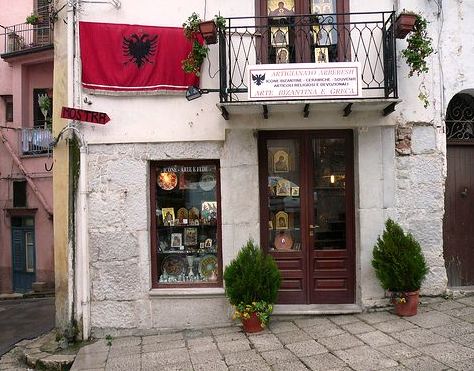
Emerging from decades of isolation following the fall of communism, Albania has adopted a foreign policy orientation centred on active cooperation and engagement in international affairs. At the core of Albania's foreign policies lie a set of objectives, which encompass the commitment to protect its sovereignty and territorial integrity, the cultivation of diplomatic ties with other countries, advocating for international recognition of Kosovo, addressing the concerns related to the expulsion of Cham Albanians, pursuing Euro-Atlantic integration and protecting the rights of the Albanians in Kosovo, Greece, Italy, Montenegro, North Macedonia, Serbia and the diaspora.
The external affairs of Albania underscore the country's dedication to regional stability and integration into major international institutions. Albania became a member of the United Nations (UN) in 1955, shortly after emerging from a period of isolation during the communist era. The country reached a major achievement in its foreign policy by securing NATO membership in 2009. Since obtaining candidate status in 2014, the country has also embarked on a comprehensive reform agenda to align itself with European Union (EU) accession standards, with the objective of becoming an EU member state.
Albania and Kosovo maintain a fraternal relationship strengthened by their substantial cultural, ethnical and historical ties. Both countries foster enduring diplomatic ties, with Albania actively supporting Kosovo's development and international integration efforts. Its fundamental contribution to Kosovo's path to independence is underscored by its early recognition of Kosovo's sovereignty in 2008. Furthermore, both governments hold annual joint meetings, displayed by the inaugural meeting in 2014, which serves as an official platform to enhance bilateral cooperation and reinforce their joint commitment to policies that promote the stability and prosperity of the broader Albanian region.
Military
Main article: Armed Forces of Albania
The Albanian Armed Forces consist of Land, Air and Naval Forces and constitute the military and paramilitary forces of the country. They are led by a commander-in-chief under the supervision of the Ministry of Defence and by the President as the supreme commander during wartime. However, in times of peace its powers are executed through the Prime Minister and the Defence Minister.
The chief purpose of the armed forces of Albania is the defence of the independence, the sovereignty and the territorial integrity of the country, as well as the participation in humanitarian, combat, non-combat and peace support operations. Military service is voluntary since 2010 with the age of 19 being the legal minimum age for the duty.
Albania has committed to increase the participations in multinational operations. Since the fall of communism, the country has participated in six international missions but only one United Nations mission in Georgia, where it sent three military observers. Since February 2008, Albania has participated officially in NATO's Operation Active Endeavor in the Mediterranean Sea. It was invited to join NATO on 3 April 2008, and it became a full member on 2 April 2009.
Albania reduced the number of active troops from 65,000 in 1988 to 14,500 in 2009. The military now consists mainly of a small fleet of aircraft and sea vessels. Increasing the military budget was one of the most important conditions for NATO integration. As of 1996 military spending was an estimated 1.5% of the country's GDP, only to peak in 2009 at 2% and fall again to 1.5%.
Human rights
Ride_2016.jpg)
Nearly 60% of women in rural areas suffer physical or psychological violence and nearly 8% are victims of sexual violence. Protection orders are often violated. In 2014 the Albanian Helsinki Committee (AHC) reported that the number of female murder victims is still high. The Commissioner for Protection from Discrimination has raised concerns regarding the family registration law that discriminates against women. As a result, heads of households, who are overwhelmingly men, have the right to change family residency without their partners' permission.
In 2015, the association ILGA-Europe ranked Albania 19th in terms of LGBT rights out of 49 observed European countries. On the latest report in 2022, lack of progress caused Albania to be ranked the 28th country in Europe, among 49 countries observed.
Administrative divisions
Main article: Administrative divisions of Albania
Albania is defined within a territorial area of 28748 km2 in the Balkan Peninsula. It is informally divided into three regions, the Northern, Central and Southern Regions. Since its Declaration of Independence in 1912, Albania has reformed its internal organisation 21 times. Presently, the primary administrative units are the twelve constituent counties (), which hold equal status under the law. Counties had previously been used in the 1950s and were recreated on 31 July 2000 to unify the 36 districts () of that time. The largest county in Albania by population is Tirana County with over 800,000 people. The smallest county, by population, is Gjirokastër County with over 70,000 people. The largest county, by area, is Korçë County encompassing 3711 km² of the southeast of Albania. The smallest county, by area, is Durrës County with an area of 766 km² in the west of Albania.
The counties are made up of 61 second-level divisions known as municipalities (). The municipalities are the first level of local governance, responsible for local needs and law enforcement. They unified and simplified the previous system of urban and rural municipalities or communes () in 2015. For smaller issues of local government, the municipalities are organised into 373 administrative units (njësia/njësitë administrative). There are also 2980 villages (), neighborhoods or wards (), and localities () previously used as administrative units.
| Emblem | County | Capital | Area | ||||||||||||||||||||||||||||||||||||||
|---|---|---|---|---|---|---|---|---|---|---|---|---|---|---|---|---|---|---|---|---|---|---|---|---|---|---|---|---|---|---|---|---|---|---|---|---|---|---|---|---|---|
| (km2) | Population (2023) | HDI (2022) | [[File:Flag of Albania.svg | 17px | alt=Flag of Albania]] | [[File:Stema e Qarkut Berat.svg | 17px | alt=Emblem of Berat County]] | [[File:ALB Qarku i Dibrës COA.svg | 17px | alt=Emblem of Dibër County]] | [[File:Stema e Qarkut Durrës.svg | 17px | alt=Emblem of Durrës County]] | [[File:Stema e Qarkut Elbasan.svg | 17px | alt=Emblem of Elbasan County]] | [[File:Stema e Qarkut Fier.svg | 17px | alt=Emblem of Fier County]] | [[File:Stema e Qarkut Gjirokastër.svg | 17px | alt=Emblem of Gjirokastër County]] | [[File:Stema e Qarkut Korçë.svg | 17px | alt=Emblem of Korçë County]] | [[File:Stema e Qarkut Kukës.svg | 17px | alt=Emblem of Kukës County]] | [[File:Stema e Qarkut Lezhë.svg | 17px | alt=Emblem of Lezhë County]] | [[File:Stema e Qarkut Shkodër.svg | 17px | alt=Emblem of Shkodër County]] | [[File:Stema e Qarkut Tiranë.svg | 17px | alt=Emblem of Tirana County]] | [[File:Stema e Qarkut Vlorë.svg | 17px | alt=Emblem of Vlorë County]] |
| **Albania (total)** | Tirana | 28,748 | **2,402,113** | **0.806** | |||||||||||||||||||||||||||||||||||||
| Berat | Berat | 1,798 | 140,956 | 0.793 | |||||||||||||||||||||||||||||||||||||
| Dibër | Peshkopi | 2,586 | 107,178 | 0.765 | |||||||||||||||||||||||||||||||||||||
| Durrës | Durrës | 766 | 226,863 | 0.813 | |||||||||||||||||||||||||||||||||||||
| Elbasan | Elbasan | 3,199 | 232,580 | 0.795 | |||||||||||||||||||||||||||||||||||||
| Fier | Fier | 1,890 | 240,377 | 0.779 | |||||||||||||||||||||||||||||||||||||
| Gjirokastër | Gjirokastër | 2,884 | 60,013 | 0.806 | |||||||||||||||||||||||||||||||||||||
| Korçë | Korçë | 3,711 | 173,091 | 0.801 | |||||||||||||||||||||||||||||||||||||
| Kukës | Kukës | 2,374 | 61,998 | 0.760 | |||||||||||||||||||||||||||||||||||||
| Lezhë | Lezhë | 1,620 | 99,384 | 0.780 | |||||||||||||||||||||||||||||||||||||
| Shkodër | Shkodër | 3,562 | 154,479 | 0.795 | |||||||||||||||||||||||||||||||||||||
| Tirana | Tirana | 1,652 | 758,513 | 0.832 | |||||||||||||||||||||||||||||||||||||
| Vlorë | Vlorë | 2,706 | 146,681 | 0.814 | |||||||||||||||||||||||||||||||||||||
| References: |
Economy
Main article: Economy of Albania

Transitioning from a socialist planned to a capitalist mixed economy, Albania is classified as a developing open market with an upper-middle income status. The Albanian economy is characterised by a substantial service sector, comprising 48.6% of GDP, with key contributions from wholesale and retail trade, tourism, real estate, and logistics. Following this, the industrial sector accounts for 20.2%, particularly influenced by construction, while the agricultural sector, including forestry, and fisheries, represents 18.5%, and the manufacturing sector contributes a modest 6.3% to the economy. As of 2025, Albania's nominal gross domestic product (GDP) is reported at $26.911 billion with a GDP per capita of $9,474. The projected annual percentage change in economic growth for 2025 is 3.8%, with a forecasted moderation to 3.5% by 2029.
Albania has developed a comprehensive framework for international trade through several pivotal agreements with various regions. The Stabilisation and Association Agreement (SAA) with the European Union (EU), signed in 2006, is one of the most significant. This agreement provides critical trade benefits and serves as a foundation for the Albanian integration into the EU. In 2009, Albania signed a free trade agreement (FTA) with the European Free Trade Association (EFTA), which further expands trade opportunities and market access. The country is also a signatory to the Central European Free Trade Agreement (CEFTA) and Organization of the Black Sea Economic Cooperation (BSEC), promoting regional trade and collaboration with neighboring countries. Fruthermore, the country has enhanced its bilateral trade relations through a FTA with Turkey, the United Kingdom and a bilateral investment treaty with the United States.
The 2023 Economic Freedom of the World report placed Albania in the 31st position, noting a considerable degree of economic independence and the effective adoption of market-oriented policies. The 2024 Bertelsmann Transformation Index ranked Albania 20th and acknowledged substantial progress in political and economic transformation. Also in 2024, the country was positioned 23rd in the Global Gender Gap Index, excelling in the Economic Participation and Opportunity category with a global ranking of 16th, showcasing significant advancements in women's economic participation. However, the Albanian economy, despite demonstrating considerable resilience, encounters substantial vulnerabilities that hinder its development. Principal challenges include widespread corruption, distorted competition, and frequent modifications to fiscal legislation. Furthermore, inadequate contract enforcement, a large informal sector, and persistent labor shortages further complicate the national economic progress.
Economic landscape of Albania is characterised by regional disparities, particularly apparent in the concentration of economic activities in the triangular region formed by Tirana, Durrës and Laç. This metropolitan area, referred to as Durana, functions as the principal economic center of Albania. In the year 2021, Tirana County accounted for a significant 44% of the national GDP, with the counties of Fier and Durrës also playing integral roles in the economy, contributing 11% and 10% to the GDP, respectively. Other substantial economic centers, such as Elbasan and the coastal cities of Sarandë and Vlorë, highlight the uneven distribution of economic development across the country. Cultural regions, including Berat and Korçë, despite their geographical distance from the primary economic hubs, have derived considerable benefits from the expansion of the tourism sector.
Primary sector
Main article: Agriculture in Albania
Albania produces significant amounts of fruits (apples, olives, grapes, oranges, lemons, apricots, peaches, cherries, figs, sour cherries, plums, and strawberries), vegetables (potatoes, tomatoes, maize, onions, and wheat), sugar beets, tobacco, meat, honey, dairy products, traditional medicine and aromatic plants. Further, the country is a worldwide significant producer of salvia, rosemary and yellow gentian. The country's proximity to the Ionian Sea and the Adriatic Sea give the underdeveloped fishing industry great potential. The World Bank and European Community economists report that, Albania's fishing industry has good potential to generate export earnings because prices in the nearby Greek and Italian markets are many times higher than those in the Albanian market. The fish available off the coasts of the country are carp, trout, sea bream, mussels and crustaceans.
Albania has one of Europe's longest histories of viticulture. Today's region was one of the few places where vine was naturally grown during the ice age. The oldest found seeds in the region are 4,000 to 6,000 years old. In 2009, the nation produced an estimated 17,500 tonnes of wine.
Secondary sector
Albania's secondary sector has undergone many changes and diversification since the communist regime collapsed. It is very diversified, from electronics, manufacturing, textiles, to food, cement, mining, and energy. The Antea Cement plant in Fushë-Krujë is considered one of the nation's largest industrial greenfield investments. Albanian oil and gas is one of the most promising, albeit strictly regulated, sectors of its economy. Albania has the second-largest oil deposits in the Balkan peninsula after Romania, and the largest oil reserves in Europe. The Albpetrol company is owned by the Albanian state and monitors the state petroleum agreements in the country. The textile industry has seen an extensive expansion by approaching companies from the European Union (EU) in Albania. According to the Instituti i Statistikës (INSTAT), , textile production had an annual growth of 5.3% and an annual turnover of around 1.5 billion euros.
Albania is a significant minerals producer and ranks among the world's leading chromium producers and exporters. The nation is also a notable producer of copper, nickel, and coal. The Batra mine, Bulqizë mine, and Thekna mine are among the most recognised Albanian mines still in operation.
Tertiary sector
The tertiary sector represents the fastest growing sector of the country's economy. 36% of the population work in the service sector which contributes to 65% of the country's GDP. Ever since the end of the 20th century, the banking industry is a major component of the tertiary sector and remains in good conditions overall due to privatisation and the commendable monetary policy.
Previously one of the most isolated and controlled countries in the world, telecommunication industry represents nowadays another major contributor to the sector. It developed largely through privatisation and subsequent investment by both domestic and foreign investors. Eagle, Vodafone and Telekom Albania are the leading telecommunications service providers in the country.
Tourism is recognised as an industry of national importance and has been steadily increasing since the beginnings of the 21st century. It directly accounted for 8.4% of GDP in 2016 though including indirect contributions pushes the proportion to 26%. In the same year, the country received approximately 4.74 million visitors mostly from across Europe and the United States as well.
The increase of foreign visitors has been dramatic. Albania had only 500,000 visitors in 2005, and an estimated 4.2 million in 2012, an increase of 740 percent. According to the United Nations World Tourism Organization (UN Tourism), Albania welcomed approximately 11.7 million tourists in 2024, marking a significant increase from previous years.
The bulk of the tourist industry is concentrated along the Adriatic and Ionian Sea in the west of the country. But the Albanian Riviera in the southwest has the most scenic and pristine beaches; its coastline has a considerable length of 446 km. The coast has a distinctive character, rich in varieties of virgin beaches, capes, coves, covered bays, lagoons, small gravel beaches, sea caves, and many landforms. Some parts of this seaside are very clean ecologically, including unexplored areas, which are very rare within the Mediterranean. Other attractions include the mountainous areas such as the Albanian Alps, Ceraunian Mountains and Korab Mountains but also the historical cities of Berat, Durrës, Gjirokastër, Sarandë, Shkodër and Korçë.
Transport
Main article: Transport in Albania
Transportation in Albania is managed within the functions of the Ministry of Infrastructure and Energy and entities such as the Albanian Road Authority (ARRSH), responsible for the construction and maintenance of the highways and motorways in Albania, as well as the Albanian Aviation Authority (AAC), with the responsibility of coordinating civil aviation and airports in the country.
The international airport of Tirana is the premier air gateway to the country, and is also the principal hub for Albania's national flag carrier airline, Air Albania. The airport carried more than 3.3 million passengers in 2019 with connections to many destinations in other countries around Europe, Africa and Asia. The country plans to progressively increase the number of airports especially in the south with possible locations in Sarandë, Gjirokastër and Vlorë.
The highways and motorways in Albania are properly maintained and often still under construction and renovation. The Autostrada 1 (A1) is an integral transportation corridor and the country's longest motorway. It is planned to link Durrës on the Adriatic Sea across Pristina in Kosovo with the Pan-European Corridor X in Serbia. The Autostrada 2 (A2) is part of the Adriatic–Ionian Corridor as well as the Pan-European Corridor VIII and connects Fier with Vlorë. The Autostrada 3 (A3) is under construction and after its completion will connect Tirana and Elbasan with the Pan-European Corridor VIII. When all three corridors are completed, Albania will have an estimated 759 km of highway, linking it with all neighboring countries.
Durrës is the busiest and largest seaport in the country, followed by Vlorë, Shëngjin and Sarandë. The rail network is administered by the national railway company Hekurudha Shqiptare. A new railway line from Tirana and its airport to Durrës is planned. The location of this railway, connecting Albania's most populated urban areas, makes it an important economic development project.
Energy
Main article: Renewable energy in Albania
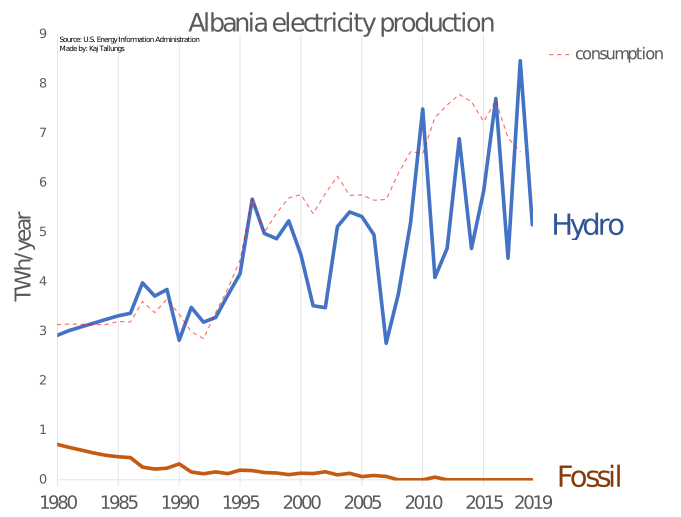
Due to its location and natural resources, Albania has a wide variety of energy resources, ranging from gas, oil, and coal to wind, solar, water, and other renewable sources. According to the World Economic Forum's 2023 Energy Transition Index (ETI), the country ranked 21st globally, highlighting the progress in its energy transition agenda. Currently, Albania's electricity generation sector depends on hydroelectricity, ranking fifth in the world in percentage terms. Increasing risks of river floods and droughts due to climate change is expected to put electricity generation at risk. The Drin, in the north, hosts four hydroelectric power stations, including Fierza, Koman, Skavica and Vau i Dejës. Two other power stations, such as the Banjë and Moglicë, are along the Devoll in the south.
Albania has considerable oil deposits. It has the 10th-largest oil reserves in Europe and the 58th in the world. The country's main petroleum deposits are located around the Albanian Adriatic Sea Coast and Myzeqe Plain within the Western Lowlands, where the country's largest reserve is located. Patos-Marinza, also located within the area, is the largest onshore oil field in Europe. The Trans Adriatic Pipeline (TAP), part of the planned Southern Gas Corridor, runs for 215 km across Albania's territory before entering the Albanian Adriatic Sea Coast approximately 17 km northwest of Fier.
Albania's water resources are particularly abundant in all the regions of the country and comprise lakes, rivers, springs, and groundwater aquifers. The country's available average quantity of fresh water is estimated at 129.7 m3 per inhabitant per year, one of the highest rates in Europe. According to data presented by the Joint Monitoring Programme for Water Supply and Sanitation (JMP) in 2015, about 93% of the country's total population had access to improved sanitation.
Media
Main article: Media in Albania
The freedom of press and speech, and the right to free expression is guaranteed in the constitution of Albania. Albania was ranked 84th on the Press Freedom Index of 2020 compiled by the Reporters Without Borders, with its score steadily declining since 2003. Nevertheless, in the 2020 report of Freedom in the World, the Freedom House classified the freedoms of press and speech in Albania as partly free from political interference and manipulation.
Radio Televizioni Shqiptar (RTSH) is the national broadcaster corporation of Albania operating numerous television and radio stations in the country. The three major private broadcaster corporations are Top Channel, Televizioni Klan and Vizion Plus whose content are distributed throughout Albania and beyond its territory in Kosovo and other Albanian-speaking territories.
Albanian cinema has its roots in the 20th century and developed after the country's declaration of independence. The first movie theater exclusively devoted to showing motion pictures was built in 1912 in Shkodër. During the People's Republic of Albania, Albanian cinema developed rapidly with the inauguration of the Kinostudio Shqipëria e Re in Tirana. In 1953, the Albanian-Soviet epic film, the Great Warrior Skanderbeg, was released chronicling the life and fight of the medieval Albanian hero Skanderbeg. It went on to win the international prize at the 1954 Cannes Film Festival. In 2003, the Tirana International Film Festival was established, the largest film festival in the country. The Durrës Amphitheatre is host to the Durrës International Film Festival, the second largest film festival.
Technology
Main article: Science and technology in Albania, Telecommunications in Albania
After the fall of communism in 1991, human resources in sciences and technology in Albania have drastically decreased. As of various reports, during 1991 to 2005 approximately 50% of the professors and scientists of the universities and science institutions in the country have left Albania. Albania was ranked 67th in the Global Innovation Index in 2025.
Telecommunication represents one of the fastest growing and dynamic sectors in Albania. Vodafone Albania, Telekom Albania and Albtelecom are the three large providers of mobile and internet in Albania. As of the Electronic and Postal Communications Authority (AKEP) in 2018, the country had approximately 2.7 million active mobile users with almost 1.8 million active broadband subscribers. Vodafone Albania alone served more than 931,000 mobile users, Telekom Albania had about 605,000 users and Albtelecom had more than 272,000 users. In January 2023, Albania launched its first two satellites, Albania 1 and Albania 2, into orbit, in what was regarded as a milestone effort in monitoring the country's territory and identifying illegal activities. Albanian-American engineer Mira Murati, the Chief Technology Officer of research organisation OpenAI, played a substantial role in the development and launch of artificial intelligence services such as ChatGPT, Codex and DALL-E. In December 2023, Prime Minister Edi Rama announced plans for collaboration between the Albanian government and ChatGPT, facilitated by discussions with Murati. Rama emphasised the intention to streamline the alignment of Albanian laws with the regulations of the European Union, aiming to reduce costs associated with translation and legal services.
Demographics
Main article: Demographics of Albania
The demographic statistics of Albania, as revealed by the 2023 census conducted by the Instituti i Statistikave (INSTAT), indicated a population of 2,402,113, with a notable decline from the 2,821,977 recorded in the 2011 census. The decrease in inhabitants began after the disintegration of the communist regime in Albania and is associated with significant shifts within the political, economic, and social structure of Albania. A principal factor in this transition incorporates a decline in fertility rates coupled with an increase in emigration, both contributing to persistent demographic changes and challenges. It is forecast that the population will continue shrinking for the next decade at least, depending on the actual rates and the level of migration. Currently, the population density of Albania is measured at 83.6 inhabitants per square kilometer with a varied distribution of inhabitants across different regions. The counties of Tirana and Durrës showcase substantial concentrations of people, accounting for about 41% of the overall demographic of Albania, with 32% residing in Tirana and 9% in Durrës. Conversely, more peripheral and rural counties such as Gjirokastër and Kukës present significantly lower population densities, with each aiding 3% to the overall population.
Historically, the Albanian people have established several communities in many regions throughout Southern Europe. The Albanian diaspora has been formed since the late Middle Ages, when they emigrated to escape either various socio-political difficulties or the Ottoman conquest of Albania. Following the fall of communism, large numbers of Albanians have migrated to countries such as Australia, Canada, Switzerland, the United Kingdom and the United States. Albanian minorities are present in the neighbouring territories such as the west of North Macedonia, the southeast of Montenegro, Kosovo in its entirety and parts of southern Serbia. Altogether, the number of ethnic Albanians living abroad is estimated to be higher than the total population inside Albania. As much as a third of those born in the country's borders now live outside of it, making Albania one of the countries with the highest rate of outmigration relative to its population in the world. In 2022 the birth rate was 20% lower than in 2021, largely due to emigration of people of childbearing age.
Urbanisation
Main article: List of cities and towns in Albania
Subsequent to the collapse of communism in 1991, Albania has undergone a remarkable transformation in its urban landscape, emerging as one of the fastest urbanising countries in Europe. At the forefront of this transformation is the Tirana-Durrës agglomeration, a densely populated urban corridor situated along the western coast of Albania. This corridor has become the primary locus of population growth and settlement development, attracting a significant influx of internal migrants from the country's peripheral areas. Despite an overall decline of the country's total population, the proportion of the urban demographic has consistently progressed from 47% in 2001 to 65% in 2023. This sustained increase, coupled with the concentration in the Tirana-Durrës region, has led to a spread of regional imbalances, with the peripheral areas, particularly Dibër and Kukës, experiencing severe depopulation.
Language
Main article: Languages of Albania
The official language of the country is Albanian which is spoken by the vast majority of the country's population. Its standard spoken and written form is revised and merged from the two main dialects, Gheg and Tosk, though it is notably based more on the Tosk dialect. The Shkumbin river is the rough dividing line between the two dialects. Among minority languages, Greek is the second most-spoken language in the country, with 0.5 to 3% of the population speaking it as first language, mainly in the country's south where its speakers are concentrated. Other languages spoken by ethnic minorities in Albania include Aromanian, Serbo-Croatian, Macedonian, Bulgarian, Gorani, and Roma. Macedonian is official in the Pustec Municipality in East Albania. In the 2023 population census, 91.07% reported Albanian as the language spoken at home. 1.54% declared to speak at home another language, 0.57% multiple languages, 1.21% gave no answer and 5.59% were unavailable.
Among young people aged 25 or less, English, German and Turkish have seen rising interest after 2000. Italian and French have had a stable interest, while Greek has lost much of its previous interest. The trends are linked with cultural and economic factors.
In the mid-2010s, an increasing number of Albanians showed interest in learning the German language, which has been explained as part of "a Western Balkan trend of preparing to integrate into the German labor market". Some of them have gone to Germany for studies or work. Albania and Germany have agreements for cooperating in helping young people of the two countries know both cultures better. Due to a sharp rise in economic relations with Turkey, interest in learning Turkish, in particular among young people, was also growing on a yearly basis in the 2010s.
Minorities
Main article: Minorities of Albania
Designated national and cultural minorities in Albania include Aromanian, Greek, Macedonian, Montenegrin, Serb, Roma, Egyptian, Bosnian and Bulgarian peoples, as well as Gorani and Jews as other minority groups. The 2023 census recorded the ethnic composition as Albanians 2,186,917 (91,04% of the total), Greeks 23,485 (0,98%), Macedonians 2,281 (0,09%), Montenegrins 511 (0,02%), Aromanians 2,459 (0,1%), Roma 9,813 (0.4%), Balkan Egyptians 12,375 (0,5%), Bosnians 2,963 (0,12%), Serbians 584 (0,02%), Bulgarians 7,057 (0,29%), mixed ethnicities 770 (0.03%), other ethnicities 3,798 (0.15%), and 134,451 (5.60%) with unspecified ethnicity, out of a total population of 2,402,113.
Religion
Main article: Religion in Albania
Albania is a secular and religiously diverse country with no official religion. Freedom of religion, belief and conscience are guaranteed under the country's constitution. As of the 2023 Census, there were 1,101,718 (45.86%) Sunni Muslims, 201,530 (8.38%) Catholics, 173,645 (7.22%) Eastern Orthodox, 115,644 (4.81%) Bektashi Muslims, 9,658 (0.4%) Evangelicals, 3,670 (0.15%) of other religions, 332,155 (13.82%) believers without religion or denomination, 85,311 (3.55%) Atheists and 378,782 (15.76%) did not provide an answer. Albania is nevertheless ranked among the least religious countries in the world. Religion constitute an important role in the lives of only 39% of the country's population. In another report, 56% considered themselves religious, 30% considered themselves non-religious, while 9% defined themselves as convinced atheists. 80% believed in God.
The Muslim Albanians are spread throughout the country. Orthodox and Bektashis are mostly found in the south, whereas Catholics mainly live in the north. In 2008, there were 694 Catholic churches and 425 Orthodox churches, 568 mosques and 70 bektashi takyas in the country.
During modern times, the Albanian republican, monarchic and later communist regimes followed a systematic policy of separating religion from official functions and cultural life. The country has never had an official religion either as a republic or as a kingdom. In the 20th century, the clergy of all faiths was weakened under the monarchy and ultimately eradicated during the 1950s and 1960s, under the state policy of obliterating all organised religion from the territories of Albania. The communist regime persecuted and suppressed religious observance and institutions and entirely banned religion. The country was then officially declared to be the world's first atheist state. Religious freedom has returned, however, since the end of communism.
Islam survived communist era persecution and reemerged in the modern era as a practised religion in Albania. Some smaller Christian sects in Albania include Evangelicals and several Protestant communities including Seventh-day Adventist Church, Church of Jesus Christ of Latter-day Saints and Jehovah's Witnesses. The first recorded Protestant of Albania was Said Toptani, who travelled around Europe and returned to Tirana in 1853, where he preached Protestantism. The first evangelical Protestants appeared in the 19th century and the Evangelical Alliance was founded in 1892. Nowadays, it has 160 member congregations from different Protestant denominations. Following mass emigration to Israel after the fall of communism, there are only 200 Albanian Jews left in the country.
Education
Main article: Education in Albania
In Albania, education is secular, free, compulsory, and based on three levels. The academic year is apportioned into two semesters, beginning in September or October and ending in June or July. Albanian is the primary language of instruction in the country's academic institutions. The study of a first foreign language is mandatory and taught most often at elementary and bilingual schools. Languages taught in schools are English, Italian, French and German. Albania has a school life expectancy of 16 years and a literacy rate of 98.7%, with 99.2% for men and 98.3% for women.
Compulsory primary education is divided into two levels, elementary and secondary school, from grade one to five and six to nine, respectively. Pupils are required to attend school from the age six until they turn 16. Upon successful completion of primary education, all pupils are entitled to attend high schools, specialising in any field, including arts, sports, languages, sciences, and technology.
Tertiary education is optional and has undergone a thorough reformation and restructuring in compliance with the principles of the Bologna Process. There are a significant number of private and public institutions of higher education in Albania's major cities. Tertiary education is organised into three successive levels, the bachelor, master, and doctorate.
Health
Main article: Health in Albania
The constitution of Albania guarantees its citizens equal, free, and universal health care. The health care system is organised into primary, secondary, and tertiary healthcare, and is in a process of modernisation and development. The life expectancy at birth in Albania is 77.8 years, ranking 37th in the world and surpassing several developed countries. The average healthy life expectancy is 68.8 years, ranking 37th in the world. The country's infant mortality rate was estimated at 12 per 1,000 live births in 2015. In 2000, the country had the world's 55th-best healthcare performance, as defined by the World Health Organisation (WHO).
Cardiovascular disease is the principal cause of death in Albania, accounting for 52% of deaths. Accidents, injuries, malignant and respiratory diseases are other primary causes of death. Neuropsychiatric disease has also increased due to recent demographic, social, and economic changes in the country.
In 2009, Albania had a fruit and vegetable supply of 886 grams per capita per day, the fifth-highest supply in Europe. Compared to other developed and developing countries, Albania has a relatively low rate of obesity, probably thanks to the Mediterranean diet. According to 2016 WHO data, 21.7% of adults in the country are clinically overweight, with a Body mass index (BMI) score of 25 or more.
Culture
Main article: Culture of Albania
Symbols
Main article: National symbols of Albania
The red and black national colours are displayed on the flag of Albania that is adorned with a double-headed eagle as the foremost recognised national symbol of Albania. With the black eagle portraying bravery and strength, the red field symbolises the fortitude and sacrifices of the Albanian people. The eagle is linked with the legacy of the national hero Gjergj Kastrioti, renowned as Skanderbeg, who led a prosperous resistance movement against Ottoman rule. Rooted in the Middle Ages, it emerged as a heraldic symbol in the Principality of Arbër and among notable Albanian dynasties such as the Dukagjini, Kastrioti, Muzaka and Thopia clans. Amid the Albanian Renaissance, marking the resurgence of Albanian national identity and aspirations for independence, the Albanian eagle regained its prominence. Its importance reached its culmination with Albania's declaration of independence in 1912, when Ismail Qemali raised it as the national flag in Vlorë.
The coat of arms of Albania is an adaptation of the flag of Albania and the seal of Skanderbeg. The coat comprises the black double-headed eagle positioned at the centre of a red field. Above the eagle, it carries the helmet of Skanderbeg that is crowned with the head of a golden horned goat. Ti Shqipëri, më jep nder, më jep emrin Shqipëtar, which translates to "You Albania, give me honour, give me the name Albanian", is the national motto of Albania. It finds its foundation in the legacy of national poet Naim Frashëri, who held a renowned role during the Albanian Renaissance. The national anthem of Albania, "Himni i Flamurit", was composed by Asdreni and adopted as such following Albania's independence in 1912.
Clothing
Main article: Albanian national clothing
Albanian traditional clothing, with its contrasting variations for the northern Gheg and southern Tosk Albanians, is a testament to Albania's history, cultural diversity and ethnic identity.{{cite book |last=Gjergji |first=Andromaqi |author-link=Andromaqi Gjergji |publisher=Academy of Sciences of Albania |year=2004 |title=Albanian Costumes Through the Centuries: Origin, Types, Evolution |isbn=978-99943-614-4-1 |pages=153 |url=https://books.google.com/books?id=vc3fAAAAMAAJ |access-date=23 September 2023 |archive-url=https://web.archive.org/web/20230312175750/https://books.google.com/books?id=vc3fAAAAMAAJ |archive-date=12 March 2023 |url-status=live}} Gheg men wear a light-colored shirt paired with wide loose-fitting trousers referred to as the Tirq. These trousers are securely fastened by a wide woven belt, the Brez. An integral component of their costume is the Xhamadan, a woolen red velvet vest adorned with folkloric motifs and gold patterns. They also wear a distinctive dome-shaped hat known as the Qeleshe, crafted from wool, with its origins tracing back to the Illyrians. Conversely, Tosk men opt for the Fustanella, a knee-length garment designated as the national costume, typically white with pleats, accompanied by a white shirt. They also wear a beige or dark blue Xhamadan reminiscent of the Gheg attire. To complete their attire, men wear knee-high socks referred to as Çorape and leather shoes known as Opinga.
The attire of Gheg and Tosk women is renowned for its rich palette of colors and intricate filigree detailing, displayed across various components including ear ornaments, finger rings, necklaces, belt buckles and buttons. Key components include a long, light-toned shirt paired with an apron, often accompanied by a woolen or felt mantle referred to as the Xhoka. Additional upper garments, such as the Dollama or Mintan, may be layered, along with a headscarf known as Kapica or Shall. A distinctive variation incorporates a pair of aprons, including the Pështjellak at the rear and the Paranik at the front. Integral to the traditional attire of Gheg women is the ancient Xhubleta. Dedicated efforts have been undertaken to preserve and promote the dress, acknowledging its significance as an emblem of Albanian heritage. As a testament to its importance, the Xhubleta has been inscribed on the UNESCO Intangible Cultural Heritage List. The distinctive bell-shaped garment is fashioned in black and enriched with embroidered ethnic Albanian motifs, showcasing the remarkable craftsmanship of northern Albania. Its crafting process involves multiple intricate stages, encompassing the preparation of shajak fabric and the precise cutting techniques.
Art and architecture
Main article: Albanian art, Albanian architecture
The artistic history of Albania has been particularly influenced by a multitude of ancient and medieval people, traditions and religions. It covers a broad spectrum with mediums and disciplines that include painting, pottery, sculpture, ceramics and architecture all of them exemplifying a great variety in style and shape, in different regions and period.
The rise of the Byzantine and Ottoman Empire in the Middle Ages was accompanied by a corresponding growth in Christian and Islamic art in the lands of Albania which are apparent in examples of architecture and mosaics throughout the country. Centuries later, the Albanian Renaissance proved crucial to the emancipation of the modern Albanian culture and saw unprecedented developments in all fields of literature and art whereas artists sought to return to the ideals of Impressionism and Romanticism. However, Onufri, Kolë Idromeno, David Selenica, Kostandin Shpataraku and the Zografi Brothers are the most eminent representatives of Albanian art.
The architecture of Albania reflects the legacy of various civilisations tracing back to the classical antiquity. Major cities in Albania have evolved from within the castle to include dwellings, religious and commercial structures, with constant redesigning of town squares and evolution of building techniques. Nowadays, the cities and towns reflect a whole spectrum of various architectural styles. In the 20th century, many historical as well as sacred buildings bearing the ancient influence were demolished during the communist era.
Ancient architecture is found throughout Albania and most visible in Byllis, Amantia, Phoenice, Apollonia, Butrint, Antigonia, Shkodër and Durrës. Considering the long period of rule of the Byzantine Empire, they introduced castles, citadels, churches and monasteries with spectacular wealth of visible murals and frescos. Perhaps the best known examples can be found in the southern Albanian cities and surroundings of Korçë, Berat, Voskopojë and Gjirokastër. Involving the introduction of Ottoman architecture there was a development of mosques and other Islamic buildings, particularly seen in Berat and Gjirokastër.
A productive period of Historicism, Art Nouveau and Neoclassicism merged into the 19th century, best exemplified in Korçë. The 20th century brought new architectural styles such as the modern Italian style, which is present in Tirana such as the Skanderbeg Square and Ministries. It is also present in Shkodër, Vlorë, Sarandë and Durrës. Moreover, other towns received their present-day Albania-unique appearance through various cultural or economic influences.
Socialist classicism arrived during the communist era in Albania after the Second World War. At this period many socialist-styled complexes, wide roads and factories were constructed, while town squares were redesigned and numerous of historic and important buildings demolished. Notable examples of that style include the Mother Teresa Square, Pyramid of Tirana, Palace of Congresses and so on.
Three Albanian archaeological sites are included in the list of UNESCO World Heritage Sites. These include the ancient remains of Butrint, the medieval Historic Centres of Berat and Gjirokastër, and Natural and Cultural Heritage of the Ohrid region site shared with North Macedonia since 2019. Furthermore, the royal Illyrian tombs, the remains of Apollonia, the ancient Amphitheatre of Durrës and the Fortress of Bashtovë has been included on the tentative list of Albania.
Music
Main article: Music of Albania

Albanian folk music is a prominent part of the national identity, and continues to play a major part in overall Albanian music. Folk music can be divided into two stylistic groups, mainly the northern Gheg varieties, and southern Lab and Tosk varieties. Northern and southern traditions are contrasted by a rugged tone from the north, and the more relaxed southern form of music.
Many songs concern events from Albanian history and culture, including traditional themes of honour, hospitality, treachery, and revenge. The first compilation of Albanian folk music was made by two Himariot musicians, Neço Muka and Koço Çakali, in Paris, during their work with Albanian soprano Tefta Tashko-Koço. Several gramophone compilations were recorded at the time by the three artists, which eventually led to the recognition of Albanian iso-polyphony as a UNESCO Intangible Cultural Heritage.
Festivali i Këngës is a traditional Albanian song contest organised by the national broadcaster Radio Televizioni Shqiptar (RTSH). The festival is celebrated annually since its inauguration in 1962 and has launched the careers of some of Albania's most successful singers including Vaçe Zela and Parashqevi Simaku. It is significantly a music competition among Albanian performers presenting unreleased songs in premiere, composed by Albanian authors and voted by juries or by public.
Contemporary artists Rita Ora, Bebe Rexha, Era Istrefi, Dua Lipa, Ava Max, Bleona, Elvana Gjata, Ermonela Jaho, and Inva Mula have achieved international recognition for their music, while soprano Ermonela Jaho has been described by some as the "world's most acclaimed soprano". Albanian opera singer Saimir Pirgu was nominated for the 2017 Grammy Award.
Literature
Main article: Albanian literature
The cultural renaissance was first of all expressed through the development of the Albanian language in the area of church texts and publications. The Protestant reforms invigorated hopes for the development of the local language and literary tradition, when cleric Gjon Buzuku translated the Catholic liturgy into Albanian, trying to do for Albanian what Martin Luther had done for German. Meshari (The Missal) written by Gjon Buzuku was published in 1555 and is considered one of the first literary work of written Albanian during the Middle Ages. The refined level of the language and the stabilised orthography must be the result of an earlier tradition of written Albanian, a tradition that is not well understood. However, there is some fragmented evidence, pre-dating Buzuku, which indicates that Albanian was written from at least the 14th century.
Albanian writings from these centuries must not have been religious texts only, but historical chronicles too. They are mentioned by the humanist Marin Barleti, who in his book Siege of Shkodër (Rrethimi i Shkodrës) from 1504, confirms that he leafed through such chronicles written in the language of the people (in vernacula lingua) as well as his famous biography of Skanderbeg Historia de vita et gestis Scanderbegi Epirotarum principis (History of Skanderbeg) from 1508. The History of Skanderbeg is still the foundation of Skanderbeg studies and is considered an Albanian cultural treasure, vital to the formation of Albanian national self-consciousness.
During the 16th and the 17th centuries, the catechism (E mbësuame krishterë) (Christian Teachings) from 1592 written by Lekë Matrënga, (Doktrina e krishterë) (The Christian Doctrine) from 1618 and (Rituale romanum) 1621 by Pjetër Budi, the first writer of original Albanian prose and poetry, an apology for George Castriot (1636) by Frang Bardhi, who also published a dictionary and folklore creations, the theological-philosophical treaty Cuneus Prophetarum (The Band of Prophets) (1685) by Pjetër Bogdani, the most universal personality of Albanian Middle Ages, were published in Albanian. The most famous Albanian writer in the 20th and 21st century is probably Ismail Kadare.
Cuisine
Main article: Albanian cuisine
Throughout the centuries, Albanian cuisine has been widely influenced by Albanian culture, geography and history, and as such, different parts of the country enjoy specific regional cuisines. Cooking traditions especially vary between the north and the south, owing to differing topography and climate that essentially contribute to the excellent growth conditions for a wide array of herbs, fruits, and vegetables.
Albanians produce and use many varieties of fruits such as lemons, oranges, figs, and most notably, olives, which are perhaps the most important element of Albanian cooking. Spices and other herbs such as basil, lavender, mint, oregano, rosemary, and thyme are widely used, as are vegetables such as garlic, onions, peppers, potatoes, tomatoes, as well as legumes of all types.
With a coastline along the Adriatic and Ionian in the Mediterranean Sea, fish, crustaceans, and seafood are a popular and an integral part of the Albanian diet. Otherwise, lamb is the traditional meat for different holidays and religious festivals for both Christians and Muslims, although poultry, beef, and pork are also in plentiful supply.
Tavë kosi ("soured milk casserole") is the national dish of Albania, consisting of lamb and rice baked under a thick, tart veil of yoghurt. Fërgesë is another national dish, made up of peppers, tomatoes, and cottage cheese. Pite is also popular, a baked pastry with a filling of a mixture of spinach and gjizë (curd) or mish (ground meat).
Petulla, a traditional fried dough, is also a popular speciality, and is served with powdered sugar or feta cheese and different sorts of fruit jams. Flia consists of multiple crêpe-like layers brushed with cream and served with sour cream. Krofne, similar to Berliner doughnuts, are filled with jam, or chocolate and often eaten during winter.
Coffee is an integral part of the Albanian lifestyle. The country has more coffee houses per capita than any other country in the world. Tea is also enjoyed both at home or outside at cafés, bars, or restaurants. Çaj Mali (Sideritis tea) is enormously beloved, and a part of the daily routine for most Albanians. It is cultivated across Southern Albania and noted for its medicinal properties. Black tea is also popular.
Albanian wine is also common throughout the country, and has been cultivated for thousands of years. Albania has a long and ancient history of wine production, and belongs to the Old World of wine producing countries.
Sports
Albania participated at the Olympic Games in 1972 for the first time. The country made their Winter Olympic Games debut in 2006. Albania missed the next four games, two of them due to the 1980 and 1984 boycotts, but returned for the 1992 games in Barcelona. Since then, Albania have participated in all games. Albania normally competes in events that include swimming, athletics, weightlifting, shooting and wrestling. The country have been represented by the National Olympic Committee of Albania since 1972. The nation has participated at the Mediterranean Games since the games of 1987 in Syria. The Albanian athletes have won a total of 43 (8 gold, 17 silver and 18 bronze) medals from 1987 to 2013.
Popular sports in Albania include football, weightlifting, basketball, volleyball, tennis, swimming, rugby union and gymnastics. Football is by far the most popular sport in Albania. It is governed by the Football Association of Albania (, F.SH.F.), which has membership in FIFA and UEFA.
The Albania national football team, ranking 51st in the World in 2017 (highest 22nd on 22 August 2015) have won the 1946 Balkan Cup and the Malta Rothmans International Tournament 2000, but had never participated in any major UEFA or FIFA tournament, until UEFA Euro 2016, Albania's first ever appearance at the continental tournament and at a major men's football tournament. Albania scored their first ever goal in a major tournament and secured their first ever win in European Championship when they beat Romania by 1–0 in a UEFA Euro 2016 match on 19 June 2016. The most successful football clubs are Skënderbeu, KF Tirana, Dinamo Tirana, Partizani and Vllaznia.
Weightlifting is one of the most successful individual sport for the Albanians, with the national team winning medals at the European Weightlifting Championships and the rest international competitions. Albanian weightlifters have won a total of 16 medals at the European Championships with 1 of them being gold, 7 silver and 8 bronze. In the World Weightlifting Championships, the Albanian weightlifting team has won in 1972 a gold in 2002 a silver and in 2011 a bronze medal.
Notes
References
Sources
- {{cite book |last=Blumi |first=Isa |publisher=Palgrave Macmillan |date=10 May 2011 |title=Reinstating the Ottomans: Alternative Balkan Modernities, 18001912 |isbn=978-0-230-11908-6 |url=https://books.google.com/books?id=ca3IAAAAQBAJ&pg=PA19 |access-date=23 September 2023 |archive-url=https://web.archive.org/web/20230923161456/https://books.google.de/books?id=ca3IAAAAQBAJ&pg=PA19&redir_esc=y |archive-date=23 September 2023 |url-status=live}}
References
- "Censi I Popullsisë Dhe Banesave Në Shqipëri 2023".
- (9 January 2026). "IMF Data Mapper (Albania)". [[International Monetary Fund]].
- "Gini Coefficient Index-World, Albania". WorldBank Group, World Bank Open Data.
- (6 May 2025). "Human Development Report 2025". [[United Nations Development Programme]].
- Giacomo Jungg. (1 January 1895). "Fialuur i voghel scc...p e ltinisct mle...un prei P. Jak Junkut t' Scocniis ...". N'Sckoder t' Scc...pniis.
- Howe, T.. (2017). "The History of the Argeads: New Perspectives". Wiesbaden.
- Zolo, D.. (27 August 2002). "Invoking Humanity: War, Law and Global Order". Continuum International Publishing Group.
- "Albania". The World Bank.
- Madrugearu A, Gordon M. The wars of the [[Balkan Peninsula]]. Rowman & Littlefield, 2007. p. 146.
- {{Barrington. 49 & notes
- The Illyrians by J. J. Wilkes, 1992, {{ISBN. 978-0-631-19807-9, page 279,"We cannot be certain that the Arbanon of Anna Comnena is the same as Albanopolis of the Albani, a place located on the map of Ptolemy (3.12)"
- {{harvnb. Madgearu. Gordon. 2008
- Robert Elsei. ''The Albanian lexicon of Dion Von Kirkman. Earliest reference to the existence of the Albanian language'', pp. 113–122.
- "pinocacozza.it".
- Matasović, Ranko. (2019). "A Grammatical Sketch of Albanian for Students of Indo European". Ranko Matasovic.
- Lloshi, Xhevat. (1999). "Handbuch der Südosteuropa-Linguistik". Otto Harrassowitz Verlag.
- Kristo Frasheri. ''History of Albania (A Brief Overview)''. Tirana, 1964.
- Lloshi, Xhevat. "The Albanian Language". United Nations Development Programme.
- F. Prendi, "The Prehistory of Albania", ''The Cambridge Ancient History'', 2nd edn., vol. 3, part 1: ''[https://books.google.com/books?id=vXljf8JqmkoC&pg=PA187 The Prehistory of the Balkans; and the Middle East and the Aegean World, Tenth to Eighth Centuries B.C.]'', ed. John Boardman et al. (Cambridge: Cambridge UP, 1982), 189–90.
- (2014). "Different models for the Neolithisation of Albania". Documenta Praehistorica.
- (2024). "Natural asphalt on Late Neolithic (5000 – 4500 BCE) potsherds from southeastern Albania: A geochemical study". Journal of Archaeological Science: Reports.
- (2016). "The Stratigraphy of Tumulus 6 in Shtoj and the Appearance of the Violin Idols in Burial Complexes of the South Adriatic Region". Godišnjak Centra za balkanološka ispitivanja.
- (26 August 2022). "The genetic history of the Southern Arc: A bridge between West Asia and Europe". Science.
- (2018). "The Cetina phenomenon across the Adriatic during the 2nd half of the 3rd millennium BC: new data and research perspectives". 38° Convegno Nazionale Sulla Preistoria, Protostoria, Storia della Daunia.
- The Illyrians (The Peoples of Europe) by John Wilkes, 1996, {{ISBN
- 0-521-23447-6, page 261,"... down to the mouth of Aous"
- (1982). "The Cambridge Ancient History: The Expansion of the Greek World, Eighth to Six Centuries B.C". Cambridge University Press.
- (1994). "The Cambridge Ancient History, Volume 6: The Fourth Century BC". Cambridge University Press.
- Wilkes, John. (1995). "The Illyrians". Blackwell Publishing.
- Wilson, Nigel Guy. (2006). "Encyclopedia of Ancient Greece". Routledge (Taylor & Francis).
- Chamoux, François. (2003). "Hellenistic Civilization". Blackwell Publishing.
- Justin, ''Epitome'', 17.3
- (1 January 1972). "A History of Macedonia: 336–167 B.C.". Clarendon Press.
- Jackson-Laufer, Guida Myrl. (1 January 1999). "Women Rulers Throughout the Ages: An Illustrated Guide". ABC-CLIO.
- (1 January 1846). "The History of Rome". D. Appleton & Company.
- Wilkes, John. (9 January 1996). "The Illyrians". Wiley.
- Marjeta Šašel Kos, "The Illyrian King Ballaeus – Some Historical Aspects", ''Épire, Illyrie, Macédoine: Mélanges offerts au professeur Pierre Cabanes'', ed. Danièle Berranger (Clermont-Ferrand: Presses Universitaires Blaise Pascal, 2007), 127.
- (24 January 2007). "Balkans: A Post-Communist History". Routledge.
- Schaefer, Richard T.. (2008). "Encyclopedia of Race, Ethnicity, and Society". SAGE Publications.
- Nicol, Donald MacGillivray. (1986). "Studies in late Byzantine history and prosopography". Variorum Reprints.
- (1916). "Illyrisch-albanische Forschungen". Duncker & Humblot.
- (21 October 1999). "The New Cambridge Medieval History: Volume 5, C.1198-c.1300". Cambridge University Press.
- (1980). "The Genealogist".
- Clements, John (1992), ''Clements encyclopedia of world governments'', Vol. 10. Political Research, Inc. p. 31: "By 1190, Byzantium's power had so receded that the archon Progon succeeded in establishing the first Albanian state of the Middle Ages, a principality"
- (2008). "Analysis and Reform of Cultural Heritage Policies in South-East Europe". Council of Europe Publishing.
- Norris, H. T.. (1993). "Islam in the Balkans: religion and society between Europe and the Arab world". University of South Carolina Press.
- (1984). "Studies on Kosova".
- (1994). ""The Barbarian Invasions and the Middle Ages," Albania: A Country Study".
- (2008). "The wars of the Balkan Peninsula: Their medieval origins". Scarecrow Press.
- Etleva, Lala. (2008). "Regnum Albaniae, the Papal Curia, and the Western Visions of a Borderline Nobility". Cambridge University Press.
- Qeriqi, Ahmet. (2017-01-17). "Gjergj Kastrioti-Skënderbeu, heroi kombëtar dhe personaliteti më i njohur i Shqipërisë".
- "Gjergj Kastrioti Skënderbeu - heroi kombëtar i shqiptarëve".
- Licursi, Emiddio Pietro. (2011). "Empire of Nations: The Consolidation of Albanian and Turkish National Identities in the Late Ottoman Empire, 1878–1913". Columbia University.
- [https://books.google.com/books?id=sQGIDAAAQBAJ&q=albania+vassal+serbia&pg=PA120 The Balkans: From Constantinople to Communism] by D. Hupchick, page 110
- Gjonça, Arjan. (2001). "Communism, Health and Lifestyle: The Paradox of Mortality Transition in Albania, 1950–1990". Greenwood Publishing Group.
- (1994). "Albania: A Country Study ("Albanians under Ottoman Rule")".
- (2008). "Analysis and Reform of Cultural Heritage Policies in South-East Europe". Council of Europe.
- "Skënderbeu, heroi i popujve të Europës".
- Donald Edgar Pitcher. (1968). "An Historical Geography of the Ottoman Empire: From Earliest Times to the End of the Sixteenth Century". Brill.
- Fine, John V.A.. (1994). "The late medieval Balkans: a critical survey from the late twelfth century to the Ottoman conquest". University of Michigan Press.
- "Islamizimi i shqiptarëve – Ftillimi".
- R, K.. (2024-10-15). "Përdhosja e Historisë".
- Clayer, Nathalie (2012). [http://referenceworks.brillonline.com/entries/encyclopaedia-of-islam-3/albania-COM_23054 "Albania"] in ''Encyclopaedia of Islam'', Gudrun Krämer, Denis Matringe, Rokovet, John Nawas, Everett Rowson (eds.). Brill Online.
- [http://referenceworks.brillonline.com/entries/encyclopaedia-of-islam-2/arnawutluk-COM_0065 "Arnawutluḳ."] in ''Encyclopaedia of Islam'', Second Edition. Brill Online, 2012.
- Babinger, Franz. (1992). "Mehmed the Conqueror and His Time". [[Princeton University Press]].
- Peirce, Leslie P.. (1993). "The Imperial Harem: Women and Sovereignty in the Ottoman Empire". Oxford University Press, Inc..
- "Dor de Dunăre şi alte nostalgii cosmopolite".
- (2007). "Theorising Social Change in Post-Soviet Countries: Critical Approaches". Peter Lang, 2007.
- (2006). "Discourses of collective identity in Central and Southeast Europe (1770–1945)". Central European University Press.
- (2006). "Discourses of collective identity in Central and Southeast Europe (1770–1945)". Central European University Press.
- Elsie, Robert. "1878 The Resolutions of the League of Prizren". albanianhistory.net.
- "Albanian League".
- Giaro, Tomasz. (2007). "Modernisierung durch Transfer zwischen den Weltkriegen". Vittorio Klosterman GmbH.
- Qemali, Ismail. "Ismail Kemal bey Vlora: Memoirs".
- Qemali, Ismail. "Ismail Kemal bey Vlora: Memoirs".
- Giaro, Tomasz. (2007). "Modernisierung durch Transfer zwischen den Weltkriegen". Vittorio Klosterman GmbH.
- Elsie, Robert. "1913 The Conference of London".
- Jelavich, Barbara. (1999). "History of the Balkans: Twentieth century". The Press Syndicate of University of Cambridge.
- Zaharia, Perikli. (24 March 2003). "The post – 1989 constitutional course of south east Europe". Centre for European Constitutional Law.
- (10 January 2004). "The War and Democracy". MacMillan.
- Elsie, Robert. "Albania under prince Wied".
- Jelavich, Barbara. (1999). "History of the Balkans: Twentieth century". The Press Syndicate of University of Cambridge.
- (2003). "Epirus Vetus : the archaeology of a late antique province". Duckworth.
- (1994). "Chronology of 20th century eastern European history". Gale Research.
- "The Efforts to settle amputated Albania state". albaniainbrief.com.
- Vickers, Miranda. (1999). "The Albanians: a modern history". I.B. Tauris.
- Elsie, Robert. "Albania under prince Wied".
- Elsie, Robert. "Albania under prince Wied".
- (1993). "Archiv und Forschung". Oldenbourg Wissenschaftsverlag.
- "Albania country study". [[Federal Research Division]], [[Library of Congress]].
- Vickers, Miranda. (29 November 1999). "The Albanians: A Modern History". [[Bloomsbury Publishing.
- (2011). "Vanished Kingdoms: The History of Half-Forgotten Europe". [[Penguin Group.
- (2015). "War in the Balkans: Conflict and Diplomacy before World War I". Bloomsbury Publishing.
- (2007). "Twisted Paths: Europe 1914-1945". [[Oxford University Press]].
- (1986). "The Second World War (Six Volume Boxed Set)". [[Mariner Books]].
- Zabecki, David T.. (1999). "World War II in Europe: an encyclopedia". Garland Pub.
- (15 March 2007). "Albania and the European Union: The Tumultuous Journey Towards Integration and Accession". I.B. Tauris.
- Morrock, Richard. (11 October 2010). "The Psychology of Genocide and Violent Oppression: A Study of Mass Cruelty from Nazi Germany to Rwanda". McFarland.
- "Albanian Nationalism".
- "Envery Hoxha".
- "Human Rights in Post-Communist Albania". [[Human Rights Watch]] (HRW).
- Fischer, Bernd. (10 June 2010). "Albania and Enver Hoxha's legacy".
- Pano, Aristotel. "Panorama of the Economic-Social Development of Socialist Albania".
- ''40 Years of Socialist Albania'', Dhimiter Picani
- Qori, Arlind. (22 February 2019). "From Faculty to Factory". [[Jacobin (magazine).
- "Hapet dosja, ja harta e bunkerëve dhe tuneleve sekretë".
- Elsie, Robert. (2010). "Historical Dictionary of Albania". [[The Scarecrow Press]].
- (4 April 1991). "Report: The Elections in Albania". [[Commission on Security and Cooperation in Europe]] (CSCE).
- Jarvis, Christopher. (2000). "The Rise and Fall of the Albanian Pyramid Schemes". Finance and Development.
- Bezemer, Dirk. (2001). "Post-socialist Financial Fragility: The Case of Albania". Cambridge Journal of Economics.
- Musaraj, Smoki. (2011). "Tales from Albarado: The Materiality of Pyramid Schemes in Post-socialist Albania". Cultural Anthropology.
- For the most part, the [[Albanian diaspora. Albanian refugees]] emigrated to [[Albanians in Italy. Italy]], [[Albanian communities in Greece. Greece]], [[Albanians in Switzerland. Switzerland]], [[Albanians in Germany. Germany]], or North America.
- National Geophysical Data Center / World Data Service (NGDC/WDS): NCEI/WDS Global Significant Earthquake Database. NOAA National Centers for Environmental Information. (1972). "Significant Earthquake Information". NOAA National Centers for Environmental Information.
- Burden, Brandon. (December 2016). "Nato's small states: Albania as a case study". [[Naval Postgraduate School.
- (7 April 2009). "Ceremony marks the accession of Albania and Croatia to NATO". [[North Atlantic Treaty Organization]] (NATO).
- "Albania in NATO". Permanent Delegation of the Republic of Albania to NATO.
- "Albania{{spaced ndash}}Eu-Albania relations". [[European Commission]] (EC).
- (24 June 2014). "EU candidate status for Albania". European Commission (EC).
- Shqip, Gazeta. "Ahmetaj: Premtimi për 300 mijë vende punë është mbajtur – Gazeta SHQIP Online".
- "PM Rama at 'Global Leader Woman' Summit".
- (27 April 2021). "Albania: PM Edi Rama secures third term for Socialist Party". [[Deutsche Welle]] (DW).
- Crowcroft, Orlando. (27 April 2021). "Edi Rama claims 'beautiful victory' in Albanian election". [[Euronews]].
- {{cite anss. Albania. 2019. us70006d0m. M 6.4 – 16 km WSW of Mamurras, Albania
- (26 November 2019). "Very Strong earthquake – Albania – November 26, 2019".
- (29 November 2019). "Albanians Raise $13 Million in 3 Days for Earthquake Relief". Exit News.
- (9 March 2020). "Ministria e Shëndetësisë: Konfirmohen dy rastet e para me koronavirusin e ri". [[Ministry of Health and Social Protection]].
- Ruci, Ani. (9 March 2020). "Shqipëria preket nga virusi Corona". [[Deutsche Welle]] (DW).
- (11 March 2020). "Masat për koronavirusin, Rama: Nga nesër postblloqe, gjobë 5000 euro kush thyen karantinën". [[CNN International.
- Gjonaj, Arlinda. (9 March 2020). "Rama: Mbyllja e kufijve nuk këshillohet nga OBSH, vetëm kufizime të pjesshme". [[Albanian Telegraphic Agency]] (ATA).
- Cuka, Fatjon. (1 June 2020). "COVID-19, në Shqipëri vazhdon lehtësimi i masave". [[Anadolu Agency]] (AA).
- "Fushata e vaksinimit 'Shqipëria buzëqesh'". [[Ministry of Health and Social Protection]].
- (11 August 2021). "Vaksinimi antiCOVID/ Kryhen 1,280,239 vaksinime". [[Ministry of Health and Social Protection]].
- Eftimi, R.. "Some Considerations on Seawater-freshwater Relationship in Albanian Coastal Area".
- "Tregues Sipas Qarqeve Indicators by Prefectures". [[Institute of Statistics (Albania).
- (3 January 2017). "Largest lake in southern Europe under threat from "eco-resort"".
- "Natural and Cultural Heritage of the Ohrid region". UNESCO.
- (2023). "Terms and Definitions FRA 2025 Forest Resources Assessment, Working Paper 194". Food and Agriculture Organization of the United Nations.
- "Global Forest Resources Assessment 2020, Albania".
- "Environmental Performance Reviews Albania". [[United Nations Economic Commission for Europe]] (UNECE).
- "The First National Communication of the Republic of Albania to the United Nations Framework Convention on Climate Change (UNFCCC)". Ministry of Environment of Albania.
- "Albania's Second National Communication to the Conference of Parties under the United Nations Framework Convention on Climate Change".
- "Albania: Climate Change Overview". World Bank Group.
- "PERGATITJA E PROFILIT KOMBETAR SHQIPETAR PER TE VLERESUAR STRUKTUREN KOMBETARE NE MENAXHIMIN E KIMIKATEVE DHE ZBATIMIN E UDHEZIMEVE TE SAICM".
- "Moti, regjistrohet temperatura rekord në Shqipëri, – 29 gradë në Librazhd".
- "Climate and climate change data for Albania".
- (30 November 2009). "Twenty-first Century Glaciers and Climate in the Prokletije Mountains, Albania". Arctic, Antarctic, and Alpine Research.
- (July 2017). "Mediterranean Basin Biodiversity Hotspot". [[BirdLife International]].
- "Biodiversity in Albania". [[National Agency of Protected Areas (Albania).
- "Fifth National Report of Albania to the United Nations Convention on Biological Diversity (CBD)". [[Ministry of Tourism and Environment (Albania).
- "Albania Environmental Performance Reviews".
- "On the status and distribution of the large carnivores (Mammalia: Carnivora) in Albania".
- "Die potentielle Verbreitung der Wildkatze (Felis silvestris silvestris) in Österreich als Entscheidungsgrundlage für weitere Schutzmaßnahmen".
- "Albanian Nature".
- "Albania towards NATURA 2000".
- (11 September 2019). "The National Parks of Albania The fifteen national parks in Albania encompass an area of 210,668.48 hectares which accounts for about 3.65% of the overall territory of the country.".
- Ministry of Environment. "Gap Analysis for Nature Protection Legal Acts on Wild Fauna Conservation and Hunting (Albania)".
- "Country Profiles: Albania{{spaced ndash}}Main Details". [[Convention on Biological Diversity]] (CBD).
- (26 January 2022). "Për miratimin e ndryshimit të statusit dhe të sipërfaqes së ekosistemeve natyrore park kombëtar (kategoria ii) të zonave të mbrojtura mjedisore". [[Official Publishing Center (Albania).
- "Annotated List of Wetlands of International Importance: Albania". [[Ramsar Convention]].
- "Ohrid-Prespa Transboundary Biosphere Reserve, Albania/North Macedonia". United Nations Educational, Scientific and Cultural Organization (UNESCO).
- "Prespa-Ohrid region: Ancient lakes and undiscovered mountain ranges". Euronatur.
- "Ancient and Primeval Beech Forests of the Carpathians and Other Regions of Europe". United Nations Educational, Scientific, and Cultural Organisation (UNESCO).
- Shumka, Spase. "Albania's Biodiversity and Protected Areas An Executive Summary". [[United Nations Development Programme]] (UNDP).
- "Albania Environment and Climate Change Policy Brief". Sida's Helpdesk for Environment and Climate Change (SLU).
- "Albania: Environment and Climate Change". [[United Nations Development Programme.
- "Climate Risk Country Profile Albania". [[World Bank]].
- World Bank. (October 2024). "Albania—Country Climate and Development Report".
- International monetary Fund. (14 November 2022). "IMF Country Report No. 22/363: Albania".
- "Third National Communication of the Republic of Albania under the United Nations Framework Convention on Climate Change". [[Ministry of Tourism and Environment (Albania).
- International monetary Fund. (14 November 2022). "IMF Country Report No. 22/363: Albania".
- (2023-03-29). "National contributions to climate change due to historical emissions of carbon dioxide, methane, and nitrous oxide since 1850". Scientific Data.
- (2024-01-05). "Greenhouse gas emissions". Our World in Data.
- "Albania Climate Change Data {{!}} Emissions and Policies".
- (3 June 2020). "2022 Environmental Performance Index Results". [[Environmental Performance Index]] (EPI).
- "2012 Environmental Performance Index and Pilot Trend Environmental Performance Index". [[Columbia University]], [[Yale University]].
- "Legal and Institutional Reform in albania after the Democratic Revolution (1991{{spaced ndash}}1997)". [[NATO.
- "Constitution of the Republic of Albania". [[Organization for Security and Co-operation in Europe]] (OSCE).
- "Constitution of Albania". [[Food and Agriculture Organization]] (FAO).
- "Albania: Freedom in the World 2023". [[Freedom House]].
- "2022 Country Reports on Human Rights Practices: Albania". [[United States Department of State]].
- (4 April 2017). "Arbëreshët kërkojnë ndihmë nga Tirana (Video)". Telegrafi.
- (May 2011). "Albanian foreign policy in the post-communist era". Unisci Discussion Papers.
- "Albania in the region". [[Ministry for Europe and Foreign Affairs (Albania).
- "Meeting Global Challenges Through Partnership Albania For UN Security Council 2022{{spaced ndash}}2023". Ministry for Europe and Foreign Affairs.
- (8 June 2023). "Nato member countries". [[NATO.
- (7 April 2009). "Ceremony marks the accession of Albania and Croatia to Nato". North Atlantic Treaty Organization (NATO).
- "Relations with Regional Countries". Ministry for Europe and Foreign Affairs.
- Dhimolea, Antonela. "Comprehensive cooperation between Albania and Kosovo as an auxiliary instrument to a speedy regional economic integration". [[Friedrich Ebert Foundation]].
- {{cite constitution. link
- (22 August 2008). "Albania to end conscription by 2010".
- "Albania Military 2017".
- "Engagement Policy and evidence of AAF participation in PK missions".
- [http://www.nato.int/isminor sues/active_endeavour/index.html Operation Active Endeavour]. nato.int {{webarchive. link. (30 August 2011)
- "Albania membership Nato". NATO.
- (17 April 2002). "Albania sells off its military hardware". BBC News.
- (21 August 2008). "Albania to abolish conscription by 2010". Southeast European Times.
- "Albanian military expenditure as % of GDP". World Bank.
- "Human Rights in Albania".
- (2015). "Annual Review of the Human Rights Situation of Lesbian, Gay, Bisexual, Trans and Intersex People in Europe". ILGA-Europe.
- "Rainbow Europe".
- "Reforma Administrativo-territoriale". [[Government of Albania]].
- "A Brief History of the Administrative-territorial Organisation in Albania".
- "A Brief History of the Administrative-territorial Organization in Albania".
- "STRATEGJIA NDËRSEKTORIALE PËR DECENTRALIZIMIN DHE QEVERISJEN VENDORE 2015–2020". [[Fletorja Zyrtare e Republikës së Shqipërisë]].
- "On the Organization and Functioning of the Local Government, Republic of Albania, 2000".
- (10 January 2014). "Ndarja e re, mbeten 28 bashki, shkrihen komunat | Shekulli Online". Shekulli.com.al.
- "Reforma Territoriale – KRYESORE". Reformaterritoriale.al.
- "Ndarja administrative, njësitë vendore në lagje dhe fshatra".
- "Ndarja e re, mbeten 28 bashki, shkrihen komunat – Shekulli Online". Shekulli.com.al.
- "Popullsia e Shqipërisë, 1 Janar 2025". Instituti i Statistikës (INSTAT).
- "Sub-national HDI – Global Data Lab (Albania, 2022)".
- {{harvnb. UNECE Country Profile. 2024
- "Overview: Identifying strategic opportunities for Albania". [[OECD iLibrary]].
- "Albania Country Program Evaluation: Chapter 1 {{!}} Country Context and World Bank Group Strategy and Program FY11{{spaced ndash}}19". [[Independent Evaluation Group]] (IEG).
- "Competitiveness in South East Europe 2021: Albania profile". [[OECD.
- "World Economic Outlook Database: April 2024". [[International Monetary Fund]] (IMF).
- "Real GDP growth Annual percent change". International Monetary Fund (IMF).
- "Stabilisation and Association Agreement with Albania". [[EUR-Lex]].
- "Free Trade Network: Albania". [[European Free Trade Association]] (EFTA).
- (1 December 2018). "Albania: Trade Impact of CEFTA". World Bank Group.
- "BSCE Member States". [[Organization of the Black Sea Economic Cooperation]] (BSEC).
- "Free Trade Agreements". [[General Directorate of Customs (Albania)]].
- (8 October 2021). "Albania - Country Commercial Guide: Market Overview". [[International Trade Administration]] (ITA).
- (19 September 2023). "Economic Freedom of the World: 2023 Annual Report". [[Fraser Institute]].
- "Albania Country Report 2024". [[Bertelsmann Stiftung]].
- (11 June 2024). "Global Gender Gap Report 2024". World Economic Forum (WEF).
- "2024 Investment Climate Statements: Albania". [[United States Department of State]].
- (20 November 2023). "Strategjia Kombëtare për Mbrojtjen Sociale 2024–2030". Regjistri elektronik per Njoftimet dhe Konsultimet publike.
- {{harvnb. UNECE Country Profile. 2024
- Karafili, Elona. (16 March 2021). "Cluster Dynamics in Transition Economies The Case of Albania". [[Springer Nature.
- (16 May 2023). "Gross Domestic Product by Statistical Regions NUTS in Albania, year 2021". Instituti i Statistikës (INSTAT).
- {{harvnb. UNECE Country Profile. 2024
- {{harvnb. UNECE Country Profile. 2024
- "Albaniens vergessener Exportschlager".
- [http://www.winealbania.com winealbania.com] {{webarchive. link. (8 February 2011 Wine Albania Portal)
- Tom Stevenson. (2011). "The Sotheby's Wine Encyclopedia". Dorling Kindersley.
- "Wine production (tons)". [[Food and Agriculture Organization]].
- (1 June 2014). "Manufacturing & garment industry".
- (1 June 2014). "Mining sector".
- "ANTEA, the company with the highest working standards".
- (7 April 2011). "UPDATE 1-Bankers Petroleum's key Albanian oilfield output jumps in Q1". Reuters.
- (24 August 2014). "Textile industry in Albania is unprepared for a potential influx of import orders".
- (2003). "Europe Review 2003/04: The Economic and Business Report". Kogan Page Publishers.
- (15 August 2016). "Albania – Mining and Minerals".
- "The Development of the Service Sector in Albania and Its Future".
- "Analysis of the Albanian Banking System in the Transition Years".
- "TOURISM AND EMPLOYMENT IN ALBANIA – IS THERE A STRONG CORRELATION?".
- "INFLUENCE OF TOURISM SECTOR IN ALBANIAN GDP: ESTIMATION USING MULTIPLE REGRESSION METHOD".
- (November 2017). "Travel & Tourism: Economic Impact 2017: Albania".
- (November 2017). "Arrivals of foreign citizens by Lëvizjet e shtetasve shqiptarë dhe të huaj and Month".
- "Tourism Doing Business: Investing in Albania". [[UN Tourism]].
- (7 April 2015). "Sustainable Development of Sea-Corridors and Coastal Waters: The TEN ECOPORT project in South East Europe". Springer.
- "Coastline | The Official website of Albanian Tourism". Albania.al.
- (27 January 2019). "Statistikat e transportit". Instituti i Statistikës (INSTAT).
- (17 January 2018). "Turkish consortium bids to build Vlora airport as Albania prepares to launch national carrier".
- "The Core Transport Network – South-East Europe Transport Observatory". European Commission.
- (15 April 2018). "Serbia and Kosovo Only Beginning to Form Infrastructural Links: Peace Highway to Connect the Region".
- "Trenat e rinj Tiranë-Durrës-Rinas me 222 pasagjerë, 112 të ulur".
- (25 June 2016). "Hekurudha Tiranë-Rinas-Durrës, Haxhinasto: Projekti përfundon në 2019".
- (March 2004). "Albania's Technology Needs Assessment (Final Draft)". [[Ministry of Tourism and Environment (Albania).
- Zavalani, Orion. "Renewable energy potentials of Albania". [[European Commission]] (EC).
- "Fostering Effective Energy Transition 2023 Edition". [[World Economic Forum]].
- "Albania Renewable Energy Progress Reports 2014–2015". [[Ministry of Infrastructure and Energy (Albania)]].
- "Electricity production from hydroelectric sources (% of total)". [[World Bank]].
- "Electricity – from hydroelectric plants". [[The World Factbook]].
- International monetary Fund. (14 November 2022). "IMF Country Report No. 22/363: Albania".
- "Profile: Albania". [[International Hydropower Association]] (IHA).
- (3 September 2016). "Crude Oil Proved Reserves 2016".
- (21 June 2017}}{{Dead link). "Albania, from the largest continental onshore oil reserves in Europe, to the new bridge between the Balkans and Italy, by Dr Lorenc Gordani".
- (April 2011). "Scoping Report for the ESIA (Environmental and Social Impact Assessment) Albania". [[Trans Adriatic Pipeline]] (TAP).
- (October 2007). "06/11347 – Albania – Benefits of Compliance with environmental acquis – final report". [[European Commission]] (EC).
- "Water statistics". [[European Statistical Office]] (Eurostat).
- "Progress on Sanitation and Drinking Water : 2015 Update and MDG Assessment". [[United Nations Children's Fund]] (UNICEF) and [[World Health Organization]] (WHO).
- "1998 Constitution of the Republic of Albania". [[Organization for Security and Co-operation in Europe]] (OSCE).
- (30 January 2013). "2020 World Press Freedom Index". [[Reporters Without Borders]].
- "Freedom House–Countries and Territories". [[Freedom House]].
- "Media Outlets in Albania". [[Konrad Adenauer Foundation]] (KAS).
- "An Overview of Albanian Film History". The Albanian Cinema Project.
- "Research for Development". DFID.
- "GII Innovation Ecosystems & Data Explorer 2025".
- (2025). "Global Innovation Index 2025: Innovation at a Crossroads". [[World Intellectual Property Organization]].
- "Albania ranking in the Global Innovation Index 2025".
- "Plani Kombëtar për Zhvillimin e Qëndrueshëm të Infrastrukturës Digjitale Broadband 2020–2025". [[Ministry of Infrastructure and Energy (Albania).
- (October 2013). "The Development of the Service Sector in Albania and Its Future".
- "2019 Raporti Vjetor". [[Electronic and Postal Communications Authority (Albania).
- Petrushevska, Dragana. (4 January 2023). "SpaceX launches two Albanian satellites{{spaced ndash}}PM Rama". SeeNews.
- (4 January 2023). "Albania's first satellites launched into space". bne IntelliNews.
- Reyes, Marta. (20 November 2023). "Who is OpenAI's Mira Murati: An AI innovation race from Tesla to ChatGPT". [[Medium (website).
- (17 November 2023). "Meet Mira Murati, the Engineer Now Leading OpenAI". [[The New York Times]].
- Aratani, Lauren. (19 November 2023). "How OpenAI interim chief Mira Murati helped launch AI into the mainstream". [[The Guardian]].
- Taylor, Alice. (13 December 2023). "Albania to speed up EU accession using ChatGPT". [[Euractiv]].
- (9 December 2023). "'Bisedova me Mira Muratin', Rama: Përafrimi i legjislacionit me BE-në bëhet me ChatGPT". Telegrafi.
- "Albania Population Projections 2011–2031". Instituti i Statistikës (INSTAT).
- {{cite CIA World Factbook. (2024)
- Stafi i Akedemise se Shkencave. (2003). "Historia e popullit shqiptar". Botimet Toena.
- (17 November 2022). "30% of Albanians live abroad amid increased migration woes – EURACTIV.com".
- (9 September 2015). "Article: Embracing Emigration: The Migration-Devel.. | migrationpolicy.org".
- "The other Albanian migrant crisis".
- {{harvnb. UNECE Country Profile. 2024
- {{harvnb. UNECE Country Profile. 2024
- {{harvnb. CIEACA: Albania. 2017
- "Urban population (% of total population){{spaced ndash}}Albania". World Bank.
- "Constitution of the Republic of Albania".
- (2011). "Balkan Border Crossings: Second Annual of the Konitsa Summer School". LIT Verlag Münster.
- (August 2017). "What Languages Are Spoken in Albania?".
- "The Second Most Spoken Languages Around the World". Kathimerini.
- "The Greek language is widely spoken in Albania (H Ελληνική γλώσσα γίνεται καθομιλουμένη στην Αλβανία)". Kathimerini.
- "Languages of Albania".
- Gjovalin Shkurtaj. (2017). "Urgjenca gjuhësore: -huazime të zëvendësueshme me fjalë shqipe- : (fjalorth)". Naimi.
- Pani, Pandeli. (10 June 2016). "Learning German is gaining popularity".
- . (9 October 2017). ["Albanians join regional race to learn German as escape from everyday problems"](https://www.tiranatimes.com/albanians-join-regional-race-to-learn-german-as-escape-from-everyday-problems).
- (10 April 2014). "Gjuha gjermane, shumë e kërkuar në Shqipëri". albinfo.
- (5 October 2016). "Në Shqipëri vazhdon të rritet interesi për gjuhën turke". voal.
- (12 October 2017). "Albania has Recognized the Bulgarian Minority in the Country". novinite.com.
- United Nations High Commissioner for Refugees. (11 May 2005). "World Directory of Minorities and Indigenous Peoples – Albania : Overview". United Nations High Commission for Refugees.
- "1998 Constitution of the Republic of Albania". [[Organization for Security and Co-operation in Europe]] (OSCE).
- "Gallup Global Reports". Gallup.
- Smith, Oliver. (14 January 2018). "Mapped: The world's most (and least) religious countries". [[The Daily Telegraph.
- "Religion prevails in the world".
- (14 September 2007). "Albania: International Religious Freedom Report 2007". U.S. State Department.
- (23 May 2005). "Korrieri online – Shqip".
- "Në Shqipëri P. ka 1119 kisha dhe 638 xhami".
- Merdjanova, Ina. (2013). "Rediscovering the Umma: Muslims in the Balkans between nationalism and transnationalism". Oxford University Press.
- "Albania". TED Adventist.
- (30 April 2001). "Famous British celebrity visits ADRA Albania – Albania".
- "LDS Newsroom-Country Profile-Albania". The Church of Jesus Christ of Latter-day Saints.
- "2015 Yearbook of Jehovah's Witnesses". Watch Tower Society.
- "1st chief rabbi inaugurated in Albania – Israel Jewish Scene, Ynetnews". Ynetnews.
- Scheib, Ariel. "Albania Virtual Jewish Tour".
- (October 2016). "Language Education Policy Profile: Albania Country Report".
- (1 January 2015). "The Albanian education system described and compared with the Dutch system".
- "Language Education Policy Profile 2015 – 2017 ALBANIA".
- (31 January 2017). "SCHOOL LIFE EXPECTANCY".
- {{Cite CIA World Factbook. (2013)
- (February 2017). "Overview of the Higher Education System Albania". European Commission.
- "Health Care Systems in Transition Albania 2002". World Health Organization.
- "1998 CONSTITUTION OF THE REPUBLIC OF ALBANIA".
- (March 2010). "Albania Demographic and Health Survey 2008–09".
- "Albania-prel.pmd".
- "Life Expectancy at Birth". CIA – The World Factbook.
- "Healthy life expectancy at birth, 2000–2015". World Health Organization.
- World Health Organization. "Measuring overall health system performance for 191 countries". New York University.
- "Nutrition, Physical Activity and Obesity Albania". World Health Organization.
- (6 April 2016). "The World Is Getting Fatter and No One Knows How to Stop It". Bloomberg L.P..
- (1 May 2017). "Living Smart, the Mediterranean Way of Being Albanian".
- "Prevalence of obesity, ages 18+, 2010–2014". World Health Organization.
- "Për formën dhe përmasat e Flamurit kombëtar përmbajtjen e Himnit kombëtar, formën dhe përmasat e Stemës së Republikës të Shqiperisë dhe mënyrën e përdorimit të tyre". [[Official Publishing Center (Albania).
- Robert, Elsie. (19 March 2010). "Historical Dictionary of Albania". [[Rowman & Littlefield.
- James Minahan. (23 December 2009). "The Complete Guide to National Symbols and Emblems". ABC-CLIO.
- Paulist Fathers. (1876). "Catholic World, Band 23". [[Paulist Fathers]].
- Francis Tapon. (8 December 2011). "The Hidden Europe: What Eastern Europeans Can Teach Us". SonicTrek, Inc..
- "Historia e popullit shqiptar". Botimet Toena, 2002.
- {{harvnb. Blumi. 2011
- {{harvnb. Stipčević. 1977
- (1982). "Recherches albanologiques: Folklore et ethnologie". Instituti Albanologijik i Prishtinës.
- "Xhubleta, skills, craftsmanship and forms of usage". UNESCO.
- "Robert Elsie: Arti Shqiptar".
- MaryLee Knowlton. (2005). "Albania – Band 23 von Cultures of the world". Marshall Cavendish, 2004.
- "Heritage from the Communist Period in Albania – An Unwanted Heritage Today?".
- "Butrint". UNESCO.
- "Historic Centres of Berat and Gjirokastra". UNESCO.
- "Albanian folk iso-polyphony". [[United Nations Educational, Scientific, and Cultural Organisation]] (UNESCO).
- "Kujtimet për Koço Çakalin, themeluesin e këngës himariote". shekulli.com.al.
- "Historiku i Festivalit të Këngës". [[Radio Televizioni Shqiptar]] (RTSH).
- (12 November 2016). "Era Istrefi requires Albanian citizenship, meets with President Nishani".
- (28 May 2016). "How Ermonela Jaho became the world's most acclaimed soprano". [[The Economist]].
- (7 December 2016). "Tenori shqiptar Saimir Pirgu nominohet në "Grammy Awards"! (Foto)".
- "Albania Mania".
- (19 February 2018). "Albania ranked first in the World for the number of Bars and Restaurants per inhabitant". Oculus News.
- (5 January 2017). "Why Albania Is A Great Destination For Wine Drinkers".
- "Wines of Albania".
- (19 June 2016). "Euro 2016: Albania 0–1 Romania – Armando Sadiku scores the only goal to seal his country's first ever win at a major competition". The Daily Telegraph.
- (19 June 2016). "Romania 0–1 Albania – Sadiku scores landmark goal to provide last 16 hope". Daily Mirror.
This article was imported from Wikipedia and is available under the Creative Commons Attribution-ShareAlike 4.0 License. Content has been adapted to SurfDoc format. Original contributors can be found on the article history page.
Ask Mako anything about Albania — get instant answers, deeper analysis, and related topics.
Research with MakoFree with your Surf account
Create a free account to save articles, ask Mako questions, and organize your research.
Sign up freeThis content may have been generated or modified by AI. CloudSurf Software LLC is not responsible for the accuracy, completeness, or reliability of AI-generated content. Always verify important information from primary sources.
Report