From Surf Wiki (app.surf) — the open knowledge base
Aircraft
Vehicle or machine that is able to fly by gaining support from the air
Vehicle or machine that is able to fly by gaining support from the air
An aircraft is a vehicle that is able to fly by gaining support from the air. It counters the force of gravity by using either static lift or the dynamic lift of an airfoil, or, in a few cases, direct downward thrust from its engines. Common examples of aircraft include airplanes, drones, rotorcraft (including helicopters), airships (including blimps), gliders, paramotors, and hot air balloons. Part 1 (Definitions and Abbreviations) of Subchapter A of Chapter I of Title 14 of the U. S. Code of Federal Regulations states that aircraft "means a device that is used or intended to be used for flight in the air."
The human activity that surrounds aircraft is called aviation. The science of aviation includes, designing and building aircraft, is called aeronautics. Crewed aircraft are flown by an onboard pilot, whereas unmanned aerial vehicles may be remotely controlled or self-controlled by onboard computers. Aircraft may be classified by different criteria, such as lift type, aircraft propulsion (if any), usage and others.
History
Main article: History of aviation
_DSCN2832.jpg)
The history of aviation spans over two millennia, from the earliest innovations like kites and attempts at tower jumping to supersonic and hypersonic flight in powered, heavier-than-air jet aircraft. Kite flying in China, dating back several hundred years BC, is considered the earliest example of man-made flight. In the 15th century, Leonardo da Vinci created flying machine designs incorporating aeronautical concepts, but they were unworkable due to the limitations of contemporary knowledge.
In the late 18th century, the Montgolfier brothers invented the hot-air balloon which soon led to manned flights. At almost the same time, the discovery of hydrogen gas led to the invention of the hydrogen balloon. Various theories in mechanics by physicists during the same period, such as fluid dynamics and Newton's laws of motion, led to the development of modern aerodynamics; most notably by Sir George Cayley. Balloons, both free-flying and tethered, began to be used for military purposes from the end of the 18th century, with France establishing balloon companies during the French Revolution.
In the 19th century, especially the second half, experiments with gliders provided the basis for learning the dynamics of winged aircraft; most notably by Cayley, Otto Lilienthal, and Octave Chanute. By the early 20th century, advances in engine technology and aerodynamics made controlled, powered, manned heavier-than-air flight possible for the first time. In 1903, following their pioneering research and experiments with wing design and aircraft control, the Wright brothers successfully incorporated all of the required elements to create and fly the first airplane. In 1906 Charles Frederick Page was granted the first U.S. patent for an aircraft. The basic configuration with its characteristic cruciform tail was established by 1909, followed by rapid design and performance improvements aided by the development of more powerful engines.
The first vessels of the air were the rigid steerable balloons pioneered by Ferdinand von Zeppelin that became synonymous with airships and dominated long-distance flight until the 1930s, when large flying boats became popular for trans-oceanic routes. After World War II, the flying boats were in turn replaced by airplanes operating from land, made far more capable first by improved propeller engines, then by jet engines, which revolutionized both civilian air travel and military aviation.
In the latter half of the 20th century, the development of digital electronics led to major advances in flight instrumentation and "fly-by-wire" systems. The 21st century has seen the widespread use of pilotless drones for military, commercial, and recreational purposes. With computerized controls, inherently unstable aircraft designs, such as flying wings, have also become practical.
Methods of lift
Lighter-than-air
Main article: Aerostat
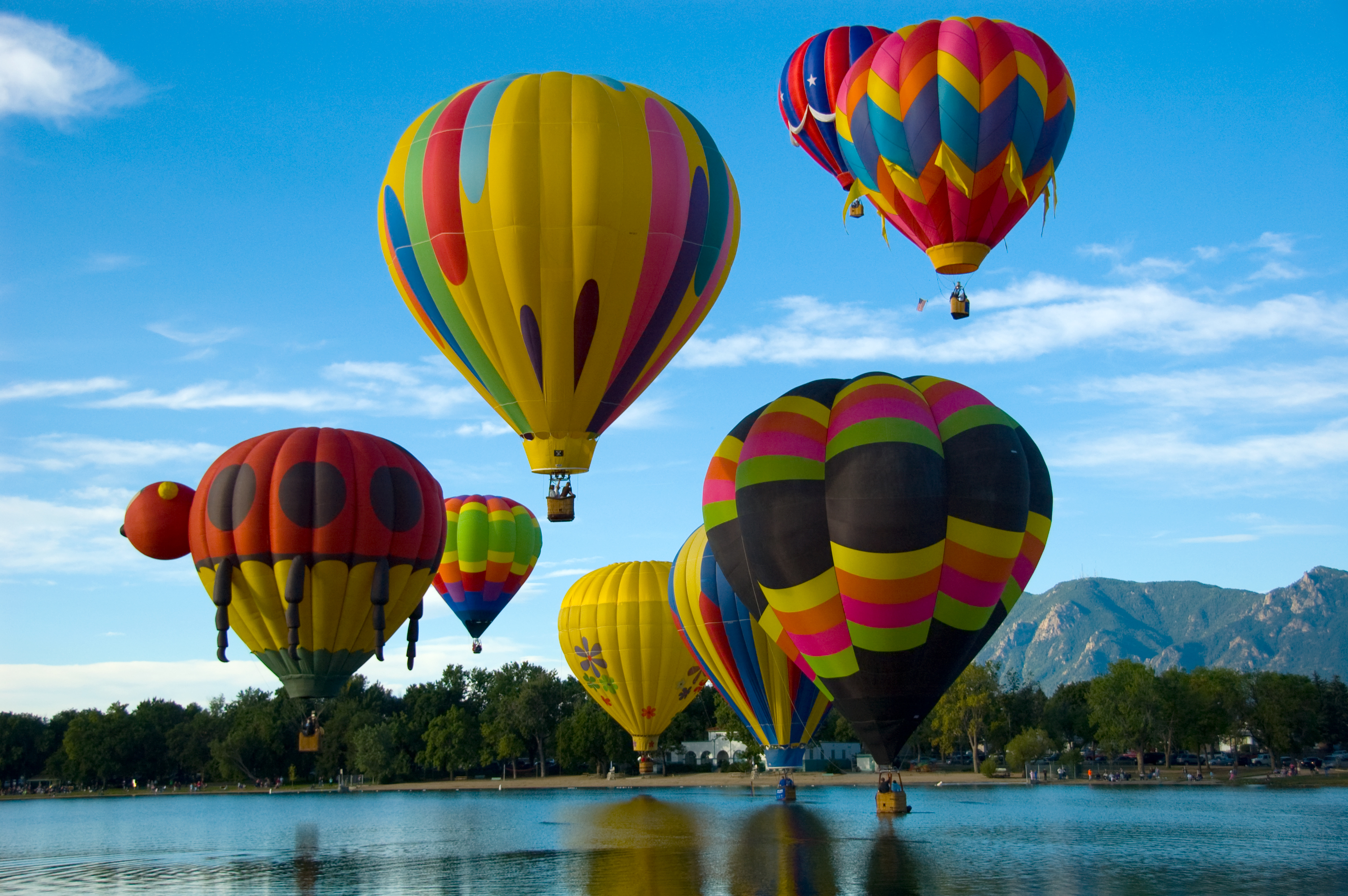
Lighter-than-air aircraft or aerostats use buoyancy to float in the air in much the same way that ships float on the water. They are characterized by one or more large cells or canopies, filled with a lifting gas such as helium, hydrogen or hot air, which is less dense than the surrounding air. Other gases lighter than air also theoretically work, however, such gases also needs to be safe for human use (non-flammable, non-toxic).
Small hot-air balloons, called sky lanterns, were first invented in ancient China prior to the 3rd century BC and used primarily in cultural celebrations, although they also had military purposes. They, along with kites, were two forms of unmanned aircraft that originated from China. Kites were also used in the military, but unlike sky lanterns, their flight is caused by the differences of air pressure beneath and above the kite.
A balloon was originally any aerostat, while the term airship was used for large, powered aircraft designs — usually fixed-wing. In 1919, Frederick Handley Page was reported as referring to "ships of the air," with smaller passenger types as "Air yachts." In the 1930s, large intercontinental flying boats were also sometimes referred to as "ships of the air" or "flying-ships".
Lighter-than-air aircraft don't typically require a pilot's license in the United States. In most countries in Europe, standards for flying Lighter-than-air aircraft tend to be stricter compared to the United States.
Heavier-than-air{{Anchor|Heavier than air}}
Heavier-than-air aircraft or aerodynes are denser than air and thus must find some way to obtain enough lift that can overcome the aircraft's weight. There are two ways to produce dynamic upthrust — aerodynamic lift by having air flowing past an aerofoil (such dynamic interaction of aerofoils with air is the origin of the term "aerodyne"), or powered lift in the form of reactional lift from downward engine thrust.
Aerodynamic lift involving wings is the most common, and can be achieved via two methods. Fixed-wing aircraft (airplanes and gliders) achieve airflow past the wings by having the entire aircraft moving forward through the air, while rotorcraft (helicopters and autogyros) do so by having mobile, elongated wings spinning rapidly around a mast in an assembly known as the rotor.
Fixed-wing aircraft
Main article: Fixed-wing aircraft
Gliders were one of the first forms of a fixed wing aircraft. They are a special type of aircraft that doesn't require an engine. The first person to successfully build a human-carrying glider was George Cayley, who also was the first to discover the four major aerodynamic forces. The first powered aircraft (Airplane) was invented by Wilbur and Orville Wright.
Rotorcraft
Main article: Rotorcraft
A rotary-wing aircraft, rotorwing aircraft or rotorcraft is a heavier-than-air aircraft with rotary wings that spin around a vertical mast to generate lift. The assembly of several rotor blades mounted on a single mast is referred to as a rotor. The International Civil Aviation Organization (ICAO) defines a rotorcraft as "supported in flight by the reactions of the air on one or more rotors".
Rotorcraft generally include aircraft where one or more rotors provide lift throughout the entire flight, such as helicopters, gyroplanes, autogyros, and gyrodynes Compound rotorcraft augment the rotor with additional thrust engines, propellers, or static lifting surfaces. Some types, such as helicopters, are capable of vertical takeoff and landing. An aircraft which uses rotor lift for vertical flight but changes to solely fixed-wing lift in horizontal flight is not a rotorcraft but a convertiplane.
Other methods of lift
- A lifting body is an aircraft which produces lift through the shape of its body, rather than its wings or rotors, like conventional aircraft. Lifting bodies were first experimented by NASA in the 1960s-70s, but the idea was already conceived in the 1950s.
- A powered lift aircraft is one which has the capability of vertical takeoff and landing. These aircraft must transition from vertical to lateral movement, which is considered the most dangerous phases of a flight. Classes of powered lift types include VTOL jet aircraft (such as the Harrier jump jet) and tiltrotors, such as the Bell Boeing V-22 Osprey, among others.
- An ornithopter is an aircraft that produces lift through the movement of its wings, akin to how a bird flies.
Size and speed extremes
Size
Main article: List of large aircraft}}The largest aircraft by dimensions and volume (as of 2016) is the {{cvt, 302, ft, m}} long British [[Airlander 10]], a hybrid blimp, with helicopter and fixed-wing features, and reportedly capable of speeds up to {{cvt, 90, mph, km/h kn}}, and an airborne endurance of two weeks with a payload of up to {{cvt, 22050, lbs
The largest aircraft by weight and largest regular fixed-wing aircraft ever built, , was the Antonov An-225 Mriya. That Soviet-built (Ukrainian SSR) six-engine transport of the 1980s was 84 m long, with an 88 m wingspan. It holds the world payload record, after transporting 428834 lbs of goods, and has flown 100 t loads commercially. With a maximum loaded weight of 550-700 t, it was also the heaviest aircraft built to date. It could cruise at 500 mph. The aircraft was destroyed during the Russo-Ukrainian War.
The largest military airplanes are the Ukrainian Antonov An-124 Ruslan (world's second-largest airplane, also used as a civilian transport), and American Lockheed C-5 Galaxy transport, weighing, loaded, over 380 t. The 8-engine, piston/propeller Hughes H-4 Hercules "Spruce Goose" — an American World War II wooden flying boat transport with a greater wingspan (94m/260 ft) than any current aircraft and a tail height equal to the tallest (Airbus A380-800 at 24.1m/78 ft) — flew only one short hop in the late 1940s and never flew out of ground effect.
The largest civilian airplanes, apart from the above-noted An-225 and An-124, are the Airbus Beluga cargo transport derivative of the Airbus A300 jet airliner, the Boeing Dreamlifter cargo transport derivative of the Boeing 747 jet airliner/transport (the 747-200B was, at its creation in the 1960s, the heaviest aircraft ever built, with a maximum weight of over 400 t), and the double-decker Airbus A380 "super-jumbo" jet airliner (the world's largest passenger airliner).
Speeds
Main article: Flight airspeed record
The fastest fixed-wing aircraft and fastest glider, is the Space Shuttle, which re-entered the atmosphere at nearly Mach 25 or 17,500 mph
The fastest recorded powered aircraft flight and fastest recorded aircraft flight of an air-breathing powered aircraft was of the NASA X-43A Pegasus, a scramjet-powered, hypersonic, lifting body experimental research aircraft, at Mach 9.68 or 6,755 mph on 16 November 2004.
Prior to the X-43A, the fastest recorded powered airplane flight, and still the record for the fastest manned powered airplane, was the North American X-15, rocket-powered airplane at Mach 6.7 or 7,274 km/h (4,520 mph) on 3 October 1967.
The fastest manned, air-breathing powered airplane is the Lockheed SR-71 Blackbird, a U.S. reconnaissance jet fixed-wing aircraft, having reached 3529.56 km/h on 28 July 1976.
Propulsion and steering
Unpowered aircraft
Main article: Unpowered aircraft}}The main feature of unpowered aircraft is the inability to directly provide thrust through its engines. This means that all unpowered aircraft rely on the [Wind, [environment]] for sustained flight. Gliders, for example, take advantage of their aerodynamic properties to enable them to travel long distances. Techniques such as thermal circling, where gliders fly into warm air which allows them to rise, prolongs flight time.{{Cite web
Due to the lack of an engine, initial propulsion assistance is usually necessary to ensure flight. A common glider launching method is aerotowing, where another aircraft tows the glider to an altitude from which sustained flight is possible. Steering for a glider is also rudimentary, while more complex gliders like sailplanes usually have joysticks for steering, more basic aircraft like hang gliders rely on the pilot's physical coordination to change the centre of gravity.[[File:PH-1274 Rolladen-Schneider LS-4b.JPG|thumb|Sailplane ([[Rolladen-Schneider LS4]])]]
Powered aircraft
Main article: Aircraft engine
A powered aircraft is an aircraft with a source of mechanical power, used to produce thrust. Such sources are generally engines, as is the case with airplanes, but can be human-powered in more extreme cases.
Propeller aircraft
Propeller aircraft, as their name suggests, rely on propellers to produce thrust for the airplane.[[File:WestCoastAirFloatplane.jpg|thumb|A [[turboprop]]-engined [[De Havilland Canada DHC-6 Twin Otter]] adapted as a [[floatplane]]]]
Jet aircraft
Main article: Jet aircraft
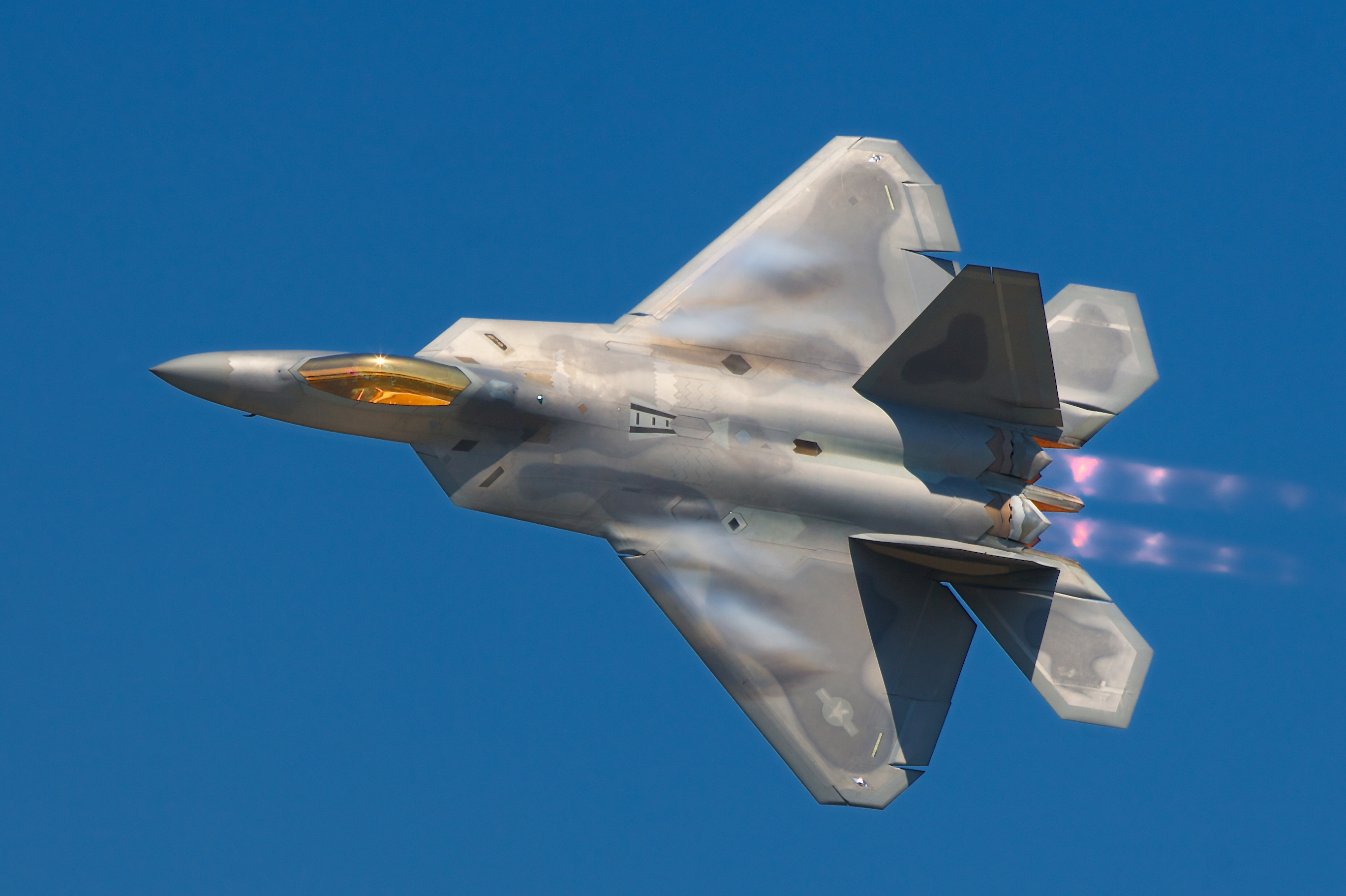
Compared to engines using propellers, jet engines can provide much higher thrust, higher speeds and, above about 40000 ft, greater efficiency.
Rotorcraft
Main article: Rotorcraft
Although some rotorcraft, such as rotor kites, can be unpowered, most rotorcraft are powered by either piston engines or turboprops. Some rotorcraft, including autogyros and gyrodynes, are propelled by a conventional propeller or jet engine, with the rotor unpowered, but most modern rotorcraft have a powered rotor, allowing them to hover in place. Autogyros and gyrodynes are steered using a rudder, similarly to propeller and jet aircraft, and rotorcraft with powered rotors, such as helicopters, turn by adjusting the pitch of the rotor cylically, so that the rotors on one side produce more lift than the other. Rotorcraft with powered rotors typically need a tail rotor to counter the rotational thrust produced by the rotor, which can cause the helicopter to spin.
Design and construction
The key parts of an aircraft are generally divided into three categories:
- The structure ("airframe") comprises the main load-bearing elements and associated equipment, as well as flight controls.
- The propulsion system ("powerplant") (if it is powered) comprises the power source and associated equipment, as described above.
- The avionics comprise the electrical and electronic control, navigation and communication systems.
Structure
Aerostats
Main article: Aerostat
An aerostat or lighter-than-air aircraft relies on buoyancy to maintain flight. Aerostats include unpowered balloons (free-flying or tethered) and powered airships. The relative density of an aerostat as a whole is lower than that of the surrounding atmospheric air (hence the name "lighter-than-air"). Its main component is one or more gas capsules made of lightweight skins, containing a lifting gas (hot air, or any gas with lower density than air, typically hydrogen or helium) that displaces a large volume of air to generate enough buoyancy to overcome its own weight. Payload (passengers and cargo) can then be carried on attached components such as a basket, a gondola, a cabin or various hardpoints. With airships, which need to be able to fly against wind, the lifting gas capsules are often protected by a more rigid outer envelope or an airframe, with other gasbags such as ballonets to help modulate buoyancy.
Aerostats are so named because they use aerostatic buoyant force that does not require any forward movement through the surrounding air mass, resulting in the inherent ability to levitate and perform vertical takeoff and landing. This contrasts with the heavier-than-air aerodynes that primarily use aerodynamic lift, which must have consistent airflow over an aerofoil (wing) surface to stay airborne. The term has also been used in a narrower sense, to refer to the statically tethered balloon in contrast to the free-flying airship. This article uses the term in its broader sense.
Aerodynes
An aerodyne is a heavier-than-air aircraft that relies on aerodynamic lift, or upthrust produced by the airflow, to fly. Aerodynes include rotorcraft, airplanes, gliders, and several other varieties of aircraft. Airplanes use wings, or airfoils, to direct the airflow to produce lift. Wings are usually constructed with a wooden or metal inner framework, and a skin stretched over it. Rotorcraft use a rotor which acts like a rotating wing, allowing them to hover in place. When aerodynes carry a payload, it is usually carried inside the aircraft's fuselage, or central structure, but aerodynes can also carry loads attached outside the aircraft or inside the wing. Unlike aerostats, which control their altitude by changing their weight, aerodynes use control surfaces to control their altitude, or raise or lower the lift on their wing by adjusting their speed. As they typically travel at higher speeds than aerostats, most aerodynes have a rigid structure consisting of a frame covered by a skin.
Power
Main article: Propulsion
The source of motive power for an aircraft is normally called the powerplant, and includes engine or motor, propeller or rotor, (if any), jet nozzles and thrust reversers (if any), and accessories essential to the functioning of the engine or motor (e.g.: starter, ignition system, intake system, exhaust system, fuel system, lubrication system, engine cooling system, and engine controls).
Powered aircraft are typically powered by internal combustion engines (piston or turbine) burning fossil fuels—typically gasoline (avgas) or jet fuel. A very few are powered by rocket power, ramjet propulsion, or by electric motors, or by internal combustion engines of other types, or using other fuels. A very few have been powered, for short flights, by human muscle energy (e.g.: Gossamer Condor).
Avionics
Main article: Avionics
The avionics comprise any electronic aircraft flight control systems and related equipment, including electronic cockpit instrumentation, navigation, radar, monitoring, and communications systems.
Flight characteristics
Flight envelope
Main article: Flight envelope
The flight envelope of an aircraft refers to its approved design capabilities in terms of airspeed, load factor and altitude.
Range
Main article: Range (aeronautics)
The maximal total range is the maximum distance an aircraft can fly between takeoff and landing. Powered aircraft range is limited by the aviation fuel energy storage capacity (chemical or electrical) considering both weight and volume limits. Unpowered aircraft range depends on factors such as cross-country speed and environmental conditions. The range can be seen as the cross-country ground speed multiplied by the maximum time in the air. The fuel time limit for powered aircraft is fixed by the available fuel (considering reserve fuel requirements) and rate of consumption. The Airbus A350-900ULR is among the longest range airliners.
Some aircraft can gain energy while airborne through the environment (e.g. collecting solar energy or through rising air currents from mechanical or thermal lifting) or from in-flight refueling. These aircraft could theoretically have an infinite range.
Ferry range means the maximum range that an aircraft engaged in ferry flying can achieve. This usually means maximum fuel load, optionally with extra fuel tanks and minimum equipment. It refers to the transport of aircraft without any passengers or cargo. Combat radius is a related measure based on the maximum distance a warplane can travel from its base of operations, accomplish some objective, and return to its original airfield with minimal reserves.
Flight dynamics
Main article: Aircraft flight dynamics

Flight dynamics is the science of air vehicle orientation and control in three dimensions. The three critical flight dynamics parameters are the angles of rotation in three dimensions about the vehicle's center of gravity (cg), known as pitch, roll and yaw. These are collectively known as aircraft attitude, often principally relative to the atmospheric frame in normal flight, but also relative to terrain during takeoff or landing, or when operating at low elevation. The concept of attitude is not specific to fixed-wing aircraft, but also extends to rotary aircraft such as helicopters, and dirigibles, where the flight dynamics involved in establishing and controlling attitude are entirely different.
Control systems adjust the orientation of a vehicle about its cg. A control system includes control surfaces which, when deflected, generate a moment (or couple from ailerons) about the cg which rotates the aircraft in pitch, roll, and yaw. For example, a pitching moment comes from a force applied at a distance forward or aft of the cg, causing the aircraft to pitch up or down.
A fixed-wing aircraft increases or decreases the lift generated by the wings when it pitches nose up or down by increasing or decreasing the angle of attack (AOA). The roll angle is also known as bank angle on a fixed-wing aircraft, which usually "banks" to change the horizontal direction of flight. An aircraft is streamlined from nose to tail to reduce drag making it advantageous to keep the sideslip angle near zero, though an aircraft may be deliberately "sideslipped" to increase drag and descent rate during landing, to keep aircraft heading same as runway heading during cross-wind landings and during flight with asymmetric power.
Stability
Control
In fixed-wing aircraft, multiple control surfaces are used to adjust the aircraft's roll, pitch, and yaw. Ailerons, hinged surfaces normally located on the rear edge of the wing, can raise or lower the lift produced by one side of the wing, causing the aircraft to bank to one side. Elevators, usually located in the horizontal stabilizer, are used to increase or decrease the lift produced by the tail, causing the aircraft to pitch upwards or downwards, which in turn affects the lift of the wing. However, when the ailerons are used to turn an aircraft to the left, the right aileron must be tilted downwards, producing more drag than the left aileron and causing the aircraft to yaw right. To counteract this force, most fixed-wing aircraft have a rudder mounted on the vertical stabilizer which can deflect the airflow to the tail left or right to control the aircraft's yaw. In rotorcraft, control is mainly accomplished through the cyclical tilting of the rotor's blades, increasing the angle of attack of the blades on one side and decreasing the angle of attack on the other. Similarly to the rudder on fixed-wing aircraft, rotorcraft with powered rotors have a tail rotor, which counters the rotational thrust produced by the rotor and allows the aircraft to turn in forward flight. Rotorcraft with unpowered rotors, such as autogyros, use a rudder for yaw.
Environmental impact
Main article: Environmental impact of aviation
Aircraft engines produce gases, noise, and particulates from fossil fuel combustion, raising environmental concerns over their global effects and on local air quality.
Jet airliners contribute to climate change by emitting carbon dioxide (), the best understood greenhouse gas, and, with less scientific understanding, nitrogen oxides, contrails and particulates. Their radiative forcing is estimated at 1.4 that of alone, excluding induced cirrus cloud with a very low level of scientific understanding. In 2018, global commercial operations generated 2.4% of emissions. Jet airliners have become more fuel efficient and emissions per revenue ton-kilometer (RTK) in 2018 were 47% of those in 1990. In 2018, emissions averaged 88 grams of per revenue passenger per km. While the aviation industry is more fuel efficient, overall emissions have risen as the volume of air travel has increased. By 2020, aviation emissions were 70% higher than in 2005 and they could grow by 300% by 2050.
Aircraft noise pollution disrupts sleep, children's education and could increase cardiovascular risk. Airports can generate water pollution due to their extensive handling of jet fuel and deicing chemicals if not contained, contaminating nearby water bodies. Aviation activities emit ozone and ultrafine particles, both of which are health hazards. Piston engines used in general aviation burn Avgas, releasing toxic lead.
Aviation's environmental footprint can be reduced by better fuel economy in aircraft, or air traffic control and flight routes can be optimized to lower non- effects on climate from , particulates or contrails. Aviation biofuel, emissions trading and carbon offsetting, part of the ICAO's CORSIA, can lower emissions. Aviation usage can be lowered by short-haul flight bans, train connections, personal choices and aviation taxation and subsidies. Fuel-powered aircraft may be replaced by hybrid electric aircraft and electric aircraft or by hydrogen-powered aircraft. Since 2021, the IATA members plan net-zero carbon emissions by 2050, followed by the ICAO in 2022.
Uses for aircraft
Military
Main article: Military aircraft
A military aircraft is any aircraft that is operated by a legal or insurrectionary armed service of any type. Military aircraft can be either combat or non-combat:
- Combat aircraft are aircraft designed to destroy enemy equipment using its own armament. Combat aircraft are typically developed and procured only by military forces.
- Non-combat aircraft, such as transports and tankers, are not designed for combat as their primary function but may carry weapons for self-defense. These mainly operate in support roles, and may be developed by either military forces or civilian organizations.
Civil
Main article: Civil aviation
Civil aviation is one of two major categories of flying, representing all non-military and non-state aviation, which can be both private and commercial. Most countries in the world are members of the International Civil Aviation Organization and work together to establish common Standards and Recommended Practices for civil aviation through that agency.
Civil aviation includes three major categories:
- Commercial air transport, including scheduled and non-scheduled passenger and cargo flights
- Aerial work, in which an aircraft is used for specialized services such as agriculture, photography, surveying, search and rescue, etc.
- General aviation (GA), including all other civil flights, private or commercial
Although scheduled air transport is the larger operation in terms of passenger numbers, GA is larger in the number of flights (and flight hours, in the U.S.) In the U.S., GA carries 166 million passengers each year, more than any individual airline, though less than all the airlines combined. Since 2004, the U.S. airlines combined have carried over 600 million passengers each year, and in 2014, they carried a combined 662,819,232 passengers.
Some countries also make a regulatory distinction based on whether aircraft are flown for hire, like:
- Commercial aviation includes most or all flying done for hire, particularly scheduled service on airlines; and
- Private aviation includes pilots flying for their own purposes (recreation, business meetings, etc.) without receiving any kind of remuneration.
All scheduled air transport is commercial, but general aviation can be either commercial or private. Normally, the pilot, aircraft, and operator must all be authorized to perform commercial operations through separate commercial licensing, registration, and operation certificates.
Experimental
Main article: Experimental aircraft

An experimental aircraft is an aircraft intended for testing new aerospace technologies and design concepts.
The term research aircraft or testbed aircraft, by contrast, generally denotes aircraft modified to perform scientific studies, such as weather research or geophysical surveying, similar to a research vessel.
The term "experimental aircraft" also has specific legal meaning in Australia, the United States and some other countries; usually used to refer to aircraft flown with an experimental certificate. In the United States, this also includes most homebuilt aircraft, many of which are based on conventional designs and hence are experimental only in name because of certain restrictions in operation.
Model
Main article: Model aircraft
Model aircraft are typically small-scale replicas of flying aircraft, or new designs built smaller than most passenger aircraft. Static model aircraft, which cannot fly, are usually not considered to be aircraft, but they can be used to test aspects of a flying aircraft, such as its aerodynamics. Flying models are commonly propelled by electric motors, combustion engines, or are gliders, but there are many alternate methods of propulsion, such as wound rubber bands and small jet engines. Most flying model aircraft are either radio-controlled aircraft, fly freely, or are controlled by wires held by the pilot.
References
References
- "Aircraft — Define Aircraft at Dictionary.com". Dictionary.com.
- "Different Kinds & Types of Aircraft".
- "14 CFR Part 1 -- Definitions and Abbreviations".
- "Kite {{!}} Aeronautics, History & Benefits".
- Botelho Parra, Rogerio. (14 September 2018). "Leonardo da Vinci Interdisciplinarity". 31st Congress of the International Council of the Aeronautical Sciences.
- (2004). "Wings: A History of Aviation from Kites to the Space Age". W.W. Norton & Co.
- Hallion (2003)
- [https://news.bbc.co.uk/2/hi/special_report/1998/11/98/great_balloon_challenge/299568.stm "Flying through the ages"] ''BBC News''. Retrieved 2024-10-18.
- (1 August 2020). "Louisiana figures fly out of aviation history". The Times.
- (2022-01-12). "What Is a Lifting Gas? - National Aviation Academy".
- (26 May 2024). "The Fascinating History of Hot Air Balloons: From Ancient Sky Lanterns to Modern Marvels". History Tools.
- MAK. (2025-01-22). "The Origin of Kites in Ancient China - CS Kites".
- Ashish. (2016-08-02). "Why Is It Difficult To Fly Kites On Non-Windy Days?".
- [https://texashistory.unt.edu/ark:/67531/metapth172915/ US patent 467069] {{Webarchive. link. (23 February 2014 "Air-ship" referring to a compound aerostat/rotorcraft.)
- [[Ezekiel Airship]] (1902) [http://www.wright-brothers.org/History_Wing/History_of_the_Airplane/History_of_the_Airplane_Intro/History_of_the_Airplane_Intro.htm wright-brothers.org] {{Webarchive. link. (3 December 2013[http://altereddimensions.net/2012/burrell-cannon-flies-first-airplane altereddimensions.net] {{Webarchive). link. (22 February 2014 "airship," – referring to an HTA aeroplane.)
- [http://gustavewhitehead.org/news_journalism/1901_-_flying.html The Bridgeport Herald, August 18, 1901] {{Webarchive. link. (3 August 2013 – "air ship" referring to Whitehead's aeroplane.)
- "Unbelievable Flying Objects".
- Frater, A.; ''The Balloon Factory'', Picador (2009), p. 163. Wright brothers' "airship."
- link. (22 February 2014 — "air-ship," "vessel" referring to a VTOL compound rotorcraft (not clear from the reference if it might be an aerostat hybrid.))
- link. (24 March 2014 "Ships of the air," "Air yachts" – passenger landplanes large and small)
- [https://nla.gov.au/nla.news-article17455790 The Sydney Morning Herald, Monday 11 April 1938] – "ship of the airs," "flying-ship," referring to a large flying-boat.
- [http://airandspace.si.edu/exhibitions/america-by-air/online/innovation/innovation16.cfm Smithsonian, America by air] {{Webarchive. link. (18 January 2014 "Ships of the Air" referring to Pan Am's Boeing Clipper flying-boat fleet.)
- Altmann, Ray. (2025-03-01). "Ultralight Aircraft: Planes You Can Fly Without a Pilot License".
- Balloon and other aircraft certifications or regulations. https://www.easa.europa.eu/en/regulations#regulations-balloons
- Laurent. (2023-11-15). "Understanding the Aerodynamic Forces in Flight".
- (13 May 2021). "Rocket Principles".
- (2021-12-20). "2.1.2: Rotorcraft".
- "Gliders {{!}} Glenn Research Center {{!}} NASA". Glenn Research Center {{!}} NASA.
- "The Pioneers : An Anthology : Sir George Cayley Bt. (1773 - 1857)".
- (2003-12-01). "Who Invented the Airplane? (Grades K-4) - NASA".
- "ICAO Annex 7." Retrieved on 30 September 2009.
- (2014-02-28). "Lifting Bodies - NASA".
- "Powered-Lift Aircraft {{!}} SKYbrary Aviation Safety".
- Siminski, Jacek. (2013-04-11). "Harrier: The Story Of The "Jump Jet" That Helped Margaret Thatcher Win The Falklands War".
- "V-22 Osprey".
- (2010-09-24). "'World's first' ornithopter takes flight". BBC News.
- [https://www.telegraph.co.uk/news/2016/08/17/worlds-largest-aircraft-the-airlander-takes-first-flight/ "World's largest aircraft the Airlander makes maiden flight in UK,"] {{Webarchive. link. (22 November 2016 16 August 2016, London 'Daily Telegraph' via Telegraph.co.uk. Retrieved 22 November 2016.)
- "Airlander 10, the world's largest aircraft, takes off for the first time," 19 August 2016, CBS News (TV) retrieved 22 November 2016.
- Kottasova, Ivana [https://money.cnn.com/2016/08/24/technology/worlds-largest-aircraft-crash-airlander-10/ "The world's largest aircraft crashes after 2nd test flight"] {{Webarchive. link. (22 November 2016, 24 August 2016, ''CNN Tech'' on [[CNN]], the Cable News Network. Retrieved 22 November 2016.)
- "Fly Drive Aanbiedingen".
- [https://www.foxnews.com/tech/watch-the-worlds-biggest-plane-land-in-australia/ "Watch the world's biggest plane land in Australia,"] 16 May 2016, Fox News. Retrieved 22 November 2016.
- Rumbaugh, Andrea. (18 November 2016). "World's biggest airplane lands at Bush airport". Houston Chronicle.
- Lewis, Danny, [http://www.smithsonianmag.com/smart-news/worlds-largest-aircraft-might-lose-its-title-blimp-180956677/ "The World's Largest Aircraft Might Lose its Title to a Blimp,"], 18 September 2015, ''Smart News'', Smithsonian.com, [[Smithsonian Institution]], Washington, D.C.. Retrieved 22 November 2016.
- [http://www.aerospaceweb.org/question/design/q0188.shtml "Ask Us – Largest Plane in the World,"] Aerospaceweb.org. Retrieved 22 November 2016.
- Shead, Sam. (4 April 2022). "Photos show world's largest cargo plane destroyed in Ukraine".
- [https://www.nasa.gov/centers/glenn/multimedia/imagegallery/image_feature_028_Antonov.html "World's Second Largest Aircraft,"] {{Webarchive. link. (22 November 2016 28 July 2013, [[NASA]]. Retrieved 22 November 2016.)
- Loftin, Laurence K., Jr., [https://history.nasa.gov/SP-468/ch13-5.htm "Wide-Body Transports"] {{Webarchive. link. (7 June 2013, in Chapter 13, "Jet Transports," in Part II, "The Jet Age," in ''Quest for Performance: The Evolution of Modern Aircraft'', NASA SP-468, 1985, Scientific and Technical Information Branch, [[NASA]], Washington, D.C., Updated: 6 August 2004. Retrieved 22 November 2016.)
- [https://www.nytimes.com/2008/04/29/business/worldbusiness/29iht-airbus.4.12438349.html "Airbus reviews A380 schedule,"] {{Webarchive. link. (2 February 2017 29 April 2008, ''[[The New York Times]]''. Retrieved 22 November 2016.)
- "Speed Regimes: Hypersonic Re-Entry". Glenn Research Center, [[NASA]].
- (16 November 2004). "Fastest aircraft, air-breathing engine: X-43". Guinness World Records.
- (3 October 1967). "Fastest speed in a non-spacecraft aircraft". Guinness World Records.
- (28 July 1976). "current record, Powered Aeroplanes, Absolute, Speed". [[Fédération Aéronautique Internationale.
- "Understanding the Principles of Glider Flight".
- cwarrior. "How Gliders Fly - Beverley Soaring Society - West Australia Gliding Club".
- . (2025-04-21). ["Can you steer a glider?"](https://enviroliteracy.org/can-you-steer-a-glider/).
- (13 May 2021). "How does a jet engine work?".
- Paleja, Ameya. "Human-powered aircraft: A plane with 'impossible engineering' and no engine".
- "ch10-3". Hq.nasa.gov.
- [https://www.faa.gov/sites/faa.gov/files/regulations_policies/handbooks_manuals/aviation/helicopter_flying_handbook/hfh_ch02.pdf FAA Helicopter Flying Handbook, Aerodynamics], pp. 18, 15
- Gove, P.B., editor: ''Webster's Third New International Dictionary of the English Language, Unabridged,'' 1993, Merriam-Webster, Springfield, Mass., USA
- Crane, D., editor: ''Dictionary of Aeronautical Terms,'' Third Edition, ASA (Aviation Supplies & Academics), Newcastle, Washington, USA
- ''2012 Federal Aviation Regulations for Aviation Maintenance Technicians,'' 2012, Federal Aviation Administration, U.S. Department of Transportation
- [[Bill Gunston. Gunston, Bill]], editor: ''Jane's Aerospace Dictionary'' 1980, Jane's, London / New York / Sydney
- [https://www.faa.gov/regulations_policies/handbooks_manuals/aviation/phak/media/21_phak_glossary.pdf "Glossary"] in ''Pilot's Handbook of Aeronautical Knowledge'' (PHAK), [[Federal Aviation Administration]], Washington, D.C., retrieved 12 September 2022
- Wragg, David W. editor: ''A Dictionary of Aviation,'' 1974, Frederick Fell, New York
- Chambers, Allied. (1998). "The Chambers Dictionary". Allied Publishers.
- (1976). "The Oxford Illustrated Dictionary". Oxford University Press.
- Wragg, David W.. (1973). "A Dictionary of Aviation". Osprey.
- [https://www.faa.gov/sites/faa.gov/files/05_phak_ch3_0.pdf FAA, ''Chapter 3, Aircraft Construction''] pp. 4, 5, 9
- [https://www.faa.gov/sites/faa.gov/files/07_phak_ch5_0.pdf FAA, ''Chapter 5, Aerodynamics''] pp. 2,3
- [https://www.grc.nasa.gov/www/k-12/airplane/icengine.html "Internal Combustion Engine,"] Glenn Research Center, [[National Aeronautics and Space Administration]] (NASA), retrieved 12 September 2022
- [https://www.grc.nasa.gov/www/k-12/airplane/icengine.html "Engines,"] Glenn Research Center, [[National Aeronautics and Space Administration]] (NASA), retrieved 12 September 2022
- Bryan, C.D.B.: ''The National Air and Space Museum,'' 1979 / 1984, Abrams, New York
- Taylor, Michael J.H., editor: ''Jane's Encyclopedia of Aviation,'' 1989 ed., Portland House / Random House, New York
- [https://www1.grc.nasa.gov/aeronautics/eap/ "Electrified Aircraft Propulsion" (EAP)], Glenn Research Center, [[National Aeronautics and Space Administration]] (NASA), retrieved 12 September 2022
- "eCFR — Code of Federal Regulations". gpoaccess.gov.
- "LOAD FACTOR".
- Wragg, David W.. (1973). "A Dictionary of Aviation". Osprey.
- (2024). "Airbus-A350-Family-Facts-and-Figures April-2024.pdf". Airbus.
- Defense Technical Information Center. (1981-11-01). "DTIC ADA124610: Fixed Wing Stability and Control Theory and Flight Test Techniques. Revision".
- Crane, Dale: ''Dictionary of Aeronautical Terms, third edition'', p. 194. Aviation Supplies & Academics, 1997. {{ISBN. 1-56027-287-2
- Aviation Publishers Co. Limited, ''From the Ground Up'', p. 10 (27th revised edition) {{ISBN. 0-9690054-9-0
- "Airline Handbook Chapter 5: How Aircraft Fly". [[Airlines for America.
- [https://www.faa.gov/sites/faa.gov/files/08_phak_ch6.pdf FAA, ''Chapter 5, Flight Controls''] pp. 3, 5, 8
- [https://www.faa.gov/sites/faa.gov/files/regulations_policies/handbooks_manuals/aviation/faa-h-8083-21.pdf FAA, ''Rotorcraft Flying Handbook''], pp. 13, 35
- "Aircraft Engine Emissions". [[International Civil Aviation Organization]].
- Brandon Graver. (September 2019). "CO2 emissions from commercial aviation, 2018". [[International Council on Clean Transportation]].
- (23 November 2016). "Reducing emissions from aviation". European Commission.
- "NTSB - Aviation Accident Statistics".
- "Advantages of General Aviation vs. Airline, Faster, Better, Cheaper, More Secure".
- United States Department of Transportation. "[http://www.rita.dot.gov/bts/data_and_statistics/by_mode/airline_and_airports/airline_passengers.html Bureau of Transportation Statistics] {{webarchive. link. (2015-07-25 ". Retrieved 24 July 2015)
- "NOAA research aircraft".
- [http://rgl.faa.gov/Regulatory_and_Guidance_Library/rgFAR.nsf/0/71F1608EE6AAF580862576E4005B24C6?OpenDocument 14CFR 21.175] {{Webarchive. link. (2018-09-12 , US Federal Aviation Administration. Retrieved 2018-01-12)
- [http://rgl.faa.gov/Regulatory_and_Guidance_Library/rgFAR.nsf/0/A9986A485C9E636386256EDF00510840?OpenDocument 14CFR 21.191] {{Webarchive. link. (2021-06-10 , US Federal Aviation Administration. Retrieved 2018-01-12)
- Gunston 1986, p. 274
This article was imported from Wikipedia and is available under the Creative Commons Attribution-ShareAlike 4.0 License. Content has been adapted to SurfDoc format. Original contributors can be found on the article history page.
Ask Mako anything about Aircraft — get instant answers, deeper analysis, and related topics.
Research with MakoFree with your Surf account
Create a free account to save articles, ask Mako questions, and organize your research.
Sign up freeThis content may have been generated or modified by AI. CloudSurf Software LLC is not responsible for the accuracy, completeness, or reliability of AI-generated content. Always verify important information from primary sources.
Report