From Surf Wiki (app.surf) — the open knowledge base
Airborne Science Program
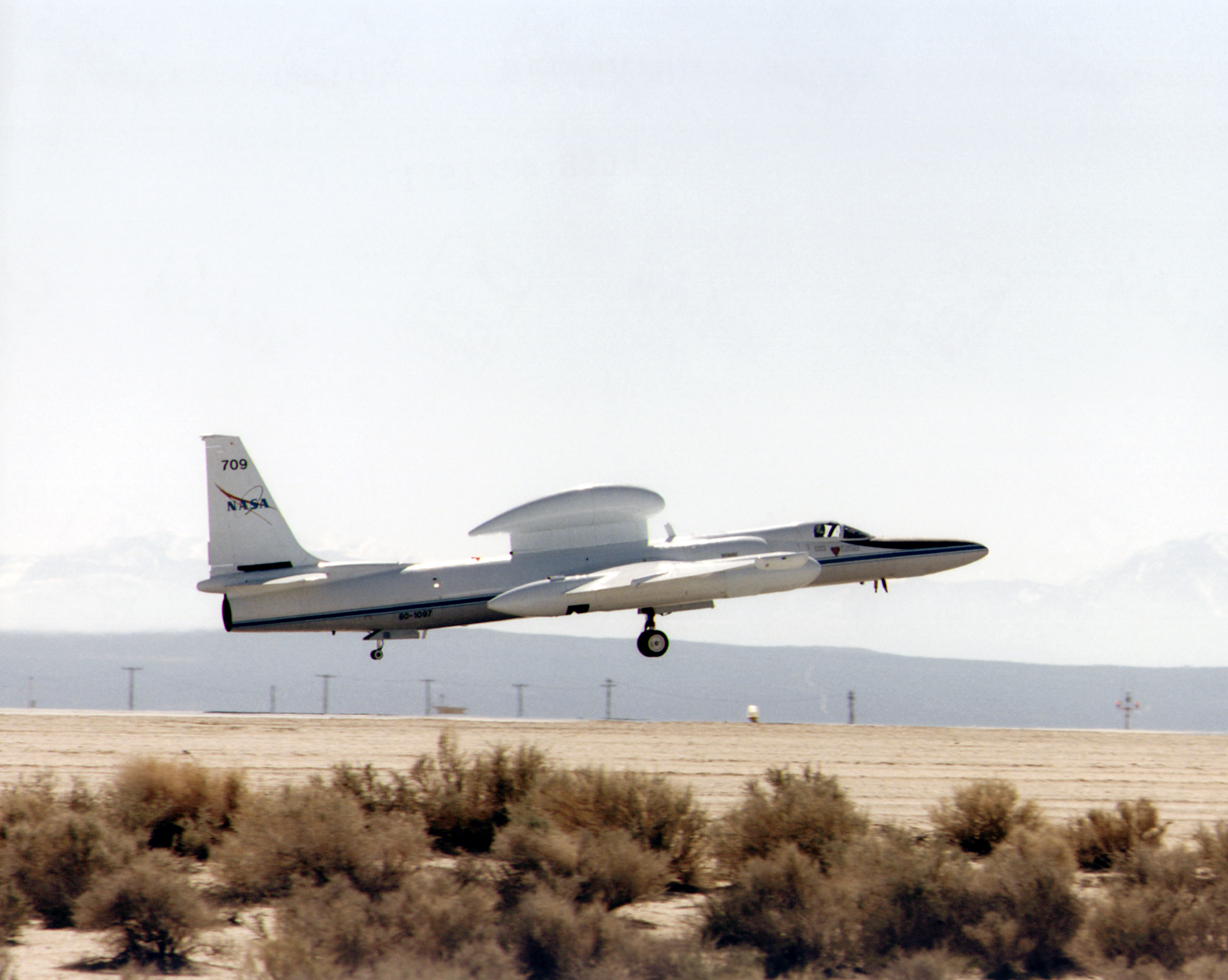
NASA's Airborne Science Program is administered from the NASA Neil A. Armstrong Flight Research Center, in Edwards, California. The program supports the sub-orbital flight requirements of NASA's Earth Science Enterprise. Dryden maintains and operates two ER-2 high-altitude "satellite simulator" aircraft and a DC-8 which is specially configured as a "flying laboratory" in service from 1987 to May 2024.
The scientific disciplines that employ these aircraft include Earth sciences, astronomy, atmospheric chemistry, climatology, oceanography, archeology, ecology, forestry, geography, geology, hydrology, meteorology, volcanology and biology. The DC-8 and ER-2 are also important tools for the development of sensors intended to fly aboard future Earth-observing satellites, and to validate and calibrate the sensors which are used onboard satellites which currently orbit the Earth.
NASA research aircraft types operated
Present
| Aircraft | Number in service | Introduced | Research Center |
|---|---|---|---|
| McDonnell Douglas DC-8 | 1 | 1987 (end in 2024) | Armstrong Flight Research Center |
| Lockheed ER-2 | 2 | 1981 | Armstrong Flight Research Center |
| Gulfstream C-20A | 1 | 2008 | Armstrong Flight Research Center |
| Gulfstream III | 1 | 2012 | Johnson Space Center |
| Gulfstream III | 1 | 2012 | Langley Research Center |
| Gulfstream V | 1 | 2012 | Johnson Space Center |
| Lockheed P-3 Orion | 1 | 1991 | Wallops Flight Facility |
Media
Image:Airborne Science Safari 2000 Mission.ogv|Airborne Science Safari 2000 Mission Image:ER-2 in Sweden for the Sage III Ozone Loss and Validation Experiment.ogg|ER-2 in Sweden for the Sage III Ozone Loss and Validation Experiment
References
References
- https://www.scramble.nl/military-news/nasa-dc-8-retired
This article was imported from Wikipedia and is available under the Creative Commons Attribution-ShareAlike 4.0 License. Content has been adapted to SurfDoc format. Original contributors can be found on the article history page.
Ask Mako anything about Airborne Science Program — get instant answers, deeper analysis, and related topics.
Research with MakoFree with your Surf account
Create a free account to save articles, ask Mako questions, and organize your research.
Sign up freeThis content may have been generated or modified by AI. CloudSurf Software LLC is not responsible for the accuracy, completeness, or reliability of AI-generated content. Always verify important information from primary sources.
Report