From Surf Wiki (app.surf) — the open knowledge base
Agrinio
City in Greece

City in Greece
| Field | Value |
|---|---|
| name | Agrinio |
| name_local | Αγρίνιο |
| type | municipality |
| image_map | 2011 Dimos Agriniou.png |
| periph | Western Greece |
| periphunit | Aetolia-Acarnania |
| pop_municipality | 89691 |
| area_municipality | 1229.33 |
| pop_municunit | 60609 |
| area_municunit | 162.73 |
| pop_community | 50690 |
| population_as_of | 2021 |
| elevation | 91 |
| coordinates | |
| postal_code | 301 00 |
| area_code | 26410 |
| licence | ΑΙ |
| mayor | Georgios Papanastasiou |
| party | New Democracy |
| since | 2014 |
| website | [https://agrinio.gov.gr/](https://agrinio.gov.gr/agrinionews/ypiresies.php) |
| image_skyline | Agioschristoforosagrinio.jpg |
| caption_skyline | Aerial view of the city with the Saint Christopher church in the center |
| city_seal | Agrinio Siegel.png |
Agrinio (Greek: Αγρίνιο, ) is the largest city and municipality of the Aetolia-Acarnania regional unit of Greece, as well as the second largest city in Western Greece after Patras. It is the economic center of Aetolia-Acarnania, although its capital is the town of Mesolonghi. The settlement dates back to ancient times. Ancient Agrinion was 3 km northeast of the present city; some walls and foundations of which have been excavated. In medieval times and until 1836, the city was known as Vrachori (Βραχώρι). According to the 2021 census, the municipality of Agrinio has a population of 89,691, of whom 50,690 live within the city limits of Agrinio.
The majority of the local population was occupied for an important period of time in the tobacco industry, from the last decades of 19th till the end of the 20th century. Big tobacco companies were founded in the city, including the famous Papastratos, alongside Panagopoulos and Papapetrou. Agrinion is also agriculturally known for its production of Agrinion olives.
History
Antiquity
Main article: Agrinium
According to mythology, the ancient city of Agrinion (or Agrinium), situated in the area of Megali Chora, was built by king Agrios, son of Portheus and a great-grandson of Aetolos (king of Plevron and Calydon) around 1600–1100 BC.
The town, built near the banks of river Achelous (the natural border between Aetolia and Acarnania), was claimed by both states during ancient times. Agrinio became member of the Aetolian League and it was later destroyed by Cassander in 314 BC during the League's wars against the Kingdom of Macedonia.
Ottoman era
The city reappeared during the Ottoman period with the name Vrachori and apart from its Greek population it was also inhabited by many Turks (Muslims). In 1585 it was deserted during the revolt of Theodoros Migas. At the beginning of the 18th century, it became the administrative centre of Aetolia-Acarnania (then as the sanjak of Karleli), depended on the imperial harems. Vrachori participated in the Greek Revolution and was temporarily liberated, by an army group led by Alexakis Vlachopoulos, on 11 June 1821. In August 1822, while Reşid Mehmed Pasha's (Kütahi) troops were marching towards Vrachori, its citizens decided to burn and evacuate their city, following the strategy of scorched earth. The deserted city was recaptured by the Turks. The city was finally included in the borders of the newborn Greek state permanently in 1832 with the Treaty of Constantinople (9 July 1832) and was renamed after its ancient name, Agrinion.[[File:Kentriki xoris logotypo.jpg|thumb|Christmas Central Square|240x240px|left]]
Modern era
During the Interwar period, in spite of economical crisis, works of infrastructure took place in the city, like the paving of streets and the installation of electricity, and a water tower was installed in 1930. At the same time excavations revealed the ancient city of Agrinion. Growth and prosperity returned after World War II and the Greek Civil War. This growth was boosted by the building of two major hydroelectric dam installations at Kremasta and Kastraki, on the north of the city. The tobacco industry and olive tree cultivation became the main income sources of the city.
Geography
Geology
The area, like nearly all of Greece is prone to earthquakes. On 10 April 2007, the city was struck by several earthquakes, with their epicenter located in the nearby Lake Trichonis on the southeast of the city. The first earthquake rumbled at around 2:20 AM, the second around 6:15 AM, three earthquakes shook at 10:13, 10:14 and 10:15 AM, and the last one at around 13:45 PM, they measured between 5.0 and 5.7 on the Richter scale. Residents reported that the buildings and its glasses were shaking and rumbling. Minor damages were reported without any victims.
Climate
The climate of Agrinio is Mediterranean (Csa) according to the Köppen climate classification, with a large amount of rainfall during the winter, just as the rest of Western Greece, and high daytime temperatures during the relatively dry summer, sometimes over 40 °C.
Transportation
The main roads passing through Agrinio are the Greek National Road 5/E55 (Arta – Agrinio – Missolonghi) and the Greek National Road 38/E952 (Thermo – Agrinio – Karpenisi). Since 2009, the A5 motorway bypasses Agrinio to the west.[[File:Agrinio-center.jpg|thumb|200x200px|Central square]]
Agrinio's airport is located near the city, in the area of Dokimi. IATA code: AGQ, ICAO: LGAG. The airport hosts the Agrinion aeroclub Agrinion Aeroclub, website.
Municipality

- Agrinio
- Angelokastro
- Arakynthos
- Makryneia
- Neapoli
- Panaitoliko
- Parakampylia
- Paravola
- Stratos
- Thestieis
The municipality has an area of 1229.330 km2, the municipal unit 162.728 km2.
Subdivisions
The municipal unit (former municipality) of Agrinio consists of the following communities:
- Agios Konstantinos
- Agios Nikolaos Trichonidos
- Agrinio
- Dokimi
- Kalyvia
- Kamaroula
- Skoutesiada
The city of Agrinio consists of the main city and the outlying villages Agios Ioannis Riganas, Akropotamos, Bouzi, Giannouzi, Diamanteika, Eleftheria, Lefka, Liagkaiika, Pyrgi, Schinos and Strongylaiika.
City seal
Historical population
| Year | Town | Municipal unit | Municipality |
|---|---|---|---|
| 1971 | 32,190 | 39,667 | - |
| 1981 | 35,773 | 45,087 | - |
| 1991 | 39,638 | 52,081 | - |
| 2001 | 42,390 | 54,523 | - |
| 2011 | 48,645 | 59,329 | 94,181 |
| 2021 | 50,690 | 60,609 | 89,691 |
Landmarks

- The Archaeological Museum of Agrinion, located in the city center, at 1-2 Diamantis Street. website
- The neoclassical buildings of the tobacco storehouses Papastratos and Papapetrou, which date from the early 20th century.
- The Papastrateio Municipal Park.
- The Papastratios Municipal Library.
- The Dimokratias Square, the main square of the city.
- The remains of the Church of the Holy Trinity of Mavrika (8th-9th century), situated at the banks of lake Lysimachia.
- Lakes Trichonida and Lysimachia.
- The ancient city of Stratos.
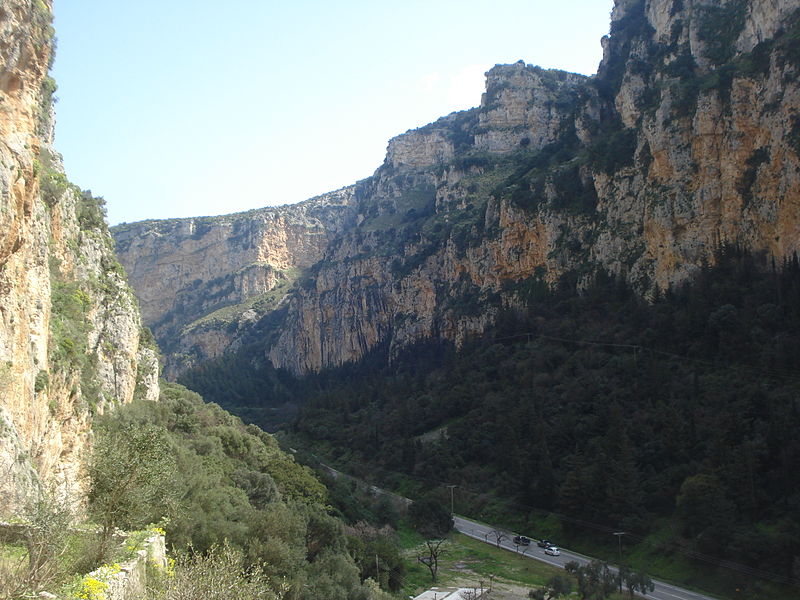
- The gorge of Kleisoura, on the old national road, 15 km south of the city.
- The hydroelectric dams of Kremasta, Kastraki and Stratos.
Mayors
- Georgios Baibas (1899–1907)
- Andreas Panagopoulos (1925–1934 and 1951–1952)
- Dimitrios Votsis (1934–1941)
- Anastasios Panagopoulos (1964–1967)
- Stelios Tsitsimelis (1975–1986)
- Giannis Vainas (1986–1994)
- Thimios Sokos (1994–2006)
- Pavlos Moscholios (2006–2014)
- Georgios Papanastasiou (2014–present)
Famous citizens

- Stratos Apostolakis (1964) – footballer
- Petros Michos (1959) – footballer
- Kostas Chatzopoulos (1868–1920) – poet
- Christos Garoufalis (1959) – writer
- Katia Gerou – actress
- Panagiotis Danglis (1853–1924) – general and politician
- Filipos Darlas (1983) – footballer
- Maria Dimadi (1907–1944) – resistance fighter
- Petros Fyssoun (1933) – actor
- Panos Kaponis (Caponis) (1947) – poet & writer
- Christos Kapralos (1909–1993) – artist
- Michalis Kousis (1953–2005) – Marathon runner
- Aristidis Moschos (1930–2001) – musician
- Pythagoras Papastamatiou (1930–1979) – writer
- Thodoros (1931–2018) – sculptor
- Evangelos Papastratos (1910–1988) – industrialist and benefactor of Agrinio
- Loukia Pistiola – actress
- Yiannis Yfantis (1949) – poet
- Kostis Maraveyas (1974) – singer and composer
- Spiros and Eleni Tsiknia – Benefactors of Agrinio
- – Greek army officer
Sporting teams

- Panetolikos– Super League Greece
- Gymnastiki Etairia Agriniou (G.E.A.)
- A.O. Agriniou
- Ionikos 80 Volleyball
- Nautikos Omilos
- Asteras Agriniou
- PAO Agriniou
- Panagriniakos
Gallery
File:Kalydon Aetolias 01.JPG|The ancient theatre of Calydon near Evinochori File:Agiatriada.JPG|Agia Triada Maurika Byzantine church File:Agrinio-center.jpg|Central square, Κεντρική Πλατεία Αγρινίου (Dimokratias square) AGRINIO XAR TRIKOUPI.jpg|Charilaou Trikoupi street File:Agr mouseio.jpg|Agrinio Archaeological museum File:Agrinio railway station.jpg|Old railway station File:AGRINIO REGION.jpg|Rural area in the municipality of Agrinio File:Trichonida lake.jpg|Trichonida Lake File:Ruins of Voukatio castle.jpg|Voukatio castle, Paravola File:Πλατεία Χατζοπούλου.jpg|Hatzopoulou Square File:Saint John church in Dafnias, Agrinio, Greece.jpg|Saint John church, Dafnias File:Ευαγγελισμός της Θεοτόκου Οχθίων Ακαρνανίας. - panoramio.jpg|Annunciation church File:Agia Triada Maurika. Agrinio, Aitoloakarnania, Greece.jpg|Agia Triada Maurika (another angle)
References
References
- [https://ekloges.ypes.gr/current/d/home/en/municipalities/9123/ Municipality of Agrinio, Municipal elections – October 2023], Ministry of Interior
- Gerasimos Papatrehas, "The history of Agrinion", Municipality of Agrinion, 1991
- "Κλιματικά Δεδομένα ανά Πόλη- ΜΕΤΕΩΓΡΑΜΜΑΤΑ, ΕΜΥ, Εθνική Μετεωρολογική Υπηρεσία".
- "HNMS".
- "ΦΕΚ B 1292/2010, Kallikratis reform municipalities". [[Government Gazette (Greece).
- "Population & housing census 2001 (incl. area and average elevation)". National Statistical Service of Greece.
This article was imported from Wikipedia and is available under the Creative Commons Attribution-ShareAlike 4.0 License. Content has been adapted to SurfDoc format. Original contributors can be found on the article history page.
Ask Mako anything about Agrinio — get instant answers, deeper analysis, and related topics.
Research with MakoFree with your Surf account
Create a free account to save articles, ask Mako questions, and organize your research.
Sign up freeThis content may have been generated or modified by AI. CloudSurf Software LLC is not responsible for the accuracy, completeness, or reliability of AI-generated content. Always verify important information from primary sources.
Report