From Surf Wiki (app.surf) — the open knowledge base
African diaspora
Spread of people with African heritage
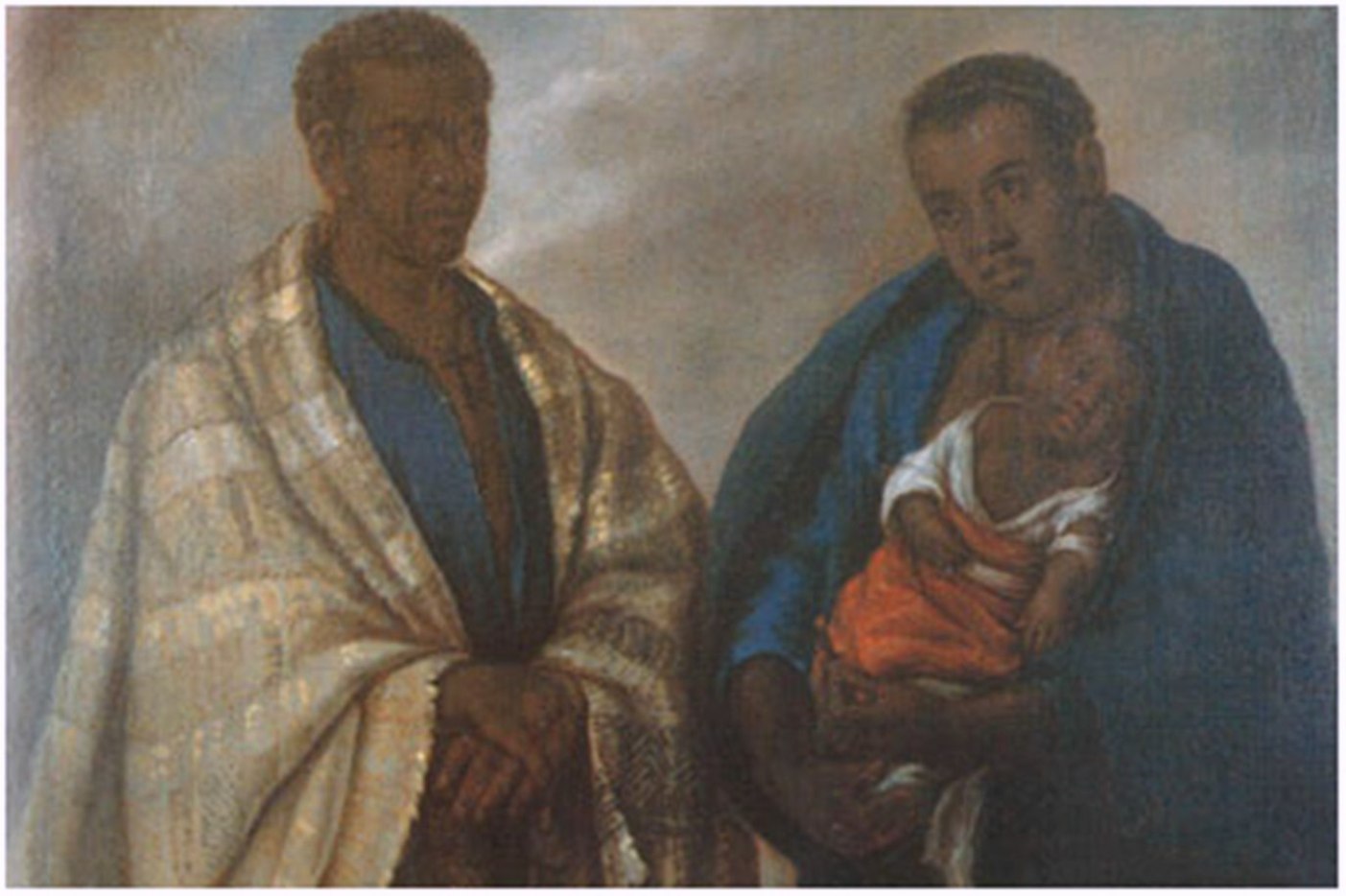
Spread of people with African heritage
| Field | Value |
|---|---|
| group | African diaspora |
| flag | File:Flag of the UNIA.svg |
| flag_caption | Pan-African flag |
| image | Map of the African Diaspora in the World.svg |
| caption | World map of African diaspora |
| region1 | Brazil |
| pop1 | 20,656,458–112,739,744 (2022) |
| ref1 | |
| region2 | United States |
| pop2 | 41,104,200–46,936,733 (2020) |
| ref2 | |
| region3 | Colombia |
| pop3 | 4,944,400–15,000,000 (2020) |
| ref3 | |
| region4 | Haiti |
| pop4 | 11,200,000 |
| ref4 | |
| region5 | France |
| pop5 | 8,000,000-10,000,000 |
| ref5 | |
| region6 | Saudi Arabia |
| pop6 | 3,600,000 |
| ref6 | |
| region7 | Yemen |
| pop7 | 3,500,000 |
| ref7 | |
| region8 | Mexico |
| pop8 | 2,576,213 (2020) |
| ref8 | |
| region9 | Jamaica |
| pop9 | 2,510,000 |
| ref9 | |
| region10 | United Kingdom |
| pop10 | 2,485,724 (2021) |
| ref10 | |
| region11 | Iraq |
| pop11 | 2,000,000 |
| ref11 | |
| region12 | Dominican Republic |
| pop12 | 1,704,000 (2017) |
| 8,984,587(Mixed) | |
| ref12 | |
| region13 | Canada |
| pop13 | 1,547,870 |
| ref13 | |
| region14 | Panama |
| pop14 | 1,258,915 (2023) |
| ref14 | |
| region15 | Spain |
| pop15 | 1,206,701 |
| ref15 | |
| region16 | Italy |
| pop16 | 1,140,000 |
| ref16 | |
| region17 | Venezuela |
| pop17 | 1,087,427 (2011) |
| ref17 | |
| region18 | Cuba |
| pop18 | 1,034,044–7,656,042 (mixed) |
| ref18 | |
| region19 | Germany |
| pop19 | 1,000,000 |
| ref19 | |
| region20 | Peru |
| pop20 | 828,894 (2017) |
| ref20 | |
| region21 | Oman |
| pop21 | 750,000 |
| region22 | Ecuador |
| pop22 | 569,212 (2022) |
| 245,256 (Mixed) | |
| ref22 | |
| region23 | Netherlands |
| pop23 | 507,000 |
| region24 | Trinidad and Tobago |
| pop24 | 452,536 |
| ref24 | |
| region25 | Belgium |
| pop25 | 358,268 (2023) |
| ref25 | |
| region26 | Australia |
| pop26 | 326,673 (2021) |
| ref26 | |
| region27 | Portugal |
| pop27 | up to ~ 700,000 |
| ref27 | |
| region28 | Argentina |
| pop28 | 302,936 (2022) |
| ref28 | |
| region29 | Sweden |
| pop29 | 283,695 (2024) |
| ref29 | |
| region30 | Barbados |
| pop30 | 270,853 |
| ref30 | |
| region31 | Pakistan |
| pop31 | 250,000 |
| ref31 | |
| region32 | Puerto Rico |
| pop32 | 228,711 |
| ref32 | |
| region33 | Guyana |
| pop33 | 225,860 |
| ref33 | |
| region34 | Suriname |
| pop34 | 200,406 |
| ref34 | |
| region35 | Chile |
| pop35 | 195,809 (2017) |
| ref35 | |
| region36 | Uruguay |
| pop36 | 149,689 (2011) |
| ref36 | |
| region37 | Norway |
| pop37 | 144,510 (2025) |
| ref37 | |
| region38 | Grenada |
| pop38 | 108,700 |
| ref38 | |
| region39 | Turkey |
| pop39 | 100,000 |
| ref39 | |
| region40 | Finland |
| pop40 | 70,592 (2023) |
| ref40 | |
| region41 | Jordan |
| pop41 | 60,000 |
| ref41 | |
| region42 | Russia |
| pop42 | 50,000 |
| ref42 | (est. 2009) |
| region43 | Costa Rica |
| pop43 | 45,228 (2018) |
| 289,209 (Mixed) | |
| ref43 | |
| region44 | Guatemala |
| pop44 | 27,647 (2018) |
| 19,529 (Mixed) | |
| ref44 | |
| region45 | India |
| pop45 | 19,514 (2011) |
| ref45 | |
| region46 | Paraguay |
| pop46 | 8,013 (2022) |
| ref46 | |
| languages | English (American, Caribbean), French (Canadian, Haitian), Haitian Creole, Jamaican Patois, Spanish, Portuguese, Papiamento, Dutch, Palenquero and African languages |
| rels | Christianity, Islam, Traditional African religions, Afro-American religions |
| related_groups | Africans |
emigration from Africa in historic times
(2023) 8,984,587(Mixed) 245,256 (Mixed) 289,209 (Mixed) 19,529 (Mixed)
The African diaspora is the worldwide collection of communities that descended from people from Africa. The term most commonly refers to emigrants of people of African heritage. Scholars typically identify "four circulatory phases" of this migration out of Africa. The first phase includes the ancient migrations of early humans out of Africa, which laid the foundations for the global human population. The second phase centers on the transatlantic slave trade between the 16th and 19th centuries, during which millions of Africans were forcibly relocated to the Americas, Europe, and the Caribbean. This period significantly shaped the cultural, social, and economic landscapes of many countries. The third phase involves voluntary migrations during the 19th and 20th centuries, often driven by economic opportunities, colonialism, and political upheaval. Lastly, the contemporary phase includes ongoing migrations in the 20th and 21st centuries, characterized by globalization and the pursuit of education, employment, and asylum. The African diaspora has contributed profoundly to global culture, politics, and identity, influencing music, cuisine, language, and social movements worldwide.
The phrase African diaspora gradually entered common usage at the turn of the 21st century. The term diaspora originates from the Greek word (diaspora, "scattering") which gained popularity in English in reference to the Jewish diaspora before being more broadly applied to other populations. Less commonly, the term has been used in scholarship to refer to more recent emigration from Africa.
The African Union (AU) defines the African diaspora as consisting: "of people of native or partial African origin living outside the continent, irrespective of their citizenship and nationality and who are willing to contribute to the development of the continent and the building of the African Union". Its constitutive act declares that it shall "invite and encourage the full participation of the African diaspora as an important part of our continent, in the building of the African Union". | access-date = January 7, 2016 | archive-url = https://web.archive.org/web/20151201073646/http://pages.au.int/cido/pages/diaspora-division | archive-date = December 1, 2015 }}
History
In the late 20th century, Africans began to emigrate to Europe and the Americas in increasing numbers, constituting new African diaspora communities.
In the Americas, the confluence of multiple ethnic groups from around the world contributed to multi-ethnic societies. In Central and South America, most people are descended from European, Native American, and African ancestry. In 1888, in Brazil nearly half the population were people of African descent, the variation of physical characteristics extends across a broad range.
Concepts and definitions
The African Union defined the African diaspora as "[consisting] of people of African origin living outside the continent, irrespective of their citizenship and nationality and who are willing to contribute to the development of the continent and the building of the African Union." Its constitutive act declares that it shall "invite and encourage the full participation of the African diaspora as an important part of our continent, in the building of the African Union."
Between 1500 and 1900, approximately four million enslaved Africans were transported to island plantations in the Indian Ocean as part of the Indian Ocean slave trade, roughly eight million were shipped northwards as part of the Trans-Saharan slave trade, and roughly eleven million were transported to the Americas as part of the Atlantic slave trade. The diaspora that resulted from the Atlantic slave trade, specifically, may also be referred to as the black diaspora.
Social and political
Many scholars have challenged conventional views of the African diaspora as a mere dispersion of African people. For them, it is a movement of liberation that opposes the implications of racialization. Their position assumes that Africans and their descendants abroad struggle to reclaim power over their lives through voluntary migration, cultural production and political conceptions and practices. It also implies the presence of cultures of resistance with similar objectives throughout the global diaspora. Thinkers like W. E. B. Dubois and more recently Robin Kelley, for example, have argued that black politics of survival reveal more about the meaning of the African diaspora than labels of ethnicity and race, and degrees of skin hue. From this view, the daily struggle against what they call the "world-historical processes" of racial colonization, capitalism, and Western domination defines blacks' links to Africa.
African diaspora and modernity
In the last decades, studies on the African diaspora have shown an interest in the roles that Africans played in bringing about modernity. This trend also opposes the traditional eurocentric perspective that has dominated history books showing Africans and its diasporans as primitive victims of slavery, and without historical agency. According to historian Patrick Manning, blacks toiled at the center of forces that created the modern world. Paul Gilroy describes the suppression of blackness due to imagined and created ideals of nations as "cultural insiderism". Cultural insiderism is used by nations to separate deserving and undeserving groups and requires a "sense of ethnic difference" as mentioned in his book The Black Atlantic. Recognizing their contributions offers a comprehensive appreciation of global history.
Culture and Literature
The African diaspora has shaped global culture, specifically in music and literature. Musical forms rooting from Black communities in the Americas and the Caribbean such as jazz, reggae, samba, and hiphop. Hip hop is one of the best examples and it started in the Bronx, created by African American and Afro-Caribbean youth and has grown into one of the most popular music genres around the world. Writers from the African diaspora have also made contributions by sharing stories about identity, family, migration, and the sense of belonging. Through literature, people are able to understand what diaspora life is really like and it gives a voice to experiences from the past. The influence of the African diaspora can be seen everywhere, from songs people listen to, and to the books they read. All of this helps show that the culture from the African diaspora still has an impact on the modern world. https://notestomypastself.wordpress.com/wp-content/uploads/2017/05/cant-stop-wont-stop-a-history-of-the-hip-hop-generation.pdf
Richard Iton's view of diaspora
Cultural and political theorist Richard Iton suggested that diaspora be understood as a "culture of dislocation". For Iton, the traditional approach to the African diaspora focuses on the ruptures associated with the Atlantic slave trade and Middle Passage, notions of dispersal, and "the cycle of retaining, redeeming, refusing, and retrieving 'Africa.'" This conventional framework for analyzing the diaspora is dangerous, according to Iton, because it presumes that diaspora exists outside of Africa, thus simultaneously disowning and desiring Africa. Further, Iton suggests a new starting principle for the use of diaspora: "the impossibility of settlement that correlates throughout the modern period with the cluster of disturbances that trouble not only the physically dispersed but those moved without traveling." Iton adds that this impossibility of settlement—this "modern matrix of strange spaces—outside the state but within the empire"—renders notions of black citizenship fanciful, and in fact, "undesirable". Iton argues that we citizenship, a state of statelessness thereby deconstructing colonial sites and narratives in an effort to "de-link geography and power", putting "all space into play" (emphasis added) For Iton, diaspora's potential is represented by a "rediscursive albeit agonistic field of play that might denaturalize the hegemonic representations of modernity as unencumbered and self-generating and bring into clear view its repressed, colonial subscript".
Populations and estimated distribution
African diaspora populations include:
- African Americans, Afro-Caribbeans, Afro-Latin Americans, Black Canadians – descendants of mostly enslaved West and Central Africans brought to the United States, the Caribbean, Central America and South America during the Atlantic slave trade.
- Afro-Arabs (Afro-Saudis, Afro-Omanis, Afro-Syrians, Afro-Palestinians, Afro-Iraqis, Afro-Jordanians, etc.), Afro-Iranians, Afro-Turks – descendants of Zanj slaves whose ancestors were brought to the Near East and other parts of Asia during the Indian Ocean slave trade.
- Siddis – descendants of Zanj slaves whose ancestors were brought to the Indian subcontinent (Pakistan and India). Also referred to as the Makrani in Pakistan.
| Continent or region | Country population | Afro-descendants | African and African-mixed population | Caribbean | 41,309,327 | 67% | 27,654,061 | South America | 388,570,461 | N/A | N/A | North America | 450,545,368 | 10% | 42,907,538 | Central America | 41,283,652 | 4% | 1,453,761 | Europe | 738,856,462 | 1% | Asia | 3,879,000,000 | |||||||||||||||||||
|---|---|---|---|---|---|---|---|---|---|---|---|---|---|---|---|---|---|---|---|---|---|---|---|---|---|---|---|---|---|---|---|---|---|---|---|---|---|---|---|---|---|---|---|
| Saint Kitts and Nevis | 39,619 | 98% | 38,827 | ||||||||||||||||||||||||||||||||||||||||
| Dominica | 71,293 | 96% (87% African + 9% Mixed) | 61,882 + 9,411 | ||||||||||||||||||||||||||||||||||||||||
| Haiti | 10,646,714 | 95% | 10,114,378 | ||||||||||||||||||||||||||||||||||||||||
| Antigua and Barbuda | 78,000 | 95% | 63,000 | ||||||||||||||||||||||||||||||||||||||||
| Jamaica | 2,812,090 | 92.1% | 2,663,614 | ||||||||||||||||||||||||||||||||||||||||
| Grenada | 110,000 | 91% | 101,309 | ||||||||||||||||||||||||||||||||||||||||
| The Bahamas | 332,634 | 90.6% (African + British mixed) | 301,366 | ||||||||||||||||||||||||||||||||||||||||
| Barbados | 281,968 | 90% | 253,771 | ||||||||||||||||||||||||||||||||||||||||
| Netherlands Antilles | 225,369 | 85% | 191,564 | ||||||||||||||||||||||||||||||||||||||||
| Saint Vincent and the Grenadines | 118,432 | 85% | 100,667 | ||||||||||||||||||||||||||||||||||||||||
| British Virgin Islands | 24,004 | 83% | 19,923 | ||||||||||||||||||||||||||||||||||||||||
| Saint Lucia | 172,884 | 83% | 142,629 | ||||||||||||||||||||||||||||||||||||||||
| Dominican Republic | 10,090,000 | 83% (11% Afro, 72% Mixed) | 1,109,900 + 8,000,000 | ||||||||||||||||||||||||||||||||||||||||
| US Virgin Islands | 108,210 | 80% | 86,243 | ||||||||||||||||||||||||||||||||||||||||
| Bermuda | 66,536 | 61% | 40,720 | ||||||||||||||||||||||||||||||||||||||||
| Cayman Islands | 47,862 | 60% | 28,717 | ||||||||||||||||||||||||||||||||||||||||
| Cuba | 11,116,396 | 35% | 3,890,738 | ||||||||||||||||||||||||||||||||||||||||
| Trinidad and Tobago | 1,215,527 | 34.2% | 415,710 | ||||||||||||||||||||||||||||||||||||||||
| Puerto Rico | 3,285,874 | 17.5% (African + Taino mixed) | 558,598 | ||||||||||||||||||||||||||||||||||||||||
| French Guiana | 199,509 | 66% | 131,676 | ||||||||||||||||||||||||||||||||||||||||
| Suriname | 632,638 | 37% | 223,718 | ||||||||||||||||||||||||||||||||||||||||
| Guyana | 770,794 | 36% | 277,486 | ||||||||||||||||||||||||||||||||||||||||
| Colombia | 53,093,632 | 10.6–25% (10% African, 15% Mulattoes, Mixed and other groups) | 7,800,000–13,000,000; Some studies (from the United Nations) suggests that the percentage of Afro-Colombians (including mixed race groups) are around 25% or lower than the entire population in Colombia. The city of Quibdo, (Chocó) has the highest percentage of Afro-Colombians than any other city in the country with 95.3% of its residents. The Colombian government estimates that 10.6% of Colombia's population are entirely of African descent. | ||||||||||||||||||||||||||||||||||||||||
| Brazil | 213,650,000 | 55.5% | title=Maioria da população do Brasil se declara parda | url=https://www.ufrn.br/imprensa/noticias/77639/maioria-da-populacao-do-brasil-se-declara-parda | access-date=2025-03-16 | website=Universidade Federal do Rio Grande do Norte | quote=(Translated) The figures show that 45.3% of the population of the country declared themselves brown; 43.5% declared themselves white, 10.2% black, 0.8% indigenous and 0.4% yellow. In the sum, 56.7% of Brazilians are non-white, of these, 55.5% are afrodescendant.}} | ||||||||||||||||||||||||||||||||||||
| Ecuador | 13,927,650 | 5% | 680,000 | ||||||||||||||||||||||||||||||||||||||||
| Uruguay | 3,494,382 | 4% | 255,074 | ||||||||||||||||||||||||||||||||||||||||
| Venezuela | 27,227,930 | 3% (African) | 1,087,427 | ||||||||||||||||||||||||||||||||||||||||
| Peru | 29,496,000 | 3% | 828,841 | ||||||||||||||||||||||||||||||||||||||||
| Chile | 17,094,270 | 1% | 170,943* | ||||||||||||||||||||||||||||||||||||||||
| Argentina | 46,044,703 | 302,936 | |||||||||||||||||||||||||||||||||||||||||
| Bolivia | 10,027,254 | 23,330 | |||||||||||||||||||||||||||||||||||||||||
| Paraguay | 6,109,903 | 8,013 | |||||||||||||||||||||||||||||||||||||||||
| United States | 328,745,538 | 12% | 42,020,743 According to the genomics company 23andMe, less than 4% of White Americans have 1% or more of African ancestry. Including this figure changes the total to **49,241,508** | ||||||||||||||||||||||||||||||||||||||||
| Canada | 39,566,248 | 4% | 1,547,870 | ||||||||||||||||||||||||||||||||||||||||
| Mexico | 108,700,891 | 1% | title = Principales resultados de la Encuesta Intercensal 2015 Estados Unidos Mexicanos | url = http://www.beta.inegi.org.mx/contenidos/proyectos/enchogares/especiales/intercensal/2015/doc/eic2015_resultados.pdf | publisher = INEGI | access-date = December 9, 2015 | page = 77 | archive-url = https://web.archive.org/web/20170422033628/http://www.beta.inegi.org.mx/contenidos/proyectos/enchogares/especiales/intercensal/2015/doc/eic2015_resultados.pdf | archive-date = April 22, 2017 }} | ||||||||||||||||||||||||||||||||||
| Belize | 301,270 | 31% | 93,394 | ||||||||||||||||||||||||||||||||||||||||
| Panama | 3,292,693 | 11% | 362,196 | ||||||||||||||||||||||||||||||||||||||||
| Nicaragua | 5,785,846 | 9% | 520,726 | ||||||||||||||||||||||||||||||||||||||||
| Costa Rica | 4,195,914 | 3% | 125,877 | ||||||||||||||||||||||||||||||||||||||||
| Honduras | 7,639,327 | 2% | 152,787 | ||||||||||||||||||||||||||||||||||||||||
| France | 68,000,000 | 8% | url=https://www.nytimes.com/2008/06/17/arts/17abroad.html | title=For blacks in France, Obama's rise is reason to rejoice, and to hope | last=Kimmelman | first=Michael | date=June 17, 2008 | work=The New York Times | access-date=October 18, 2021}} | ||||||||||||||||||||||||||||||||||
| Portugal | 10,467,366 | 7% | up to ~ 700,000 (People with recent immigrant background are only 325,000 (2023)) It is illegal for the Portuguese State to collect data on ethnicity and race. the percentage is likely much higher. | ||||||||||||||||||||||||||||||||||||||||
| United Kingdom | 67,886,004 | 5% (inc. partial) | 3,000,000 | ||||||||||||||||||||||||||||||||||||||||
| Netherlands | 16,491,461 | 3% | 507,000 | - | |||||||||||||||||||||||||||||||||||||||
| Belgium | 10,666,866 | 3% | ~300,000 | ||||||||||||||||||||||||||||||||||||||||
| Spain | 47,615,033 | 2,5% (including Maghrebis) | 1,206,701 (Of those ~300,000 are Black Sub-Saharan African) | ||||||||||||||||||||||||||||||||||||||||
| Sweden | 10,379,295 (2020) | 2.3% | 236,975 (2020) | ||||||||||||||||||||||||||||||||||||||||
| Italy | 60,795,612 | 2% (including Maghrebis) | 1,036,653 (Of those ~450,000 are Black Sub-Saharan African) | ||||||||||||||||||||||||||||||||||||||||
| Ireland | 4,339,000 | 1.38% | 64,639 | ||||||||||||||||||||||||||||||||||||||||
| Germany | 82,000,000 | 1.2% (including Maghrebis) | last=OnlineFOCUS Staff Writer | title=Zu Besuch in Neger und Mohrenkirch: Können Ortsnamen rassistisch sein? [Can place names be racist?] | url=https://www.focus.de/wissen/mensch/sprache/es-gibt-einige-die-entsetzt-waren-zu-besuch-in-neger-und-mohrenkirch-koennen-ortsnamen-rassistisch-sein_id_12824108.html | date=December 30, 2020 | access-date=April 27, 2021 | work=FOCUS Online | language=de}} | ||||||||||||||||||||||||||||||||||
| Finland | 5,603,851 (2023) | 1.26% | 70,592 (2023) | ||||||||||||||||||||||||||||||||||||||||
| Norway | 4,858,199 | 1% | 67,000 | ||||||||||||||||||||||||||||||||||||||||
| Switzerland | 7,790,000 | 1% | 57,000 | ||||||||||||||||||||||||||||||||||||||||
| Russia | 141,594,000 | 50,000 | |||||||||||||||||||||||||||||||||||||||||
| Israel | 7,411,000 | 3% | 200,000 | ||||||||||||||||||||||||||||||||||||||||
| India | 1,132,446,000 | 40,000 | |||||||||||||||||||||||||||||||||||||||||
| Malaysia | 28,334,135 | 31,904 | |||||||||||||||||||||||||||||||||||||||||
| Hong Kong | 7,200,000 | ||||||||||||||||||||||||||||||||||||||||||
| China | 1,321,851,888 | 16,000 | |||||||||||||||||||||||||||||||||||||||||
| Japan | 127,756,815 | 10,000 |
The Americas
Main article: African diaspora in the Americas

- African Americans – There are an estimated 43 million people of black African descent in the United States.
- Afro-Latin Americans – An estimation from the Pew Research Center calculates about 100 million people of African Descent. It's important to note, however, that the racial classification criteria used in the US can differ markedly from the racial classification criteria used in other countries in the region and from how other populations perceive their own racial identification. There are also sizeable African-descended populations in Cuba, Haiti, Colombia and Dominican Republic, often with ancestry of other major ethnic groups.
- Afro-Caribbeans – The population in the Caribbean is approximately 23 million. Significant numbers of African-descended people include Haiti – 8 million, Dominican Republic – 7.9 million, and Jamaica – 2.7 million,
Caribbean
Main article: Afro-Caribbean
.jpg)
The first Africans in the Americas arrived in the region during the initial period of European colonization. In 1492, Afro-Spanish sailor Pedro Alonso Niño served as a pilot on the voyages of Christopher Columbus; though he returned to the Americas in 1499, Niño did not settle in the region. By the early 16th century, more Africans began to arrive in Spanish colonies in the Americas, sometimes as free people of color, but the majority were enslaved. Demand of African labor increased as the indigenous population of the Americas experienced a massive population decline due to the introduction of Eurasian infectious diseases (such as smallpox) to which they had no natural immunity. The Spanish Crown granted asientos (monopoly contracts) to merchants granting them the right to supply enslaved Africans in to Spanish colonies in the Americas, regulating the trade. As other European nations began establishing colonies in the Americas, these new colonies began importing enslaved Africans as well.
During the 17th and 18th centuries, most European colonies in the Caribbean operated on plantation economies fueled by slave labor, and the resulting importation of enslaved Africans meant that Afro-Caribbeans soon far outnumbered their European enslavers in terms of population. Roughly eleven to twelve million enslaved Africans were transported to the Americas as part of the transatlantic slave trade.
Beginning in 1791, the Haitian Revolution, a slave rebellion by self-emancipated slaves in the French colony of Saint-Domingue eventually led to the creation of the Republic of Haiti. The new state, led by Jean Jacques Dessalines was the first nation in the Americas to be established from a successful slave revolt and represented a challenge to the existing slave systems in the region. Continuous waves of slave rebellions, such as the Baptist War led by Samuel Sharpe in British Jamaica, created the conditions for the incremental abolition of slavery in the region, with Great Britain abolishing it in the 1830s. The Spanish colony of Cuba was the last Caribbean island to emancipate its slaves.
During the 20th century, Afro-Caribbean people began to assert their cultural, economic and political rights on the world stage. The Jamaican Marcus Garvey formed the UNIA movement in the United States, continuing with Aimé Césaire's négritude movement, which was intended to create a pan-African movement across national lines. From the 1960s, the decolonization of the Americas led to various Caribbean countries gaining their independence from European colonial rule. They were pre-eminent in creating new cultural forms such as calypso, reggae music, and Rastafari within the Caribbean. Beyond the region, a new Afro-Caribbean diaspora, including such figures as Stokely Carmichael and DJ Kool Herc in the United States, was influential in the creation of the black power and hip hop movements. Influential political theorists such as Walter Rodney, Frantz Fanon and Stuart Hall contributed to anti-colonial theory and movements in Africa, as well as cultural developments in Europe.
North America
United States
Main article: Black Americans
Several migration waves to the Americas, as well as relocations within the Americas, have brought people of African descent to North America. According to the Schomburg Center for Research in Black Culture, the first African populations came to North America in the 16th century via Mexico and the Caribbean to the Spanish colonies of Florida, Texas and other parts of the South. Out of the 12 million people from Africa who were shipped to the Americas during the transatlantic slave trade, 645,000 were shipped to the British colonies on the North American mainland and the United States. In 2000, African Americans comprised 12.1 percent of the total population in the United States, constituting the largest racial minority group. The African-American population is concentrated in the southern states and urban areas.
In the establishment of the African diaspora, the transatlantic slave trade is often considered the defining element, but people of African descent have engaged in eleven other migration movements involving North America since the 16th century, many being voluntary migrations, although undertaken in exploitative and hostile environments.
In the 1860s, people from sub-Saharan Africa, mainly from West Africa and the Cape Verde Islands, started to arrive in a voluntary immigration wave to seek employment as whalers in Massachusetts. This migration continued until restrictive laws were enacted in 1921 that in effect closed the door on non-Europeans. By that time, men of African ancestry were already a majority in New England's whaling industry, with African Americans working as sailors, blacksmiths, shipbuilders, officers, and owners. The internationalism of whaling crews, including the character Daggoo, an African harpooneer, is recorded in the 1851 novel Moby-Dick. They eventually took their trade to California.
Today 1.7 million people in the United States are descended from voluntary immigrants from sub-Saharan Africa, most of whom arrived in the late twentieth century. African immigrants represent 6 percent of all immigrants to the United States and almost 5 percent of the African-American community nationwide. About 57 percent immigrated between 1990 and 2000. Immigrants born in Africa constitute 1.6 percent of the black population. People of the African immigrant diaspora are the most educated population group in the United States—50 percent have bachelor's or advanced degrees, compared to 23 percent of native-born Americans. The largest African immigrant communities in the United States are in New York, followed by California, Texas, and Maryland.
Due to the legacy of slavery in the colonial history of the United States, the average African American has a significant European component to his DNA. According to a study conducted in 2011, the African American DNA consists on average of 73.2% West African, 24% European and 0.8% Native American DNA. The European ancestry of African Americans is largely patrilineal with an estimated 19% of African American ancestors being European males, and 5% being European females. The interracial mixing occurred before the Civil War and largely in the American South, beginning during the colonial era.
The states with the highest percentages of people of African descent are Mississippi (36%), and Louisiana (33%). While not a state, the population of the District of Columbia is more than 50% black. Recent African immigrants represent a minority of black people nationwide. The U.S. Bureau of the Census categorizes the population by race based on self-identification. The census surveys have no provision for a "multiracial" or "biracial" self-identity, but since 2000, respondents may check off more than one box and claim multiple ethnicity that way.
Canada
Main article: Black Canadians
Much of the earliest black presence in Canada came from the newly independent United States after the American Revolution. The British resettled African Americans (known as Black Loyalists) primarily in Nova Scotia. These were primarily former slaves who had escaped to British lines for promised freedom during the Revolution.
Later during the antebellum years, other individual African Americans escaped to Canada, mostly to locations in Southwestern Ontario, via the Underground Railroad, a system supported by both blacks and whites to assist fugitive slaves. After achieving independence, northern states in the U.S. had begun to abolish slavery as early as 1793, but slavery was not abolished in the South until 1865, following the American Civil War.
Black immigration to Canada in the twentieth century consisted mostly of Caribbean descent. As a result of the prominence of Caribbean immigration, the term "African Canadian", while sometimes used to refer to the minority of Canadian blacks who have direct African or African-American heritage, is not normally used to denote black Canadians. Blacks of Caribbean origin are usually denoted as "West Indian Canadian", "Caribbean Canadian" or more rarely "Afro-Caribbean Canadian", but there remains no widely used alternative to "Black Canadian" which is considered inclusive of the African, Afro-Caribbean, and African-American black communities in Canada.
Central America and South America
Main article: Afro-Latin Americans
At an intermediate level, in South America and in the former plantations in and around the Indian Ocean, descendants of enslaved people are a bit harder to define because many people are mixed in demographic proportion to the original slave population. In places that imported relatively few slaves (like Chile), few if any are considered "black" today. In places that imported many enslaved people (like Brazil or Dominican Republic), the number is larger, though most identify themselves as being of mixed, rather than strictly African, ancestry. In places like Brazil and the Dominican Republic, blackness is performed in more taboo ways than it is in, say, the United States. The idea behind Trey Ellis Cultural Mulatto comes into play as there are blurred lines between what is considered as black.
In Colombia, the African slaves were first brought to work in the gold mines of the Department of Antioquia. After this was no longer a profitable business, these slaves slowly moved to the Pacific coast, where they have remained unmixed with the white or Indian population until today. The whole Department of Chocó remains a black area. Mixture with white population happened mainly in the Caribbean coast, which is a mestizo area until today. There was also a greater mixture in the south-western departments of Cauca and Valle del Cauca. In these mestizo areas the African culture has had a great influence.
In Central America, Afro-indigenous people, also known as Caribs or Garifuna(Carib and African descent) migrated to Central America to save themselves from forced enslavement.These people trace their origin to the Saint Vincent island.The original exiled population of 3000 people has now grown into an estimated 60000 people.The community has retained its Afro indigenous culture.The community makes around 1 to 2% of the population in Guatemala, Nicaragua, Honduras, and Belize.Many also live in the United states. The people have retained their language, beliefs and the associated rituals.
Europe
Some European countries make it illegal to collect demographic census information based on ethnicity or ancestry (e.g. France), but some others do query along racial lines (e.g. the UK). Of 42 countries surveyed by a European Commission against Racism and Intolerance study in 2007, it was found that 29 collected official statistics on country of birth, 37 on citizenship, 24 on religion, 26 on language, 6 on country of birth of parents, and 22 on nationality or ethnicity.
France
Estimates of 8 to 10 million of African descent, although one quarter of the Afro-French population live in overseas territories. This number is difficult to estimate because the French census does not use race as a category for ideological reasons.
Germany
As of 2020, there were approximately 1,000,000 Afro-Germans. This number is difficult to estimate because the German census does not use race as a category.
Georgia
Main article: Afro-Abkhazians
Some black people of unknown origin (Though perceived as Ethiopians) once inhabited southern Abkhazia; today, they have been assimilated into the Abkhaz population.
Italy
Main article: African emigrants to Italy
African emigrants to Italy include Italian citizens and residents originally from Africa; immigrants from Africa officially residing in Italy in 2015 numbered over 1 million residents.
Netherlands
There are an estimated 500,000 African or mixed African people in the Netherlands and the Dutch Antilles. They mainly live in the islands of Aruba, Bonaire, Curaçao and Saint Martin, the latter of which is also partly French-controlled. Many Afro-Dutch people reside in the Netherlands.
Portugal
As of 2023, is up to 700,000 people of recent Native African immigrant background living in Portugal. They mainly live in the regions of Lisbon metropolitan area. As Portugal doesn't collect information dealing with ethnicity, the estimate includes only people that, as of 2023, hold the citizenship of an African country or people who have acquired Portuguese citizenship from 2008 to 2021, thus excluding descendants, people of more distant African ancestry or people who have settled in Portugal generations ago and are now Portuguese citizens.
Romania
Main article: Afro-Romanian
Spain
As of 2021, there were 1,206,701 Africans. They mainly live in the regions of Andalusia, Catalonia, Madrid and the Canaries.
United Kingdom
Main article: Black British
There are about 2,500,000 (4.2%) people identifying as Black British (not including British Mixed), among which are Afro-Caribbeans. They live mostly in urban areas in England.
Eurasia

Russia
Main article: Afro-Russians
The first Black people in Russia were the result of the slave trade of the Ottoman Empire and their descendants still live on the coasts of the Black Sea. Czar Peter the Great was advised by his friend Lefort to bring in Africans to Russia for hard labor. Alexander Pushkin's great-grandfather was the African princeling Abram Petrovich Gannibal, who became Peter's protégé, was educated as a military engineer in France, and eventually became general-en-chef, responsible for the building of sea forts and canals in Russia.
During the 1930s fifteen Black American families moved to the Soviet Union as agricultural experts. As African states became independent in the 1960s, the Soviet Union offered their citizens the chance to study in Russia; over 40 years, 400,000 African students came, and some settled there.
Turkey
Main article: Afro-Turks
Afro-Turks are people of Zanj (Bantu) descent living in Turkey. Like the Afro-Abkhazians, they trace their origins to the Ottoman slave trade. Beginning several centuries ago, a number of Africans came to the Ottoman Empire, usually via Zanzibar as Zanj and from places such as present-day Niger, Saudi Arabia, Libya, Kenya and Sudan; they settled by the Dalaman, Menderes and Gediz valleys, Manavgat, and Çukurova. In the 19th century, contemporary records mention African quarters of İzmir, including Sabırtaşı, Dolapkuyu, Tamaşalık, İkiçeşmelik, and Ballıkuyu. Africans in Turkey are around 100.000 people.
Asia
South Asia
There are a number of communities in South Asia that are descended from African slaves, traders or soldiers. These communities are the Siddi, Sheedi, Makrani and Sri Lanka Kaffirs. In some cases, they became very prominent, such as Jamal-ud-Din Yaqut, Hoshu Sheedi, Malik Ambar, or the rulers of Janjira State. The Mauritian creole people are the descendants of African slaves similar to those in the Americas.
Siddi people
The Siddi (), also known as the Sheedi, Sidi, Siddhi, or Habshi, are an ethnic group inhabiting India and Pakistan. Members are mostly descended from the Bantu peoples of Southeast Africa, along with Habesha immigrants. Some were merchants, sailors, indentured servants, slaves and mercenaries. The Siddi population is currently estimated at 850,000 individuals, with Karnataka, Gujarat and Telangana states in India and Makran and Karachi in Pakistan as the main population centres. Siddis are primarily Muslims, although some are Hindus and others belong to the Catholic Church.
Although often economically and socially marginalised as a community today, Siddis once ruled Bengal as the Habshi dynasty of the Bengal Sultanate, while the famous Siddi, Malik Ambar, effectively controlled the Ahmadnagar Sultanate. He played a major role, politically and militarily, in Indian history by slowing down the penetration of the Delhi-based Mughals into the Deccan Plateau of South central India.
Southeast Asia
Some Pan-Africanists also consider other peoples as diasporic African peoples. These groups include, among others, Negritos, such as in the case of the peoples of the Malay Peninsula (Orang Asli); New Guinea (Papuans); Andamanese; certain peoples of the Indian subcontinent, and the aboriginal peoples of Melanesia and Micronesia. Most of these claims are rejected by mainstream ethnologists as pseudoscience and pseudo-anthropology, as part of ideologically motivated Afrocentrist irredentism, touted primarily among some extremist elements in the United States who do not reflect on the mainstream African-American community. Mainstream anthropologists determine that the Andamanese and others are part of a network of autochthonous ethnic groups present in South Asia that trace their genetic ancestry to a migratory sequence that culminated in the Australian Aboriginals rather than from Africa directly. Genetic testing has shown the Andamani to belong to the Y-Chromosome Haplogroup D-M174, which is in common with Australian Aboriginals and the Ainu people of Japan rather than the actual African diaspora.
West Asia
In 517 AD, the Himyarite king Ma'adikarib was overthrown by Dhu Nuwas, a Jewish leader who began persecuting Christians and confiscating trade goods between Aksum and the Byzantine Empire, both of which were Christian nations. According to the Book of the Himyarites, a man identified as Bishop Thomas journeyed to Aksum to report on the persecution of Christians in Himyar to the Aksumite Kingdom. As a result, the Aksumite king Ahayawa invaded Himyar. Dhu Nuwas fled this first invasion, and at least 580 Aksumite soldiers remained in Himyar. Himyarites who opposed Aksumite settlement united under Dhu Nuwas, and the formerly expelled king traveled back to kill the Aksumite soldiers and continue the oppression of Christians, forcing some settlers back into Aksum.

A third invasion was prompted by a rebellion of Aksumite soldiers between 532 and 535, led by the former slave and Aksumite commander Abreha, against Sumyafa Ashwa. Kaleb sent 3,000 soldiers to quell this rebellion, led by one of his relatives, but these soldiers joined Abreha's rebellion upon arrival and killed Kaleb's relative. Kaleb sent reinforcements in another attempt to end the rebellion, but his soldiers were defeated and forced to turn around. Following Kaleb's death, Abreha paid tribute to Aksum to reinforce Himyar's independence. The new Himyarite nation consisted of several thousand Aksumite emigrants, serving as one of the earliest examples of a large-scale movement of tropical Africans outside of the continent. Just a century later, Aksum's relationship to this southwestern part of the Arabian Peninsula would be pivotal to the introduction of Islam at Mecca and Yathrib (Medina), as evidenced by the naming of Bilal, an Ethiopian, as the first muezzin, and the flight of some of Muhammad's earliest followers from Mecca to Askum.
Music and the African diaspora
Although fragmented and separated by land and water, the African Diaspora maintains connection through the use of music. This link between the various sects of the African Diaspora is termed by Paul Gilroy as The Black Atlantic. The Black Atlantic is possible because black people have a shared history rooted in oppression that is displayed in Black genres such as rap and reggae. The linkages within the black diaspora formulated through music allows consumers of music and artists to pull from different cultures to combine and create a conglomerate of experiences that reaches across the world.
References
References
- (2022-11-08). "Routledge Handbook of Afro-Latin American Studies". Taylor & Francis.
- "Afro-Brazilians".
- "Maioria da população do Brasil se declara parda".
- "Tabela 9605: População residente, por cor ou raça, nos Censos Demográficos".
- (August 12, 2021). "Race and Ethnicity in the United States: 2010 Census and 2020 Census". [[US Census Bureau]].
- "Visibilización estadística de los grupos étnicos". Departamento Administrativo Nacional de Estadistica (DANE).
- "HAITI 2023 INTERNATIONAL RELIGIOUS FREEDOM REPORT".
- (21 October 2014). "Don't believe anyone in France who says they don't see race".
- (2 April 2007). "Combien sont-ils ?".
- (1 April 2008). "Combien y a-t-il de Noirs en France ?".
- Crumley, Bruce. (24 March 2009). "Should France Count Its Minority Population?".
- {{Cite CIA World Factbook. (2017)
- (November 29, 2014). "Yemen's Al-Akhdam face brutal oppression – CNN iReport".
- "Principales resultados del Censo de Población y Vivienda 2020".
- "Jamaica – People".
- (November 11, 2022). "2021 Census: Ethnic group, local authorities in the United Kingdom". Office for National Statistics.
- (2011). "Ethnic group". Office for National Statistics.
- . (21 May 2024). ["Scotland's Census 2022 - Ethnic group, national identity, language and religion - Chart data"](https://www.scotlandscensus.gov.uk/media/trbdxzme/scotland-s-census-2022-ethnic-group-national-identity-language-and-religion-chart-data.xlsx). *[[National Records of Scotland]]*.
- (22 September 2022). "MS-B01: Ethnic group". Northern Ireland Statistics and Research Agency.
- "Refworld | World Directory of Minorities and Indigenous Peoples - Iraq: Black Iraqis".
- "The ethnicity of the Dominican population".
- (April 25, 2017). "Ethnic groups of the Dominican Republic".
- (9 February 2022). "Profile table, Census Profile, 2021 Census of Population - Canada [Country]".
- (March 2023). "El 32,8 % de la población de Panamá se reconoce como afrodescendiente".
- "Población extranjera por país de nacionalidad, edad (grupos quinquenales) y sexo".
- Fabrizio Ciocca. (November 12, 2019). "Africani d'Italia".
- (May 2014). "XIV Censo National de Poblacion y Vivienda".
- "Población por sexo y zona de residencia según grupos de edades y color de la piel".
- "Zu Besuch in Neger und Mohrenkirch: Können Ortsnamen rassistisch sein?".
- (2018). "La Autoidentificación Étnica: Población Indígena y Afroperuana.".
- (September 2, 2011). "Población del país es joven y mestiza, dice censo del INEC".
- (2012). "Trinidad and Tobago 2011 Population and Housing Census: Demographic Report". Government of the Republic of Trinidad and Tobago, Central Statistical Office.
- "Origin {{!}} Statbel".
- (November 25, 2021). "ABS Statistics".
- "Censo 2022".
- (December 2024). "Befolkning efter födelseland och ursprungsland, 31 december 2024, totalt". Statistiska centralbyrån.
- [https://www.cia.gov/the-world-factbook/countries/barbados/ Barbados]. ''[[The World Factbook]]''. [[Central Intelligence Agency]].
- Paracha, Nadeem F.. (August 26, 2018). "Smokers' corner: Sindh's African roots".
- "Puerto Rico Population Declined 11.8% from 2010 to 2020".
- "Archived copy".
- "Censusstatistieken 2012".
- "Cuadro P42. Total del país. Población afrodescendiente en viviendas particulares por sexo, según grupo de edad. Año 2010".
- "Cuadro P43. Total del país. Población afrodescendiente en viviendas particulares por sexo, según lugar de nacimiento. Año 2010".
- (November 2018). "Medición de Pueblos Indígenas y Afrodescendientes en el Censo de Población y Vivienda 2017".
- (9 April 2018). "Extranjeros en Chile superan el millón 110 mil y el 72% se concentra en dos regiones: Antofagasta y Metropolitana". El Mercurio.
- (7 March 2021). "La población afro-uruguaya en el Censo 2011".
- "Immigrants and Norwegian-born to immigrant parents".
- "Grenada". Central Intelligence Agency (CIA).
- (December 13, 2020). "İstanbul'da yaşayan Afrikalıların sayısı 70 bine yakın. Ten renklerinden ötürü ötekileştirilmiyor olmak onları Türkiye'ye bağlıyor.".
- "11rv -- Origin and background country by sex, by municipality, 1990-2023".
- link. (July 24, 2014 Jordan)
- Gribanova, Lyubov [http://www.nashi-deti.ru/articles/15/ "Дети-метисы в России: свои среди чужих"] {{Webarchive. link. (November 4, 2008 (in Russian). Nashi Deti Project. Retrieved February 25, 2010.)
- "Costa Rica: Población total por autoidentificación étnica-racial, según provincia y sexo. (Spanish)".
- "Portal de Resultados del Censo 2018". Censopoblacion.gt.
- "A-11 Individual Scheduled Tribe Primary Census Abstract Data and its Appendix". [[Registrar General and Census Commissioner of India.
- "Afroparaguayos, condenados a no existir".
- "African Diaspora {{!}} Encyclopedia.com".
- (July 1, 1998). "General History of Africa". University of California Press.
- Warren, J. Benedict. (1985). "The Conquest of Michoacán". [[University of Oklahoma Press]].
- Harris, J. E. (1993). "Introduction" In J. E. Harris (ed.), ''Global Dimensions of the African Diaspora'', pp. 8–9.
- "Google Books Ngram Viewer".
- In an article published in 1991, [[William Safran]] set out six rules to distinguish "diasporas" from general migrant communities. While Safran's definitions were influenced by the idea of the [[Jewish diaspora]], he recognised the expanding use of the term. [[Rogers Brubaker]] (2005) also noted that use of the term "diaspora" had started to take on an increasingly general sense. He suggests that one element of this expansion in use "involves the application of the term diaspora to an ever-broadening set of cases: essentially to any and every nameable population category that is to some extent dispersed in space". An early example of the use of "African diaspora" appears in the title of Sidney Lemelle, Robin D. G. Kelley, ''Imagining Home: Class, Culture and Nationalism in the African Diaspora '' (1994).
- (2000). "Africans in the Diaspora: The Diaspora and Africans". African Affairs.
- "The Diaspora Division {{!}} African Union".
- "Defining and Studying the Modern African Diaspora {{!}} Perspectives on History {{!}} AHA".
- (September 29, 2017). "Slavery in Antiquity". Routledge.
- (2007). "Historical survey > The international slave trade > Slavery".
- (January 2005). "One drop & one hate".
- Larson, Pier M.. (1999). "Reconsidering Trauma, Identity, and the African Diaspora: Enslavement and Historical Memory in Nineteenth-Century Highland Madagascar". William and Mary Quarterly.
- (2016-12-01). "The African diaspora: history, adaptation and health". Current Opinion in Genetics & Development.
- Lao-Montes, Agustín. (2007). "Decolonial Moves: Trans-locating African Diaspora Spaces". Cultural Studies.
- Gilroy, 3
- Manning, Patrick. ''The African Diaspora: A History Through Culture.'' New York: Columbia University Press, 2009, Kindle.
- Iton, Richard. ''In Search of the Black Fantastic: Politics and Popular Culture in the Post-Civil Rights Era''. [[Oxford University Press]], 2010.
- Labbż, Theola. (January 11, 2004). "A Legacy Hidden in Plain Sight". The Washington Post.
- "The World Factbook>". cia.gov.
- [https://www.cia.gov/the-world-factbook/countries/jamaica/ Jamaica]. ''[[The World Factbook]]''. [[Central Intelligence Agency]].
- "Dominican Republic: Racial and Ethnic Groups". U.S. Library of Congress.
- http://www.informaworld.com/index/902542287.pdf Inter-American Dialogue {{Dead link. (April 2021)
- [https://www.cia.gov/the-world-factbook/countries/cuba/ Cuba]. ''[[The World Factbook]]''. [[Central Intelligence Agency]].
- [https://www.cia.gov/the-world-factbook/countries/trinidad-and-tobago/ Trinidad and Tobago]. ''[[The World Factbook]]''. [[Central Intelligence Agency]].
- "Puerto Rico: 2020 Census". United States Census Bureau.
- "Colombia una nación multicultural: su diversidad étnica".
- "Población Ecuatoriana Por Autodefinición Étnica en El VI Censo de Población del Año".
- [http://www.ine.gov.ve/CENSO2011/documentos/pdf/ResultadosBasicosCenso2011.pdf Resultado Basico del XIV Censo Nacional de Población y Vivienda 2011] {{Webarchive. link. (December 3, 2017 , (p. 14).)
- "CIA – The World Factbook – United States". Cia.gov.
- (2014-12-18). "Ancestry Across the United States".
- (September 11, 2009). "Visible minority population, by province and territory (2001 Census)". 0.statcan.ca.
- "Principales resultados de la Encuesta Intercensal 2015 Estados Unidos Mexicanos". [[INEGI]].
- link. "". (June 2016)
- Sylvain Papon. "Demographic report 2022".
- Kimmelman, Michael. (June 17, 2008). "For blacks in France, Obama's rise is reason to rejoice, and to hope". The New York Times.
- "Portugal: Comunidade cabo-verdiana está muito bem integrada mas embaixador admite desafios".
- "Angola – Emigrantes totais 2020 {{!}} Countryeconomy.com".
- (15 November 2023). "Visão {{!}} Guineenses em Portugal elegem liberdade como maior conquista da Guiné-Bissau".
- "Moçambique – Emigrantes totais 2020 {{!}} Countryeconomy.com".
- "ISTAT (Istituto Nazionale di Statistica), Popolazione residente 2015". Demo.istat.it.
- "ISTAT (Istituto Nazionale di Statistica), Cittadini Stranieri, Bilancio Demografico 2015 Africa". Demo.istat.it.
- "Ireland: People". Central Intelligence Agency.
- OnlineFOCUS Staff Writer. (December 30, 2020). "Zu Besuch in Neger und Mohrenkirch: Können Ortsnamen rassistisch sein? [Can place names be racist?]". FOCUS Online.
- "11rb -- Population and change in population size by sex, 1750-2023".
- (January 1, 2010). "Statistics Norway – Persons with immigrant background by immigration category, country background and sex. 1 January 2010". Ssb.no.
- "Federal Office of Statistics".
- "Мймй Зпмдео Й Мймй Дйлупо. Фемертпелф "Юетоще Тхуулйе": Уйопруйу". Africana.ru.
- "Music Earns Black Hebrews Some Acceptance".
- "colaco.net". colaco.net.
- Lisa Goh. (May 6, 2012). "Fear and prejudice". The Star.
- Fenn, Andrea, [http://www.chinadaily.com.cn/hkedition/2010-07/06/content_10067689.htm The pride, passion and purpose of HK's Africans], ''[[China Daily]]'', July 6, 2010.
- (June 30, 2005). "Global View: China: Foreign ghosts". Canadian Broadcasting Corporation.
- Zhuang Pinghui. (November 1, 2014). "Guangzhou clarifies size of African community amid fears over Ebola virus".
- [http://popafrica.homiez.net/15th/day15th1/15_1_1/ POP AFRICA]{{dead link. (July 2017)
- (March 2016). "Afro-Latino: A deeply rooted identity among U.S. Hispanics".
- (December 15, 2021). "Brazil".
- (February 16, 2011). "The Genomic Ancestry of Individuals from Different Geographical Regions of Brazil Is More Uniform Than Expected". PLOS ONE.
- "World Population 2004 chart, UN". United Nations.
- Clark, J.M.H.. (June 1, 2016). "Niño, Pedro Alonso". Oxford University Press.
- Foner, Laura, and Eugene D. Genovese, eds. ''Slavery in the New World: A Reader in Comparative History''. Englewood Cliffs NJ: Prentice Hall, 1969.
- Stephen Behrendt. (1999). "Africana: The Encyclopedia of the African and African American Experience". Basic Civitas Books.
- Philippe Girard, "Jean-Jacques Dessalines and the Atlantic System: A Reappraisal," William and Mary Quarterly (July 2012).
- Childs, Matt D. ''1812 Aponte Rebellion in Cuba and the Struggle against Atlantic Slavery'', [[University of North Carolina Press]], 2006, {{ISBN. 9780807857724
- [[Howard Dodson. Dodson, Howard]], and [[Sylviane Diouf. Sylviane A. Diouf]], eds (2005). [http://www.inmotionaame.org/home.cfm ''In Motion: The African-American Migration Experience''] {{Webarchive. link. (February 26, 2011 . Schomburg Center for Research in Black Culture, New York Public Library. Retrieved November 24, 2007.)
- Ronald Segal. (1995). "The Black Diaspora: Five Centuries of the Black Experience Outside Africa". Farrar, Straus and Giroux.
- [http://www.censusscope.org/us/map_nhblack.html United States African-American Population]. CensusScope, Social Science Data Analysis Network. Retrieved December 17, 2007.
- [https://web.archive.org/web/20061231054329/http://www.whalingmuseum.org/kendall/heros/index_h.html "Heroes in the Ships: African Americans in the Whaling Industry"]. Old Dartmouth Historical Society / New Bedford Whaling Museum, 2001.
- link. (January 14, 2011 , ''In Motion: The African-American Migration Experience'', Schomburg Center for Research in Black Culture, New York Public Library. Retrieved November 24, 2007.)
- link. (May 6, 2009)
- [https://www.un.org/ecosocdev/geninfo/afrec/vol17no2/172brain.htm "Reversing Africa's 'brain drain'"], ''In Motion: The African-American Migration Experience''. Schomburg Center for Research in Black Culture, New York Public Library. Retrieved November 24, 2007.
- (January 8, 2015). "The Genetic Ancestry of African Americans, Latinos, and European Americans across the United States". American Journal of Human Genetics.
- DeBonis, Mike. (February 4, 2015). "D.C., where blacks are no longer a majority, has a new African American affairs director". The Washington Post.
- U.S. Census Bureau. [http://quickfacts.census.gov/qfd/meta/long_ASR151205.htm State & County QuickFacts] {{webarchive. link. (September 22, 2008 . Retrieved November 6, 2007.)
- (2005). "The African Diaspora in Canada: negotiating identity & belonging". University of Calgary Press.
- Harry Hoetink, ''Caribbean Race Relations: A Study of Two Variants'' (Lon-don, 1971), xii.
- Clara E. Rodriguez, "Challenging Racial Hegemony: Puerto Ricans in the United States," in ''Race'', ed. [[Steven Gregory]] and [[Roger Sanjek]] (New Brunswick NJ, 1994), 131–45, 137. See also Frederick P. Bowser, "Colonial Spanish America," in ''Neither Slave Nor Free: The Freedmen of African Descent in the Slave Societies of the New World'', ed. David W. Cohen and Jack P. Greene (Baltimore, 1972), 19–58, 38.
- Wade, Peter. (1995). "The Cultural Politics of Blackness in Colombia". American Ethnologist.
- (2025-10-19). "Garifuna". Wikipedia.
- 1/4 of the French African population comes from the [[Caribbean]] islands. [http://www.institutmontaigne.org/medias/im_rapport_oublies-de-legalite-des-chances.pdf in French] {{webarchive. link. (September 26, 2007)
- (December 30, 2020). "Zu Besuch in Neger und Mohrenkirch: Können Ortsnamen rassistisch sein?".
- Mazon, Patricia. (2005). "Not So Plain as Black and White: Afro-German Culture and History, 1890–2000". University of Rochester Press.
- Dati ISTAT 2016. "Cittadini stranieri in Italia – 2016".
- Gowricharn, Ruben S. ( 2006 ). [https://books.google.com/books?id=NR1upOe8KKMC&q=afro+dutch ''Caribbean Transnationalism: Migration, Pluralization, and Social Cohesion'']. Lexington Books.
- "Sefstat".
- "Portal do INE".
- "Población residente por fecha, sexo, nacionalidad (agrupación de países) y lugar de nacimiento (agrupación de países)(9691)".
- "Лили Голден и Лили Диксон. Телепроект "Черные русские": синопсис. Info on "Black Russians" film project in English". Africana.ru.
- Gnammankou, Dieudonné. [http://www.gnammankou.com/publications.htm ''Abraham Hanibal – l'aïeul noir de Pouchkine''] {{Webarchive. link. (March 15, 2016 , Paris, 1996.)
- (2005). "Barnes, Hugh. ''Gannibal: The Moor of Petersburg''". Profile Books.
- [https://query.nytimes.com/gst/fullpage.html?res=9E0CE7D6163AF930A25751C1A964958260 Eric Foner, "Three Very Rare Generations"] review of [[Yelena Khanga]]'s family memoir ''Soul To Soul: A Black Russian American Family 1865–1992'', in ''[[The New York Times]]'', December 13, 1992.
- "Film: Black Russians". MediaRights.org.
- (May 11, 2008). "Turks with African ancestors want their existence to be felt". Today's Zaman.
- Shanti Sadiq Ali, [https://books.google.com/books?id=-3CPc22nMqIC The African Dispersal in the Deccan: From Medieval to Modern Times] ''The African Dispersal in the Deccan: From Medieval to Modern Times]'', [[Orient Blackswan]], 1996.
- (2004). "An African Indian community in Hyderabad: Siddi identity, its maintenance and change". Cuvillier Verlag..
- (May 15, 2020). "Malik Ambar: The African slave who built Aurangabad and ruined the game for Mughals in the Deccan".
- Shah, Anish M.. (July 15, 2011). "Indian Siddis: African Descendants with Indian Admixture". American Journal of Human Genetics.
- Kumar Suresh Singh, Rajendra Behari Lal. (2003). "Gujarat". Anthropological Survey of India (Popular Prakashan).
- Shanti Sadiq Ali. (1996). "The African dispersal in the Deccan". Orient Blackswan.
- (June 5, 2016). "African rulers of India: That part of our history we choose to forget". The Indian Express.
- Runoko Rashidi. (November 4, 2000). "Black People in the Philippines".
- (July 25, 2007). "West Papua New Guinea: Interview with Foreign Minister Ben Tanggahma".
- Iniyan Elango. (August 8, 2002). "Notes from a Brother in India: History and Heritage".
- Horen Tudu. (August 8, 2002). "The Blacks of East Bengal: A Native's Perspective".
- Runoko Rashidi. (November 19, 1999). "Blacks in the Pacific".
- "Micronesians". Newcastle University.
- [[Mary Lefkowitz]], ''Not Out Of Africa: How "Afrocentrism" Became An Excuse To Teach Myth As History'', New Republic Press, {{ISBN. 0-465-09838-X, {{ISBN. 978-0-465-09838-5
- (June 1, 2003). "Status of Austro-Asiatic groups in the peopling of India: An exploratory study based on the available prehistoric, linguistic and biological evidences". Journal of Biosciences.
- (1999). "Multiple origins of the mtDNA 9-bp deletion in populations of South India". American Journal of Physical Anthropology.
- (January 2003). "The Genetic Origins of the Andaman Islanders". The American Journal of Human Genetics.
- "WorldHaplogroupsMaps.pdf.".
- (2014). "The Chronicle of Seert".
- Kobishchanov, Yuri M.. (1990). "Axum". Penn State University Press.
- Procopius. (1914). "Procopius, with an English translation by H. B. Dewing". William Heinemann.
- (1924). "The book of the Himyarites: fragments of a hitherto unknown Syriac work.". Lund : C.W.K. Gleerup.
- {{harvp. Moberg. 1924
- (1861). ["Acta Sanctorum"](https://www.roger-pearse.com/weblog/2012/06/19/volumes-of-the-acta-sanctorum-online/ }} Cited in {{ harvp).
- {{harvp. Moberg. 1924
- Wilson, Carlton. (1997). "Conceptualizing the African Diaspora". [[Comparative Studies of South Asia, Africa and the Middle East]].
- Isḥа̄q. (1998). "Bilа̄l b. Rabа̄ḥ". Oxford University Press.
- Sīrat ibn Hishа̄m. (2000). "Biography of the Prophet". Al-Falah Foundation for Translation, Publication and Distribution.
- "Selena Gomez and Rema on Winning the First Ever Afrobeats Award at the 2023 MTV VMAs".
- "Is All This Because Of The Internet?".
- Gilroy, Paul. (1993). "The Black Atlantic". Harvard University Press.
- Veal, Michael. (2007). "Dub: Soundscapes and Shattered Songs in Jamaican Reggae". Wesleyan University Press.
- Campbell, Mark. (December 2012). "'Other/ed' Kinds of Blackness: An Afrodiasporic Versioning of Black Canada". Southern Journal of Canadian Studies.
This article was imported from Wikipedia and is available under the Creative Commons Attribution-ShareAlike 4.0 License. Content has been adapted to SurfDoc format. Original contributors can be found on the article history page.
Ask Mako anything about African diaspora — get instant answers, deeper analysis, and related topics.
Research with MakoFree with your Surf account
Create a free account to save articles, ask Mako questions, and organize your research.
Sign up freeThis content may have been generated or modified by AI. CloudSurf Software LLC is not responsible for the accuracy, completeness, or reliability of AI-generated content. Always verify important information from primary sources.
Report