From Surf Wiki (app.surf) — the open knowledge base
Acton, Australian Capital Territory
Suburb of Canberra, Australia
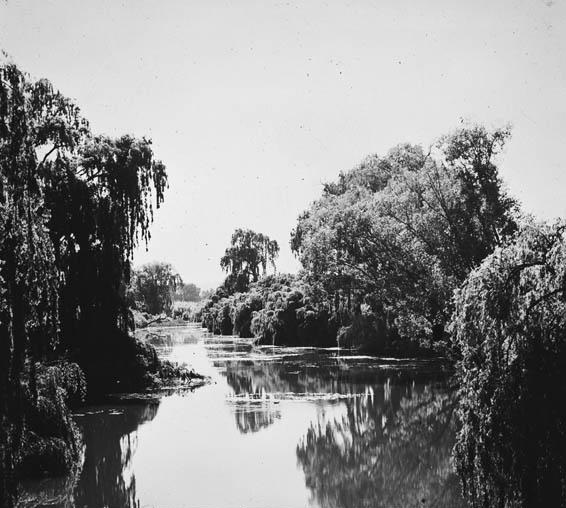
Suburb of Canberra, Australia
| Field | Value |
|---|---|
| type | suburb |
| name | Acton |
| city | Canberra |
| state | act |
| image | Joplin Lane June 2024.jpg |
| caption | Joplin Lane, 2024 |
| alternative_location_map | Australia ACT districted Canberra |
| pushpin_map_caption | Location in Canberra |
| coordinates | |
| lga | North Canberra |
| stategov | Kurrajong |
| fedgov | Canberra |
| postcode | 2601 |
| pop | 2,848 |
| pop_year | |
| pop_footnotes | |
| elevation | 567 |
| est | 1928 |
| dist1 | 2 |
| dir1 | W |
| location1 | Canberra CBD |
| dist2 | 17 |
| dir2 | WNW |
| location2 | Queanbeyan |
| dist3 | 87 |
| dir3 | SW |
| location3 | Goulburn |
| dist4 | 286 |
| dir4 | SW |
| location4 | Sydney |
| near-nw | O'Connor |
| near-n | O'Connor |
| near-ne | Turner |
| near-w | *Black Mountain* |
| near-e | City |
| near-sw | Yarralumla |
| near-s | *Lake Burley Griffin* |
| near-se | Parkes |
| near-nw = O'Connor | near-n = O'Connor | near-ne = Turner | near-w = Black Mountain | near-e = City | near-sw = Yarralumla | near-s = Lake Burley Griffin | near-se = Parkes
Acton is a suburb of Canberra, ACT, Australia. Acton covers an area west of the CBD, bordered by Black Mountain to the west and Lake Burley Griffin in the south.
The Australian National University campus covers most of Acton, though other sites in the suburb include the National Film and Sound Archive located in the former Institute of Anatomy building, the National Museum of Australia on the Acton Peninsula, and New Acton, which was developed as a unique urban precinct around Acton House in phases from 2006 to 2019.
At the Acton had a population of 2,848 people, mostly students living at the Australian National University.
History

Acton was inhabited by Aboriginal Australian groups for thousands of years before European occupation. Part of this history is documented by the ANU Aboriginal and Torres Strait Islander Heritage Trail. Sullivans Creek, which flows through Acton, provided a culturally significant source of food and resources for Aboriginal people. According to historian Bill Gammage, part of the area now used as the South Oval was purposely deforested by Aboriginal people, to form a grassland area that may have been used for hunting kangaroos, camping, or as an area to await smoke signals from nearby. Scarred trees in Acton suggest that their bark provided a valuable resource.
The suburb is named in recognition of one of the region's original homesteads 'Acton' which was sited near the present-day National Museum at the end of Liversidge Street.
With the establishment of the Federal Capital in 1911, territory administrators erected a temporary workers camp in the vicinity of 'Acton Homestead', since demolished, to house staff coordinating the development of the National Capital. The chief Surveyor Scrivener occupied Acton Homestead at an early stage during his survey of the capital site. The Bachelors' Quarters above Lennox Crossing, now renamed Lennox House, became the city's first guest house.
The alignment of Liversidge Street and Lennox Crossing follows the original line of the pre-1911 road towards the major ford across the Molonglo River. A low bridge and causeway was erected in 1911, at the site of the original river ford in an area subsequently inundated by Lake Burley Griffin.
The Acton Tunnel was built below a hill in the suburb between 1976 and 1979 as part on an extension of Parkes Way.
In 2011 a proposal was launched to build the Australia Forum, a major convention centre complex, on the lake shoreline in Acton.
The Acton Waterfront is currently being developed, starting with Henry Rolland Park in 2018 and a boardwalk completed in 2022. Ngamarawai, Ngunnawal for 'cave place' (referring to limestone caves now beneath Lake Burley Griffin), will be the completed park replacing a temporary one by 2028. The waterfront will also become a neighbourhood with improved connections to New Acton.
Demographics
In the , the population of Acton was 2,848. In 2011, 56.9% of the population was foreign-born, the highest for any Canberra suburb.
Geology
The southern part of Acton has a complicated arrangement of sediments that include the Pittman Formation greywacke and the black-coloured Acton Shale Member from the Ordovician age. Then from the Silurian age there is mudstone, State Circle Shale, and Camp Hill Sandstone. Some limestone is found near the National Museum of Australia.
Calcareous shales from the Canberra Formation are overlain by Quaternary alluvium on the north. This rock is the limestone of the original title of Canberra, "Limestone Plains". Tertiary-age pebbly gravels are left from when the Molonglo river was at a higher level.
References
- {{Census 2021 AUS
- "New Acton Precinct".
- "NewActon".
- "Aboriginal Heritage".
- Scott MacArthur of Tanner Architects (2007), ''Heritage Impact Statement'', Australian National University
- "Acton Waterfront". ACT Government.
- (17 March 2014). "Where do migrants live? (4102.0 – Australian Social Trends, 2014)". Australian Bureau of Statistics.
- Henderson G A M and Matveev G, Geology of Canberra, Queanbeyan and Environs 1:50000 1980.
This article was imported from Wikipedia and is available under the Creative Commons Attribution-ShareAlike 4.0 License. Content has been adapted to SurfDoc format. Original contributors can be found on the article history page.
Ask Mako anything about Acton, Australian Capital Territory — get instant answers, deeper analysis, and related topics.
Research with MakoFree with your Surf account
Create a free account to save articles, ask Mako questions, and organize your research.
Sign up freeThis content may have been generated or modified by AI. CloudSurf Software LLC is not responsible for the accuracy, completeness, or reliability of AI-generated content. Always verify important information from primary sources.
Report