From Surf Wiki (app.surf) — the open knowledge base
9K35 Strela-10

| Field | Value | |
|---|---|---|
| name | 9K35 Strela-10 | |
| SA-13 Gopher | ||
| image | 9A35 combat vehicle 9K35 Strela-10 - TankBiathlon14part2-37.jpg | |
| image_size | 300 | |
| caption | 9K35 transporter erector launcher and radar (TELAR) | |
| origin | Soviet Union | |
| type | Vehicle-mounted SAM system | |
| <!-- Type selection Please do not change.--> | is_vehicle | yes |
| is_UK | yes | |
| <!-- Service history --> | service | 1976–present |
| used_by | See list of operators | |
| wars | ||
| <!-- Production history --> | designer | KB Tochmash Design Bureau of Precision Engineering |
| design_date | 1969–1976 | |
| manufacturer | Saratovskiy Zenit Machine Plant (Muromteplovoz Joint Stock Company for the 9K35M3-K) | |
| production_date | 1976–present | |
| variants | Strela-10, Strela-10SV (Prototype), Strela-10M, Strela-10M2, Strela-10M3, Strela-10M3-K, Strela-10M4 | |
| <!-- General specifications --> | spec_label | 9K35 Strela-10M3 |
| weight | 12,300 kg | |
| length | 6,600 mm | |
| width | 2,850 mm | |
| height | 2,300 mm (travelling), 3,800 mm (firing) | |
| crew | 3 (commander, gunner and driver) | |
| <!-- Vehicle/missile specifications --> | armour | 7 mm |
| primary_armament | 4 × 9M333 (or 9M37MD) | |
| secondary_armament | 1x PKMB machine gun | |
| engine | YaMZ-238 V diesel | |
| engine_power | 240 hp | |
| suspension | torsion bar | |
| clearance | 0.5 m | |
| fuel_capacity | 450 litres | |
| vehicle_range | 500 km | |
| speed | 61.5 km/h (road) | |
| 6 km/h (water) |
SA-13 Gopher
- Angolan Civil War
- Iran–Iraq War
- Persian Gulf War
- Afghan Civil War (1989–1992)
- Afghan Civil War (1992–1996)
- Kosovo War
- Syrian Civil War
- Russo-Ukrainian War
- Russo-Ukrainian war (2022–present)
- Second Nagorno-Karabakh War 6 km/h (water)
The **9K35 ''Strela-10''''' (; ) is a Soviet highly mobile, short-range surface-to-air missile system. It is visually aimed, and utilizes optical/infrared-guidance. The system is primarily intended to engage low-altitude threats, such as helicopters. "9K35" is its GRAU designation; its NATO reporting name is **SA-13 "Gopher"'''.
Development
The 9K35 is the successor of the 9K31 Strela-1 and can also use the Strela-1's missiles in place of the 9M37.
Development of the 9K37 Strela-10SV system was initiated July 24, 1969. The decision to begin the development of a new non-all-weather system was taken despite the simultaneous development of an all-weather hybrid gun/missile system 2K22 "Tunguska" mainly as an economical measure. It was also seen as advantageous to have a system capable of fast reaction times and immunity to heavy radio-frequency jamming.
Rather than being mounted on an amphibious but lightly armoured BRDM-2 chassis like the 9K31, the 9K35 is mounted on a more mobile tracked, modified MT-LB, with more room for equipment and missile reloads. Provision for amphibious capability is provided in some variants in the form of polyurethane-filled floats.
The Strela-10SV system and its 9M37 missile were tested in Donguzkom range from 1973 to 1974, but the results were disappointing: the system was found deficient in terms of missile probability of kill, vehicle reliability, among other things. Acceptance to service was thus delayed until May 16, 1976, by which time improvements had been introduced to the system.
Development of the system continued throughout the years through Strela-10M, -10M2 and -10M3 variants introducing among other things improved radio communications and provision for better integration to the Soviet integrated air defence system air picture data. Also improved missiles (9M37M and 9M333) have been developed and by September 2007 the 9K35M3-K Kolchan variant, mounted on a BTR-60 wheeled chassis, was displayed for the first time at the Moscow Air Show MAKS 2007.
The Russian Armed Forces will receive 72 advanced mobile "night" short-range anti-aircraft missile complexes "Strela-10M4" by 2016. In 2014, the Russian Airborne Troops received the first batch of 18 "Strela-10M4" vehicles. This modernization is intended to extend the service life of the system for 3–5 years.
The Strela-10M is expected to be replaced by the Sosna anti-aircraft missile system. The system is based on the MT-LB chassis consisting of 12 Sosna-R 9M337 beam rider missiles with a range of 10 km and altitude of 5 km.
Description
Associated systems and vehicles
The 9K35 is a SAM system with electro-optical guidance. It has the capability to use radars for target acquisition and range. Some vehicles have a pintle-mounted PKT 7.62 mm machine gun in front of the forward hatch for local protection. Other vehicles have been seen with additional support railings for the system on the rear deck. The following is a list of associated equipment:
- 9A34M2, 9A34M3-K: launcher vehicle with 9S86 (NATO designation "SNAP SHOT") range only radar located between the two pairs of missile canisters on the transporter erector launcher and radar (TELAR) (maximum radar range is 450 to 10,000 m).
- 9A35M2, 9A35M3-K: launcher vehicle with 9S16 (NATO designation "Flat Box-B") passive radar detection system that gives a 360° azimuth and minimum 40° elevation coverage
- 9F624 and 9F624M training simulator
- 9S482M7 Control Post.
- 9U111: a 1,950 kg trailer-mounted 12 kW generator unit, designed to feed power to up to four 9A35M2, 9A35M3-K or 9A34M2, 9A34M3-K launcher vehicles at a distance of up to 30 m by cable while conducting maintenance or training operations.
- 9V839M: system checkout vehicle
- 9V915M, 9V915M-1: technical maintenance vehicle
- MT-LBU with 9S80 (NATO designation "DOG EAR") F/G-band target acquisition radar (maximum range 80 km (50 miles))
- Ranzhir-M 9S737М (GRAU designation 9S737); is a mobile command center for a mixed grouping of air defense forces, such as the Tor, Tunguska, Strela-10, and Igla.
Missiles
The Strela-10 system was originally designed to use the 9M37 missile as its primary weapon, but its launch system was designed to be also backwards compatible with the 9M31M missile of the earlier 9K31 Strela-1.
Each 9M37 missile is 2,200 mm (7.2 ft) long, weighs 40 kg (88 pounds) and carries a 3.5 kg (7–15 pound) warhead. The maximum speed of the missile is near Mach 2, engagement range is from 800 to 5000 m (0.3–3 miles) and engagement altitude is between 10 and 3500 m (33-11,500 ft). (The ranges define the zone of target intercept, minimum and maximum launch distances are longer for approaching and shorter for receding targets, depending on the target's speed, altitude and flight direction.)
Four missiles are mounted on the turret in boxes, ready to launch, and eight more are carried inside the vehicle as reloads. Reloading takes around 3 minutes.
The 9M37 was quickly replaced with a slightly improved 9M37M (main improvement was in more efficient autopilot system for missile flight path control), and later the more significantly upgraded 9M333, which introduced:
- heavier warhead of improved expanding-rod design and larger HE content
- new proximity fuzing with 8-ray laser to improve probability of fuzing on near misses of very small targets such as cruise missiles or UAVs
- triple-channel guidance system for more robust countermeasure rejection
- improved engine to provide similar performance despite the slight increase in missile length and weight.
All missiles—9M31M, 9M37, 9M37M and 9M333—are equipped with optical homing heads utilizing reticle-based photocontrast and/or infrared homing. 9M333 is said to have particularly good countermeasures resistance due to its triple-channel homing head, while the photocontrast channel of 9M37/9M37M is described as back-up method to the IR channel.
All main variants—Strela-10SV, Strela-10M, Strela-10M2 and Strela-10M3—can use all aforementioned missile types.
The main characteristics of the missiles are listed in the table below, based on source number, unless otherwise noted. For comparison purposes data for nearest western equivalent, the somewhat larger and heavier MIM-72 Chaparral, is also provided.
As the photocontrast channel provides effective head-on engagement ability, firing range against an approaching target can be considerably longer than the maximum ranges listed above, likewise maximum firing range would be considerably less than the maximum range of target destruction against a receding target. Definition of range and effective ceiling for MIM-72 is unknown and the figures are therefore not directly comparable.
| System | 9K31 Strela-1M | 9K35 Strela-10 | 9K35M Strela-10M3-K | 9K35M Strela-10M4 | MIM-72A Chaparral | MIM-72G Chaparral | Missile | 9M31M | 9M37 | 9M37M | 9M333 | MIM-72A | MIM-72G | |||||||
|---|---|---|---|---|---|---|---|---|---|---|---|---|---|---|---|---|---|---|---|---|
| year of | ||||||||||||||||||||
| introduction | 1971 | 1976 | 1981 | 1989 | title=CHAPARRAL | url=http://www.redstone.army.mil/history/systems/CHAPP.html | access-date=July 16, 2010 | url-status=dead | archive-url=https://web.archive.org/web/20100609055806/http://www.redstone.army.mil/history/systems/CHAPP.html | archive-date=June 9, 2010 }} | 1982/1990(*) | |||||||||
| diameter [mm] | 120 | 120 | 120 | 120 | url=http://www.designation-systems.net/dusrm/m-72.html | title=Ford MIM-72 Chaparral | website=Designation-systems.net | date=2002-02-20 | access-date=2016-02-16 | archive-url=https://web.archive.org/web/20120917143123/http://www.designation-systems.net/dusrm/m-72.html | archive-date=2012-09-17 | url-status=live }} | 127 | |||||||
| length [mm] | 1803 | 2190 | 2190 | 2230 | 2900 | 2900 | ||||||||||||||
| weight [kg] | 32 | 40 | 40 | 42 | 86 | 86 | ||||||||||||||
| warhead (HE) [kg] | 2.6 | 3 | 3 | 5 | 11 | 12.6 | ||||||||||||||
| fuze | impact and proximity | proximity + impact | proximity + impact | 8-ray laser proximity + impact | impact + radar proximity | impact + directional doppler radar proximity | ||||||||||||||
| seeker head | url=http://pvo.guns.ru/strela1/strela1_02.htm | title=ЗРК "Стрела-1" | website=Pvo.guns.ru | access-date=2016-02-16 | archive-url=https://web.archive.org/web/20160310015424/http://pvo.guns.ru/strela1/strela1_02.htm | archive-date=2016-03-10 | url-status=live }}) | Two-channel: | ||||||||||||
| 1) AM-modulated photocontrast (cooled PbS), | ||||||||||||||||||||
| 2) FM-modulated uncooled IR | Two-channel: | |||||||||||||||||||
| 1) AM-modulated photocontrast (cooled PbS), | ||||||||||||||||||||
| 2) FM-modulated uncooled IR | Three-channel: | |||||||||||||||||||
| 1) photocontrast, | ||||||||||||||||||||
| 2) IR, | ||||||||||||||||||||
| 3) IRCCM channel | cooled IR of AIM-9D (limited/no forward hemisphere capability) | two-channel: | ||||||||||||||||||
| 1) cooled all-aspect IR, | ||||||||||||||||||||
| 2) UV (forward-hemisphere / long-range homing + IRCCM) | ||||||||||||||||||||
| Min. range of target destruction [km] | 0.8 | 0.8 | 0.8 | 0.8 | ? | ? | ||||||||||||||
| Max. range of target destruction [km] | 4.2 | 5.0 | 5.0 | 5.0 | 6..9 (sources vary) | 6..9 (sources vary) | ||||||||||||||
| Min. intercept altitude [m] | 30 | 25 | 25 | 10 | 15 | 15 | ||||||||||||||
| Max. intercept altitude [m] | 3000 | 3500 | 3500 | 3500 | 3000 | 3000 | ||||||||||||||
| speed [m/s] | 420 | 517 | 517 | 517 | 515 (Mach 1.5) | 515 (Mach 1.5) | ||||||||||||||
| target max speed [m/s]: approaching / receding | ? | 415/310 | 415/310 | 415/310 | ? | ? |
(*) Contract for production of MIM-72G by retrofitting new components was awarded in late 1982, with all missile in US service upgraded by the late 1980s. New production of MIM-72G missiles started in 1990.
Combat use
Angolan Civil War
On February 20, 1988, 31-year-old Major Edward Richard Every from 1 Squadron SAAF, was killed in action when his Mirage F1AZ (serial 245) was shot down by a Cuban Strela-10 surface-to-air missile in Cuatir (near Menongue) while on an attack mission over Southern Angola.
Persian Gulf War
Iraq had several operational Strela-10 systems at the beginning of the 1991 international operation to liberate Kuwait from Iraqi occupation, most if not all of which were organized as part of the battlefield air defence systems of the Republican Guard divisions.
During the operation, 27 coalition aircraft are believed to have been hit by Iraqi IR-homing SAMs, resulting in 14 losses. Some of the losses were shot down on the spot, while others, such as OA-10A 77-0197, returned to base only to be lost in a crash landing. Others landed safely, but were written off as total losses.
At least two losses are believed to have been due to Strela-10s: On February 15 an A-10A (78-0722) of 353rd TFS/354th TFW was hit by a SAM believed to be a Strela-10, some 100 km north west of Kuwait City, while attacking Republican Guard targets. Pilot Lt Robert Sweet ejected and was made a prisoner of war. While attempting to protect Sweet on the ground, his wingman Steven Phyllis flying an A-10A 79-0130 was also hit by what is believed to have been a Strela-10. Phyllis was killed in the incident.
Kosovo War
During NATO bombing campaign against FR Yugoslavia, a Strela-10 managed to hit an A-10 of United States Air Force on 11 May 1999.
Syrian Civil War
On April 14, 2018, American, British, and French forces launched a barrage of 105 air-to-surface and cruise missiles targeting eight sites in Syria. According to a Russian source, five Strela-10 missiles launched in response destroyed three incoming missiles, However, the American Department of Defense stated in a daily press briefing that no Allied missiles were shot down.
2020 Nagorno-Karabakh war
The Armenian Air Defense employed Strela-10 missile systems during the 2020 Nagorno-Karabakh conflict. During the opening days of the war, several videos released by the Azerbaijani military showed several Armenian 9K33 Osa and Strela-10 vehicles destroyed by Bayraktar TB2 armed drones.
Russo-Ukrainian War
A Strela-10 from the Ukrainian Armed Forces was recorded running over a civilian car in the opening weeks of the war. The driver of the car was uninjured. A Russian Strela-10M guarding Snake Island was destroyed by a Bayraktar TB2 on 30 April 2022. A Ukrainian Strela-10M system was reported destroyed by the Russian Air Force near Lisichansk on 17 June 2022. A Russian source claimed in September 2023 that Russia uses the 9M333 missile in Ukraine.
Wagner Group rebellion
A video of a Strela-10 targeting and almost hitting a Russian Army Ka-52 helicopter near Voronezh has been published. The missile was decoyed by flares.
Operators
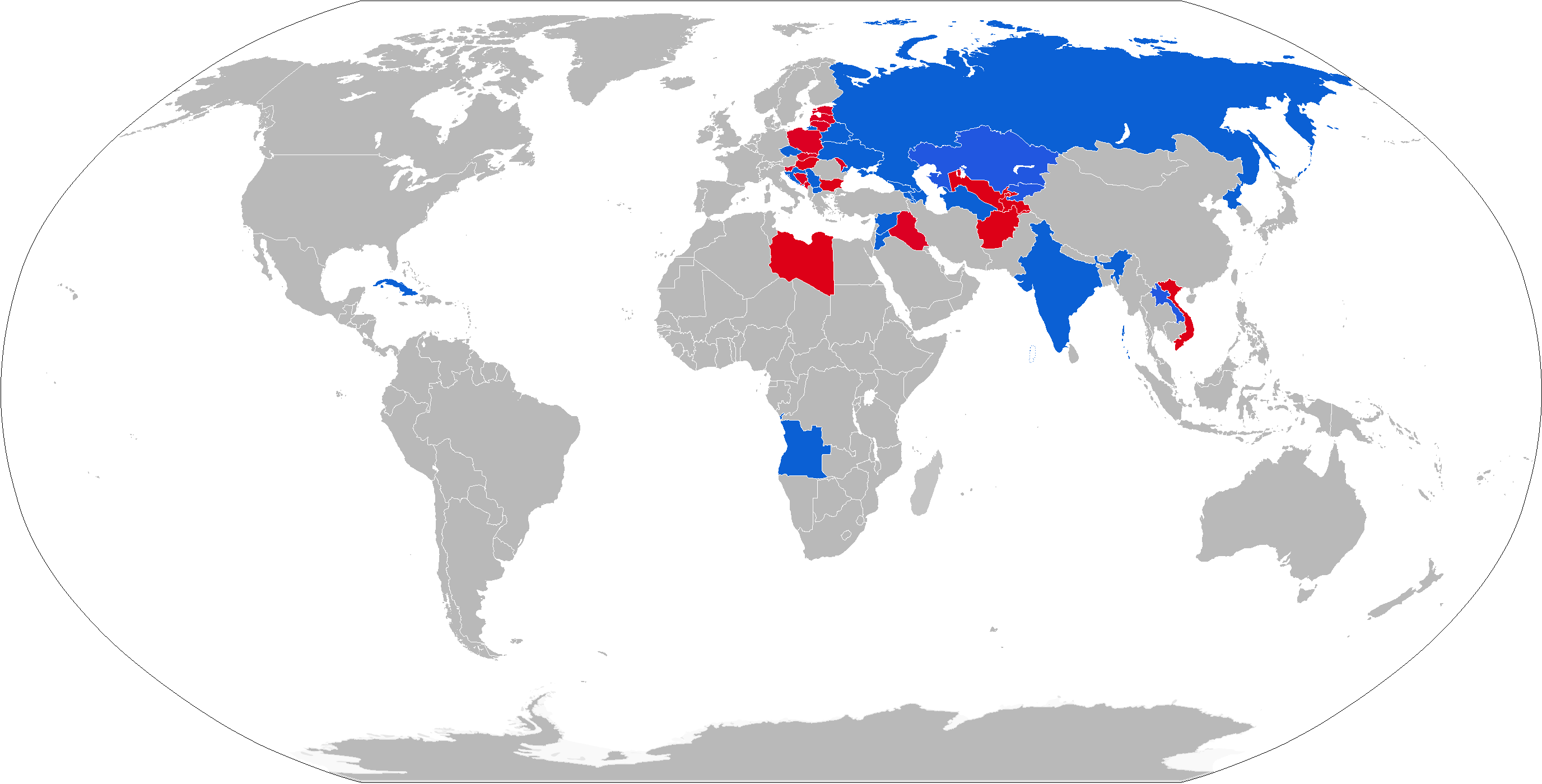
Current operators
- : Unknown amount in service in 2023.
- : Unknown amount in service in 2023.
- : Unknown amount in service in 2023.
- : 200 in service in 2023.
- : 3 9K35 Strela-10M3 and 6 9K35 Strela-10CRO in service in 2024.
- : 9 in service in 2024.
- : Unknown amount in service in 2023.
- : Unknown amount in service in 2023.
- : 92 in service in 2023
- : Unknown amount in service in 2023.
- : Unknown amount in service in 2023.
- : In service as of January 2019.
- manufactured domestically under designation 1976 model year self propelled missile launcher Type 10.
- : 8 launchers
- : 350. In production the 9M333 missile (2024). 100 Strela-10MNs in 2012–2020.
- : 18
- : Unknown amount in service in 2023
- : 13 in service as of 2023
- : Unknown amount in service in 2023.
- : 20
Former operators
- : 16+ launchers prior to the 1992–1996 Afghan Civil War.
- : Withdrawn from service.
- : Passed on successor states.
- Retired after reunification
- : Withdrawn from service.
- Iraq: Some destroyed in combat, all remaining units were written off after the Iraq War in 2003.
- Libya: 60+ launchers in 1992, unknown number operational prior to the 2011 Libyan civil war.
- : 4, probably withdrawn in 2001–2002.
- : Withdrawn from service.
- : Passed on successor states.
- : Passed on successor states
Gallery
File:9A34 Strela-10 - 4th Separate Tank Brigade (3).jpg File:9A34 Strela-10 - 4th Separate Tank Brigade (4).jpg File:9A34 Strela-10 - 4th Separate Tank Brigade (5).jpg File:9A34 Strela-10 - 4th Separate Tank Brigade (6).jpg File:9A34 Strela-10 - 4th Separate Tank Brigade (7).jpg File:9A34 Strela-10 - 4th Separate Tank Brigade (8).jpg
References
References
- (2008-01-16). "KB Tochmash 9K35 Strela-10 (SA-13 'Gopher') low-altitude surface-to-air missile system". Jane's }}{{Dead link.
- "РАКЕТНЫЙ КОМПЛЕКС 9К35 "СТРЕЛА-10СВ": Боевые средства")".
- (2015-05-19). "Russia's armed forces to get advanced "Strela-10M4" air defense systems | defencerussia".
- [https://www.armyrecognition.com/army-2018_news_russia_online_show_daily/russian_sosna_air_defense_missile_system_unveiled_at_army-2018.html Russian Sosna air defense missile system unveiled at Army-2018] {{Webarchive. link. (2018-08-22 . ''Army Recognition''. 21 August 2018.)
- "Унифицированный батарейный командный пункт 9С737М".
- "ракетный комплекс 9К35М3 "Стрела-10М3" (9К35М "Стрела-10М")".
- "CHAPARRAL".
- (2002-02-20). "Ford MIM-72 Chaparral".
- "ЗРК "Стрела-1"".
- "Raytheon AIM-9 Sidewinder".
- (2008). "From Fledgling to Eagle: The South African Air Force during the Border War". 30 Degrees South.
- "Desert Storm A-10 Combat Losses".
- (2021-01-04). "Kojim raketnim sistemima zameniti Strele u Vojsci Srbije?".
- "Briefing by Russian Defence Ministry official Major General Igor Konashenkov (April 16, 2018)".
- "Department of Defense Press Briefing by Pentagon Chief Spokesperson".
- (September 27, 2020). "Azerbaijan used TB2 drone to destroy twelve 9K33 Osa short-range anti-aircraft systems of Armenia".
- Newdick, Joseph Trevithick and Thomas. (28 September 2020). "Everything We Know About The Fighting That Has Erupted Between Armenia And Azerbaijan".
- (28 February 2022). "Ukraine: These videos do not show a Russian tank running over a civilian in Kyiv". [[France 24]].
- (2 May 2022). "#Ukraine: Some more footage made its way to us from Snake Island- another Ukrainian Bayraktar TB-2 drone strike.T…".
- (17 June 2022). "#Ukraine: In #Lysychansk the threat is from above. Remnant of an anti-aircraft armored vehicle, no longer guarding the skies.".
- "ЦАМТО / / ВС России начали применять в зоне СВО зенитные ракеты 9М333, обходящие тепловые ловушки".
- Cᴀʟɪʙʀᴇ Oʙsᴄᴜʀᴀ. "Tweet".
- Lenkov, Alexey. (26 June 2023). "Ka-52 came back from the dead by dropping anti-missile decoys".
- [[International Institute for Strategic Studies]]. (2021). "The Military Balance". Taylor & Francis.
- [[International Institute for Strategic Studies]]: The Military Balance 2024
- (22 January 2019). "Laotian military parades Russian- and Chinese-made equipment".
- https://www.jajusibo.com/20137
- "История ВВС КНДР".
- "Kalashnikov begins serial production of new missile for Strela-10M air defense system".
- "Russia's top brass signs a host of deals on advanced weapons delivery to Russian troops".
- "Defense firm delivers latest missiles for Strela air defense system to Russian troops".
- "ЦАМТО / / «Калашников» досрочно выполнил гособоронзаказ по ЗУР 9М333".
- (2024-05-25). "«Концерн «Калашников» успешно отгрузил крупную партию зенитных управляемых ракет (ЗУР) 9М333".
- "Шаманов: Оснащение ВДВ отдельными видами новейшего вооружения идет с опережением сроков | Еженедельник "Военно-промышленный курьер"".
- "Валерий Герасимов: за пятилетний период принято на вооружение более 300 новых образцов ВиВТ".
- "ЦАМТО / Новости / На вооружение мотострелкового соединения ЮВО поступили ПЗРК "Верба" и ЗРК "Стрела-10МН"".
- "Војска Србије – Наоружање Копнене војске – Средства за противваздухопловна дејства – Ракетни систем ПВД СТРЕЛА-10М".
- (15 February 2023). "The Military Balance 2023". Routledge.
- (1 March 1992). "Jane's Land-based Air Defence 1992-93". Jane's Information Group.
- (4 March 2011). "The military balance, 2011". Routledge.
- (August 2014). "Micmac à tire-larigot chez Tito: L'arme blindée yougoslave durant la Guerre froide". Caraktère.
This article was imported from Wikipedia and is available under the Creative Commons Attribution-ShareAlike 4.0 License. Content has been adapted to SurfDoc format. Original contributors can be found on the article history page.
Ask Mako anything about 9K35 Strela-10 — get instant answers, deeper analysis, and related topics.
Research with MakoFree with your Surf account
Create a free account to save articles, ask Mako questions, and organize your research.
Sign up freeThis content may have been generated or modified by AI. CloudSurf Software LLC is not responsible for the accuracy, completeness, or reliability of AI-generated content. Always verify important information from primary sources.
Report