From Surf Wiki (app.surf) — the open knowledge base
966th Airborne Air Control Squadron
| Field | Value | |
|---|---|---|
| unit_name | 966th Airborne Air Control Squadron | |
| image | E-3 Sentry refuels (11088097443).jpg | |
| image_size | 300px | |
| caption | 552d Air Control Wing Boeing E-3 Sentry | |
| dates | 1942–1944; 1944–1945; 1961–1969; 1976–present | |
| country | ||
| branch | ||
| role | Airborne command and control training | |
| size | 180 personnel | |
| command_structure | Air Combat Command | |
| current_commander | Lt Col Asif Kausar | |
| garrison | Tinker Air Force Base | |
| motto | Protection by Professionals (1963-1989) | |
| battles | China-Burma-India Theater | |
| decorations | Air Force Outstanding Unit Award with Combat "V" Device | |
| Air Force Meritorious Unit Award | ||
| Air Force Outstanding Unit Award | ||
| Republic of Vietnam Gallantry Cross with Palm | ||
| identification_symbol | [[Image:966th Airborne Air Control Squadron.jpg | 165px]] |
| identification_symbol_label | 966th Airborne Air Control Squadron emblem | |
| identification_symbol_2 | [[File:966 Airborne Early Warning & Control Sq emblem.png | 165px]] |
| identification_symbol_2_label | 966th Airborne Early Warning & Control Squadron emblem |
Air Force Meritorious Unit Award Air Force Outstanding Unit Award Republic of Vietnam Gallantry Cross with Palm
The 966th Airborne Air Control Squadron is an active United States Air Force unit assigned to the 552d Air Control Wing at Tinker Air Force Base, Oklahoma. It operates the Boeing E-3 Sentry Airborne Warning and Control System aircraft conducting training of crews in airborne command and control missions.
The squadron's first predecessor is the 466th Bombardment Squadron which served during World War II as an Operational Training Unit, and later as a Replacement Training Unit. It was inactivated in the spring of 1944 in a general reorganization of Army Air Forces support and training units in the United States.
The second predecessor of the squadron was organized in India as the 166th Liaison Squadron. It provided light transport, observation, and aeromedical evacuation support for Allied forces fighting in Burma. Following V-J Day, it returned to the United States for inactivation.
The 966th Airborne Early Warning and Control Squadron was organized in 1962 to provide seaward radar coverage in the Gulf of Mexico and Caribbean Sea. It also supported Lockheed U-2 Dragon Lady missions over Cuba and NASA rocket recovery. After 1965, it deployed aircrews to Viet Nam and Thailand to provide radar coverage over North Viet Nam. The squadron was inactivated at the end of 1969.
Mission
The squadron is the Boeing E-3 Sentry formal training unit (FTU) for all Airborne Warning and Control System aircrew.
It is Air Combat Command's largest flying training unit, training all active duty and Air Force Reserve Command E-3 pilots and mission crew, training approximately 500 initial qualification students every year. It provides the combat Air Force with airborne systems and personnel for surveillance, warning and control of strategic, tactical, and special mission forces. It also provides upgrade training to approximately 200 students annually. With its initial and upgrade training for various crew positions it teaches 30 different courses.
In addition to its training mission, the squadron maintains its personnel and equipment in readiness for dispersal and augmentation of tactical forces worldwide.
Organization
The squadron has 180 personnel assigned, not counting trainees.
Until January 2020, the squadron used planes assigned to other squadrons of the 552d Air Control Wing, when it received a dedicated E-3 Sentry. This number had increased to four aircraft by 2023. The squadron also trains with the use of simulators
History
World War II
Bomber training

The first predecessor of the squadron, the 466th Bombardment Squadron was activated on 15 July 1942 at Topeka Army Air Base, Kansas as one of the four original squadrons of the 333d Bombardment Group. In August, it began operating as an Operational Training Unit (OTU) for Boeing B-17 Flying Fortress units. The OTU program involved the use of an oversized parent unit to provide cadres to "satellite groups" The OTU program was patterned after the unit training system of the Royal Air Force. The parent assumed responsibility for satellite unit training and oversaw their expansion with graduates of Army Air Forces Training Command schools to become effective combat units. Phase I training concentrated on individual training in crewmember specialties. Phase II training emphasized the coordination for the crew to act as a team. The final phase concentrated on operation as a unit. Later that year, the squadron traded its Flying Fortresses for Consolidated B-24 Liberators.

In February 1943, the squadron moved to Dalhart Army Air Field, Texas. However, many of the Army Air Forces' bomber units had been activated. With the exception of special programs, like forming Boeing B-29 Superfortress units, training “fillers” for existing units became more important than unit training. The squadron mission changed to becoming a Replacement Training Unit (RTU). RTUs were also oversized units, but their mission was to train individual pilots or aircrews. It continued this mission through November 1943.
The AAF was finding that standard military units like the 466th, whose manning was based on relatively inflexible tables of organization were proving not well adapted to the training mission, even more so to the replacement mission. Accordingly, the Army Air Forces adopted a more functional system in which each base was organized into a separate numbered unit. The 466th and other training and support units at Dalhart were disbanded or inactivated on 1 April 1944 In 1985, the squadron was consolidated with the active 966th Airborne Warning and Control Training Squadron.
Special operations


The squadron's second predecessor, the 166th Liaison Squadron, was activated at Burnpur Airfield, India on 3 September 1944, when the 1st Air Commando Group reorganized its light plane and light cargo sections into three liaison squadrons. It moved to Yazagyo Airfield, Burma in November 1944 and began operations with its Stinson L-5 Sentinels and Noorduyn C-64 Norseman. It flew aeromedical evacuation missions and provided light transport services for ground forces in Burma until May 1945, when it was withdrawn to Burnpur Airfield.
After V-J Day, the squadron remained in India until October 1945. It returned to the United States and upon arrival at the Port of Embarkation was inactivated at Camp Kilmer, New Jersey on 3 November 1945. In 1985, the squadron was consolidated with the active 966th Airborne Warning and Control Training Squadron.
Airborne warning and control
Operations from Florida

In the 1950s, Air Defense Command established the 551st Airborne Early Warning and Control Wing to extend air defense radar coverage and fighter control seaward over the Atlantic beyond the range of shore based radars. Once Cuba was no longer a friendly power, similar coverage was extended over the Gulf of Mexico and adjacent waters. The 551st Wing began sending crews to McCoy Air Force Base, Florida on temporary duty to provide this coverage. The 966th Airborne Early Warning and Control Squadron was organized on 1 February 1962 at McCoy to provide the coverage on a permanent basis. Initially, the squadron also operated the Lockheed TC-121 Constellation for training aircrews.
When flying active air defense patrols, the squadron's aircraft came under the operational control of the Montgomery Air Defense Sector. In addition to its primary active air defense mission, the squadron assisted with antisubmarine patrols and developed weather information in its area of operations. It occasionally supported Strategic Air Command and Military Airlift Command operations. It supported NASA by tracking rocket boosters as they fell back into the ocean after test launches.
Later the squadron added three EC-121Q aircraft, which were used for Operation Gold Digger missions. Gold Digger missions monitored and tracked Lockheed U-2 Dragon Lady photographic reconnaissance missions over Cuba. These missions were flown at very low altitude off the Florida Keys, tracking the path of the U-2 they were supporting. The low altitude permitted the radar signals (the search radar was under the EC-121 fuselage) to "bounce" off the surface of the water and detect the high altitude U-2s.
During the Cuban Missile Crisis, the squadron was reinforced on 20 October 1962 by six EC-121s deployed from the 552d Airborne Early Warning and Control Wing at McClellan Air Force Base, California. Along with the deployment of Navy Grumman WF-2s to Key West Naval Air Station, this enabled the maintenance of three separate airborne warning tracks off southern Florida, rather than the single orbit usually maintained. On 3 December, the forces augmenting the 966th were released and the squadron resumed its normal posture. The squadron was reassigned to the 552d Wing in May 1963.
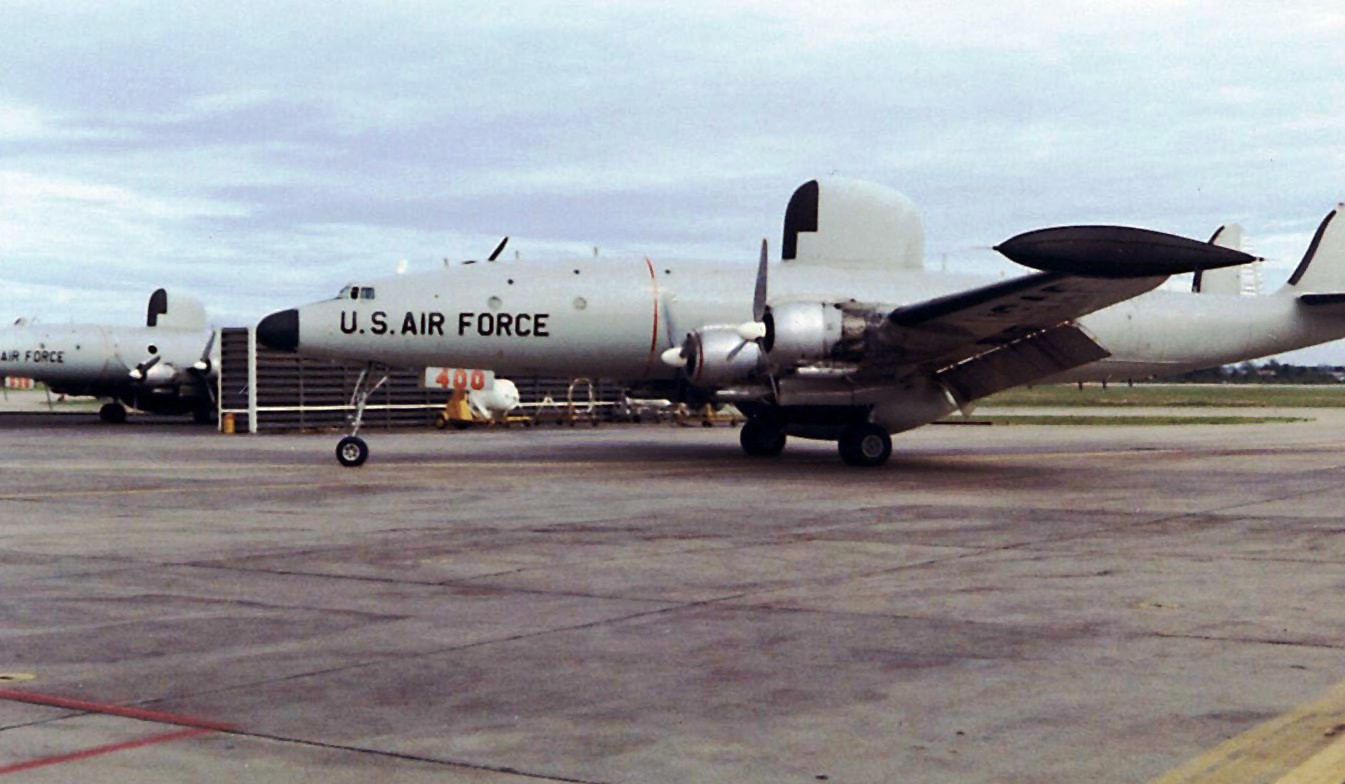
Beginning in April 1965, the squadron rotated aircrews to Southeast Asia to support the Big Eye (later College Eye) Task Force.
In July 1969, the squadron was returned to the control of the 551st Wing. It was inactivated along with the wing on 31 December 1969.
Aircrew training
The 966th was redesignated the 966th Airborne Warning and Control Training Squadron and activated at Tinker Air Force Base, Oklahoma on 1 May 1976. The 966th began training aircrews in 1977. In addition to its assigned E-3s, the squadron has also operated two civilian Boeing 707s to train flight crews.
In December 1983, academic training was split off from the squadron with the formation of the 552nd Training Squadron, which also serves as the administrative unit for students in initial and upgrade training. It was redesignated the 966th Airborne Air Control Squadron in July 1994, although its mission did not change.
Lineage
; 466th Bombardment Squadron
- Constituted as the 466th Bombardment Squadron (Heavy) on 9 July 1942 : Activated on 15 July 1942 : Inactivated on 1 April 1944
- Consolidated with the 166th Liaison Squadron and the 966th Airborne Warning and Control Training Squadron as the 966th Airborne Warning and Control Training Squadron on 19 September 1985
; 166th Liaison Squadron
- Constituted as the 166th Liaison Squadron (Commando) on 9 August 1944 : Activated on 3 September 1944 : Inactivated on 3 November 1945
- Consolidated with the 466th Bombardment Squadron and the 966th Airborne Warning and Control Training Squadron as the 966th Airborne Warning and Control Training Squadron on 19 September 1985
966th Airborne Air Control Squadron
- Constituted as the 966th Airborne Early Warning and Control Squadron and activated on 18 December 1961 (not organized) : Organized on 1 February 1962 : Inactivated on 31 December 1969 : Redesignated 966th Airborne Warning and Control Training Squadron on 5 May 1976 : Activated on 1 July 1976
- Consolidated with the 166th Liaison Squadron and the 466th Bombardment Squadron on 19 September 1985 : Redesignated 966th Airborne Air Control Squadron on 1 July 1994
Assignments
- 333d Bombardment Group, 15 July 1942 – 1 April 1944
- 1st Air Commando Group, 3 September 1944 – 3 November 1945
- Air Defense Command, 18 December 1961 (not organized)
- 551st Airborne Early Warning and Control Wing, 1 February 1962
- 552d Airborne Early Warning and Control Wing, 1 May 1963
- 551st Airborne Early Warning and Control Wing, 1 July 1969
- 552d Airborne Early Warning and Control Wing, 15 November-31 December 1969
- 552d Airborne Warning and Control Wing (later 552d Airborne Warning and Control Division; 552d Airborne Warning and Control Wing; 552d Air Control Wing), 1 July 1976
- 552d Operations Group, 29 May 1992
- 552d Training Group, c. 17 August 2018 – present
Stations
- Topeka Army Air Base, Kansas, 15 July 1942
- Dalhart Army Air Field, Texas, 22 February 1943 – 1 April 1944
- Burnpur Airfield, India, 3 September 1944
- Yazagyo Airfield, Burma, 13 November 1944
- Inbaung Airfield, Burma, 12 December 1944
- Burnpur Airfield, India, 19 December 1944 (detachment operated from Arakan Airfield, Burma, c. 29 December 1944 – 23 January 1945)
- Sinthe Airfield, Burma, 4 February 1945
- Burnpur Airfield, India, 14 March 1945
- Ondaw Airfield, Burma, 29 March 1945
- Meiktila Airfield, Burma, 5 April 1945
- Toungoo Airfield, Burma, 27 April 1945
- Burnpur Airfield, India, 14 May – 6 October 1945
- Camp Kilmer, New Jersey, 1–3 November 1945
- McCoy Air Force Base, Florida, 1 February 1962 – 31 December 1969
- Tinker Air Force Base, Oklahoma, 1 July 1976 – present
Aircraft
- Boeing B-17 Flying Fortress (1942)
- Consolidated B-24 Liberator (1942–1943)
- Stinson L-5 Sentinel (1944–1945)
- Noorduyn C-64 Norseman (1944–1945)
- Lockheed RC-121 (later EC-121) Warning Star (1963–1969)
- Lockheed TC-121 Constellation (1962–1963)
- Boeing C-135 Stratolifter (1977–1979)
- Boeing E-3 Sentry (1977–present)
Awards and campaigns
| Campaign Streamer | Campaign | Dates | Notes | |
|---|---|---|---|---|
| [[Image:Streamer AC.PNG | 200px]] | American Theater without inscription | 15 July 1942–1 April 1944 | 466th Bombardment Squadron |
| [[Image:Streamer APC.PNG | 200px]] | India-Burma | 3 September 1944–28 January 1945 | 166th Liaison Squadron |
| [[Image:Streamer APC.PNG | 200px]] | Central Burma | 29 January 1945–15 July 1945 | 166th Liaison Squadron |
References
Notes
; Explanatory notes
; Citations
Bibliography
:* :*
- NORAD/CONAD Participation in the Cuban Missile Crisis, Historical Reference Paper No. 8, Directorate of Command History Continental Air Defense Command, Ent AFB, CO , 1 Feb 63 (Top Secret NOFORN declassified 9 March 1996)
References
- Endicott, p. 904
- (March 31, 2008). "Factsheet 966 Airborne Air Control Squadron". Air Force Historical Research Agency.
- Unknown. (January 2021). "Unit Spotlight on 966th Airborne Air Control Squadron". The Journal Record}}{{dead link.
- (May 11, 2020). "966th Airborne Air Control Squadron Continues Mission Despite COVID-19". 72nd Air Base Wing Public Affairs.
- (18 March 2023). "966 Airborne Air Control Squadron". USAF Unit History.
- (June 1, 2007). "Library: Factsheets 552nd Operations Group". 552nd Air Control Wing Public Affairs.
- (January 14, 2020). "E-3 Sentry aircraft dedicated to the 966th AACS". 552nd Air Control Wing Public Affairs.
- Maurer, ''Combat Squadrons'', p 572
- Maurer, ''Combat Units'', pp.213-14
- Maurer, ''Combat Squadrons'', pp. 573-575
- Craven & Cate, Introduction, p. xxxvi
- Goss, p. 74
- Greer, p. 601
- Greer, p. 606
- Goss, pp. 74-75
- Craven & Cate, Introduction, p. xxxvi
- Goss, p. 75
- Unknown. "Abstract, History of Dalhart AAF, Vol. I April 1944". Air Force History Index.
- Maurer, ''Combat Squadrons'', p. 364
- Maurer, ''Combat Units'', p. 19
- Maurer, ''Combat Squadrons'', pp. 363-64
- Ravenstein, p. 4
- Ravenstein, pp. 285-86
- Ravenstein, p. 286
- (January 2, 2008). "966 AEW&C Gold Digger Missions". Dean Boys.
- (November 22, 2013). "Lockheed EC-121 Constellation". Dean Boys.
- The sector was inactivated in April 1966, and control was exercised by the [[32nd Air Division]].Cornett & Johnson, pp. 36-38
- NORAD/CONAD Participation in the Cuban Missile Crisis, pp. 6-7
- NORAD/CONAD Participation in the Cuban Missile Crisis, pp. 9-10, 12
- NORAD/CONAD Participation in the Cuban Missile Crisis, p. 26
- Assignments through March 2008 in AFHRA Factsheet, 966 Airborne Air Control Squadron
- No byline. "Library: Factsheet 552nd Training Group". 552nd Air Control Wing Public Affairs.
- "Air Force Personnel Services: Unit Awards". Air Force Personnel Center.
This article was imported from Wikipedia and is available under the Creative Commons Attribution-ShareAlike 4.0 License. Content has been adapted to SurfDoc format. Original contributors can be found on the article history page.
Ask Mako anything about 966th Airborne Air Control Squadron — get instant answers, deeper analysis, and related topics.
Research with MakoFree with your Surf account
Create a free account to save articles, ask Mako questions, and organize your research.
Sign up freeThis content may have been generated or modified by AI. CloudSurf Software LLC is not responsible for the accuracy, completeness, or reliability of AI-generated content. Always verify important information from primary sources.
Report