From Surf Wiki (app.surf) — the open knowledge base
859th Special Operations Squadron

| Field | Value | |
|---|---|---|
| unit_name | 859th Special Operations Squadron | |
| image | C-146A Wolfhound from Hurlburt Field, Florida.jpg | |
| image_size | 300 | |
| caption | C-146A Wolfhound takes off from a highway | |
| dates | 1942–1945; 2016–present | |
| country | ||
| branch | ||
| role | Special Operations | |
| command_structure | Air Force Reserve Command | |
| garrison | Duke Field, Florida | |
| battles | European Theater of Operations | |
| Mediterranean Theater of Operations | ||
| decorations | French Croix de Guerre with Palm | |
| identification_symbol | [[File:859 Special Operations Sq emblem.png | 165px]] |
| identification_symbol_label | 859th Special Operations Squadron emblem | |
| identification_symbol_2 | [[File:859th Bombardment Squadron emblem.jpg | 165px]] |
| identification_symbol_2_label | 859th Bombardment Squadron emblem |
Mediterranean Theater of Operations
The 859th Special Operations Squadron is a reserve unit of the United States Air Force. It was first activated in October 1942 as the 517th Bombardment Squadron, when the Army Air Forces replaced National Guard observation units that had been mobilized and were performing antisubmarine patrols off the Atlantic coastline. A month after its activation, the squadron was redesignated the 12th Antisubmarine Squadron. In August 1943, the Army Air forces began turning the antisubmarine patrol mission over to the Navy and the squadron moved to California, where, as the 859th Bombardment Squadron, it formed the cadre for the 492d Bombardment Group.
After deploying to England, the 492d entered the strategic bombing campaign against Germany, but in three months of combat, suffered the most severe losses of an Eighth Air Force bomber group. The 492d Group was withdrawn from combat in August 1944, and the 859th moved on paper to replace the 788th Bombardment Squadron, which was engaged in Operation Carpetbagger, dropping agents and supplies behind German lines, primarily in France. As American forces advanced in France, this special operations mission diminished. The squadron moved to Italy, where it performed the same mission in the Balkans and Italy. The squadron was inactivated in Italy in October 1945.
The squadron was redesignated the 859th Special Operations Squadron and activated in 2016 as an associate of the 524th Special Operations Squadron, performing the Non-Standard Aviation mission.
Mission
In association with active duty units, performs the Non-Standard Aviation mission. Non-Standard Aviation refers to operations performed by aircraft used by Air Force Special Operations Command to support austere and remote locations not serviced by reliable and safe commercial aviation runway environments. The squadron operates the Dornier C-146 Wolfhound. The Wolfhound provides United States Special Operations Command flexible movement of small special operations teams to support theater special operations commands.
History
Antisubmarine campaign
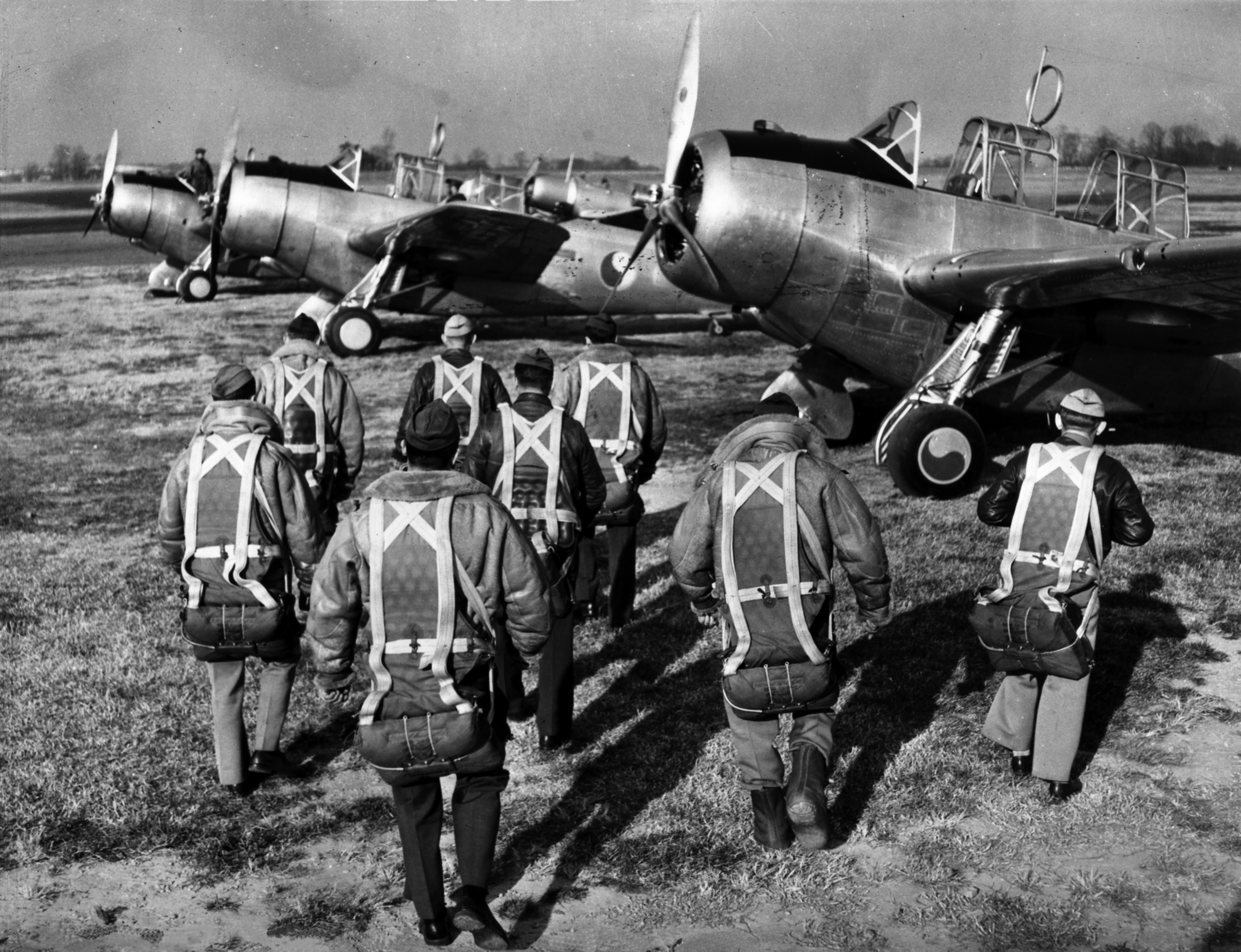
The squadron was first activated at Atlantic City Airport, New Jersey as the 517th Bombardment Squadron on 18 October 1942, when the 377th Bombardment Group replaced the 59th Observation Group at Fort Dix Army Air Field and assumed its mission, personnel and equipment. It was initially equipped with the Stinson Vigilants, Douglas O-46s and North American O-47s of the 104th Observation Squadron, which it replaced at Atlantic City. but converted to Douglas B-18 Bolos and North American B-25 Mitchells the following year. The squadrons of the 377th Group were at various bases along the coast between Delaware and New Hampshire.
In October 1942, the Army Air Forces organized its antisubmarine forces into the single Army Air Forces Antisubmarine Command, which established the 25th Antisubmarine Wing the following month to control its forces operating over the Atlantic. Its bombardment group headquarters, including the 377th, were inactivated and the squadron, now designated the 12th Antisubmarine Squadron, was assigned directly to the 25th Wing.
Conversion to heavy bomber and training
thumb|[[B-24J Liberator]] flown by the squadron In September 1943, the squadron moved to Blythe Army Air Base, California, where its personnel were used as the cadre for the 492d Bombardment Group, which was being formed at Alamogordo Army Air Field, New Mexico. It was redesignated the 859th Bombardment Squadron and then, on 1 October, assigned to the 492d Group.
By January 1944, most of the ground echelon of the squadron had been used to form other bomber units. 2d Bombardment Division, which controlled VIII Bomber Command's Liberator units in England, began to form new ground echelons from personnel of bomber units already in England, while the air echelon of the 859th continued training at Alamogordo. The air echelon began to depart Alamogordo on 1 April 1944, following the southern ferry route, while the few remaining members of the ground echelon departed on 11 April, sailing on the on 20 April.
Strategic bomber operations

On 14 April, the ground echelon that had been formed in England arrived at RAF North Pickenham The air echelon began arriving on 18 April. When the 492d Group returned to strategic operation, on 20 June Luftwaffe fighters, primarily Messerschmitt Bf 110s, using air to air rockets shot down fourteen of the 492d Group's B-24s. Heavy losses, this time to fighters from Jagdgeschwader 3, were again suffered on 29 June.
Special operations
The squadron transferred to RAF Harrington on 1 August 1944, Although nominally a move without personnel or equipment, some low mission crews and aircraft from the entire 492d Bomb Group moved to Harrington and were assigned to the 859th Squadron on arrival. The squadron operated chiefly over southern France with B-24s and a few Douglas C-47 Skytrains, engaging in Operation Carpetbagger missions, dropping agents and supplies behind enemy lines. As the Allies advanced across northern France, and with Operation Dragoon placing Allied forces in southern France, full scale Carpetbagger operations wound down by 16 September. This support for the French Resistance earned the squadron the French Croix de Guerre with Palm. With the drawdown of the Carpetbagger mission, the squadron concentrated on hauling gasoline to advancing mechanized forces in France and Belgium. During its assignment to special operations form England, the squadron flew 179 sorties and delivered 121 "Joes", as the agents were called. It also flew a small number of "Nickling" missions (dropping propaganda leaflets).
Even as the need for guerilla support in France was decreasing, it was increasing in the Mediterranean. On 17 December 1944, the 859th departed England, arriving at its new home, Brindisi Airfield, Italy three days later. For the most part, the 859th operated in Yugoslavia, while the 885th operated in Italy. Most supply drops were made in the Zagreb region, where partisans were attacking German forces withdrawing up the Sava River valley. On 20 May 1945, thirteen days after V-E Day, the 859th moved to Gioia del Colle Airfield and from there to Bari Airfield Italy in July 1945 where it remained until October 1945 when it was inactivated.
Air Force Reserves
The unit was reactivated in the Air Force reserve as the 859th Special Operations Squadron, marked by a ceremony at Duke Field, Florida, on April 1, 2016. The unit was formed from the assets of Detachment 1, 919th Special Operations Group. It is an associate of the 524th Special Operations Squadron at Cannon Air Force Base, New Mexico.
Lineage
- Constituted as the 517th Bombardment Squadron (Heavy) on 13 October 1942 : Activated on 18 October 1942 : Redesignated 12th Antisubmarine Squadron (Heavy) on 29 November 1942 : Redesignated 859th Bombardment Squadron, Heavy on 24 September 1943 : Inactivated on 4 October 1945 : Redesignated 859th Special Operations Squadron : Activated c. 1 April 2016
Assignments
- 377th Bombardment Group, 18 October 1942
- 25th Antisubmarine Wing, c. 9 December 1942
- 492d Bombardment Group, 1 October 1943 (attached to 15th Special Group (Provisional) (later 2641st Special Group (Provisional)), 17 December 1944
- United States Strategic Air Forces, 14 August–4 October 1945
- 919th Special Operations Group, c. 1 April 2016
Stations
- Atlantic City Airport, New Jersey, 18 October 1942
- Langley Field, Virginia, 12 January–18 September 1943
- Blythe Army Air Field, California, 24 September 1943
- Alamogordo Army Air Field, New Mexico, 9 December 1943 – 1 January 1944
- RAF North Pickenham (AAF-143), England, 1 January 1944
- RAF Harrington (AAF-179), England, 1 August-17 December 1944
- Brindisi Airfield, Italy, 20 December 1944
- Rosignano Airfield, Italy, 24 March 1945
- Gioia del Colle Airfield, Italy, 20 May 1945
- Bari Airfield, Italy, 20 July – 4 October 1945
- Duke Field, Florida c. 1 April 2016 – present
Aircraft
- Stinson Vigilant, 1942–1943
- Douglas O-46, 1942–1943
- North American O-47, 1942–1943
- Douglas B-18 Bolo, 1943
- North American B-25 Mitchell, 1943
- Consolidated B-24 Liberator, 1943–1945
- Douglas C-47 Skytrain, 1944–1945
Awards and campaigns
| Campaign Streamer | Campaign | Dates | Notes | |
|---|---|---|---|---|
| [[File:American Campaign Streamer.png | 200px]] | Antisubmarine | 18 October 1942 – 1 August 1943 | 517th Bombardment Squadron (later 12th Antisubmarine Squadron) |
| [[Image:Streamer EAMEC.PNG | 200px]] | Air Offensive, Europe | 1 January 1944 – 5 June 1944 | 859th Bombardment Squadron |
| [[Image:Streamer EAMEC.PNG | 200px]] | Air Combat, EAME Theater | 1 January 1944 – 11 May 1945 | 859th Bombardment Squadron |
| [[Image:Streamer EAMEC.PNG | 200px]] | Central Europe | 22 March 1944 – 21 May 1945 | 859th Bombardment Squadron |
| [[Image:Streamer EAMEC.PNG | 200px]] | Normandy | 6 June 1944 – 24 July 1944 | 859th Bombardment Squadron |
| [[Image:Streamer EAMEC.PNG | 200px]] | Northern France | 25 July 1944 – 14 September 1944 | 859th Bombardment Squadron |
| [[Image:Streamer EAMEC.PNG | 200px]] | Southern France | 15 August 1944 – 14 September 1944 | 859th Bombardment Squadron |
| [[Image:Streamer EAMEC.PNG | 200px]] | Rhineland | 15 September 1944 – 21 March 1945 | 859th Bombardment Squadron |
| [[Image:Streamer EAMEC.PNG | 200px]] | North Apennines | 20 December 1944 – 4 April 1945 | 859th Bombardment Squadron |
| [[Image:Streamer EAMEC.PNG | 200px]] | Po Valley | 3 April 1945 – 8 May 1945 | 859th Bombardment Squadron |
References
Notes
; Explanatory notes
; Citations
Bibliography
References
- Watkins, pp. 120–121
- Wilson, Lt Col James R.. (April 5, 2016). "919th SOW welcomes new special operations squadron". 919th Special Operations Wing Public Affairs.
- Undergraduate Flying Training Guidebook, p. 27
- Maurer, ''Combat Squadrons'', p. 785
- Maurer, ''Combat Units'', pp. 265–266
- Maurer, ''Combat Units'', p. 123
- Maurer, ''Combat Squadrons'', pp. 75, 773, 785–786
- Maurer, ''Combat Units'', p. 437
- Maurer, ''Combat Units'', pp. 388–389
- The squadron moved to [[Langley Field]], Virginia in January 1943. In July 1943, the AAF and Navy reached an agreement to transfer the coastal antisubmarine mission to the Navy. This mission transfer also included an exchange of AAF long-range bombers equipped for antisubmarine warfare for Navy Consolidated B-24 Liberators without such equipment.Ferguson, pp. 82–83
- Maurer, ''Combat Squadrons'', pp. 783–785
- Freeman, p. 262
- The squadron flew its first combat mission on 11 May 1944, joining the [[strategic bombing during World War II#US bombing in Europe. strategic bombing campaign]] with attacks primarily on targets in central Germany. During the first week in June, the squadron was diverted from strategic targets to support [[Operation Overlord]] by attacking [[airfield]]s and [[V-1 flying bomb]] and [[V-2 rocket]] launch sites. It bombed [[coastal defence and fortification. interceptors]].Freeman, p. 142
- Freeman, p. 156
- Freeman, p. 160
- Freeman, p. 172
- Warren, Appendix No. 7, p. 215
- Warren, pp. 97–98
- Station number in Anderson.
- Station information in Maurer, ''Combat Squadrons'', p. 785, except as noted.
This article was imported from Wikipedia and is available under the Creative Commons Attribution-ShareAlike 4.0 License. Content has been adapted to SurfDoc format. Original contributors can be found on the article history page.
Ask Mako anything about 859th Special Operations Squadron — get instant answers, deeper analysis, and related topics.
Research with MakoFree with your Surf account
Create a free account to save articles, ask Mako questions, and organize your research.
Sign up freeThis content may have been generated or modified by AI. CloudSurf Software LLC is not responsible for the accuracy, completeness, or reliability of AI-generated content. Always verify important information from primary sources.
Report