From Surf Wiki (app.surf) — the open knowledge base
811 series
Japanese train type
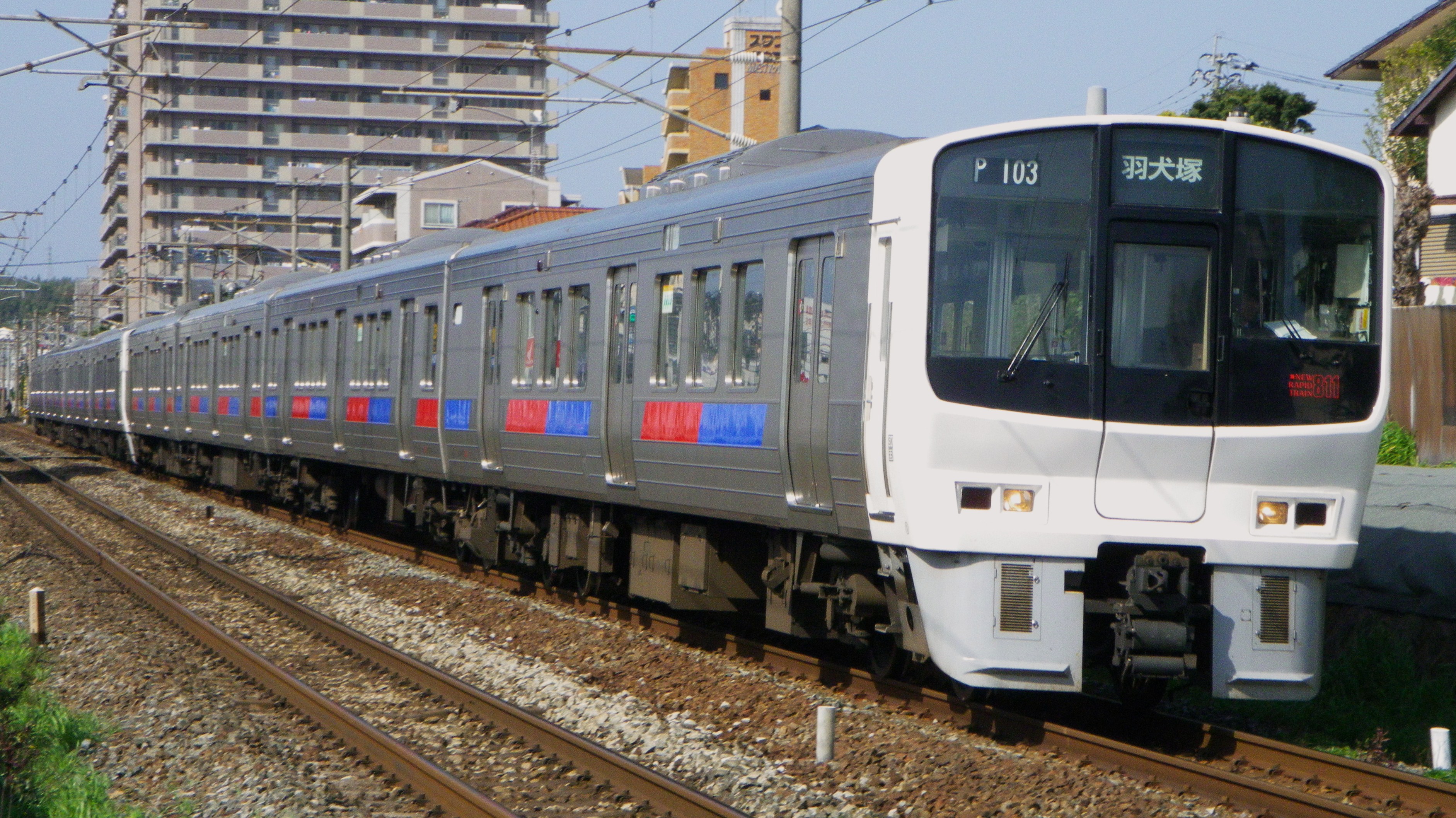
Japanese train type
| Field | Value |
|---|---|
| name | 811 series |
| image | Series811-P9.jpg |
| imagesize | 300px |
| caption | An 811-0 series set in June 2019 |
| manufacturer | Hitachi, Kinki Sharyo, JR Kyushu |
| replaced | 421 series |
| yearconstruction | 1989–1993 |
| yearservice | 21 July 1989 |
| refurbishment | 2017– |
| numberbuilt | 112 vehicles (28 sets) |
| numberservice | 108 vehicles (27 sets) |
| numberscrapped | 4 vehicles (set PM2, accident damage) |
| formation | 4 cars per trainset |
| operator | JR Kyushu |
| depots | Minami-Fukuoka |
| lines | Kagoshima Main Line, Nagasaki Main Line, Nippo Main Line |
| carbody | Stainless steel |
| carlength | 20,000 mm |
| width | 2,950 mm |
| height | 3,670 mm |
| doors | 3 pairs per side |
| maxspeed | 120 km/h |
| traction | Thyristor drive |
| Variable frequency (IGBT/SiC Hybrid module) (811-1500 series) | |
| traction motors | 811-0/100 series: |
| MT61QA | |
| 811-1500 series | |
| MT405K | |
| electricsystem | 20 kV AC 60 Hz |
| collectionmethod | Overhead catenary |
| multipleworking | 813/815/817/821 series |
| gauge |
Variable frequency (IGBT/SiC Hybrid module) (811-1500 series) MT61QA
811-1500 series MT405K
The 811 series is an AC electric multiple unit (EMU) train type operated on local services by Kyushu Railway Company (JR Kyushu) in Japan since 1989.
Variants
- 811-0 series: 16 x 4-car sets (PM1–17)
- 811-100 series: 11 x 4-car sets (PM101–111)
- 811-1500 series: Refurbished 4-car sets (PM15xx)
Design
The trains were built jointly by Hitachi, Kinki Sharyo, and JR Kyushu (Kokura factory).
Operations
811 series trains are used on "Local" (all-stations) and "Rapid" (limited-stop) services on the following lines.
- Kagoshima Main Line
- Nagasaki Main Line
- Nippo Main Line
Formations
, the fleet consists of 108 vehicles, formed as 27 four-car sets.
811-0 series
The four-car 811-0 series sets (sets PM1 to PM17) are formed as follows.
| Designation | Numbering | Capacity (Seated/total) |
|---|---|---|
| M'c | M | T |
| KuMoHa 810 | MoHa 811 | SaHa 811 |
| 48/124 | 56/133 | 44/123 |
The KuMoHa 810 car is fitted with one PS101Q lozenge-type pantograph. The KuHa 810 car has a toilet.
811-100 series
The four-car 811-100 series sets (sets PM101 to PM111) are formed as follows.
| Designation | Numbering | Capacity (Seated/total) |
|---|---|---|
| M'c | M | T |
| KuMoHa 810-1xx | MoHa 811-1xx | SaHa 811-1xx |
| 48/133 | 56/141 | 44/131 |
The KuMoHa 810 car is fitted with one PS101Q lozenge-type pantograph. The KuHa 810 car has a toilet. Sets PM105 and PM106 have SaHa 811-200 cars instead of SaHa 811-100 cars. These also have a toilet.
811-1500 series

The four-car 811-1500 series sets (sets PM15xx) refurbished from former 811-0 series sets are formed as follows.
| Designation | Numbering |
|---|---|
| M'c | M |
| KuMoHa 810-15xx | MoHa 811-15xx |
The KuMoHa 810 car is fitted with one single-arm pantograph. The KuHa 810 car has a toilet.
Interior
The 811-100 series sets have fixed transverse seats in the vicinity of the doorways rather than the flip-over seats of the 811-0 series sets. File:JRKyushu EMU 811-P11 inside.jpg|The interior of 811-0 series set PM11 in November 2008 File:JR Kyushu 811 kuha810-106 interior 20061104.jpg|The interior of 811-100 series car KuHa 810-106 of set PM106 in November 2006 File:JRKyushu EC moha811-1504 inside.jpg|The interior of refurbished 811-1500 series car MoHa 811-1504 of set PM1504 in September 2017
Livery variations
Sets P8 and P9 carried a "Mitsui Greenland" promotional livery, and set P11 carried a "Space World" promotional livery for a while. As of January 2013, P8 carries promotional vinyls for the Kyushu Heritage Museum, and the other two sets have been returned to the standard colour scheme.
File:JRKyushu EMU811-P9.jpg|Set P9 in Mitsui Greenland livery in April 2006 File:JRKyushu EMU 811-P11.jpg|Set P11 in Space World livery in September 2006 File:Kyushu Railway - Series 811-0 - 01.JPG|Set P8 in promotional livery in April 2011
History
The first sets were delivered in June 1989, and entered service from 21 July 1989. Trains became all no-smoking from 1 September 1995.
11 811-100 series four-car sets were delivered from 1992, numbered PM101 to PM111. These had a modified seating arrangement to provide more standing space in the doorway areas.
Refurbishment
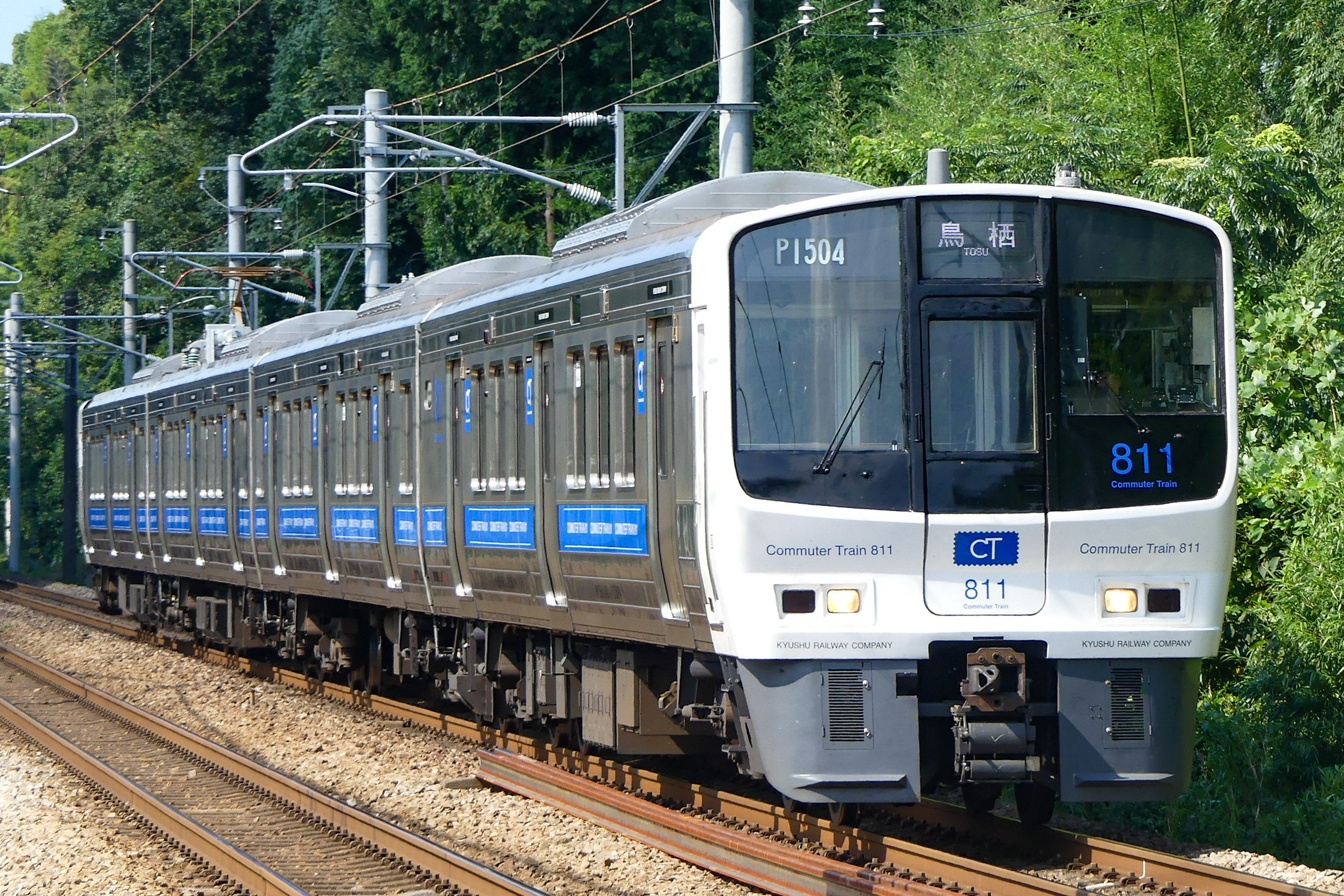
In 2017, set PM4 was refurbished, renumbered as set PM1504. Refurbishment changes include replacing the traction control equipment with SiC-VVVF equipment, changing to a single-arm pantograph, tinted passenger windows, full-colour LED destination indicators, and replacement of the former transverse seating with longitudinal bench seating. The interior and exterior design for refurbished trainsets was overseen by the industrial design company Don Design Associates. The first refurbished trainset returned to service in April 2017.
References
References
- Neko Publishing. (2009)
- Saka. Masahiro. Tetsudō Daiya Jōhō Magazine. Kotsu Shimbun. (March 2014)
- Haraguchi. Takayuki. Sekai Bunka. (2009)
- Kotsu Shimbunsha. (15 November 2017)
- Saka. Masahiro. Tetsudō Daiya Jōhō Magazine. Kotsu Shimbun. (February 2013)
- JRR. (July 1998)
- link. (4 April 2017). RM News. Neko Publishing Co., Ltd.
- link. (26 April 2017). Japan Railfan Magazine Online. Koyusha Co., Ltd.
This article was imported from Wikipedia and is available under the Creative Commons Attribution-ShareAlike 4.0 License. Content has been adapted to SurfDoc format. Original contributors can be found on the article history page.
Ask Mako anything about 811 series — get instant answers, deeper analysis, and related topics.
Research with MakoFree with your Surf account
Create a free account to save articles, ask Mako questions, and organize your research.
Sign up freeThis content may have been generated or modified by AI. CloudSurf Software LLC is not responsible for the accuracy, completeness, or reliability of AI-generated content. Always verify important information from primary sources.
Report