From Surf Wiki (app.surf) — the open knowledge base
771 Naval Air Squadron
Defunct flying squadron of the Royal Navy's Fleet Air Arm
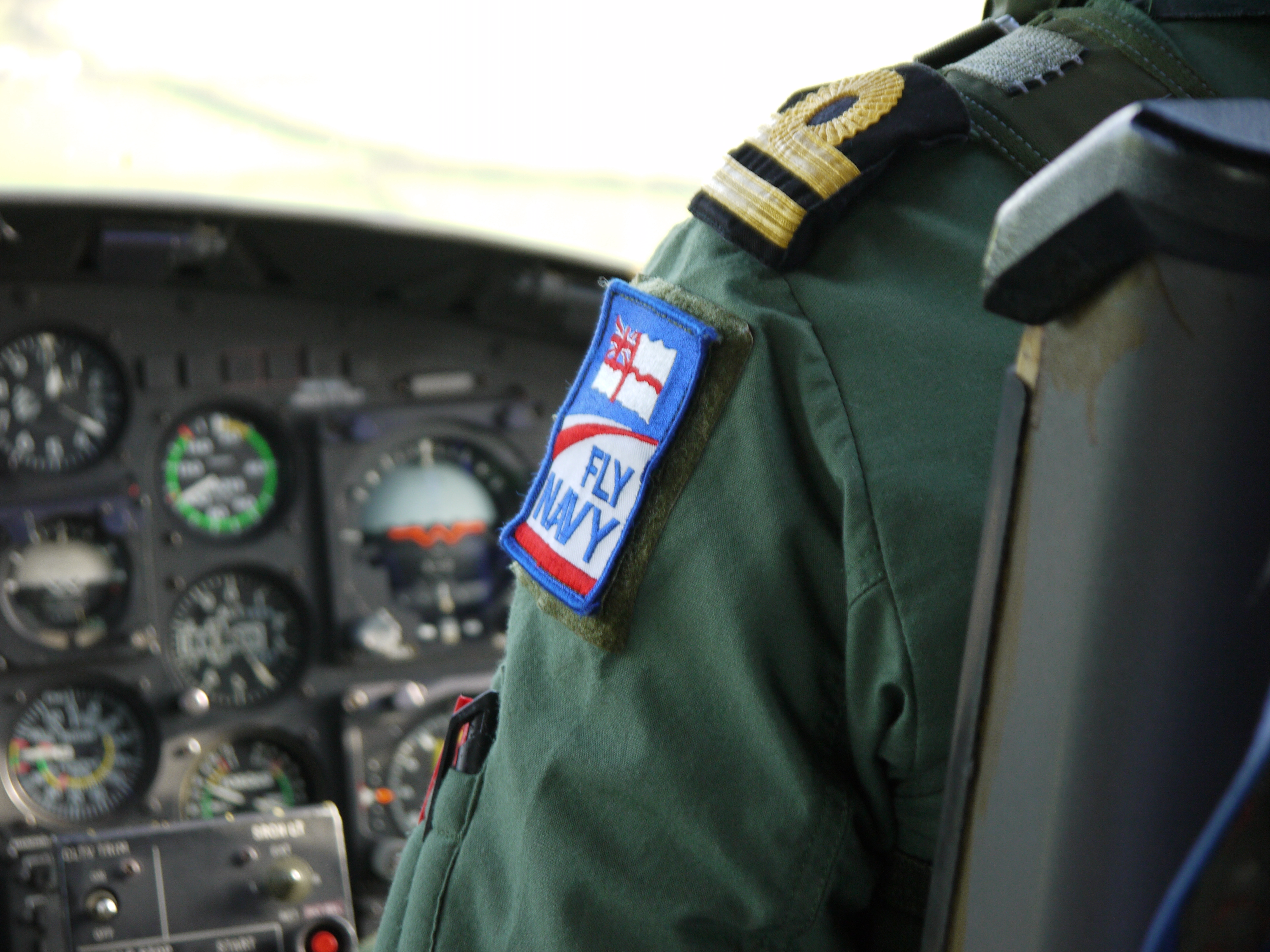
Defunct flying squadron of the Royal Navy's Fleet Air Arm
| Field | Value |
|---|---|
| unit_name | 771 Naval Air Squadron |
| image | 771 Naval Air Squadron Badge.png |
| image_size | 150 |
| caption | 771 Naval Air Sqdn crest |
| dates | |
| disbanded | 22 March 2016 |
| country | |
| branch | |
| type | Fleet Air Arm Second Line Squadron |
| role | Search and Rescue |
| Training | |
| equipment | *See Aircraft operated section for full list.* |
| equipment_label | Aircraft |
| size | Squadron |
| command_structure | Fleet Air Arm |
| garrison | RNAS Culdrose (HMS *Seahawk*) |
| garrison_label | Home station |
| motto | |
| decorations | Boyd Trophy 1992 |
Training
- 51st Miscellaneous Air Group (July 1948 - 1950) 771 Naval Air Squadron (771 NAS) of the Fleet Air Arm was a Fleet Air Arm (FAA) naval air squadron of the United Kingdom’s Royal Navy (RN). It was formed on 24 May 1939 at , Lee-on-Solent as a Fleet Requirements Unit with 14 Fairey Swordfish TSR biplanes. The squadron carried out various exercises with ships and provided towed targets for naval air gunners, and was decommissioned on 22 March 2016.
Second World War
The Squadron initially had a northern element (X Flight), and a southern element (Y Flight). 'X' Flight broke away on 28 September 1939 to become 772 Naval Air Squadron. The reshaped 771 NAS was based at RNAS Hatston flying a variety of fixed-wing aircraft, ranging from Supermarine Walruses to Hawker Hurricanes, from airfields across the UK and abroad.
A notable point in 771's wartime history was that they started the chain that led to the sinking of the German battleship Bismarck. The Commanding Officer of HMS Sparrowhawk, Captain Henry Lockhart St John Fancourt, RN, had been ordered to identify and sink the Bismarck at the earliest opportunity. The two squadrons of Albacores he had did not have sufficient range to attack the battleship whilst in harbour. He was relying on the Royal Air Force to carry out flights over Bergen, and inform the Royal Navy when the Battleship had left port. On 22 May 1941 RAF Coastal Command deemed the weather unsuitable for flight; however, Fancourt volunteered to put together a crew to fly 771's Martin Maryland twin-engined plane to carry out the sortie. Temporary Lieutenant (A) Noel Ernest Goddard, RNVR, at the time the Senior Pilot of 771 NAS, volunteered to pilot the sortie, with his crew of Acting Leading Airman John Walker Armstrong as TAG-WO and Leading Airman J. D. Milne as TAG-AG. The extremely experienced observer Commander Geoffry Alexander Rotherham, at the time the Air Station's XO, stepped up to act as Mission Commander. Goddard flew on instruments at low level over the sea, making landfall on target. Having identified that the ships had sailed already they attempted to radio their discovery back to RAF Coastal Command. However, they did not receive any reply. Rotherham decided to contact the Air Station directly on the Towed Target frequency and also fly directly to HMS Sparrowhawk's forward airfield, Sumburgh, where the Albacores were ready to intercept. Acting on Rotherhams's radio message, the Home Fleet were set to sea and engage the Bismarck and her escorts intercepting her at the Battle of the Denmark Straits. On 16 September 1941 The London Gazette reported the awarding of the following honours: Rotherham received the DSO, Goddard the DSC, and Armstrong the DSM. Goddard went on to Command 771 NAS as a Temporary Lieutenant Commander (A) on 15 October 1941. On 1 July 1942 771 NAS moved to RNAS Twatt to fly more modern aircraft in a similar role.
Post Second World War
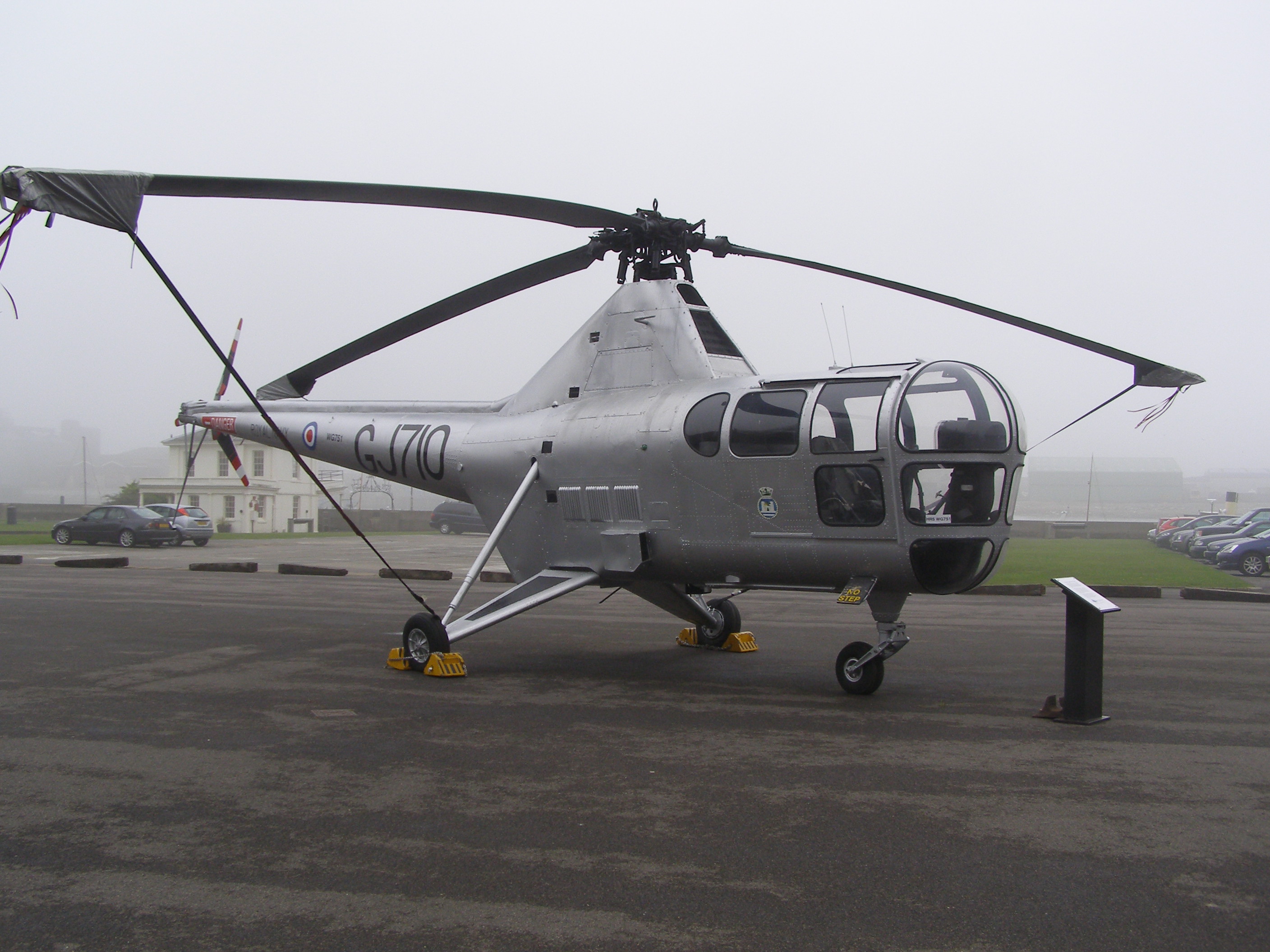
In February 1945, 771 received the Sikorsky Hoverfly, making it the first naval air squadron to operate helicopters, which it used until May 1947. After victory in Europe the Fleet moved from Scapa Flow to Portsmouth and the anchorage at Portland. 771 NAS followed south to RNAS Zeals and then to RNAS Lee-on-Solent and RNAS Ford. Here the Squadron flew Miles Martinets, Douglas Bostons, Vought Corsairs, Grumman Wildcats, Airspeed Oxfords, Grumman Hellcats, Supermarine Seafires, North American Harvards, de Havilland Mosquitoes, Hawker Sea Furys, Short Sturgeons, as well as the Hoverfly. The Hoverflies were transferred to 705 Naval Air Squadron as it was formed. During the Defence reductions following the Second World War it was decided that 771 would be disbanded in August 1955 (whilst operating the Avro Anson, de Havilland Sea Hornet, Gloster Meteor, de Havilland Sea Vampire and Fairey Firefly) when it combined with 703 Naval Air Squadron to form 700 Naval Air Squadron.
Helicopter-only squadron
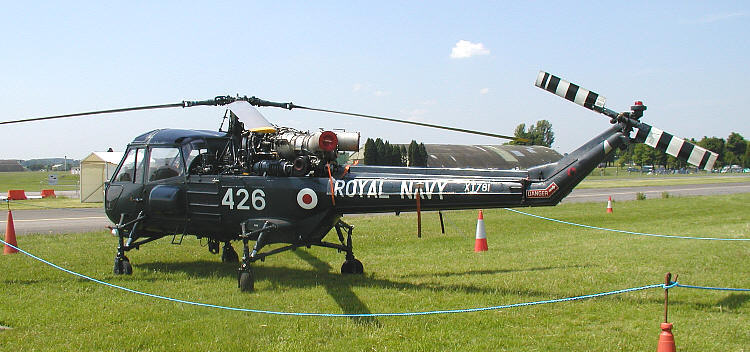
771 NAS reformed in 1961 and assumed the helicopter trials and training roles from 700 NAS with the Westland Whirlwind, Westland Dragonfly, and the Westland Wasp prototype at RNAS Portland. During this time 771 was able to pioneer and develop many Search And Rescue techniques; including helicopter in-flight refueling (HIFR), hi-line transfer, free diver drop and cliff winching techniques. Soon after standing up again, the Squadron gained two Westland Whirlwind HAR.3s and assumed the RNAS Portland SAR commitment. The Squadron was disbanded on 1 December 1964, on being absorbed into 829 Naval Air Squadron.
On 23 June 1967, the squadron reformed with the new primary task of anti-submarine warfare (ASW) Fleet Requirements Unit, in addition to the Portland SAR duty. Nine Whirlwind HAS.7 were used by the Squadron at this time. The Westland Wessex was introduced in 1969 with the Mk 1. This marked the beginning of a long association of the aircraft with the squadron. By 1970, the ASW role had been passed on to 737 Naval Air Squadron, making SAR 771's primary role, a role that has remained to the present day.
The Squadron moved to RNAS Culdrose in September 1974. Six of its Wessex aircraft were left at RNAS Portland, to form the basis of 772 Naval Air Squadron. The Wessex HAS.1 was replaced by the twin turbine-powered Wessex HU.5 in 1979, when it was involved with the 1979 Fastnet race rescues. During the Falklands Conflict all of 771 aircraft were taken for troop transport roles, some went to 722 Naval Air Squadron, but the majority reformed 847 Naval Air Squadron and 848 Naval Air Squadron along with some of 771 NASs aircrew. The remaining crew went either to their old aircraft type, or to new roles in the Lynx or Wasp fleets. Two Wessex Mk.5 from Wroughton were used in August 1982 to form the backbone of 771 NAS as it took the SAR commitment back from the RAF. In January 1983 the Squadron once again operated mixed fleets of rotary and fixed wing aircraft as it absorbed the Station Flight, taking ownership of two Chipmunks and 2 Sea Devons. It operated these until the end of 1989 when the Sea Devon was withdrawn from service. In 1985 the Squadron absorbed 707 Naval Air Squadron's Wessex helicopters when 771 NAS took over Commando Helicopter Training. The Wessex were replaced by Westland Sea King HAS.5s, converted to HAR.5s, in October 1987 as the Squadron assumed a long range, day/night and all weather SAR capability. In July 2001, 771 Squadron assumed the responsibility for Advanced and Operational Flying Training for anti-submarine warfare (ASW) pilots and Observers, as well as the residual Sea King HAS.5 & HAS.6 Pilot Conversion and Refresher Courses.
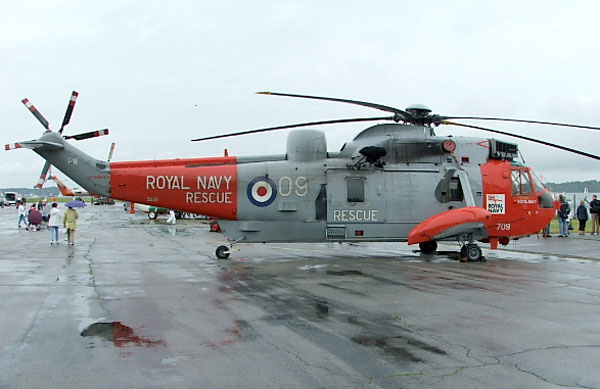
In its final years the Squadron operated the Sea King HAR.5 in the grey and red colours, with nine permanently stationed at RNAS Culdrose. 771's sister unit, Gannet Flight operates 3 HAR.5s performing a similar role from HMS Gannet on Prestwick Airport. 771's primary role was one of military Search and Rescue, with secondary roles in civilian Search and Rescue, Pilot and Observer refresher training, utility and liaison and ab-initio Pilot Conversion and operational training. To perform these roles, one of the helicopters was on 15 minutes notice to fly during the day, and 45 minutes during the night, with a duty crew on call for 24 hours. This duty was maintained for 365 days of the year, with a second standby aircraft ready to assist should the emergency have demanded it.
It stopped rescue duties on 1 January 2016 and was decommissioned on 22 March 2016. The squadron was responsible for saving over 15,000 lives on more than 9,000 missions.
Ace of Clubs
771s Helicopters feature the unofficial Ace of Clubs Squadron Logo. The origin of this logo is unclear, but it is widely believed to follow a similar pedigree as the Royal Navy Historic Flight Hawker Sea Hawk, wearing 806 NAS's Ace of Diamonds logo. Shortly after the Second World War Squadrons of the Fleet Air Arm often had an in-house display team. Each of the display aircraft were painted with identification marks. Playing card suits were chosen by some Squadrons as they were a neat identification that allows clear hierarchy; the Squadron Commanding Officer would take the Ace card, the XO the King and so on until each aircraft had a value relating to the seniority in the Squadron/display team of that pilot. Today 771 does not assign an aircraft to each pilot, instead operating a pool of aircraft allowing each pilot to fly any helicopter. It was chosen that only the Ace of Clubs would be painted on each of the helicopters in the Squadrons fleet.
Rescues
771 NAS was one of the busiest SAR units in the UK being called out an average of 220 times per year. With the limitations in civilian flight rules for the Cornwall Air Ambulance pilots 771 was also often called upon to perform patient and hospital transfers throughout the West Country. These were typically when the Air Ambulance was engaged in other duties, in poor weather, at night or where no suitable landing place was close by, allowing the Sea King to utilise its winch. Individual honours have included 4 George Medals, 4 Air Force Crosses, 6 Queens Gallantry Medals, and 14 Queen's Commendation for Bravery awards. Some of the more memorable rescues have been:
- 1978 – Ben Asdale, Air Force Cross awarded to Lt AJM Hogg RN, and Lt Cdr MJ Norman RN
- 1979 – Fastnet Race, Air Force Cross awarded to Lt Jerry Grayson for his role in the Fastnet '79 Race. It was awarded a year later in 1980.
- 1985 – Fastnet Race, George Medal awarded to the Rescue Diver; POACMN L Slater for his rescue of Simon Le Bon and 19 other survivors from the Yacht Drum
- 1985 – Yacht Master Cube
- 1989 – MV Secil Japan, Air Force Medal awarded to the Rescue Diver CPOACMN JPR Grinney
- 1989 – MV Murree, George Medal awarded to each of the 2 Rescue Divers; POACMN DS Wallace, POACMN SW Wright
- 1992 – Boyd Trophy won for night rescue of five crew from yacht Sine Seorra off Guernsey, Air Force Medal awarded to LA I Chambers
- 2004 – Boyd Trophy won for Boscastle Flood rescues, Air Force Cross awarded to Lt Cdr MJ Ford RN
- 2005 – Boyd Trophy won for the recovery of critically ill crewman from fishing vessel 240 miles off coast in gale-force winds and very poor visibility
- 2007 – MSC Napoli, PO J O'Donnel awarded Queen's Gallantry Medal
- 2008 – Pesca del Verdes, CPOACMN D Rigg awarded Queen's Gallantry Medal
- 2009 – Fishing Vessel Trevessa, PO D Lacy awarded Queen's Gallantry Medal
- 2011 – Yacht Andriette, Sgt A Russell RM awarded George Medal for his role in the rescue
RN SAR 60
As one of only two commissioned units of the ten that have operated in the dedicated Royal Navy Search and Rescue role, 771 NAS were a core part of the year-long celebration to recognise 60 years of RN Helicopter Search and Rescue in 2013. Events took place throughout the country and media all year, with the RN SAR Force raising £60,000 for charity.
Aircraft operated
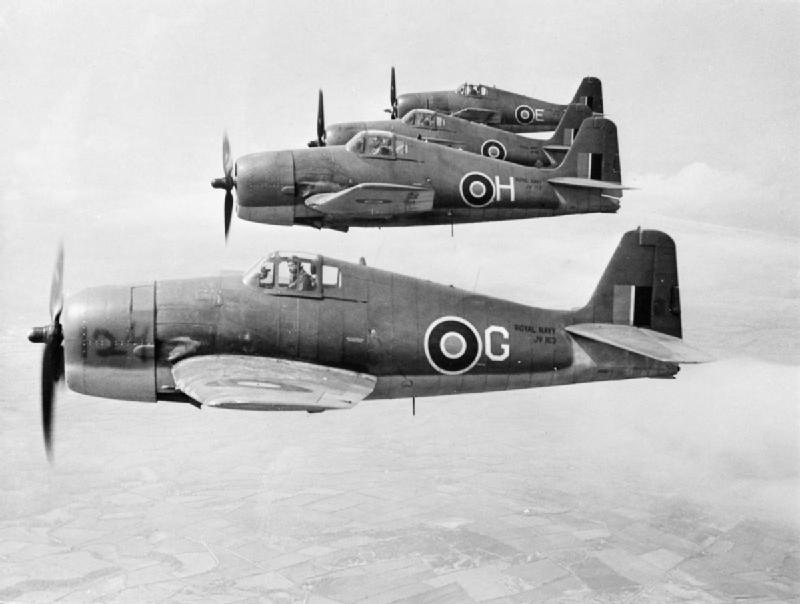
There are 68 different marks of aircraft known to have been operated by 771 NAS.




.jpg)



| Aircraft Equipment | Entered service | Left service |
|---|---|---|
| Swordfish | ||
| Henley III | ||
| Walrus I | ||
| Skua II | ||
| Roc I | ||
| Albacore I | ? | |
| Blenheim I | ||
| Blenheim IV | ||
| Sea Gladiator | ||
| Maryland | ||
| Walrus | ||
| Defiant TT.1 | ||
| Chesapeake I | ||
| Proctor Ia | ||
| Lysander TT.III | ||
| Martinet TT.I | ||
| Havoc I | ||
| Boston II | ||
| Boston III | ||
| Hurricane FB.IIc | ||
| Sea Otter | ||
| Corsair II | ||
| Corsair III | ||
| Wildcat IV | ||
| Wildcat V | ||
| Wildcat VI | ||
| Oxford I | ? | |
| Hellcat I | ? | |
| Hoverfly I | ||
| Hoverfly II | ||
| Seafire III | ||
| Seafire F.15 | ||
| Seafire F.45 | ||
| Seafire F.46 | ||
| Anson I | ||
| Harvard T.2B | ? | |
| Mosquito FB.6 | ||
| Mosquito PR.16 | ||
| Mosquito B.25 | ||
| Sea Mosquito TR.33 | ||
| Mosquito PR.34 | ||
| Sea Mosquito TR.37 | ||
| Mosquito TT.39 | ||
| Sea Hornet FR.20 | ||
| Sea Hornet NF.21 | ||
| Sea Fury T.20 | ||
| Meteor T.7 | ||
| Sea Vampire F.20 | ||
| Sea Vampire F.21 | ||
| Sturgeon TT.2 | ||
| Firefly FR.1 | ||
| Firefly T.1 | ? | |
| Firefly T.2 | ||
| Firefly TT.4 | ||
| Firefly TT.5 | ? | |
| Firefly AS.6 | ||
| Dragonfly HR.5 | ||
| Wasp P-531 O/N | ||
| Wasp HAS.1 | ||
| Whirlwind HAR.1 | ||
| Whirlwind HAR.3 | ||
| Whirlwind HAS.7 | ||
| Whirlwind HAS.7 ( service period) | ||
| Whirlwind HAS.22 | ||
| Wessex HAS.1 | ||
| Wessex HAS.1( service period) | ||
| Wessex HU.5 | ||
| Chipmunk T.10 | ||
| Sea Devon C.20 | ||
| Sea King HAR.5 |
Commanding officers
| Rank | Name | Date |
|---|---|---|
| Lt Cdr | KW Beard RN | 24 May 1939 |
| Lt Cdr | FEC Judd RN | 13 September 1940 |
| Maj | AR Burch RM | 15 January 1941 |
| Lt Cdr (A) | NE Goddard DSC RNVR | 15 October 1941 |
| Lt Cdr (A) | HT Molyneaux RNVR | 4 May 1942 |
| Lt Cdr (A) | W Dobson RN | 13 February 1944 |
| Lt Cdr( A) | CC Burke RNZNVR | 11 April 1945 |
| Lt Cdr | GMT Osborn DSO DSC RN | 24 October 1945 |
| Lt Cdr | CR Bateman RN | 23 February 1948 |
| Lt Cdr (A) | RWM Walsh RN | 7 January 1949 |
| Lt Cdr | JG Baldwin DSC RN | 18 November 1949 |
| Lt Cdr | JA Welpy RN | 19 December 1950 |
| Lt Cdr | MW Rudorf DSC RN | 5 May 1952 |
| Lt Cdr | Pridham-Wippell RN | 15 September 1952 |
| Lt Cdr | BE Bullivant RN | 3 June 1953 |
| Lt Cdr | RW Turral RN | 28 March 1955 |
| **squadron disbanded** | 17 August 1955 | |
| Lt Cdr | AIR Shaw MBE RN | 11 July 1961 |
| Lt Cdr | RV Woodward RN | 23 March 1962 |
| Lt Cdr | JRJ Rutherford RN | 28 March 1964 |
| **squadron disbanded** | 1 December 1964 | |
| Lt Cdr | JT Rawlins MBE RN | 23 June 1967 |
| Lt Cdr | R McLean MVO RN | 14 August 1968 |
| Lt Cdr | I Lachlan RN | 20 May 1970 |
| Lt Cdr | CL MacGregor RN | 4 October 1971 |
| Lt Cdr | RN Woodard RN | 5 September 1974 |
| Lt Cdr | CP West RN | 16 September 1974 |
| Lt Cdr | KJMcK Ayres RN | 16 June 1976 |
| Lt Cdr | R Mortimer RN | 10 May 1978 |
| Lt Cdr | PA Fish RN | 28 September 1979 |
| Lt Cdr | NB Shaw RN | 23 February 1981 |
| Lt Cdr | GRK Gadsden RN | 20 September 1982 |
| Lt Cdr | EK Bramall RN | 10 January 1983 |
| Lt Cdr | RHS Everall RN | 8 April 1983 |
| Lt Cdr | DR George RN | 15 October 1985 |
| Lt Cdr | MJ Lawrence RN | 18 December 1988 |
| Lt Cdr | IS Dominey RN | 28 July 1989 |
| Lt Cdr | SD Pendrich AFC RN | 15 March 1991 |
| Lt Cdr | L Matthews RN | 23 July 1993 |
| Lt Cdr | GBM Milton RN | 5 March 1996 |
| Lt Cdr | PC Richings RN | 19 May 1998 |
| Lt Cdr | D Whitehead RN | 7 July 2000 |
| Lt Cdr | DA Cunningham RN | 6 August 2002 |
| Lt Cdr | JC Barnbrook RN | 21 July 2004 |
| Lt Cdr | CA Godwin RN | 24 July 2006 |
| Lt Cdr | GJ Finn RN | 27 July 2008 |
| Lt Cdr | CP Canning RN | 30 March 2010 |
| Lt Cdr | MP Shepherd RN | 29 March 2012 |
| Cdr | MP Shepherd RN | 30 June 2013 |
| Lt Cdr | ST Armstrong RN | 4 April 2014 |
| Lt Cdr | RT Calhaem RN | 12 January 2015 |
References
References
- (12 September 1941). "Second supplement to The London Gazette, Sep 1941". [[Her Majesty's Stationery Office]].
- (12 September 1941). "Second supplement to The London Gazette, Sep 1941". [[Her Majesty's Stationery Office]].
- "Final shift for 771 Naval Air Squadron | Plymouth Herald".
- (September 2018). "Final ceremony disbands navy 771 search and rescue squadron at RNAS Culdrose Helston".
- (10 September 1979). "Second supplement to The London Gazette, Sep 1979 - Honours and awards". [[Her Majesty's Stationery Office]].
- (1979). "1979 Fastnet Race Inquiry". [[Royal Yachting Association]] and [[Royal Ocean Racing Club]].
- Grayson, Jerry. (2015). "Rescue Pilot". Adlard Coles Nautical.
- (10 March 1986). "Second supplement to The London Gazette, Mar 1986 - Honours and awards". [[Her Majesty's Stationery Office]].
- (22 January 1990). "Second supplement to The London Gazette, Jan 1990 - Honours and awards". [[Her Majesty's Stationery Office]].
- "MURREE – IMO 8000161 – ShipSpotting.com – Ship Photos and Ship Tracker". ShipSpotting.com.
- (23 July 1990). "Second supplement to The London Gazette, Jul 1990". [[Her Majesty's Stationery Office]].
- (22 March 1993). "Second supplement to The London Gazette, Mar 1993". [[Her Majesty's Stationery Office]].
- (27 September 2005). "Bravery awards for flood heroes". BBC News.
- (18 March 2005). "Second supplement to The London Gazette, Mar 2005". [[Her Majesty's Stationery Office]].
- (14 December 2009). "Rescue winchman gets royal award". BBC News.
- "Fishermen rescued trawler blaze".
- "George Medal for Royal Marines winchman".
This article was imported from Wikipedia and is available under the Creative Commons Attribution-ShareAlike 4.0 License. Content has been adapted to SurfDoc format. Original contributors can be found on the article history page.
Ask Mako anything about 771 Naval Air Squadron — get instant answers, deeper analysis, and related topics.
Research with MakoFree with your Surf account
Create a free account to save articles, ask Mako questions, and organize your research.
Sign up freeThis content may have been generated or modified by AI. CloudSurf Software LLC is not responsible for the accuracy, completeness, or reliability of AI-generated content. Always verify important information from primary sources.
Report