From Surf Wiki (app.surf) — the open knowledge base
729th Airlift Squadron

| Field | Value | |
|---|---|---|
| unit_name | 729th Airlift Squadron | |
| image | Global Medic 130719-F-AF679-123.jpg | |
| image_size | 300 | |
| caption | 729th Airlift Squadron C-17 Globemaster III | |
| dates | 1943–1945; 1947–1952; 1952–present | |
| country | ||
| branch | ||
| role | Airlift | |
| command_structure | Air Force Reserve Command | |
| garrison | March Air Reserve Base | |
| battles | European Theater of Operations | |
| Korean War | ||
| decorations | Distinguished Unit Citation | |
| Air Force Outstanding Unit Award | ||
| Republic of Korea Presidential Unit Citation | ||
| Republic of Vietnam Gallantry Cross with Palm | ||
| aircraft_transport | C-17 Globemaster III | |
| identification_symbol | [[Image:729th Airlift Squadron.png | 150px]] |
| identification_symbol_label | 729th Airlift Squadron emblem | |
| identification_symbol_2 | [[File:729 Military Airlift Sq emblem.png | 150px]] |
| identification_symbol_2_label | 729th Military Airlift Sq emblem | |
| identification_symbol_3 | [[File:729th Bombardment Squadron - B-26 era Emblem.png | 150px]] |
| identification_symbol_3_label | Unofficial 729th Bombardment Squadron emblem (B-26 era) | |
| identification_symbol_4 | [[File:729 Bombardment Sq emblem.png | 150px]] |
| identification_symbol_4_label | 729th Bombardment Squadron emblem | |
| identification_symbol_5 | **M3** | |
| identification_symbol_5_label | World War II fuselage code |
Korean War Air Force Outstanding Unit Award Republic of Korea Presidential Unit Citation Republic of Vietnam Gallantry Cross with Palm
The 729th Airlift Squadron is a United States Air Force Reserve squadron, assigned to the 452d Operations Group, stationed at March Air Reserve Base, California. It operates Boeing C-17 Globemaster III aircraft providing global airlift any time, any place.
The squadron was first activated as the 729th Bombardment Squadron in 1943. After training in the United States with the Boeing B-17 Flying Fortress, the squadron deployed to the European Theater of Operations, participating in the strategic bombing campaign against Germany. It earned a Distinguished Unit Citation (DUC) during an attack on a German jet fighter base near Kaltenkirchen in April 1945. Following V-E Day, the squadron returned to the United States and was inactivated.
The squadron was activated again in the reserves in 1947. Two years later, it began to train with Douglas B-26 Invaders. In August 1950, the squadron was one of the first reserve units mobilized for the Korean War. After filling its ranks and undergoing intensive training, the squadron deployed to Far East Air Forces and began flying combat missions. It was awarded two additional DUCs for its operations in Korea. In May 1952, the squadron was inactivated and its personnel and equipment were transferred to a regular unit that was simultaneously activated.
The squadron was activated in the reserves again two months later as the 729th Tactical Reconnaissance Squadron. It returned to the light bomber mission in 1955, but the Air Force's reserve units were converting to the airlift mission, and the squadron became the 729th Troop Carrier Squadron in July 1957, and has served in tactical and strategic airlift roles since then.
History
World War II
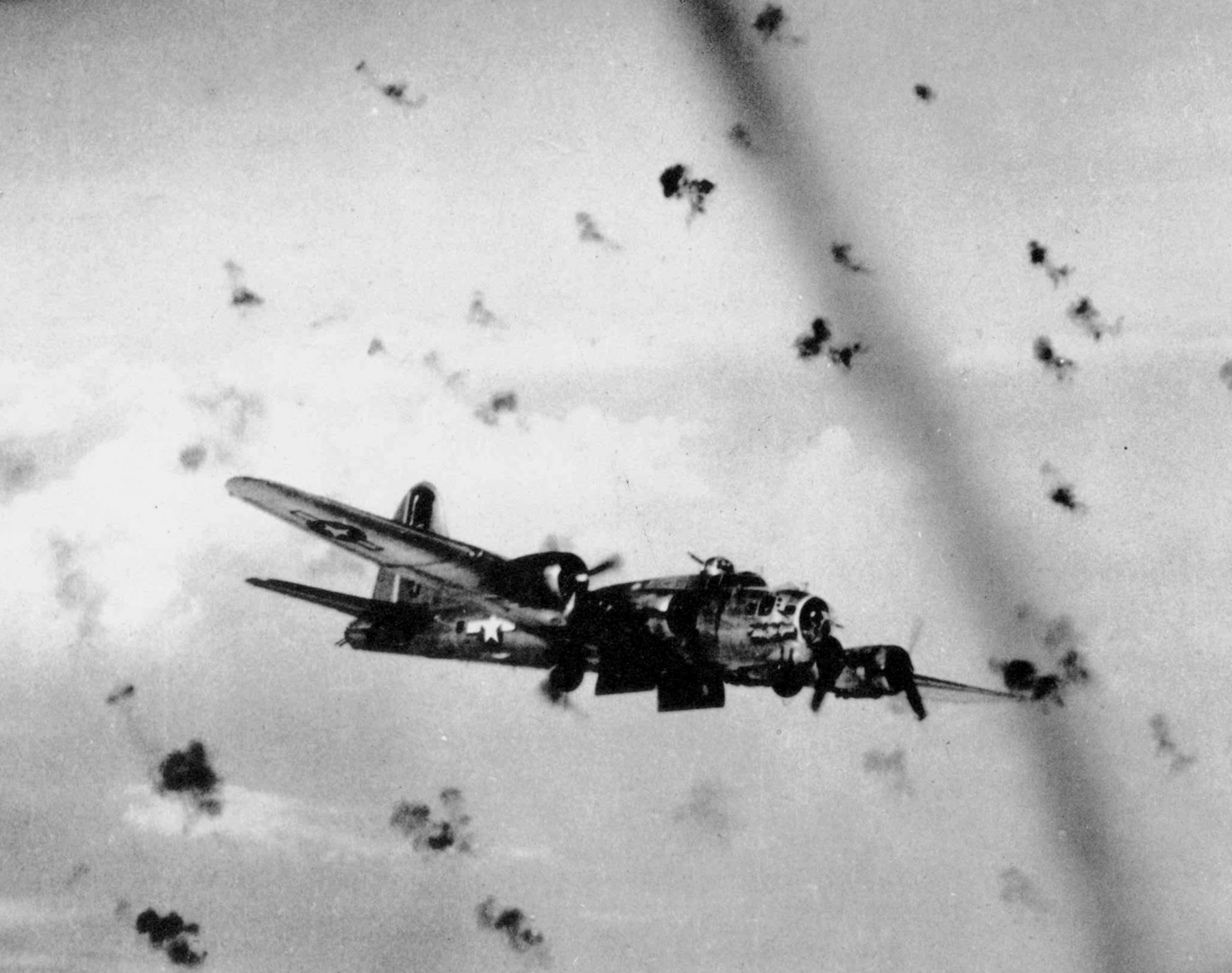
The squadron was first activated in June 1943 at Geiger Field, Washington as the 729th Bombardment Squadron, one of the four original squadrons of the 452d Bombardment Group. Later that month, it moved to Rapid City Army Air Base, South Dakota and began to train with the Boeing B-17 Flying Fortress. It continued training with Second Air Force until December, when it began its movement to the European Theater of Operations. The ground echelon staged through Camp Shanks and sailed on the on 2 January 1944. The air echelon deployed via the South Atlantic air ferry route
The squadron established itself at RAF Deopham Green in January 1944, and began operations on 4 February 1944 with a strike on an aircraft assembly plant near Brunswick. Its strategic targets included railroad marshalling yards near Frankfurt, aircraft factories near Regensberg and Kassel. the ball bearing factory at Schweinfurt and an oil refinery near Bohlen.
The 729th was occasionally diverted to support tactical operations. It hit airfields, V-weapon launching sites, bridges and other objectives in preparations for Operation Overlord, the invasion of Normandy. It bombed enemy positions to support Operation Cobra, the breakout at Saint Lo in July 1944 and the attacks on Brest, France in August. It supported Operation Market Garden, airborne attacks in the Netherlands in September and, during the Battle of the Bulge, struck German lines of communication. It struck an airfield to support Operation Varsity, the airborne assault across the Rhine.
Shortly before the end of the war, on 7 April, the squadron struck the jet fighter base at Kaltenkirchen, pressing the attack despite strong fighter opposition, earning a Distinguished Unit Citation. It flew its last mission of the war on 21 April against marshalling yards at Ingolstadt.
After V-E Day, in August 1945, the squadron returned to the United States (the ground echelon once again sailed on the RMS Queen Elizabeth) and was inactivated at Sioux Falls Army Air Field, South Dakota.
Reserve duty and Korean War call-up
_Korea_May1951.jpg)
The squadron was reactivated in the reserve at Long Beach Army Air Field, California in 1947 as a very heavy bomber squadron, but conducted proficiency flying with a variety of trainer airplanes under the supervision of the 416th AAF Base Unit (later the 2347th Air Force Reserve Training Center). In a 1949 reorganization of the reserves, it became a light bomber squadron and began to equip and train with Douglas B-26 Invaders. The squadron was manned at only 25% of its authorized strength.
The squadron was mobilized for the Korean War in August 1950 in the first wave of reserve mobilizations. To help bring it up to strength, the squadron was augmented by reservists assigned to the 448th Bombardment Wing, which was also stationed at Long Beach, but remained in reserve status until the following year. The 729th was a squadron of one of the first two reserve wings to be mobilized, and administrative provisions for mobilization proved inadequate, with numerous reservists never receiving the telegrams calling them to active duty.
The unit moved to George Air Force Base, California for intensive training and to be brought up to full strength. In October, the squadron deployed to Itazuke Air Base, Japan to begin combat operations. The squadron operated from Japan and later from the southern tip of Korea. The squadron flew armed reconnaissance, intruder and interdiction missions. It supported ground troops and attacked tactical targets.
On 23 March 1951, the squadron led troop carrier aircraft carrying the 187th Airborne Infantry Regiment in an aerial assault on Munsan-ni, strafing the front lines of the Chinese Communist Forces and dropping bombs on enemy targets. In May 1952, the squadron was inactivated and returned to the reserve. Its mission, personnel and aircraft were transferred to the 37th Bombardment Squadron, which was simultaneously activated at Pusan East (K-9) Air Base, South Korea.
Reconnaissance and Bombardment in the reserves
The squadron was redesignated the 729th Tactical Reconnaissance Squadron and activated in June 1952 at Long Beach, where it absorbed some of the resources of the 921st Reserve Training Wing, which was inactivated. The reserve mobilization for the Korean War, however, had left the reserve without aircraft, and the unit did not receive aircraft until July 1952. Despite its tactical reconnaissance name, it was first equipped with Curtiss C-46 Commando transports. The following year, it began to equip with a mix of aircraft, including The B-26 and North American F-51 Mustang. In 1954 it received its first jets, Lockheed F-80 Shooting Stars.
In 1955, the squadron once again became the 729th Bombardment Squadron and trained with the Invader as a tactical bombardment unit. In July 1957, the squadron became the 729th Troop Carrier Squadron.
Tactical airlift
As a troop carrier squadron the unit transitioned to the C-119 and flew them from Long Beach until reserve flying operations there ended in the fall of 1960 and the 452d Troop Carrier Wing moved to March Air Force Base. The squadron had been assigned directly to the wing since April 1959, when ConAC converted its flying wings to the dual deputy organization and inactivated the 452d Troop Carrier Group.
Activation of groups under the wing
Since 1955, the Air Force had been detaching Air Force Reserve squadrons from their parent wing locations to separate sites. The concept offered several advantages: communities were more likely to accept the smaller squadrons than the large wings and the location of separate squadrons in smaller population centers would facilitate recruiting and manning. In time, the detached squadron program proved successful in attracting additional participants. Although the dispersal of flying units was not a problem when the entire wing was called to active service, mobilizing a single flying squadron and elements to support it proved difficult. This weakness was demonstrated in the partial mobilization of reserve units during the Berlin Crisis of 1961. To resolve this, at the start of 1962, ConAC determined to reorganize its reserve wings by establishing groups with support elements for each of its troop carrier squadrons. This reorganization would facilitate mobilization of elements of wings in various combinations when needed. However, as this plan was entering its implementation phase, another partial mobilization occurred for the Cuban Missile Crisis. The formation of new troop carrier groups was delayed until January for wings that had not been mobilized. The 943d Troop Carrier Group was formed at March on 17 January as the headquarters for the 729th and its supporting units.
In March 1968, the squadron moved to Norton Air Force Base, California, but it would only fly C-119s from Norton for a year.
Strategic airlift
By 1968 regular air force military airlift squadrons were operating the Lockheed C-141 Starlifter, while reserve heavy airlift units still flew the obsolete Douglas C-124 Globemaster II. As the Globemaster was retired, Air Force Reserve formed associate units with the C-141 In this program reserve units flew and maintained aircraft owned by an associated regular unit. On 25 April 1969, the 729th transferred its aircraft and was reassigned to the 944th Military Airlift Group as an associate of the active duty 63d Military Airlift Wing. In 1973, Air Force Reserve inactivated its reserve associate groups and the squadron was assigned directly to the 445th Military Airlift Wing. Missions the 729th has flown included humanitarian relief, aeromedical flights, and airdrops of supplies and paratroopers.
In August 1992, Air Force Reserve Command reorganized its flying wings under the Objective Wing model. The squadron, along with the other flying squadrons of the 445th Wing, was assigned to the reactivated 445th Operations Group. As a result of the closure of Norton as part of the United States Department of Defense's 1988 Base Realignment and Closure Commission program, on 14 August 1993, the 729th returned to March Air Force Base, where it was assigned to the 452d Operations Group and once more operated its own planes. The 729th was renamed the 729th Airlift Squadron on 1 February 1992.
On 9 August 2005 the wing received its first Boeing C-17 Globemaster III strategic airlifter, named "Spirit of California". This was the first of nine C-17s assigned to the 452nd, the wing became the first Air Force Reserve Command C-17 Globemaster III unit.
Lineage
- Constituted as the 729th Bombardment Squadron (Heavy) on 14 May 1943 : Activated on 1 June 1943 : Redesignated 729th Bombardment Squadron, Heavy on 20 August 1943 : Inactivated on 28 August 1945
- Redesignated 729th Bombardment Squadron, Very Heavy on 13 May 1947 : Activated in the reserve on 12 July 1947 : Redesignated 729th Bombardment Squadron, Light on 27 June 1949 : Ordered to active service on 10 August 1950 : Redesignated 729th Bombardment Squadron, Light, Night Intruder on 25 June 1951 : Relieved from active service and inactivated on 10 May 1952
- Redesignated 729th Tactical Reconnaissance Squadron on 6 June 1952 : Activated in the reserve on 13 June 1952 : Redesignated 729th Bombardment Squadron, Tactical on 22 May 1955 : Redesignated 729th Troop Carrier Squadron, Medium on 1 July 1957 : Redesignated 729th Tactical Airlift Squadron on 1 July 1967 : Redesignated 729th Military Airlift Squadron (Associate) on 25 April 1969 : Redesignated 729th Airlift Squadron (Associate) on 1 February 1992 : Redesignated 729th Airlift Squadron on 1 April 1993
Assignments
- 452d Bombardment Group, 1 June 1943 – 28 August 1945
- 452d Bombardment Group, 12 July 1947 – 10 May 1952
- 452d Tactical Reconnaissance Group (later 452d Bombardment Group, 452d Troop Carrier Group), 13 June 1952
- 452d Troop Carrier Wing, 14 April 1959
- 943d Troop Carrier Group (later 943 Tactical Airlift Group), 17 January 1963
- 944th Military Airlift Group, 25 April 1969
- 445th Military Airlift Wing, 1 July 1973
- 445th Operations Group, 1 August 1992
- 452d Operations Group, 1 May 1994 – present
Stations
- Geiger Field, Washington, 1 June 1943
- Rapid City Army Air Base, South Dakota, c. 13 June 1943
- Pendleton Field, Oregon, 10 October 1943
- Walla Walla Army Air Base, Washington, c. 4 November–December 1943
- RAF Deopham Green (AAF-142), England, c. 8 January 1944 – 6 August 1945
- Sioux Falls Army Air Field, South Dakota, c. 12 – 28 August 1945
- Long Beach Army Air Field (later Long Beach Municipal Airport), California, 19 April 1947
- George Air Force Base, California, 10 August – October 1950
- Itazuke Air Base, Japan, 26 October 1950
- Miho Air Base, Japan, c. 10 December 1950
- Pusan East (K-9) Air Base, South Korea, 17 May 1951 – 10 May 1952
- Long Beach Municipal Airport, California, 13 June 1952
- March Air Force Base, California, 14 October 1960
- Norton Air Force Base, California, 25 March 1968
- March Air Force Base (later March Air Reserve Base), California, 14 August 1993 – present
Aircraft
- Boeing B-17 Flying Fortress (1943–1945)
- North American T-6 Texan (1948–1950, 1952–1954)
- Beechcraft T-7 Navigator (1948–1950)
- BeechcraftT-11 Kansan (1948–1950)
- Douglas B-26 Invader (1949–1952, 1955–1957)
- North American F-51 Mustang (1953–1954)
- Lockheed T-33 T-Bird (1954–1955)
- Lockheed P-80 Shooting Star (1954–1955)
- Curtiss C-46 Commando (1957–1958)
- Fairchild C-119 Flying Boxcar (1958–1969)
- Lockheed C-141 Starlifter (1969–2005)
- Boeing C-17 Globemaster III (2005–present)
Awards and campaigns
| Campaign Streamer | Campaign | Dates | Notes | |
|---|---|---|---|---|
| [[Image:Streamer EAMEC.PNG | 200px]] | Air Offensive, Europe | 8 January 1944 – 5 June 1944 | 729th Bombardment Squadron |
| [[Image:Streamer EAMEC.PNG | 200px]] | Air Combat, EAME Theater | 8 January 1944 – 11 May 1945 | 729th Bombardment Squadron |
| [[Image:Streamer EAMEC.PNG | 200px]] | Normandy | 6 June 1944 – 24 July 1944 | 729th Bombardment Squadron |
| [[Image:Streamer EAMEC.PNG | 200px]] | Northern France | 25 July 1944 – 14 September 1944 | 729th Bombardment Squadron |
| [[Image:Streamer EAMEC.PNG | 200px]] | Rhineland | 15 September 1944 – 21 March 1945 | 729th Bombardment Squadron |
| [[Image:Streamer EAMEC.PNG | 200px]] | Ardennes-Alsace | 16 December 1944 – 25 January 1945 | 729th Bombardment Squadron |
| [[Image:Streamer EAMEC.PNG | 200px]] | Central Europe | 22 March 1944 – 21 May 1945 | 729th Bombardment Squadron |
| [[Image:Streamer KS.PNG | 200px]] | CCF Intervention | 3 November 1950 – 24 January 1951 | 729th Bombardment Squadron |
| [[Image:Streamer KS.PNG | 200px]] | 1st UN Counteroffensive | 25 January 1951 – 21 April 1951 | 729th Bombardment Squadron |
| [[Image:Streamer KS.PNG | 200px]] | CCF Spring Offensive | 22 April 1951 – 9 July 1951 | 729th Bombardment Squadron |
| [[Image:Streamer KS.PNG | 200px]] | UN Summer-Fall Offensive | 9 July 1951 – 27 November 1951 | 729th Bombardment Squadron |
| [[Image:Streamer KS.PNG | 200px]] | Second Korean Winter | 28 November 1951 – 30 April 1952 | 729th Bombardment Squadron |
| [[Image:Streamer KS.PNG | 200px]] | Korea Summer-Fall 1952 | 1 May 1952 – 10 May 1952 | 729th Bombardment Squadron |
References
Notes
; Explanatory notes
; Citations
Bibliography
References
- (26 November 2012). "Factsheet 729 Airlift Squadron (AFRC)". Air Force Historical Research Agency.
- Maurer, ''Combat Squadrons'', pp. 724–725
- Freeman, p. 289
- Maurer, ''Combat Units'', pp. 326–328
- Freeman, p. 258
- In September 1944, the squadron participated in the third shuttle mission, striking [[Chemnitz]] before landing in bases in the Soviet Union.Freeman, p. 188
- "Abstract, History 416 AAF Base Unit Jan–Mar 1945". Air Force History Index.
- "Abstract, History 2347 Air Force Reserve Training Center Jul–Sep 1950". Air Force History Index.
- Cantwell, p. 74
- Cantwell, p. 92, Maurer, ''Combat Units'', pp. 522–523
- Cantwell, p. 93
- Prior to June 1951, the squadron had been conducting strikes primarily in the daytime. However, due to the extent of enemy night movements, after June, the 729th focused on night operations.Cantwell, p. 103
- Cantwell, p. 139
- However, at this time, the [[Joint Chiefs of Staff]] were pressuring the Air Force to provide more wartime airlift. At the same time, about 150 [[Fairchild C-119 Flying Boxcar]]s became available from the active force. Consequently, in November 1956 the Air Force directed [[Continental Air Command]] (ConAC) to convert units to the troop carrier mission by September 1957.Cantwell, p. 168
- Cantwell, p. 156
- Cantwell, pp. 189–191
- Cantwell, p. 210
- "March accepts AF Reserve Command's first C-17".
- Station number in Anderson.
- Station number in Endicott.
- Station information in Robertson, 729 Airlift Squadron Factsheet, except as noted.
- (9 August 2005). "Air Force Reserve welcomes its first unit-equipped C-17 Globemaster III". Air Force Reserve Command Public Affairs.
This article was imported from Wikipedia and is available under the Creative Commons Attribution-ShareAlike 4.0 License. Content has been adapted to SurfDoc format. Original contributors can be found on the article history page.
Ask Mako anything about 729th Airlift Squadron — get instant answers, deeper analysis, and related topics.
Research with MakoFree with your Surf account
Create a free account to save articles, ask Mako questions, and organize your research.
Sign up freeThis content may have been generated or modified by AI. CloudSurf Software LLC is not responsible for the accuracy, completeness, or reliability of AI-generated content. Always verify important information from primary sources.
Report