From Surf Wiki (app.surf) — the open knowledge base
61 Mechanised Battalion Group

| Field | Value | |
|---|---|---|
| unit_name | 61 Mechanised Battalion Group | |
| image | SADF 61 Mech flash badge.jpg | |
| caption | 61 Mechanised Battalion emblem | |
| dates | 19782005 | |
| country | ||
| allegiance | ||
| branch | ||
| type | Mechanised Battle Group | |
| command_structure | South African Infantry Corps | |
| garrison | Otavi, Tsumeb, Omuthiya, Lohatla Army Battle School | |
| garrison_label | Garrison | |
| nickname | 61 Mech | |
| motto | Mobilitate vincere | |
| equipment | {{plainlist | |
| battles | South African Border War | |
| disbanded | 2005 |
- Ratel (all types)
- Eland Mk7 90mm and 60mm Armoured Cars
- Rooikat
- Buffel
- G5 howitzer
61 Mechanised Battalion Group was a unit of the South African Infantry Corps; although it was classed as mechanized infantry, it was a combined arms force consisting of infantry, armour and artillery.
History
Combat Group Juliet
General Constand Viljoen, Chief of the Army, formulated a plan in 1978 to introduce a mechanized combat group to Ovamboland in the then South West Africa, to conduct operations against SWAPO. Combat Group Juliet was then formed under the command of Commandant Frank Bestbier.

Operation Reindeer
The Battle Group first saw action in Operation Reindeer in early May 1978, launching an attack on SWAPO's Western Front headquarters and logistics base, at Chetequera, 15 km north of the South West African border, with a mechanized assault force. This attack formed part of Operation Reindeer during which paratroopers attacked a separate target at Cassinga, some 300 km into Angola. After Operation Reindeer it was decided to establish a permanent conventional mechanized combat unit in the operational area and Commandant Johann Dippenaar was appointed to set up this unit.
By January 1979, the Battle Group was renamed 61 Mechanised Battalion and became part of the regular order of battle. 61 Mech served for over a decade in the territory fighting both a guerrilla war against the South-West Africa People's Organisation, as well as taking part in conventional operations against Cuban and Angolan forces.
South West Africa Headquarters of 61 Mech
A tactical headquarters for 61 Mech was initially established at Otavi but during April 1979 this was moved to Tsumeb. 61 Mech was eventually resettled at Omuthiya, with a base headquarters in Tsumeb.
Further operations
61 Mech was primarily involved in these operations.
- Operation Carrot (1979)
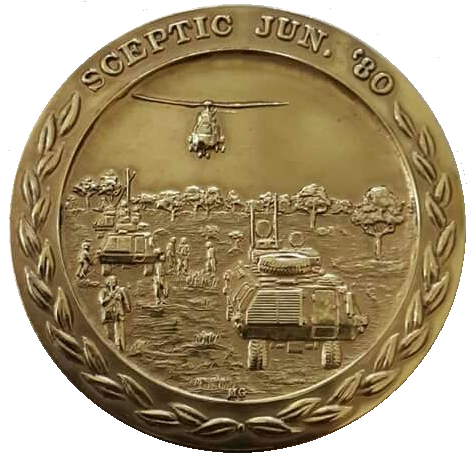
- Operation Sceptic (1980)
- Operation Protea (1981)
- Operation Daisy (1981)
- Operation Meebos (1982)
- Operation Yahoo (1982)
- Operation Dolfyn (1983)
- Operation Askari (1983)
- Operation Vasvat (1984)
- Operation Nekomdraai (1984)
- Operation Pronkertjie (1985)
- Operation Viper (1985)
- Operation Benzine
- Operation Moduler
- Operation Hooper
- Operation Packer
- Operation Excite (1988)
- Operation Linger
- Operation Merlyn (1989)
- Operation Arson I
- Operation Arson II
- Operation Light Foot
- Operation Ventic
- Operation Pikadel
- Operation Reward
- Operation Displace
- Operation Jamba
- Operation Hulti (1988)
- Operation Prone (1988)
- Operation Makro (1981)

Relocation to South Africa and Lohatla Army Battle School
During September 1991 61 Mech Bn Gp, which was based at Rooikop in Namibia, resettled at the Army Battle School in Lohatla, South Africa. 61 Mech remained part of C Army's Reserve, under operational command of 60 Brigade HQ and administratively supported by the Army Battle School. During this time, C Army amended the organisation of the Battle School to execute two functions concurrently:
- first, continuing to administer the facility as a large training institution for reserves and full-time forces as it had been in the past;
- second, to provide the headquarters for a virtual Rapid Deployment Force (including 61 Mech), as part of its permanent order of battle.
Operations after relocation
61 Mech was primarily involved in these operations.
- Operation Shobashobane
- Operation Intexo (1995)
- Operation Jumbo III (1996)
- Operation Vlakhaas (1995)
- Operation Sweepslag (1994)
- Operation Sombre (1994)
Disbandment
By 2005, 61 Mech was disbanded and its infantry elements merged into 8 South African Infantry Battalion at Upington after moving from Lohatla. The Armour and Artillery components were merged into other existing regular units of their respective corps.
Organisation
61 Mech was organised along the following lines:
- two infantry companies, which were equipped with the Ratel-20 Infantry Fighting Vehicle,
- if necessary, a third infantry company was attached. On many occasions this was a company from 1 Parachute Battalion who were attached as a motorised company in Buffels
- an armoured car squadron initially equipped with Eland Armoured Cars. During 1980 the Elands were replaced by the Ratel-90 and later the Rooikat Armoured Fighting Vehicle,
- a support company consisting of an anti-tank platoon in Ratel-90s,
- an 81mm mortar platoon in Ratel-81s,
- an anti-aircraft troop and
- an artillery battery equipped with the G5 howitzer. Firepower was further augmented by the addition of the self-propelled version (G6 Rhino).
- In 1988 61 Mech also received the first combat-deployed squadron of Olifant MBTs, to counter the ever-escalating FAPLA tank threat
61 Mech was primarily tasked as the Army's Immediate Response Unit, due to its versatility.
Equipment
Armour
- Eland 60
- Eland 90
- Olifant MBT
Armoured Personnel Carrier
- Buffel
- Casspir
Artillery
- 5.5(140mm)
- G2
- G4
- G5
- G6
Anti Aircraft
- Ystervark
Personal Weapons
- R1
- R4
- R5
- FN Mag
- 60mm patrol mortar
- RPG
Fighting Vehicles
- Ratel 20
- Ratel 60
- Ratel 81
- Ratel 90
- Ratel Command
- Ratel ZT3
Logistics
- samil 10 lappiespomp
- Samil 20
- Samil 50
- Samil 100
- Rinkhals ambulance
Insignia
Standard Dress

Ops Badge
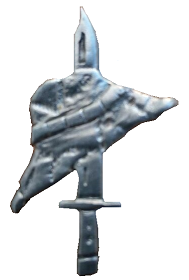
61 Mech awarded a small badge called the Operational Badge for those in or attached to the unit who deployed with the unit on operational duties. The badge had a yellow backing and was awarded initially only for cross border operations into Angola. A subsequent version with a green backing was suggested which was to be for internal duties. This version was never authorised and the yellow badge was awarded for all operational deployments. The badge consisted of a dagger with three diagonal lightning bolts in red across it. A subdued version was produced for wear on nutria (brown's) uniforms. With the introduction of camouflage, a new version was produced on green thatching. | File:SANDF 61 Mech Operational Participation bar 2.png | Operational Participation Bar | File:61 Mech - Operational Participation Bar Field Dress ver 2.png | Operational Participation Bar Field Dress (Old Style) | File:SANDF 61 Mech Ops Badge embossed ver 2.png | Operational Participation Bar Field Dress (New Style) | File:SANDF 61 Mech Veteran bar.jpg | 61 Mech Veteran Bar
This knifepoint always faced the heart of the wearer.
Companies
Each company or element in the Battalion (group) had its own flag and identifying badge. |File:61 Mech HQ Company.png |HQ Company |File:61 Mech Alpha Company - Infantry.png |Alpha Company - Infantry |File:61 Mech Bravo Company - Infantry.png |Bravo Company - Infantry |File:61 Mech Charlie Squadron - Armour.png |61 Mech Charlie Squadron - Armour |File:61 Mech Golf Battery - Artillery.png |61 Mech Sierra Battery - Artillery
Leadership
Honoris Crux recipients
Main article: Honoris Crux
| Surname | Initials | Rank | Year | Operation |
|---|---|---|---|---|
| du Toit | J.J. | Lt | 1980 | Operation Sceptic |
| Rutherford | G.T. | LCPL | 1980 | Operation Sceptic |
| van der Westhizen | D.R. | 2nd Lt | 1981 | Operation Carrot |
| Anderson | L.A. | Maj | 1981 | Operation Daisy |
| Steyn | S.S. | 2nd Lt | 1982 | Operation Meebos |
| le Roux | H.C. | 2nd Lt | 1983 | Operation Phoenix (South Africa) |
| Macaskill | A. | 2nd Lt | 1984 | Operation Askari |
| Kooij | J. | 2nd Lt | 1987 | Operation Moduler |
| Bremer | H.M. | 2nd Lt | 1987 | Operation Moduler |
| Green | G.W. | Rfn | 1987 | Operation Moduler |
Battle Honours
Further developments
From 61 Mech's success, 62 Mechanised Battalion Group and 63 Mechanised Battalion Group, were developed, encompassing similar battlegroup principles.
Theoretically the three units would have formed 60 Brigade, South Africa's highly mobile brigade level response to a full conventional attack on South West Africa.
Notes
References
Other sources
References
- de Vries, Roland. (2015-11-13). "The Influence of the Ratel Infantry Fighting Vehicle on Mobile Warfare in Southern Africa". Scientia Militaria: South African Journal of Military Studies.
- (2007). ""Starting Out" Collecting South African Militaria". Just Done Productions Publishing.
- (2016). "Mobility Conquers: The Story Of 61 Mechanised Battalion Group 1978-2005 plate iii". Helion & Company.
- (2016). "Mobility Conquers. The Story of 61 Mechanised Battalion Group 1978-2005". Helion & Company.
- "61 Mech: 1979: Overview by the Commander".
This article was imported from Wikipedia and is available under the Creative Commons Attribution-ShareAlike 4.0 License. Content has been adapted to SurfDoc format. Original contributors can be found on the article history page.
Ask Mako anything about 61 Mechanised Battalion Group — get instant answers, deeper analysis, and related topics.
Research with MakoFree with your Surf account
Create a free account to save articles, ask Mako questions, and organize your research.
Sign up freeThis content may have been generated or modified by AI. CloudSurf Software LLC is not responsible for the accuracy, completeness, or reliability of AI-generated content. Always verify important information from primary sources.
Report