From Surf Wiki (app.surf) — the open knowledge base
601st Bombardment Squadron

| Field | Value | |
|---|---|---|
| unit_name | 601st Bombardment Squadron | |
| (later 601st Tactical Air Support Squadron) | ||
| image | Living Legends.jpg | |
| image_size | 300 | |
| caption | 398th Bombardment Group B-17s on a bombing run to Neumünster, Germany | |
| dates | 1943–1945 | |
| country | ||
| branch | ||
| role | Heavy bomber | |
| decorations | Air Force Outstanding Unit Award | |
| identification_symbol | [[File:601st Bombardment Squadron - Emblem.png | 165px]] |
| identification_symbol_label | 601st Bombardment Squadron emblem | |
| identification_symbol_2 | [[File:601 Tactical Air Support Sq emblem.png | 160px]] |
| identification_symbol_2_label | 601st Tactical Air Support Squadron emblem | |
| identification_symbol_3 | **Triangle W** | |
| identification_symbol_3_label | World War II group tail marking | |
| identification_symbol_4 | **3O** | |
| identification_symbol_4_label | World War II squadron fuselage code |
(later 601st Tactical Air Support Squadron)
The 601st Bombardment Squadron is an inactive United States Air Force unit. It was assigned to the 398th Bombardment Group, and served in combat in the European Theater of Operations, flying its last mission in late April 1945. The squadron moved to Drew Field, Florida, where it was inactivated on 1 September 1945.
In 1985, the squadron was consolidated with the 601st Tactical Air Support Squadron, stationed at Sembach Air Base, Germany. The consolidated squadron was last assigned to the 601st Tactical Control Wing.
History
World War II
The 601st Bombardment Squadron was activated at Ephrata Army Air Base, Washington in early 1943 as one of the four original squadrons of the 398th Bombardment Group. The squadron trained under II Bomber Command with Boeing B-17 Flying Fortresses. In November, replacement training ended and the squadron resumed its preparation for overseas deployment.
The 601st deployed to England in April 1944 Its parent group was the last B-17 group to be assigned to VIII Bomber Command. The squadron flew its first combat mission the following month. Until V-E Day the squadron participated in the strategic bombing campaign against Germany, bombing such targets as factories in Berlin, marshalling yards in Saarbrücken, shipping facilities in Kiel, oil refineries in Merseburg and aircraft factories in Münster.
In June 1944, prior to Operation Overlord, the Normandy invasion, the squadron temporarily suspended its strategic bombing to attack coastal defenses and enemy troop concentrations on the Cherbourg peninsula. Eighth Air Force took advantage of the diversion from strategic bombing to allow newly arrived units like the 601st to fly attacks against nearby targets to gain combat experience. The first target assigned was a V-1 flying bomb launch site near Sottevast, but the unit's inexperience and overcast conditions in the target area caused it to return to its home station without bombing.
The squadron also struck gun positions near Eindhoven to support Operation Market Garden, the airborne attacks in the Netherlands, in September and attacked power stations, railroads and bridges during the Battle of the Bulge from December until January 1945. It attacked airfields in March 1945 during Operation Varsity, the airborne assault across the Rhine River.
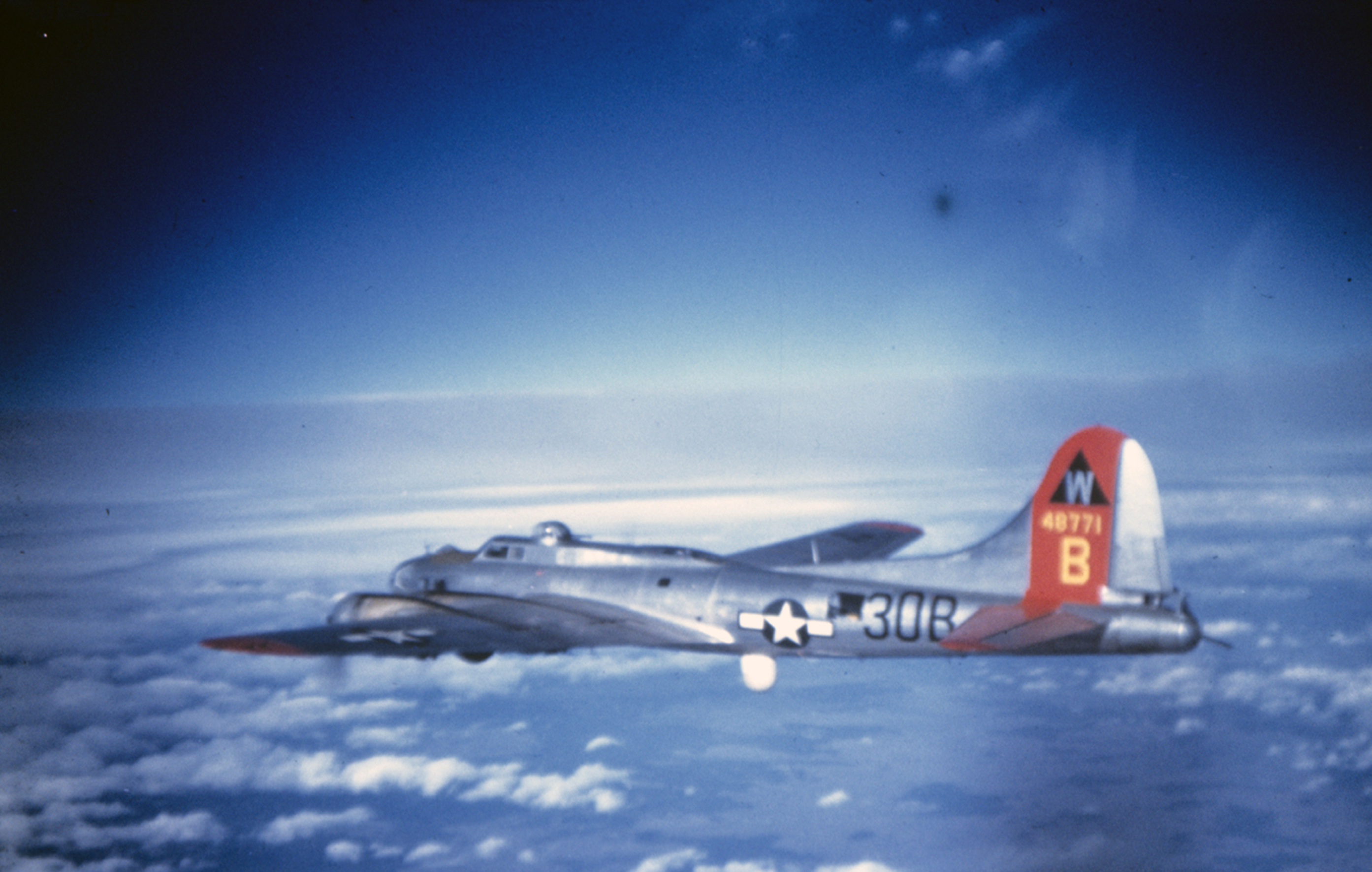
The squadron flew its last combat mission on 25 April 1945 when it attacked the airfield at Plzeň, Czechoslovakia. After the German surrender it transported liberated prisoners of war from Germany to France. It left Europe in May and returned to the United States aboard the passenger liner , arriving at the New York Port of Embarkation on 29 June. Squadron members were given thirty days leave, and a cadre assembled at Drew Field, Florida, where the squadron was inactivated in August 1945.
Cold War
On 19 September 1985 the 601st Tactical Air Support Squadron, a unit that had been activated at Ramstein Air Base, Germany in 1974 as a forward air control unit, and the 601st Bombardment Squadron were consolidated. The consolidated squadron was inactivated in 1988.
Lineage
601st Bombardment Squadron
- Constituted as the 601st Bombardment Squadron (Heavy) on 15 February 1943 : Activated on 1 March 1943
- Redesignated 601st Bombardment Squadron Heavy in 1944 : Inactivated on 1 September 1945
- Consolidated on 19 September 1985 with the 601st Tactical Air Support Squadron as the 601st Tactical Air Support Squadron
601st Tactical Air Support Squadron
- Constituted as the 601st Tactical Air Support Squadron on 31 January 1974 : Activated on 8 July 1974
- Consolidated on 19 September 1985 with the 601st Bombardment Squadron
- Inactivated in 1988
Assignments
- 398th Bombardment Group, 1 March 1943 – 1 September 1945
- 601st Tactical Air Support Group, 8 July 1974
- 601st Tactical Control Wing, 1 November 1975
- 601st Tactical Air Support Group, 1 May 1977 – 1988
Stations
- Ephrata Army Air Base, Washington, 1 March 1943
- Bishop Army Air Field, California, 5 April 1943
- Geiger Field, Washington, 29 April 1943
- Rapid City Army Air Base, South Dakota, 10 June 1943 – 4 April 1944
- RAF Nuthampstead (AAF-131), England, 22 April 1944 – 26 May 1945
- Drew Field, Florida, 3 July 1945 – 1 September 1945
- Ramstein Air Base, Germany. 8 July 1974
- Wiesbaden Air Base, Germany,
- Sembach Air Base, Germany, January 1976 – 1988
Aircraft
- Boeing B-17 Flying Fortress, 1943–1945
Awards and campaigns
| Campaign Streamer | Campaign | Dates | Notes | |
|---|---|---|---|---|
| [[File:World War II - American Campaign Streamer (Plain).png | 200px]] | American Theater | 1 March 1943 – 4 April 1944 | 601st Bombardment Squadron |
| [[File:European-African-Middle Eastern Campaign Medal streamer.png | 200px]] | Air Offensive, Europe | 22 April 1944 – 5 June 1944 | 601st Bombardment Squadron |
| [[File:European-African-Middle Eastern Campaign Medal streamer.png | 200px]] | Normandy | 6 June 1944 – 24 July 1944 | 601st Bombardment Squadron |
| [[File:European-African-Middle Eastern Campaign Medal streamer.png | 200px]] | Northern France | 25 July 1944 – 14 September 1944 | 601st Bombardment Squadron |
| [[File:European-African-Middle Eastern Campaign Medal streamer.png | 200px]] | Rhineland | 15 September 1944 – 21 March 1945 | 601st Bombardment Squadron |
| [[File:European-African-Middle Eastern Campaign Medal streamer.png | 200px]] | Ardennes-Alsace | 16 December 1944 – 25 January 1945 | 601st Bombardment Squadron |
| [[File:European-African-Middle Eastern Campaign Medal streamer.png | 200px]] | Central Europe | 22 April 1944 – 21 May 1945 | 601st Bombardment Squadron |
| [[File:European-African-Middle Eastern Campaign Medal streamer.png | 200px]] | Air Combat, EAME Theater | 22 April 1944 – 11 May 1945 | 601st Bombardment Squadron |
References
Notes
; Explanatory notes
; Citations
Bibliography
References
- Maurer, ''Combat Squadrons'', p. 680
- Watkins, pp. 84–85
- Maurer, ''Combat Units'' p. 284
- Freeman, p. 140
- Department of the Air Force/MPM Letter 662q, 19 September 85, Subject: Reconstitution, Redesignation, and Consolidation of Selected Air Force Tactical Squadrons
- "Abstract (Unclassified), Vol. 1 History 601 Tactical Control Wing Jan-Jun 1988 (Secret)". Air Force History Index.
- Station number in Anderson, p. 21.
- "Air Force Recognition Programs". Air Force Personnel Center.
This article was imported from Wikipedia and is available under the Creative Commons Attribution-ShareAlike 4.0 License. Content has been adapted to SurfDoc format. Original contributors can be found on the article history page.
Ask Mako anything about 601st Bombardment Squadron — get instant answers, deeper analysis, and related topics.
Research with MakoFree with your Surf account
Create a free account to save articles, ask Mako questions, and organize your research.
Sign up freeThis content may have been generated or modified by AI. CloudSurf Software LLC is not responsible for the accuracy, completeness, or reliability of AI-generated content. Always verify important information from primary sources.
Report