From Surf Wiki (app.surf) — the open knowledge base
51st Fighter Wing
US Air Force unit
US Air Force unit
| Field | Value |
|---|---|
| unit_name | 51st Fighter Wing |
| image | 51st Fighter Wing.png |
| image_size | 200 |
| dates | 1948–1971; 1971–present |
| country | United States |
| branch | United States Air Force |
| command_structure | Pacific Air Forces |
| current_commander | [Colonel Joshua Wood](https://www.osan.af.mil/About-Us/Biographies/Display/Article/1879113/william-mckibban/) |
| garrison | Osan Air Base, South Korea |
| motto | *Leading the Charge* (1993–present); *Deftly and Swiftly* (former motto) |
| battles | * World War II |
| notable_commanders | Benjamin O. Davis, Jr. |
| Francis S. "Gabby" GabreskiJohn W. Mitchell | |
| decorations | Air Force Outstanding Unit Award (15 Awards) |
| Republic of Korea Presidential Unit Citation (3 Awards) |
: Asiatic-Pacific Campaign (1941–1945)
- Korean Service (1950–1954) Francis S. "Gabby" GabreskiJohn W. Mitchell Republic of Korea Presidential Unit Citation (3 Awards)
The 51st Fighter Wing (51 FW) is a wing of the United States Air Force and the host unit at Osan Air Base, South Korea. The wing has been based in the Far East since 1948, with a short interruption in 1971. It flew operations as the 51st Fighter-Interceptor Wing during the Korean War.
The 51st Fighter Wing is under Pacific Air Forces' Seventh Air Force. The unit is the most forward deployed wing in the world, providing combat ready forces for close air support, air strike control, counter air, interdiction, theater airlift, and communications in the defense of the Republic of Korea. The wing executes military operations to bed-down, maintain and employ follow-on forces for the combined arms base that includes three major flying tenants and large multi-service fighting units.
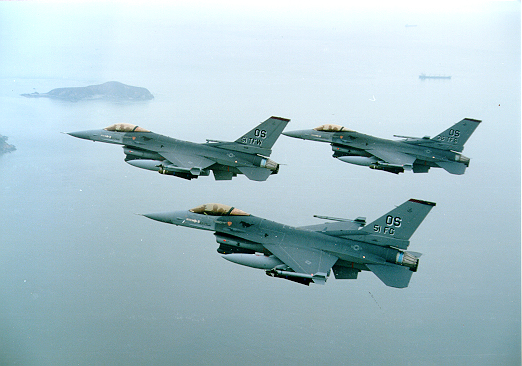
The wing is equipped with General Dynamics F-16 Fighting Falcon and Fairchild Republic A-10 Thunderbolt II squadrons and myriad base support agencies conducting the full spectrum of missions providing for the defense of the Republic of Korea.
Mission
The mission of the 51st FW is to provide mission-ready Airmen to execute combat operations and receive follow-on forces. The wing accomplishes this mission through:
- Conducting exercises to ensure our forces maintain the highest degree of readiness to defend Osan AB against air and ground attack.
- Maintaining and administering U.S. operations at Osan and five collocated operating bases—Taegu, Suwon, Kwang Ju, Kimhae and Cheong Ju – for reception and bed-down of follow-on forces.
- Providing timely and accurate air power in support of military operations directed by higher headquarters.
Units
The 51st Fighter Wing is composed of four groups each with specific functions. The Operations Group controls all flying and airfield operations. The Maintenance Group performs maintenance of aircraft, ground equipment and aircraft components. The Mission Support Group has a wide range of responsibilities but a few of its functions are Security, Civil Engineering, Communications, Personnel Management, Logistics, Services and Contracting support, whilst the Medical Group provides medical and dental care.
- 51st Operations Group (Tail Code OS)
- 51st Operations Support Squadron (OSS)
- 25th Fighter Squadron (25 FS) (A-10/OA-10)
- 36th Fighter Squadron (36 FS) (Block 40 F-16C/D)
- 51st Mission Support Group
- Civil Engineer Squadron (CES)
- Force Support Squadron (FSS)
- Logistics Readiness Squadron (LRS)
- Security Forces Squadron (SFS)
- Communications Squadron (CS)
- 51st Maintenance Group
- Aircraft Maintenance Squadron (AMXS)
- 25th Aircraft Maintenance Unit
- 36th Aircraft Maintenance Unit
- Maintenance Operations Squadron (MOS)
- Maintenance Squadron (MXS)
- Munitions Squadron (MUNS)
- Aircraft Maintenance Squadron (AMXS)
- 51st Medical Group
- Aerospace Medicine Squadron (AMDS)
- Medical Support Squadron (MDSS)
- Medical Operations Squadron (MDOS)
- Dental Squadron (DS)
- Bioenvironmental Engineering (BE)
- 51st Fighter Wing Staff Agencies
- Inspector General (IG)
- Comptroller (CPTS)
- Entitlements in Korea
- Safety (SE)
- Chapel (HC)
- Legal Office (JA)
- Protocol (CCP)
- Command Post (CP)
- Public Affairs (PA)
- Equal Opportunity (EO)
- Historian (HO)
- Sexual Assault Prevention & Response (SAPR)
- Wing Plans (XP)
- AFSO21 (CVO)
- Information Protection (IP)
- Community Support Coordinator (CVB)
History
: For additional history and lineage, see 51st Operations Group In 1948, assumed air defense of Ryukyu Islands.
Korean War
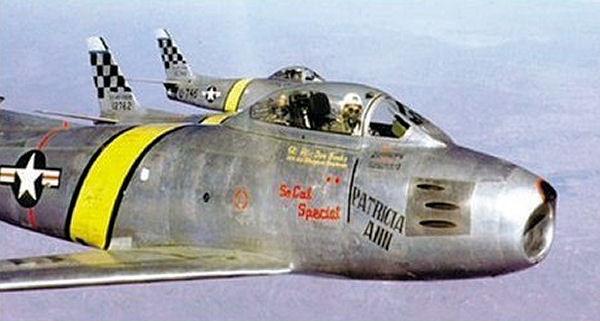
With the outbreak of the Korean War in 1950, elements of the 51st FIW were dispatched first to Japan, then to South Korea. Korean War operational squadrons were:
- 16th Fighter-Interceptor Squadron: duration (F-80C, F-86F)
- 25th Fighter-Interceptor Squadron: duration (F-80C, F-8)
- 39th Fighter-Interceptor Squadron: attached 1 June 1952– (F-80C, F-86F)
- 68th Fighter-All Weather Squadron: attached 25 September – 9 October 1950 (F-82F/G)
- 80th Fighter-Bomber Squadron: attached 25 September – 20 December 1950 (F-80C)
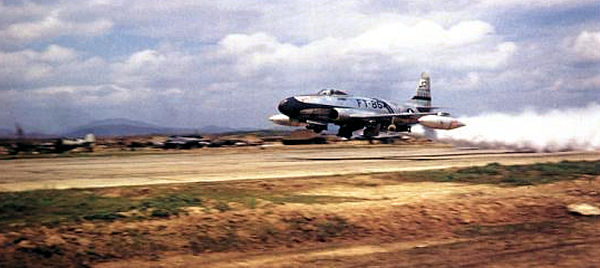
It entered combat service flying the F-80C Shooting Star on 22 September of that year, when it moved to Itazuke AB, Japan, to support the breakout of the Eighth U.S. Army from the Pusan Perimeter. For nearly 4 years thereafter, the 51st FIW played a key role in the defense of South Korea despite moving to four different locations within a year and operating under austere conditions.
The wing moved to South Korea in October only to return to Japan in December, leaving combat elements behind. In May 1951, the 51st FIW moved to Suwon Air Base, southwest of Seoul, but retained maintenance and supply elements at Tsuiki AB, Japan, to provide rear echelon support. In November 1951 the 51st FIW transitioned to the F-86 Sabre with two squadrons (16th, 25th), adding a third squadron (39th) the following May.
The group operated a detachment at Suwon AB, Korea, beginning in May 1951, and relocated there in October 1951, with maintenance and supply elements remaining in Japan until August 1954. The wing ceased combat on 27 July 1953. The 51 FIW's war record was impressive. Wing pilots flew more than 45,000 sorties and shot down 312 MiG-15s; this produced 14 air aces including the top ace of the war, Captain Joseph C. McConnell. The ratio of aerial victories to losses was 10 to 1. Unfortunately, the wing lost 32 pilots to enemy action; however, nine that became prisoners of war were repatriated later.
Korean War Aces

| 5 | Maj | William H. Westcott | 25FIS | 26 April 1952 |
|---|
Cold War

On 1 August 1954, the 51 FIW returned to Naha Air Base to resume air defense coverage of the Ryukyu Islands. Operational squadrons were:
- 16th Fighter-Interceptor Squadron (F-86D, 1954–59), (F102, 1959–1964)
- 25th Fighter-Interceptor Squadron (F-86D, 1954–1960)
- 26th Fighter-Interceptor Squadron (F-86D, 1954–59)
At the same time, the wing demonstrated its mobility readiness in response to three regional crises.
From August 1958 to January 1959, the 51 FIW deployed eight F-86Ds to Ching Chuan Kang Air Base Taiwan to fly combat air support missions for Nationalist Chinese forces after mainland Communist Chinese forces shelled the Nationalist-held islands of Quemoy and Matsu. Six years later, the wing deployed 12 F-102s to the Philippines and South Vietnam from August to October 1964 for air defense against possible Communist North Vietnamese air attacks.
During the Vietnam War, crews of the 51st Fighter Interceptor Wing provided air defense of Naha AB, Okinawa, with F-102s of the 82nd FIS which was assigned to the 51st FIW from Travis AFB in January 1966. During the 1968 Pueblo crisis, the wing deployed 12 of is 33 aircraft to Suwon AB. On 31 May 1971, the 51st FIW was inactivated, ending almost 17 years of service in the Pacific from Naha when it was inactivated as the Air Force began scaling down its activities in Southeast Asia. In 1975 Naha Air Base closed.

The 51st was inactive for only five months. On 1 November 1971, the wing was redesignated the 51st Air Base Wing and activated at Osan Air Base, South Korea. At Osan, the 51st assumed the host responsibilities of the inactivated 6314th Support Wing to include the Koon-ni range and a variety of remote sites. Operational squadrons of the 51st at Osan have been:
Fighter Squadrons
- 25th Fighter Squadron (1992–present A-10, OA-10)
- 36th Fighter Squadron (F-4E 1974–88), (F-16C/D 1988–present)
- 497th Fighter Squadron (F-4E) (1982–84)
On 1 October 1993, after a half-dozen name changes, the wing returned to its original and current designation as the 51st Fighter Wing. Since then, the 51st has continued operating as a fighter/ground attack wing and continues to be tasked to receive and integrate follow-on reinforcing forces to Korea in the event of crisis.
Lineage
- Established as 51 Fighter Wing on 10 August 1948 : Activated on 18 August 1948 : Redesignated 51 Fighter-Interceptor Wing on 1 February 1950 : Inactivated on 31 May 1971
- Redesignated 51 Air Base Wing on 20 October 1971 : Activated on 1 November 1971 : Redesignated: 51 Composite Wing (Tactical) on 30 September 1974 : Redesignated: 51 Tactical Fighter Wing on 1 July 1982 : Redesignated: 51 Wing on 7 February 1992 : Redesignated: 51 Fighter Wing on 1 October 1993.
Assignments
- 1st Air Division, 18 August 1948
- Thirteenth Air Force, 1 December 1948
- Twentieth Air Force, 16 May 1949 : Attached to Fifth Air Force, 25 September 1950 – 1 August 1954 :: Further attached to 8th Fighter-Bomber Wing, 25 September – 12 October 1950
- 313th Air Division, 1 March 1955 – 31 May 1971
- 314th Air Division, 1 November 1971
- Seventh Air Force, 8 September 1986–present
Components
Groups
- 5th Tactical Air Control (later, 5 Tactical Control; 5 Air Control) Group: 8 January 1980 – 20 June 1982; 1 October 1990 – 1 July 1993
- 51st Fighter (later, 51 Fighter-Interceptor, 51 Fighter, 51 Operations) Group: 18 August 1948 – 25 October 1957 (detached 26 September – 12 October 1950, 16 August 1954 – 15 March 1955); 1 October 1990–present
Squadrons
- 16th Fighter-Interceptor Squadron: attached 1 July – 24 October 1957, assigned 25 October 1957 – 24 December 1964
- 19th Tactical Air Support Squadron: 30 September 1974 – 8 January 1980
- 25th Fighter-Interceptor (later, 25 Tactical Fighter) Squadron: attached 1 July – 24 October 1957, assigned 25 October 1957 – 8 June 1960; 1 February 1981 – 31 June 1990
- 36th Tactical Fighter Squadron: 30 September 1974 – 1 October 1990
- 82d Fighter Interceptor Squadron: attached 17 February – 24 June 1966, assigned 25 June 1966 – 31 May 1971 (detached 30 January – 20 February 1968)
- 318th Fighter Interceptor Squadron: attached 11–18 February 1968
- 497th Tactical Fighter Squadron: 1 January 1982 – 24 January 1989
- 555th Tactical Fighter Squadron: attached 11 December 1964 – 15 March 1965 and 11 November 1965 – 25 February 1966
- 558th Tactical Fighter Squadron: attached 12 March – 15 June 1965
- 559th Tactical Fighter Squadron: attached 12 June – 15 November 1965.
Stations
- Naha Afld (later, Naha AB), Okinawa, 18 August 1948
- Itazuke AB, Japan, 22 September 1950
- Kimpo AB, South Korea, 10 October 1950
- Itazuke AB, Japan, 10 December 1950
- Tsuiki Air Base, Japan, 15 January 1951
- Suwon AB (K-13), South Korea, 1 October 1951 – 26 July 1954
- Naha AB, Okinawa, 1 August 1954 – 31 May 1971
- Osan AB, South Korea, 1 November 1971–present
Aircraft Assigned

The 51st FW's aircrews have flown a variety of aircraft, including the P/F-51 Mustang, F-80 Shooting Star, F-82 Twin Mustang, F-86 Sabrejet, F-94 Starfire, F-102A Delta Dagger, F-4E Phantom II, RF-4C Phantom II, F-106A Delta Dart, OV-10 Bronco, A-10 and OA-10 Thunderbolt II and several versions of the F-16 Fighting Falcon.
Commanders
The list of commanders for the 51st Fighter Wing and its predecessors includes a wartime hero, Colonel Francis Gabreski, and an aviation pioneer, Tuskegee Airman Colonel Benjamin O. Davis Jr. This list includes those who only held command briefly as interim commanders.

| Number | Command Rank | Name | Call Sign | Command Start | Command End | Notes: |
|---|---|---|---|---|---|---|
| 1 | Brig Gen | Hugo P. Rush | – | 18 August 1948 | 24 March 1949 | Commanded 301st Fighter Wing from April 1947; 51FIW activated at Naha Air Base, Okinawa |
| 2 | Col | John F. Egan | – | 25 March 1949 | 31 March 1949 | |
| 3 | Col | Richard M. Montgomery | – | 1 April 1949 | 18 September 1949 | |
| 4 | Col | John W. Weltman | – | 19 September 1949 | 23 April 1951 | Commanded 51FIW as it entered the Korean War (Japan / Korea / Japan / Korea) |
| 5 | Col | Oliver G. Cellini | – | 24 April 1951 | 31 October 1951 | |
| 6 | Col | William P. Litton | – | 1 November 1951 | 2 November 1951 | Crashed 2 November 1951, on mission, missing and presumed dead |
| 7 | Col | George R. Stanley | – | 2 November 1951 | 5 November 1951 | |
| 8 | Col | Francis S. Gabreski | – | 6 November 1951 | 12 June 1952 | Lead Ace of WWII – European Theater; Ace in Korean War with 6.5 Aerial Victories |
| 9 | Col | John W. Mitchell | – | 13 June 1952 | 30 May 1953 | "Robinson Crusoe of MiG Alley" |
| 10 | Col | William C. Clark | – | 31 May 1953 | 8 August 1953 | Commander when Korean War Armistice was signed |
| 11 | Col | Ernest H. Beverly | – | 9 August 1953 | 10 September 1953 | |
| 12 | Col | William C. Clark | – | 11 September 1953 | 11 November 1953 | |
| 13 | Col | Benjamin O. Davis Jr. | – | 12 November 1953 | 1 July 1954 | Former Commander of the Tuskegee Airman |
| 14 | Col | Barton M. Russell | – | 2 July 1954 | 31 July 1954 | Relinquished command in Korea as last units returned to Naha AB |
| 15 | Col | Travis Hoover | – | 1 August 1954 | 8 August 1954 | 51FIW returns to Naha AB |
| 16 | Col | Hilmer C. Nelson | – | 9 August 1954 | 15 August 1954 | |
| 17 | Col | Edwin C. Ambrosen | – | 16 August 1954 | 14 November 1955 | |
| 18 | Col | John H. Bell | – | 15 November 1955 | 1 February 1957 | |
| 19 | Col | Paul E. Hoeper | – | 2 February 1957 | 3 May 1957 | |
| 20 | Col | Robert L. Cardenas | – | 4 May 1957 | 14 July 1957 | |
| 21 | Col | Walter V. Gresham Jr. | – | 15 July 1957 | 31 July 1957 | |
| 22 | Col | Elliott H. Reed | – | 1 August 1957 | 14 August 1957 | |
| 23 | Col | Walter V. Gresham Jr. | – | 15 August 1957 | 21 November 1957 | |
| 24 | Col | Lester J. Johnsen | – | 22 November 1957 | 24 March 1960 | |
| 25 | Col | William W. Ingenhutt | – | 25 March 1960 | 23 July 1962 | |
| 26 | Col | Lester C. Hess | – | 24 July 1962 | June 1965 | |
| 27 | Col | Lloyd R. Larson | – | 11 June 1965 | 7 April 1967 | |
| 28 | Col | Frank E. Angier | – | 8 April 1967 | 12 June 1968 | |
| 29 | Col | John B. Weed | – | 13 June 1968 | 29 June 1968 | |
| 30 | Col | Roy D. Carlson | – | 30 June 1968 | 31 May 1971 | Wing inactivated at Naha AB. |
| 31 | Col | Hewitt E. Lovelace Jr. | – | 1 November 1971 | 31 July 1972 | Wing Reactivate at Osan Air Base. |
| 32 | Col | John H. Allison | – | 1 August 1972 | 6 June 1973 | |
| 33 | Col | Billie J. Norwood | – | 7 June 1973 | 30 April 1974 | |
| 34 | Col | Alonzo L. Ferguson | – | 1 May 1974 | 29 September 1974 | |
| 35 | Col | Glenn L. Nordin | – | 30 September 1974 | 11 August 1975 | |
| 36 | Col | Vernon H. Sandrock | – | 12 August 1975 | 14 June 1977 | |
| 37 | Col | Fred B. Hoenniger | – | 15 June 1977 | 17 June 1979 | |
| 38 | Col | James T. Boddie Jr. | – | 18 June 1979 | 15 May 1980 | |
| 39 | Col | John C. Scheidt Jr. | – | 16 May 1980 | 19 February 1981 | |
| 40 | Col | Eugene Myers | – | 20 February 1981 | 15 July 1982 | |
| 41 | Col | Thomas R. Olsen | – | 16 July 1982 | 25 May 1983 | |
| 42 | Col | Marcus F. Cooper Jr. | – | 26 May 1983 | 17 October 1983 | |
| 43 | Col | Barry J. Howard | – | 18 October 1983 | 19 July 1984 | |
| 44 | Col | Charles D. Link | – | 20 July 1984 | 11 August 1985 | |
| 45 | Col | Henry J. Cochran | – | 12 August 1985 | 11 June 1987 | |
| 46 | Col | John C. Marshall | – | 12 June 1987 | 29 June 1989 | |
| 47 | Col | James J. Winters | – | 30 June 1989 | 16 July 1990 | |
| 48 | Col | Thomas R. Case | – | 17 July 1990 | 22 June 1992 | |
| 49 | Brig Gen | Robert G. Jenkins | – | 23 June 1992 | 30 January 1994 | |
| 50 | Brig Gen | Robert H. Foglesong | – | 31 January 1994 | 20 November 1995 | |
| 51 | Brig Gen | Steven R. Polk | – | 21 November 1995 | 14 May 1997 | |
| 52 | Brig Gen | Paul R. Dordal | – | 15 May 1997 | 14 September 1998 | |
| 53 | Brig Gen | Robert R. Dierker | – | 15 September 1998 | 21 May 2000 | |
| 54 | Brig Gen | David E. Clary | – | 22 May 2000 | 17 March 2002 | |
| 55 | Brig Gen | William L. Holland | – | 18 March 2002 | 28 September 2003 | |
| 56 | Brig Gen | Maurice H. Forsyth | – | 29 September 2003 | 7 July 2005 | |
| 57 | Brig Gen | Joseph Reynes Jr. | – | 8 July 2005 | 14 June 2007 | |
| 58 | Col | Jon A. Norman | – | 15 June 2007 | 14 October 2008 | |
| 59 | Col | Thomas H. Deale | – | 15 October 2008 | 6 December 2009 | |
| 60 | Col | Patrick C. Malackowski | – | 7 December 2009 | 14 July 2011 | |
| 61 | Col | Patrick McKenzie | Smack | 15 July 2011 | 12 July 2013 | |
| 62 | Col | Brook J. Leonard | Tank | 13 July 2013 | 15 June 2015 | |
| 63 | Col | Andrew P. Hansen | Popeye | 16 June 2015 | 26 June 2017 | |
| 64 | Col | William D. Betts | Wilbur | 27 June 2017 | 17 June 2019 | |
| 65 | Col | John F. Gonzales | Gonzo | 18 June 2019 | Present |
Notable members
- Buzz Aldrin, Served in the 16th Fighter Squadron during the Korean War; attained two aerial victories.
- Lt Col William A. Campbell, Commanded the 25FIS in 1954; served with the Tuskegee Airmen in WWII, flying 106 missions with one aerial victory.
- CMSAF James A. Cody, assigned to the 51st Operations Support Squadron from May 1993 – May 1994; became the 17th Chief Master Sergeant of the Air Force.
- Gen Benjamin O. Davis, Jr., former commander of the Tuskegee Airmen who became the wing commander and was promoted to General Officer (four-star) post-retirement.
- John Glenn, served as a branch exchange pilot from the USMC to the 25th Fighter Squadron, with three aerial victories in the Korean War.
- Chuck Norris, assigned to Osan security forces where he first started his martial arts practice.
- CMSAF Kaleth O. Wright. assigned to the 51st Dental Squadron from 1994 – 1995 and 2007 – 2009; became the 18th Chief Master Sergeant of the Air Force.
References
- USAAS-USAAC-USAAF-USAF Aircraft Serial Numbers—1908 to present
- This article contains information from the Osan Air Base factsheet which is an official document of the United States Government and is presumed to be in the public domain.
References
- Ravenstein, p. 85.
- Okonski, John. (26 July 2007). "Wing's shield preserves long heritage". 51st Fighter Wing History Office.
- Fisher, Franklin. (26 March 2004). "Osan airmen practice 'hot pit refueling'". [[Stars and Stripes (newspaper).
- (26 July 2007). "Experienced commanders have led 'Mustang Stampede'". 51st Fighter Wing History Office.
- "News".
This article was imported from Wikipedia and is available under the Creative Commons Attribution-ShareAlike 4.0 License. Content has been adapted to SurfDoc format. Original contributors can be found on the article history page.
Ask Mako anything about 51st Fighter Wing — get instant answers, deeper analysis, and related topics.
Research with MakoFree with your Surf account
Create a free account to save articles, ask Mako questions, and organize your research.
Sign up freeThis content may have been generated or modified by AI. CloudSurf Software LLC is not responsible for the accuracy, completeness, or reliability of AI-generated content. Always verify important information from primary sources.
Report