From Surf Wiki (app.surf) — the open knowledge base
50th Fighter-Bomber Squadron
| Field | Value | |
|---|---|---|
| unit_name | 50th Fighter-Bomber Squadron | |
| image | File:F86f.jpg | |
| image_size | 300px | |
| caption | F-86 Sabre, last plane flown by the squadron | |
| dates | 1941–1944; 1947–1949; 1949–1951; 1957 | |
| country | ||
| branch | ||
| role | Fighter-Bomber | |
| battles | American Theater Antisubmarine Campaign | |
| identification_symbol | [[File: 50th Bombardment Squadron - Emblem.png | 165px]] |
| identification_symbol_label | 50th Fighter-Bomber Squadron emblem |
The 50th Fighter-Bomber Squadron is an inactive United States Air Force unit. It was last assigned to the 319th Fighter-Bomber Group at New Orleans Naval Air Station, Louisiana, where it was inactivated on 16 November 1957.
The squadron was first activated in 1941 as the 50th Bombardment Squadron. Following the entry of the United States into World War II, the squadron engaged in antisubmarine warfare patrols, but then became a training unit until spring 1944, when it was disbanded in a general reorganization of Army Air Forces training units in the United States.
The squadron was reconstituted and activated in the reserve in 1947. It was mobilized in 1951 for the Korean War, but its personnel were used as fillers for other units and the squadron was inactivated. It was briefly activated in the reserves again in 1957, but was inactivated when the reserves converted to a troop carrier mission.
History
World War II
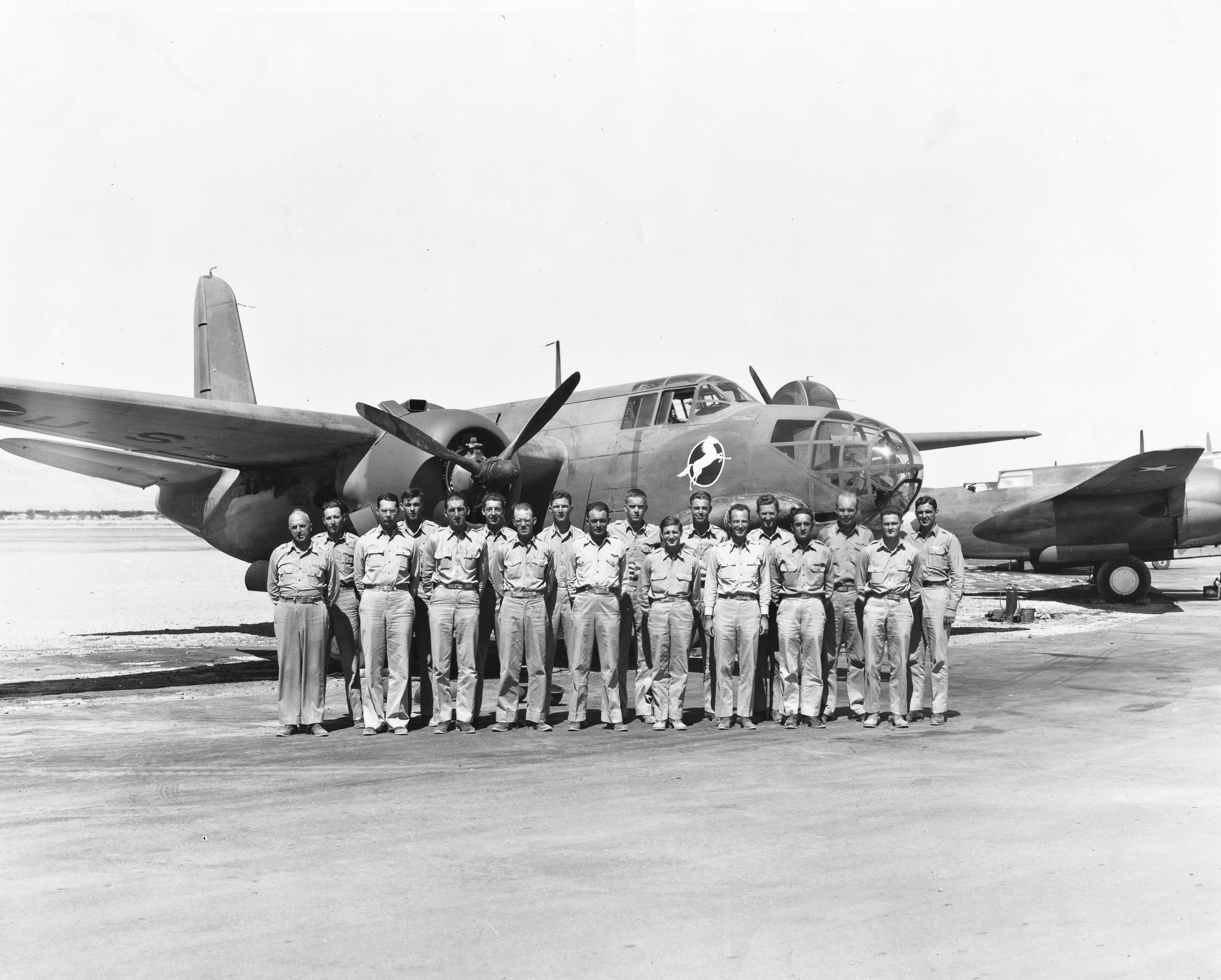
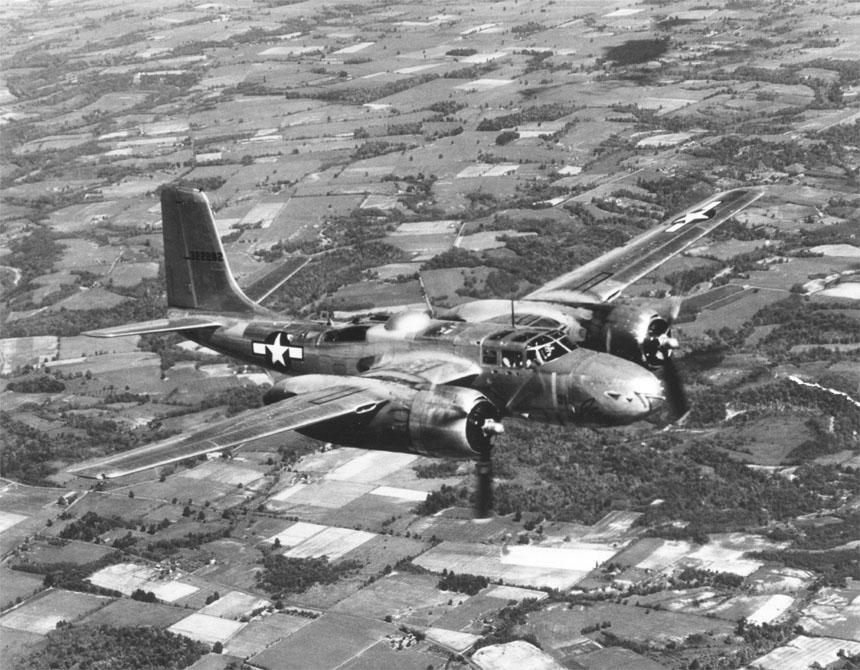
The squadron was activated as the 50th Bombardment Squadron at Hunter Field, Georgia in the United States Army Air Corps' buildup before World War II. It was one of the original squadrons of the 46th Bombardment Group and was equipped with Douglas A-20 Havoc aircraft. The 50th trained with the Havoc and participated in maneuvers. After the entry of the United States into the war, the squadron moved to Barksdale Field, Louisiana, and then to Galveston Army Air Field, Texas, from which it flew anti-submarine warfare patrol and search missions over the Gulf of Mexico until May 1942.
It moved to Blythe Army Air Base, California, where it participated in desert maneuvers. It then assumed responsibility for their training and oversaw their expansion with graduates of Army Air Forces Training Command schools to become effective combat units. Phase I training concentrated on individual training in crewmember specialties. Phase II training emphasized the coordination for the crew to act as a team. The final phase concentrated on operation as a unit.
In late 1943 the squadron moved to Morris Field, North Carolina, where it became a Replacement Training Unit, concentrating on training of individual pilots and aircrews. Just before disbanding, the squadron began to convert to North American B-25 Mitchells.
However the Army Air Forces was finding standard military units, based on relatively inflexible tables of organization, were not well adapted to the training mission. Accordingly, it adopted a more functional system in which each base was organized into a separate numbered unit. In May 1944, the squadron was disbanded
Air Force reserve
Initial activation and mobilization for the Korean War
The squadron was reconstituted and activated in the reserve under Air Defense Command (ADC) at Mitchel Field, New York in April 1947 and assigned to the 319th Bombardment Group. The 50th's stay at Mitchel ended when ConAC reorganized its reserve units under the wing base organization system in June 1949.
The squadron moved on paper to Reading Municipal Airport, Pennsylvania, where it replaced elements of the 322d Bombardment Group. At Reading, the squadron trained under the supervision of the 2237th Air Force Reserve Training Center. The squadron was authorized manning of only 25% of normal strength. Runway length at Reading, however, led ConAC to decide to station a troop carrier unit there, and the squadron was inactivated on 2 October 1949 and its personnel were transferred to the 327th Troop Carrier Squadron.
The squadron activated again about a month later, on 10 October 1949, at Birmingham Municipal Airport, Alabama, where it replaced the 336th Troop Carrier Squadron. The squadron flew the Douglas B-26 Invader at Birmingham, where training was conducted by the 2587th Air Force Reserve Training Center. All reserve combat and corollary units were mobilized for the Korean war, and the 319th was called up on 10 March 1951. Its personnel and aircraft were used as fillers for other units, and the squadron was inactivated on 22 March.
Fighter operations
The squadron was activated in June 1957 at New Orleans Naval Air Station, Louisiana as the 50th Fighter-Bomber Squadron. The squadron was not located with its parent wing, which was at Memphis Municipal Airport, Tennessee, under what was called the Detached Squadron Concept. The concept had been adopted by ConAC because communities were more likely to accept smaller squadrons than large wings and the location of separated squadrons would facilitate recruiting and manning. The squadron began to receive North American F-86 Sabres. However, the Air Force directed ConAC to convert three reserve fighter bomber wings to the troop carrier mission by September 1957. In addition, within the Air Staff was a recommendation that the reserve fighter mission given to the Air National Guard and replaced by the troop carrier mission. The 50th Squadron was inactivated in this mission change on 16 November 1957 and its place was taken by the 77th Troop Carrier Squadron.
Lineage
- Constituted as the 50th Bombardment Squadron (Light) on 20 November 1940 : Activated on 15 January 1941 : Disbanded on 1 May 1944
- Reconstituted on 10 March 1947 : Activated in the reserve on 16 April 1947 : Inactivated on 2 September 1949
- Activated in the reserve on 10 October 1949 : Ordered to active service on 10 March 1951 : Inactivated on 22 March 1951
- Redesignated 50th Fighter-Bomber Squadron on 12 February 1957 : Activated in the reserve 8 June 1957 : Inactivated on 16 November 1957
Assignments
- 46th Bombardment Group, 15 January 1941 – 1 May 1944
- 319th Bombardment Group, 16 April 1947 – 2 September 1949
- 319th Bombardment Group, 10 October 1949 – 22 March 1951
- 319th Fighter-Bomber Group, 8 June–16 November 1957
Stations
- Hunter Field, Georgia, 15 January 1941
- Bowman Field, Kentucky, 19 May 1941
- Barksdale Field, Louisiana, 1 February 1942
- Galveston Army Air Field, Texas, 2 April 1942
- Blythe Army Air Base, California, 19 May 1942
- Will Rogers Field, Oklahoma, 7 November 1942
- Drew Field, Florida, 6 October 1943
- Morris Field, North Carolina, 6 November 1943 – 1 May 1944
- Mitchel Field, New York, 16 April 1947
- Reading Municipal Airport, Pennsylvania, 27 June 1949 – 2 September 1949
- Birmingham Municipal Airport, Alabama, 10 October 1949 – 22 March 1951
- New Orleans Naval Air Station, Louisiana, 8 June–16 November 1957
Aircraft
- Douglas A-20 Havoc, 1941–1944
- North American B-25 Mitchell, 1944
- Douglas B-26 Invader, 1949–1951
- North American F-86 Sabre, 1957
Campaign
| Campaign Streamer | Campaign | Dates | Notes | |
|---|---|---|---|---|
| [[File:American Campaign Streamer.png | 200px]] | American Theater Antisubmarine | 7 December 1941 – 17 May 1942 |
References
Notes
; Explanatory note
; Citations
Bibliography
:: ::
References
- Maurer, ''Combat Squadrons'', p. 215
- Maurer, ''Combat Units'', pp. 104–105
- "Abstract, History of 46th Bomb Gp 1941–1944". Air Force History Index.
- It then served as an [[Operational - Replacement Training Units#Operational Training Units. Operational Training Unit]] (OTU) at [[Will Rogers Field]], Oklahoma. The OTU program was patterned after the unit training system of the [[Royal Air Force]] and involved the use of an oversized parent unit to provide [[cadre (military)
- Goss, p. 74
- Greer, p. 601
- Greer, p. 606
- Goss, p. 75
- Maurer, ''Combat Units'', p. 7
- Maurer, ''Combat Units'', pp. 202–203
- Cantwell, p. 74
- (26 November 2012). "Factsheet 336 Air Refueling Squadron (AFRC)". Air Force Historical Research Agency.
- "Abstract, History 2587 Air Force Reserve Training Center Jul–Sep 1950". Air Force History Index.
- Cantwell, p. 87
- Cantwell, pp. 96, 137
- Cantwell, pp. 156, 169
- Ravenstein, pp. 168–169
- Cantwell, p. 168
- Maurer, ''Combat Squadrons'', p. 217
This article was imported from Wikipedia and is available under the Creative Commons Attribution-ShareAlike 4.0 License. Content has been adapted to SurfDoc format. Original contributors can be found on the article history page.
Ask Mako anything about 50th Fighter-Bomber Squadron — get instant answers, deeper analysis, and related topics.
Research with MakoFree with your Surf account
Create a free account to save articles, ask Mako questions, and organize your research.
Sign up freeThis content may have been generated or modified by AI. CloudSurf Software LLC is not responsible for the accuracy, completeness, or reliability of AI-generated content. Always verify important information from primary sources.
Report