From Surf Wiki (app.surf) — the open knowledge base
492nd Attack Squadron

| Field | Value | |
|---|---|---|
| unit_name | 492d Attack Squadron | |
| image | 163d Attack Wing Converts Reapers into Hunter-Killers of Wildfire.jpg | |
| image_size | 300px | |
| caption | 163d Attack Wing MQ-9 Reaper | |
| dates | 1917–1919; 1925–1937; 1942–1946; 1946–1963, 2019-present | |
| country | ||
| branch | ||
| role | Unmanned vehicle training | |
| command_structure | Air Education and Training Command | |
| nickname | Busy Beaver Bombing Co. (CBI Theater), Fightin' Bees | |
| battles | World War I Theater of OperationsChina-Burma-India Theater | |
| decorations | Distinguished Unit CitationAir Force Outstanding Unit Award | |
| identification_symbol | [[File:492 Bombardment Sq (later 492 Attack Sq) emblem.png | 165px]] |
| identification_symbol_label | 492d Attack Squadron emblem | |
| identification_symbol_2 | [[File:492 Bombardment Sq emblem (WW II).png | 165px]] |
| identification_symbol_2_label | 492d Bombardment Squadron emblem (World War II) |
The 492d Attack Squadron is an active United States Air Force unit. It is stationed at March Air Reserve Base, California, where it was reactivated on 15 April 2019 and assigned to the 49th Operations Group.
The squadron's first predecessor was organized in 1917 as the 80th Aero Squadron. It moved to France the following year, where it was redesignated the 492d Aero Squadron (Construction) and served as a support unit. It returned to the United States, where it was demobilized in 1919.
The second predecessor of the squadron is the 492d Bombardment Squadron, which served in the Organized Reserve from 1925 to 1937. It was consolidated with the Aero Squadron in 1936, but was disbanded along with other reserve units in May 1942, shortly after the United States entered World War II.
The squadron's third predecessor was activated in India in late 1942 as the 492d Bombardment Squadron. It served in combat in the China Burma India Theater, earning a Distinguished Unit Citation. After V-J Day, the squadron returned to the United States and was inactivated at the port of embarkation. A few months later, the squadron was reactivated as a Strategic Air Command bomber unit. It served in the strategic bomber role until being inactivated in 1963, when its resources were transferred to another squadron.
Mission
The squadron trains personnel, including maintenance, base operations support, medical and aircrews with the General Atomics MQ-9 Reaper unmanned vehicle.
History
World War I
The first predecessor of the squadron was organized as the 80th Aero Squadron at Kelly Field, Texas, on 15 August 1917.
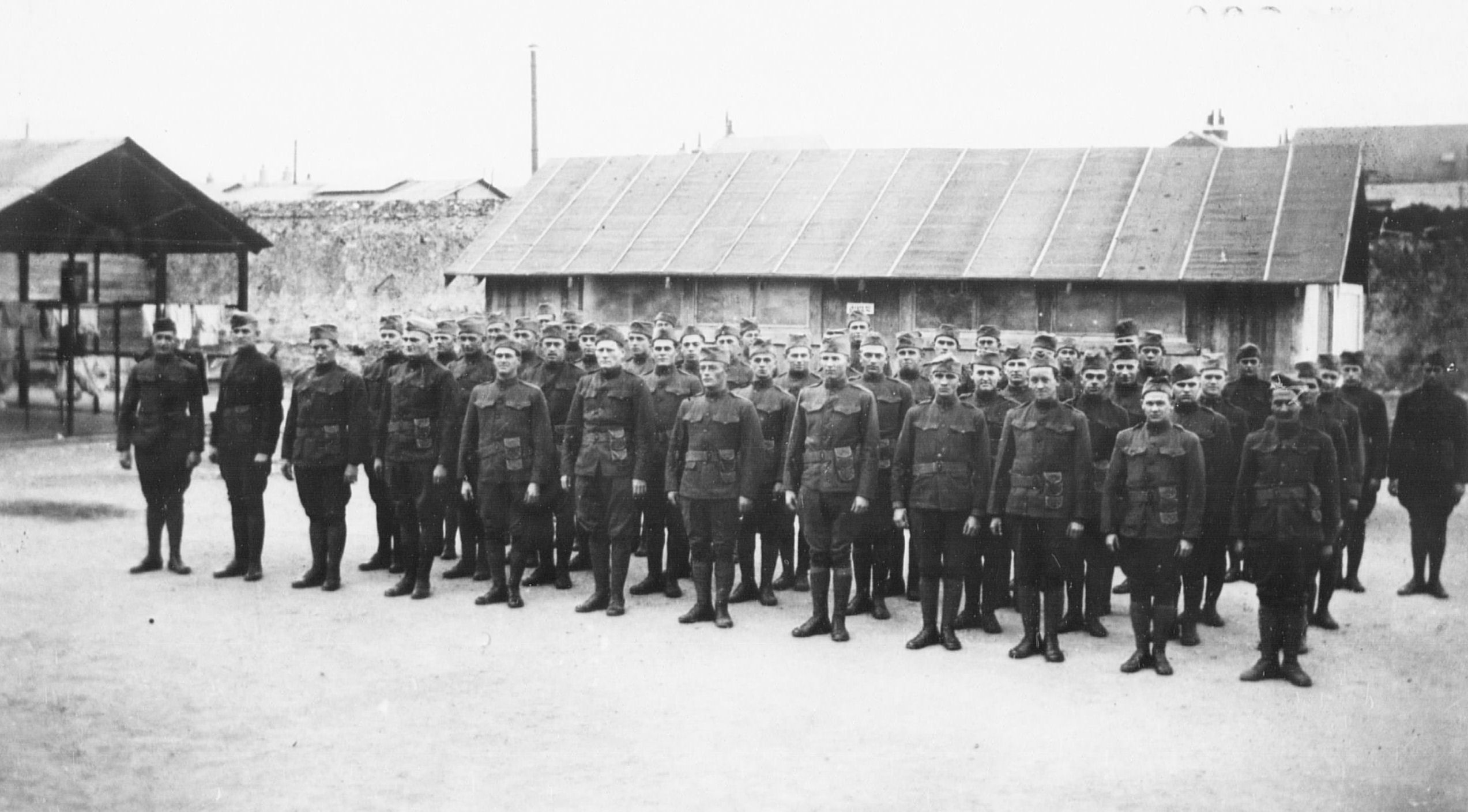
The squadron left Kelly Field on 28 October 1917, arriving at the Aviation Concentration Center, Garden City, New York on 3 November. While at Garden City, the squadron was given intensive drill and training for service overseas. It departed for the port of Hoboken, New Jersey on 22 November and boarded the . The ship left port later that day, arriving at Halifax, Nova Scotia on 25 November. It waited in Halifax for other ships to form a convoy for the Atlantic crossing, and arrived at Liverpool, England on 8 December. From there, the squadron took a troop train south to a rest camp at Winchester. With the exception of 30 men who were quarantined with sickness, the squadron left Winchester on 13 December and crossed the English Channel on the SS Mona's Queen, landing at Le Havre, France, on 14 December 1917.
After arriving in France the 80th Squadron moved to Tours Aerodrome, where it was assigned to the Second Aviation Instruction Center.
Interwar years
The first 492d Bombardment Squadron was constituted in the Organized Reserve on 31 March 1924, and assigned to the 349th Bombardment Group as part of the General Headquarters Reserve and allotted to the Ninth Corps Area. Training began for reserve personnel in January 1925 at Sand Point Airport, Seattle, Washington.
The unit was consolidated on 5 December 1936 with the 492d Aero Squadron, in order to perpetuate the history and traditions of the World War I organization. In 1960, it was reconstituted and consolidated with the second 492d Bombardment Squadron.
World War II

The 7th Bombardment Group was deploying to the Philippines when the Japanese struck Pearl Harbor. With the air bases in the Philippines in Japanese hands, it engaged in combat in Australia and the Netherlands East Indies. By late spring 1942, it had moved to India. In India, it was assigned two medium bomber squadrons, the 11th and 22d Bombardment Squadrons, and two heavy bomber squadrons, the 9th and 436th Bombardment Squadrons. In September, the two medium squadrons were reassigned to form the cadre for the new 341st Bombardment Group,
The second 492d Bombardment Squadron was activated at Camp Malir near Karachi, India (now Pakistan).
At the beginning of January 1944, the squadron moved to Madhaiganj Airfield. It concentrated on Japanese Lines of communication in Burma, attacking bridges, docks and warehouses. It focused on the Burmese rail system with attacks on marshalling yards locomotives, and rolling stock. At sea, at attacked merchant vessels and navy ships in the Bay of Bengal. As the 1944 monsoon began, the squadron moved to Tezgaon Airfield, India (now Bangla Desh). There, it ceased combat operations and began ferrying fuel over the Hump to Fourteenth Air Force in China, making its first delivery to Kunming Airfield on 20 June. Supply operations continued until October, when it returned to Madhaiganj. After spending most of the month retraining for combat, it returned to attacking the Burma rail system, although during most of December it focused on enemy bombing storage locations. On 20 December a detachment of the squadron moved to Luliang Airfield, China, where it resumed airlift operations until the end of January.
Early in 1945 the squadron supported British ground forces in the region north of Mandalay and east of the Irrawaddy River. On 19 March it attacked rail lines and bridges in Thailand, for which it was awarded a Distinguished Unit Citation. After the fall of Rangoon in May 1945 and the onset of the 1945 monsoon, the 492d moved to Tezpur Airfield, India, and once again took on the mission of airlifting gasoline over the Hump into China. This time, its Liberators were modified to act as substitute cargo carriers, and it was 20 June before it resumed operations over the Hump. Hump operations continued past V-J Day, terminating on 18 September. It sailed from Calcutta aboard the on 7 December 1945 as part of Operation Magic Carpet, and arrived at the Port of Embarkation, Camp Kilmer, New Jersey on 5 January 1946. The unit was inactivated at Camp Kilmer the following day.
Strategic Air Command
B-29 Superfortress operations
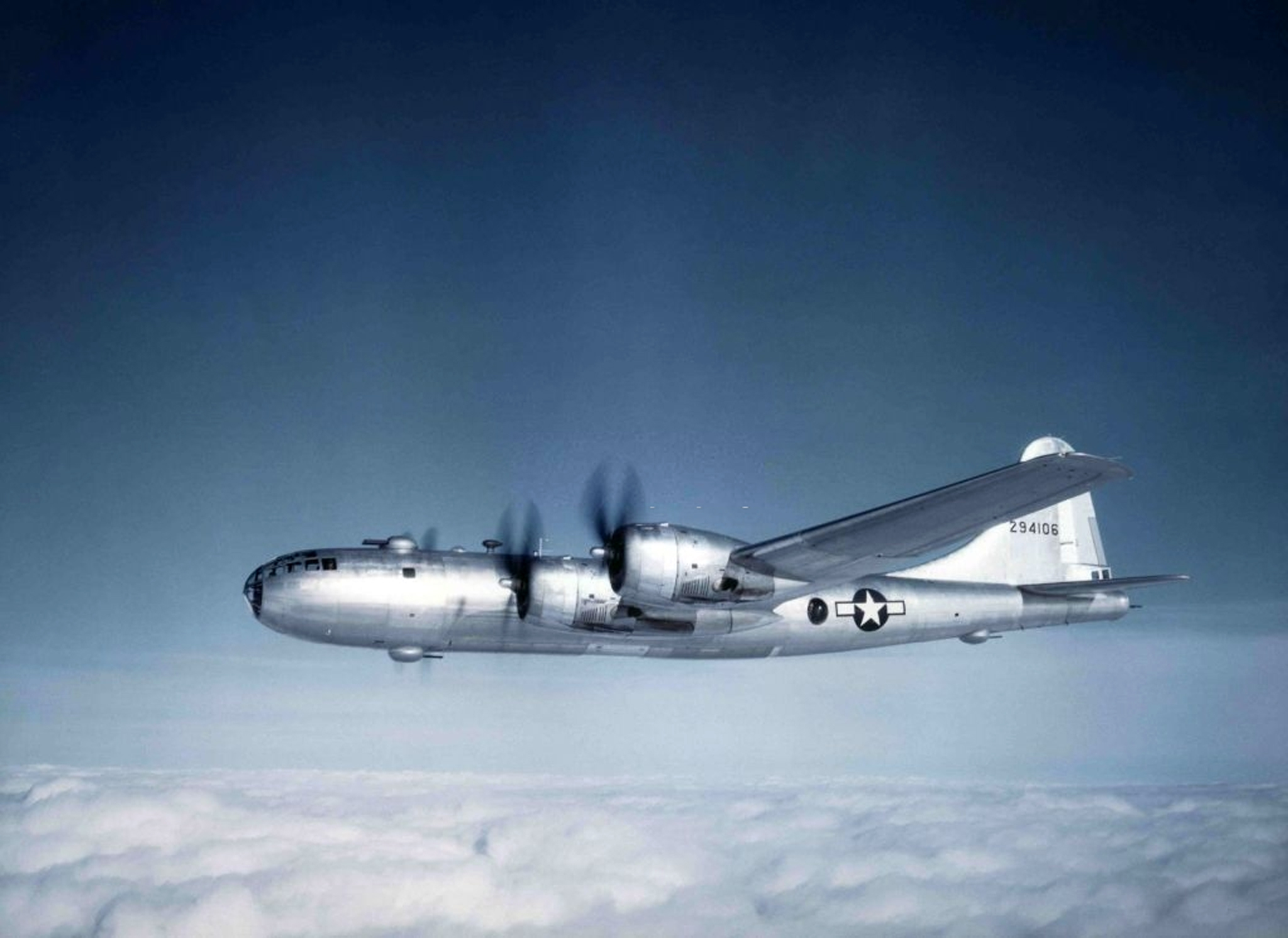
On 1 October 1946 the 492d was activated at Fort Worth Army Airfield, Texas and assigned to the 7th Bombardment Group of Strategic Air Command (SAC). When the 327th Bombardment Squadron moved on paper from Fort Worth to Smoky Hill Army Airfield, Kansas in the last week of October, the squadron received its first contingent of troops and Boeing B-29 Superfortress aircraft, which had been assigned to the 327th. It then began a training program which was designed primarily to prepare the unit for overseas operations.
In April 1947 the 492d engaged in a mass formation flight from Fort Worth to Los Angeles. During June and July, it deployed to Japan to participate in maneuvers. The following month, most of its planes made a nonstop flight to Elmendorf Field, Alaska, to test the immediate mobility of the 7th Bombardment Group. In September, the 7th Group deployed to Giebelstadt Airfield, Germany. While in Europe they flew training missions in the central and southern parts of the continent.
B-36 Peacemaker operations
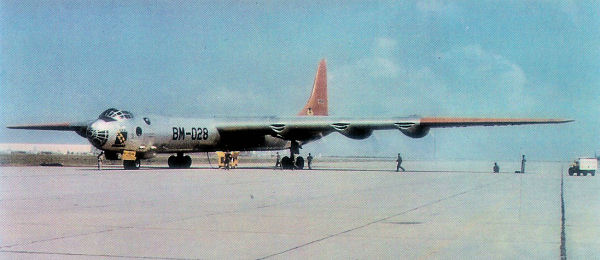
In 1948, the squadron began transitioning to the Convair B-36 Peacemaker. it received its first B-36 in June and by January 1949 it completed the transition to the new bomber and ended B-29 operations. In March 1949 an aircrew assigned to the unit flew nonstop a distance of 9,600 miles from Fort Worth to Minneapolis, Great Falls, Montana Key West, Denver, Great Falls, Spokane, Denver, and back to Fort Worth. This 44 hour flight was reported to be the longest to that date in a B-36. The squadron mission was to maintain the ability to conduct strategic strikes, conducting most of its operations from its home base, now named Carswell Air Force Base, primarily operating in the 48 United States. However, it also conducted deployments and exercises outside the United States.
In August 1949 the squadron inaugurated a series of training missions to Alaska. During February 1950 it participated in an operational readiness test in which it deployed several aircraft to Eielson Air Force Base, Alaska. Eielson served as a forward staging area from which simulated missions were directed against targets in the United States. In May 1950 the 492d provided a B-36 for a mobility mission to Ramey Air Force Base, Puerto Rico.
In 1951 and 1954, squadron aircraft and aircrews departed Carswell for Goose Air Base, Labrador, Canada, performing a navigation mission to Thule Air Base, Greenland. On the return flight, they made simulated attacks on targets in the United States. In December 1951 the squadron provided a bomber on a special mission to RAF Sculthorpe, England. On this deployment it participated in a Royal Air Force navigation mission and had a mutual exchange of ideas with Royal Air Force personnel, and compared techniques in target study and briefing.
Starting in August 1954 the squadron began a number of operations in North Africa. That month it flew a simulated strike mission, flying non-stop the 4,600 miles to Nouasseur Air Base, French Morocco, which had been designated its post-strike headquarters. In July 1955, the entire 7th Bombardment Wing deployed to Nouasseur for 60 days. It tested the ability of Nouasseur to act as a prestrike and a post-strike staging area for a B-36 task force. The squadron deployed again to North Africa in February and in October 1956. While deployed, it conducted simulated missions against targets in Europe and the Middle East.
B-52 Stratofortress operations

In December 1957, the 7th Bombardment Wing began conversion from the B-36 to the Boeing B-52F Stratofortress. In March 1958, crews began transition training at Castle Air Force Base, California. The first B-52s arrived in June, and the wing was combat ready by January 1959. However, large concentrations of bombers, like the 45 B-52s of the 7th Wing at Carswell, made attractive targets for an enemy strike. SAC decided to disperse its B-52 force to smaller wings with 15 bombers at other bases. This not only complicated Soviet targeting planning, but with more runways, it would take less time to launch the bomber force.
Implementing this program, on 15 June 1959, the 492d moved to Columbus Air Force Base, Mississippi, where it was assigned to the 4228th Strategic Wing. It conducted worldwide strategic bombardment training missions and provided nuclear deterrent. That goal was met by 1960,
At the beginning of the Cuban Missile Crisis, on 20 October, the squadron, along with all B-52 units except those equipped with the B-52H, were directed to put two additional planes on alert. On 22 October, 1/8 of SAC's B-52s were placed on airborne alert. On 24 October SAC went to DEFCON 2, placing all the squadron's aircraft on alert As tensions eased, on 21 November SAC returned to its normal airborne alert posture. On 27 November, SAC finally returned to normal ground alert posture.
The 4228th Wing was a Major Command controlled (MAJCON) wing, and MAJCON units could not carry a permanent history or lineage. SAC received authority from Headquarters USAF to discontinue its MAJCON strategic wings that were equipped with combat aircraft and to activate Air Force controlled (AFCON) units, most of which were inactive at the time, but which could carry a lineage and history. SAC activated the 454th Bombardment Wing at Columbus to replace the 4228th on 1 February 1963. In this reorganization, the 492d was inactivated and transferred its mission, personnel, and equipment to the 454th's 736th Bombardment Squadron, which was simultaneously activated.
Unmanned vehicle training
The squadron was redesignated the 492d Attack Squadron and activated at March Air Reserve Base, California to train operators of unmanned aerial vehicles. It was assigned to the 49th Operations Group, which is stationed at Holloman Air Force Base, New Mexico The squadron is associated with the 163rd Attack Wing in training personnel, including maintenance, base operations support, medical and aircrews with the General Atomics MQ-9 Reaper. The activation of the squadron enables the 163rd Wing to graduate 72 or more MQ-9 crews per year.
In April 2025 the 163d Wing hosted Exercise Reaper Smoke 2025. This exercise was the first Air Force operation focusing on maritime operations with the MQ-9, emphasizing the long range needed for operations in the Indo-Pacific theater.
Lineage
; 492d Aero Squadron
- Organized as the 80th Aero Squadron on 15 August 1917 : Redesignated 80th Aero Squadron (Construction) in September 1917 : Redesignated 492d Aero Squadron (Construction) on 1 February 1918 : Demobilized on 13 February 1919 : Reconstituted and consolidated with the 492d Bombardment Squadron on 5 December 1936
; 492d Bombardment Squadron
- Constituted as the 492d Bombardment Squadron and allotted to the Organized Reserve on 31 March 1924 : "Initiated" in January 1925 : Consolidated with the 492d Aero Squadron on 5 December 1936 : Inactivated on 2 March 1937 : Disbanded on 31 May 1942 : Consolidated with the 492d Bombardment Squadron, Heavy on 31 March 1960
; 492d Attack Squadron
- Constituted as the 492d Bombardment Squadron (Heavy) on 19 September 1942 : Activated on 25 October 1942 : Redesignated 492d Bombardment Squadron, Heavy c. 19 September 1944 : Inactivated on 6 January 1946
- Redesignated 492d Bombardment Squadron, Very Heavy and activated on 1 October 1946 : Redesignated 492d Bombardment Squadron, Heavy on 20 July 1948 : Consolidated with the 492d Bombardment Squadron on 31 March 1960 : Discontinued and inactivated on 1 February 1963
- Redesignated 492d Attack Squadron on 26 Mar 2019 : Activated on 15 Apr 2019
Assignments
- Unknown, 15 August 1917
- Second Aviation Instruction Center, 15 January 1918 – 9 December 1918
- Air Service, Services of Supply, 9 December 1918 – 13 February 1919
- 349th Bombardment Group, 1925 – 2 Mar 1937
- 7th Bombardment Group, 25 October 1942 – 6 January 1946; 1 October 1946
- 7th Bombardment Wing, 16 June 1952
- 4228th Strategic Wing, 15 June 1959 – 1 February 1963
- 49th Operations Group, 15 April 2019 – present
Stations
- Kelly Field, Texas, 15 August 1917
- Aviation Concentration Center, Garden City, New York, 3–22 November 1917
- Tours Aerodrome, France, 15 January 1918
- Brest, France, 30 December 1918-c. 19 January 1919
- Sand Point Airport, Washington, January 1925 – 2 March 1937
- Garden City, New York, c. 31 January–13 February 1919
- Camp Malir, India, 25 October 1942
- Gaya Airfield, India, 14 November 1942
- Piardoba Airfield, Bishnupur, India, 26 February 1943
- Panagarh Airfield, India, 25 April 1943
- Madhaiganj Airfield, India, 22 January 1944
- Tezgaon Airdrome, India, 17 June 1944
- Madhaiganj Airfield, India, 6 October 1944 (detachment at Liulang Airfield, China, 20 December 1944 – 30 January 1945)
- Tezpur Airfield, India, 1 June–7 December 1945
- Camp Kilmer, New Jersey, 5–6 January 1946
- Fort Worth Army Airfield (later Griffiss Air Force Base, Carswell Air Force Base), Texas, 1 October 1946
- Columbus Air Force Base, Mississippi, 15 June 1959 – 1 February 1963
- March Air Reserve Base, California, 15 April 2019 – present
Aircraft
- Consolidated B-24 Liberator, 1942–1945
- Boeing B-29 Superfortress, 1946–1948
- Convair B-36 Peacemaker, 1948–1958
- Boeing B-52F Stratofortress, 1958-1963
- General Atomics MQ-9 Reaper, 2019–present
Awards and campaigns
| Campaign Streamer | Campaign | Dates | Notes | |
|---|---|---|---|---|
| [[File:World War I War Service Streamer without inscription.png | 200px]] | Theater of Operations | 15 January 1918–c. 19 January 1919 | 80th Aero Squadron (later 492d Aero Squadron) |
| [[Image:Streamer APC.PNG | 200px]] | China Defensive | 25 October 1942–4 May 1945 | 492d Bombardment Squadron |
| [[Image:Streamer APC.PNG | 200px]] | India-Burma | 2 April 1943–28 January 1945 | 492d Bombardment Squadron |
| [[Image:Streamer APC.PNG | 200px]] | Central Burma | 29 January 1945–15 July 1945 | 492d Bombardment Squadron |
| [[Image:Streamer APC.PNG | 200px]] | China Offensive | 5 May 1945–2 September 1945 | 492d Bombardment Squadron |
References
Notes
; Explanatory notes
; Citations
Bibliography
References
- Watkins, pp. 68-69
- (May 15, 2019). "492nd ATKS activates at March ARB". 49th Wing Public Affairs.
- Musser, James M.. (April 24, 2019). "Factsheet 492 Attack Squadron (AETC)". Air Force Historical Research Agency.
- Early the next month the unit's mission became apparent when it was redesignated the '''80th Aero Squadron''' (Construction).Byard, p. 1
- USS ''Frederick'']]{{cn. (May 2025 late in January 1919. It was demobilized at [[Garden City, New York]] on 13 February. It was reconstituted in December 1936 and consolidated with the first '''492d Bombardment Squadron'''.Clay, p. 1594)
- Maurer, ''Combat Units'', pp. 43-45
- Maurer, ''Combat Squadrons'', pp. 59-60, 115-116
- Maurer, ''Combat Squadrons'', pp. 50-51, 538-40
- while the 492d and [[493d Bombardment Squadron]]s were organized to take their places and make the 7th Group an all heavy bomber unit.Maurer, ''Combat Squadrons'', pp. 592-93, 594
- Byard, p. 3
- (December 26, 2018). "The B-25 ‘Bridge Busters’ and the GLIP bombing technique". The Aviation Geek Club.
- Maurer, ''Combat Squadrons'', p. 403
- Byard, p. 4
- Byard, pp. 4-5
- Byard, p. 5
- Alert Operations and SAC, pp. 4-5
- The squadron began to keep aircraft on [[alert status
- (1 April 1975). "Abstract (Unclassified), History of the Strategic Bomber since 1945 (Top Secret, downgraded to Secret)". Air Force History Index.
- but the alert commitment was increased to half the squadron's aircraft in 1962. SAC planners were also looking into other methods to protect their forces in addition to the ground alert program as early as 1957 In January 1961, SAC disclosed it was maintaining an airborne force (which included the squadron's Stratofortresses) for "airborne alert training" in [[Operation Chrome Dome]].Narducci, pp. 5-6
- Alert Operations and SAC, p. 8
- Kipp, ''et al''., pp. 34-35
- Kipp, ''et al''., p. 47
- Kipp, ''et al''., p. 61
- Ravenstein, Charles A.. (1984). "A Guide to Air Force Lineage and Honors". USAF Historical Research Center.
- Ravenstein, pp. 249-50
- (May 6, 2025). "California Air National Guard Hosts Reaper Smoke 2025". 163rd Attack Wing Public Affairs.
- ZI Directory of Troops, p. 1015
- Lineage in Musser, Factsheet, except as noted.
- Gorrell {{page needed. (August 2020)
- "Air Force Personnel Services: Unit Awards". Air Force Personnel Center.
This article was imported from Wikipedia and is available under the Creative Commons Attribution-ShareAlike 4.0 License. Content has been adapted to SurfDoc format. Original contributors can be found on the article history page.
Ask Mako anything about 492nd Attack Squadron — get instant answers, deeper analysis, and related topics.
Research with MakoFree with your Surf account
Create a free account to save articles, ask Mako questions, and organize your research.
Sign up freeThis content may have been generated or modified by AI. CloudSurf Software LLC is not responsible for the accuracy, completeness, or reliability of AI-generated content. Always verify important information from primary sources.
Report