From Surf Wiki (app.surf) — the open knowledge base
486th Fighter Squadron
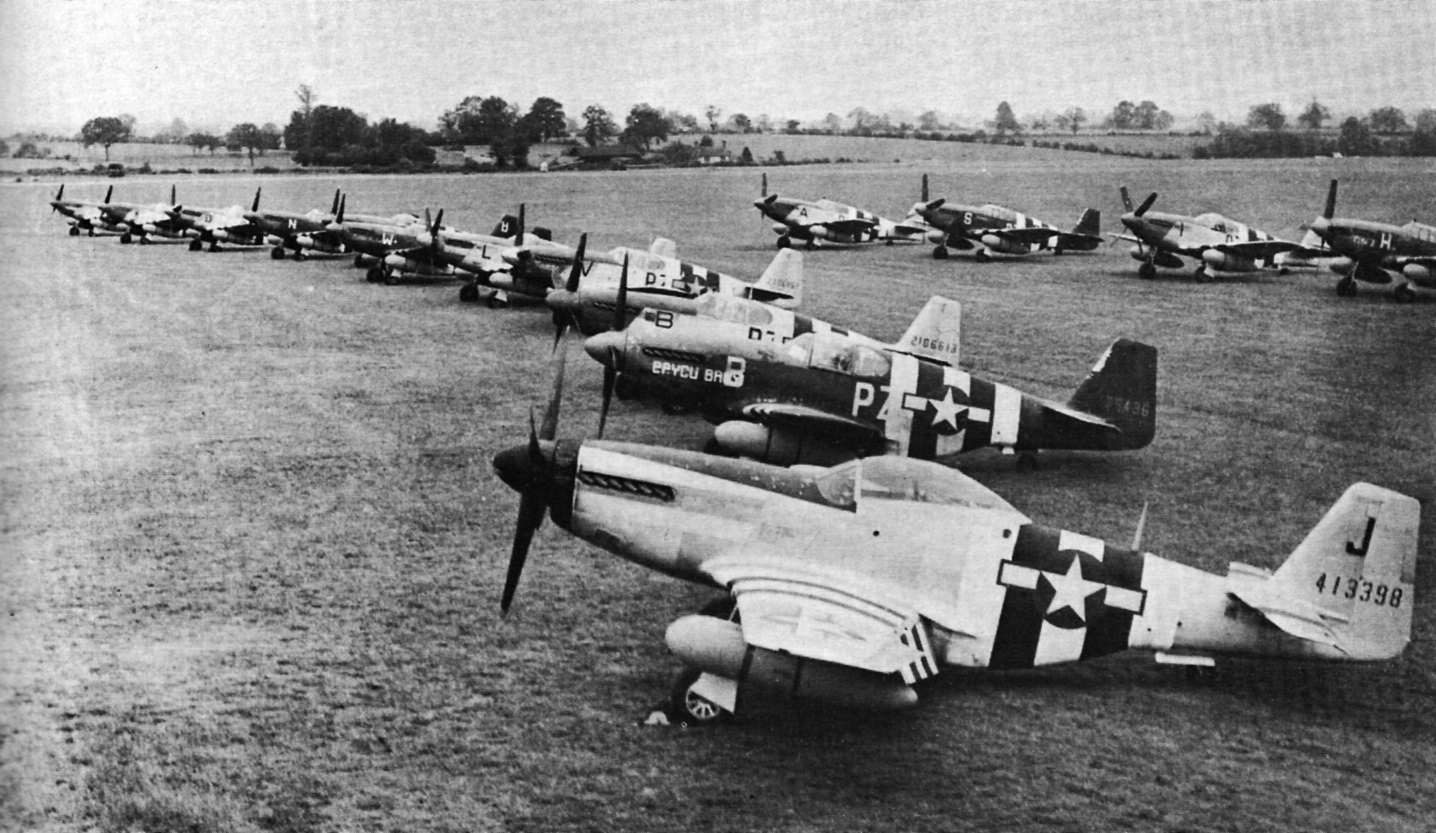
| Field | Value | |||||
|---|---|---|---|---|---|---|
| unit_name | 486th Fighter Squadron | |||||
| image | 352fg-p47.jpg | |||||
| image_size | 300px | |||||
| caption | Squadron P-47D Thunderbolt at RAF BodneyAircraft is Republic P-47D-2-RA, serial 42-22548, "Gigs-Up". | |||||
| dates | 1942–1945 | |||||
| country | ||||||
| branch | ||||||
| role | Fighter | |||||
| commander5 | then Lt. Col. Luther H. Richmond (to April 15, 1944){{cite web | first1=Marc L. | last1=Hamel | |||
| first2 | Luther H. | last2=Richmond | work=World War II - Prisoners of War - Stalag Luft I | title=Jackpot over Vechta | url=http://www.merkki.com/vechta.htm | access-date=2023-06-20}} |
| nickname | Blue nosed bastards of Bodney | |||||
| battles | European Theater of Operations | |||||
| decorations | Distinguished Unit Citation | |||||
| French Croix de Guerre with Palm | ||||||
| identification_symbol | [[File:486th Fighter Squadron - World War II - Emblem.jpg | 165px]] | ||||
| identification_symbol_label | 486th Fighter Squadron emblem | |||||
| identification_symbol_2 | **PZ** | |||||
| identification_symbol_2_label | Fuselage code | |||||
| <!-- | Fighter | P-47, P-51-- |
French Croix de Guerre with Palm
The 486th Fighter Squadron is an inactive United States Air Force unit. It activated during World War II and was assigned to the 352nd Fighter Group of VIII Fighter Command. After training in the United States, it deployed to the European Theater of Operations, where it earned a Distinguished Unit Citation and a French Croix de Guerre with Palm for its combat actions. Following V-E Day, it returned to the United States and was inactivated at the port of embarkation, Camp Kilmer, New Jersey, on 9 November 1945.
History
Formation and training in the United States
The Adjutant General directed the activation of the 352nd Fighter Group on 1 October 1942. Among its components was the 21st Fighter Squadron, formed by redesignating the 21st Pursuit Squadron as the 21st Fighter Squadron. The squadron began training under that designation. Just before the squadron shipped overseas, in May 1943, headquarters became aware that the 21st Pursuit Squadron, whose personnel were all in Japanese POW camps, was still being maintained on the rolls of the United States Army as an active unit: that there were two 21st Pursuit or Fighter Squadrons. As a result, the designation as the 21st Fighter Squadron was revoked. The squadron was retroactively activated as the 486th Fighter Squadron.Some original squadron members continued to wear the 21st Pursuit Squadron emblem on their flight jackets. Watkins, p. 57. However, because the original directive was revoked, the 21st Pursuit Squadron and the 486th Fighter Squadron are not related under U.S. Army lineage rules.
The squadron was activated at Mitchel Field, New York, although its formation occurred at Bradley Field, Connecticut. and it trained with Republic P-47 Thunderbolts at various bases in the northeast United States. While training, the squadron also served in the air defense of the northeast as part of the New York Fighter Wing. In mid-June 1943, the squadron moved to Camp Kilmer and sailed on the for England on 1 July.
Combat in the European Theater
The squadron flew its first combat mission on 9 September 1943. It concentrated on flying escort missions for VIII Bomber Command heavy bombers participating in the strategic bombing campaign against Germany. From 20 February to 25 February 1944, it flew cover for bombers involved in the Big Week campaign against the German aircraft manufacturing industry.
In April 1944 the squadron began to replace its Thunderbolts with longer range North American P-51D Mustangs. On 8 May, the squadron was escorting bombers on a raid on Braunschweig. It routed an attack by a numerically superior force of German interceptors, continuing the fight until most planes had used all their ammunition and were running short on fuel, requiring the unit to return to base. For this action, the squadron was awarded the Distinguished Unit Citation. In addition to escort missions, the squadron flew counter air missions. Returning from its escort missions, it often engaged in air interdiction attacks.
As the German Army launched the counteroffensive known as the Battle of the Bulge, a detachment of the squadron that included all of its air echelon deployed to Asch Airfield on 23 December 1944 to reinforce Ninth Air Force flying air support missions. On 1 January the detachment earned the squadron the French Croix de Guerre with Palm, when its airfield was attacked by 50 Luftwaffe fighter aircraft, just as its planes were taking off for an area patrol. In the ensuing aerial battle, about half the attacking German aircraft were destroyed with no loss to the squadron. The detachment moved to Chievres Airfield, Belgium in late January 1945, where it was joined by the rest of the squadron, coming under the control of Eighth Air Force again. From Chievres, it provided cover for Operation Varsity, the airborne assault to establish a bridgehead across the Rhine.
In April 1945, the squadron returned to England, flying its last mission on 3 May. Following V-E Day, many of the squadron personnel transferred for early return to the United States. The remaining personnel sailed on the on 4 November 1945. After arriving in the United States, the squadron inactivated on 10 November 1945.
Lineage
- Constituted as the 486th Fighter Squadron on 29 September 1942 : Activated on 1 October 1942 : Inactivated on 10 November 1945
Assignments
- 352d Fighter Group, 1 October 1942 – 10 November 1945
Stations
- Mitchel Field, New York, 1 October 1942
- Bradley Field, Connecticut, October 1942
- Westover Field, Massachusetts, November 1942
- Trumbull Field, Connecticut, c. 15 January 1943
- Republic Field, New York, 8 March 1943
- Westover Field, Massachusetts, 24 May – 16 June 1943
- RAF Bodney, England (Sta 141), 7 July 1943 (detachment operated from Asch Airfield (Y-29), Belgium, after 23 December 1944)
- Chievres Airfield (A-84), Belgium, 28 January 1945
- RAF Bodney, England (Sta 141), c. 14 April 1945 – 4 November 1945
- Camp Kilmer, New Jersey, 9–10 November 1945
Aircraft
- Republic P-47 Thunderbolt, 1942-1944
- North American P-51 Mustang, 1944-1945
Awards and campaigns
| Campaign Streamer | Campaign | Dates | Notes | |
|---|---|---|---|---|
| [[Image:Streamer EAMEC.PNG | 200px]] | Air Offensive, Europe | 7 July 1943 – 5 June 1944 | |
| [[Image:Streamer EAMEC.PNG | 200px]] | Normandy | 6 June 1944 – 24 July 1944 | |
| [[Image:Streamer EAMEC.PNG | 200px]] | Northern France | 25 July 1944 – 14 September 1944 | |
| [[Image:Streamer EAMEC.PNG | 200px]] | Rhineland | 15 September 1944 – 21 March 1945 | |
| [[Image:Streamer EAMEC.PNG | 200px]] | Ardennes-Alsace | 16 December 1944 – 25 January 1945 | |
| [[Image:Streamer EAMEC.PNG | 200px]] | Central Europe | 22 March 1944 – 21 May 1945 | |
| [[Image:Streamer EAMEC.PNG | 200px]] | Air Combat, EAME Theater | 7 July 1943 – 11 May 1945 |
References
Notes
; Explanatory notes
; Citations
Bibliography
References
- Watkins, p. 56
- ''See'' Maurer, ''Combat Units'', p. 232 (listing "486th [formerly 21st]" as a component of the 352nd Group)
- No byline. "Abstract, 486 Fighter Squadron History, Jan 1943-Jun 1945". Air Force History Index.
- Maurer, ''Combat Squadrons'', pp. 112-113 (21st Pursuit Squadron), 584-585 (486th Fighter Squadron). Nor is either squadron related to the [[21st Fighter Squadron]]. Maurer, ''Combat Squadrons'', p. 111.
- Maurer, ''Combat Units'', pp. 231-233
- Maurer, ''Combat Units'', p. 427
- Freeman, p. 250
- The squadron was sent to [[RAF Debden]] in June to reinforce the [[4th Fighter Group]], providing top cover for [[Boeing B-17 Flying Fortress]]es in [[Operation Frantic]], the shuttle mission from England to the Soviet Union. Other units protected the bombers on the way to the target, an oil facility near [[Berlin]]. The squadron rendezvoused with the bombers over Poland and defended them against an attack by 20 [[Focke-Wulf Fw 190]] fighters. P-51 maintenance personnel had flown as gunners on the bombers, and were available to ready the squadron's planes for an escort mission attacking a target in Yugoslavia. Before returning to England, the squadron participated in missions in the Balkans, operating from Italy after the first mission.Freeman, pp. 168-169
- It was credited with the destruction of 115 enemy aircraft in combat.Newton & Senning, pp.662-663
- Maurer, ''Combat Squadrons'', pp. 584-585
- Station number in Anderson, p. 21.
- Station number in Johnson, p. 28.
- Station number in Johnson, p. 23.
- Station information in Maurer, ''Combat Squadrons'', pp. 584-585, except as noted
This article was imported from Wikipedia and is available under the Creative Commons Attribution-ShareAlike 4.0 License. Content has been adapted to SurfDoc format. Original contributors can be found on the article history page.
Ask Mako anything about 486th Fighter Squadron — get instant answers, deeper analysis, and related topics.
Research with MakoFree with your Surf account
Create a free account to save articles, ask Mako questions, and organize your research.
Sign up freeThis content may have been generated or modified by AI. CloudSurf Software LLC is not responsible for the accuracy, completeness, or reliability of AI-generated content. Always verify important information from primary sources.
Report