From Surf Wiki (app.surf) — the open knowledge base
47th Infantry Regiment (United States)
Infantry regiment of the United States Army
Infantry regiment of the United States Army
| Field | Value | |||||||
|---|---|---|---|---|---|---|---|---|
| unit_name | 47th Infantry Regiment | |||||||
| image | 47 Inf Regt CoA.jpg | |||||||
| image_size | 100 | |||||||
| country | United States | |||||||
| garrison | Fort Benning | |||||||
| type | Infantry basic training | |||||||
| branch | ||||||||
| start_date | ||||||||
| size | Regiment | |||||||
| current_commander | 2d Bn – LTC Dennis W. Hall | |||||||
| 3d Bn – LTC Benjamin J. Horner<ref>{{cite web | url | https://www.benning.army.mil/Infantry/197th/3-47th/ | author= | date=25 April 2019 | website=U.S. Army Maneuver Center of Excellence | publisher=United States Army | access-date=16 February 2022 | title=Fort Benning }} |
| motto | *Ex Virtute Honos* (Honor Comes From Virtue) | |||||||
| battles | World War I | |||||||
| World War II | ||||||||
| Vietnam War | ||||||||
| notable_commanders | Alexander Patch | |||||||
| Edwin Randle | ||||||||
| George W. Smythe | ||||||||
| identification_symbol | [[File:Distinctive unit insignia of the 47th Infantry Regiment.png | 111px]] | ||||||
| identification_symbol_label | Distinctive unit insignia |
3d Bn – LTC Benjamin J. Horner World War II Vietnam War Edwin Randle George W. Smythe The 47th Infantry Regiment is an infantry regiment of the United States Army. Constituted in 1917 at Camp Syracuse, New York, the regiment fought in World War I, and was later inactivated in 1921. Remaining nominally inactive throughout the interwar period but manned with Organized Reserve personnel, the 47th Infantry was reactivated in 1940 and subsequently fought during World War II in North Africa, Sicily, and Western Europe, then was inactivated in 1946. During the Cold War, the regiment saw multiple activations and inactivations, with service both in the Regular Army and the Army Reserve; it fought in South Vietnam. Ultimately it was reactivated as a training regiment, and as of 1999, it has been assigned to Fort Benning and consists of two active battalions.
History
The Great War
The 47th Infantry Regiment was organized at Camp Syracuse, near Syracuse, New York, on 1 June 1917, almost two months after the American entry into World War I, with a cadre from the 9th Infantry Regiment; Initially assigned to Major General George H. Cameron's 4th Division; within the division the regiment was part of Brigadier General Benjamin A. Poore's 7th Infantry Brigade. By May 1918, the regiment arrived at Brest, France, training until July. it was then sent to bolster the beleaguered 42nd Division at Ourcq. In September and October 1918, the regiment fought near Cuisy, Septsarges, and Brieulles-sur-Meuse;{{efn|During the Meuse–Argonne offensive, a battalion of the regiment was commanded by Major James Stevens. During the battle the regimental surgeon, Major Harrison Webster, was killed. It ended the war near Fays, Vosges, and served in the Army of Occupation near Koblenz until July 1919.
Interwar period
The 47th Infantry Regiment arrived at the port of New York on 16 July 1919 on the troopship USS Mobile. Emergency period personnel were discharged from the service in New York, and the regiment was transferred 2 August 1919 to Camp Dodge, Iowa, and to Camp Lewis, Washington, on 2 August 1920. The 47th Infantry Regiment was inactivated on 22 September 1921 at Camp Lewis and along with the 4th Division, was allotted to the Fourth Corps Area for mobilization responsibility. On 27 July 1921, the 58th Infantry Regiment had been designated the 47th Infantry's "Active Associate," that would provide the personnel to reactivate the unit in the event of war. Upon inactivation of the 47th Infantry, the personnel were transferred to the 3rd Division's 7th Infantry Regiment at Camp Lewis.
The 58th Infantry Regiment was relieved as Active Associate on 17 July 1922, and the 22nd Infantry Regiment was designated as Active Associate. The 47th Infantry was organized on 25 July 1926 with Organized Reserve personnel as a "Regular Army Inactive" unit with headquarters at Starkville, Mississippi. The regiment was affiliated with the Agricultural and Mechanical College of Mississippi's ROTC program on 25 February 1927 and was organized, less the 3rd Battalion, at Starkville with Regular Army instructors assigned to the ROTC detachment and Reserve officers commissioned from the program. An Organized Reserve officer functioned as the day-to-day commander of the regiment, but the professor of military science and tactics at Mississippi A&M was designated the regimental commander for mobilization purposes. Concurrently, the 3rd Battalion was affiliated with the Louisiana State University ROTC program and organized at Baton Rouge, Louisiana. The 22nd Infantry was relieved on 30 June 1927 as Active Associate. The 47th Infantry was relieved from the 4th Division on 15 August 1927 and assigned to the 7th Division, and relieved from the 7th Division on 1 October 1933. It participated in the 1938 Third Army maneuvers in the De Soto National Forest in Mississippi by providing numerous Reserve officers as umpires. The regimental headquarters was transferred by 1939 to Baton Rouge. The regiment conducted summer training most years at Fort McPherson, Georgia, and some years at Fort Screven, Georgia. As an alternate form of summer training, the regiment conducted infantry Citizens Military Training Camps some years at Camp Beauregard, Louisiana. The 47th Infantry was assigned to the reactivated 9th Infantry Division on 1 August 1940, and activated on 10 August 1940, less Reserve personnel, at Fort Bragg, North Carolina. The regiment was briefly commanded by Colonel Alexander Patch in the summer of 1941; after the Japanese attack on Pearl Harbor, Patch was reassigned to the Pacific Theater of Operations.
World War II

In November 1942, the regiment took part in Operation Blackstone in North Africa, where it fought against Vichy French forces during an amphibious landing; the regiment's Company K were the first American troops to land in French Morocco. At the time of the regiment was commanded by Colonel Edwin Randle. during this time, the regiment conducted a foot march of more than 200 mi from Safi to Port-Lyautey.
Still in North Africa, along with the rest of the 9th Infantry Division (United States), the regiment fought in the Battle of El Guettar, which resulted in a significant number of casualties; for actions during the battle, the regiment's commander, received the Distinguished Service Cross (he would later go on to be promoted to be the assistant division commander of the 77th Division). Following El Guettar, the regiment moved north, and fought in the Battle of Sedjenane, and soldiers of the regiment's 2d Battalion, were the first Allied soldiers in Bizerte. After Colonel Randle was promoted and parted ways with the regiment, Colonel George W. Smythe became the regiment's commander. Along with the rest of the 9th Infantry Division, the regiment was sent to Sicily, in 1943; in Sicily the regiment was tangentially involved during the Battle of Troina, which saw the 9th Infantry Division's other infantry regiments in significant combat.
Remaining in Sicily after the Axis forces retreated, the regiment received orders to move in November 1943, making its way to England; with the rest of the 9th Infantry Division, the regiment trained until June 1944. While stationed around Alresford, the regiment adopted a dog as a mascot which died when struck by a vehicle in May 1944. The dog's marked grave is still in place in Alresford.
On 10 June, four days after D-Day, the 9th Infantry Division landed at Utah Beach. Assigned to VII Corps, it was allocated to the liberation of the Cotentin Peninsula and was the division that sealed off the peninsula to prevent additional German reinforcements from breaking through. Medical supplies for the regiment had been lost during its movement from England to Normandy, but were replaced and captured German vehicles were pressed into service by the regiment's medical detachment. The regiment reached Saint-Lô-d'Ourville, via Saint-Sauveur-le-Vicomte, Saint-Sauveur-de-Pierrepont, and Neuville-en-Beaumont, by 18 June.
Relieved by the 357th Infantry Regiment (of the 90th Infantry Division) along the English Channel, facing Jersey, the regiment moved to Saint-Jacques-de-Néhou where it began its push northward to Vasteville, via Bricquebec; on 20 June it began its push towards Cherbourg, but was initially halted near Sideville by stiff German prepared defenses around the outskirts of the port city. On 22 June, the attack on Cherbourg began, with the regiment errantly being attacked by aircraft of the IX Bomber Command, and the 39th Infantry Regiment following behind its advancement; by the 24th the regiment had broken through the enemy defenses, and along with the 39th, where fighting within the suburb of Octeville. The regiment continued to fight in the western portion of Cherbourg, and by the 26th it captured German General Karl-Wilhelm von Schlieben and Admiral Walter Hennecke. The city fell to the Allies by the next day; following the liberation of the port city, along with the 60th Infantry Regiment, the 47th fought the remaining German forces in Cap de la Hague, ultimately capturing over 6,000 Germans by 1 July.
By 10 July, the 9th Infantry Division was tasked to join the effort to liberate Saint-Lô; the next day it was attacked by the Panzer Lehr Division. On 11 July, wounded men and medical officers of the regiment's third battalion, were captured by German forces; one of the medical officers would later be killed by friendly fire and buried at Aisne-Marne American Cemetery and Memorial, while the other was liberated at Château-Thierry while taking care of wounded prisoners of war. The liberation of Château-Thierry occurred on 27 August, while the 9th Infantry Division was following the wake of the movement of the 3d Armored Division.

On 14 September, the regiment entered Germany, at or near, Roetgen; it was the first German city to fall to the Allies. The regiment penetrated the Siegfried Line near Schevenhütte on 16 September. This was followed by fighting in the Hürtgen Forest; during the battle the regiment captured Frenzerburg Castle. By 30 September, the regiment had lost 163 officers; one company alone lost 18 officers killed, leading to a loss of experienced leadership over time. During the Battle of the Bulge, the regiment served as a cornerstone of American resistance around Eupen. The regiment had the distinction of another first; on 8 March 1945, soldiers of the regiment became the first infantry troops to cross the Rhine River, doing so at Remagen; for its actions during the crossing of the Rhine, the regiment was awarded a Distinguished Unit Citation.
By early April, the 9th Infantry Division was assigned to III Corps, and was part of the effort against the Ruhr Pocket; once again the Panzer Lehr Division attacked the 9th Infantry Division. For its actions in repelling the attack the regiment earned another Distinguished Unit Citation. By mid-April 1945, the 9th Infantry Division was reassigned to VII Corps, and fought against remaining German forces in the Harz Mountains; there they encountered concentration camps near Nordhausen. After the Germans surrendered, the regiment conducted occupation duty in Germany, which lasted until late 1946.
Part of the Regiment's postwar occupation duty included a stint at the Dachau Concentration Camp.
In December 1946, the regiment was deactivated in Germany.
Cold War
In July 1947 the regiment was reactivated at Fort Dix.}} In 1957, the regiment's 2d Battalion was relieved from the 9th Infantry Division, returning to assignment with the 4th Infantry Division. Also 1957, the regiment's 3d Battalion was inactivated and relieved from the 9th Infantry Division, and two years later allotted to the United States Army Reserves' 81st Infantry Division.
In 1961, the regiment's 2nd Battle Group (the redesignated 2d Battalion) was deployed to Germany. Stationed in Berlin, the regiment remained there for a year; the following year the regiment's 2d Battalion was inactivated at Fort Lewis, and the 3d Battalion was inactivated at Atlanta. In July 1963, the 1st Battalion was reactivated as a part of the 171st Infantry Brigade. In 1966, at Fort Riley, both the 2d and 3d Battalions were reactivated, with the 3d Battalion being reassigned to 9th Infantry Division.
Vietnam
In Vietnam, the regiment fought in the Mekong Delta, where it conducted riverine warfare. however, the regiment's 3d Battalion was based in Kiến Hòa province. In addition to riverine operations, the regiment also conducted air mobile operations.
During the conflict three of the regiment's battalions served; For the most part the regiment's battalions were assigned to the 9th Infantry Division's 2d Brigade, except for the 2d Battalion, which was temporarily assigned at various times in 1968 to the division's other two brigades. During its time in Vietnam, the regiment conducted joint operations with the United States Navy, during which its soldiers deployed from, and billeted aboard, naval vessels.
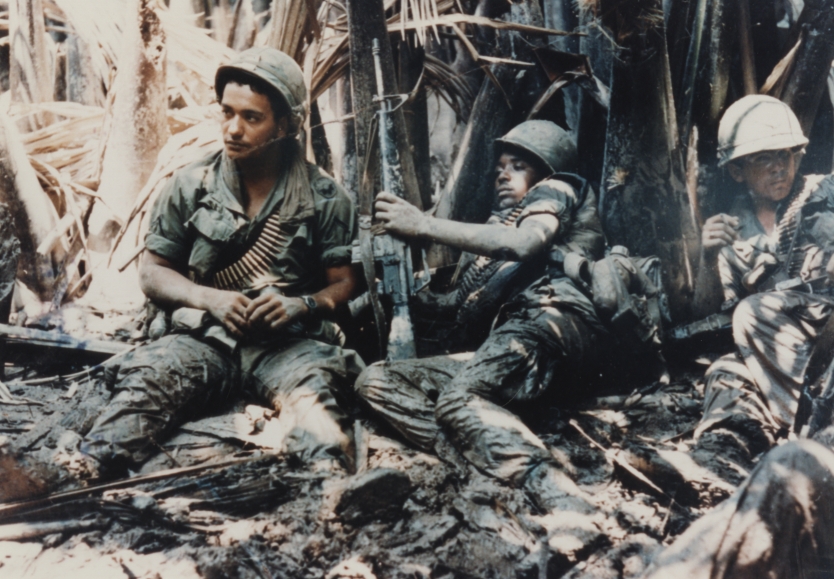
In 1966, upon learning of the regiment's upcoming riverine mission, the regiment's leadership worked with the Navy's Amphibious Training School, in Coronado, to gain the skills needed for the expected deployment. In January 1967, the regiment deployed from Fort Riley, by way of San Francisco, disembarking at Vũng Tàu. From mid-February to late-March 1967, the regiment's 3d Battalion conducted combat training, with the and the 9th River Assault Squadron, in the Rung Sat Special Zone. In April and May 1967, the regiment's 4th Battalion conducted operations in the Rung Sat Special Zone.
Beginning in April 1967, the regiment's 3d Battalion deployed to the Mekong Delta proper. By May of that same year it began to conduct combat operations near Ap Bac; that same month, the regiment's 4th Battalion completed operations in Rung Sat and began operations in the Mekong Delta. On 19 May 1967, the 2d Brigade's headquarters came under attack on the banks of the Mỹ Tho River, and the regiment's 3d Battalion was heavily engaged in thwarting the attack. In June 1967, the regiment took part in Operation Concordia, with the providing medical support. In early July 1967, operations were conducted in the Gò Công Province; at the end of that month, the regiment moved to Can Guioc. In August, and early September, the regiment operated in the Long An Province, supporting units from the Republic of Vietnam Marine Division. From October 1967 until January 1968, the regiment was involved in Operations Coronado V & IX, which ended when the regiment embarked on the .
During the Tet Offensive, in early February, the regiment fought heavily in and around Mỹ Tho in Operation Coronado X.}} From mid-February and into early March, the regiment took part in Operation Coronado XI. Following that operation, the regiment took part in Operation Truong Cong Dinh until April. Several helicopters were lost due to enemy fire, and two artillery barges sunk; the Benewah was struck by enemy fire, and one LCM was sunk. In July, the regiment's 4th Battalion conducted operations with the South Vietnamese Army's 9th Division. In October, two of the regiment's battalions conducted pacification operations in Kiến Hòa province.
Post-Vietnam and 21st century
Following the regiment's deployment to Vietnam, its battalions were progressively inactivated. The 3d Battalion was the first to be inactivated, doing so at Fort Riley in August 1969; due to this the 3d Battalion was assigned to the 199th Infantry Brigade, but was later inactivated in January 1994 at Fort Polk.
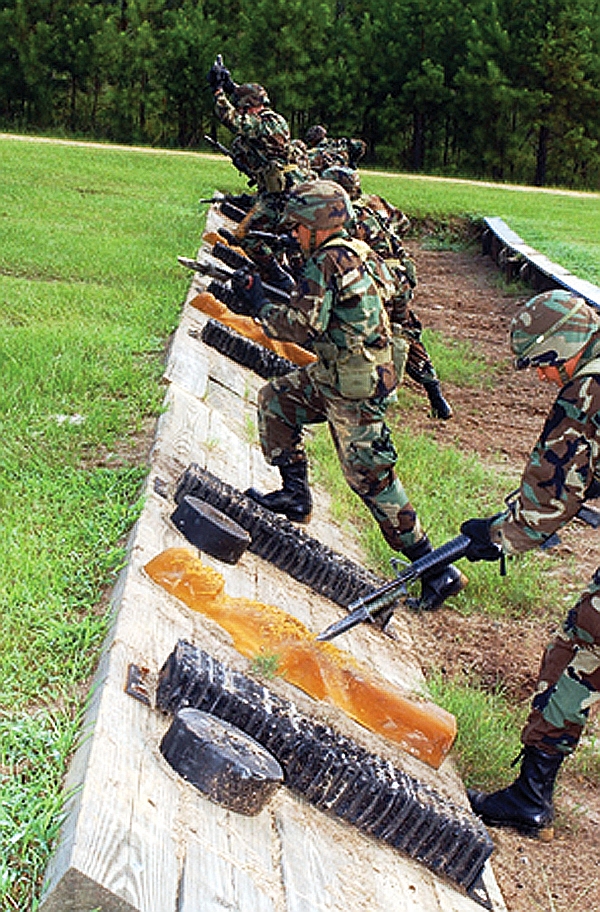
In April 1996, the regiment was transferred to the United States Army Training and Doctrine Command. On 8 April 2013, an inactivation ceremony was held for the 3d Battalion, 47th Infantry Regiment, resulting in a reduction of 44 soldier and 27 civilian positions. On 4 March 2019, 3d Battalion was re-activated in the 198th Infantry Brigade for infantry one station unit training.
Regimental lineage
The regiment's lineage is as follows:
- Constituted 15 May 1917 in the Regular Army as the 47th Infantry
- Organized 1 June 1917 at Syracuse, New York
- Assigned 19 November 1917 to the 4th Division
- Inactivated 22 September 1921 at Camp Lewis, Washington
- Relieved 15 August 1927 from assignment to the 4th Division and assigned to the 7th Division
- Relieved 1 October 1933 from assignment to the 7th Division
- Assigned 1 August 1940 to the 9th Division (later redesignated as the 9th Infantry Division)
- Activated 10 August 1940 at Fort Bragg, North Carolina
- Inactivated 31 December 1946 in Germany
- Activated 15 July 1947 at Fort Dix, New Jersey
- Relieved 1 December 1957 from assignment to the 9th Infantry Division and reorganized as a parent regiment under the Combat Arms Regimental System
- Withdrawn 16 June 1986 from the Combat Arms Regimental System and reorganized under the United States Army Regimental System
- Transferred 15 April 1996 to the United States Army Training and Doctrine Command
Honors
The regiment's campaign participation credits, and decorations, are as follows:
Campaign participation credit
World War I: Aisne-Marne; St. Mihiel; Meuse-Argonne; Champagne 1918; Lorraine 1918
World War II: Algeria-French Morocco (with arrowhead); Tunisia; Sicily; Normandy; Northern France; Rhineland; Ardennes-Alsace; Central Europe
Vietnam: Counteroffensive, Phase II; Counteroffensive, Phase III; Tet Counteroffensive; Counteroffensive, Phase IV; Counteroffensive, Phase V; Counteroffensive, Phase VI; Tet 69/Counteroffensive; Summer-Fall 1969; Winter-Spring 1970; Sanctuary Counteroffensive; Counteroffensive, Phase VII
Decorations
- Presidential Unit Citation (Army) for Cherbourg
- Presidential Unit Citation (Army) for Hague Peninsula
- Presidential Unit Citation (Army) for Wilhelmshoe, Germany
- Presidential Unit Citation (Army) for Roetgen, Germany
- Presidential Unit Citation (Army) for Nothberg, Germany
- Presidential Unit Citation (Army) for Freuzenbeg Castle
- Presidential Unit Citation (Army) for Remagen, Germany
- Presidential Unit Citation (Army) for Oberkirchen, Germany
- Presidential Unit Citation (Army) for Mekong Delta
- Valorous Unit Award for Long Binh – Bien Hoa
- Valorous Unit Award for Saigon
- Valorous Unit Award for Fish Hook
- Meritorious Unit Commendation (Army) for Vietnam 1968
- French Croix de Guerre with Palm, World War II for Cherbourg
- Belgian Fourragere 1940
- Cited in the Order of the Day of the Belgian Army for action at the Meuse River
- Cited in the Order of the Day of the Belgian Army for action in the Ardennes
Notes
References
References
- . (11 October 2024). ["Fort Moore"](https://www.moore.army.mil/infantry/197th/2-47th/). *United States Army*.
- . (25 April 2019). ["Fort Benning"](https://www.benning.army.mil/Infantry/197th/3-47th/). *United States Army*.
- Bonn, Keith E.. (2003). "Most Underrated General of World War II: Alexander Patch". Association Newsletter.
- Atkinson, Rick. (15 May 2007). "An Army at Dawn: The War in North Africa, 1942–1943, Volume One of the Liberation Trilogy". Henry Holt and Company.
- Crew, Thomas E.. (2007). "Combat Loaded: Across the Pacific on the USS Tate". Texas A&M University Press.
- Caddick-Adams, Peter. (2015). "Snow & Steel: The Battle of the Bulge, 1944-45". Oxford University Press.
- Villahermosa, Gilberto N.. (2009). "Honor and Fidelity: The 65th Infantry in Korea, 1950-1953". Government Printing Office.
- . (5 July 2006). ["3D Battalion 47th Infantry Regiment"](https://history.army.mil/html/forcestruc/lineages/branches/inf/0047in003bn.htm). *United States Army Center of Military History*.
- . ["William G. Thiele"](https://www.townofhalfmoon-ny.gov/sites/halfmoonny/files/u81/william_theile_0.pdf). *Town of Halfmoon, New York*.
- Miles, Paul L.. (1999). "The United States in the First World War: An Encyclopedia". Taylor & Francis.
- Molinaro, Kristin. (6 May 2010). "Veterans of 47th Infantry return to Benning, dedicate regimental room". Ledger-Enquirer.
- (5 September 2007). "The Fourth Division: Its Services and Achievements in the World War". Country Life Press.
- (1944). "4th Division, Summary of Operations in the World War". U.S. Government Printing Office.
- (1944). "4th Division, Summary of Operations in the World War". U.S. Government Printing Office.
- Mitchell, Paul B.. (1999). "What Were the Causes of the Delay of the 79th Division Capturing Montfaucon During the Mause-Argonne Offensive in World War?". United States Army Command and General Staff College.
- (1944). "4th Division, Summary of Operations in the World War". U.S. Government Printing Office.
- Clay, Steven E.. (2010). "U.S. Army Order of Battle, 1919-1941, Volume 1. The Arms: Major Commands and Infantry Organizations, 1919-41". Combat Studies Institute Press.
- English, John A.. (5 February 2009). "Patton's Peers: The Forgotten Allied Field Army Commanders of the Western Front, 1944–45". Stackpole Books.
- Committee 34, the Armored School Staff. (21 September 2017). "The Armored Division as an Assault Landing Force". Merriam Press.
- Anderson, Charles R.. (3 October 2003). "Algeria-French Morocco". United States Army Center of Military History.
- Picken, Jack L.. (1991). "Summary Histories: World War II Regular Army Infantry and Cavalry Divisions". Florida Department of Military Affairs.
- McCombe, Leonard. (26 December 1960). "War and Peace for Private Teed". United States Army Center of Military History.
- Howe, George F.. (1957). "Northwest Africa: Seizing the Initiative in the West". United States Army Center of Military History.
- Greenwald, Robert J.. (2019). "Ours to Hold it High: The History of the 77th Infantry Division in World War II". Infantry Journal Press.
- Sperry, John. (2000). "9th Infantry Division: Old Reliables". Turner Publishing Company.
- Nelson, Harold W.. (1990). "To Bizerte With The II Corps". Center of Military History.
- . (December 1945). ["Order of Battle of the US Army – WWII – ETO: 9th Infantry Division"](https://history.army.mil/documents/ETO-OB/9ID-ETO.htm). *United States Army Center of Military History*.
- Diamond, Jon. (30 August 2017). "The Invasion of Sicily 1943". Pen and Sword.
- (1969). "The Mediterranean Theater of Operations: Sicily and the Surrender of Italy (Paperback)". Government Printing Office.
- MAJ Donald R. Roberts. (25 January 1945). "Headquarters Ninth Infantry Division, Office of the Surgeon, A.P.O. #9". United States Army Medical Department.
- Whaley, Vincent Z.. (1 November 2013). "Bloody British History: Winchester". History Press.
- Photo: [[c:File:Grave of Hambone Jr, Mascot of 47th Infantry Regiment. Alresford, Hampshire, England.jpg. Grave of Hambone Jr, 47th Infantry Regiment mascot. Alresford, England.]]
- (1990). "Utah Beach to Cherbourg". United States Army Center of Military History.
- (1990). "Utah Beach to Cherbourg". United States Army Center of Military History.
- (1990). "Utah Beach to Cherbourg". United States Army Center of Military History.
- (1990). "Utah Beach to Cherbourg". United States Army Center of Military History.
- Harrison, Gordan A.. (2002). "Cross-Channel Attack". United States Army Center of Military History.
- (1990). "Utah Beach to Cherbourg". United States Army Center of Military History.
- (1994). "St-Lo (7 July – 19 July 1944)". United States Army Center of Military History.
- Astor, Gerald. (2 June 2010). "The Bloody Forest: Battle for the Hurtgen: September 1944 – January 1945". Random House Publishing Group.
- Beck, Earl R.. (26 August 1999). "Under the Bombs: The German Home Front, 1942-1945". University Press of Kentucky.
- Nash, Douglas E.. (9 March 2015). "Victory Was Beyond Their Grasp: With the 272nd Volks-Grenadier Division from the Huertgen Forest to the Heart of the Reich". Casemate.
- Reardon, Mark. (December 2006). "Battle of Hürtgen Forest: The 9th Infantry Division Suffered in the Heavily Armed Woods". World History Group.
- Miller, Edward G.. (2003). "A Dark and Bloody Ground: The Hürtgen Forest and the Roer River Dams, 1944–1945". Texas A&M University Press.
- Monsoor, Peter R.. (1992). "The Development of Combat Effective Divisions in the United States Army During World War II". Ohio State University.
- . (February 1969). ["General Smythe Passes Away"](https://www.holycross.edu/sites/default/files/files/libraryarchives/octofoil_24_1_1969_january_february.pdf). *The Ninth Infantry Division Association*.
- . (10 December 1982). ["US Army Units, Book 4 Boxes 748–902"](https://www.eisenhower.archives.gov/research/finding_aids/pdf/US_Army_Unit_Records_4.pdf). *National Archives and Records Administration*.
- MacDonald, Charles B.. (1993). "The Last Offensive". United States Army Center of Military History.
- Mittelman, Joseph Bernard. (1948). "Eight Stars to Victory: A History of the Veteran Ninth U.S. Infantry Division". Ninth Infantry Division Assn..
- MacDonald, Charles B.. (1948). "The Last Offensive". United States Army Center of Military History.
- (1946). "Raiders: History of the 47th Infantry Regiment".
- Mittelman, Joseph Bernard. (1948). "Eight Stars to Victory: A History of the Veteran Ninth U.S. Infantry Division". Ninth Infantry Division Assn..
- {{cite letter. Richard J.. Lembach. ({{date). 1945-08-09. mdy. link. 2022-06-08. mdy
- Roberts, Donald R.. (2008). "The Other War, a World War II Journal". McClain Printing Co..
- Marcuse, Harold. (2001). "Legacies of Dachau". Cambridge University Press.
- McGrath, John J.. (2004). "The Brigade: A History Its Organization and Employment in the US Army". Combat Studies Institute Press.
- Chandler, Rex A.. (August 2015). "Cold Warriors, Good Neighbors, Smart Power: U.S. Army, Berlin, 1961–1994". Bowling Green State University.
- Aumiller, Timothy S. (12 August 2007). "United States Army Infantry, Artillery, Armor/Cavalry Battalions 1957–2011". Ravi Rikhye.
- Hunt, Ira Augustus. (5 October 2010). "The 9th Infantry Division in Vietnam: Unparalleled and Unequaled". University Press of Kentucky.
- Sperry, John. (2000). "9th Infantry Division: Old Reliables". Turner Publishing Company.
- Rawson, Andrew. (2 September 2016). "Vietnam War Handbook: US Armed Forces in Vietnam". History Press.
- Gromelski, Joe. (20 September 2009). "Charles Timothy Hagel Collection". Library of Congress.
- Baldwin, Leon. (1997). "Photos of Forrest Gump". ABC-CLIO.
- Atkinson, Rick. (1 April 2010). "The Long Gray Line: The American Journey of West Point's Class of 1966". Henry Holt and Company.
- Fulton, William B.. (1985). "Vietnam Studies: Riverine Operations 1966–1969". United States Army.
- . (18 December 2017). ["Secretary of the American Battle Monuments Commission: Who Is William Matz?"](http://www.allgov.com/news/top-stories/secretary-of-the-of-the-american-battle-monuments-commission-who-is-william-matz-171218?news=860386). *David Wallechinsky*.
- (6 April 2013). "Fort Benning to deactivate basic training unit". Army Times.
- Fisher, Franklin. (4 March 2019). "Army activates new battalion to train Infantrymen". United States Army.
- . (22 May 1997). ["47th Infantry Lineage"](https://history.army.mil/html/forcestruc/lineages/branches/inf/0047in.htm). *United States Army*.
This article was imported from Wikipedia and is available under the Creative Commons Attribution-ShareAlike 4.0 License. Content has been adapted to SurfDoc format. Original contributors can be found on the article history page.
Ask Mako anything about 47th Infantry Regiment (United States) — get instant answers, deeper analysis, and related topics.
Research with MakoFree with your Surf account
Create a free account to save articles, ask Mako questions, and organize your research.
Sign up freeThis content may have been generated or modified by AI. CloudSurf Software LLC is not responsible for the accuracy, completeness, or reliability of AI-generated content. Always verify important information from primary sources.
Report