From Surf Wiki (app.surf) — the open knowledge base
47-foot Motor Lifeboat
Standard lifeboat of the United States Coast Guard
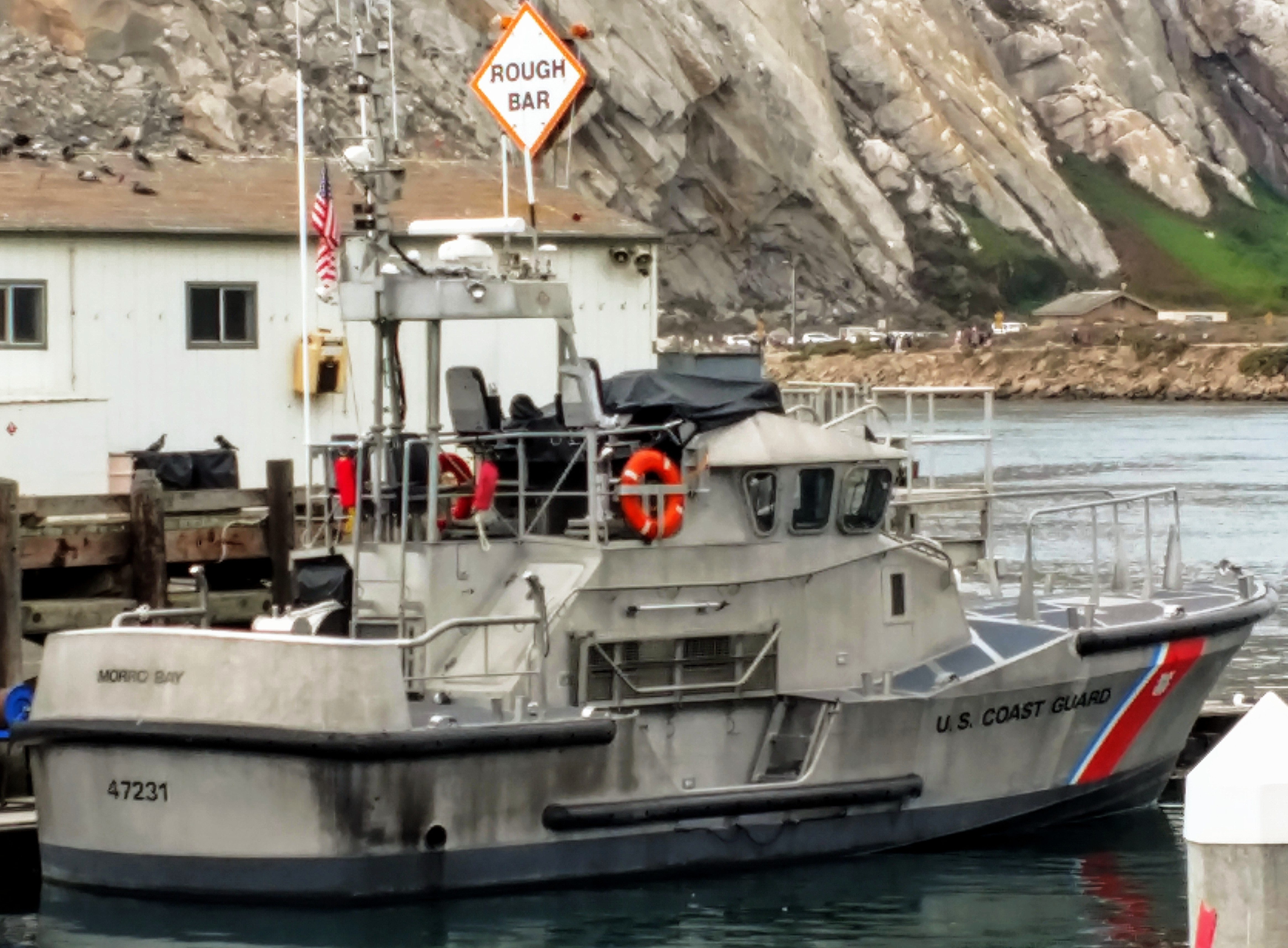
Standard lifeboat of the United States Coast Guard
| Field | Value | ||||
|---|---|---|---|---|---|
| section1 | {{Infobox ship/image | ||||
| image | Coast Guard Boat in Morro Bay.jpg | ||||
| image_caption | *CG-47231*, a USCG 47' MLB in the surf zone off the coast of Morro Bay | ||||
| section2 | {{Infobox ship/class overview | ||||
| name | 47′ MLB | ||||
| builders | Textron Marine | ||||
| operators | * | ||||
| class_before | [44-foot motor lifeboat](44-foot-motor-lifeboat) | ||||
| cost | $1,214,300 | ||||
| in_service_range | 1997–present | ||||
| total_ships_planned | c. 227 | ||||
| total_ships_completed | 227 | ||||
| total_ships_active | 227 | ||||
| section3 | {{Infobox ship/characteristics | ||||
| displacement | 18 t | ||||
| length | 14.6 m | ||||
| beam | 4.27 m | ||||
| draft | 1.37 m | ||||
| propulsion | *2 × Detroit Diesel 6V92TA DDEC-IV engines, 435 hp each | ||||
| * usable fuel capacity <ref name | "uscg3" / | ||||
| speed | *25 kn maximum | ||||
| *{{convert | 22 | kn | mph km/h | lk | in}} cruising |
| range | 200 nmi cruising | ||||
| complement | 34 persons, 4 crew, 30 passengers | ||||
| armament | 1 × M240B machine gun (optional) |
-
Maritime Search and Rescue (Mexico)
-
1500 l usable fuel capacity
-
22 kn cruising The 47-foot MLB is the standard lifeboat of the United States Coast Guard (USCG). The 47′ MLB is the successor to the 44′ MLB, which were in service from 1963 until 2009.
Design
The 47′ MLB is designed to weather hurricane force winds and heavy seas, capable of surviving winds up to 60 kn, breaking surf up to 6 m and impacts up to three G's. If the boat should capsize, it self-rights in less than ten seconds with all equipment fully functional.
The boat's hull and superstructure are constructed entirely from 5456 marine grade aluminum. Designed with a hard chined deep "V" planing hull, the 47′ MLB exceeds its hull speed. The frame is composed of 17 vertical bulkhead frames, each of which is welded to the deck and hull, and five of which are watertight.
For the international version, Textron have modified the design slightly to use Caterpillar C12 diesel engines with Tier I emissions.
Employing "fly-by-wire" control systems, the boat can be operated from four different locations: two from the enclosed bridge, and two amidships from an open bridge. Because of the fly-by-wire system, the boat is controlled by joysticks instead of wheels.
Situated less than 1 ft above the water line are recessed retrieval wells, allowing for easier recovery of persons and jetsam, and easier boardings. A watertight survivor's compartment is equipped for comprehensive first aid. It is situated at the combined center of rotation of the ship. If needed, a light machine gun can be fitted at the front of the vessel.
Operating history
Textron Marine & Land Systems was awarded the prototype construction contract in 1988 and the first prototype was assigned hull number CG-47200, entering service in 1990, followed by the pre-production boats (CG-47201 through CG-47205), which were delivered in 1993 and 1994. After Textron was awarded the production contract in 1995, the first production MLB, CG-47206, was delivered in 1997. By 2003, Textron had delivered 117 47' MLBs to the USCG.
Textron also has been awarded international contracts for the 47' MLB from Egypt (2002, three delivered in 2005) and Mexico (2008, six delivered by 2011).
At Station Chatham where the 47-foot boat would draw too much to get over the bar, the 42-foot Near Shore Lifeboat was designed to replace the 44' MLB. The 42-foot near shore lifeboat were decommissioned in 2021 and replaced with a pair of 45-foot RB-M craft.
A service life extension program (SLEP) for the 47' MLB will extend their useful life by 20 years to 2047; the first boats to undergo the SLEP were returned in June 2023, and , 107 47' MLBs are planned to complete SLEP by 2030. The SLEP contract, which was awarded to Birdon Group in 2019, is being implemented at its facilities in Bellingham, Washington and Portland, Connecticut.
References
References
- (April 18, 2003). "47-foot Motor Lifeboat (MLB)". United States Coast Guard.
- (December 6, 2006). "USCG: About Us – Aircraft & Cutters". United States Coast Guard.
- "Foreign Military Sales: Motor Life Boat 47-Foot MLB". United States Coast Guard.
- (November 2007). "COMDTINST M16114.25B: 47FT MOTOR LIFEBOAT OPERATOR'S HANDBOOK". U.S. Department of Homeland Security, United States Coast Guard.
- Finucane, Martin. (May 8, 2009). "Coast Guard bids adieu to 44-foot boat". The Boston Globe.
- [http://www.uscg.mil/directives/cim/4000-4999/CIM_4081_12.pdf Operational Logistics Support Plan (OLSP) for the 47′ Motor Lifeboat (MLB)]
- (September 2003). "47-Foot Motor Lifeboat". Textron Marine & Land Systems.
- (March 2015). "Motor Lifeboat: versatile, proven, and ready for duty". -Textron Systems.
- Young, LT Stephanie. (November 30, 2012). "Shipmate of the Week — BMC William Lefever".
- Fraser, Doug. "Chatham rescue boats to be retired — replacement vessels are not rated for breaking surf".
- (June 29, 2023). "First 47-foot motor lifeboats delivered following design modification to service life extension program". Acquisition Directorate, United States Coast Guard.
- (20 August 2024). "Birdon Announces United States Coast Guard Extension of Motor Lifeboat (MLB) Contract". Birdon Group.
This article was imported from Wikipedia and is available under the Creative Commons Attribution-ShareAlike 4.0 License. Content has been adapted to SurfDoc format. Original contributors can be found on the article history page.
Ask Mako anything about 47-foot Motor Lifeboat — get instant answers, deeper analysis, and related topics.
Research with MakoFree with your Surf account
Create a free account to save articles, ask Mako questions, and organize your research.
Sign up freeThis content may have been generated or modified by AI. CloudSurf Software LLC is not responsible for the accuracy, completeness, or reliability of AI-generated content. Always verify important information from primary sources.
Report