From Surf Wiki (app.surf) — the open knowledge base
419th Flight Test Squadron

| Field | Value | |
|---|---|---|
| unit_name | 419th Flight Test Squadron | |
| image | 419th Flight Test Squadron - B-2 Spirit.jpg | |
| image_size | 300 | |
| caption | Squadron B-2 Spirit | |
| dates | 1942–1945; 1958–1962; 1989–present | |
| country | ||
| branch | ||
| type | Squadron | |
| role | Flight Testing | |
| command_structure | Air Force Materiel Command | |
| garrison | Edwards Air Force Base, California | |
| motto | Silent Sting | |
| battles | European Theater of Operations | |
| Mediterranean Theater of Operations | ||
| decorations | Distinguished Unit Citation | |
| Air Force Outstanding Unit Award | ||
| identification_symbol | [[File:419th Flight Test Squadron.jpg | 165px]] |
| identification_symbol_label | 419th Flight Test Squadron emblem | |
| identification_symbol_2 | [[File:419th Bombardment Squadron - Emblem.png | 165px]] |
| identification_symbol_2_label | Patch with 419th Bombardment Squadron emblem | |
| identification_symbol_3 | **ED** (1992-present) | |
| identification_symbol_3_label | Tail code | |
| aircraft_bomber | B-2 SpiritB-1 LancerB-52 Stratofortress |
Mediterranean Theater of Operations Air Force Outstanding Unit Award
The **419th Flight Test Squadron ** is a United States Air Force squadron. It is assigned to the 412th Operations Group, Air Force Materiel Command, stationed at Edwards Air Force Base, California.
During World War II, the 419th Bombardment Squadron was a Boeing B-17 Flying Fortress squadron, assigned to the 301st Bombardment Group of Fifteenth Air Force. It earned two Distinguished Unit Citations. In 1958, the squadron was activated as a Boeing B-47 Stratojet squadron as part of Strategic Air Command's nuclear force, but was discontinued four years later. In 1993, the squadron was consolidated with the 6519th Test Squadron, which had been conducting test operations at Edwards since 1989.
Mission
The 419th is responsible for developmental testing of Northrop Grumman B-2 Spirit, Rockwell B-1 Lancer, and Boeing B-52 Stratofortress strategic bombers. It conducts tests to extend the usable life of these airframes, upgrade their combat capabilities, and integrate new weapons systems into their operation. It works closely with Air Combat Command operational testing elements for these systems, often flying with them on the same missions. It receives overall testing oversight from the program management offices of these systems.
History
World War II
Initial organization and training
The first predecessor of the squadron was organized as the 29th Reconnaissance Squadron, one of the four Boeing B-17 Flying Fortress squadrons of the 301st Bombardment Group in February 1942. In April 1942, it was redesignated the 419th Bombardment Squadron, a heavy bomber unit. In late May, it moved to Alamogordo Army Air Field, New Mexico, although the air echelon operated from Muroc Army Air Base, flying antisubmarine patrols off the California coast until early June 1942. The ground echelon moved to Virginia to prepare for movement overseas, leaving for Fort Dix and the Port of Embarkation on 19 July. The air echelon left for Brainard Field, Connecticut in late June. The squadron ferried its Flying Fortresses via the North Atlantic ferry route as part of Operation Bolero, the build up of American forces in the United Kingdom. The squadron and its companion squadrons of the 301st Group were the first B-17F unit to arrive in England.
Operations from England
The ground and air echelons were reunited at RAF Chelveston on 19 August 1942. The squadron flew its first mission on 5 September 1942. From England it attacked targets primarily in France, including submarine pens, airfields, railroad targets, and bridges. On 14 September, the 301st Group and its squadrons were reassigned to XII Bomber Command in preparation for Operation Torch, the invasion of North Africa, but they continued to operate under the control of VIII Bomber Command. Between 20 and 23 November 1942, the air echelon moved forward to bases in southeastern England, from which it flew directly to Tafaraoui Airfield, Algeria. The ground echelon sailed for Algeria from Liverpool on 8 December 1942.
Combat in the Mediterranean

Until August 1943, the squadron operated from airfields in Algeria, bombing docks, shipping facilities, airfields and marshalling yards in Tunisia, Sicily, and Sardinia. It also attacked enemy ships operating between Sicily and Tunisia. On 6 April 1943, the squadron withstood heavy flak from shore defenses and enemy vessels, when it attacked a merchant convoy near Bizerte, Tunisia carrying supplies essential for the Axis defense of Tunisia. For this mission it was awarded the Distinguished Unit Citation (DUC). In May and June, it participated in Operation Corkscrew, the bombing and invasion of Pantelleria, prior to the invasion of Sicily.
Starting in July 1943, the squadron began flying numerous missions to targets in Italy, moving forward to Oudna Airfield, Tunisia in early August. In November 1943, strategic and tactical forces in the Mediterranean were divided and the squadron became part of Fifteenth Air Force. It moved to Italy in December 1943 and in February 1944 it was established at Lucera Airfield, Italy, from which it would conduct combat operations for the remainder of the war. From its Italian base, it concentrated on the strategic bombing campaign against Germany, attacking oil centers, lines of communications, and industrial areas in Austria, Bulgaria, Czechoslovakia, France, Germany, Greece, Hungary, Italy, Poland, Romania, and Yugoslavia. On 23 February 1944, it participated in an attack on the Messerschmitt aircraft factory at Regensburg, succeeding despite "viscous" attacks by enemy interceptors. For this mission, it was awarded a second DUC.
The 419th also flew air support missions near Anzio and Monte Cassino, provided cover for Operation Dragoon, the invasion of southern France and the advance of the Red Army in the Balkans and the Allies of World War II advances in the Po Valley.
Return to the United States
Following V-E Day, the squadron remained in Italy until July 1945. In August, it was designated as a "very heavy" unit in preparation for conversion to the Boeing B-29 Superfortress and deployment to Pacific Theater. Before the squadron arrived at its planned training base, Pyote Army Air Field, Texas, Japan had surrendered and there was no need for additional bomber units. The squadron was inactivated in October 1945, shortly before Pyote ended training operations and became an aircraft storage depot.
Strategic Air Command

From 1958, the Boeing B-47 Stratojet wings of Strategic Air Command (SAC) began to assume an alert posture at their home bases, reducing the amount of time spent on alert at overseas bases. The SAC alert cycle divided itself into four parts: planning, flying, alert and rest to meet General Thomas S. Power's initial goal of maintaining one third of SAC’s planes on fifteen minute ground alert, fully fueled and ready for combat to reduce vulnerability to a Soviet missile strike. To implement this new system B-47 wings reorganized from three to four squadrons. The 419th was activated at Lockbourne Air Force Base as the fourth squadron of the 301st Bombardment Wing. The alert commitment was increased to half the squadron's aircraft in 1962 and the four squadron pattern no longer met the alert cycle commitment, so the squadron was inactivated on 1 January 1962.
Flight test squadron
The second predecessor of the squadron was organized as the 6519th Test Squadron at Edwards Air Force Base in October 1989, taking over the Air Force Flight Test Center's Strategic Systems Division testing of the Boeing B-52G and B-52H Stratofortress. It gained the Rockwell B-1 Lancer program from the 6510th Test Squadron in 1991. On 1 October 1992, the 6519th and 419th squadrons were consolidated, with the consolidated unit redesignating as the 419th Test Squadron the following day.
The squadron is the Air Force element of the Global Power Bomber Combined Test Force. It also operated the Unmanned Aerial Vehicle (UAV) test program General Atomics MQ-1 Predator from 1994 until 2000, when the UAV program was realigned.

The squadron added the Northrop Grumman B-2 Spirit program from the inactivating 420th Flight Test Squadron on 30 December 1997. It has also tested external weapons loads on the B-1 Lancer, in tests to increase its weapons loads both internally and by adding an external weapons carriage capability. It has also tested the Litening targeting pod on the B-52.
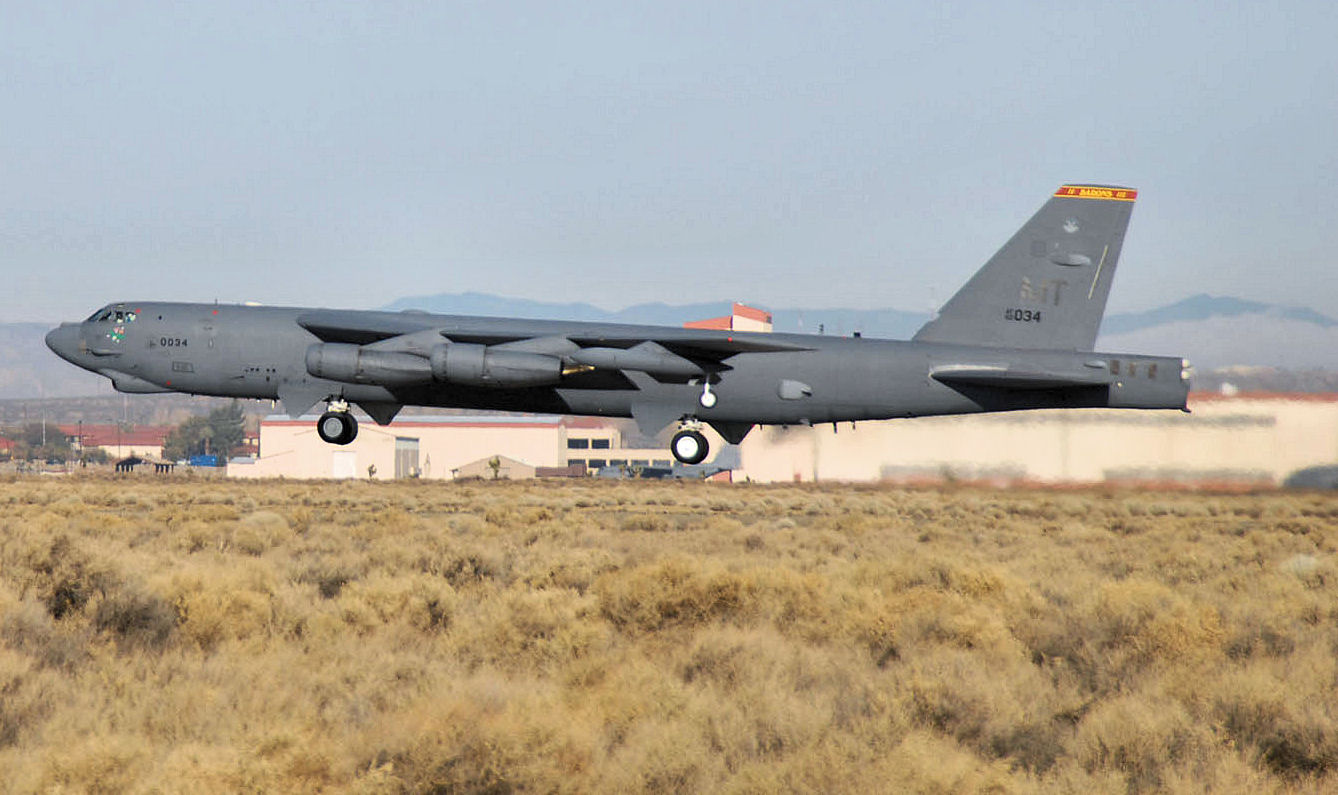
The squadron has also performed tests with hypersonic vehicles, launching them from its B-52s. In May 2010, a squadron launched a Boeing X-51 Waverider experimental unmanned scramjet. On 14 May 2022, a squadron B-52 launched a AGM-183A Air-launched Rapid Response Weapon, another hypersonic weapon.
In the spring of 2015, the 445th Flight Test Squadron, which had been conducting "Test Operations" at Edwards was inactivated and its mission transferred to other test squadrons. In this reorganization, the squadron gained the Beechcraft C-12 Huron Formal Training Unit.
Lineage
; 419th Bombardment Squadron
- Constituted as the 29th Reconnaissance Squadron (Heavy) on 28 January 1942 : Activated on 3 February 1942 : Redesignated 419th Bombardment Squadron (Heavy) on 22 April 1942 : Redesignated 419th Bombardment Squadron, Heavy c. 6 March 1944 : Redesignated 419th Bombardment Squadron, Very Heavy on 5 August 1945 : Inactivated on 15 October 1945
- Redesignated 419th Bombardment Squadron, Medium on 20 August 1958 : Activated on 1 December 1958 : Discontinued and inactivated on 1 January 1962
- Consolidated with the 6519th Test Squadron as the 6519th Test Squadron on 1 October 1992
; 419th Flight Test Squadron
- Designated as the 6519th Test Squadron and activated on 10 March 1989
- Consolidated with the 419th Bombardment Squadron on 1 October 1992 : Redesignated 419th Test Squadron on 2 October 1992 : Redesignated 419th Flight Test Squadron on 1 March 1994
Assignments
- 301st Bombardment Group, 3 Feb 1942 – 15 Oct 1945
- 301st Bombardment Wing, 1 Dec 1958 – 1 Jan 1962
- 6510th Test Wing (later 412th Test Wing), 10 March 1989
- 412th Operations Group, 1 Oct 1993 – present
Stations
- Geiger Field, Washington, 3 February 1942
- Alamogordo Army Air Field, New Mexico, 28 May 1942 (operated from Muroc Army Air Base, California, c. 28 May - 14 June 1942)
- Richard E. Byrd Field, Virginia, 21 June - 19 July 1942
- RAF Chelveston (AAF-105), England, 19 August 1942
- Tafaraoui Airfield, Algeria, 24 November 1942
- Biskra Airfield, Algeria, 21 December 1942
- Ain M'lila Airfield, Algeria, 16 January 1943
- Saint-Donat Airfield, Algeria, 8 March 1943
- Oudna Airfield, Tunisia, 6 August 1943
- Cerignola Airfield, Italy, 10 December 1943
- Lucera Airfield, Italy, 2 February 1944 – July 1945
- Sioux Falls Army Air Field, South Dakota, 28 July 1945
- Mountain Home Army Air Field, Idaho, 17 August 1945
- Pyote Army Air Field, Texas, 23 August – 15 October 1945
- Lockbourne Air Force Base, Ohio, 1 December 1958 – 1 January 1962
- Edwards Air Force Base, California, 10 March 1989 – present
Aircraft
- Boeing B-17 Flying Fortress, 1942–1945
- Boeing B-47 Stratojet, 1959–1961
- Boeing B-52 Stratofortress, 1989–present
- Rockwell B-1 Lancer, 1991–present
- General Atomics MQ-1 Predator, 1994–2000
- Northrop Grumman B-2 Spirit, 1997–present
- Beechcraft C-12 Huron, 2015 – unknown
Awards and campaigns
| Campaign Streamer | Campaign | Dates | Notes | |
|---|---|---|---|---|
| [[File:American Campaign Streamer.png | 200px]] | Antisubmarine | 28 May–24 June 1942 | 419th Bombardment Squadron |
| [[Image:Streamer EAMEC.PNG | 200px]] | Air Offensive, Europe | 19 August 1942–24 November 1942 | 419th Bombardment Squadron |
| [[Image:Streamer EAMEC.PNG | 200px]] | Air Combat, EAME Theater | 19 August 1942–11 May 1945 | 419th Bombardment Squadron |
| [[Image:Streamer EAMEC.PNG | 200px]] | Egypt-Libya | 24 November 1942 1942–12 February 1943 | 419th Bombardment Squadron |
| [[Image:Streamer EAMEC.PNG | 200px]] | Tunisia | 24 November 1942–13 May 1943 | 419th Bombardment Squadron |
| [[Image:Streamer EAMEC.PNG | 200px]] | Sicily | 14 May 1943–17 August 1943 | 419th Bombardment Squadron |
| [[Image:Streamer EAMEC.PNG | 200px]] | Naples-Foggia | 18 August 1943–21 January 1944 | 419th Bombardment Squadron |
| [[Image:Streamer EAMEC.PNG | 200px]] | Anzio | 22 January 1944–24 May 1944 | 419th Bombardment Squadron |
| [[Image:Streamer EAMEC.PNG | 200px]] | Rome-Arno | 22 January 1944–9 September 1944 | 419th Bombardment Squadron |
| [[Image:Streamer EAMEC.PNG | 200px]] | Central Europe | 22 March 1944–21 May 1945 | 419th Bombardment Squadron |
| [[Image:Streamer EAMEC.PNG | 200px]] | Normandy | 6 June 1944–24 July 1944 | 419th Bombardment Squadron |
| [[Image:Streamer EAMEC.PNG | 200px]] | Northern France | 25 July 1944–14 September 1944 | 419th Bombardment Squadron |
| [[Image:Streamer EAMEC.PNG | 200px]] | Southern France | 15 August 1944–14 September 1944 | 419th Bombardment Squadron |
| [[Image:Streamer EAMEC.PNG | 200px]] | North Apennines | 10 September 1944–4 April 1945 | 419th Bombardment Squadron |
| [[Image:Streamer EAMEC.PNG | 200px]] | Rhineland | 15 September 1944–21 March 1945 | 419th Bombardment Squadron |
| [[Image:Streamer EAMEC.PNG | 200px]] | Po Valley | 3 April 1945–8 May 1945 | 419th Bombardment Squadron |
References
Notes
; Explanatory notes
; Citations
Bibliography
References
- Endicott, p. 796
- (7 April 2008). "Factsheet 419 Flight Test Squadron". Air Force Historical Research Agency.
- Salasovich, Maj Richard and Harmer, Capt Paul, ''A Year of Bomber Test: Legacy and Lessons Learned'', 2005
- Maurer, ''Combat Squadrons'', pp. 436-439, 514
- Maurer, ''Combat Units'', pp. 173-174
- Maurer, ''Combat Squadrons'', p. 514
- Freeman, p. 247
- Freeman, p. 13
- (July 2017)
- Pimlott, {{page needed. (July 2017)
- Schake, p. 220 (note 43)
- (1 April 1975). "Abstract (Unclassified), History of the Strategic Bomber since 1945 (Top Secret, downgraded to Secret)". Air Force History Index.
- No byline. (May 16, 2022). "Air Force conducts successful hypersonic weapon test". Space Operations Command Public Affairs.
- No byline. (January 9, 2021). "The Year in Review: Edwards Air Force Base". Aerotech News.
- "419th Flight Test Squadron B-52 LITENING TRG Ground Las[]er Testing". 412 Test Wing Public Affairs.
- (June 2, 2010). "X51 Historic Hypersonic Flight". 95th Air Base Wing Public Affairs.
- (31 March 2023). "US Air Force drops Lockheed hypersonic missile after failed tests". DefenseNews.
- Fabara, Jet. (May 7, 2015). "Test Ops bids farewell, consolidates into three other units". 412th Test Wing Public Affairs.
- Station number in Anderson, p. 19.
- (July 2017)
This article was imported from Wikipedia and is available under the Creative Commons Attribution-ShareAlike 4.0 License. Content has been adapted to SurfDoc format. Original contributors can be found on the article history page.
Ask Mako anything about 419th Flight Test Squadron — get instant answers, deeper analysis, and related topics.
Research with MakoFree with your Surf account
Create a free account to save articles, ask Mako questions, and organize your research.
Sign up freeThis content may have been generated or modified by AI. CloudSurf Software LLC is not responsible for the accuracy, completeness, or reliability of AI-generated content. Always verify important information from primary sources.
Report