From Surf Wiki (app.surf) — the open knowledge base
375th Bombardment Squadron
| Field | Value | |
|---|---|---|
| unit_name | 375th Bombardment Squadron | |
| image | Strategic Air Command B-47 Stratojets - 020903-o-9999r-001.jpg | |
| image_size | 300 | |
| caption | Strategic Air Command B-47 Stratojets as flown by the squadron | |
| dates | 1942–1946; 1947–1951; 1951–1961 | |
| country | ||
| branch | ||
| role | Bombardment | |
| battles | China Burma India Theater | |
| decorations | Distinguished Unit Citation | |
| Air Force Outstanding Unit Award | ||
| identification_symbol | [[File:375th Bombardment Squadron - Emblem.png | 165px]] |
| identification_symbol_label | 375th Bombardment Squadron emblem |
Air Force Outstanding Unit Award
The 375th Bombardment Squadron is an inactive United States Air Force unit. Its last assignment was with 308th Bombardment Wing at Plattsburgh Air Force Base, New York.
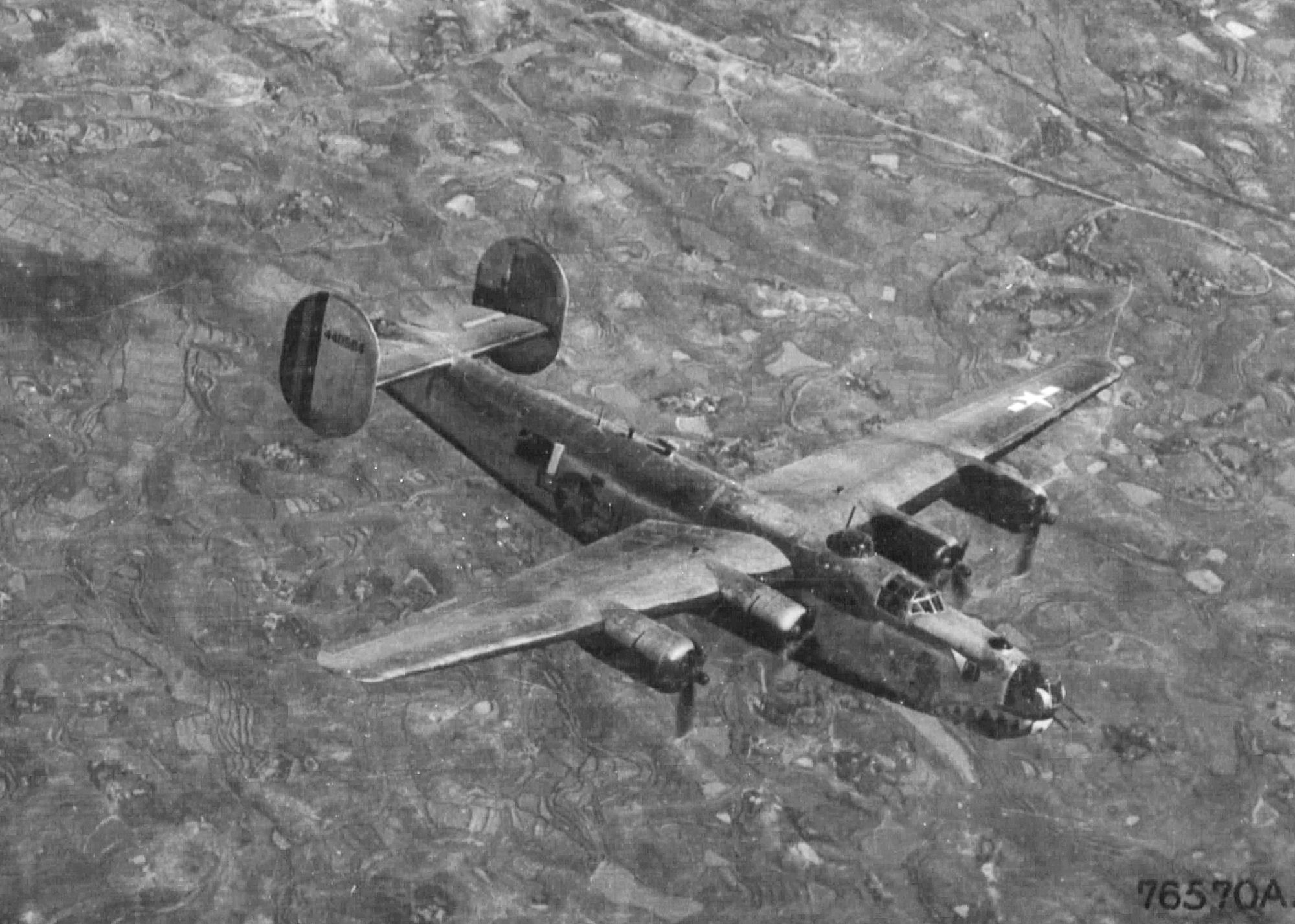
The squadron was first activated in April 1942. After training in the United States, the squadron deployed to China in early 1943. It engaged in combat, primarily in China and Southeast Asia until June 1945, when it assumed a mainly transport role. It was awarded two Distinguished Unit Citations for its operations in China and its attacks on Japanese shipping. At the end of 1945 it returned to the United States for inactivation.
The squadron was redesignated the 375th Reconnaissance Squadron and activated in Alaska in 1947. It was inactivated in 1949. It returned to its bombardment designation in 1951 and operated Boeing B-47 Stratojets for Strategic Air Command. In 1959 it moved as part of a test of a "super wing" concept, but was not operational until in inactivated in 1961.
History
Initial organization and training
The squadron was activated at Gowen Field, Idaho on 15 April 1942 as the 375th Bombardment Squadron, one of the four original squadrons of the 308th Bombardment Group. As the squadron was forming and beginning its training in Consolidated B-24 Liberators, at Alamogordo Army Air Field, New Mexico in August 1942, almost all its personnel were transferred to the 330th Bombardment Group.
The following month, a fresh cadre taken from the 39th Bombardment Group joined the group. In addition to its own training activities, at the beginning of October, the unit was briefly designated as an Operational Training Unit The squadron began its movement to the China Burma India Theater in January 1943. The air echelon ferried its Liberators across the Atlantic and Africa, leaving from Morrison Field, while the ground echelon moved by ship across the Pacific.
Combat operations
In late March 1943, the squadron arrived at Chengkung Airfield, China. In order to prepare for and sustain combat operations in China, the squadron had to conduct numerous flights over the Hump transporting gasoline, lubricants, ordnance, spare parts and the other items it needed. The 375th supported Chinese ground forces and attacked airfields, coal yards, docks, oil refineries and fuel dumps in French Indochina. It attacked shipping, mined rivers and ports and bombed maintenance shops and docks at Rangoon, Burma and attacked Japanese shipping in the East China Sea, Formosa Straits, South China Sea and Gulf of Tonkin. On 21 August 1943, the squadron conducted an unescorted bombing attack on docks and warehouses at Hankow, China, pressing its attack despite heavy flak and fighter opposition. For this mission it was awarded a Distinguished Unit Citation (DUC). Its operations interdicting Japanese shipping in 1944 and 1945 earned it a second (DUC).
The squadron moved to Rupsi Airfield, Assam, India in June 1945. Its mission again was primarily air transport as it ferried gasoline and supplies from there back into China. The unit sailed for the United States in October 1945, and it was inactivated at the Port of Embarkation on 6 January 1946.
Weather reconnaissance

The squadron was reactivated at Ladd Field, Alaska on 15 October 1947 as the 375th Reconnaissance Squadron, an Air Weather Service weather reconnaissance squadron, The squadron performed weather reconnaissance. In March 1949, the squadron moved to Eielson Air Force Base, Alaska, where it was inactivated in February 1951 and its personnel and equipment transferred to the 59th Strategic Reconnaissance Squadron.
Strategic Air Command
It was reactivated a few months later in October as the 375th Bombardment Squadron with new Boeing B-47E Stratojet swept-wing medium bombers, capable of flying at high subsonic speeds and primarily designed for penetrating the airspace of the Soviet Union. In the early late 1950s, the B-47 was considered to be reaching obsolescence and was being phased out of SAC's strategic arsenal. B-47s began being sent to AMARC at Davis-Monthan in July 1959 and the squadron went non-operational. Was inactivated on 25 June 1961.
Lineage
- Constituted as the 375th Bombardment Squadron (Heavy) on 28 January 1942 : Activated on 15 April 1942 : Redesignated 375th Bombardment Squadron, Heavy in 1944 : Inactivated on 6 January 1946
- Redesignated 375th Reconnaissance Squadron (Very Long Range, Weather) on 16 September 1947 : Activated on 15 October 1947 : Inactivated on 21 February 1951
- Redesignated 375th Bombardment Squadron, Medium on 4 October 1951 : Activated on 10 October 1951 : Discontinued and inactivated on 25 June 1961
Assignments
- 308th Bombardment Group, 15 April 1942 – 6 January 1946
- 7th Weather Group (later 2107th Air Weather Group), 15 October 1947 – 21 February 1951
- 308th Bombardment Group, 10 October 1951 (attached to 21st Air Division until 17 April 1952)
- 308th Bombardment Wing, 16 June 1952 – 25 June 1961
Stations
- Gowen Field, Idaho, 15 April 1942
- Davis-Monthan Field, Arizona, 18 June 1942
- Alamogordo Army Air Field, New Mexico, 24 July 1942
- Davis-Monthan Field, Arizona, 28 August 1942
- Wendover Field, Utah, 1 October 1942
- Pueblo Army Air Base, Colorado, 1 December 1942 – 2 January 1943
- Chengkung Airfield, China, 20 March 1943
- Hsinching Airfield, China, 18 February 1945
- Rupsi Airfield, India, 27 June-14 October 1945
- Camp Kilmer, New Jersey, 5–6 January 1946
- Ladd Field, Alaska, 15 October 1947 (one flight operated from Fairfield-Suisun Army Air Field, California, and later from Shemya Air Force Base, Alaska, 15 October 1947-15 May 1949)
- Eielson Air Force Base, Alaska, 6 March 1949 – 21 February 1951
- Forbes Air Force Base, Kansas, 10 October 1951
- Hunter Air Force Base, Georgia, 17 April 1952
- Plattsburgh Air Force Base, New York, 15 July 1959 – 25 June 1961
Aircraft
- Douglas B-18 Bolo, 1942
- Consolidated B-24 Liberator, 1942–1945
- Boeing B-29 Superfortress, 1947–1951, 1951-1952
- Boeing RB-29 Superfortress, 1947–1951
- Boeing WB-29 Superfortress, 1947–1951
- Douglas C-47 Skytrain, 1947–1951
- Boeing B-47 Stratojet, 1953–1959
References
Notes
; Explanatory notes
; Citations
Bibliography
References
- Maurer, ''Combat Squadrons'', p. 464
- Maurer, ''Combat Squadrons'', pp. 461-464, 521-522
- Maurer, ''Combat Units'', pp. 182-184
- (2012). "308th Bombardment Group: China-Burma-India 1942-1945". Tony Strotman.
- assuming the personnel and [[Boeing B-29 Superfortress]]es of the [[59th Reconnaissance Squadron]], which was simultaneously inactivated.Markus, ''et al.'', p. 148
This article was imported from Wikipedia and is available under the Creative Commons Attribution-ShareAlike 4.0 License. Content has been adapted to SurfDoc format. Original contributors can be found on the article history page.
Ask Mako anything about 375th Bombardment Squadron — get instant answers, deeper analysis, and related topics.
Research with MakoFree with your Surf account
Create a free account to save articles, ask Mako questions, and organize your research.
Sign up freeThis content may have been generated or modified by AI. CloudSurf Software LLC is not responsible for the accuracy, completeness, or reliability of AI-generated content. Always verify important information from primary sources.
Report