From Surf Wiki (app.surf) — the open knowledge base
365 Crete earthquake
Eastern Mediterranean natural disaster

Eastern Mediterranean natural disaster
| Field | Value | |||||||
|---|---|---|---|---|---|---|---|---|
| title | 365 Crete earthquake | |||||||
| pre-1900 | yes | |||||||
| local-date | ||||||||
| local-time | Sunrise | |||||||
| map2 | {{Location map+ | Mediterranean | ||||||
| {{Location map~ | Mediterranean | lat | 41.01 | long=28.96 | label=Constantinople | label_size=100 | position=top | mark=Green pog.svg}} |
| {{Location map~ | Mediterranean | lat | 32.9 | long=13.19 | label=Tripoli | position=left | label_size=100 | mark=Green pog.svg}} |
| {{Location map~ | Mediterranean | lat | 31.198 | long=29.9192 | label=Alexandria | label_size=100 | mark=Green pog.svg}} | |
| {{Location map~ | Mediterranean | lat | 35.0 | long=23.0 | mark=Bullseye1.png | marksize=40}} | ||
| width | 250 | |||||||
| float | right | |||||||
| relief | yes}} | |||||||
| magnitude | 8.5+ | |||||||
| location | near Crete | |||||||
| fault | *Unknown* (HSZ) | |||||||
| countries affected | Roman Empire | |||||||
| tsunami | Yes | |||||||
| intensity | ||||||||
| casualties | "Many thousands" | |||||||
| affected | Mediterranean Basin |
| pre-1900 = yes | local-date = | local-time = Sunrise
The 365 Crete earthquake occurred at about sunrise on 21 July 365 in the Eastern Mediterranean, with an assumed epicentre near Crete. Geologists today estimate the undersea earthquake to have been a moment magnitude 8.5 or higher. It caused widespread destruction in the central and southern Diocese of Macedonia (modern Greece), Africa Proconsularis (northern Libya), Egypt, Cyprus, Sicily, and Hispania (Spain). On Crete, nearly all towns were destroyed.
The earthquake was followed by a tsunami which devastated the southern and eastern coasts of the Mediterranean, particularly Libya, Alexandria, and the Nile Delta, killing thousands and hurling ships 3 km inland. The quake left a deep impression on the late antique mind, and numerous writers of the time referred to the event in their works.
Geological evidence
Recent (2001) geological studies view the 365 Crete earthquake in connection with a clustering of major seismic activity in the Eastern Mediterranean between the fourth and sixth centuries which may have reflected a reactivation of all major plate boundaries in the region. The earthquake is thought to be responsible for an uplift of 9 m of the island of Crete, which is estimated to correspond to a seismic moment of 1e22 Nm, or 8.6 on the moment magnitude scale. An earthquake of such a magnitude exceeds all modern ones known to have affected the region.
Carbon dating shows that corals on the coast of Crete were lifted 10 m and clear of the water in one massive push. This indicates that the tsunami of 365 was generated by an earthquake in a steep fault in the Hellenic Trench near Crete. Scientists estimate that such a large uplift is likely to occur only once in 5,000 years; however, the other segments of the fault could slip on a similar scale—and this could happen every 800 years or so. It is uncertain whether "one of the contiguous patches might slip in the future."
Sedimentation increased dramatically in some areas of the Mediterranean Sea, while other areas had coastal sediments moved to deep waters.
Literary evidence
Historians continue to debate whether ancient sources refer to a single catastrophic earthquake in 365, or whether they represent a historical amalgamation of a number of earthquakes occurring between 350 and 450. The interpretation of the surviving literary evidence is complicated by the tendency of late antique writers to describe natural disasters as divine responses or warnings to political and religious events. In particular, the virulent antagonism between rising Christianity and paganism at the time led contemporary writers to distort the evidence. Thus, the Sophist Libanius and the church historian Sozomenus appear to conflate the great earthquake of 365 with other lesser ones to present it as either divine sorrow or wrath—depending on their viewpoint—for the death of Emperor Julian, who had tried to restore the pagan religion two years earlier.
On the whole, however, the relatively numerous references to earthquakes in a time which is otherwise characterized by a paucity of historical records strengthens the case for a period of heightened seismic activity. Kourion on Cyprus, for example, is known to have been hit then by five strong earthquakes within a period of eighty years, leading to its permanent destruction.
Archeology
Archeological evidence for the particularly devastating effect of the 365 earthquake is provided by a survey of excavations which document the destruction of most late antique towns and cities in the Eastern and Southern Mediterranean around 365.
Tsunami
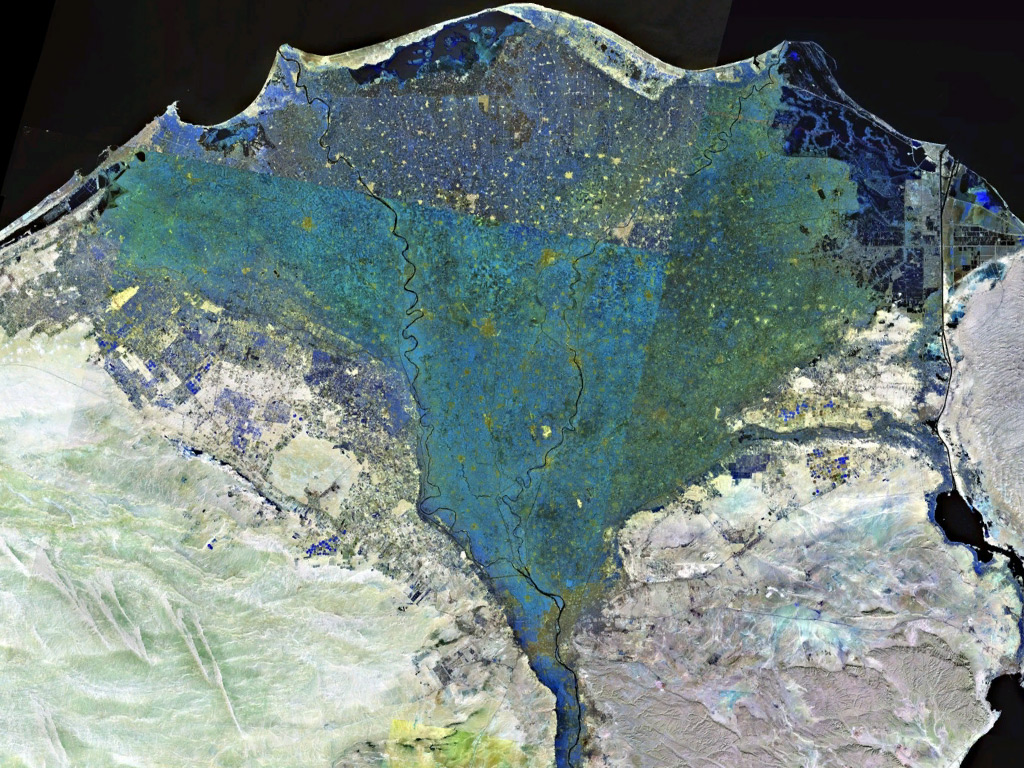
The Roman historian Ammianus Marcellinus described in detail the tsunami that hit Alexandria and other places in the early hours of 21 July 365. His account is particularly noteworthy for clearly distinguishing the three main phases of a tsunami, namely an initial earthquake, the sudden retreat of the sea and an ensuing gigantic wave rolling inland:
The tsunami in 365 was so devastating that the anniversary of the disaster was still commemorated annually at the end of the sixth century in Alexandria as a "day of horror".
According to the Life of Hilarion, a hagiography, the eponymous saint saved the town of Epidauros in the Adriatic Sea from the waves of the tsunami by raising his hands in the sign of the cross; this has been often taken uncritically as evidence that the tsunami also affected the Adriatic, though there is little evidence for that.
Gallery
Effects of the earthquake visible in the ancient remains:
File:Raised beach western Crete.jpg|Raised beach 2 km west of Paleochora (Crete) showing wave-cut notch and sea caves uplifted by about 9 m during the earthquake Image:Seaward Baths, Sabratha.JPG|Sea advanced close to the baths at Sabratha (Libya) Image:365 Crete Earthquake, Apollonia, Pier (Jona).JPG|Submerged harbors at Apollonia (Libya) Image:Phalasarna Quay.jpg|The no-longer-submerged harbor in Phalasarna (Crete)
Footnotes
References
- {{Citation | hdl-access = free
- {{Citation
References
- Stiros, S. C.. (2010). "The 8.5+ magnitude, AD365 earthquake in Crete: Coastal uplift, topography changes, archaeological and historical signature". Quaternary International.
- (1972). "Comments for the Significant Earthquake". NOAA National Centers for Environmental Information.
- [https://earthquake.usgs.gov/learning/today/his_07_21.php Today in Earthquake History] {{webarchive. link. (2007-03-25)
- {{harnvb. Stiros. 2001
- {{harnvb. Stiros. 2001
- {{harnvb. Stiros. 2001
- Moreno, M. E.. "Los estudios de sismicidad histórica en Andalucía: Los terremotos históricos de la Provincia de Almería". Instituto Andaluz de Geofísica y Prevención de Desastres Sísmicos.
- [[Ammianus Marcellinus]], [http://www.tertullian.org/fathers/ammianus_26_book26.htm#C9 "Res Gestae"], 26.10.15–19
- For summaries of the sources, see: {{harnvb. Stiros. 2001
- Jeff Hecht. (15 March 2008). "Mediterranean's 'horror' tsunami may strike again". [[New Scientist]].
- (2008). "Eastern Mediterranean tectonics and tsunami hazard inferred from the AD 365 earthquake". Nature Geoscience.
- (December 2013). "Mediterranean megaturbidite triggered by the AD 365 Crete earthquake and tsunami". Scientific Reports.
- {{harnvb. Stiros. 2001
- {{harnvb. Kelly. 2004
- {{harnvb. Stiros. 2001
- {{harnvb. Stiros. 2001
- Soren, D.. (1988). "The Day the World Ended at Kourion. Reconstructing an Ancient Earthquake". [[National Geographic (magazine).
- {{harnvb. Kelly. 2004
- {{harnvb. Stiros. 2001
This article was imported from Wikipedia and is available under the Creative Commons Attribution-ShareAlike 4.0 License. Content has been adapted to SurfDoc format. Original contributors can be found on the article history page.
Ask Mako anything about 365 Crete earthquake — get instant answers, deeper analysis, and related topics.
Research with MakoFree with your Surf account
Create a free account to save articles, ask Mako questions, and organize your research.
Sign up freeThis content may have been generated or modified by AI. CloudSurf Software LLC is not responsible for the accuracy, completeness, or reliability of AI-generated content. Always verify important information from primary sources.
Report