From Surf Wiki (app.surf) — the open knowledge base
329th Combat Crew Training Squadron
| Field | Value | |
|---|---|---|
| unit_name | 329th Combat Crew Training Squadron | |
| image | B-52 Stratofortress landing.jpg | |
| image_size | 300 | |
| caption | B-52 Stratofortress as flown by the squadron | |
| dates | 1942-1971; 1986-1994 | |
| country | ||
| branch | ||
| role | Strategic bomber training | |
| motto | Universal Air Enforced: Peace and Law (1956-1971) | |
| Where it All Begins (1986-1994) | ||
| battles | European Theater of Operations | |
| Mediterranean Theater of Operations | ||
| decorations | Distinguished Unit Citation | |
| Air Force Outstanding Unit Award | ||
| identification_symbol | [[File:329th Combat Crew Training Squadron-SAC - Emblem.png | 150px]] |
| identification_symbol_label | Patch with 329th Combat Crew Training Squadron emblem | |
| identification_symbol_2 | [[File:329 Bombardment Sq (SAC) emblem.png | 150px]] |
| identification_symbol_2_label | 329th Bombardment Squadron emblem | |
| identification_symbol_3 | [[File:329 Bombardment Sq emblem.png | 150px]] |
| identification_symbol_3_label | World War II squadron emblem | |
| identification_symbol_4 | RE | |
| identification_symbol_4_label | World War II fuselage code |
Where it All Begins (1986-1994) Mediterranean Theater of Operations Air Force Outstanding Unit Award
The 329th Combat Crew Training Squadron is an inactive United States Air Force unit. It was last assigned to the 93d Operations Group at Castle Air Force Base, California, where it was responsible for the training of Boeing B-52 Stratofortress aircrews until inactivating on 1 July 1994.
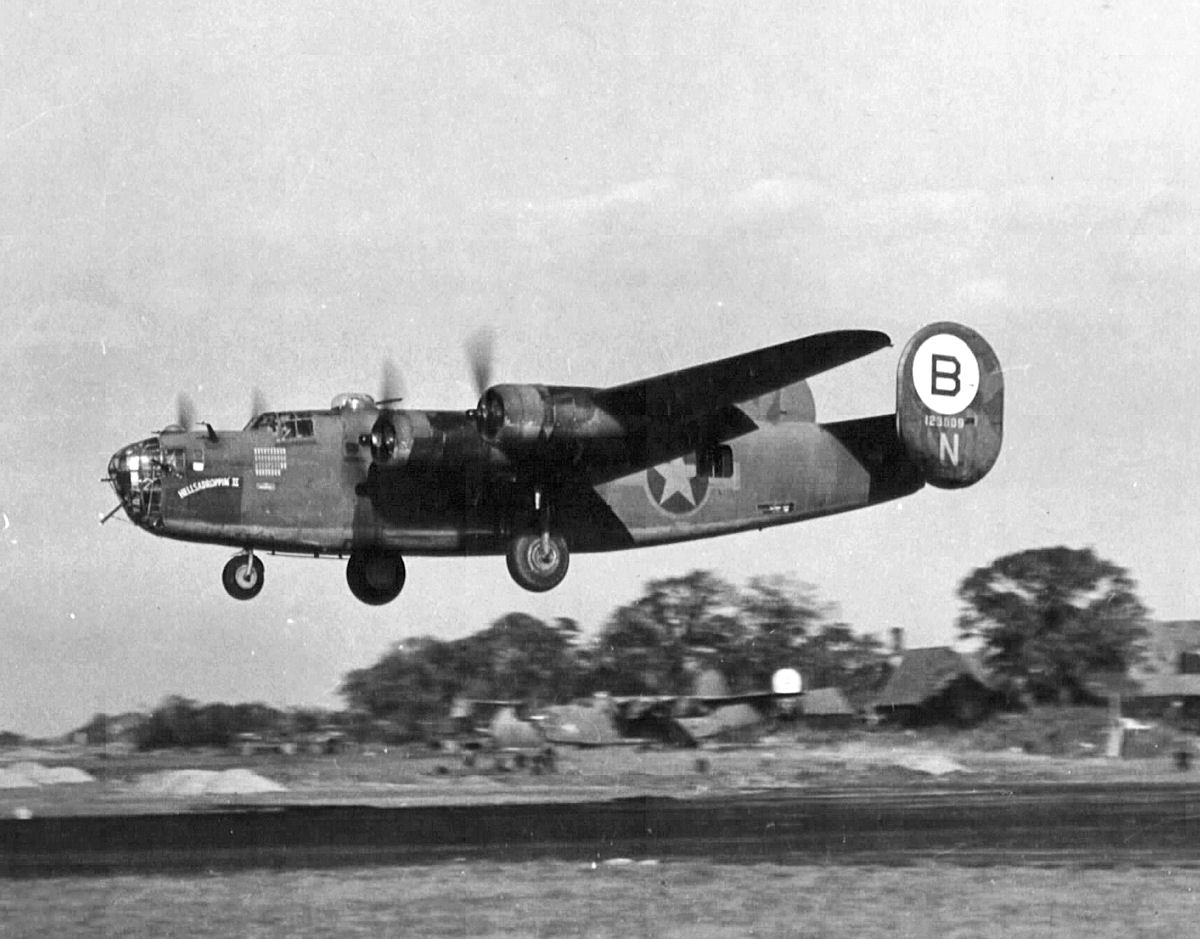
The squadron was first activated as the 329th Bombardment Squadron in 1942 and trained with Consolidated B-24 Liberator heavy bombers. During training, it also flew antisubmarine patrols over the Gulf of Mexico. It was one of the first bomber units to deploy to the European Theater of Operations, to participate in the strategic bombing campaign against Germany. In 1943, its air echelon moved to reinforce the bomber force in the Mediterranean Theater of Operations, where it earned a Distinguished Unit Citation for its participation in Operation Tidal Wave. Following V-E Day, the squadron returned to the United States to retrain as a Boeing B-29 Superfortress unit.
In 1946, the squadron moved to Castle Field, which was to be its home for the rest of its existence. It trained for bomber operations and also conducted the flying phase of B-52 aircrew training until inactivating in 1971. It was reactivated at Castle in the training mission in 1986 as the 329th Strategic Bomber Training Squadron.
History
World War II
Initial organization and training in the US
The squadron was activated at Barksdale Field, Louisiana in March 1942 as one of the original four squadrons of the 93rd Bombardment Group. It began Phase I training conducted by the 44th Bombardment Group with Consolidated B-24 Liberators at Barksdale, then moved to Page Field, Florida for final training, preparing to deploy to the European Theater of Operations. From Page, the squadron also flew antisubmarine patrols over the Gulf of Mexico and the Caribbean Sea until July, when it began preparing for movement to England.
Combat in Europe
The squadron assembled at RAF Alconbury in early September, where it was part of the first B-24 bombardment group to become part of VIII Bomber Command in England. The remaining elements of the squadron at Bungay returned to RAF Hardwick in June 1943.
The squadron also engaged in day bombing operations, joining formations of the 44th Bombardment Group, the only other B-24 group in Eighth Air Force, while the other squadrons of the 93rd were in Africa. Norden bombsights were removed from unit B-24s and a modified gunsight, optimized for low level attacks, replaced them. Squadron Liberators that had been modified for night operations were sent to another unit and bomb bay tanks were installed in others.
Deployments to the Mediterranean Theater

In June, the air echelon deployed to Benina Airfield, Libya. From this base it initially supported Operation Husky, the invasion of Sicily, flying ten missions. Following this, the unit resumed low level training in Libya. On 1 August, the squadron participated in Operation Tidal Wave, the low level attack on oil refineries near Ploiești, where 60% of the Axis fuel was produced. This attack involved a round trip of over 2,000 miles, which was beyond the range of B-17s, but within the range of B-24s. All three of Eighth Air Force's Liberator groups were sent to reinforce the two B-24 groups of IX Bomber Command for this operation. During the attack, the squadron's formation followed the 376th Bombardment Group which had mistaken the Initial Point for the bomb run and flew the wrong course to the target, bombing targets that had been assigned to other groups, despite heavy opposition from enemy forces that had been fully alerted to the approach of the bombers. For this action, the squadron earned the Distinguished Unit Citation. Before departing the Mediterranean, the squadron flew an attack against the Messerschmitt Bf 109 factory at Wiener Neustadt, stretching the range of its B-24s and requiring it to recover at bases in Tunisia, which were closer than its station in Libya.
The squadron returned to England in August, but flew only two missions before the air echelon returned to the Mediterranean to fly missions from Oudna Airfield, Tunisia to support the Fifth Army landings at Salerno during Operation Avalanche, the invasion of Italy. The crews and aircraft returned to England in October.
Continuing operations from England
From England, the squadron resumed strategic bombardment raids against marshalling yards, aircraft factories, chemical plants, and oil refineries in Germany. The squadron also made tactical attacks on gun emplacements near Cherbourg Naval Base during Operation Overlord, the Normandy invasion, in June 1944 and attacked troop concentrations during the Saint Lo breakout the following month. In August and September, its bombers were diverted to airlifting food, gasoline, water and other supplies to Allies advancing through northern France. It also dropped supplies to airborne troops engaged in Operation Market Garden airborne attacks in the Netherlands.
Near the end of the war, on 24 March 1945, the squadron dropped supplies to airborne forces near Wesel and bombed a night fighter base near Störmede during Operation Varsity, the airborne assault across the Rhine. The squadron ended combat operations in April, and began returning to the United States in May and June. The ground echelon sailed aboard the and received thirty days leave upon arrival.
Post war operations
The squadron was nominally stationed at Sioux Falls Army Air Field, South Dakota, gathering there as its personnel ended their leaves, moving to Pratt Army Air Field, Kansas the following month to begin training with the Boeing B-29 Superfortress.

The squadron began upgrading to the Boeing B-50 Superfortress, an advanced version of the B-29, in 1950. The B-50 gave the unit the capability to carry heavy loads of conventional weapons faster and farther as well as being designed for nuclear weapon missions if necessary. From July to October 1950, the squadron deployed to RAF Mildenhall, repeating this deployment from December 1952 to March 1952. SAC’s mobilization for the Korean War highlighted that SAC wing commanders focused too much on running the base organization and not spending enough time on overseeing actual combat preparations. To allow wing commanders the ability to focus on combat operations, the air base group commander became responsible for managing the base housekeeping functions. Under the plan implemented in February 1951 and finalized in June 1952, the wing commander focused primarily on the combat units and the maintenance necessary to support combat aircraft, the squadron was assigned directly to the 93d Bombardment Wing
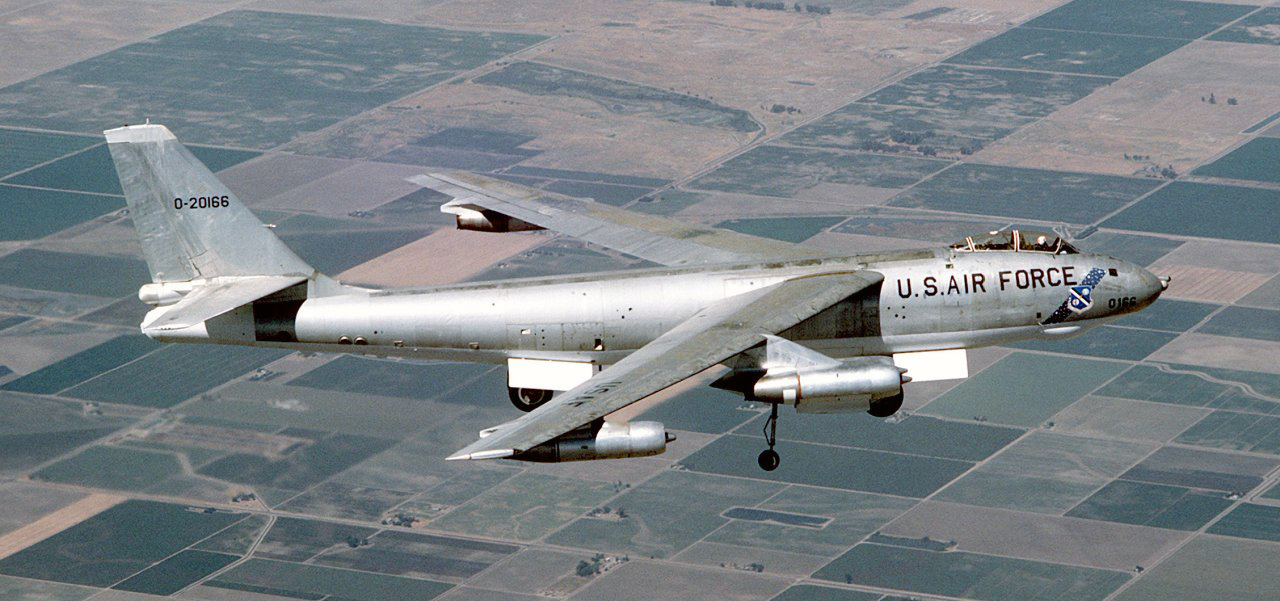
The squadron received Boeing B-47 Stratojet jet bombers in 1954, but only flew the Stratojet for a year. In 1955 the 93rd Wing became the first unit in SAC to equip with Boeing B-52 Stratofortresses. On completing its transition, the squadron became a training unit for B-52 crews.
During the Cuban Missile Crisis, the squadron suspended its training mission. On 24 October SAC went to DEFCON 2, placing all aircraft on alert. The squadron resumed its training mission on 15 November 1962.
.jpg)
The squadron ceased operations on 14 September 1971 and was inactivated at the end of the month. It was redesignated 329th Strategic Bombardment Training Squadron and reactivated, again serving as a B-52 combat crew training squadron in 1986. It was inactivated in 1994 after the end of the Cold War and the reduction of the B-52 fleet.
Lineage
- Constituted 329th Bombardment Squadron (Heavy) on 28 January 1942 : Activated on 1 March 1942 : Redesignated: 329th Bombardment Squadron, Heavy on 20 August 1943 : Redesignated: 329th Bombardment Squadron, Very Heavy on 23 May 1945 : Redesignated: 329th Bombardment Squadron, Medium on 28 May 1948 : Redesignated: 329th Bombardment Squadron, Heavy on 1 February 1955 : Inactivated on 30 September 1971 : Redesignated 329th Strategic Bombardment Training Squadron c. 12 February 1986 : Activated on 1 July 1986 : Redesignated 329th Combat Crew Training Squadron c. 1 July 1987 : Inactivated on 1 July 1994
Assignments
- 93d Bombardment Group, 1 March 1942 (attached to 93d Bombardment Wing after 10 February 1951)
- 93d Bombardment Wing, 16 June 1952 – 30 September 1971
- 93d Bombardment Wing, 1 July 1986
- 93d Operations Group, 1 September 1991 – 1 July 1994
Stations
- Barksdale Field, Louisiana, 1 March 1942
- Page Field, Florida, 18 May – 13 August 1942
- RAF Alconbury (AAF-102), England, 7 September 1942
- RAF Hardwick (AAF-104), England, c. 6 December 1942
- RAF Bungay (AAF-125), c. 14 December 1942
- RAF Hardwick (AAF-104), c. 15 June 1943 – 15 June 1945 (operated from Benghazi Airfield, Libya, 27 June - 25 August 1943. Oudna Airfield, Tunisia, 18 September – 3 October 1943)
- Sioux Falls Army Air Field, South Dakota, 26 June–26 July 1945
- Pratt Army Air Field, Kansas, 20 August 1945
- Clovis Army Air Field, New Mexico, 13 December 1945
- Castle Field (later Castle Air Force Base), California, 21 June 1946 – 30 September 1971
- Castle Air Force Base, California, 1 July 1986 – 1 July 1994
Aircraft
- Consolidated B-24 Liberator, 1942–1945
- Boeing B-29 Superfortress, 1945–1949
- Boeing B-50 Superfortress, 1949–1954
- Boeing B-47 Stratojet, 1954–1955
- Boeing B-52 Stratofortress, 1955–1971, 1986–1994
Awards and campaigns
| Campaign Streamer | Campaign | Dates | Notes | |
|---|---|---|---|---|
| [[File:American Campaign Streamer.png | 200px]] | Antisubmarine | 18 May 1942–1 August 1943 | 329th Bombardment Squadron |
| [[Image:Streamer EAMEC.PNG | 200px]] | Air Offensive, Europe | 7 September 1942–5 June 1944 | 329th Bombardment Squadron |
| [[Image:Streamer EAMEC.PNG | 200px]] | Sicily | 27 June 1943–17 August 1943 | 329th Bombardment Squadron |
| [[Image:Streamer EAMEC.PNG | 200px]] | Naples-Foggia | 18 September 1943–3 October 1943 | 329th Bombardment Squadron |
| [[Image:Streamer EAMEC.PNG | 200px]] | Normandy | 6 June 1944–24 July 1944 | 329th Bombardment Squadron |
| [[Image:Streamer EAMEC.PNG | 200px]] | Rhineland | 15 September 1944–21 March 1945 | Maurer does not list credit for the Northern France Campaign, although the 93rd Group and all other squadrons of the group are credited with that campaign, and no source indicates that the 329th was withdrawn from combat between July and September of 1944.}} |
| [[Image:Streamer EAMEC.PNG | 200px]] | Ardennes-Alsace | 16 December 1944–25 January 1945 | 329th Bombardment Squadron |
| [[Image:Streamer EAMEC.PNG | 200px]] | Central Europe | 22 March 1944–21 May 1945 | 329th Bombardment Squadron |
References
Notes
; Explanatory notes
; Citations
Bibliography
; Further reading
References
- Maurer, ''Combat Squadrons'', pp. 405-06
- Watkins, pp. 38-39
- Maurer, ''Combat Units'', pp. 160-62
- Maurer, ''Combat Squadrons'', pp. 404, 406-07, 500
- Freeman, p. 33
- The squadron moved to [[Fort Dix]], New Jersey on 2 August. The ground echelon sailed for England on 15 August aboard the {{RMS
- Gee]] radio navigation system. Augmented by crews from other squadrons of the 93rd Group, it moved to [[RAF Bungay]], from which it conducted "Moling" missions. These were individual aircraft raids, conducted to disrupt the German [[air defense]] systems by alerting early warning radars. Due to the sensitivity of the Gee equipment, these missions were only flown in bad weather, when the chances of interception over enemy territory were minimal. The squadron flew its first Moling mission to the [[Ruhr]] on 2 January, it was forced to turn back because of the lack of cloud cover over the target area. Similar weather conditions prevailed on further missions, and the tests were terminated on 28 March 1943. However, a number of the crew trained on blind bombing were later used to form [[Eighth Air Force]] [[pathfinder (USAAF)
- On 3 May the squadron was withdrawn from operations and began to train for night attacks. However, this training ended abruptly and all the squadrons of the 93d Group joined those of the 44th Group in flying diversionary missions, while Eighth's [[Boeing B-17 Flying Fortress]]es attacked primary targets. On 29 May the squadron was once again taken off operations and began practicing low level flights over England.Freeman, pp. 37-38
- Freeman, pp. 86–89
- Willard, p. 42
- Kipp ''et al.'', p. 56
- Kipp, ''et al''., p. 35
- Kipp, ''et al''.p. 58
- Ravenstein, p. 130
- Lineage, including assignments, stations, and aircraft, through May 1963 in Maurer, ''Combat Squadrons'', pp. 405-406
- ''See'' Ravenstein, pp. 130-32 (end of assignment to 93rd Wing)
- Assignments through June 1977 in Ravenstein, p. 130
- Station number in Anderson, p. 19
- Station number in Anderson, p. 20
- "Air Force Personnel Services: Unit Awards". Air Force Personnel Center.
This article was imported from Wikipedia and is available under the Creative Commons Attribution-ShareAlike 4.0 License. Content has been adapted to SurfDoc format. Original contributors can be found on the article history page.
Ask Mako anything about 329th Combat Crew Training Squadron — get instant answers, deeper analysis, and related topics.
Research with MakoFree with your Surf account
Create a free account to save articles, ask Mako questions, and organize your research.
Sign up freeThis content may have been generated or modified by AI. CloudSurf Software LLC is not responsible for the accuracy, completeness, or reliability of AI-generated content. Always verify important information from primary sources.
Report