From Surf Wiki (app.surf) — the open knowledge base
326th Bombardment Squadron
| Field | Value | |
|---|---|---|
| unit_name | 326th Bombardment Squadron | |
| image | File:Boeing B-52D-40-BW (SN 56-0695) in flight launching Quail decoy 061127-F-1234S-011.jpg | |
| image_size | 300 | |
| caption | B-52D Stratofortress as flown by the squadron | |
| dates | 1942–1946; 1946–1963 | |
| country | ||
| branch | ||
| role | Strategic bomber | |
| battles | European Theater of Operations | |
| decorations | Distinguished Unit Citation | |
| Air Force Outstanding Unit Award | ||
| Republic of Korea Presidential Unit Citation | ||
| identification_symbol | [[File:326 Bombardment Sq emblem.png | 165px]] |
| identification_symbol_label | 326th Bombardment Squadron emblem | |
| identification_symbol_2 | **JW** | |
| identification_symbol_2_label | World War II fuselage code |
Air Force Outstanding Unit Award Republic of Korea Presidential Unit Citation
The 326th Bombardment Squadron is an inactive United States Air Force unit. It was last assigned to the 4141st Strategic Wing at Glasgow Air Force Base, Montana, where it was inactivated on 1 February 1963.
The squadron was first activated in March 1942. After participating in the antisubmarine campaign while training, it moved to the United Kingdom in August 1942, where it became a training unit for heavy bombers. From May 1943, it participated in the strategic bombing campaign against Germany. It earned two Distinguished Unit Citations for its actions. After V-E Day, it moved to France, performing airlift missions until it was inactivated in February 1946.
The squadron was activated at Fort Worth Army Air Field, Texas the following August as a Strategic Air Command (SAC) long range bomber unit. It deployed to Japan in 1950, flying missions during the Korean War. It moved to Glasgow in April 1961, as part of a SAC program to disperse its strategic bomber forces to reduce vulnerability to a surprise attack. In February 1963 it was inactivated and its resources transferred to another squadron as part of a SAC program to replace its strategic wings with units with distinguished combat histories.
History
World War II
Initial organization and training
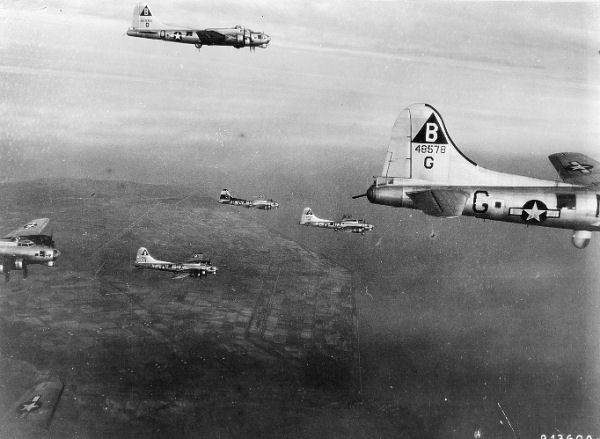
The squadron was activated at Barksdale Field, Louisiana on 1 March 1942, as the 326th Bombardment Squadron, one of the four original squadrons of the 92nd Bombardment Group. Later that month it moved to MacDill Field, Florida and trained with Boeing B-17 Flying Fortresses. While training in Florida, the squadron also flew antisubmarine patrols off the Florida coast. The squadron's air echelon departed Sarasota Army Air Field for Westover Field, Massachusetts on 19 June 1942, flying on to Dow Field, Maine on 29 June. The squadron then ferried their B-17s across the North Atlantic via Newfoundland starting between 12 and 15 August. They flew directly from Newfoundland to Prestwick Airport, Scotland. The 92nd Group was the first to fly their bombers non-stop across the Atlantic, and the 326th was the first squadron in the group to make the transit. Meanwhile, the ground echelon left Bradenton on 18 July, arriving at Fort Dix, New Jersey in the New York Port of Embarkation two days later. It sailed aboard the on 2 August and docked at Liverpool on 18 August, moving to Bovingdon the same day.
Operations in the European Theater
The buildup of Eighth Air Force in England required the establishment of a combat crew replacement and training center, but a lack of qualified personnel and aircraft hampered its development. As a result, the decision was made to use the 92nd Group and its squadrons as a temporary crew training unit, acting as the main component of what became the 11th Combat Crew Replacement Center Group. However, the 92d was the first group to arrive in England with improved B-17Fs, and with the training mission came an exchange of these newer models for the older B-17Es of the 97th Bombardment Group to use in training. On 6 September, to provide the squadron with combat experience, it flew its first combat mission against Meaulte, France. Although remaining a replacement crew training unit until May 1943, the squadron initially flew occasional combat missions. In January 1943, he squadron moved to RAF Alconbury.
In May 1943, the squadron's training mission was transferred and the 326th began flying combat missions. Through May 1944 its targets included shipyards at Kiel, ball bearing plants at Schweinfurt, submarine pens at Wilhelmshaven, a tire manufacturing plant at Hannover, airfields near Paris, an aircraft factory at Nantes and a magnesium mine in Norway.
The squadron earned a Distinguished Unit Citation on 11 January 1944, when it successfully bombed aircraft manufacturing factories in central Germany despite adverse weather, a lack of fighter protection and heavy flak. It participated in Big Week, the intensive attack against German aircraft industry in late February 1944. It took part in Operation Crossbow, attacks on launch sites for V-1 flying bombs and V-2 rockets. It struck airfields and industrial sites in France, Belgium, the Netherlands, and Germany. After October 1944 it concentrated on transportation and oil industry targets.
In addition to its strategic bombing mission, the squadron flew interdiction and air support missions. During Operation Overlord, the Normandy invasion, it attacked coastal defenses, transportation junctions and marshalling yards near the beachhead. It provided air support for Operation Cobra, the Allied breakout at Saint Lo, It bombed bridges and gun positions to support Operation Market Garden, the airborne attacks in the Netherlands near Arnhem, to secure bridgeheads across the Rhine in September. During the Battle of the Bulge, from December 1944 to January 1945, it attacked bridges and marshalling yards near the target area. During Operation Varsity, the airborne assault across the Rhine, it provided cover by bombing airfields near the drop zone. It flew its last combat mission on 25 April 1945, when the 92nd Group led the entire Eighth Air Force formation.
Following V-E Day, the squadron moved to Istres Air Base, France, where it participated in the Green Project, transporting troops returning to the United States, flying them to Cazes Field in Morocco until September, returning French servicemen to France on return trips.
Medal of Honor
Flight Officer John C. Morgan of the squadron was awarded the Medal of Honor for a mission on 26 July 1943. He was flying as copilot, when an attack by enemy fighter aircraft caused a brain injury to the pilot, leaving the pilot in a crazed condition. Morgan kept his B-17 in formation, flying with one hand as he fended off the semiconscious pilot, who was attempting to take control of the bomber for two hours until the navigator was able to control the pilot, finally landing the plane safely at its home station. Morgan was used as the model for the character Lieutenant Jesse Bishop in the novel and film Twelve O'Clock High.
Strategic Air Command
B-29 Superfortress operations
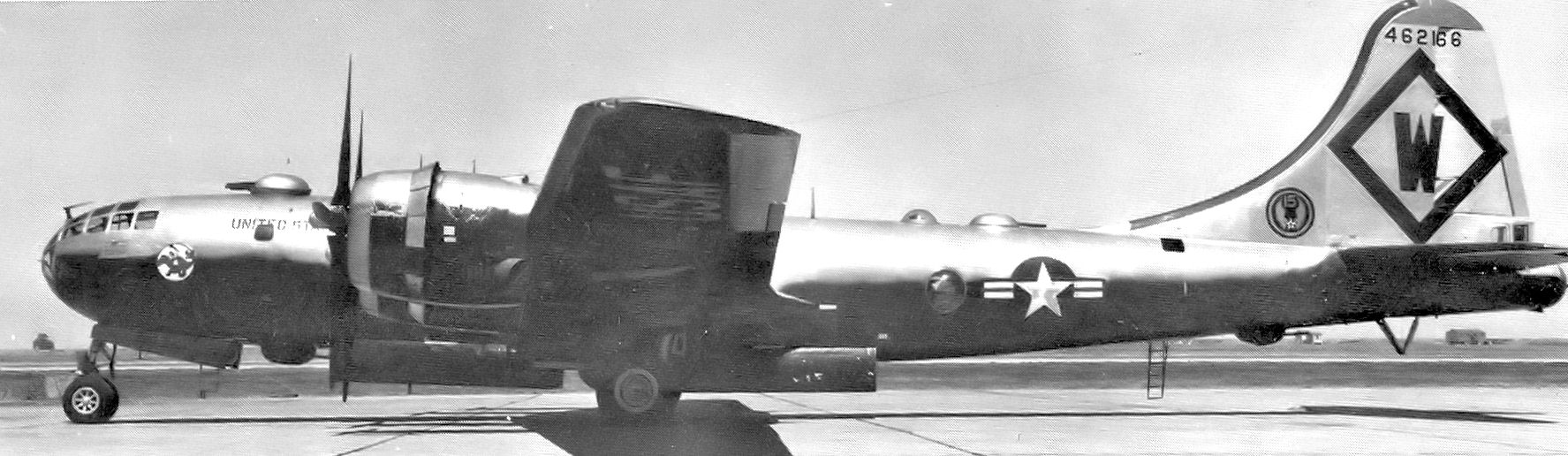
The squadron was soon reactivated at Fort Worth Army Air Field, Texas as a Strategic Air Command (SAC) squadron in August 1946, when it absorbed the personnel and Boeing B-29 Superfortresses of the 713th Bombardment Squadron, which was simultaneously inactivated. In October, the squadron moved to Smoky Hill Army Air Field, Kansas, but its stay there was short, as it moved to Spokane Army Air Field in June 1947. It trained for strategic bombardment missions at all three locations. This deployment of B-29s, which were known to be capable of carrying nuclear weapons, was part of a show of force to support the Berlin Airlift. In reality, the squadron's B-29s had not been modified to be armed with nuclear weapons.
In July 1950, the squadron deployed to Yokota Air Base, Japan, where it came under the control of Far East Air Forces Bomber Command (Provisional). The squadron bombed factories, refineries, iron works, hydroelectric plants, airfields, bridges, tunnels, troop concentrations, barracks, marshalling yards, road junctions, rail lines, supply dumps, docks, vehicles and other strategic and interdiction targets. It returned to Fairchild Air Force Base in late October 1950.
B-36 Peacemaker operations

In 1951, the squadron transitioned to the Convair B-36 Peacemaker intercontinental strategic bomber. The squadron participated in Operation Big Stick, a show of force in which the 92nd Wing deployed its B-36s to Japan. The squadron received the Air Force Outstanding Unit Award for its participation in this exercise. Along with other operational elements of the 92d Bombardment Wing, the squadron deployed to Andersen Air Force Base, Guam from 16 October 1954 to 12 January 1955 and again from 26 April to 5 July 1956. It continued flying B-36s until 1957, when it began upgrading to Boeing B-52D Stratofortresses.
B-52 Stratofortress operations
Starting in 1960, one third of the squadron's aircraft were maintained on fifteen minute alert, fully fueled and ready for combat to reduce vulnerability to a Soviet missile strike. This was increased to half the squadron's aircraft in 1962. SAC planners were looking into methods to protect their forces in addition to the ground alert program as early as 1957. Tests under the name Operation Head Start were precursors to Operation Chrome Dome. From 2 March to 30 June 1959, the 92nd Wing participated in Operation Head Start II, keeping five of its armed bombers in the air for the entire period. In January 1961, SAC disclosed it was maintaining an airborne force for "airborne alert training."
Large concentrations of bombers, like the 45 B-52s of the 92nd Wing at Fairchild, made attractive targets for an enemy strike. SAC decided to disperse its B-52 force to smaller wings with 15 bombers at other bases. This not only complicated Soviet targeting planning, but with more runways, it would take less time to launch the bomber force. In April 1961, the squadron moved to Glasgow Air Force Base, Montana, where it became the strike component of the 4141st Strategic Wing.
Soon after detection of Soviet missiles in Cuba, SAC brought all degraded and adjusted alert sorties up to full capability. On 20 October along with all B-52 units except those equipped with the B-52H, the squadron was directed to put two additional planes on alert. On 22 October, 1/8 of the squadron's B-52s were placed on airborne alert. Two days later, SAC went to DEFCON 2, placing all aircraft on alert. SAC returned to normal airborne alert posture on 21 November . On 27 November, SAC finally returned the squadron to its normal alert posture.
In February 1963, The 91st Bombardment Wing assumed the aircraft, personnel and equipment of the discontinued 4141st Wing. The 4141st was a Major Command controlled (MAJCON) wing, which could not carry a permanent history or lineage, and SAC wanted to replace it with a permanent unit. In this reorganization, the 326th was inactivated, and its mission, personnel and equipment were transferred to the 322d Bombardment Squadron, which was simultaneousy activated.
Lineage
- Constituted as the 326th Bombardment Squadron (Heavy) on 28 January 1942 : Activated on 1 March 1942 : Redesignated 326 Bombardment Squadron, Heavy on 29 September 1944 : Inactivated on 28 February 1946
- Redesignated 326 Bombardment Squadron, Very Heavy on 15 July 1946 : Activated on 4 August 1946 : Redesignated 326 Bombardment Squadron, Medium on 28 May 1948 : Redesignated 326 Bombardment Squadron, Heavy' on 16 June 1951 : Discontinued and inactivated on 1 February 1963
Assignments
- 92d Bombardment Group, 1 March 1942 – 28 February 1946
- 92d Bombardment Group, 4 August 1946 (attached to 92d Bombardment Wing after 16 February 1951)
- 92d Bombardment Wing (later 92d Strategic Aerospace Wing, 92d Bombardment Wing), 16 June 1952 (attached to 4141st Strategic Wing after 1 March 1961)
- 4141st Strategic Wing, 1 April 1961 – 1 February 1963
Stations
- Barksdale Field, Louisiana, 1 March 1942
- MacDill Field, Florida, 26 March 1942
- Sarasota Army Air Field, Florida, 18 May–18 July 1942
- RAF Bovingdon (AAF-112), England, 18 August 1942
- RAF Alconbury (AAF-102), England, 6 January 1943
- RAF Podington (AAF-109), England, 15 September 1943
- Istres Air Base (AAF 196), (Y-17), France, 12 June 1945 – 28 February 1946
- Fort Worth Army Air Field, Texas, 4 August 1946
- Smoky Hill Army Air Field, Kansas, 26 October 1946
- Spokane Army Air Field (later Spokane Air Force Base, Fairchild Air Force Base), Washington, 20 June 1947 (deployed to Yokota Air Base, Japan, 9 July–29 October 1950
- Glasgow Air Force Base, Montana, 1 April 1961 – 1 February 1963
Aircraft
- Boeing B-17 Flying Fortress, 1942–1946
- Boeing B-29 Superfortress, 1946, 1947–1951
- Convair B-36 Peacemaker, 1951–1957
- Boeing B-52 Stratofortress, 1957–1963
Awards and Campaigns
| Campaign Streamer | Campaign | Dates | Notes | |
|---|---|---|---|---|
| [[File:American Campaign Streamer.png | 200px]] | Antisubmarine | 26 March 1942–July 1942 | |
| [[Image:Streamer EAMEC.PNG | 200px]] | Air Offensive, Europe | 18 August 1942–5 June 1944 | |
| [[Image:Streamer EAMEC.PNG | 200px]] | Air Combat, EAME Theater | 18 August 1942–11 May 1945 | |
| [[Image:Streamer EAMEC.PNG | 200px]] | Normandy | 6 June 1944–24 July 1944 | |
| [[Image:Streamer EAMEC.PNG | 200px]] | Northern France | 25 July 1944–14 September 1944 | |
| [[Image:Streamer EAMEC.PNG | 200px]] | Rhineland | 15 September 1944–21 March 1945 | |
| [[Image:Streamer EAMEC.PNG | 200px]] | Ardennes-Alsace | 16 December 1944–25 January 1945 | |
| [[Image:Streamer EAMEC.PNG | 200px]] | Central Europe | 22 March 1944–21 May 1945 | |
| [[Image:Streamer KS.PNG | 200px]] | UN Defensive | 9 July 1950–15 September 1950 | |
| [[Image:Streamer KS.PNG | 200px]] | UN Offensive | 16 September 1950–29 October 1950 |
References
Notes
; Explanatory notes
; Citations
Bibliography
References
- Maurer, ''Combat Squadrons'', pp. 401-02
- Watkins, p. 36
- Maurer, ''Combat Units'', pp. 158-60
- Freeman, p. 244
- No byline. "A week in history Aug. 27 – Sept. 2". 92nd Air Refueling Wing Public Affairs.
- Freeman, pp.16-17
- During the winter it flew displaced Greek nationals from [[Munich]] to [[Athens]]. It was inactivated in France on 28 February 1946 and its remaining personnel were absorbed into elements of the [[306th Bombardment Group]] at [[Lechfeld Air Base]], Germany.Maurer, ''Combat Units'', p. 180
- (2017). "Medal of Honor, Second Lieutenant John Cary Morgan, United States Army Air Corps". This Day in Aviation: Important Dates in Aviation History.
- No byline. "The Berlin Airlift, 1948–1949". United States Department of State Office of the Historian.
- Miller, pp. 24-25 (no nuclear capable B-29s were deployed to England before July 1949).
- A Legacy of Excellence, p. 18
- (1 April 1975). "Abstract (Unclassified), History of the Strategic Bomber since 1945 (Top Secret, downgraded to Secret)". Air Force History Index.
- Narducci, pp. 5-6
- Alert Operations and SAC, p. 8
- Alert Operations and SAC, pp. 4-5
- Kipp, ''et al''., p. 30.
- Kipp, ''et al''., pp. 34-35
- Kipp, ‘’et al’’., p. 35
- Kipp, ''et al''., p. 47
- Kipp ''et al''., p. 61
- Ravenstein, Charles A.. (1984). "A Guide to Air Force Lineage and Honors". USAF Historical Research Center.
- ''See'' Ravenstein, p, 128 (detached from wing).
- Assignments in Maurer, ''Combat Squadrons'', pp. 401-02, except as noted.
- Station number in Anderson, p. 20
- Station number in Anderson, p. 19
- Station numbers in Anderson, p. 23 and Johnson, p. 27
- Station information in Maurer, ''Combat Squadrons'', pp. 401-02, except as noted.
This article was imported from Wikipedia and is available under the Creative Commons Attribution-ShareAlike 4.0 License. Content has been adapted to SurfDoc format. Original contributors can be found on the article history page.
Ask Mako anything about 326th Bombardment Squadron — get instant answers, deeper analysis, and related topics.
Research with MakoFree with your Surf account
Create a free account to save articles, ask Mako questions, and organize your research.
Sign up freeThis content may have been generated or modified by AI. CloudSurf Software LLC is not responsible for the accuracy, completeness, or reliability of AI-generated content. Always verify important information from primary sources.
Report