From Surf Wiki (app.surf) — the open knowledge base
321st Missile Squadron
US Air Force unit
US Air Force unit
| Field | Value | |
|---|---|---|
| unit_name | 321st Missile Squadron | |
| image | LGM-30G Minuteman III test launch.jpg | |
| image_size | 250 | |
| caption | LGM-30G Minuteman III test launch at Vandenberg AFB, California | |
| dates | 1942–1946; 1947–1948; 1951–1960; 1964–present | |
| country | United States | |
| branch | ||
| type | Squadron | |
| role | Intercontinental ballistic missile | |
| command_structure | Air Force Global Strike Command | |
| current_commander | Lt. Col. David Bull | |
| garrison | Francis E. Warren Air Force Base | |
| nickname | Jolly Rogers | |
| motto | 3-2-1...Bombs Away! (World War II) | |
| battles | Southwest Pacific Theater | |
| decorations | Distinguished Unit CitationAir Force Outstanding Unit AwardPhilippine Presidential Unit Citation | |
| battle_honours | ||
| identification_symbol | [[File:321st Missile Squadron.jpg | 165px]] |
| identification_symbol_label | 321st Missile Squadron emblem | |
| identification_symbol_2 | [[File:321st Strategic Reconnaissance Squadron - SAC - Emblem.png | 165px]] |
| identification_symbol_2_label | Patch with unofficial 321st Strategic Reconnaissance Squadron emblem | |
| identification_symbol_3 | [[File:321st Bomb Sq emblem.png | 165px]] |
| identification_symbol_3_label | 321st Bombardment Sq emblem | |
| identification_symbol_4 | [[File:321st Bombardment Squadron - Emblelm.png | 150px]] |
| identification_symbol_4_label | 321st Bombardment Squadron "Jolly Rogers" patch |
The 321st Missile Squadron is a United States Air Force unit. It is assigned to the 90th Operations Group, stationed at Francis E. Warren Air Force Base, Wyoming. The squadron is equipped with the LGM-30G Minuteman III Intercontinental ballistic missile (ICBM). Their mission is to operate safe and secure nuclear weapons, maintain mission ready facilities, and on order destroy OPLAN assigned targets.
History
World War II
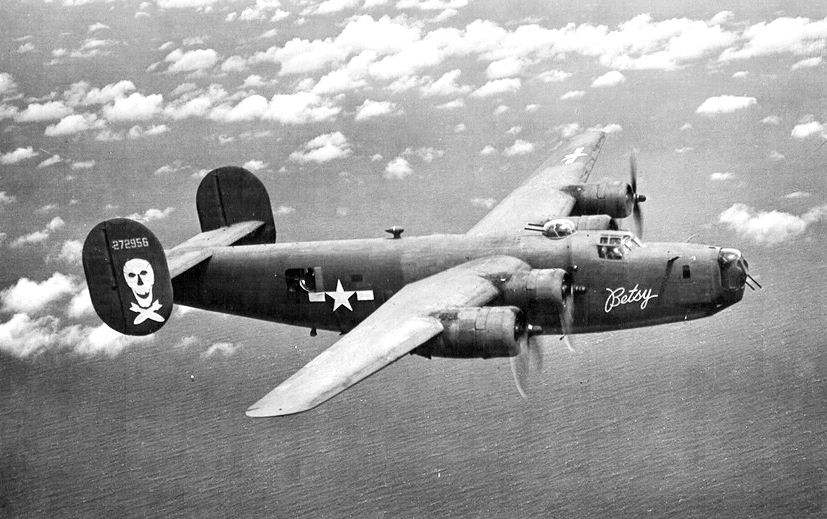
The squadron was first organized as the 321st Bombardment Squadron at Key Field, Mississippi in April 1942 as a Consolidated B-24 Liberator unit and one of the original squadrons of the 90th Bombardment Group. The squadron trained with Liberators in the southeastern United States under III Bomber Command until August.

The squadron moved to Willow Run Airport, Michigan for conversion training on newly manufactured Ford Liberators. Assigned to VII Bomber Command with B-24Ds, the unit moved to Hickam Field, Hawaii in September. The squadron arrived in northern Queensland, Australia in November 1942 and began bombardment missions under V Bomber Command almost immediately.
The squadron attacked enemy airfields, troop concentrations, ground installations and shipping in New Guinea, the Bismarck Archipelago, Palau and the southern Philippines. The 321st was awarded a Distinguished Unit Citation for its operations in Papua through January 1943. The unit participated in the Battle of Bismarck Sea in March 1943, and earned another citation for strikes on enemy airfields at Wewak, New Guinea in September 1943 despite heavy flak and fighter opposition.
During 1944, the 321st supported the New Guinea Campaign through the end of June, then made long-range raids on oil refineries at Balikpapan, Borneo, in September and October. In January 1945, the squadron moved to the Philippines and supported ground forces on Luzon, attacked industrial targets on Formosa, and bombed railways, airfields, and harbor facilities on the Asiatic mainland. Shortly before the end of the war in the Pacific, the 90th moved to Okinawa, from which it would be able to strike the Japanese home islands.
After VJ Day, the squadron flew reconnaissance missions over Japan and ferried Allied prisoners of war from Okinawa to Manila. It ceased operations by November 1945. The squadron was inactivated in the Philippines in early 1946.
Superfortress operations
Main article: 90th Bombardment Wing
The squadron was reactivated in July 1947 as a very heavy unit at Andrews Field, Maryland. It was a component of one of seven bombardment groups activated at Andrews by Strategic Air Command (SAC) that day. Most of these units, including the 321st, were inactivated by September 1948 and it does not appear they were manned during this period.

The squadron was again organized at Fairchild Air Force Base, Washington in January 1951 and equipped with the Boeing B-29 Superfortress. In February, as part of a reorganization of Strategic Air Command wings, the 90th Bombardment Group was reduced to paper status and the squadron was attached to the wing for operational control. In June 1952, this organization, which was designed to permit the wing commander to focus on the wing's combat units and the maintenance necessary to support combat aircraft, was formalized as the Dual Deputy Organization and the squadron was assigned to the wing.
In March 1951, the squadron moved to Forbes Air Force Base, where it served primarily as a training unit. In May, it began serving as an operational training unit for B-29 aircrews and mechanics of newly activating units. The squadron help organize and train the 376th, 308th, and 310th Bombardment Wings.
In June, the squadron added duty as a Replacement Training Unit, primarily providing individual training for aircrew being assigned to existing Far East Air Forces B-29 units during the Korean War. In November 1952 it also began training replacement crews for the RB-29 reconnaissance model of the Superfortress and SHORAN personnel for Strategic Air Command (SAC). These training activities continued through November 1953.
Strategic reconnaissance
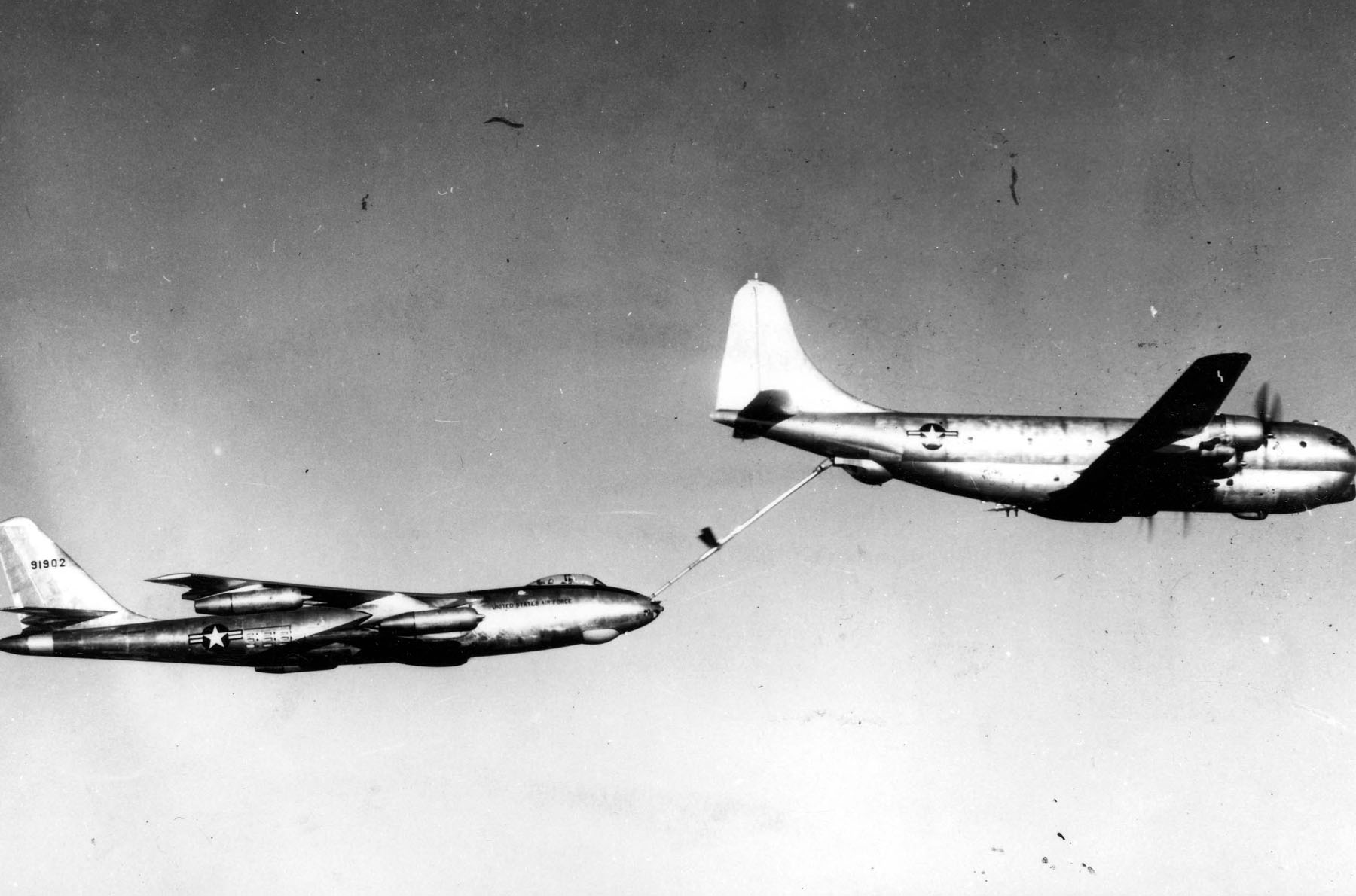
The squadron began to fly strategic reconnaissance missions in September 1953. One year later, the squadron and the entire 90th Strategic Reconnaissance Wing deployed as a unit to Eielson Air Force Base, Alaska from 5 May until 31 August 1955, where the wing performed the final mapping of Alaska. In May 1958, the 90th Wing returned to the training mission serving as a combat crew training wing for RB-47 aircrews until it was inactivated on 20 June 1960.
Intercontinental ballistic missiles
The squadron was reactivated on 9 April 1964 as an intercontinental ballistic missile squadron assigned to the 90th Strategic Missile Wing at Francis E. Warren Air Force Base, Wyoming, and equipped with fifty LGM-30B Minuteman Is, armed with a single reentry vehicle. The squadron was the third of the 90th Wing's four Minuteman squadrons to activate, as construction on launch facilities continued until the middle of 1964. Beginning in June 1973, its Minuteman I missiles began to be replaced by LGM-30G Minuteman IIIs, which could carry up to three reentry vehicles. In 2001 in compliance with the Strategic Arms Reduction Treaty, these missiles were limited to a single reentry vehicle
The squadron won the Samuel C. Phillips Award as the best missile squadron in Air Force Space Command in 2005, 2010 and 2019.
Lineage
- Constituted as the 321 Bombardment Squadron (Heavy) on 28 January 1942 : Activated on 15 April 1942 : Redesignated 321 Bombardment Squadron, Heavy on 6 March 1944 : Inactivated on 27 January 1946
- Redesignated 321 Bombardment Squadron, Very Heavy on 11 June 1947 : Activated on 1 July 1947 : Inactivated on 6 September 1948
- Redesignated 321 Bombardment Squadron, Medium on 20 December 1950 : Activated on 2 January 1951 : Redesignated 321 Strategic Reconnaissance Squadron, Medium on 16 June 1952 : Discontinued on 20 June 1960
- Redesignated 321 Strategic Missile Squadron (ICBM-Minuteman) on 16 September 1963 : Organized on 9 April 1964 : Redesignated 321 Missile Squadron on 1 September 1991
Assignments
- 90th Bombardment Group, 15 April 1942 – 27 January 1946
- 90th Bombardment Group, 1 July 1947 – 6 September 1948
- 90th Bombardment Group, 2 January 1951 (attached to 90th Bombardment Wing after 16 February 1951)
- 90th Strategic Reconnaissance Wing, 16 June 1952 – 20 June 1960
- Strategic Air Command, 16 September 1963 (not organized)
- 90th Strategic Missile Wing, 9 April 1964
- 90th Operations Group, 1 September 1991 – present
Stations
- Key Field, Mississippi, 15 April 1942
- Barksdale Field, Louisiana, 17 May 1942
- Greenville Army Air Base, South Carolina, 21 June 1942
- Willow Run Airport, Michigan, 9–23 August 1942
- Wheeler Field, Hawaii, 12 September 1942
- Iron Range Airfield, Queensland, Australia, c. 4 November 1942
- Jackson Airfield (7 Mile Drome), Port Moresby, New Guinea, 10 February 1943
- Dobodura Airfield Complex, New Guinea, December 1943
- Nadzab Airfield Complex, New Guinea, c. 23 February 1944
- Mokmer Airfield, Biak Island, Netherlands East Indies, 12 August 1944
- McGuire Field, Mindoro, Philippines, 26 January 1945
- Ie Shima Airfield, Okinawa, 15 August 1945
- Fort William McKinley, Luzon, Philippines, 23 November 1945 – 27 January 1946
- Andrews Field (later Andrews Air Force Base), Maryland, 1 July 1947 – 6 September 1948
- Fairchild Air Force Base, Washington, 2 January 1951
- Forbes Air Force Base, Kansas, 14 March 1951 – 20 June 1960
- Francis E. Warren Air Force Base, Wyoming, 9 April 1964 – present
Aircraft and missiles
- Consolidated B-24 Liberator (1942–1945)
- Boeing RB-29 Superfortress (1951–1954)
- Boeing RB-47E Stratojet (1954–1960)
- LGM-30B Minuteman I (1964–1974)
- LGM-30G Minuteman III (1973 – Present)
Awards and campaigns
(later 321st Missile Squadron)
| Campaign Streamer | Campaign | Dates | Notes | |
|---|---|---|---|---|
| [[File:Streamer APC.PNG | 200px]] | Guadalcanal | c. 4 November 1942 – 21 February 1943 | 321st Bombardment Squadron |
| [[File:Streamer APC.PNG | 200px]] | Papua | c. 4 November – 23 January 1943 | 321st Bombardment Squadron |
| [[File:Streamer APC.PNG | 200px]] | Northern Solomons | 23 February 1943 – 21 November 1944 | 321st Bombardment Squadron |
| [[File:Streamer APC.PNG | 200px]] | Bismarck Archipelago | 15 December 1943 – 27 November 1944 | 321st Bombardment Squadron |
| [[File:Streamer APC.PNG | 200px]] | New Guinea | 24 January 1943 – 31 December 1944 | 321st Bombardment Squadron |
| [[File:Streamer APC.PNG | 200px]] | Leyte | 17 October 1944 – 1 July 1945 | 321st Bombardment Squadron |
| [[File:Streamer APC.PNG | 200px]] | Luzon | 15 December 1944 – 4 July 1945 | 321st Bombardment Squadron |
| [[File:Streamer APC.PNG | 200px]] | Southern Philippines | 27 February 1945 – 4 July 1945 | 321st Bombardment Squadron |
| [[File:Streamer APC.PNG | 200px]] | China Defensive | November 1942 – 4 May 1945 | 321st Bombardment Squadron |
| [[File:Streamer APC.PNG | 200px]] | China Offensive | 5 May 1945 – 2 September 1945 | 321st Bombardment Squadron |
| [[File:Streamer APC.PNG | 200px]] | Air Offensive, Japan | November 1942 – 2 September 1945 | 321st Bombardment Squadron |
| [[File:Streamer APC.PNG | 200px]] | Western Pacific | 17 April 1944 – 2 September 1945 | 321st Bombardment Squadron |
References
Notes
Citations
Bibliography
References
- (18 June 2015). "Factsheet 321 Missile Squadron (AFGSC)". Air Force Historical Research Agency.
- Maurer, ''Combat Squadrons'', p. 394 (no approved emblem).
- Watkins, pp. 86–87
- (27 May 2010). "Factsheet 90 Operations Group (AFSPC)". Air Force Historical Research Agency.
- Maurer, ''Combat Units'', pp. 102, 176, 178
- (6 April 2012). "Factsheet 90 Missile Wing (AFGSC)". Air Force Historical Research Agency.
- Deaile, pp. 175–176
- Ravenstein, pp. 200–202
- (27 August 2015). "Factsheet 308 Armament Systems Wing (AFMC)". Air Force Historical Research Agency.
- (23 December 2010). "Factsheet 310 Space Wing (AFRC)". Air Force Historical Research Agency.
- (1 October 1951). "Abstract, History 90 Bombardment Wing". Air Force History Index.
- The following year, it replaced its RB-29s with the jet [[Boeing RB-47 Stratojet]], with the first B-47E arriving on 25 June, although crews had begun training in March.90th Missile Wing Heritage Pamphlet, pp. 3, 15
- (19 August 2010). "90 MW Fact Sheet". 90th Missile Wing Public Affairs.
- 90th Missile Wing Heritage Pamphlet, p. 9
This article was imported from Wikipedia and is available under the Creative Commons Attribution-ShareAlike 4.0 License. Content has been adapted to SurfDoc format. Original contributors can be found on the article history page.
Ask Mako anything about 321st Missile Squadron — get instant answers, deeper analysis, and related topics.
Research with MakoFree with your Surf account
Create a free account to save articles, ask Mako questions, and organize your research.
Sign up freeThis content may have been generated or modified by AI. CloudSurf Software LLC is not responsible for the accuracy, completeness, or reliability of AI-generated content. Always verify important information from primary sources.
Report