From Surf Wiki (app.surf) — the open knowledge base
300X
Japanese experimental high speed train type
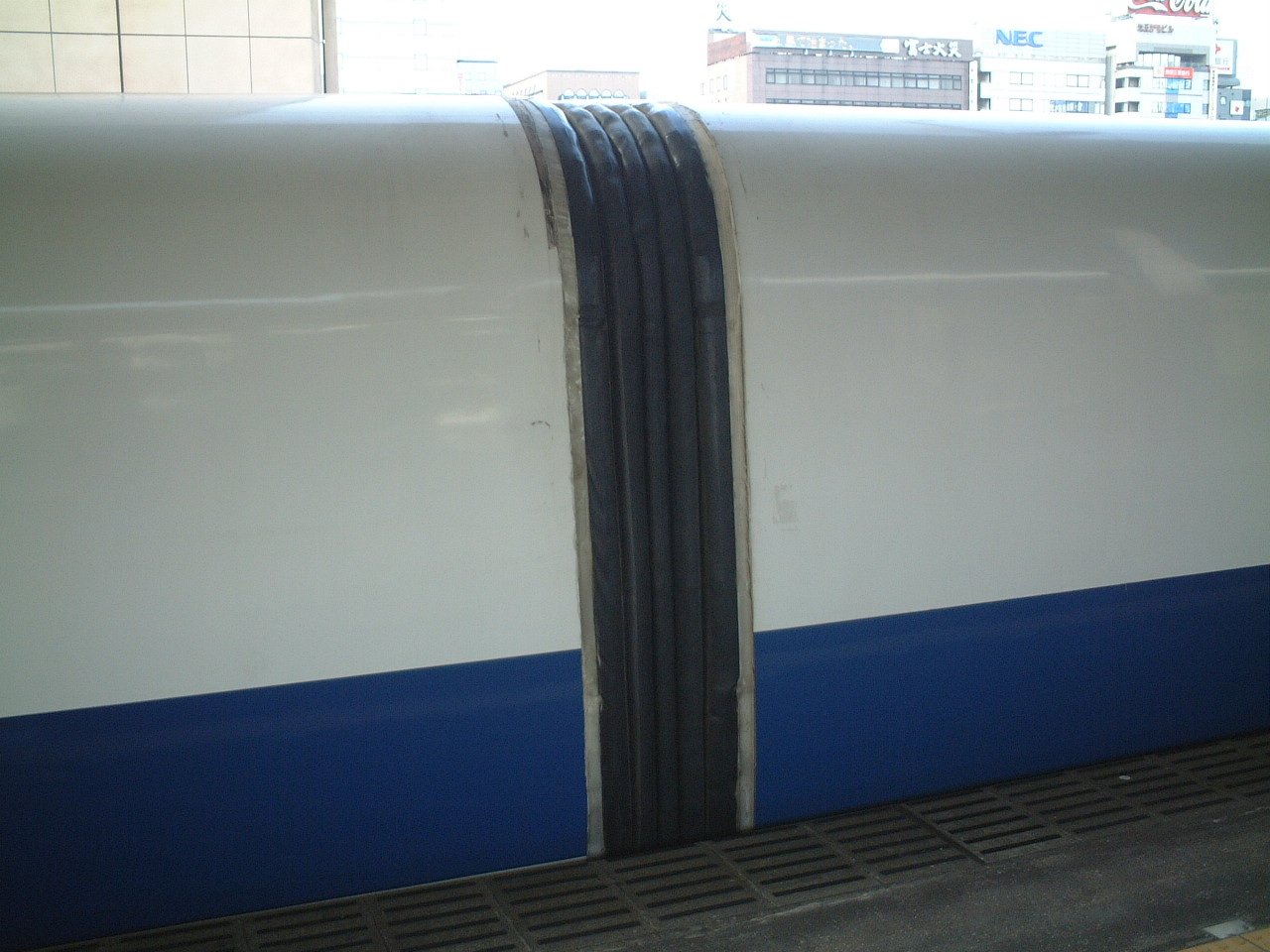
Japanese experimental high speed train type
| Field | Value | ||||
|---|---|---|---|---|---|
| name | Class 955 "300X" | ||||
| image | 300x-955-6.jpg | ||||
| imagesize | 300px | ||||
| caption | Preserved car 955-6 at Hamamatsu Works, July 2010 | ||||
| service | 1994–2002 | ||||
| manufacturer | Hitachi, Kawasaki Heavy Industries, Mitsubishi Heavy Industries, Nippon Sharyo | ||||
| yearconstruction | 1994 | ||||
| yearscrapped | 2002 | ||||
| numberbuilt | 6 vehicles | ||||
| numberservice | None | ||||
| numberpreserved | 2 vehicles | ||||
| numberscrapped | 4 vehicles | ||||
| formation | 6 cars | ||||
| fleetnumbers | A0 | ||||
| operator | JR Central | ||||
| depots | Tokyo | ||||
| lines | Tōkaidō Shinkansen | ||||
| carbody | Aluminium alloy | ||||
| carlength | {{Plainlist | ||||
| * {{Convert | 27150 | mm | ftin | abbr | on}} (end cars) |
| * {{Convert | 25000 | mm | ftin | abbr | on}} (intermediate cars) |
| width | 3100 mm | ||||
| height | 3300 mm | ||||
| maxspeed | 350 km/h (nominal) | ||||
| traction | 500 kW motors | ||||
| (4 per car) | |||||
| poweroutput | 12 MW | ||||
| electricsystem | [25 kV AC](25-kv-ac-railway-electrification), 60 Hz Overhead catenary | ||||
| collectionmethod | Pantograph | ||||
| gauge |
- 27150 mm (end cars)
- 25000 mm (intermediate cars) (4 per car)
"300X" was the name given to the Class 955 6-car experimental Shinkansen train developed in 1994 by the Central Japan Railway Company (JR Central) in Japan to test technology to be incorporated in future shinkansen trains operating at speeds of 300 km/h or higher.
Design
Manufacture of the train was shared among four different manufacturers, with a number of different body construction methods used. The two ends cars employed differing nose designs, and a number of pantograph shroud designs were tested over the lifetime of the trainset.
Formation
| Car No. | 1 | 2 | 3 | 4 | 5 | 6 | Designation | Numbering | Weight (t) |
|---|---|---|---|---|---|---|---|---|---|
| Mc | M | M | M | M | Mc | ||||
| 955-1 | 955-2 | 955-3 | 955-4 | 955-5 | 955-6 | ||||
| 36 | 36 | 36 | 32 | 36 | 36 |
Cars 2 and 5 were fitted with pantographs.
955-1
End car with "cusp" nose design, built by Mitsubishi Heavy Industries. The body was constructed of rivetted Duralumin. This car had no passenger seats.
955-2
The body was constructed by Nippon Sharyo using large hollow aluminium extrusions. This was the only car in the trainset to be fitted with passenger seats.
955-3
This vehicle was constructed by Kawasaki Heavy Industries using spot-welded large aluminium extrusions and was fitted with active tilting.
955-4
This vehicle was constructed by Nippon Sharyo using large hollow aluminium extrusions, similar to car 2, and was equipped with large side doors for installing and removing test equipment.
955-5
This vehicle was constructed by Hitachi using aluminium honeycomb panels. This car had no seats.
955-6
Hitachi-built end car with "wedge" nose design. The body was constructed of brazed aluminium honeycomb panels.
History

The train was unveiled on 22 December 1994.
Test-running on the Tōkaidō Shinkansen was delayed by track damage caused by the Great Hanshin earthquake in January 1995, but full-scale test-running commenced on 25 May 1995, between Maibara and Kyoto.
On 21 September 1995, the Class 955 train recorded a maximum speed of 354.1 km/h on the Tokaido Shinkansen between Maibara and Kyoto.
On 11 July 1996, the train recorded a maximum speed of 426.6 km/h, exceeding the previous national speed record of 425.0 km/h set in December 1993 by JR East's Class 952/953 "STAR21" experimental train.
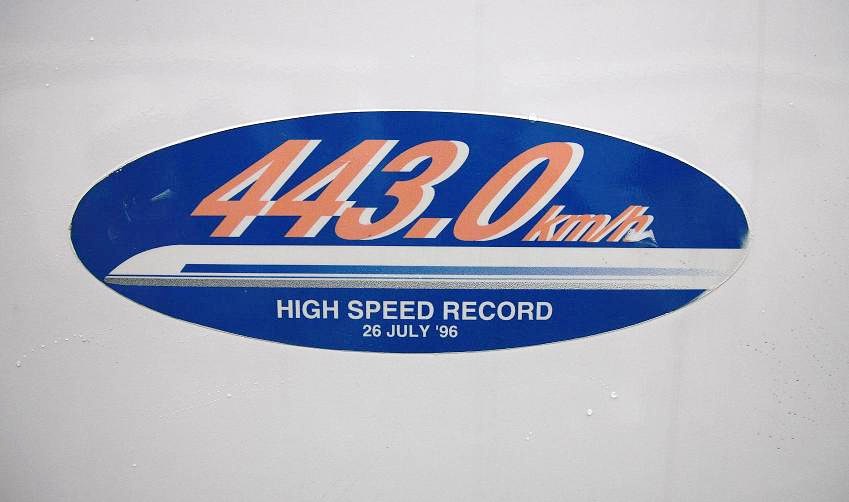
On 26 July 1996, the train recorded a Japanese national speed record of 443.0 km/h on the Tokaido Shinkansen between Maibara and Kyoto. This record still stands.
The Class 955 trainset was officially withdrawn on 1 February 2002.
Preservation
End car 955-1 is preserved outdoors at the RTRI large-scale wind tunnel test facility in Maibara, Shiga. End car 955-6 was initially preserved inside JR Central's Hamamatsu Works, and was moved to the new SCMaglev and Railway Park in 2010.
File:Shinkansen955-1-2.jpg|Car 955-1 preserved at Maibara, July 2006 File:300x 955-6.JPG|Car 955-6 preserved at Hamamatsu Works, July 2006 File:300X 955-6 SCMaglev and Railway Park 20110605.jpg|Car 955-6 preserved at the SCMaglev and Railway Park in Nagoya, June 2011
References
References
- Neko Publishing. (2001)
- Kotsu Shimbunsha. (December 2005)
- JRR. (July 1998)
- Suda. Hiroshi. JTB Can Books. (2000)
- Semmens, Peter. (1997). "High Speed in Japan: Shinkansen – The World's Busiest High-speed Railway". Platform 5 Publishing.
- JRR. (March 2011)
- Sanei Mook. (April 2009)
- JR Central. (21 July 2010). link
This article was imported from Wikipedia and is available under the Creative Commons Attribution-ShareAlike 4.0 License. Content has been adapted to SurfDoc format. Original contributors can be found on the article history page.
Ask Mako anything about 300X — get instant answers, deeper analysis, and related topics.
Research with MakoFree with your Surf account
Create a free account to save articles, ask Mako questions, and organize your research.
Sign up freeThis content may have been generated or modified by AI. CloudSurf Software LLC is not responsible for the accuracy, completeness, or reliability of AI-generated content. Always verify important information from primary sources.
Report