From Surf Wiki (app.surf) — the open knowledge base
2nd millennium BC
Millennium between 2000 BC and 1001 BC
Millennium between 2000 BC and 1001 BC
File:2nd millennium BC montage.jpg|thumb|400x400px|From top left clockwise: Hammurabi, Babylonian king, best known for his code of laws; The gold funerary mask of Tutankhamun has become a symbol of ancient Egyptian civilization and its enduring legacy; Nebra sky disc is considered the oldest concrete representation of astronomical phenomena, such as the Sun, Moon, and stars; The Lion Gate of Hattusa is a testament to the architectural and artistic skills of the Hittites; Hieroglyphs from the tomb of Seti I; Mask of Agamemnon (Background: Bull-Leaping Fresco ca. 1450-1400 BC). rect 23 27 345 383 Hammurabi rect 433 16 775 443 Tutankhamun rect 869 18 1264 338 Nebra sky disc rect 103 408 375 680 Mask of Agamemnon rect 466 470 833 705 Egyptian hieroglyphs rect 870 392 1262 656 Hittites
rect 1 1 1279 719 Minoan civilization The 2nd millennium BC spanned the years 2000 BC to 1001 BC. In the Ancient Near East, it marks the transition from the Middle to the Late Bronze Age. The Ancient Near Eastern cultures are well within the historical era: The first half of the millennium is dominated by the Middle Kingdom of Egypt and Babylonia. The alphabet develops. At the center of the millennium, a new order emerges with Mycenaean Greek dominance of the Aegean and the rise of the Hittite Empire. The end of the millennium sees the Bronze Age collapse and the transition to the Iron Age.
Other regions of the world are still in the prehistoric period. In Europe, the Beaker culture introduces the Bronze Age, presumably associated with Indo-European expansion. The Indo-Iranian expansion reaches the Iranian plateau and onto the Indian subcontinent (Vedic India), propagating the use of the chariot. Mesoamerica enters the Pre-Classic (Olmec) period. North America is in the late Archaic stage. In Maritime Southeast Asia, the Austronesian expansion reaches Micronesia. In Sub-Saharan Africa, the Bantu expansion begins.
World population rose steadily, possibly surpassing the 100 million mark for the first time.Klein Goldewijk, K., A. Beusen, M. de Vos and G. van Drecht (2011). The HYDE 3.1 spatially explicit database of human induced land use change over the past 12,000 years, Global Ecology and Biogeography20(1): 73–86. (pbl.nl). Jean-Noël Biraben, "Essai sur l'évolution du nombre des hommes", Population 34-1 (1979), 13–25 (p. 22) estimates c. 80 million in 2000 BC and c. 100 million at 1200 BC.
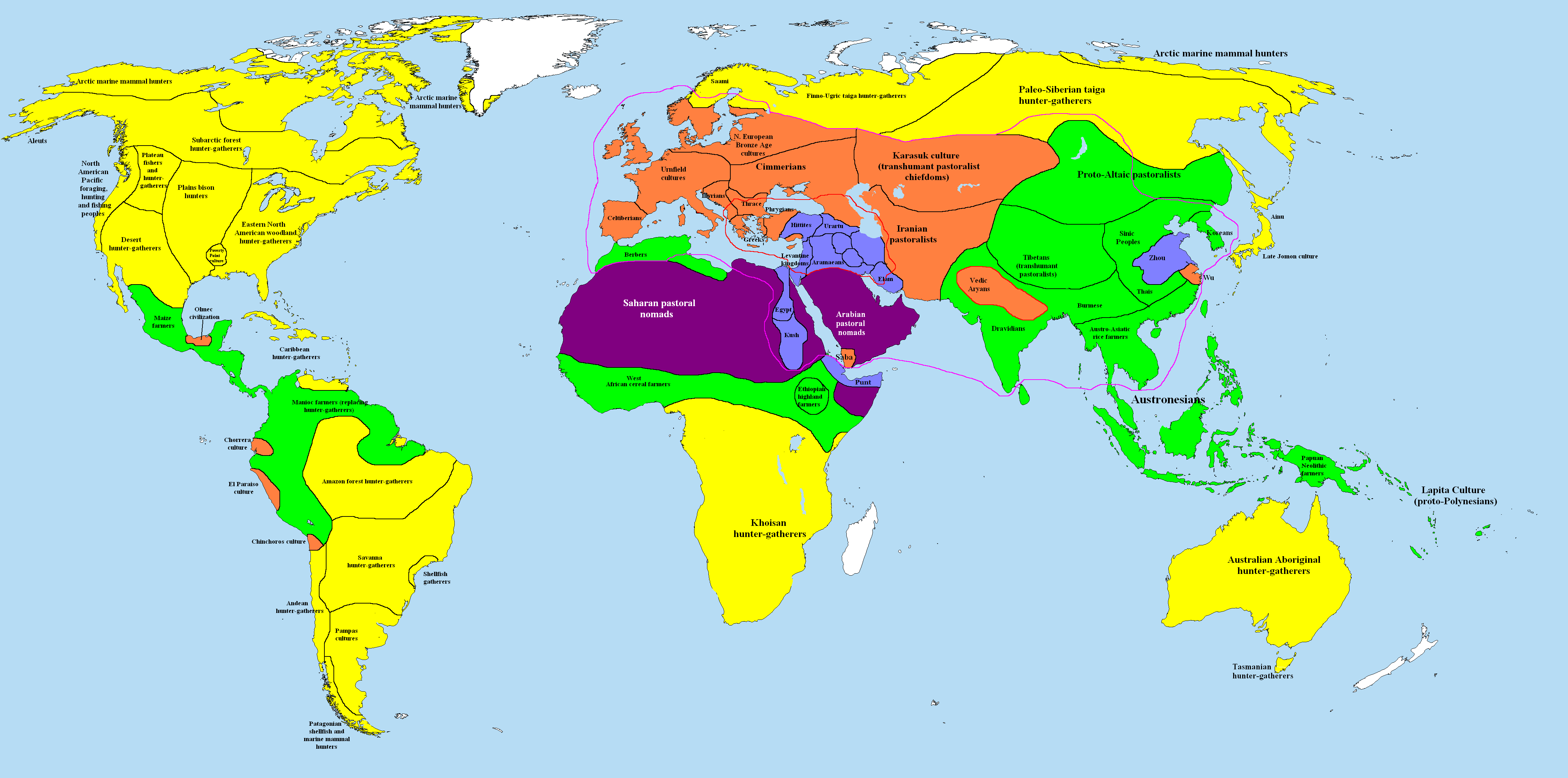
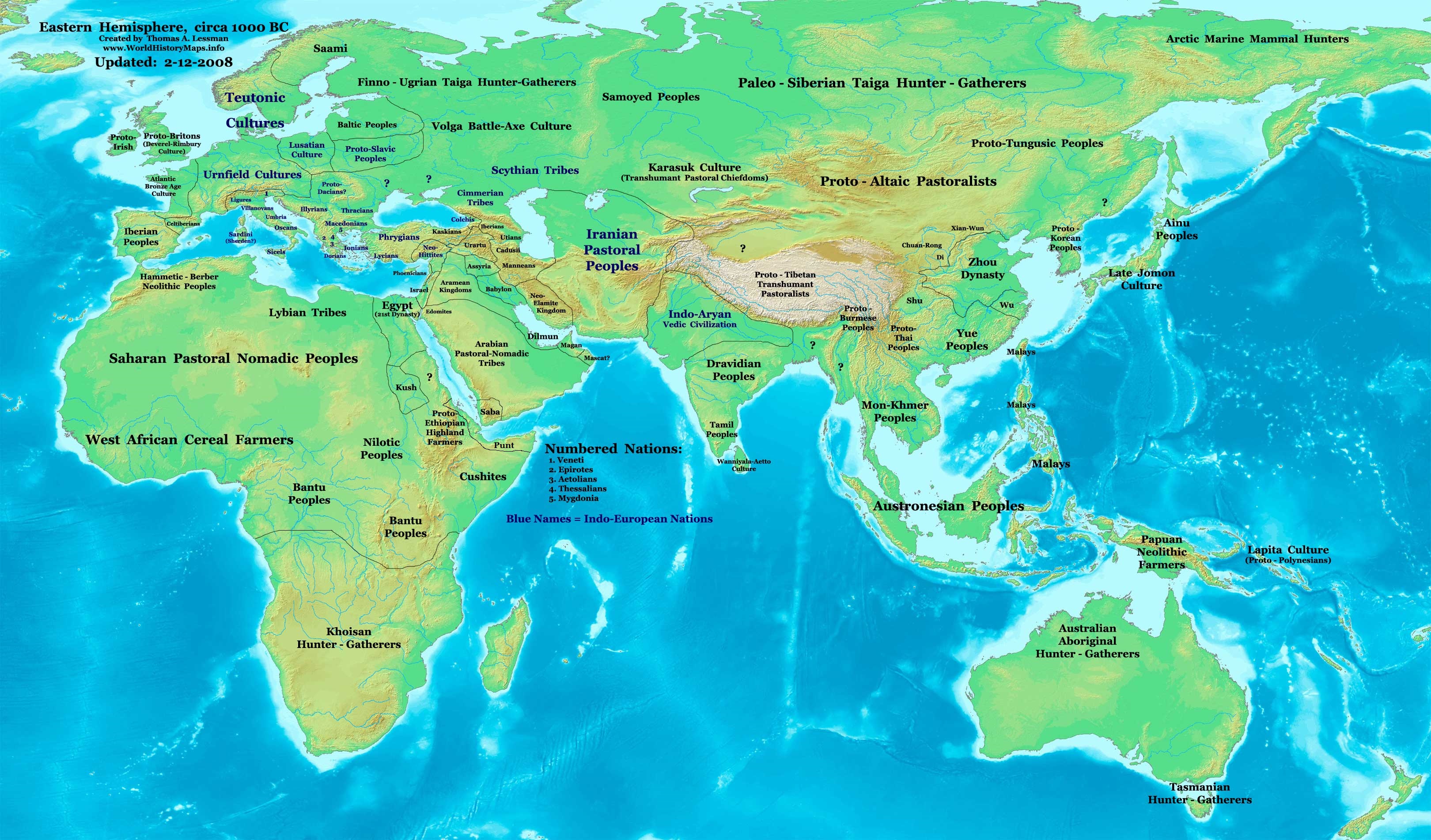
The world in the 2nd millennium BC
]]
History
See the article on chronology of the ancient Near East for a discussion regarding the accuracy and resolution of dates for events of the 2nd millennium BC in the Near East.
Middle Bronze Age
Spending much of their energies in trying to recuperate from the chaotic situation that existed at the turn of the millennium, the most powerful civilizations of the time, Egypt and Mesopotamia, turned their attention to more modest goals. The Pharaohs of the Middle Kingdom of Egypt and their contemporary Kings of Babylon, of Amorite origin, brought governance that was largely popular and approved of among their subjects, and favoured elegant art and architecture. Farther east, the Indus Valley Civilization was in a period of decline, possibly as a result of intense, ruinous flooding.
Egypt and Babylonia's military tactics were still based on foot soldiers transporting their equipment on donkeys. Combined with a weak economy and difficulty in maintaining order, this was a fragile situation that crumbled under the pressure of external forces they could not oppose.
Unrest of the 16th century
About a century before the middle of the millennium, bands of Indo-European invaders came from the Central Asian plains and swept through Western Asia and Northeast Africa. They were riding fast two-wheeled chariots powered by horses, a system of weaponry developed earlier in the context of plains warfare. This tool of war was unknown among the classical civilizations. Egypt and Babylonia's foot soldiers were unable to defend against the invaders: in 1630 BC, the Hyksos swept into the Nile Delta, and in 1595 BC, the Hittites swept into Mesopotamia.
Late Bronze Age
The people in place were quick to adapt to the new tactics, and a new international situation resulted from the change. Though during most of the second half of the 2nd millennium BC several regional powers competed relentlessly for hegemony, many developments occurred: there was new emphasis on grandiose architecture, new clothing fashions, vivid diplomatic correspondence on clay tablets, renewed economic exchanges, and the New Kingdom of Egypt played the role of the main superpower. Among the great states of the time, only Babylon refrained from taking part in battles, mainly due to its new position as the world's religious and intellectual capital.
The Bronze Age civilization at its final period of time, displayed all its characteristic social traits: low level of urbanization, small cities centered on temples or royal palaces, strict separation of classes between an illiterate mass of peasants and craftsmen, and a powerful military elite, knowledge of writing and education reserved to a tiny minority of scribes, and pronounced aristocratic life.
Near the end of the 2nd millennium BC, new waves of barbarians, this time riding on horseback, wholly destroyed the Bronze Age world, and were to be followed by waves of social changes that marked the beginning of different times. Also contributing to the changes were the Sea Peoples, ship-faring raiders of the Mediterranean.
Empires and dynasties
- Ancient Near East
- Middle Kingdom of Egypt
- New Kingdom of Egypt
- Nubian Kerma culture
- Old Assyrian Empire
- Middle Assyrian Empire
- Elam
- Hittites Old Kingdom in Anatolia
- Vedic India
- Kuru kingdomThe Kuru kingdom of the late Vedic period was most likely established around 1200 BC, although there are no datable contemporary references.
- Bronze Age China
- Shang dynasty
- Zhou dynasty
- Africa
- Land of Punt
Prehistoric cultures
;Europe
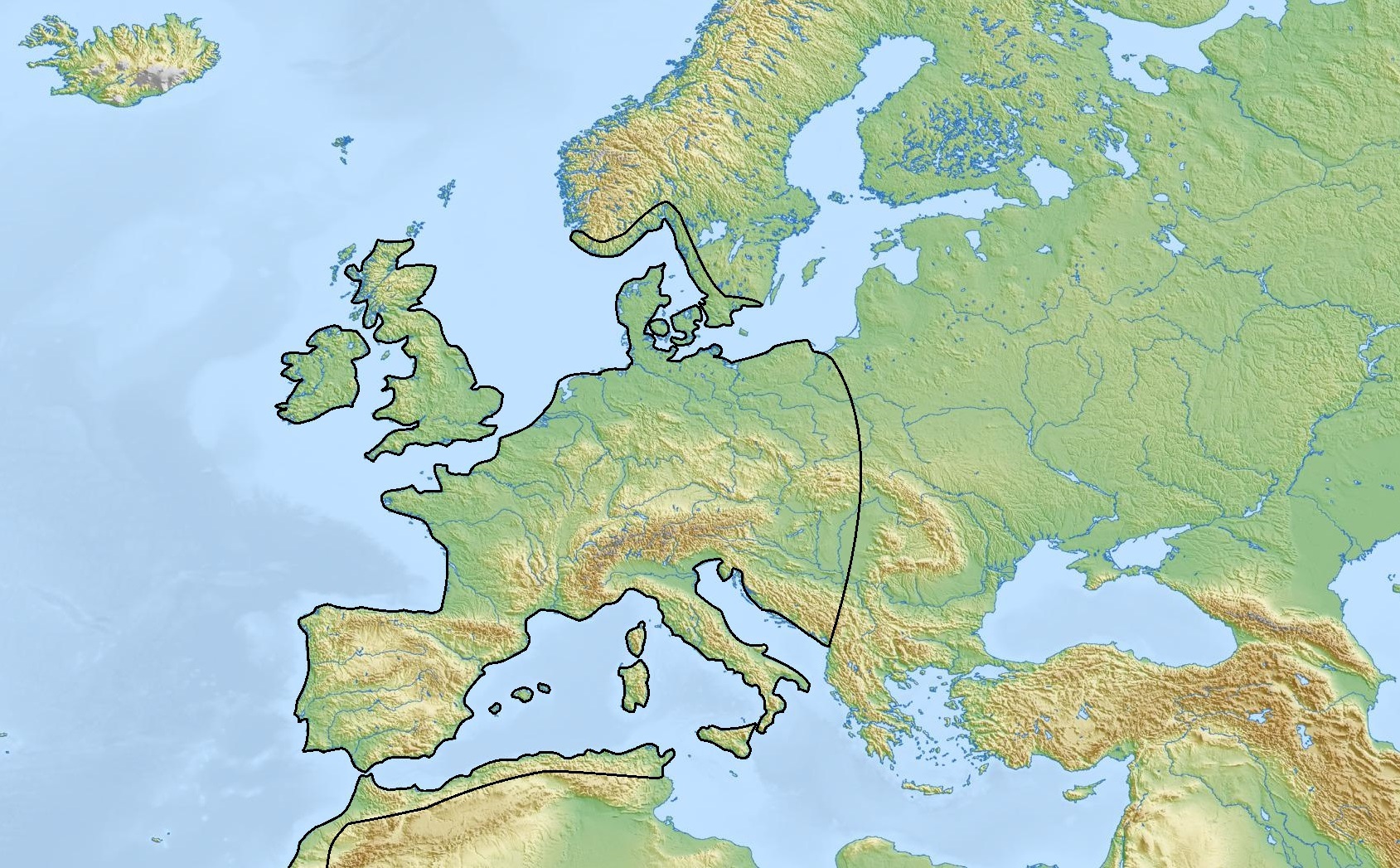
Europe is still entirely within the prehistoric era; much of Europe enters the Bronze Age early in the 2nd millennium.
- Aegean civilization
- Cycladic culture
- Helladic period
- Minoan civilization
- Mycenaean Greece
- [[File:Castel statue menhir.jpg|220x220px|thumb|Women figure of a [[Menhir]], typically dating to the Bronze Age]]Beaker culture
- Terramare culture
- Tumulus culture
- Unetice culture
- Urnfield culture
;Central Asia
- Andronovo culture
- Oxus civilization
;East Asia

- Erlitou culture
- Wucheng culture
;South Asia
- Ahar–Banas culture
- Cemetery H culture
- Indus Valley Civilization
- Jorwe culture
- Malwa culture
- Ochre Coloured Pottery culture
;Americas
- Olmec
;Sub-Saharan Africa The desiccation of the Sahara is complete. Neolithisation of Sub-Saharan Africa is initiated via expansion from the dried Sahara, reaching West and East Africa. Later in the 2nd millennium, pastoralism and iron metallurgy spread to Central Africa via the Bantu migration.
- Kerma culture
- Savanna Pastoral Neolithic
- Nok culture
Events

- 2000 BC – Seima-Turbino Phenomenon. | author-link = David Keys (author)
- 1700–1300 BC – Palace complex in Knossos, Crete, was built.
- 1700 BC earthquake damages palaces at Knossos and Phaistos.
- 1627 BC – Minoan eruption.
- 1600 BC–1360 BC – Egyptian domination over Canaan and Syria.
- 1575 BC – Nubian Kerma sacks Egypt.
- 1500 BC – Volcanic eruption at Thera.
- 1500 BC – Meteorite impact that formed the Kaali crater in Estonia.
- 1500 BC – Bantu expansion across central, eastern and southern Africa.
- 1520 BC – Egypt conquers Nubia.
- 1478 BC – Battle of Megiddo between Ancient Egyptians and the Canaanites.
- 1269 BC – Ramses II and Hattusilis III sign peace treaty.
- 1274 BC – Battle of Kadesh between Ancient Egyptians and Hittites.
- 1250 BC – destruction of Troy VII.
- 1045 BC – Zhou dynasty founded in China.
Inventions, discoveries, introductions
- Chinese Oracle bone script.
- Tumble polishing: Indians invented polishing method in the 10th century BC.
- Diamond drills: in the 12th century BC or 7th century BC, Indians not only innovated use of diamond tipped drills but also invented double diamond tipped drills for bead manufacturing.
- Phoenician alphabet.
- Nebra sky disk, oldest known visual representation of the cosmos.
- Discovery of new iron smelting and smithing techniques.
- Spoke-wheeled chariots.
- Oldest known trousers from a grave in Turpan, western China.
Languages
The earliest attested Indo-European language, the Hittite language, first appears in cuneiform in the 16th century BC (Anitta text), before disappearing from records in the 13th century BC. Hittite is the best known and the most studied language of the extinct Anatolian branch of Indo-European languages.
The first Northwest Semitic language, Ugaritic, is attested in the 14th century BC. The first fully phonemic script Proto-Canaanite developed from Egyptian hieroglyphs, becoming the Phoenician alphabet by 1200 BC. The Phoenician alphabet was spread throughout the Mediterranean by Phoenician maritime traders and became one of the most widely used writing systems in the world, and the parent of virtually all alphabetic writing systems. The Phoenician language is also the first Canaanite language, the Northwest Semitic languages spoken by the ancient peoples of the Canaan region: the Israelites, Phoenicians, Amorites, Ammonites, Moabites and Edomites.
Mycenaean Greek, the most ancient attested form of the Greek language, was used on the Greek mainland, Crete and Cyprus in the Mycenaean period.
Centuries and Decades
| **[11th century BC](11th-century-bc)** | [1090s BC](1090s-bc) | [1080s BC](1080s-bc) | [1070s BC](1070s-bc) | [1060s BC](1060s-bc) | [1050s BC](1050s-bc) | [1040s BC](1040s-bc) | [1030s BC](1030s-bc) | [1020s BC](1020s-bc) | [1010s BC](1010s-bc) | [1000s BC](1009-1000-bc) |
|---|
References
References
- "eruption of Thera {{!}} volcanic eruption, Thera, Greece [about 1500 BCE]".
- Cartwright, Mark. "Bantu Migration".
- David Hatcher Childress. (2000). "Technology of the Gods: The Incredible Sciences of the Ancients". Adventures Unlimited Press.
- Jane C. Waldbaum. (27 February 2009). "From bronze to iron: the transition from the Bronze age to the Iron age in the eastern Mediterranean". Paul Astroms Forlag.
- Kuznetsov, P.F.. (2006-09-01). "The emergence of Bronze Age chariots in eastern Europe". Antiquity.
This article was imported from Wikipedia and is available under the Creative Commons Attribution-ShareAlike 4.0 License. Content has been adapted to SurfDoc format. Original contributors can be found on the article history page.
Ask Mako anything about 2nd millennium BC — get instant answers, deeper analysis, and related topics.
Research with MakoFree with your Surf account
Create a free account to save articles, ask Mako questions, and organize your research.
Sign up freeThis content may have been generated or modified by AI. CloudSurf Software LLC is not responsible for the accuracy, completeness, or reliability of AI-generated content. Always verify important information from primary sources.
Report