From Surf Wiki (app.surf) — the open knowledge base
23andMe
American personal genomics company
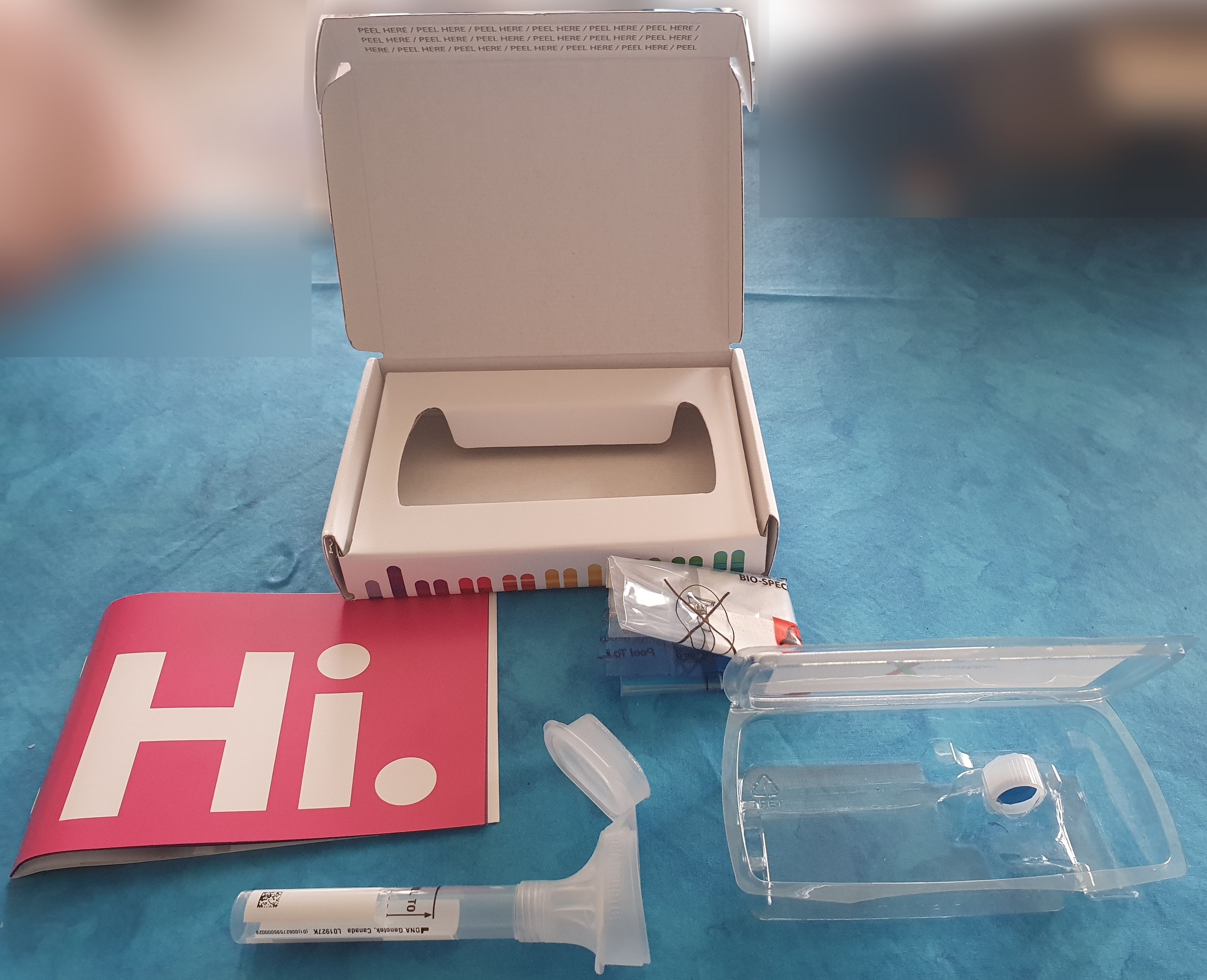
American personal genomics company
| Field | Value |
|---|---|
| name | 23andMe Holding Co. |
| logo | 23andMe logo.svg |
| logo_alt | 23andMe Logo |
| image | 23andmeheadquarters.jpg |
| image_caption | Former headquarters in Sunnyvale, California |
| type | Public |
| traded_as | |
| website | |
| foundation | |
| founders | |
| location_city | South San Francisco, California |
| defunct | March 2025 |
| fate | Filed for Chapter 11 Bankruptcy in March 2025; in June 2025, TTAM Research Institute bought 23andMe's assets for $305 million. |
| key_people | |
| industry | |
| products | |
| services | |
| owner | TTAM Research Institute |
| num_employees | 582 (2024) |
| revenue | (2024) |
| operating_income | (2024) |
| net_income | (2024) |
| assets | (2024) |
| equity | (2024) |
| footnotes | Financials . |
23andMe Holding Co. is an American personal genomics and biotechnology company based in South San Francisco, California.
Founded in 2006, 23andMe soon became the first company to begin offering autosomal DNA testing for ancestry, which all other major companies now use. Its saliva-based direct-to-consumer genetic testing business was named "Invention of the Year" by Time in 2008.
The company had a previously confrontational relationship with the United States Food and Drug Administration (FDA) due to its genetic health tests; as of October 2015, DNA tests ordered in the US include a revised health component, per FDA approval. 23andMe has been selling a product with both ancestry and health-related components in Canada since October 2014, and in the UK since December 2014.
23andMe became a publicly traded company in 2021, via a merger with a Special Purpose Acquisition Company (SPAC), and soon had a market capitalization of US$6 billion. By 2024, its valuation had fallen to 2% of that peak. In March 2025, 23andMe filed for Chapter 11 bankruptcy, and CEO Anne Wojcicki resigned. Due to the sensitive nature of data stored by 23andMe and privacy concerns due to bankruptcy filing, the attorney general of California subsequently issued a consumer alert for its customers.
On May 19, 2025, Regeneron agreed to buy 23andMe out of bankruptcy for $256 million, but in June TTAM Research Institute, a non-profit founded by Anne Wojcicki, made the winning bid of $305 million.
On July 14, 2025, TTAM announced that it had completed the purchase of 23andMe's assets.
History
Linda Avey, Paul Cusenza, and Anne Wojcicki founded 23andMe in 2006 to offer genetic testing and interpretation to individuals. Investment documents from 2007 also suggest that 23andMe hoped to develop a database to pursue research efforts. In 2007, Google invested $3.9 million in the company, along with Genentech, New Enterprise Associates, and Mohr Davidow Ventures. Wojcicki and Google co-founder Sergey Brin were married at the time.
Cusenza left the company in 2007 and Avey left in 2009.
In 2012, 23andMe raised $50 million in a Series D venture round, almost doubling its capital of $52.6 million. In 2015, 23andMe raised $115 million in a Series E offering, increasing capital to $241 million.
In September 2017, it was rumored the company was raising another $200 million with a $1.5 billion valuation. As of that time, the company had raised $230 million since its inception. Afterwards, it was reported the company raised $250 million, at a $1.75 billion valuation.
On July 25, 2018, 23andMe announced a partnership with GlaxoSmithKline to allow the pharmaceutical company to use test results from 5 million customers to design new drugs. GlaxoSmithKline invested $300 million in the company. In January 2022, this partnership was extended until July 2023 with an additional $50 million payment from GlaxoSmithKline.
The company was based in Mountain View, California, initially in North Bayshore and then downtown, until 2019, when it moved to a larger headquarters in Sunnyvale. In January 2020, 23andMe announced it would lay off about 100 employees in its consumer testing division.
In July 2020, 23andMe and GlaxoSmithKline announced their partnership's first clinical trial: a joint asset being co-developed by the two companies for cancer treatment. In December 2020, the company raised around $82.5 million in a series F round, bringing the total raised over the years to over $850M. The post-money valuation was not reported.
In February 2021, the company announced that it had entered into a definitive agreement to merge with Sir Richard Branson's special-purpose acquisition company, VG Acquisition Corp, in a $3.5 billion transaction. In June 2021, the company completed the merger with VG Acquisition Corp. The combined company was renamed to 23andMe Holding Co. and began trading on the Nasdaq stock exchange on June 17, 2021, under the ticker symbol "ME".
In October 2021, 23andMe announced that it would acquire Lemonaid Health, a telehealth company, for $400 million with the deal closing in November.
After 23andMe became a publicly traded company in 2021, it reached a market capitalization of $6 billion. By 2024, its valuation had fallen to 2% of that peak. Suggested factors include the fact that the company has never been profitable, with lack of recurring revenue from 23andMe's retail customers of its DNA kits (who only need to take the test once).
In an attempt to regain control, Wojcicki made an initial bid in February 2024 to take 23andMe private, offering $2.53 per share in a joint bid, but it did not proceed. In July 2024, Wojcicki offered 40 cents each for all outstanding shares not already owned by her directly or through affiliates. The proposal was rejected by a committee set up to evaluate options for the company's future, and in September the seven independent members of the board of directors all resigned. The company subsequently filed with the SEC indicating that it was no longer open to third-party acquisition offers.
The company conducted layoffs in November 2024.
In January 2025, 23andMe declared that it would need additional liquidity to fund operations, and was actively exploring strategic alternatives including a potential sale of the company. Wojcicki made a third offer of 41 cents per share in March 2025. On March 23, 2025, 23andMe filed for Chapter 11 bankruptcy protection in Delaware as part of a plan to sell its assets. The company listed assets and liabilities between $100 million and $500 million. Anne Wojcicki announced that she would be stepping down from her role as CEO, and would be replaced with CFO Joe Selsavage. Trading for company's shares was suspended on March 31 and stock was subsequently delisted from Nasdaq and commenced trading over-the-counter.
California Attorney General Rob Bonta issued a privacy consumer alert reminding Californian users of their right to request deletion of their genetic data. The company said there would not be any changes to the way it protects consumer data while in bankruptcy court. The bankruptcy auction was won by Regeneron Pharmaceuticals who agreed to buy the firm for $256 million. As part of the agreement, Regeneron would acquire all units of 23andMe except its on-demand telehealth service Lemonaid Health, and 23andMe would operate as a wholly owned unit of Regeneron. The transaction was expected to be completed in the third quarter of 2025. Following the acquisition, 23andMe announced that it would cease being a public company and deregister from the SEC effective June 6, 2025.
In June 2025, TTAM Research Institute, a non-profit founded by Anne Wojcicki, outbid Regeneron and bought 23andMe's assets for $305 million.
Products
Direct-to-consumer genetic testing

23andMe began offering direct-to-consumer genetic testing in November 2007. Customers provide a saliva testing sample that is partially single nucleotide polymorphism (SNP) genotyped and results are posted online. In 2008, when the company was offering estimates of "predisposition for more than 90 traits and conditions ranging from baldness to blindness", Time magazine named the product "Invention of the Year".
After the sample is received by the lab, the DNA is extracted from the saliva and amplified so that there is enough to be genotyped. The DNA is then cut into small pieces, and applied to a glass microarray chip, which has many microscopic beads applied to its surface. Each bead has a gene probe on it that matches the DNA of one of the many variants the company test for. If the sample has a match in the microarray, the sequences will hybridize, or bind together, letting researchers know that this variant is present in the customer's genome by a fluorescent label located on the probes. Tens of thousands of variants are tested out of the 10 to 30 million located in the entire genome. These matches are then compiled into a report that is supplied to the customer, allowing them to know if the variants associated with certain diseases, such as Parkinson's, celiac and Alzheimer's, are present in their own genome.
Uninterpreted raw genetic data may be downloaded by customers. This provides customers with the ability to choose one of the 23 chromosomes, as well as mitochondrial DNA, and see which base is located in certain positions in genes, and see how these compare to other common variants. Customers who bought tests with an ancestry-related component have online access to genealogical DNA test results and tools, including a relative-matching database. Customers can also view their mitochondrial haplogroup (maternal) and, if they are male or a relative shared a patriline that has also been tested, Y chromosome haplogroup (paternal). US customers who bought tests with a health-related component and received health-related results before November 22, 2013, have online access to an assessment of inherited traits and genetic disorder risks. Health-related results for US customers who purchased the test from November 22, 2013, were suspended until late 2015 while undergoing an FDA regulatory review. Customers who bought tests from 23andMe's Canadian and UK locations have access to some, but not all, health-related results.
As of February 2018, 23andMe has genotyped over 3,000,000 individuals. FDA marketing restrictions reduced customer growth rates. In February 2024, 23andMe said they had genotyped more than 14,000,000 individuals.
23andMe is commonly used for donor conceived people to find their biological siblings and in some cases their sperm or egg donor.
Product changes
In late 2009, 23andMe split its genotyping service into three products with different prices: an Ancestry Edition, a Health edition, and a Complete Edition. This decision was reversed a year later, when the different products were recombined. In late 2010, the company introduced a monthly subscription fee for updates based on new medical research findings. The subscription model proved unpopular with customers and was eliminated in mid-2012.
23andMe only sold raw genetic data and ancestry-related results in the US due to FDA restrictions from November 22, 2013, until October 21, 2015, when it announced that it would resume providing health information in the form of carrier status and wellness reports with FDA approval.
The price of the full direct-to-consumer testing service in the US reduced from $999 in 2007 to $399 in 2008 and to $99 in 2012, and was effectively being sold as a loss leader in order to build a valuable customer database. In October 2015, the US price was raised to $199. In September 2016, an ancestry-only version was once again offered at a lower price of $99 with an option to upgrade to include the health component for an additional $125 later.
The initial price of the product sold in Canada from October 2014, which includes health-related results, was . The initial price of the product sold in the UK from December 2014, which includes health-related results, was £125.
In February 2018, 23andMe announced that its ancestry reporting would tell people what country they were from, not just what region, and increased the number of regions by 120. Like other companies, it still lacked data about Asia and Africa, which the African Genetics Program (launched in October 2016 with a grant from the US National Institutes of Health) will rectify by recruiting sub-Saharan Africans to increase the genomic data on racial and ethnic minorities. Building off of the African Genetics Program, the Global Genetics Program was also announced in February 2018. This program aims to increase the genomic data of 61 underrepresented countries in their database by providing free tests to individuals that have all 4 grandparents from one of the countries. In April 2018, 23andMe announced the Populations Collaboration Program, which sets up formal collaborations between the company and researchers that are investigating underrepresented countries.
Additional services
Since October 1, 2020, the company has offered a new service called "23andMe+", priced at $29/year, for the customers of the "Health + Ancestry" service, who completed genotyping on version 5 of the microarray chip used by the company. The new service makes available additional reports on health and pharmacogenetics, and commits to provide ongoing new reports and features.
Lemonaid Health acquisition
At the end of 2021, 23andMe acquired leading digital healthcare company Lemonaid Health for $400m to "...give patients and healthcare providers better information about health risks and treatment". Paul Johnson, CEO and co-founder of Lemonaid Health became COO of the 23andMe consumer business.
Instrument and chip versions
Up until 2010, Illumina only sold instruments that were labeled "for research use only"; in early 2010, Illumina obtained FDA approval for its BeadXpress system to be used in clinical tests.
Government regulation in the United States
The new genetic testing service and ability to map significant portions of the genome has raised controversial questions, including whether the results can be interpreted meaningfully and whether they will lead to genetic discrimination.
State regulators
In 2008, New York and California each provided notice to 23andMe and similar companies that those companies needed to obtain a CLIA license in order to sell tests in those states. By August 2008, 23andMe had received licenses that allow them to continue to do business in California.
FDA
According to Anne Wojcicki, 23andMe has been in dialogue with the FDA since 2008. In 2010, the FDA notified several genetic testing companies, including 23andMe, that their genetic tests are considered medical devices and federal approval is required to market them; a similar letter was sent to Illumina, which makes the instruments and chips used by 23andMe in providing its service. 23andMe first submitted applications for FDA clearance in July and September 2012.
In November 2013, the FDA published guidance on how it classified genetic analysis and testing services offered by companies using instruments and chips labelled for "research use only" and instruments and chips that had been approved for clinical use.
At around the same time, after not hearing from 23andMe for six months, the FDA ordered 23andMe to stop marketing its saliva collection kit and personal genome service (PGS), as 23andMe had not demonstrated that they have "analytically or clinically validated the PGS for its intended uses" and that the "FDA is concerned about the public health consequences of inaccurate results from the PGS device". , 23andMe had stopped all advertisements for its PGS test but is still selling the product. , 23andMe was selling only raw genetic data and ancestry-related results.
23andMe publicly responded to media reports on November 25, 2013, stating, "We recognize that we have not met the FDA's expectations regarding timeline and communication regarding our submission. Our relationship with the FDA is extremely important to us and we are committed to fully engaging with them to address their concerns." CEO Anne Wojcicki subsequently posted an update on the 23andMe website, stating: "This is new territory for both 23andMe and the FDA. This makes the regulatory process with the FDA important because the work we are doing with the agency will help lay the groundwork for what other companies in this new industry do in the future. It will also provide important reassurance to the public that the process and science behind the service meet the rigorous standards required by those entrusted with the public's safety."
On December 5, 2013, 23andMe announced that it had suspended health-related genetic tests for customers who purchased the test from November 22, 2013, in order to comply with the FDA warning letter, while undergoing regulatory review.
In May 2014, it was reported that 23andMe was exploring alternative locations abroad, including Canada, Australia, and the United Kingdom, in which to offer its full genetic testing service. 23andMe had been selling a product with both ancestry and health-related components in Canada since October 2014, and in the UK since December 2014.
In 2014, 23andMe submitted a 510(k) application to the FDA to market a carrier test for Bloom syndrome, which included data showing that 23andme's results were consistent and reliable and that the saliva collection kit and instructions were easy enough for people to use without making mistakes that might affect their results, and included citations to the scientific literature showing that the specific tests that 23andMe offered were associated with Blooms. The FDA cleared the test in February 2015; in the clearance notice, the FDA said that it would not require similar applications for other carrier tests from 23andMe. The FDA sent further clarification about regulation of the test to 23andMe on October 1, 2015.
On October 21, 2015, 23andMe announced that it would begin marketing carrier tests in the US again.
23andMe submitted a "de novo" application to the FDA to market tests that provide people with information about whether they have gene mutations or alleles that put them at risk for getting or having certain diseases; the applications included data showing that 23andMe's results were consistent and reliable. In April 2017, the FDA approved the applications for ten tests: late-onset Alzheimer's disease, Parkinson's disease, celiac disease, hereditary thrombophilia, alpha-1 antitrypsin deficiency, glucose-6-phosphate dehydrogenase deficiency, early-onset of dystonia, factor XI deficiency, and Gaucher's disease. The FDA also said that it intended to exempt further 23andMe genetic risk tests from the needing 510(k) applications, and it clarified that it was only approving genetic risk tests, not diagnostic tests.
In March 2018, the FDA approved another de novo application from the company, this one for a direct-to-consumer test for three specific BRCA mutations that are the most common BRCA mutations in people of Ashkenazi descent; they are not however the most common BRCA mutations in the general population, and the test is only for three of the approximately 1,000 known mutations. These mutations increase the risk of breast and ovarian cancer in women, and the risk of breast and prostate cancer in men.
COVID-19
In June 2020, 23andMe published results from a study that claimed that people with type O blood may be at lower risk of catching COVID-19. Out of more than 750,000 participants, those with type O blood were 9–18% less likely to contract the virus, while those who had been exposed were 13–26% less likely to test positive. The study was published in April 2021 in Nature Genetics. Subsequent research focused on examining genetic associations with COVID-19 symptoms such as loss of taste or smell, vaccine reactions and its impact across different ethnicities, and risk factors of long COVID. Findings from their long COVID research was presented in 2023 ASHG conference.
Informed consent and privacy concerns
Questions have been raised since at least 2013 as to whether the company can obtain informed consent through its web-based interactions with people who want to submit samples for sequencing.
The company collects not only genetic and personal information from customers who order DNA tests, but also data about other web behavior information that 23andMe captures through the use of its website, products, software, cookies, and through its smartphone app. A combination of several individual policies within the terms of service and privacy policy (cookies, disclosure of aggregate data, targeted advertising) makes 23andMe a valuable data mine for third parties such as health insurance companies, pharmaceutical companies, advertising companies, biotechnology companies, law enforcement, or other interested parties. People may not actually be aware of how the company uses the data, and there are always risks of data breaches. Personal information of customers of 23andMe “may be accessed, sold or transferred”.
United States
Depending on which state an individual resides in, 23andMe must follow that state's laws regarding privacy and disclosing information. Since 23andMe is not a medical provider, the company does not have to abide by standard privacy policies that must be followed at a doctor's office, such as the Health Insurance Portability and Accountability Act (HIPAA). Research by Deloitte has shown that only 9% of consumers actually read the terms and conditions, and research from ProPrivacy concluded that only 1% of consumers read the policies, which suggests that consent to be included in research may have been given without full knowledge of the permissions being given. In addition, 23andMe's privacy policy can be confusing for consumers to understand. Despite confusion, 23andMe's informed consent practices are approved by an institutional review board. Several sections of the privacy policy allows data to be disclosed to third parties, regardless whether the consent is signed:
Section 4(b) "We permit third party advertising networks and providers to collect Web-Behavior Information regarding the use of our Services to help us to deliver targeted online advertisements ('ads') to you."
Section 4(c): "Regardless of your consent status, we may also include your data in aggregate data that we disclose to third-party research partners who will not publish that information in a scientific journal."
Section 4(d): "We may share some or all of your Personal Information with other companies under common ownership or control of 23andMe, which may include our subsidiaries, our corporate parent, or any other subsidiaries owned by our corporate parent in order to provide you better service and improve user experience."
The Genetic Information Nondiscrimination Act (GINA) protects a person against discrimination based on genetic information by their employer(s) or insurance companies in most situations. However, GINA does not extend to discrimination based on genetic information for long-term care or disability-insurance providers.
European Union
Effective 25 May 2018, 23andMe must abide by the General Data Protection Regulation (GDPR). The GDPR is a set of rules/regulations that helps an individual take control of their data information that is collected, used and stored digitally or in a structured filing system on paper, and restricts a company's use of personal data. The regulation also applies to companies who offer the company's products/services outside of the EU.
Medical research
Over 80% of 23andMe customers have opted in to having their data used in research. Aggregated customer data is studied by scientific researchers employed by 23andMe for research on inherited disorders; rights to use customers' data is also sold to pharmaceutical and biotechnology companies for use in their research. The company also collaborates with academic and government scientists. In July 2012, 23andMe acquired the startup CureTogether, a crowdsourced treatment ratings website with data on over 600 medical conditions. 23andMe has an optional consent that enables the individual's genetic information to be included in medical research that may be published in a scientific journal. However, if an individual chooses not to consent for their 'personal information' to be used, their 'genetic information' and 'self-reported information' may still be used and shared with the company's third party service providers.
In 2010, 23andMe said that it was able to use its database to validate work published by the NIH: identifying mutations in the gene that codes for glucocerebrosidase as a risk factor for Parkinson's disease.
In 2015, 23andMe made a business decision to pursue drug discovery themselves, under the direction of former Genentech executive Richard Scheller. One of their main focuses is Parkinson's disease, and they are utilizing the 23andMe database to search for rare variants associated with Parkinson's in the hope of developing a drug for the disease. The company also set up research agreements with the pharmaceutical company Pfizer to explore the genetic causes of inflammatory bowel disease, namely ulcerative colitis and Crohn's disease.
In 2016, a project that the company was developing to provide customers with next generation sequencing was ended, because of the fear that the results would be too complicated or vague to fit into the company's goal of providing useful information, both quickly and precisely, directly to consumers, according to Wojcicki. Also in 2016, 23andMe used self-reported data from customers to locate 17 genetic loci that seem to be associated with depression.
In 2017, 23andMe, the Lundbeck pharmaceutical company, and the Milken Institute think tank started collaborations to focus on psychiatric disorders, such as bipolar disorder and major depression. Their goals are to determine the genetic roots of such disorders, as well as pursue drug discovery in those areas.
Use by law enforcement
23andMe's transparency report states that they had received requests from law enforcement for 15 US users' data since 2015 as of September 2024, and none from other countries. Data Produced (By User Account) was zero. The 23andMe Privacy Policy states that customers "can rest assured, we will not voluntarily share your Personal Information with... Law enforcement, absent a valid court order, subpoena, or search warrant".
2023 data breach
Main article: 23andMe data leak
In October 2023, a significant data breach occurred and sensitive information of 23AndMe users was stolen. Hackers stole 7 million people's data, about half of 23andMe's customers at the time. Stolen information included people's names, addresses and genetic data and was sold online. In June 2025, the UK’s Information Commissioner’s Office (ICO) fined 23andMe £2.31 million for failing to protect user data, citing inadequate security measures and a slow response to the 2023 breach. Regulators criticised the company for weak security practices, including the lack of multi-factor authentication and inadequate monitoring of threats, which allowed hackers to access sensitive genetic and personal information.
The company claimed that it was a credential stuffing incident rather than a breach into their systems. The hackers targeted Ashkenazi Jews and users of Chinese descent and are attempting to sell the stolen information. The affected accounts had enabled the platform's "DNA Relatives" feature, which helps users find genetic relatives and connect with each other.
References
References
- (May 30, 2024). "23andMe Holding Co. Fiscal 2024 Annual Report (Form 10-K)". [[U.S. Securities and Exchange Commission]].
- "Fact Sheet". 23andMe.
- "Autosomal SNP comparison chart - ISOGG Wiki".
- "Autosomal DNA testing comparison chart". Gene by Gene.
- Herper, Matthew. (December 5, 2013). "23andMe Stops Offering Genetic Tests Related to Health". Forbes.
- Pollack, Andrew. (October 21, 2015). "23andMe Will Resume Giving Users Health Data". The New York Times.
- (October 1, 2014). "U.S. company launches genetic health and ancestry info service in Canada". Winnipeg Free Press.
- (October 2, 2014). "5Q: Anne Wojcicki, CEO 23andMe on knowing your DNA data (and being married to the boss of Google)". Yahoo Finance Canada.
- (October 2, 2014). "23andme genetic testing service raises ethical questions". CBC News.
- (December 2, 2014). "Controversial DNA test comes to UK". BBC News.
- Winkler, Rolfe. (31 January 2024). "23andMe's Fall From $6 Billion to Nearly $0". Wall Street Journal.
- (2025-03-24). "23andMe files for bankruptcy protection".
- "23andMe is filing for bankruptcy. Here's what it means for your genetic data". NPR.
- (2025-03-21). "Attorney General Bonta Urgently Issues Consumer Alert for 23andMe Customers".
- Seal, Rolfe Winkler and Dean. (May 19, 2025). "Regeneron to Buy 23andMe Out of Bankruptcy for $256 Million".
- Capoot, Ashley. (2025-06-13). "Anne Wojcicki to buy back 23andMe and its data for $305 million".
- (July 14, 2025). "TTAM Research Institute, A Nonprofit Public Benefit Corporation, Completes The Acquisition of 23andMe Assets". GlobeNewswire.
- Goetz, Thomas. (November 17, 2007). "23AndMe Will Decode Your DNA for $1,000. Welcome to the Age of Genomics".
- "All those 23andMe spit tests were part of a bigger plan firm".
- (May 22, 2007). "Google invests in genetics firm". [[BBC]] News.
- Wishart-Smith, Heather. "23andHim: The Untold Story Of 23andMe's Third Co-Founder".
- Tsotsis, Alexia. (December 11, 2012). "Another $50M Richer, 23andMe Drops Its Price To $99 Permanently. But Will The Average Dude Buy In?". AOL.
- (September 6, 2017). "23andMe hits $1.5B pre-money valuation in latest huge funding round". [[TechCrunch]].
- (April 9, 2018). "23andMe: Building a Genetically-Sound Company". Ivey Business Review.
- Fox, Maggie. (July 25, 2018). "Drug giant Glaxo teams up with DNA testing company 23andMe". [[NBC News]].
- Leuty, Ron. (January 18, 2022). "23andMe is getting $50M from GSK to extend their research partnership".
- Donato-Weinstein, Nathan. (September 23, 2014). "23andMe snags new HQ in downtown Mountain View".
- Lopez, Grace. (October 3, 2019). "23andMe Signs Lease at New Silicon Valley HQ".
- (June 10, 2022). "23andMe shrinks with HQ move to South SF".
- Farr, Christina. (2020-01-23). "23andMe lays off 100 people as DNA test sales decline, CEO says she was 'surprised' to see market turn".
- Ho, Catherine. (January 23, 2020). "23andMe lays off 14% of workforce amid slowdown in DNA testing market". [[San Francisco Chronicle]].
- (2020-07-29). "23andMe and GSK Begin First Clinical Trial with Cancer Therapy". 23andMe.
- (December 29, 2020). "23andMe raises $82.5 million in new funding". [[Techcrunch]].
- (2021-02-04). "23andMe Goes Public as $3.5 Billion Company With Branson Aid".
- (2021-06-17). "23andMe Successfully Closes its Business Combination with VG Acquisition Corp.".
- Rosenbaum, Eric. (June 17, 2021). "Genetic testing company 23andMe rises in first trade after Richard Branson SPAC merger".
- John Commins. (October 26, 2021). "23andME Will Spend $400M To Acquire Lemonaid Health". Health Leaders Media.
- (26 May 2022). "23andMe Reports FY2022 Fourth Quarter and Full Year Financial Results".
- Capoot, Ashley. (2024-02-08). "23andMe considers splitting up company to revive stock price".
- (2025-03-03). "23andMe special committee again rejects CEO Wojcicki's take-private offer".
- (September 30, 2024). "23andMe CEO Wojcicki no longer open to third-party takeover proposals, filing shows".
- (August 2, 2024). "23andMe Special Committee responds to CEO's take-private proposal". 23andMe.
- Morrow, Allison. (2024-09-20). "What happened to 23andMe?".
- (16 October 2024). "As 23andMe faces bankruptcy, your genetic data could be sold to highest bidder". ABC News.
- (2025-03-24). "23andMe files for Chapter 11 bankruptcy as co-founder and CEO Wojcicki resigns".
- Capoot, Ashley. (2025-01-28). "23andMe is exploring strategic alternatives, looking to raise capital".
- (March 23, 2025). "DNA testing firm 23andMe files for bankruptcy to sell itself".
- (2025-03-28). "23andMe Delisted From Nasdaq, Will Not Appeal".
- (2025-03-24). "Column {{!}} Delete your DNA from 23andMe right now". The Washington Post.
- (19 May 2025). "Regeneron to buy bankrupt 23andMe, vows ethical use of customer DNA data". [[Reuters]].
- Capoot, Ashley. (May 27, 2025). "23andMe to delist from Nasdaq, deregister with SEC".
- Capoot, Ashley. (2025-06-13). "Anne Wojcicki to buy back 23andMe and its data for $305 million".
- "Our Service: Genotyping Technology". 23andMe.
- Madara, Jason. [https://www.wired.co.uk/article/the-extraction-process "The extraction process: meet 23andme's Anne Wojcicki"], ''[[WIRED UK]]'', March 6, 2017. Retrieved April 17, 2018.
- (December 12, 2012). "Genes, patents, and big business: at 23andMe, are you the customer or the product?". [[The Verge]].
- Baertlein, Lisa. (November 20, 2007). "Google-backed 23andMe offers $999 DNA test". [[USA Today]].
- (January 23, 2012). "With DNA Testing, Suddenly They Are Family". The New York Times.
- Fung, Brian. (December 6, 2013). "Bowing again to the FDA, 23andMe stops issuing health-related genetic reports". The Washington Post.
- Regalado, Antonio. (February 12, 2018). "2017 was the year consumer DNA testing blew up". MIT Technology Review.
- Kiss, Jemima. (March 9, 2014). "23andMe admits FDA order 'significantly slowed up' new customers". The Guardian.
- (17 February 2024). "'There are no serious safeguards': can 23andMe be trusted with our DNA?". The Guardian.
- (January 25, 2018). "No more Mr. Anonymous for sperm donors".
- Wu, Shirley. (November 13, 2009). "Get Just the Information You Want: 23andMe To Offer Separate Health and Ancestry Editions". 23andMe.
- Vorhaus, Dan. (November 23, 2010). "A Thanksgiving Tradition: 23andMe Repackages Product, Raises Prices". Robinson Bradshaw & Hinson.
- MacArthur, Daniel. (November 24, 2010). "News from 23andMe: a bigger chip, a new subscription model and another discount drive". Wired.
- (May 10, 2012). "23andMe Eliminates Subscription Model". GenomeWeb Daily News.
- (2015-10-21). "23andMe reboots genetic health testing, now with FDA approval".
- Pollack, Andrew. (September 9, 2008). "DNA Profile Provider Is Cutting Its Prices". The New York Times.
- (September 10, 2008). "23andMe's Price Cut: The End of Personal Genomics?". CBSNews.com.
- (March 24, 2014). "23andMe Pursues Health Research in the Shadow of the FDA". Bio-IT World.
- (September 22, 2016). "23andMe is now offering a $99 genetics test again – but it's very different from the original". Business Insider.
- (December 2, 2014). "DNA-screening test 23andMe launches in UK after US ban". The Guardian.
- Farr, Christina. (February 28, 2018). "23andMe is getting more specific with its DNA ancestry tests, adding 120 new regions". CNBC.
- Hayden, Erika Check. [https://www.nature.com/news/the-rise-and-fall-and-rise-again-of-23andme-1.22801 "The rise and fall and rise again of 23andMe"], ''[[Nature (journal). Nature]]'', October 11, 2017. Retrieved April 21, 2018.
- Zhang, Sarah. [https://www.theatlantic.com/science/archive/2018/04/23andme-diversity-dna/558575/ "23andMe Wants Its DNA Data to Be Less White"], ''[[The Atlantic]]'', April 23, 2018.
- (October 1, 2020). "23andMe+: An ongoing approach to your genetics".
- (2021-10-21). "23andMe to buy telehealth firm Lemonaid for $400 mln". Reuters.
- (2021-10-22). "23andMe snaps up prescription platform Lemonaid Health for $400M".
- HealthLeaders. "23andMe Will Spend $400M to Acquire Lemonaid Health".
- (May 4, 2010). "FDA Clears Illumina's BeadXpress System for Clinical Use". GenomeWeb.
- "510(k) Premarket Notification K093128". FDA.
- Greely, Hank. (November 25, 2013). "The FDA drops an anvil on 23andMe – now what?". Stanford University.
- Hamilton, Anita. (October 29, 2008). "Best Inventions of 2008".
- (April 18, 2008). "States Crack Down On Online Gene Tests". Forbes.
- Kincaid, Jason. (June 18, 2008). "Cease And Desist: California Tries to Unravel 23andMe's Genetic Testing". [[TechCrunch]].
- Pollack, Andrew. (August 20, 2008). "California Licenses 2 Companies to Offer Gene Services". The New York Times.
- Wojcicki, Anne. (November 26, 2013). "An Update Regarding The FDA's Letter to 23andMe". 23andMe.
- (June 11, 2010). "FDA cracking down on genetic tests". NBC.
- (June 11, 2010). "F.D.A. Faults 5 Companies on Genetic Tests". The New York Times.
- (November 22, 2013). "Inspections, Compliance, Enforcement, and Criminal Investigations – 23andMe, Inc.". FDA.
- (February 1, 2014). "A New Chapter in FDA Regulation". AACC.org – Clinical Laboratory News.
- Perrone, Matthew. (November 25, 2013). "FDA Tells 23andMe to Halt Sales of Genetic Test". [[ABC News (United States).
- Gray, Tyler. (November 25, 2013). "FDA To 23andMe Founder Anne Wojcicki: Stop Marketing $99 DNA Test Or Face Penalties".
- Garde, Damian. (December 3, 2013). "23andMe pulls ads after FDA warning, but sales roll on". FierceMarkets.
- del Castillo, Michael. (December 3, 2013). "Calm down about 23andMe, the media is getting it wrong". Upstart Business Journal.
- Khan, Razib. (November 25, 2013). "The FDA's Battle With 23andMe Won't Mean Anything in the Long Run".
- Etherington, Darrell. (November 25, 2013). "DNA Testing Startup 23andMe Hits A Snag As FDA Shuts Down Sales Of Home Testing Kit". [[TechCrunch]].
- Young, Susan. (November 25, 2013). "Updated: FDA Orders 23andMe to Stop Genetic Tests".
- (May 6, 2014). "Gene startup 23andme casts eyes abroad after U.S. regulatory hurdle". Reuters.
- "Device Classification under Section 513(f)(2)(de novo)". FDA.
- (February 19, 2015). "FDA permits marketing of first direct-to-consumer genetic carrier test for Bloom syndrome". FDA News Release.
- (February 19, 2015). "23andMe Gets FDA Clearance to Market Bloom Syndrome Carrier Test Directly to Consumers". GenomeWeb.
- (October 1, 2015}}. [https://www.accessdata.fda.gov/cdrh_docs/reviews/den140044.pdf Decision Summary: Evaluation of DEN140044]{{dead link). "Letter re DEN140044". FDA.
- Bensinger, Greg. (October 26, 2016). "Disconnect Between Silicon Valley and Regulators Over Health Technologies, 23andMe CEO Says". Wall Street Journal.
- (April 6, 2017). "FDA allows marketing of first direct-to-consumer tests that provide genetic risk information for certain conditions". FDA.
- (April 6, 2017). "F.D.A. Will Allow 23andMe to Sell Genetic Tests for Disease Risk to Consumers". The New York Times.
- Stallings, Erika. (2018-03-30). "Opinion {{!}} Allowing 23andMe To Test For BRCA May Do More Harm Than Good".
- (March 6, 2018). "FDA authorizes, with special controls, direct-to-consumer test that reports three mutations in the BRCA breast cancer genes". FDA.
- Kuchler, Hannah. (2020-06-08). "Study links blood type to lower risk of catching coronavirus". Financial Times.
- Brown, Kristen V. (2020-06-08). "23andMe Provides More Evidence That Blood Type Plays Role in Virus".
- "23andMe provides more evidence that blood type plays role in COVID-19 virus".
- (June 2021). "Trans-ancestry analysis reveals genetic and nongenetic associations with COVID-19 susceptibility and severity". Nature Genetics.
- (September 9, 2020). "23andMe COVID-19 Study Findings Published". 23andme.
- ((23andMe)). (2023-03-29). "COVID-19 Three Years In".
- ((23andMe)). (2023-10-30). "23andMe to Present New COVID Data at ASHG Conference".
- (March 31, 2016). "23andMe: a new two-sided data-banking market model.". BMC Medical Ethics.
- (February 2013). "23 and Me, We, and You: direct-to-consumer genetics, intellectual property, and informed consent". Trends in Biotechnology.
- (17 July 2018). "Privacy Policy".
- (2 August 2018). "Behind at-home DNA testing companies sharing genetic data with third parties". CBS News.
- Brown, Kristen. (17 April 2017). "23andMe Is Selling Your Data, But Not How You Think".
- (February 26, 2016). "Read the Fine Print Before Sending Your Spit to 23andMe". The Hastings Center.
- Brodwin, Erin. (3 August 2018). "DNA-testing companies like 23andMe sell your genetic data to drugmakers and other Silicon Valley startups".
- (December 29, 2017). "Spit and Take". Slate.
- Pitts, Peter. (15 February 2017). "The Privacy Delusions Of Genetic Testing".
- Page, Carly. (2024-10-19). "23andMe faces an uncertain future — so does your genetic data".
- Wisgard, Alex. (25 January 2019). "23andMe sell your data – should you be worried?". dnatestingchoice.com.
- Fox, Maggie. (29 November 2017). "What you're giving away with those home DNA tests". NBC News.
- "Will the information I provide be shared with third parties?". 23andMe.
- "Data Protection - GDPR".
- (2018). "It's your Data - Take Control: Data Protection in the EU".
- (January 5, 2015). "How 23andMe is Monetizing Your DNA".
- (February 16, 2020). "Your DNA is a valuable asset, so why give it to ancestry websites for free? | Laura Spinney".
- (November 29, 2012). "23andMe sets stage for stronger ties with pharma". FierceBiotech.
- Goetz, Thomas. (June 22, 2010). "Sergey Brin's Search for a Parkinson's Cure".
- (July 11, 2012). "23andMe Makes First Acquisition, Nabs CureTogether To Double Down On Crowdsourced Genetic Research = Jul 11, 2012".
- (January 6, 2015). "Surprise! With $60 Million Genentech Deal, 23andMe Has A Business Plan". Forbes.
- (September 13, 2017). "23andMe Is Digging Through Your Data for a Parkinson's Cure".
- Pressman, Aaron. [http://fortune.com/2016/10/27/23andme-killed-next-generation-gene-sequencing/ "Why 23andme Killed Its Next Generation Gene Sequencing Project"], ''[[Fortune (magazine). Fortune]]'', October 27, 2016. Retrieved April 17, 2018.
- (August 2017). "Genetics of Depression: Progress at Last.". Current Psychiatry Reports.
- (September 12, 2017). "23andMe Raises Another $250 Million – And Wants to Use Your Genetic Data to Make Drugs". Fortune.
- (March 24, 2025). "Transparency Report". InfoAgo.com.
- "Privacy Statement".
- Helmore, Edward. (2023-12-05). "Genetic testing firm 23andMe admits hackers accessed DNA data of 7m users".
- DeGeurin, Mack. (2024-02-15). "Hackers got nearly 7 million people's data from 23andMe. The firm blamed users in 'very dumb' move".
- (17 June 2025). "UK watchdog fines 23andMe for 'profoundly damaging' data breach". BBC News.
- Toulas, Bill. (October 6, 2023). "Genetics firm 23andMe says user data stolen in credential stuffing attack". BleepingComputer.
- Newman, Lily Hay. (October 6, 2023). "23andMe User Data Stolen in Targeted Attack on Ashkenazi Jews".
This article was imported from Wikipedia and is available under the Creative Commons Attribution-ShareAlike 4.0 License. Content has been adapted to SurfDoc format. Original contributors can be found on the article history page.
Ask Mako anything about 23andMe — get instant answers, deeper analysis, and related topics.
Research with MakoFree with your Surf account
Create a free account to save articles, ask Mako questions, and organize your research.
Sign up freeThis content may have been generated or modified by AI. CloudSurf Software LLC is not responsible for the accuracy, completeness, or reliability of AI-generated content. Always verify important information from primary sources.
Report