From Surf Wiki (app.surf) — the open knowledge base
2022 Winter Olympics
Multi-sport event in Beijing, China

Multi-sport event in Beijing, China
| Field | Value |
|---|---|
| image | 2022 Winter Olympics official logo-en.svg |
| image_size | 200 |
| alt | Beijing 2022 Olympic official emblem |
| caption | Emblem of the 2022 Winter Olympics |
| host_city | Beijing, China |
| motto | |
| nations | 91 |
| athletes | 2,880 |
| events | 109 in 7 sports (15 disciplines) |
| opening | 4 February 2022 |
| closing | 20 February 2022 |
| opened_by | President Xi Jinping |
| closed_by | IOC President Thomas Bach |
| cauldron | Dilnigar Ilhamjan and Zhao Jiawen |
| stadium | Beijing National Stadium |
| winter_prev | [PyeongChang 2018](2018-winter-olympics) |
| winter_next | *[Milano Cortina 2026](2026-winter-olympics)* |
| summer_prev | [Tokyo 2020](2020-summer-olympics) |
| summer_next | [Paris 2024](2024-summer-olympics) |
| footnotes |
The 2022 Winter Olympics, officially called the XXIV Olympic Winter Games () and commonly known as Beijing 2022 (北京2022), were an international winter multi-sport event held from 4 to 20 February 2022 in Beijing, China, and surrounding areas with competition in selected events beginning 2 February 2022. It was the 24th edition of the Winter Olympic Games. These were the final winter games to take place under the IOC presidency of Thomas Bach.
Beijing was selected as the host city on 31 July 2015 during the 128th IOC Session in Kuala Lumpur, Malaysia, marking its second time hosting the Olympics and the last of three consecutive Games held in East Asia, following the 2018 Winter Olympics in Pyeongchang County, South Korea, and the 2020 Summer Olympics in Tokyo, Japan. Having previously hosted the 2008 Summer Olympics, Beijing became the first city to have hosted both the Summer and Winter Olympics. The venues for the Games were concentrated around Beijing, its suburb Yanqing District, and Zhangjiakou, with some events (including the ceremonies and curling) repurposing venues originally built for Beijing 2008 (such as Beijing National Stadium and the Beijing National Aquatics Centre).
The Games featured a record 109 medal events across 15 disciplines, with big air freestyle skiing and women's monobob making their Olympic debuts as medal events, as well as several new mixed competitions in freestyle skiing aerials, ski jumping, snowboard cross and short track speed skating. A total of 2,880 athletes representing 91 teams competed in the Games, with Haiti and Saudi Arabia making their Winter Olympic debut.
Similar to the 2008 Games, Beijing's hosting of the 2022 Games was subject to various concerns and controversies including those related to human rights violations in China, such as the persecution of Uyghurs in China, which led to calls for a boycott of the games. Ten countries, including Lithuania, the United States, Australia, Estonia, Latvia, India, Canada, the United Kingdom (including Scotland) and Belgium, participated in a diplomatic boycott of the 2022 Winter Olympics, sending athletes but no government officials. Several other countries, including Austria, Slovenia, Sweden, and the Netherlands, also did not send officials but cited its decision was due to COVID-19 precautions. At least nine European nations did not join the boycott and sent representatives to the games, including France, Italy, Norway, Poland, Romania, the Czech Republic, Ireland, Greece and Finland. The Chinese government's internet troll networks were mobilized before the Games to support government messaging, including campaigns of intimidation against human rights activists abroad. Controversies over the Games were censored on the press and internet, while foreign journalists were harassed and detained.
Like the Summer Olympics held six months earlier in Tokyo, the 2022 Winter Olympics took place during the COVID-19 pandemic and were largely closed to the public, with only selected events open to invited guests at a reduced capacity. To minimise the risk of virus transmission, China implemented strict health and safety measures, including a closed-loop system, frequent testing, and quarantine protocols for participants. Consequently, no major outbreaks were reported during the Games. China's mass surveillance practices led to espionage concerns among Games attendees, including unauthorized collection of data from the required smartphone app, so several National Olympic Committees (NOCs) recommended the use of burner phones instead of bringing personal devices to the Games.
Norway finished at the top of the medal table for the third successive Winter Olympics, winning a total of 37 medals, of which 16 were gold, setting a new record for the largest number of gold medals won at a single Winter Olympics. Germany finished second with 12 golds and 27 medals overall. The United States finished third with 9 golds and 25 medals overall, and the host nation China finished fourth with nine gold medals and also eleventh place by total medals won (15), marking its most successful performance in Winter Olympics history. Sweden finished fifth with 8 golds and 18 medals overall, which is that nation's most successful Winter Olympics of all time in terms of both gold and total number of medals. The team representing the ROC ended up with the second largest number of medals won at the Games, with 32, but finished ninth on the medal table, as only five gold medals were won by the delegation. Although traditional Winter powerhouse Canada won 26 medals, only four of them were gold, resulting in a finish outside the top ten in the medal table for the first time since 1988 (34 years).
Bidding process
Main article: Bids for the 2022 Winter Olympics
The bidding calendar was announced by the International Olympic Committee (IOC) in October 2012, with the application deadline set for 14 November 2013. The IOC Executive Board reviewed the bids from all applicant cities on 7 July 2014 and selected three cities, Oslo (Norway), Almaty (Kazakhstan), and Beijing (China), as the final candidates.
Several bid cities withdrew their bids during the process, citing the high costs or the lack of local support and funding for hosting the Games. The Oslo bid, considered the clear frontrunner, was canceled in the wake of a series of revelations about the IOC's demands for luxury treatment of IOC members that strongly turned public opinion and the parliamentary majority against the bid. The city withdrew its application for government funding after a majority of the Norwegian parliament had stated their intention to decline the application. In the days before the decision, Norwegian media had revealed the IOC's "diva-like demands for luxury treatment" for the IOC members themselves, such as special lanes on all roads only to be used by IOC members and cocktail reception at the Royal Palace with drinks paid for by the royal family. The IOC also "demanded control over all advertising space throughout Oslo" to be used exclusively by IOC's sponsors, something that is not possible in Norway because the government doesn't own or control "all advertising space throughout Oslo" and has no authority to give a foreign private organisation exclusive use of a city and the private property within it. Several commentators pointed out that such demands were unheard of in a western democracy; Slate described the IOC as a "notoriously ridiculous organization run by grifters and hereditary aristocrats." Ole Berget, deputy minister in the Finance Ministry, said "the IOC's arrogance was an argument held high by a lot of people."
Beijing was selected as the host city of the 2022 Winter Olympics after beating Almaty by four votes on 31 July 2015 at the 128th IOC Session in Kuala Lumpur, Malaysia.
| City | Nation | Votes | |
|---|---|---|---|
| **Beijing** | **China** | **44** | |
| Almaty | Kazakhstan | 40 |
Development and preparations
Venues
Main article: Venues of the 2022 Winter Olympics and Paralympics
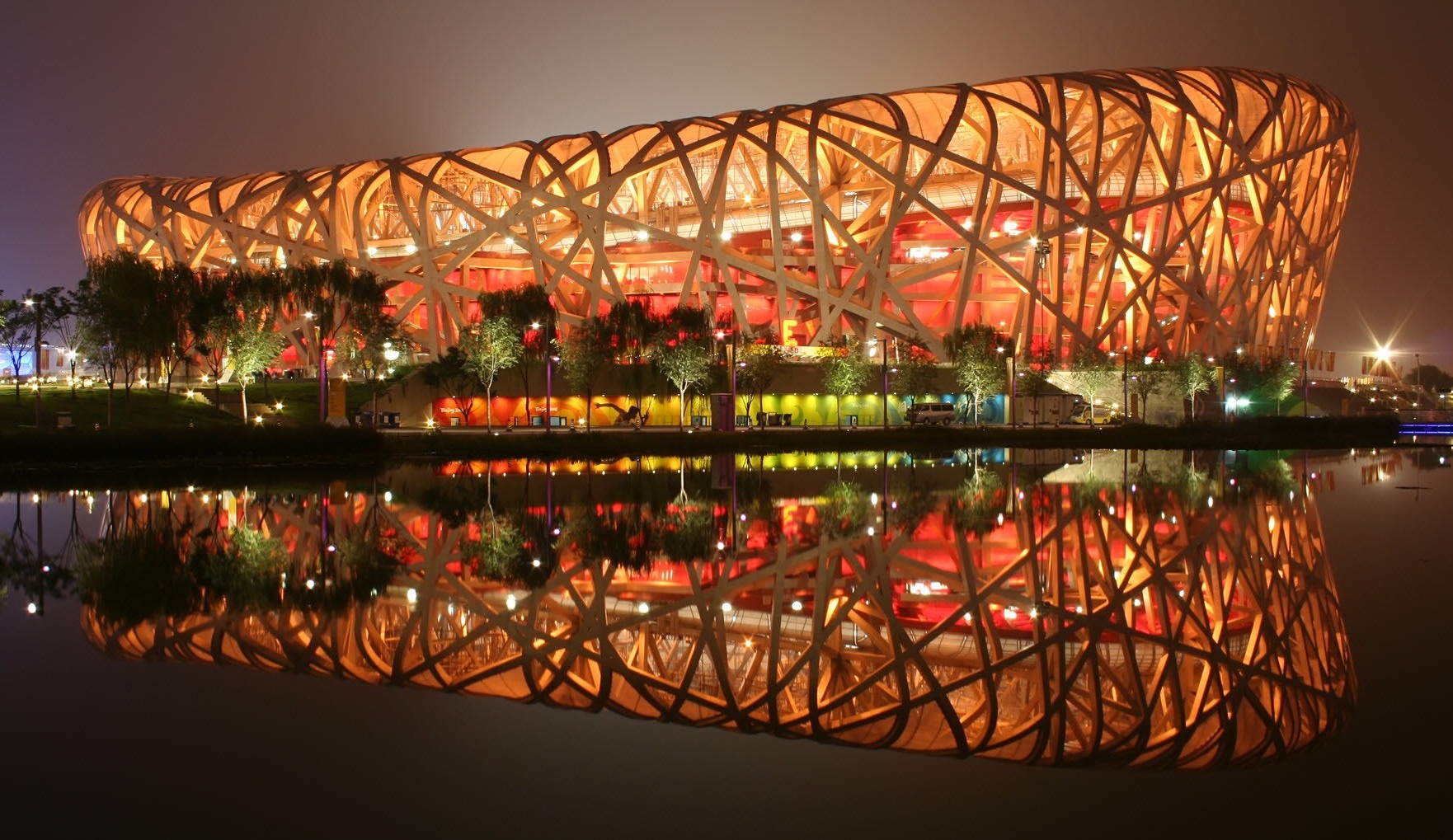


In February 2021, Beijing announced that the 26 venues (including training venues) for these sports would be running on entirely renewable energy.
There were three different clusters of venues designed and constructed for the 2022 Winter Olympics, each respectively known as the Beijing Zone, the Zhangjiakou Zone, and the Yanqing Zone.
Beijing Zone
Venues in the Beijing Zone exist in different conditions; some were recently constructed exclusively for the 2022 games, while the rest were renovated from the 2008 Summer Olympics or other existing sites. The Beijing Zone of the 2022 Winter Olympics consisted of six competition venues and was where the Opening and Closing Ceremonies, for both the 2022 Winter Olympics and 2008 Summer Olympics, would take place.
Five ice events were held at the Olympic Green, the Capital Indoor Stadium and the Beijing Wukesong Sports Center, which had been some of the main venues of the 2008 Summer Olympics. The Big Air snowboarding and freestyle skiing events were held in a former industrial area in Shijingshan District, in Western Hills area. Since the end of 2009, the Beijing Olympic Village apartments on the Olympic Green had been transformed into a residential area. There was therefore a need to build another Olympic Village on a smaller scale for the Winter Olympics. These new buildings are located in the southern area of Olympic Green on the neighbourhood of the National Olympic Sports Center and served as a Chinese Olympic Committee residential complex for those athletes who underwent training at the nearby venues.
The Beijing National Stadium () is an iconic venue in the Beijing Zone, also known as the Bird's Nest (). The Beijing National Stadium was the site that hosted the Opening and Closing Ceremonies for the 2022 Winter Olympics, but it did not host any competition in 2022.
The National Aquatics Center (), also known as the Water Cube (), was the venue for Curling competition. In the 2022 Winter Olympics, the National Aquatics Center became the first Olympic venue to incorporate a curling track in the swimming pool.
The Shougang Big Air () was newly constructed for the 2022 Winter Olympics. The Shougang Big Air hosted the freestyle skiing and snowboarding events.
The Wukesong Sports Centre () was under an 8-month renovation for the 2022 Winter Olympics. In February 2022, the Wukesong Sports Centre hosted the 2022 Winter Olympics Men's and Women's ice hockey tournaments.
The National Indoor Stadium () was the second venue for the ice hockey tournament for the 2022 Winter Olympics, besides the Wukesong Sports Centre.
The National Speed Skating Oval () has the nickname "Ice Ribbon" due to its exterior design. The National Speed Skating Oval was the venue for speed skating in the 2022 Winter Olympics.
The Capital Indoor Stadium (), also known as the Capital Gymnasium, was a venue adapted from the 2008 Summer Olympics and was reconstructed for short-track speed skating and figure skating competitions in the 2022 Winter Olympics.
- Beijing National Stadium – opening, awarding and closing ceremonies / 80,000 existing
- Beijing National Aquatics Centre – curling / 3,795 renovated
- Beijing National Indoor Stadium – ice hockey / 19,418 existing
- Beijing National Speed Skating Oval – speed skating / 11,950 new
- Capital Indoor Stadium – figure skating, short track speed skating / 13,289 existing
- Wukesong Sports Centre – ice hockey / 15,384 existing
- Big Air Shougang – snowboarding (Big Air), freestyle skiing (Big Air) – 4,912 new
- Beijing 2022 Winter Olympic Village – new
Yanqing District is a suburban district localised at the Beijing's far north. Competitions for luge, skeleton, bobsleigh and alpine skiing were held in Xiaohaituo Mountain area in the West Dazhuangke village of Zhangshanying in Yanqing District, northwest of the urban area of Beijing, 90 km away from the city center of Beijing and 17.5 km away from the town of Yanqing, using artificial snow because of the rarity of natural snow in this region.
- National Alpine Ski Centre (Rock, Ice River) – alpine skiing 4,800 new
- National Sliding Centre – bobsleigh, luge, skeleton / 7,400 new
- Yanqing Olympic Village / new
Zhangjiakou Zone
All other skiing events were held in Taizicheng Area in Chongli District, Zhangjiakou city, Hebei province. It is 220 km from downtown Beijing and 130 km away from Xiaohaituo Mountain Area. The ski resort earned over ¥ 1.54 billion (US$237.77 million) in tourism during the 2015–16 winter season for a 31.6% growth over the previous season. In 2016, it was announced that Chongli received 2.185 million tourists, an increase of 30% from the previous season, during the first snow season after winning the Olympic bid. The snow season lasted for five months from November, during which Chongli has hosted thirty-six competitions and activities, such as Far East Cup and Children Skiing International Festival. A total of twenty-three skiing camps have also been set up, attracting the participation of 3,800 youths. All the venues construction started in November 2016 and was finished by the end of 2020 to enable the city to hold test events.
- Snow Ruyi – ski jumping, Nordic combined (ski jumping) 6,000
- National Biathlon Centre – biathlon 6,024
- Genting Snow Park
- Park A – Ski and snowboard cross 1,774
- Park B – Halfpipe and Slopestyle (freestyle skiing and snowboard) 2,550
- Park C – Aerials and Moguls 1,597
- National Cross-Country Centre – Nordic combined (cross-country), cross-country 6,023
- Zhangjiakou Olympic Village
- Zhangjiakou Medals Plaza
Medals
The design for the Games' medals was unveiled on 26 October 2021. The concept is based on the 2008 Summer Olympics medals and Chinese astronomy and astrology as the games were held coinciding with the Chinese New Year festivities.
The uniforms for medal presenters at medal ceremonies were unveiled in January 2022. The uniforms have been designed in a joint project by the Central Academy of Fine Arts and Beijing Institute of Fashion Technology.
Torch relay
Main article: 2022 Winter Olympics torch relay
.jpg)
The torch relay started on 18 October 2021 in Greece. On 20 October 2021, it was announced that the local leg would start on 2 February and end on 4 February 2022 during the Opening Ceremonies. The local leg only visited two cities: Beijing and Zhangjiakou. Activists staged a protest at the Olympic torch lighting ceremony in Greece.
The inclusion and television appearance of Qi Fabao, a People's Liberation Army commander well known in China for his involvement in the 2020–2021 China–India skirmishes, as one of 1,200 torchbearers have been controversial, with India launching a diplomatic boycott of the Games as a result.
Impact of the COVID-19 pandemic
.jpg)
The COVID-19 pandemic resulted in changes in the qualifying process for curling and women's ice hockey due to the cancellation of tournaments in 2020. Qualification for curling was based on placement in the 2021 World Curling Championships and an Olympic Qualification Event that completed the field (in place of points earned across the 2020 and 2021 World Curling Championships). The IIHF based its qualification for the women's tournament upon existing IIHF World Rankings, without holding the 2020 Women's World Championship.
On 29 September 2021, the IOC announced biosecurity protocols for the Games; all athletes were required to remain within the bio-secure bubble (referred to as a "closed-loop management system") for the duration of their participation, which included daily COVID-19 testing, and only being allowed to travel to and from Games-related venues. Unless they are fully-vaccinated or have a valid medical exemption, all athletes were required to quarantine for 21 days upon their arrival. Mirroring a protocol adopted for the 2020 Summer Olympics before they were moved behind closed doors, the IOC also announced that only residents of the People's Republic of China would be permitted to attend the Games as spectators.
On 23 December 2021, the United States' National Hockey League (NHL) and its labor union, the National Hockey League Players' Association (NHLPA), announced that they had agreed to withdraw their players' participation in the Games' men's hockey tournament, citing concerns over COVID-19 and the need to make up games that had been postponed due to COVID-19 outbreak As part of their latest collective agreement with the NHLPA, the NHL had agreed to accommodate a break for the Olympics and player participation for the first time since 2014.
On 17 January 2022, amid increasing lockdowns across China and the first detected case of the Omicron variant in Beijing, it was announced that ticket sales to the general public were cancelled, and that limited numbers of spectators would be admitted by invitation only. These, therefore, became the second Olympics in a row that were closed to the general public. In the lead-up to the Games, organisers stated that they had aimed for at least 30% capacity at each venue, divided equally between spectators from within the "closed loop" (including dignitaries, delegations, and the press), and invited guests from outside of it (including local residents, school students, winter sports enthusiasts, and marketing partners). At least 150,000 spectators from outside the "closed loop" were expected to attend. Spectators were only present at events held in Beijing and Zhangjiakou; all events in Yanqing were held behind closed doors with no spectators permitted.
Everyone present at the Games, including athletes, staff, and attendees, were required to use the My2022 mobile app as part of the biosecurity protocols, which was used for submissions of customs declarations and health records for travel to the Games, daily health self-reporting, and records of COVID-19 vaccination and testing. The app also provided news and information relating to the Games, and messaging functions. Concerns were raised about the security of the My2022 app and how information collected by it would be used, so several delegations advised their athletes to bring burner phones and laptops for the duration of the games.
Because of the strict COVID-19 protocol, some top athletes, considered to be medal contenders, were not able to travel to China after having tested positive, even if asymptomatic. The cases included Austrian ski jumper Marita Kramer, the leader of the World Cup ranking, and Russian skeletonist Nikita Tregubov, silver medalist of the 2018 Winter Olympics.
Transportation
The new Beijing–Zhangjiakou intercity railway opened in late 2019, starting from Beijing North railway station and ending at Zhangjiakou railway station. It was built for speeds of up to 350 km/h; with this new road system, the travel time from Beijing to Zhangjiakou was decreased to around 50 minutes. A dedicated train for the Winter Olympics began to run on this line in January 2022, featuring a mobile television studio that supports live broadcast on the train.
On 31 December 2021, the Beijing Subway reached the planned 783 km at the bid book.
Planned before the city was awarded the rights to the Games, the Beijing Daxing International Airport opened in 2019, and due to the strategic location, it would be the main focus for the arrival and entry of delegations on Chinese soil. Chinese officials had hoped that this airport would replace Beijing Capital International Airport as the country's main hub for arrivals and departures between its opening and the Winter Games and reduce the international and domestic demands of the older airport. This airport replaced the old Beijing Nanyuan Airport which was out of date and was on the list of the most dangerous airports in the world because of its location and since its opening, it has been sharing the local and international demands of the city and the country with the older Beijing Capital International Airport. However, according to the COVID-19 pandemic security protocol manual issued by BOCWOG and International Olympic Committee, all foreign delegations could only enter and leave Beijing via the Capital International Airport due to its smaller size and the fact that it is closer to the city center and Olympic Green and has specific isolation areas and a better health protocols.
Budget
The original estimated budget for the Games was US$3.9 billion, less than one-tenth of the $43 billion spent on the 2008 Summer Olympics. Although there were reports that the games might cost more than US$38.5 billion, the final official budget was US$2.24 billion and turning a profit of $52 million, of which the International Olympic Committee (IOC) donated $10.4 million of that surplus to the Chinese Olympic Committee (COC) to help with the development of sport in China.
Ceremonies
Opening ceremony
Main article: 2022 Winter Olympics opening ceremony
.jpg)
The opening ceremony of the 2022 Winter Olympics was held on 4 February 2022 at Beijing National Stadium.
Amid the political controversies and tensions impacting the Games, IOC president Thomas Bach instructed athletes to "show how the world would look like, if we all respect the same rules and each other", and pledged that "there [would] be no discrimination for any reason whatsoever."
The final seven torchbearers reflected multiple decades of Chinese athletes, beginning with the 1950s, and concluding with two skiers competing in the Games—21 year-old skier Zhao Jiawen from Shanxi (the first Chinese athlete to compete in Nordic combined), and 20-year-old Dinigeer Yilamujiang from the Xinjiang autonomous region (cross-country, and the first Chinese cross-country skier to win a medal in an ISF event).
For the first time in Olympic history, the final torchbearers did not light a cauldron: instead, they fitted the torch into the centre of a large stylised snowflake, constructed from placards bearing the names of the delegations competing in the Games. Three similar snowflakes were also erected as public flames, with one outside of the stadium lit by a volunteer, one in Yanqing District lit by speed skater Yu Jongjun, and the third in Zhangjiakou lit by skier Wang Wezhuo.
Closing ceremony
Main article: 2022 Winter Olympics closing ceremony
The closing ceremony of the 2022 Winter Olympics was held at Beijing National Stadium on 20 February 2022; it included a cultural presentation, closing remarks, and the formal handover to Milan and Cortina d'Ampezzo as co-hosts of the 2026 Winter Olympics.
Sports
The 2022 Winter Olympics included a record 109 medal events over 15 disciplines in seven sports. There are seven new medal events, including men's and women's big air freestyle, women's monobob, mixed team competitions in freestyle skiing aerials, ski jumping, and snowboard cross, and the mixed relay in short track speed skating.
Numbers in parentheses indicate the number of medal events contested in each discipline.
New events
In October 2016, the International Ski Federation (FIS) announced plans to begin permitting women's competitions in Nordic combined, to contest the discipline at the Olympic level for the first time in Beijing. In November 2017, a further three events were put forward by the FIS for possible Olympic inclusion: a ski jumping mixed team competition and men's and women's big air in freestyle skiing. At their May 2018 Congress at the Costa Navarino resort in Messenia, Greece, the FIS submitted several additional events for consideration, including a proposal to make telemark skiing an Olympic discipline for the first time in Beijing, with proposed competitions to include the men's and women's parallel sprint and a mixed team parallel sprint. The Congress also approved to submit the aerials mixed team event, and several new snowboarding events: the men and women's snowboard cross team event; a mixed team alpine parallel event; the men's and women's parallel special slalom; and a mixed team parallel special slalom event. The individual parallel special slalom events were featured at the 2014 Winter Olympics in Sochi, Russia, but were dropped from the Olympic program in 2018 to make way for the snowboarding big air competitions.
The International Luge Federation (FIL) proposed the addition of six new events, including natural track luge (men's and women's singles), a women's doubles competition on the artificial track, and sprint events (men, women, and doubles) on the artificial track.
The International Skating Union (ISU) continued to campaign for the addition of synchronised skating as a new event within the discipline of figure skating. The ISU also proposed a new mixed team event in short track speed skating.
In biathlon, a single mixed relay was proposed by the International Biathlon Union (IBU) to complement the four-person mixed relay that featured at the 2018 Winter Olympics. Also, the International Bobsleigh and Skeleton Federation (IBSF) proposed a new team event, but there was no plan to introduce a four-woman bobsleigh event despite the recommendation from the federation's executive board to propose such an event in the interests of gender equality.
In July 2018, the IOC announced changes to the program for the 2022 Winter Olympics as part of a goal to increase the participation of women, and appeal to younger audiences. Seven new medal events were added (expanding the total program to 109 events), including men's and women's big air freestyle, women's monobob, mixed team competitions in freestyle skiing aerials, ski jumping, and snowboard cross, and the mixed relay in short track speed skating. Women's Nordic combined was not added; Nordic combined remains the only Winter Olympic sport only contested by men.
Participating National Olympic Committees
On 9 December 2019, the World Anti-Doping Agency (WADA) banned Russia from all international sport for four years, after the Russian government was found to have tampered with lab data that it provided to WADA in January 2019 as a condition of the Russian Anti-Doping Agency being reinstated. As a result of the ban, WADA planned to allow individually cleared Russian athletes to take part in the 2020 Summer Olympics under a neutral banner, as instigated at the 2018 Winter Olympics, but they were not permitted to compete in team sports. WADA Compliance Review Committee head Jonathan Taylor stated that the IOC would not be able to use "Olympic Athletes from Russia" (OAR) again, as it did in 2018, emphasising that neutral athletes cannot be portrayed as representing a specific country. Russia later filed an appeal to the Court of Arbitration for Sport (CAS) against the WADA decision.
After reviewing the case on appeal, CAS ruled on 17 December 2020 to reduce the penalty WADA had placed on Russia. Instead of banning Russia from sporting events, the ruling allowed Russia to participate in the Olympics and other international events, but for two years, the team cannot use the Russian name, flag, or anthem and must present themselves as "Neutral Athlete" or "Neutral Team." The ruling does allow for team uniforms to display "Russia" on the uniform as well as the use of the Russian flag colours within the uniform's design, although the name should be up to equal predominance as the "Neutral Athlete/Team" designation.
On 19 February 2021, it was announced that Russia would compete under the acronym "ROC" after the name of the Russian Olympic Committee although the name of the committee itself in full could not be used to refer to the delegation. Russia would be represented by the flag of the Russian Olympic Committee.
On 8 September 2021, the IOC Executive Board suspended the Olympic Committee of the Democratic People's Republic of Korea (North Korea) through at least the end of 2022 for violations of the Olympic Charter, over its refusal to send athletes to the 2020 Summer Olympics in Tokyo due to COVID-19 pandemic-related concerns. North Korean athletes would be allowed to participate under the Olympic flag. However, North Korean Ministry of Sports and the National Olympic Committee said in a letter to the 2022 Beijing Winter Olympics Organizing Committee, the Chinese Olympic Committee, and the General Administration of Sport of China on 7 January 2022 that "Due to the "action of hostile forces" and the COVID-19 pandemic, they would not be able to participate in the 2022 Beijing Winter Olympics." In addition, the North Korean Olympic Committee said "supports all the work of our comrades in China to host a grand and wonderful Olympics. The United States and its followers are plotting anti-Chinese conspiracies to obstruct the successful hosting of the Olympics, but this is an insult to the spirit of the Olympic Charter and an act to damage China's international image. We firmly oppose and reject these actions."
The following 91 National Olympic Committees have qualified athletes (two fewer than four years earlier), with Haiti and Saudi Arabia making their Winter Olympic débuts. Kenya qualified one athlete, but withdrew.

]]

| Participating National Olympic Committees | NOCs that participated in 2018, but did not in 2022. | NOCs that participated in 2022, but did not in 2018. |
|---|
Number of athletes by National Olympic Committee
2,871 athletes from 91 NOCs:
| Ranking | NOC | Athletes | Total | 2,871 |
|---|---|---|---|---|
| 1 | USA | 224 | ||
| 2 | CAN | 215 | ||
| 3 | ROC | 212 | ||
| 4 | CHN | 182 | ||
| 5 | SUI | 167 | ||
| 6 | GER | 149 | ||
| 7 | JPN | 124 | ||
| 8 | ITA | 118 | ||
| 9 | SWE | 116 | ||
| 10 | CZE | 114 | ||
| 11 | AUT | 106 | ||
| 12 | FIN | 95 | ||
| 13 | FRA | 86 | ||
| 14 | NOR | 84 | ||
| 15 | KOR | 64 | ||
| 16 | DEN | 62 | ||
| 17 | LAT | 60 | ||
| 18 | POL | 57 | ||
| 19 | GBR | 50 | ||
| 20 | SVK | 50 | ||
| 21 | UKR | 45 | ||
| 23 | AUS | 43 | ||
| 22 | SLO | 42 | ||
| 24 | NED | 41 | ||
| 25 | KAZ | 34 | ||
| 26 | BLR | 26 | ||
| EST | 26 | |||
| 28 | ROU | 21 | ||
| 29 | BEL | 19 | ||
| 30 | BUL | 15 | ||
| NZL | 15 | |||
| 32 | HUN | 14 | ||
| ESP | 14 | |||
| 34 | LTU | 13 | ||
| 35 | CRO | 11 | ||
| 36 | BRA | 10 | ||
| 37 | GEO | 9 | ||
| 38 | TUR | 7 | ||
| JAM | 7 | |||
| 40 | ARG | 6 | ||
| ARM | 6 | |||
| BIH | 6 | |||
| IRL | 6 | |||
| ISR | 6 | |||
| 45 | AND | 5 | ||
| GRE | 5 | |||
| ISL | 5 | |||
| MDA | 5 | |||
| 49 | CHI | 4 | ||
| TPE | 4 | |||
| MEX | 4 | |||
| THA | 4 | |||
| 53 | COL | 3 | ||
| HKG | 3 | |||
| IRI | 3 | |||
| LBN | 3 | |||
| MON | 3 | |||
| MNE | 3 | |||
| MKD | 3 | |||
| POR | 3 | |||
| 61 | AZE | 2 | ||
| BOL | 2 | |||
| KOS | 2 | |||
| LIE | 2 | |||
| LUX | 2 | |||
| MAD | 2 | |||
| MAS | 2 | |||
| MGL | 2 | |||
| PUR | 2 | |||
| SMR | 2 | |||
| SRB | 2 | |||
| TTO | 2 | |||
| 73 | ALB | 1 | ||
| ASA | 1 | |||
| CYP | 1 | |||
| ECU | 1 | |||
| ERI | 1 | |||
| GHA | 1 | |||
| HAI | 1 | |||
| IND | 1 | |||
| KGZ | 1 | |||
| MLT | 1 | |||
| MAR | 1 | |||
| NGR | 1 | |||
| PAK | 1 | |||
| PER | 1 | |||
| PHI | 1 | |||
| KSA | 1 | |||
| TLS | 1 | |||
| UZB | 1 | |||
| ISV | 1 |
Calendar
Medal table
Main article: 2022 Winter Olympics medal table
.jpg)
Podium sweeps
| Date | Sport | Event | Team | Gold | Silver | Bronze | Ref |
|---|---|---|---|---|---|---|---|
| 15 February | Bobsleigh | Two-man bob | GER | Francesco Friedrich | |||
| Thorsten Margis | Johannes Lochner | ||||||
| Florian Bauer | Christoph Hafer | ||||||
| Matthias Sommer |
Changes in medal standings
On 29 January 2024, CAS disqualified Kamila Valieva for four years retroactive to 25 December 2021 for an anti-doping rule violation. On 30 January 2024, the ISU reallocated medals in the figure skating team event to upgrade the United States to gold and Japan to silver while downgrading ROC to bronze.
Marketing
Main article: 2022 Winter Olympics marketing
Emblem
The emblem for the 2022 Winter Olympics, "Winter Dream" (冬梦), was unveiled on 15 December 2017 at the Beijing National Aquatics Center. Designed by Lin Cunzhen (who previously designed the emblem of the 2014 Summer Youth Olympics in Nanjing), the emblem is a stylised rendition of the Chinese character for winter (冬) as a multi-coloured ribbon, reflecting upon the landscapes of the host region. The beginning of the ribbon symbolises an ice skater, while the end of the ribbon symbolises a skier. The emblem carries a blue, red, and yellow colour scheme: the latter two colours represent both the flag of China, and "passion, youth, and vitality".
Mascot
Main article: Bing Dwen Dwen and Shuey Rhon Rhon
Bing Dwen Dwen was the mascot of the 2022 Winter Olympics. Bing Dwen Dwen was chosen from thousands of Chinese designs in 35 countries worldwide. "Bing" (冰) means ice in Chinese, and was meant to suggest purity and strength. "Dwen Dwen" (墩墩) was meant to suggest robustness, liveliness, and youth. Bing Dwen Dwen's astronaut-like clothes implied that the Winter Olympics embraced new technologies and created possibilities.
Slogan
The Games' official slogan, "Together for a Shared Future" (), was announced on 17 September 2021; organisers stated that the slogan was intended to reflect "the power of the Games to overcome global challenges as a community".
The slogan was compared in media with Chinese leader Xi Jinping's policy slogan: 'Building the Common Future of Humanity'.
Viewership
- Independent research conducted on behalf of the International Olympic Committee (IOC) recorded 2.01 billion viewers across television and digital platforms.
- A total of 713 billion minutes of coverage was watched on various Olympic Media Rights Partners' channels, which represents an 18 per cent increase when comparing with the last Winter Olympics.
Broadcasting
Main article: List of 2022 Winter Olympics broadcasters
In China, domestic rights to these Games were owned by China Media Group (CMG), with rights being sublicensed by China Mobile's Migu streaming service.
These Games confirmed an ongoing trend in U.S. viewership of the Olympics; while television viewership had seen a further decline, they were offset by increases in social media engagement and streaming viewership of the Games. Similar trends were seen in Europe, where amidst falling TV ratings Eurosport reported an eight-fold increase in streaming viewership on its platforms and Discovery+ over Pyeongchang 2018.
Concerns and controversies
Main article: Concerns and controversies at the 2022 Winter Olympics
During the bidding process, critics questioned the Beijing bid, arguing that the proposed outdoor venue sites do not have reliable snowfall in winter for snow sports. Concerns have been raised that snow may need to be transported to the venues at great cost and with uncertain environmental consequences.
Additional concerns about weather conditions were raised during certain events. Swedish athlete Frida Karlsson nearly collapsed after the women's skiathlon due to low temperatures.
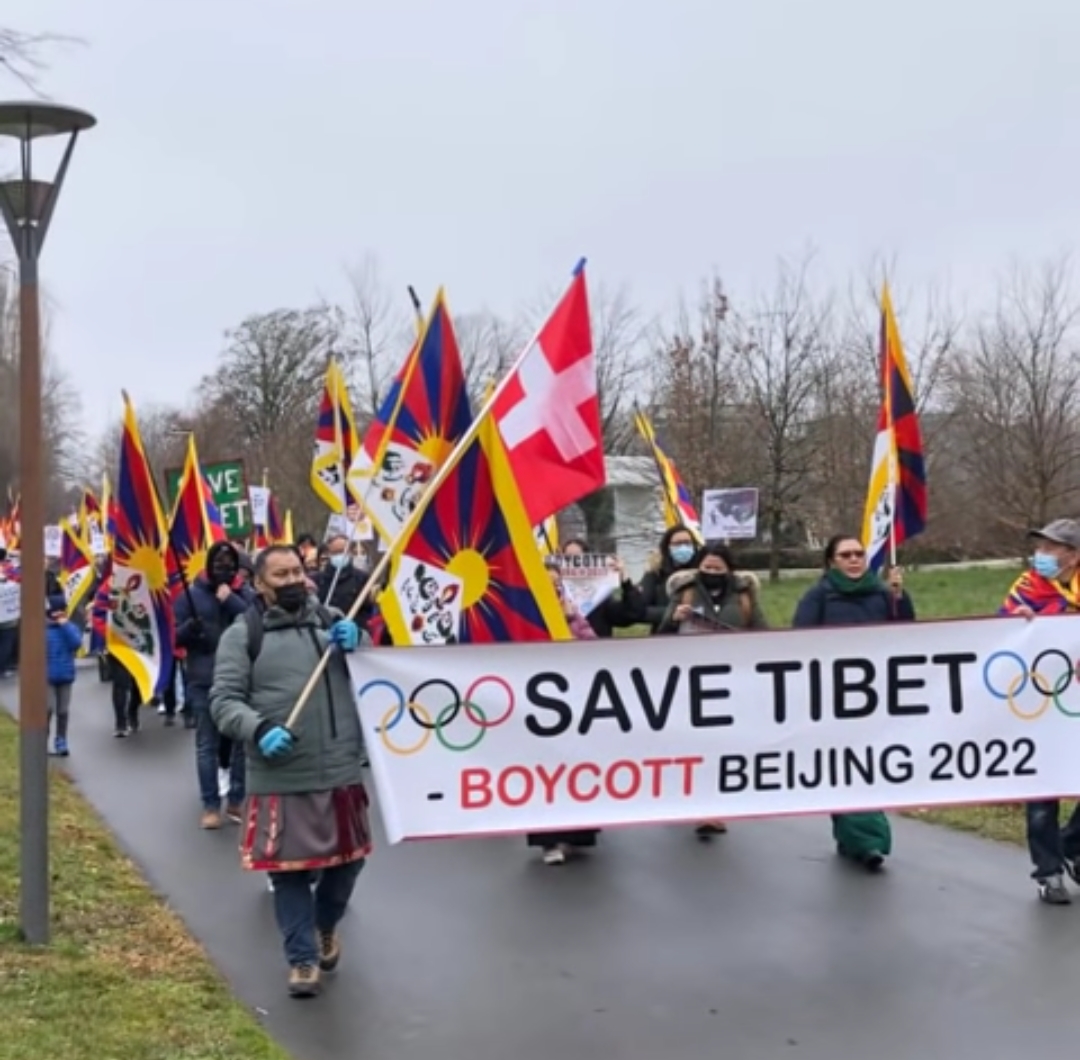
As in 2008, activists, human rights groups, and diplomats made calls to boycott the Olympic Games when hosted by China. In the aftermath of the 2019 leak of the Xinjiang papers, the 2019–2020 Hong Kong protests, and the persecution of Uyghurs in China, calls were made for a boycott of the 2022 Games. Because of these issues, the selection of an athlete from Xinjiang as part of the final torchbearers received a mixed reaction.
In February 2021, the Chinese Communist Party-owned tabloid Global Times warned that China could "seriously sanction any country that follows a boycott." In March 2021, Chinese spokesperson Guo Weimin stated that any attempt to boycott the Olympics would be doomed to fail. China's Foreign Minister Wang Yi also told the EU's foreign policy chief Josep Borrell that they should attend the games to "enhance exchanges on winter sport", and to "foster new highlights" in bilateral cooperation.
The IOC stated that it remains neutral in all global political issues and that the award of hosting the games does not signal agreement with the host country's political or social situation or its human rights standards. The committee's response to Agence France-Presse read: "We've repeatedly said it: the IOC isn't responsible for the government. It only gives the rights and opportunity for the staging of the Olympic Games. That doesn't mean we agree with all the politics, all the social or human rights issues in the country. And it doesn't mean we approve of all the human rights violations of a person or people." The statement attracted criticism, with Pacific University professor Jules Boykoff accusing the IOC of "hypocrisy".
On 19 November 2021, a group of 17 members of the Lithuanian national parliament Seimas released an official letter encouraging Lithuania to withdraw from the 2022 Winter Olympics due to human rights violations in China. On 3 December 2021, Lithuania was the first nation to announce a diplomatic boycott of the games.
After the Russian invasion of Ukraine in late February 2022, The New York Times published a report alleging that China requested Russia to delay the invasion until after the Olympics to avoid damaging the Games' public image. Russia invaded Ukraine just four days after the Games' Closing Ceremony. Liu Pengyu, spokesperson for the Chinese Embassy in Washington, has rejected the claims as "speculations without any basis, and intended to blame-shift and smear China".
Diplomatic boycott
The United States boycott of China's Winter Olympics was predominantly due to China's human rights issues on topics such as the systematic oppression of the Uyghurs, Tibetans and the protests in Hong Kong in 2019. The Chinese government implemented many coercive activities in those regions, such as the reeducation camps, mass detention camps of allegedly over a million uyghurs, and restricted access to social media.
Following the United States' announcement of a diplomatic boycott, a number of countries, including the United Kingdom, Australia, Canada, Belgium, Denmark, Lithuania, India, Estonia, and Kosovo, also participated. Meanwhile, Austria, Latvia, Slovenia, Sweden, and the Netherlands opted not to send government officials to the event but did not explicitly cite human rights concerns. Instead, they attributed their decisions to factors such as COVID-19 precautions. However, several U.S. allies, including South Korea, Germany, Italy, and France, did not join the boycott.
Unlike the US and other boycotting countries, the Japanese government did not use the term "diplomatic boycott" but announced it would not send any senior officials or Cabinet ministers. Japanese Olympic and Paralympic Committee leaders, along with senior lawmaker Seiko Hashimoto, however attended in non-governmental capacities. China welcomed the representatives, and Tokyo's decision was seen as a compromise to balance domestic and international considerations, including appeasing conservative lawmakers and allies in Washington.
The IOC remained relatively neutral regarding the letter from CECC or the boycott. The IOC negotiated with the Chinese government on specific protocols to ensure the Olympic Games ran smoothly, such as providing unrestricted internet access to foreign journalists.
Key event timeline
In October 2018, American senator Marco Rubio, Senator Jeff Merkley, and Congressmen Jim McGovern and Chris Smith sent a letter, on behalf of the Congressional-Executive Commission on China (CECC), to the International Olympic Committee (IOC) requesting the revocation of China's host right on the 2022 Winter Olympics. The letter stated that "no Olympics should be held in a country whose government is committing genocide and crimes against humanity."
In November 2021, President Biden proposed "a diplomatic boycott of the 2022 Beijing Winter Olympics." The Biden administration was aware of the prospective sanctions by the National Olympic Committee and was careful regarding the scale and severity of the boycott.
In December 2021, the Biden administration officially initiated a diplomatic boycott of the Beijing 2022 Winter Olympics, restricting United States government officials' presence at the games. The attendance of Team USA athletes was not affected by the diplomatic boycott.
Reactions
China declared that the United States was "politicizing sports" with the diplomatic boycott of the 2022 Beijing Winter Olympics. The Chinese Ministry of Foreign Affairs spokesperson, Zhao Lijian, accused the United States of violating the spirit of political neutrality endorsed in the Olympic Charter, stating that the Olympic Games "should not be a place for political posturing and manipulation". China announced that the United States was not yet officially invited by the host committee; thus, the United States "should not have initiated the boycott in the first place".
Propaganda and information operations
The Chinese government's internet troll networks were mobilized before the Games to support government messaging. This has included campaigns of intimidation against human rights activists abroad. The Ministry of Public Security's Spamouflage disinformation network transitioned to primarily push Olympic messaging in December 2021.
In the run up to the Olympics, the Chinese government deployed dozens of fake Twitter accounts to push the Government's position in the Peng Shuai scandal and the IOC's involvement. The New York Times and ProPublica identified a network of more than 3,000 inauthentic-looking Twitter accounts that appeared to be coordinating. Such accounts appeared to operate solely to amplify state media, as most of these accounts were recently created with very few followers, and their activity consisted solely of reposting China comments including from one account called "Spicy Panda" whose cartoons and videos rallied against the Olympic boycott. A Twitter spokesperson said that hundreds of accounts included in the investigation's findings have since been suspended for violating the "platform manipulation and spam policy," which prohibits "coordinated activity that attempts to artificially influence conversations through the use of multiple accounts, fake accounts and automation."
Censorship
Domestic Chinese criticism and debate on the potential environmental impacts caused by the Games are censored by the Chinese government on the press and internet. In recent years, censorship has been significantly stepped up. The government has banned, for example, Facebook, Twitter, Instagram, and, since 2019, Wikipedia.
The Citizen Lab report on the My2022 app (see below) discovered a "censorship keywords" list built into the app, and a feature that allows people to flag other "politically sensitive" expressions. The list of words included the names of Chinese leaders and government agencies, as well as references to the 1989 killing of pro-democracy protesters in Tiananmen Square, and the religious group Falun Gong.
Negative news censored during the games
On 28 January 2022, a few days before the opening ceremony, the Xuzhou chained woman incident was exposed on Chinese social media. Several media figures, including Han Song from the state-controlled Xinhua News Agency argued that people should be more concerned about the incident than the Winter Olympics. However, to avoid any negative news that could divert the public's attention from the Olympics, Chinese news media outlets were order by authorities to avoid reporting such cases, with many social media posts related to the incident censored. Some people who tried to dig into the story by investigating the case in Feng County were even detained by the police.
Harassment of journalists
On February 4, 2022, a Dutch journalist, Sjoerd den Daas was dragged away by a Chinese security guard while reporting live on the Beijing Olympic opening ceremony, stating "We have just been expelled from another area, so I'm afraid we'll have to come back to you later". His employer, the Dutch broadcaster NOS later addressed the incident on Twitter, stating: "Our correspondent [den Daas] was pulled away from the camera by security guards at 12:00 p.m. [6:00 a.m. ET] live in the NOS Journaal. Unfortunately, this is increasingly becoming a daily reality for journalists in China. He is fine and was able to finish his story a few minutes later".
IOC spokesman Mark Adams said that he thinks the security guard may have been "overzealous" and that the incident is a one-off and reassured that journalists could continue their work freely as long as they remained within the closed loop. Yan Jiarong, spokeswoman for the Beijing Olympics, said "we welcome all the international media to cover the Beijing 2022 Games and we will also protect the legal rights of the international journalists".
Den Daas pushed back against the IOC's characterization of the incident as an "isolated" case, asserting that he and other journalists had been “hindered or stopped multiple times” by police while covering topics related to the Games.
Espionage directed at athletes
China's espionage of athletes serves its political interests as well as addresses safety and COVID concerns. The smartphone app associated with the games, My2022, has been a particular subject of espionage concern.
All attendees to the Games, including athletes, audience members, and media, are required to use the My2022 app purportedly for daily Covid monitoring. The cybersecurity group Citizen Lab, a research institute at the University of Toronto's Munk School of Global Affairs and Public Policy, warned that the My2022 app fails to provide encryption on many of its files, and has security weaknesses that leave users exposed to data breaches. The Citizen Lab disclosed the concerns about the app on 3 December 2021, giving the organizing 15 days to respond and 45 days to fix the issues. A new iOS version of MY2022 was released on 6 January 2022, which failed to fix these problems, while adding a new "Green Health Code", feature that collects more medical data and also lacks SSL certificate validation making it vulnerable to attacks.
Numerous Olympic committees, including the British Olympic Association, the Australian Olympic Committee, Canadian Olympic Committee, NOC*NSF, and United States Olympic & Paralympic Committee, have recommended that attendees use burner phones, virtual private networks (VPNs), and create email accounts for their time in China, while leaving personal smartphones and laptops at home.
Cyber security firm Internet 2.0 has also warned of potential security risks during the Olympics, when it examined the technology sponsors of the Games and their products that show "the sophisticated and broad surveillance culture that exists in China". Internet 2.0 noted that "China's national data security laws are not designed with the Western values of privacy and liberty and do not offer the same level of protection" as the laws allow the government to request access to the user data captured by these products.
Environmental impact
An estimated 49 e6gal of water was expected to be used to create snow at the various venues. Pyeongchang, South Korea, which held the previous Winter Olympics, also had a cold but similarly arid climate that required vast quantities of artificial snow. Professor Carmen de Jong, a geographer at the University of Strasbourg, argued that these would be the "most unsustainable" Winter Olympics in history. The IOC stated that "a series of water-conserving and recycling designs have been put into place to optimise water usage for snowmaking, human consumption, and other purposes.
Artificial snow forms a harder piste compared to real snow. It is often favoured by professionals for being fast and "hyper-grippy" but also raises their fear of falling on it. American snowboarder Jamie Anderson compared it to "pretty bulletproof ice" while her teammate Courtney Rummel compared it to the man-made snow in Wisconsin.
According to Jules Boykoff in February 2022, Beijing's electricity came largely from coal and this coal power was what supported the construction of some Olympic venues. To offset emissions from construction and air travel, China had planted roughly 60 million trees.
Sporting controversies
There were concerns about decisions and disqualification in several events during the games. These issues included the following:
- An official appeal to the Court of Arbitration for Sport over the disqualification of two South Korean athletes from the men's 1000 metres short track speed skating event filed by the Korean Sport & Olympic Committee, after having their protests rejected by the International Skating Union.
- Controversy surrounding a ruling of an obstruction in the 5000 metres relay event.
- A potential missed call by judges during the men's snowboard slopestyle and men's half pipe event events.
- A ruling of a false start in the men's 500 metres speed skating event.
- The disqualification of racers for their uniforms during the mixed team normal hill event of ski jumping.
- The continued participation of the figure skater Kamila Valieva in the women's singles competition after a preliminary positive drug test from a sample 2 months prior.
- Three athletes failed the doping test during the Olympics and were suspended: Iranian alpine skier Hossein Saveh-Shemshaki, Ukrainian cross-country skier Valiantsina Kaminskaya, and Ukrainian bobsledder Lidiia Hunko. The positive test of the Spanish figure skater Laura Barquero was announced after the Olympics.
- U.S. skater Joey Mantia alleged that South Korean skater Lee Seung-hoon made contact with him and pulled him back, preventing him from winning a bronze medal in the Mass Start final. Mantia lost by a 0.002-second margin. Team USA challenged the result, but Lee was awarded the bronze medal.
Athlete and officials complaints
The food and overall conditions in quarantine hotels given to athletes testing positive for COVID-19 were criticised early on. Team officials from delegations including Belgium, Germany, Poland, Finland and the Russian Olympic Committee all brought up issues their athletes faced in quarantine hotels, among them were the lack of internet connections, low-quality food, insufficient facilities and no training equipment.
With China's Zero-COVID policy, there were issues raised about the process of quarantine at the games. On 2 February, Belgian skeleton athlete Kim Meylemans posted on social media and was in tears about the conditions she faced while in quarantine. According to Newsweek and Time, the hotels' conditions appeared to have improved after the athletes' complaints were made public.
There were some complaints about the food served outside of quarantine. Germany's alpine coach Christian Schweiger called the catering "extremely questionable" for not having hot meals but he echoed athletes from several nations that the food at the nearby Athletes' Village was great. The US and South Korean teams elected to bring their own food. Austrian skier Matthias Mayer said that Kitzbuehel would have offered "the best of the best" but also that a hot meal right before a race might not bring out top performances.
Other complaints included low temperatures and related safety concerns. Sweden's Frida Karlsson nearly collapsed at the conclusion of the women's skiathlon cross-country race. Afterwards, her team considered requesting that races held in afternoons and evenings for European TV audiences be moved to earlier during the day. Some athletes resorted to putting tape on their faces and noses to protect them from the bitter cold. Heavy snowfall disrupted a number of competition and training events on 13 February. Thirty-three skiers did not finish their first run of the men's giant slalom. Henrik Kristoffersen of Norway said that he "couldn't see shit." Switzerland's Loic Meillard said, "It's not what I was hoping for but it's part of the game ... we've raced in conditions like that before."
Notes
References
References
- "SuperSport".
- (17 December 2024). "Beijing 2022 - OBS Broadcast Opening Sequence".
- Reyes, Yacob. (8 December 2021). "Beijing Olympics: These countries have announced diplomatic boycotts". [[Axios (website).
- (1 February 2022). "The IOC stays silent on human rights in China". [[Axios (website).
- Member, Asia Newsweek Is A. Trust Project. (2021-12-08). "Full List of Every Country Boycotting China's Winter Olympics".
- (2022-01-20). "Who's boycotting the Winter Olympics?".
- Cole, Brendan. (2022-02-05). "Reporter covering Winter Olympics dragged away by Chinese officials live on air".
- (2022-02-06). "Beijing Olympics: Dutch journalist interrupted on-air by Chinese official, IOC says 'one-off'".
- Kong, Chad de Guzman / Hong. (2022-02-21). "What We Learned About COVID-19 Rules at the 2022 Olympics".
- "China's Espionage Plans for the 2022 Winter Olympics: What Athletes Should Expect". The Diplomat.
- Church, Ben. (20 February 2022). "Norway tops Beijing 2022 medal table after record-breaking performance". [[CNN]].
- McNicol, Homero De la Fuente, Andrew. (2024-01-30). "US figure skaters awarded Olympic gold, Canada snubbed from bronze after Russian skater disqualified".
- (2024-01-30). "U.S. figure skaters to get Olympic team event gold after Kamila Valiyeva DQ".
- Donna, Spencer. (20 February 2022). "Canada caps COVID Olympic Winter Games in Beijing with 26 medals, including 4 gold". [[CBC Sports]].
- (20 February 2022). "Canada finish outside medals top 10 for first time in 34 years". [[Diario AS]].
- "Host City Election".
- Wilson, Stephen. (7 July 2014). "Almaty, Beijing, Oslo make list for 2022 Olympics".
- Abend, Lisa. (3 October 2014). "Why Nobody Wants to Host the 2022 Winter Olympics".
- "IOC hits out as Norway withdraws Winter Olympic bid". The Financial Times.
- (2 October 2014). "Winter Olympics: What now for 2022 after Norway pulls out?". BBC Sport.
- Mathis-Lilley, Ben. (2 October 2014). "The IOC Demands That Helped Push Norway Out of Winter Olympic Bidding Are Hilarious". Slate.
- (2 October 2014). "IOC reportedly made some ridiculous demands to help push Oslo out of 2022 Winter Olympics bidding". National Post.
- (October 2014). "IOC krever gratis sprit på stadion og cocktail-fest med Kongen".
- "Oslo 2022 bid hurt by IOC demands, arrogance".
- (2022-02-11). "Winter Olympics 2022 is the 'carbon neutral template' for future global events".
- (28 February 2021). "Beijing intends to run the Olympic games next year on purely green energy".
- Omatiga, Mary. (2022-02-13). "2022 Winter Olympics: Everything you need to know about the Beijing Winter Olympics".
- "Beijing 2022 Venue Guide: Beijing Zone".
- Morgan, Liam. (12 June 2017). "Beijing 2022 Coordination Commission chair praises plans for snowboard big air after venue visit". Inside the Games.
- "北京冬奥村不出售 赛后成人才公租房". Beijing2022.cn.
- Mullin, Eric. (15 February 2022). "Here's Where the Closing Ceremony Is Being Held in Beijing".
- Coliseum. (2020-12-03). "'Water Cube' revamped for Beijing 2022".
- (2022-02-03). "Explainer: Water Cube where Phelps ruled turns into Ice Cube".
- (2022-02-03). "Big Air Shougang set to host ski jumping at Beijing Winter Olympics".
- "五棵松体育中心_北京2022年冬奥会_新华网".
- world, STIR. "A look at the stadiums hosting the Olympic Games Beijing 2022".
- "A look at the venues for the 2022 Beijing Winter Olympics - Xinhua {{!}} English.news.cn".
- Phillips, Tom. (31 July 2015). "Beijing promises to overcome lack of snow for 2022 Winter Olympics". The Guardian.
- Mills, Chris. (1 August 2015). "Here's the 2022 Winter Olympics Venue, In The Middle of Winter".
- gaiazhang. "Beijing 2022 Games Ski Venue Receives Over 2 Million Tourists".
- "Beijing 2022 Olympic medals design unveiled with 100 days to go". Beijing2022.cn.
- Barker, Philip. (2 January 2022). "Beijing 2022 reveals uniforms for medal ceremonies heavily influenced by snow". [[Inside the Games.
- "Beijing 2022 welcomes Olympic flame to China". Beijing2022.cn.
- (28 January 2022). "Uyghurs, Tibetans, Hong Kongers Join Together to Protest Beijing Olympics". NBC Chicago.
- "India Joins Diplomatic Boycott of Beijing Winter Olympics". The Diplomat.
- (9 April 2020). "Curling wants 2021 world championships to determine qualifying for Beijing Olympics".
- (24 April 2020). "U.S., Canada in same 2022 Olympic hockey group".
- Gan, Nectar. (30 September 2021). "Beijing Winter Olympics will be open to fans – if they live in China".
- "Overseas fans banned from 2022 Beijing Winter Olympics".
- "NHL will not send players to Beijing". BBC Sport.
- (3 September 2021). "NHL players to participate in '22 Beijing Olympics".
- (17 January 2022). "Beijing 2022 tickets will not be sold to general public due to COVID-19 concerns".
- "Beijing Olympics organizers hope to have 30% capacity in venues".
- (2022-02-03). "Beijing 2022 expect 150,000 spectators from outside closed loop to attend events".
- (18 January 2022). "Winter Olympics: Athletes advised to use burner phones in Beijing".
- Schad, Tom. "Olympic burner phones? Athletes warned about bringing personal devices to China for 2022 Beijing Games".
- (1 February 2022). "Skispringster Kramer, favoriet voor goud, mist Spelen door coronabesmetting". NOS.
- (31 January 2022). "Skeleton medalist out of Beijing Olympics with virus". Associated Press.
- (6 January 2022). "记者揭秘:冬奥列车高铁5G超高清演播室有啥新科技?". [[China Central Television]].
- (31 December 2021). "官宣!北京9段新地铁今天开通!线路图、新站抢先看".
- (17 May 2018). "New Beijing airport to open on Oct 1, 2019, able to accommodate 620,000 flights per year". The Straits Times.
- (13 December 2021). "北京2022年冬奥会和冬残奥会运动员和随队官员防疫手册(第二版)". [[Beijing Organizing Committee for the 2022 Olympic and Paralympic Winter Games]].
- "Beijing won't have a big budget for the 2022 Winter Olympics". CNNMoney.
- (1 February 2022). "Beijing 2022 may cost more than US$38.5bn, says report".
- (6 May 2023). "Beijing Olympics Report $52 Million Profit, IOC To Donate $10.4 To Chinese Sport".
- (2023-05-06). "IOC donates its $10.4m share of $52m Beijing 2022 surplus to Chinese sport".
- "2022 Winter Olympics officially begin". BBC Sport.
- (4 February 2022). "Uyghur athlete lights Olympic Cauldron as Beijing 2022 officially opens".
- Chappell, Bill. (4 February 2022). "The Beijing Winter Olympics' cauldron lighting made a political statement". NPR.
- Carpenter, Les. (2 December 2021). "The Beijing Olympics begin Feb. 4. Here's what you need to know.". [[The Washington Post]].
- (18 December 2021). "Athletes to compete in 109 events of 7 sports at Beijing Winter Olympics". [[Helsinki Times]].
- Zaccardi, Nick. (18 July 2018). "Beijing 2022 Winter Olympics add seven new events". [[NBC]].
- (3 October 2016). "FIS target Nordic Combined women's competition at Beijing 2022".
- (18 November 2017). "FIS Council Decisions from Autumn 2017 Meeting". [[International Ski Federation.
- (18 May 2018). "FIS propose telemark skiing for Beijing 2022 Winter Olympics".
- (31 October 2017). "FIL submits full package of events for Olympic bid". [[International Luge Federation.
- (9 February 2018). "Synchronized Skating has been proposed as a new "event" by the ISU". Jura Synchro.
- Butler, Nick. (5 March 2018). "Exclusive: Women's Nordic combined and synchronised skating among new disciplines proposed for Beijing 2022".
- (25 July 2018). "Here's a look at the new women's, gender-balanced disciplines for the 2022 Winter Games".
- Latham-Coyle, Harry. (4 February 2022). "What is Nordic Combined and why won't there be a women's event". The Independent.
- MacInnes, Paul. (9 December 2019). "Russia banned from Tokyo Olympics and football World Cup". The Guardian.
- (9 December 2019). "Russia banned for four years to include 2020 Olympics and 2022 World Cup". BBC Sport.
- (13 December 2019). "WADA lawyer defends lack of blanket ban on Russia". [[The Japan Times]].
- (27 December 2019). "Russia Confirms It Will Appeal 4-Year Olympic Ban".
- Dunbar, Graham. (17 December 2020). "Russia can't use its name and flag at the next 2 Olympics". Associated Press.
- (19 February 2021). "Olympics: Russia to compete under ROC acronym in Tokyo as part of doping sanctions". Reuters.
- (8 September 2021). "IOC Executive Board suspends NOC of Democratic People's Republic of Korea". [[International Olympic Committee]].
- (8 September 2021). "North Korea suspended from IOC after Tokyo no-show". Reuters.
- (8 September 2021). "North Korea suspended from IOC until end of 2022". CBC Sports.
- (8 September 2021). "North Korea banned from Beijing 2022 after IOC suspends NOC". [[Inside the Games]].
- (7 January 2021). "North Korea, already banned from 2022 Olympics, announces it will not send team". Special Broadcasting Service.
- (7 January 2022). "North Korea blames Beijing 2022 ban on "hostile forces" and criticises "vicious" US actions". [[Inside the Games]].
- "Haïti Pour La Première Fois De Son Histoire Qualifié Aux Jo D'hiver en 2022 !". Haiti Ski Federation.
- Pavitt, Michael. (17 December 2021). "Haiti and Saudi Arabia to debut at Beijing 2022 Winter Olympics as Alpine skiers qualify". Dunsar Media Ltd..
- Ayodi, Ayumba. (18 January 2022). "Kenya withdraws from Beijing Winter Olympics". [[Daily Nation]].
- (17 January 2022). "Denni Xhepa represents Albania at the Beijing Winter Olympics". Oculus News.
- Burke, Patrick. (23 January 2022). "American Samoa NOC commends first Winter Olympic athlete since 1994". Dunsar Media Ltd..
- (19 January 2022). "Presentació de la vestimenta de la delegació andorrana dels JO d'hivern de Beijing 2022 a la seu central de Andbank". [[Andorran Olympic Committee]].
- (18 January 2022). "Delegación Argentina en Los Juegos Olímpicos De Invierno Beijing 2022". [[Argentine Olympic Committee]].
- Ghazanchyan, Siranush. (18 January 2022). "Beijing 2022: Armenia to have six representatives at Winter Olympics". [[Public Radio of Armenia]].
- Robinson, Georgina. (23 January 2022). "Australia's winter Olympians target bronze, silver and gold". [[The Sydney Morning Herald]].
- (24 January 2022). "Olympic Team Austria wächst auf 106 Aktive". [[Austrian Olympic Committee]].
- (18 January 2022). ""Pekin-2022" Qış Olimpiya Oyunlarına həsr olunan rəsmi təqdimat mərasimi keçirilib.". [[National Olympic Committee of the Azerbaijani Republic]].
- (21 January 2022). "Белорусы получили дополнительную лицензию на Игры в Пекин". [[Belarus Olympic Committee]].
- Kohlhuber, Nicolas. (21 January 2022). "La sélection belge pour les Jeux Olympiques d'hiver de Beijing 2022". [[International Olympic Committee]] (IOC).
- Guzman, Ariel. (16 January 2022). "Los bolivianos Grönlund y Breistfuss van a los Juegos Olímpicos de Pekín". [[Opinión]].
- (21 January 2022). "BIH Olimpijski Tim {{!}} Beijing 2022". [[Olympic Committee of Bosnia and Herzegovina]].
- "NOC Entries – Brazil". [[Beijing Organizing Committee for the 2022 Olympic and Paralympic Winter Games]].
- (20 January 2022). "16 athletes to represent Bulgaria at the 2022 Winter Olympic Games in Beijing". [[Bulgarian National Radio]].
- Nichols, Paula. (28 January 2022). "By the Numbers: Team Canada heading into the Beijing 2022 Olympic Winter Games". [[Canadian Olympic Committee]].
- (19 January 2022). "Team Chile competirá con cuatro deportistas en Beijing". [[Chilean Olympic Committee]].
- "NOC Entries – Team People's Republic of China".
- Yen, William. (19 January 2022). "Taiwan holds flag waving ceremony for Winter Olympic athletes". [[Central News Agency (Taiwan).
- Zabala, Daniel. (20 January 2022). "Juegos Olímpicos de Invierno y los colombianos clasificados". [[La FM]].
- (24 January 2022). "11 athletes to represent Croatia at Winter Olympics". Croatia Week.
- Liu, Lanting. (25 January 2022). "One Cypriot to take part in 2022 Winter Olympics". [[Cyprus Mail]].
- Houston, Michael. (18 January 2022). "Czech Republic name record-size Winter Olympic team and reveal Beijing 2022 uniform". Dunsar Media Ltd..
- (20 January 2022). "Madeleine Dupont og Frans Nielsen er Danmarks OL-fanebærere". [[National Olympic Committee and Sports Confederation of Denmark]].
- (7 January 2022). "Sarah Escobar: "Quiero compartir mi sueño olímpico con todos los ecuatorianos"". [[Ecuadorian National Olympic Committee]].
- Watta, Evelyn. (28 January 2022). "African stars to watch at Beijing 2022". [[International Olympic Committee]] (IOC).
- (21 January 2022). "Olympic Committee confirms national team for Beijing Olympics". [[Eesti Rahvusringhääling]].
- (24 January 2022). "Olympiajoukkue valittu – 95 urheilijaa edustaa Suomea Pekingin talvikisoissa". [[Finnish Olympic Committee]].
- (23 January 2022). "Les sélectionnés pour les Jeux Olympiques d'hiver de Pékin !". [[French National Olympic and Sports Committee.
- (26 January 2022). "სეოკ-ის აღმასრულებელი კომიტეტის სხდომაზე ზამთრის XXIV ოლიმპიურ თამაშებზე საქართველოს ოლიმპიური დელეგაციის პერსონალური შემადგენლობა დაამტკიცეს". [[Georgian National Olympic Committee]].
- (4 February 2022). "In dieser Reihenfolge laufen die Nationen bei der Eröffnungsfeier ein". [[Frankfurter Allgemeine]].
- (21 January 2022). "Feller hat Corona – Ski-Exot Mäder bei Olympia dabei". [[Schweizer Radio und Fernsehen]].
- (21 January 2022). "Winter Olympics: Who is representing Team GB in Beijing?". [[BBC News]].
- (20 January 2022). "Με πέντε αθλητές και αθλήτριες η Ελλάδα στους Χειμερινούς Ολυμπιακούς Αγώνες «Πεκίνο 2022»". [[Hellenic Olympic Committee]].
- (11 January 2022). "Haiti – J.O. Beijing 2022 : D-24, The skier Richardson Viano will defend the colors of Haiti". HaitiLibre.
- Chan, Kin-wa. (10 December 2021). "Beijing 2022: Hong Kong set to send largest-ever squad for Winter Olympics – three athletes". [[South China Morning Post]].
- (18 January 2022). "Olimpiai indulókról döntött a Magyar Sí Szövetség". [[Hungarian Olympic Committee]].
- (21 January 2022). "Íslenski hópurinn á ÓL í Peking". [[National Olympic and Sports Association of Iceland]].
- Chaudhury, Dipanjan Roy. (17 January 2022). "India to participate in Beijing Winter Olympics sans high-level political presence". [[The Economic Times]].
- (16 January 2022). "Iran to send three skiers to 2022 Winter Olympics". [[Tehran Times]].
- O'Riordan, Ian. (24 January 2022). "Ireland names six-strong Beijing Winter Olympics team". [[The Irish Times]].
- (24 January 2022). "נקבעה המשלחת הישראלית למשחקי החורף בבייג'ין 2022". [[Israel Hayom]].
- (24 January 2022). "Ecco l'Italia Team per Pechino 2022, 118 atleti azzurri in gara in Cina". [[Italian Olympic Committee]].
- Butterfield, Michelle. (19 January 2022). "Jamaica's 4-man bobsled team makes Olympics for 1st time in over 20 years". [[Global News]].
- (21 January 2022). "Japan names Miho Takagi as team captain for Beijing Games". [[The Japan Times]].
- Zhanmukhanova, Assem. (25 January 2022). "Kazakhstan to spend about US$525,000 on Beijing Olympics". [[Kazakh TV]].
- (18 January 2022). "Kiana Kryeziu and Albin Tahiri will represent Kosovo in LOD Beijing 2022". [[Kosova Press]].
- Makeshov, Kabyl. (20 January 2022). "Кыргызстан кышкы олимпиада оюндарында". [[BBC News]].
- (21 January 2022). "Lebanese Olympic Committee Keen for Closer Cooperation With Chinese Olympic Committee". [[Association of National Olympic Committees]].
- (18 January 2022). "Team Liechtenstein selektioniert!". [[Liechtenstein Olympic Committee]].
- Suslavičius, Rokas. (16 January 2022). "Žiemos olimpinės rinktinės paveikslas: rekordinė dalyvių gausa, didžiausios viltys ir likę nežinomieji". [[Lithuanian National Radio and Television]].
- (19 January 2022). "Composition du Team Lëtzebuerg pour les JO Beijing 2022". [[Luxembourg Olympic and Sporting Committee]].
- (15 January 2022). "JO 2022 Hiver Pékin : Rencontre entre Siteny Randrianasoloniaiko et Zhang Wei". [[Midi Madagasikara]].
- (19 January 2022). "OCM confident 2022 Beijing Winter Olympics will be a success". [[Bernama]].
- (18 January 2022). "Jenise Spiteri to carry Maltese Flag at Beijing Winter Olympics". [[Maltese Olympic Committee]].
- (18 January 2022). "Confirman delegación tricolor para Juegos Invernales". [[El Porvenir (newspaper).
- (26 January 2022). "Doina Descalui va fi portdrapelul Republicii Moldova la Jocurile Olimpice de la Beijing". [[National Olympic Committee of the Republic of Moldova]].
- Boisaubert, Romain. (19 January 2022). "Meet the Monegasque athletes who will compete in the Beijing Winter Olympics". Monaco Tribune.
- Anudari, M. (13 January 2022). "Two Mongolian athletes qualify for Winter Olympics". [[Montsame]].
- (18 January 2022). "Winter Olympic Games "Beijing 2022"". [[Montenegrin Olympic Committee]].
- Ichi, Abderrahmane. (19 January 2022). "JO d'hiver de Pékin : le Maroc sera représenté par Yassine Aouich". [[Le Matin (Morocco).
- "Gekwalificeerde sporters Olympische Winterspelen Beijing 2022".
- (20 January 2022). "Beijing Winter Olympics: Biathlete Campbell Wright named to New Zealand team". [[The New Zealand Herald]].
- Kohlhuber, Nicolas. (9 December 2021). "Samuel Ikpefan: From the French Alps to representing Nigeria at Beijing 2022". [[International Olympic Committee]] (IOC).
- (18 January 2022). "ЗОИ ПЕКИНГ 2022". [[Olympic Committee of North Macedonia]].
- "NOC Entries – Norway". [[Beijing Organizing Committee for the 2022 Olympic and Paralympic Winter Games]].
- Shah, Abdul Mohi. (7 January 2022). "Karim to represent Pakistan as Mia pulls out". [[The News International]].
- (27 December 2021). "Perú presente en Pekín 2022: Ornella Oettl Reyes clasificó a los Juegos Olímpicos de Invierno". [[La República (Peru).
- (21 December 2021). "Asa Miller qualifies for 2022 Winter Olympics". Tiebreaker Times.
- (24 January 2022). "Olympics: 57 Polish athletes selected to compete in Beijing". [[Radio Poland]].
- (22 January 2022). "Equipa Portugal em ação nos Jogos Olímpicos Pequim 2022 a partir de 7 de fevereiro". [[Olympic Committee of Portugal]].
- Hernandez, Sara Del Valle. (19 January 2022). "Puerto Rico competirá en los Juegos Olímpicos de Invierno con dos atletas: ¿quiénes son y cómo clasificaron?". [[El Nuevo Día]].
- (24 January 2022). "Putin Wishes Russian Athletes 'Triumph' at Beijing Olympics". [[Moscow Times]].
- (20 January 2022). "The 22 athletes representing Romania at 2022 Winter Olympics, "heroes" to minister Eduard Novak". [[Agerpres]].
- (17 January 2022). "Olimpiadi Invernali: Gatti E Torsani Gli Atleti Che Gareggeranno a Pechino". [[Sammarinese National Olympic Committee]].
- (17 January 2022). "Saudi Arabia set to name its first-ever athlete bound for Winter Olympic Games". [[TASS]].
- (20 January 2022). "Ovo je #TeamSerbia! Nevena Ignjatović i Marko Vukićević predstavljaju Srbiju u Pekingu". [[Olympic Committee of Serbia]].
- (19 January 2022). "Slovensko môže využiť 50 miesteniek pre Peking, pribudla jedna v bežeckom lyžovaní". [[Slovak Olympic and Sports Committee]].
- (18 January 2022). "Over 40 athletes to represent Slovenia in Beijing". [[Slovenian Press Agency]].
- Yee, Jee-ho. (25 January 2022). "S. Korea to send its 3rd-largest Winter Olympics team to Beijing 2022". [[Yonhap News Agency]].
- (21 January 2022). "España acudirá a Beijing 2022 con catorce deportistas". [[Spanish Olympic Committee]].
- (24 January 2022). "Truppen klar – 116 ska tävla i Peking". [[Swedish Olympic Committee]].
- (24 January 2022). "Die 167 selektionierten Schweizer auf einen Blick". [[Schweizer Radio und Fernsehen]].
- (18 January 2022). "Thais to compete in Winter Olympics under national flag". [[Bangkok Post]].
- Xanches, Hortencio. (6 January 2022). "Timor – Leste will join the 2022 Winter Olympic event in China". [[Tatoli]].
- Ramphal, Vidia. (19 January 2022). "T&T returns to first Winter Olympics since 2002". Loop News.
- Tiryaki, Erkan. (19 January 2022). "2022 Pekin Kış Olimpiyatları'nda Türkiye'yi 7 sporcu temsil edecek". [[Anadolu Agency]].
- (20 January 2022). "Україна на зимовій Олімпіаді матиме 43 представників: хто виступатиме".
- (24 January 2022). "U.S. Olympic & Paralympic Committee Announces 222-member 2022 U.S. Olympic Team". [[United States Olympic & Paralympic Committee]].
- (16 January 2022). "Pekin-2022 Olimpiadasi haqida umumiy malumotlar. Vaqti, translyaciya va o'zbekistonlik sportchi". OlamSport.
- Kiser, Bill. (26 January 2022). "Beijing Bound: Tannenbaum earns spot in 2022 Winter Games". [[The Virgin Islands Daily News]].
- Lambley, Garrin. (2 February 2022). "South Africa sending no one to Beijing 2022 Winter Olympics". The South African.
- (13 January 2022). "No Bermuda Team In 2022 Winter Olympics". [[Bernews]].
- (6 January 2022). "North Korea Says It Will Skip Beijing Olympics Because of the Pandemic". [[The New York Times]].
- (4 February 2022). "Tonga's Pita Taufatofua skips 2022 Winter Olympics to help home country recover from natural disasters". Fox News.
- (15 February 2022). "Germany sweeps two-man bobsled podium with Friedrich, Lochner, Hafer". [[NBC Olympic broadcasts]].
- (29 January 2024). "Russian figure skater Kamila Valieva banned for four years by Court of Arbitration for Sport".
- (31 January 2024). "BEIJING 2022 FIGURE SKATING TEAM EVENT RESULTS". [[International Olympic Committee]].
- (15 December 2017). "Beijing 2022 unveils official emblems". IOC.
- "Beijing 2022 Winter Olympics Mascot".
- (17 September 2021). "Beijing 2022 reveals official motto: "Together for a Shared Future" – Olympic News".
- Brant, Robin. (4 February 2022). "北京冬奥在新冠疫情与抵制下开幕". BBC中文.
- "Records smashed as more than two billion watched Beijing 2022 Winter Olympics". Inside the games.
- CSI. (20 October 2022). "2BN people watched Beijing 2022 games".
- "中国移动咪咕成中央广播电视总台奥运会、欧洲杯、冬奥会、世界杯赛事转播顶级合作伙伴". xinhuanet.com.
- Socolow, Michael. (21 February 2022). "The Real Viewership Story of the Beijing Olympics". Slate.
- Farhi, Paul. (9 February 2022). "NBC's Olympics ratings are terrible. That doesn't mean the Games are dying.". Washington Post.
- (2022-02-14). "Discovery Sees 'Massive Increases' in Winter Olympics Streaming in Europe".
- Matt Schiavenza, "[https://www.theatlantic.com/international/archive/2015/07/a-winter-olympics-in-a-city-without-snow/400250/ A Winter Olympics in a City Without Snow] {{Webarchive. link. (24 September 2019 ", ''The Atlantic'', 31 July 2015)
- Tom Phillips, "[https://www.theguardian.com/sport/2015/jul/31/beijing-2022-winter-olympics-snow Beijing promises to overcome lack of snow for 2022 Winter Olympics] {{Webarchive. link. (19 June 2016 ", ''The Guardian'', 31 July 2015)
- Nasralla, Shadia. (6 February 2022). "Alpine skiing-Cold food riles Germany coach, U.S. bring own pasta". [[Reuters]].
- Westcott, Ben. (2 December 2019). "Huge leaks are exposing Xinjiang's re-education camps. But don't expect Beijing to back down".
- Bandler, Kenneth. (17 August 2020). "The Uyghers' plight is a humanitarian crisis. More must be done to help".
- Karlik, Evan. (8 August 2019). "The Case for Boycotting Beijing 2022".
- Montgomery, Marc. (10 June 2020). "Boycott the 2022 China Winter Olympics?". [[Radio Canada International]].
- Shih, Gerry. (8 October 2020). "Beijing is planning to host another Olympics. Clashes over human rights are back, too.". [[The Washington Post]].
- (4 February 2022). "In a provocative choice, China picks an athlete with a Uyghur name to help light the cauldron.". The New York Times.
- (4 February 2022). "Opening ceremony ends with Uyghur skier lighting cauldron". Reuters.
- (10 February 2021). "Warning that boycott of Beijing 2022 could be met with Chinese sanctions".
- (9 February 2021). "'Retaliate fiercely': China issues chilling Olympics warning".
- "China: Calls for 2022 Winter Olympics boycott doomed to fail".
- (4 March 2021). "Critics question China's right to host Winter Olympics".
- (19 November 2021). "Grupė Lietuvos parlamentarų ragina boikotuoti Pekino žiemos olimpines žaidynes".
- "Lithuania confirms diplomatic boycott of Beijing 2022 Winter Olympics".
- (2022-02-04). "China Asked Russia to Delay Ukraine War Until After Olympics, Biden Officials Say". [[The New York Times]].
- Holland, Steve. (2022-03-03). "China asked Russia to delay Ukraine invasion until after Olympics -NYT". [[Reuters]].
- Singman, Brooke. (2021-12-06). "Biden administration will not send any official representation to 2022 Winter Olympics in Beijing, Psaki says".
- (2019-01-17). "Where did the one million figure for detentions in Xinjiang's camps come from? {{!}} Merics".
- (2022-02-03). "India joins diplomatic boycott of Beijing Olympics over role of Chinese soldier from border clash". Washington Post.
- A. (2021-12-08). "Kosova bojkoton Lojrat Olimpike në Pekin".
- (2021-12-18). "Belgium joins diplomatic boycott of Beijing 2022, Latvia will not".
- Ogura, Jessie Yeung, Junko. (2021-12-24). "Japan says it won't send government officials to Beijing Winter Olympics".
- Andy Blatchford. (6 December 2021). "IOC member says diplomatic boycott of Olympics won't sway Beijing".
- (26 July 2021). "Rubio Joins CECC Commissioners Asking IOC President to Postpone and Relocate 2022 Winter Olympics If China Does Not End Abuses".
- (18 January 2022). "The Biden Boycott of the 2022 Beijing Winter Olympics".
- Sullivan, Allie Malloy, Kate. (2021-12-06). "White House announces US diplomatic boycott of 2022 Winter Olympics in Beijing {{!}} CNN Politics".
- "外交部发言人:美国政客在没有受到邀请情况下外交抵制北京冬奥会是自作多情、哗众取宠、政治操弄_中华人民共和国驻美利坚合众国大使馆".
- "Foreign Ministry Spokesperson Zhao Lijian's Regular Press Conference on December 7, 2021".
- (7 December 2021). "China responds after U.S. announces diplomatic boycott of 2022 Beijing Olympics".
- (9 December 2021). "Investigation reveals details of Chinese propaganda effort in Peng case". Inside the Games.
- (18 February 2022). "How Bots and Fake Accounts Push China's Vision of Winter Olympic Wonderland".
- "Twitter suspended hundreds of fake Chinese propaganda accounts that promoted the Beijing Olympics while glossing over human rights controversies".
- "Beijing named as host for 2022 Winter Olympics".
- (14 May 2019). "Wikipedia blocked in China in all languages". BBC News.
- (18 January 2022). "Winter Olympics: Athletes advised to use burner phones in Beijing". BBC.
- (7 February 2022). "徐州婦栓鐵鍊連生8孩惹議 中國官媒高層:人口拐賣比冬奧更該關注".
- (2022-02-07). "【徐州8孩事件】内地拐賣婦女事件掀輿論 新華社主任聲援言論被刪". BusinessFocus.
- (2022-02-16). "「八孩母」結婚證照判若兩人 再受質疑". 明報新聞網.
- "徐州鎖鏈女中國民間分頭查訪 有人能報導、有人被刑拘".
- Barnaby Lane. (4 February 2022). "A TV journalist was manhandled off camera by a guard while reporting live outside the Beijing Olympic opening ceremony". Insider.
- (2022-02-06). "Dutch reporter on-air incident was isolated case: IOC - Taipei Times".
- (2022-02-05). "Dutch reporter's on-air incident at Beijing Olympics an isolated case IOC says". ABC News.
- Katie Campione. (4 February 2022). "Dutch Journalist Dragged Away by Chinese Guard During Live Winter Olympics Broadcast". People.
- (4 February 2022). "The Latest: Dutch VJ manhandled during Olympic live shot". The Washington Post.
- Jamie Ross. (4 February 2022). "Goons Drag Reporter Away on Live TV at Beijing Games Opening Ceremony". Daily Beast.
- (2022-02-05). "Dutch TV presenter stopping by security official in Opening Ceremony show".
- Cole, Brendan. (2022-02-05). "Reporter covering Winter Olympics dragged away by Chinese officials live on air".
- (2022-02-06). "Beijing Olympics: Dutch journalist interrupted on-air by Chinese official, IOC says 'one-off'".
- "China's Espionage Plans for the 2022 Winter Olympics: What Athletes Should Expect". The Diplomat.
- "Toronto lab finds security vulnerabilities, censorship framework in Olympic MY2022 app | Globalnews.ca".
- (18 January 2022). "Toronto lab finds security vulnerabilities, censorship framework in Olympic app".
- Schad, Tom. "Olympic burner phones? Athletes warned about bringing personal devices to China for 2022 Beijing Games".
- Ungoed-Thomas, Jon. (6 November 2021). "Mounting concern over environmental cost of fake snow for Olympics". [[The Guardian]].
- (2 February 2022). "Olympic champ says man-made snow in Beijing like 'bulletproof ice'". France Médias Monde.
- Mallapaty, Smriti. (2022-02-04). "China's Winter Olympics are carbon-neutral — how?". [[Nature (journal).
- "ISU Statement – Short Track Speed Skating Men 1000m competition at Beijing 2022 Olympic Winter Games – International Skating Union".
- Houston, Michael. (8 February 2022). "South Korea to appeal to CAS over short track refereeing at Beijing 2022". Dunsar Media Ltd..
- (8 February 2022). "South Korea appeals the disqualification of two short-track speedskaters.". The New York Times.
- Negley, Cassandra. (11 February 2022). "Confusion reigns after Chinese men's short track relay team advances on judge ruling". [[Yahoo!]].
- (7 February 2022). "China blows up over Winter Olympics controversy".
- (8 February 2022). "Su Yiming 'ROBBED' of gold by judges in Olympic snowboarding event, say fans".
- "Ayumu Hirano Robbed Trending On Twitter & Controversy -How Is Half Pipe Snowboarding Scored?".
- Matthey, James. (11 February 2022). "'Should be arrested': Olympic scandal erupts". news.com.au.
- (12 February 2022). "Jury veroorzaakt ophef met "valse start" voor Canadese topfavoriet: "Heel verdacht"". [[Sporza]].
- (18 February 2022). "Olympics latest: Chinese skating pair leads as host nation wins best-ever 8 golds". Nikkei Asia.
- (17 February 2022). "Ukrainian bobsledder tests positive for banned substance at Beijing Olympics". globalnews.ca.
- (22 February 2022). "Spanish figure skater Laura Barquero fails doping test at Winter Olympics". The Guardian.
- Yahoo Sport Australia, "Spanish skater caught in shock new scandal after Winter Olympics." Sam Goodwin, 22 February 2022. [https://au.sports.yahoo.com/winter-olympics-2022-spanish-skater-fresh-doping-storm-195328933.html] {{Webarchive. link. (26 February 2022)
- (19 February 2022). "American speed skater loses medal by thousandth of a second".
- (19 February 2022). "Joey Mantia misses mass start speedskating medal by .002 seconds". [[The Washington Post]].
- "'Cheated a little bit': Photo finish in wild men's speedskating race leaves Joey Mantia off podium".
- Jessie Yeung. (February 9, 2022). "Athletes are criticizing Covid measures in the Olympic bubble. That's just daily life for many in China".
- Klawans, Justin. (2022-02-15). "China says COVID policies working as positive athletes suffer in quarantine".
- Hjelmgaard, Kim. (6 February 2022). "'I cry every day': Olympic athletes slam food, COVID tests and conditions in Beijing quarantine hotels". [[USA Today]].
- Butterfield, Michelle. (10 February 2022). "'It's a big joke for me': Olympics athletes say they're starved for food, information". [[Global News]].
- Lane, Barnaby. (7 February 2022). "An Olympic speed skater says she was put in an ambulance at 3 a.m. after being released from quarantine, then cried 'like crazy'". [[Insider (news website).
- Panja, Tariq. (2 February 2022). "Confusion, frustration and tears: a Belgian Olympian's day in isolation". [[New York Times]].
- Reynolds, Tim. (3 February 2022). "Olympian moved to village after tearful video in isolation". Associated Press.
- CHAD DE GUZMAN. (February 21, 2022). "What We Learned About COVID-19 Rules at the 2022 Olympics".
- Keh, Andrew. (2022-02-16). "A Quest for the Best Food Inside the Beijing Winter Olympics Bubble". [[The New York Times]].
- O'Connor, Philip. (6 February 2022). "Alpine skiing-Cold food riles Germany coach, U.S. bring own pasta". [[Reuters]].
- (6 February 2022). "Cold food at Winter Olympics riles Germany coach". [[NBC]].
- (8 February 2022). "Beijing 2022: Winter Olympics hit by deluge of complaints from athletes". [[BBC News]].
- Dicker, Ron. (10 February 2022). "Athletes Are Taping Their Faces At Winter Olympics But Maybe They Shouldn't". [[HuffPost]].
- (13 February 2022). "(Real) snow disrupts events at the Beijing Winter Olympics". NPR.
This article was imported from Wikipedia and is available under the Creative Commons Attribution-ShareAlike 4.0 License. Content has been adapted to SurfDoc format. Original contributors can be found on the article history page.
Ask Mako anything about 2022 Winter Olympics — get instant answers, deeper analysis, and related topics.
Research with MakoFree with your Surf account
Create a free account to save articles, ask Mako questions, and organize your research.
Sign up freeThis content may have been generated or modified by AI. CloudSurf Software LLC is not responsible for the accuracy, completeness, or reliability of AI-generated content. Always verify important information from primary sources.
Report