From Surf Wiki (app.surf) — the open knowledge base
2012 Summer Olympics and Paralympics cauldron
Artwork by Thomas Heatherwick in London for the Games of the 30th Olympiad
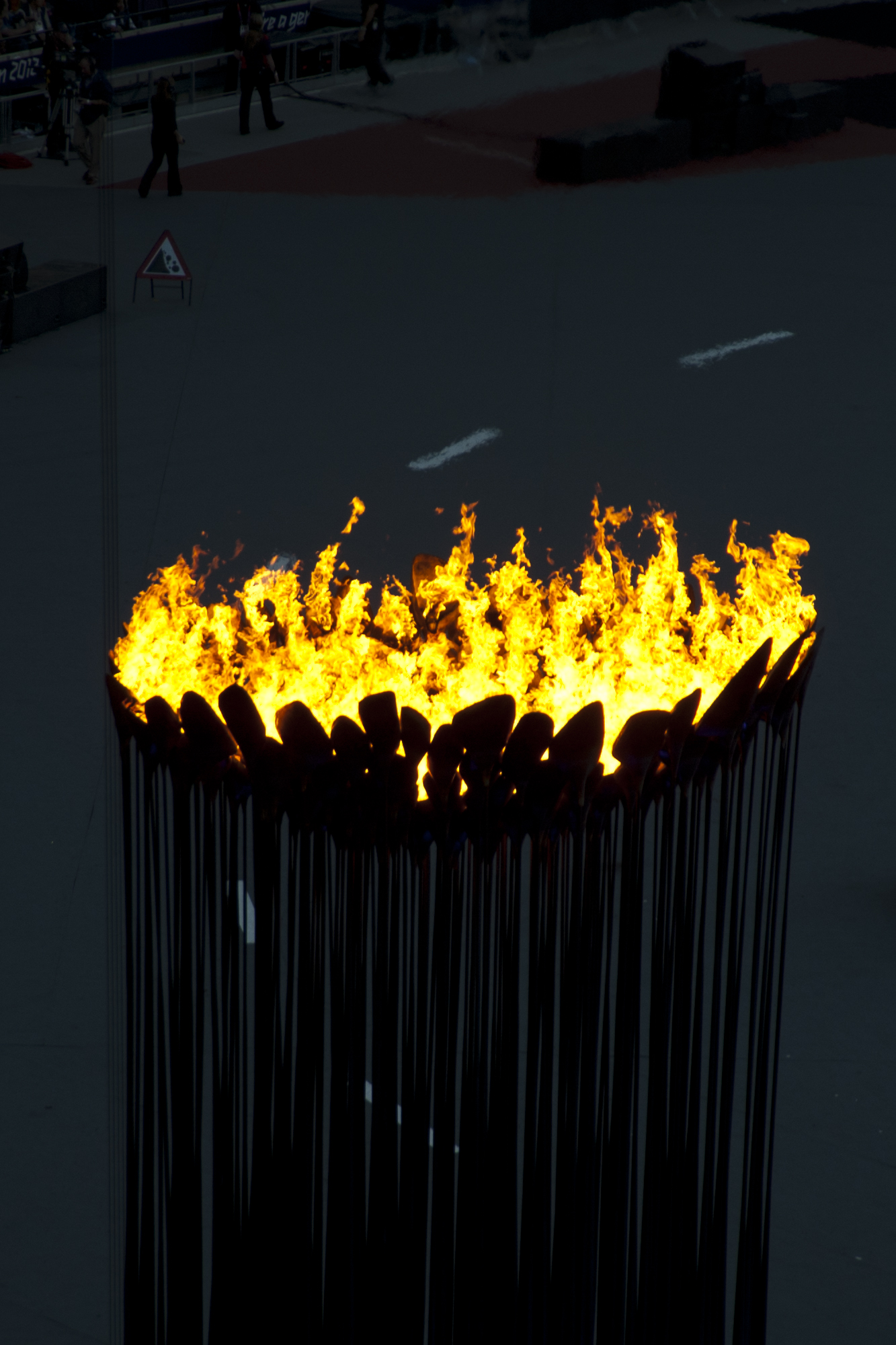
Artwork by Thomas Heatherwick in London for the Games of the 30th Olympiad
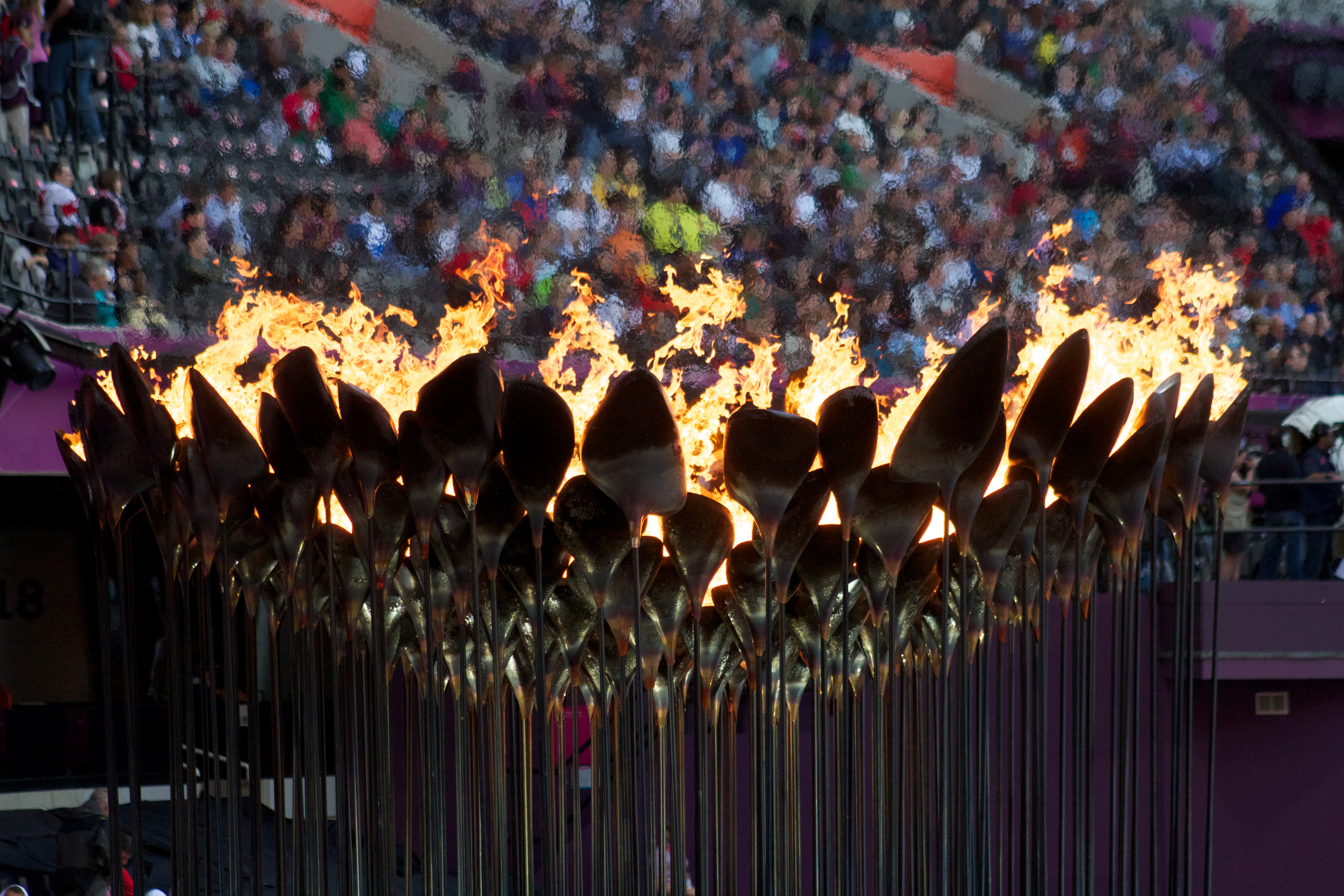
The 2012 Summer Olympics and Paralympics cauldron was used for the Olympic flame during the Summer Olympics and Paralympics of London 2012. The cauldron was designed by Thomas Heatherwick and described as "one of the best-kept secrets of the opening ceremony": until it was lit during the Olympics ceremony, neither its design and location, nor who would light it, had been revealed. For the Olympics it consisted of 204 individual 'petals', and for the Paralympics 164, one for each competing nation.
Commission and design
British designer Thomas Heatherwick was chosen by Danny Boyle to design the cauldron for the 2012 London Summer Olympics and Paralympic Games (the same design would serve both). Heatherwick was a highly regarded designer, responsible for the first prize-winning "Seed Cathedral" at the 2010 Shanghai Expo, and the New Routemaster bus introduced in London in February 2012; Boyle was an admirer of his B of the Bang sculpture in Manchester, saying of it 'I loved it so much; it's a tragedy they took it down in 2009 ... These public sculptures breathe life into you.'
The brief was that the cauldron should be something that connected all the nations, with the idea of them each bringing a constituent part of it, and also have a story or narrative. It was to be of a human scale, and to be placed among the people in the stadium rather than towering over it. It was also to be transient, like the coming-together of nations during each Games.
Heatherwick said “When Danny Boyle asked us to do this we felt this huge responsibility. We asked people: ‘Which cauldron do you remember?’ And the answer was: none. Our role was to design a 'moment': how could we make this moment manifest in the object? We didn't just want to make a bowl on a stick.” Heatherwick and his team spent two months researching and examining ideas, including a weekend spent looking at all previous Olympic cauldron designs.
Another important part of the brief was "Whatever you do, no moving parts". This was due to the failure of the cauldron at the 2010 Winter Olympics at Vancouver, when one of the four moving parts of the cauldron had failed to work.
Heatherwick wanted the cauldron to be a focal point, like an altar in a church, The Olympic cauldron comprised 204 separate copper 'petals', and the Paralympic one 164 – one petal from each of the competing nations.
Production
Production began in January 2012 in the workshops of Tockwith, near Harrogate-based firm Stage One. Each 3mm thick petal was unique: designed individually using 3D modelling, hand beaten from copper sheeting, and polished by skilled craftsmen. Each was hand-beaten over its own individual MDF former and took eight hours to produce. The petals were inscribed with the name of the competing country and "The XXX Olympiad – London 2012". Three full sets were made: for Olympic and Paralympic cauldrons, with a third for rehearsals and testing. The work on the cauldron at Stage One took 25,000 man hours.
The cauldron measured 8.5 metres high, 8 metres across when flat on the ground, and weighed 16 tonnes. It was significantly smaller and lighter than those of previous Games: the Beijing 2008 Summer Olympics cauldron weighed 300 tonnes. with a variable burn rate. The gas burners were designed by Australian firm FCT Flames based in Adelaide, which specialises in the design, manufacture and operation of ceremonial cauldrons around the world.The firm became a partner of the International Olympic Committee shortly after the 2000 Summer Olympics and became responsible for manufacturing the fuel in which the Olympic flame burns during the relay and in many cases was responsible for the construction and elaboration of the Pyre that burned during the 16 days of the Olympic Games and 12 days of the Paralympic Games in the host city.
Strict security and secrecy was paramount during construction and testing. During the project's first phase, which consisted of elaboration, assembly and first tests, the structure was codenamed "Betty", after the dog of the opening ceremony's executive producer Catherine Ugwu.
The cauldron was installed in the centre of the arena of Olympic Stadium using a 500-ton crane. This was done during overnight on 10 June 2012, in order to maintain the greatest secret of the opening ceremonies. All the tests and rehearsals were held late at night or in the early morning hours when Olympic airspace restrictions were in place, which stopped civil helicopters or planes from getting a view and take photos During final tests on the eve of the opening ceremony, one of the rods holding the petals became jammed, necessitating overnight repairs; this news was deliberately withheld from Heatherwick. Despite the secrecy, an image of the cauldron was visible in plain sight on the ceremony's tickets.
Use
In the Olympics

.jpg)
On arriving in London, each national team was presented with an inscribed petal.

During the parade at the opening ceremony, each petal was carried by a child accompanying each of the teams as they entered the stadium. The children wore gloves to avoid staining the copper. The petals (except from the independent athletes) were then passed secretly to fifteen technicians who, out of sight in the centre of the stadium, fitted them to the ends of the stainless steel stems as they lay flat on the ground. Its location was kept secret until the event; during the ceremony some people had speculated that it might be hidden under the Glastonbury Tor model at the end of the stadium.
The identity of the athlete who was to light the cauldron also remained secret. It transpired that, to reflect 'Inspire a Generation' theme of the 2012 Games, seven young athletes were chosen for that honour. Sir Steve Redgrave carried the flame into the stadium and passed it on to one of a team of six young athletes and one young volunteer, each nominated by a famous British Olympian. The torchbearers were (nominator in brackets): Callum Airlie (Shirley Robertson), Jordan Duckitt (Duncan Goodhew), Desirèe Henry (Daley Thompson), Katie Kirk (Mary Peters), Cameron MacRitchie (Steve Redgrave), Aidan Reynolds (Lynn Davies) and Adelle Tracey (Kelly Holmes).
The seven stepped forward together to light a petal each. Flames spread radially around the petals, and when all were alight, the stems rose slowly from the floor of the arena and converged to form an upright cauldron with a single, massive flame. The music performed during this part of the ceremony was the specially-commissioned "Caliban's Dream".
After the ceremony, the stadium was closed and on the following night the cauldron moved from infield to the end of the stadium formerly occupied by the Olympic Bell. During this move the Olympic flame was kept burning in a small Davy lamp, similar to those used during the torch relay. The cauldron was relit in its new spot by Austin Playfoot, who had carried an Olympic torch in both the 1948 and 2012 Games.
For the closing ceremony, the operation of the cauldron was played in reverse: it opened out until flat on the ground, and the flames in the petals extinguished one by one.
In the Paralympics
For the opening ceremony, the 164 petals were pre-set prior to lighting in a semi-spherical arrangement, and the flames lit from one side of the dome to the other, unlike the spiral of the Olympic cauldron. It was lit by Margaret Maughan, Britain's first Gold medallist in the Paralympic Games.
After the closing ceremony, the Paralympic cauldron was extinguished by swimmer Eleanor Simmonds and sprinter Jonnie Peacock. All but one of the petals were extinguished; Simmonds and Peacock lit new torches and distributed the fire to other performers across the stadium to represent an eternal flame.
After the Games
Heatherwick had intended that there would not be a large cauldron left after the Games, but instead each petal was to be offered to competing countries as a souvenir.
The day after the Olympics opening ceremony, details of the design, including a scale model, were added to the exhibition of Heatherwick's work that was running at the Victoria and Albert Museum in London. A selection of components and mechanisms of the cauldron were put on permanent display at the Museum of London in July 2014, to mark the second anniversary of the Games.
Reception
The cauldron received overwhelmingly positive reviews. The London Evening Standard called it "breathtakingly beautiful", while a reviewer for The Daily Telegraph commented that "It dazzles both by its exuberance and inventive dexterity". Creative Review said "From the moment it was lit to its last flicker, Heatherwick Studio's cauldron was an absolute star of the Games. Conceptually brilliant and utterly beautiful it was one of the most successful examples of an ambition among the Games' organisers to reinvent the familiar elements of the Olympics." A reviewer for the Sydney Morning Herald called the cauldron "stunning".
Controversy
Siting of cauldron
The London stadium had been designed assuming that the cauldron would sit above, as had become customary, on a part of the roof that was specially strengthened. The cauldron was therefore shown on video screens around the Olympic Park.
Plagiarism claim
In June 2013, New York design studio Atopia claimed that the design was identical to something they had presented to the London Olympic committee (LOCOG) in 2007; they stated they had not raised this earlier because of the restrictive non-disclosure agreement all companies had signed. Heatherwick denied that he had been briefed about Atopia's idea, and was adamant that the design was his alone. Danny Boyle also denied knowing about the earlier proposal, while Martin Green, former head of ceremonies at LOCOG, claimed that the idea had emerged from discussions between Boyle, Heatherwick and himself.
Accolades
An end of year review chose the cauldron as one of the top five design highlights of 2012, and Heatherwick was voted the Architects' Journal architecture personality of 2012 by its readers. On 12 March 2013 it was announced that the cauldron had won the Visual Arts category of the 2012 South Bank Sky Arts Awards. The cauldron was shortlisted for the Design Museum's 'Designs of the Year 2013' Awards in the 'Product' category.
Gallery
Sequence showing the cauldron starting to open out before it is extinguished at the 2012 Summer Olympics closing ceremony. File:Flame going out.jpg| File:Flame going out (1).jpg| File:Flame going out (2).jpg| File:Flame going out (3).jpg| File:Flame going out (4).jpg| File:The flame extinguished London.jpg|
References
References
- Nikkhah, Roya. (28 July 2012). "London 2012: Thomas Heatherwick, the designer behind the Olympic cauldron that stunned viewers". The Daily Telegraph.
- (7 November 2012). "Olympic and Paralympic cauldron 'petals' sent as gifts to competing nations". London 2012.
- ''Danny Boyle: Creating Wonder'' Amy Raphael, London: Faber and Faber, 2013, p. 406
- Monahan, Mark. (1 October 2012). "Hay Festival Segovia: Thomas Heatherwick: "We thought we could let copper have its day"". The Daily Telegraph.
- Keegan, Mike. (5 April 2013). "Danny Boyle: B of the Bang inspired me to Olympic heights of creativity". Manchester Evening News.
- "Danny Boyle and Frank Cottrell Boyce commentary track". BBC.
- (28 July 2012). "Olympic cauldron represents peace says designer Heatherwick". BBC.
- Singh, Rani. (14 August 2012). "The Olympic Cauldron: From 204 to a Single Flame". Forbes India.
- Curtis, Peter. (20 September 2012). "How a small Yorkshire firm made the Olympic cauldron that was seen around the world". CBI.
- (31 July 2012). "London 2012: How the Olympic cauldron was made". The Daily Telegraph.
- Rainey, Sarah. (6 August 2012). "Inside the Olympic magic cauldron factory at Stage One". The Daily Telegraph.
- (31 July 2012). "New Beauty for Old Flame". Stage One.
- (28 July 2012). "heatherwick studio: 2012 london olympics cauldron". designboom.com.
- Crompton, Sarah. (31 July 2012). "Thomas Heatherwick: A burning desire to change the world". The Daily Telegraph.
- Gill, James. (29 October 2012). "Secrets of the Olympic Opening Ceremony revealed". Radio Times.
- (12 September 2012). "Backstage at the London 2012 Olympic Ceremonies". Lsionline.
- Johnson, Kevin. (28 July 2012). "Secrets of London Olympic cauldron revealed". USA Today.
- Jones, Sam. (29 July 2012). "Betty the Olympic cauldron moves away from centre stage". The Guardian.
- Needham, Alex. (30 July 2012). "Thomas Heatherwick: the man who designed the Olympic cauldron". The Guardian.
- Gibson, Owen. (28 July 2012). "Olympic cauldron lit by sport stars of future". The Guardian.
- "London 2012 Olympic Games Opening Ceremony Media Guide". page 36.
- (28 July 2012). "Seven teenagers light Games' cauldron". Reuters.
- (28 July 2012). "Heatherwick Olympic cauldron lit by young hopefuls". BBC News.
- Jury, Louise. (30 July 2012). "Thomas Heatherwick: 'Britain is a cauldron of creativity'". The Evening Standard.
- Heatherwick, Thomas. (27 December 2012). "Mo Farah, Clare Balding, Lisa Riley, Thomas Heatherwick: What we learnt in 2012". The Daily Telegraph.
- (30 July 2012). "London Olympics cauldron put out and relit in stadium". BBC.
- Gibson, Owen. (10 September 2012). "Paralympics closing ceremony review: an emotional and fiery finale". The Guardian.
- Batty, David. (9 September 2012). "London 2012 Paralympics closing ceremony – as it happened". The Guardian.
- (9 December 2012). "London 2012 Olympic cauldron petals travel the world". Press Association Sport.
- "Heatherwick Studio: about the exhibition 31 May – 30 September 2012". Victoria & Albert Museum.
- (5 July 2012). "Paul Goldberger on the Practical, Poetic Thomas Heatherwick Exhibition at the Victoria & Albert Museum". Vanity Fair.
- "The London 2012 Cauldron: Designing a moment". Museum of London.
- (July 24, 2014). "London 2012 Olympic Cauldron at Museum of London". BBC News.
- Luke, Ben. (30 July 2012). "The Olympic Cauldron – review". London Evening Standard.
- Bailey, Jocelyn. (6 August 2012). "London 2012: in design, as in sport, investment yields gold". The Guardian.
- Burgoyne, Patrick. (14 August 2012). "London 2012: the creative Olympics". Creative Review.
- Baum, Greg. (28 July 2012). "Memorable start to Games as Boyle gets the balance right". Sydney Morning Herald.
- Oliver Wainwright. (19 June 2013). "How Olympic cauldron fanned flames of fury at American design studio". The Guardian.
- Oliver Wainwright. (19 June 2013). "Designers of London Olympic cauldron deny copying claims". The Guardian.
- Oliver Wainwright. (23 July 2014). "Row over Olympic cauldron design settled out of court". The Guardian.
- "Statement issued by the joint liquidators of LOCOG". Moore Stephens.
- Montgomery, Angus. (21 December 2012). "My design top five from 2012". Design Week.
- Waite, Richard. (21 December 2012). "The AJ readers' architecture personality of 2012". Architects' Journal.
- (12 March 2013). "Olympic cauldron wins South Bank award". BBC.
- Vincent, Alice. (6 February 2013). "Olympic art triumphs in Sky Arts Awards nominations". The Daily Telegraph.
- (6 February 2013). "Olympic art nominated for South Bank award". BBC.
- "Designs of the Year 2013". Design Museum.
This article was imported from Wikipedia and is available under the Creative Commons Attribution-ShareAlike 4.0 License. Content has been adapted to SurfDoc format. Original contributors can be found on the article history page.
Ask Mako anything about 2012 Summer Olympics and Paralympics cauldron — get instant answers, deeper analysis, and related topics.
Research with MakoFree with your Surf account
Create a free account to save articles, ask Mako questions, and organize your research.
Sign up freeThis content may have been generated or modified by AI. CloudSurf Software LLC is not responsible for the accuracy, completeness, or reliability of AI-generated content. Always verify important information from primary sources.
Report