From Surf Wiki (app.surf) — the open knowledge base
2010 FIFA World Cup event effects
Main article: 2010 FIFA World Cup
The 2010 FIFA World Cup is the 19th FIFA World Cup, the premier international association football tournament, being held in South Africa from 11 June to 11 July. It is the first time the finals of the tournament have been staged in an African host nation as South Africa were selected as hosts following a bidding in 2004. The impact of the event itself transcend those bound by its athletic aspect and appeal, and the socioeconomic aspects of the tournament are far reaching.
Economic effects
Non-FIFA events
In November 2009 it was reported that a rugby mid-year Test match between the Springboks and France scheduled to take place in Cape Town on 12 June 2010 would be moved to Europe, due to FIFA regulations banning other sport events in host cities during the time of the World Cup.{{cite news |archive-url=https://archive.today/20121224191224/http://www.sport24.co.za/Content/Rugby/264/77253aa1191947a381482cc591be690e/30-11-2009-10-31/Boks_France_Test_moved |url-status=dead |archive-date=24 December 2012
FIFA trademarks
The South African low-fare airline Kulula.com were ordered by FIFA to withdraw an advertisement that it claimed infringed their trademarks.{{cite news |access-date=19 March 2010| archive-url= https://web.archive.org/web/20100320053107/http://news.bbc.co.uk/2/hi/africa/8576220.stm| archive-date= 20 March 2010 | url-status= live}} Kulula.com disputed FIFA's claim, but later announced that they would withdraw the specific advert whilst continuing with the advertisement campaign.{{cite news
Broadcast rights and fees
In Singapore, FIFA's broadcast rights fees for the 2010 World Cup finals have been described as "exorbitant", with the organisation having changed prices according to what it perceived the country's TV operators were willing to pay. When Singapore TV operators SingTel and Starhub joined together to bid for the broadcast rights in late 2009, they were reportedly charged an initial S$40 million (about US$30 million). When the Singapore TV operators refused to pay the initial sum quoted by FIFA, and as time passed, Singapore was faced with the prospect of being one of the few countries not to get match broadcasts from the 2010 World Cup.
With only about a month left before the tournament, FIFA finally relented and reportedly reduced the fee to S$21 million (US$15 million), which was then accepted by the Singapore TV operators. This reduced fee was still significantly higher than the fee that FIFA charged Starhub for the exclusive rights to broadcast the 2006 World Cup in Germany, which was reported to be S$15 million (US$11 million).
This increased fee for the 2010 World Cup tournament broadcast rights resulted in the Singapore TV operators passing on the cost to their subscribers, which were then charged a special fee of S$94 (US$68) in addition to existing contracts, to watch the tournament's games. This high additional fee was the most expensive in the region, and angered Singapore football fans. Singapore was more expensive when compared to countries in the region that will either be broadcasting the matches free of charge, as in the case of Indonesia and Thailand; or at significantly lower viewing fees, at US$21 in Malaysia and US$38 in Hong Kong. This fee is also almost four times the S$25 (US$18) special fee that Starhub charged its subscribers for viewing the 2006 World Cup finals matches in Germany. As a result, many fans decided to protest against the increased fees with a mass boycott of the 2010 World Cup broadcast service by both operators.
Local vendors
Local vendors were prohibited from selling food and merchandise within a 1.5 km radius of any stadium hosting a World Cup Match. For a vendor to operate within the radius a registration fee of 60,000 South African Rand, equivalent to 7,888 US dollars, had to be paid FIFA. This fee was out of most local vendors' reach, as they are simple one-man-operated vendors. This prevented international visitors from experiencing local South African food. Some local vendors felt cheated out an opportunity of financial gain and spreading South African culture, in favour of multinational corporations.
Match effects
Vuvuzelas
Main article: Vuvuzela

During the World Cup events many competitors have criticised and complained about the noise caused by the vuvuzela horns, including France's Patrice Evra who blamed the horns for the team's poor performance. He also claimed that the sound of the vuvuzelas away from the stadiums hampered the ability of the players to get their rest. Other critics include Lionel Messi who complained that the sound of the vuvuzelas hampered communication among players on the pitch, and broadcasting companies, which complained that commentators' voices were being drowned out by the sound. Cristiano Ronaldo went on record to state that the sound of the vuvuzelas disturbed the teams' concentration.
Others watching on television have complained that the ambient audio feed from the stadium only contains the sounds of the vuvuzelas and the natural sounds of people in the stands are drowned out. A spokesperson for the ESPN network said it was taking steps to minimize the noise of the crowd on its broadcasts. Portuguese telecommunications company Portugal Telecom announced on 16 June an offer of an alternative audio feed, in which the vuvuzela sound is edited out, to the customers of its Pay-TV service called MEO.
When asked a few days into the tournament whether consideration would be given to banning vuvuzelas during matches, South African organising chief Danny Jordaan replied, "if there are grounds to do so, yes" and that "if any land on the pitch in anger we will take action."
Ticketing and attendance
Some first-round games suffered from large blocks of unoccupied stands, including one match with nearly 11,000 empty seats. FIFA reported that group ticket purchases went unused, and that current attendance levels were in fact second only to the 1994 event during the early round period.
References
References
- [http://www.sacsis.org.za/site/article/489.1 The Return of State Repression] {{Webarchive. link. (2013-06-30 , Jane Duncan, South African Civil Society Information Service)
- (17 May 2010). "Iraq: Al Qaeda planned World Cup attack". News World Communications.
- (11 June 2010). "Foreigners robbed in South Africa ahead of World Cup". Xinhua News.
- (10 June 2010). "Greece players suffer hotel thefts". The Daily Telegraph.
- (8 June 2010). "British media cautions travellers to South Africa". Taragana.
- (14 June 2010). "Somali militants threaten World Cup TV viewers". BBC News.
- Lai, Jodi. (14 June 2010). "Two Somali men executed for watching World Cup". CanWest Global Communications.
- Huber, Bridget. (17 June 2010). "Work suffers, parties thrive during World Cup". Associated Press.
- (19 June 2010). "World Cup 2010: Police hunt angry fan who entered England dressing room". The Daily Telegraph.
- (7 February 2008). "Hallmark Events and Evictions". [[Worldpress]].
- David Smith. (12 June 2009). "World Cup 2010: Football brings defining moment for South Africa". The Guardian.
- Alan Cowell [https://www.nytimes.com/2009/12/29/world/africa/29iht-letter.html?_r=1 ''World Cup Whose Meaning Goes Beyond Soccer''] New York Times, 28 December 2009
- (22 March 2010). "'Economic cleansing' in BBC's World Cup backyard, Stewart Maclean". The Independent.
- Mohammed Allie [https://www.bbc.co.uk/news/10205455 South Africans fight eviction for World Cup car park] ''BBC News'' 2 June 2010
- [http://www.newsweek.com/2010/06/04/kicked-out-for-the-cup.html Kicked Out for the Cup?] Christopher Worth ''Newsweek'', 4 June 2010
- (15 May 2009). "Shack Dwellers Fight Demolition in S. Africa Court". OneWorld.net.
- (16 May 2009). "Pooh-slinging Slums Act showdown at Con Court". Mail & Guardian Online.
- (1 October 2009). "South Africa's Poor Targeted by Evictions, Attacks in Advance of 2010 World Cup". Democracy Now!.
- Steele, Jonathan. (30 December 2009). "Why 2010 Could Be An Own Goal for the Rainbow Nation". The Guardian.
- [http://www.socialistworker.co.uk/art.php?id=20203 South Africa's World Cup stadium of slums] Socialist Worker, 9 February 2010
- Toussaint Losier [http://libcom.org/news/quiet-coup-south-africa%E2%80%99s-largest-social-movement-under-attack-world-cup-looms-02062010 A Quiet Coup: South Africa's largest social movement under attack as the World Cup Looms] ''Left Turn Magazine'', June 2010
- link. (2010-06-26 ''The Sowetan'', 1 June 2010)
- (10 February 2009). "The Reverse Side of the Medal: About the 2010 FIFA World Cup and the Beautification of the N2 in Cape Town". Springer Link.
- Steven Robins. "From Crossroads to Gateways". Department of Sociology and Social Anthropology, Stellenbosch University.
- (22 August 2008). "Exchange of letters re Joe Slovo with Minister Lindiwe Sisulu". LabourNet UK.
- (11 November 2005). "Local Professionals describe N2 Gateway as expensive Joke". Creamer Media.
- David Smith [https://www.theguardian.com/world/2010/apr/01/south-africa-world-cup-blikkiesdorp Life in 'Tin Can Town' for the South Africans evicted ahead of World Cup] The Guardian, 1 April 2010
- Sudarsan Raghavan [http://o.seattletimes.nwsource.com/html/worldcup/2012084369_soccersaf11.html South Africa's poor complain of evictions as country prepares to host World Cup], [[The Washington Post]], 20 June 2010
- (9 August 2009). "The real winners and losers: of the beautiful game". Herald Scotland.
- (6 May 2009). "How the World Cup will impact poor communities in South Africa". YouTube.
- (10 March 2010). "World Cup could be disrupted by violent housing protests". Telegraph.
- Corinne Louw. (23 March 2010). "Shack dwellers up in arms". The Sowetan.
- (6 January 2010). "Soaring heat keeps rescuers on high alert". IOL.
- (23 November 2009). "Life in the tin jungle of Blikkiesdorp". Western Cape Anti-Eviction Campaign.
- (29 January 2009). "Forced Removals". The Mercury.
- Smith, David. (1 April 2010). "Life in 'Tin Can Town' for the South Africans evicted ahead of World Cup". Guardian.
- (8 October 2009). "Centre on Housing Rights and Evictions ask City to reconsider Symphony Way's eviction to Blikkiesdorp". Pambazuka News.
- Brooks, Courtney. (3 December 2009). "Homeless S. Africans complain ahead of World Cup". Associated Press.
- (19 October 2009). "Delft squatters not prepared to relocate despite court ruling". SABC.
- [http://www.journalism.cuny.edu/capstones/to-be-betrayed-by-your-brother/ To Be Betrayed By Your Brother] {{Webarchive. link. (2012-04-23 , Rosaleen Ortiz, ''City University of New York'', 2010)
- E. Benjamin Skinner. (18 January 2010). "Sex Trafficking in South Africa: World Cup Slavery Fear". Time.
- (7 March 2010). "South Africa fears arrival of 40,000 sex workers for World Cup". Digital Journal.
- (7 June 2010). "Aids and HIV warning to South Africa World Cup fans". BBC News.
- (11 June 2010). "London World Cup fans warned about Rustenburg's HIV sex workers". London Evening Standard.
- Smith, David. (4 June 2010). "World Cup 2010: Fifa blocking condom distribution at venues, say Aids groups". The Guardian.
- Three World Cup matches were played on the day of the Springboks Test, one of which took place during the Test. However, all of the World Cup matches were played hundreds of kilometres from Cape Town in Port Elizabeth, Johannesburg and Rustenburg.
- (6 May 2008). "Hear Us Roar: 2010 World Cup Broadcast Rights". "REACH" by the Singapore Government's [[MCYS.
- (6 April 2010). "World Cup deal close". The Straits Times.
- (29 January 2008). "Deadlock could drive World Cup online in Singapore". Reuters.
- (15 December 2009). "No World Cup for Singapore?". The Straits Times.
- (24 February 2010). "That expensive game called football, part 2". The Star Online.
- (20 May 2010). "SingTel, Starhub face revolt". The Straits Times.
- (8 May 2008). "High Fees Irk Fans". The Straits Times.
- (12 May 2010). "Minimal World Cup Boost". [[Oversea-Chinese Banking Corporation.
- (29 May 2010). "More boycotting packages". The Straits Times.
- "Archived copy".
- (13 June 2010). "World Cup 2010: South Africa ponders vuvuzela ban". BBC Sport.
- AFP. (14 June 2010). "World Cup organiser mulls vuvuzela ban".
- DPA. (13 June 2010). "It is impossible to communicate, it's like being deaf: Messi". The Hindu.
- (13 June 2010). "Ronaldo hits out at vuvuzelas". Radio Netherlands Worldwide.
- Valenti, Elio. (13 June 2010). "Buzz off, vuvuzelas!". New York Post.
- Van Buskirk, Eliot. (18 June 2010). "Should World Cup Broadcasters Mute Vuvuzela Horns?". Condé Nast Digital.
- (14 June 2010). "Organizers consider silencing vuvuzelas". ESPN Soccernet.
- [https://web.archive.org/web/20100715104223/http://af.reuters.com/article/sportsNews/idAFJOE65E0NJ20100615?feedType=RSS&feedName=sportsNews&sp=true Empty seats concern FIFA but attendances stay high] Reuters Africa, 15 June 2010
This article was imported from Wikipedia and is available under the Creative Commons Attribution-ShareAlike 4.0 License. Content has been adapted to SurfDoc format. Original contributors can be found on the article history page.
Ask Mako anything about 2010 FIFA World Cup event effects — get instant answers, deeper analysis, and related topics.
Research with MakoFree with your Surf account
Create a free account to save articles, ask Mako questions, and organize your research.
Sign up freeThis content may have been generated or modified by AI. CloudSurf Software LLC is not responsible for the accuracy, completeness, or reliability of AI-generated content. Always verify important information from primary sources.
Report
Social effects
Security
Tournament organiser Danny Jordaan dismissed concerns that the attack on the Togo national team which took place in Angola in January 2010, had any relevance to the security arrangements for the World Cup.{{cite news |access-date=9 January 2010 | archive-url= https://web.archive.org/web/20100110053644/http://news.bbc.co.uk/sport1/hi/football/africa/8450088.stm| archive-date= 10 January 2010 | url-status= live}} There have been claims that the police have implemented a de facto state of emergency by banning protests during the event.
Major General Qassim al-Moussawi of Iraq's security services said the arrest of Abdullah Azzam Saleh al-Qahtani, allegedly a former Saudi army lieutenant, yielded information that "He was planning a terrorist act in South Africa during the World Cup based on plans issued by the central al Qaeda terrorist organisation in coordination with Osama bin Laden's first assistant, Ayman al-Zawahri."
There were also reports of thefts against visitors to the country for the World Cup. Tourists from China, Portugal, Spain, South Korea, Japan and Colombia had become victim to crimes. Three members of the Greece national team reported that £1,300 had been stolen from their rooms. These reports came after the British media cautioned visitors about such security threats.
In Iraq, the improved security situation has allowed people to watch matches in public places. This is in contrast to 2006 when violence prevented people from gathering publicly. declaring the World Cup a waste of time and resources and un-Islamic. There were reports that groups had arrested people for watching the World Cup.
On 18 June after the match between England and Algeria a fan was able to break through the FIFA-appointed security staff at Green Point stadium and gain access to the England team dressing room. The breach took place shortly after Prince William and Prince Harry had left the room. The trespasser was then released before he could be handed over to the Police. The Football Association lodged a formal complaint with FIFA and demanded that security be increased.
Evictions
As with many 'hallmark events' throughout the world, the 2010 FIFA World Cup has been connected to evictions, which many claim are meant to 'beautify the city', impress visiting tourists, and hide shackdwellers. On 14 May 2009, the Durban-based shack-dwellers' movement Abahlali baseMjondolo took the KwaZulu-Natal government to court over their controversial Elimination and Prevention of Re-Emergence of Slums Act, meant to eliminate slums in South Africa and put homeless shackdwellers in transit camps in time for the 2010 World Cup. They have gained a lot of publicity for their efforts, even in the international media. Abahlali baseMjondolo have threatened to build shacks outside of the Cape Town stadium to draw attention to their situation.
Another prominent controversy surrounding preparations for the World Cup is the N2 Gateway housing project in Cape Town, which plans to remove over 20,000 residents from the Joe Slovo Informal Settlement along the busy N2 Freeway and build rental flats and bond-houses in its place in time for the 2010 World Cup. The residents would be moved to the poverty stricken Delft township on the outskirts of the city and out of sight from the N2 Freeway. There has been particular concern about forced removals to the Blikkiesdorp camp in Delft and that in Durban, children are being forcibly removed from the city centre.
In July 2009, South Africa was hit with rolling protests by poor communities that demanded access to basic services, jobs, adequate housing and the democratisation of service delivery. These protests have been linked to the World Cup as protesters complain that public funds are being diverted away from social issues to build stadiums and upgrade airports. Fears have been expressed that the growing protests by shack dwellers could result in the tournament being disrupted. Some grassroots social movements have called for a boycott of the event.
Blikkiesdorp
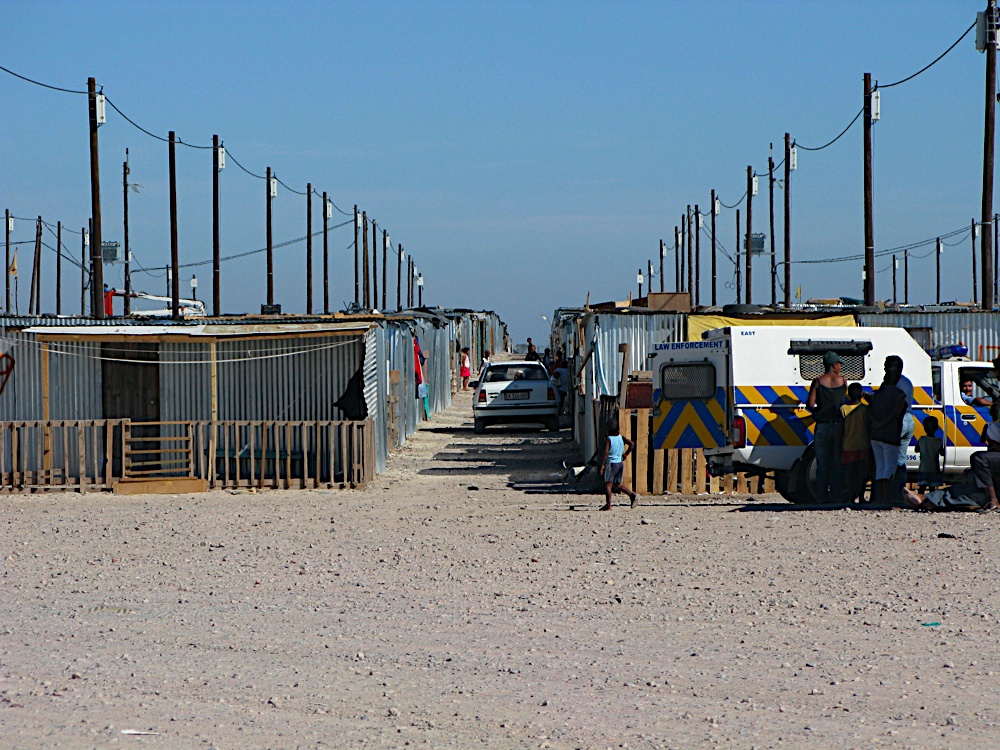
Blikkiesdorp has become well known for its high crime rate, its substandard living conditions, and its extremely hot or cold, windy and sandy living environment. NGOs, international human rights organisations, and the Anti-Eviction Campaign have publicly criticised the conditions in Blikkiesdorp and how they say it is used to reinforce the eviction of poor families especially to make way for the 2010 World Cup. Residents also threatened to burn down Blikkiesdorp before the World Cup begins because of the bad conditions in the settlement.
Xenophobic Violence
There were widespread reports in the local press that there would be mass planned violence against migrants at the conclusion of the tournament. This did not happen.
HIV/AIDS
South Africans and others expressed concern that the World Cup would stimulate the illicit sex trade. Football fans were warned that South Africa has one of the worst HIV infection rates in the world with up to half the country's sex workers HIV positive and the British government gave £1 million to buy 42 million condoms.