From Surf Wiki (app.surf) — the open knowledge base
2009 swine flu pandemic in Africa
none

none
Main article: 2009 flu pandemic
The 2009 flu pandemic hit Africa two months later than other continents with the first case reported in Egypt on June 2, 2009. As of December 1, 30 countries in Africa had reported cases and 7 countries in Africa had reported a total of 108 deaths. It was the least affected continent.
Symptoms of H1N1 swine flu are like regular flu symptoms and include fever, cough, sore throat, runny nose, body aches, headache, chills, and fatigue. Many people with swine flu have had diarrhea and vomiting, but these symptoms can also be caused by many other conditions. That means that you and your doctor can't know, just based on your symptoms, if you've got swine flu. Healthcare professionals may offer a rapid flu test, although a negative result doesn't mean you don't have the flu. The accuracy of the test depends on the quality of the manufacturer's test, the sample collection method, and how much of the virus a person is emitting at the time of testing.
Like seasonal flu, pandemic swine flu can cause neurological symptoms in children. These events are rare, but, as cases associated with seasonal flu have shown, they can be very severe and often fatal. Symptoms include seizures or changes in mental status (confusion or sudden cognitive or behavioral changes). It's not clear why these symptoms occur, although they may be caused by Reye's syndrome. Reye's syndrome usually occurs in children with a viral illness who have taken aspirin—something that should always be avoided.
| Country | Cases | Deaths | Laboratory confirmed | Laboratory confirmed | |||||||||||
|---|---|---|---|---|---|---|---|---|---|---|---|---|---|---|---|
| Total | 28,616 | 345 | |||||||||||||
| [South Africa](2009-flu-pandemic-in-africa-south-africa) | url=https://reliefweb.int/sites/reliefweb.int/files/resources/97728DC828419A8EC1257696004C31F0-Full_Report.pdf | title=Pandemic (H1N1) 2009 in the African Region: Update 63 | publisher=WHO AFRO | date=2009-11-04 | accessdate=2009-11-06}} | url=http://www.ecdc.europa.eu/en/healthtopics/Documents/091106_Influenza_AH1N1_Situation_Report_0900hrs.pdf | title=ECDC Daily Update - Pandemic (H1N1) 2009 - 06 November 2009 | date=2009-11-06 | accessdate=2009-11-06 | archive-url=https://web.archive.org/web/20091107163924/http://ecdc.europa.eu/en/healthtopics/Documents/091106_Influenza_AH1N1_Situation_Report_0900hrs.pdf | archive-date=7 November 2009 | url-status=dead | df=dmy-all }} | ||
| [Egypt](2009-flu-pandemic-in-africa-egypt) | url=http://www.emro.who.int/csr/h1n1/h1n1_update.htm | title=Latest situation in the Region | publisher=WHO EMRO | date=2009-09-19 | accessdate=2009-09-25}} | 210 | |||||||||
| [Morocco](2009-flu-pandemic-in-africa-morocco) | 2980 | 50 | |||||||||||||
| [Algeria](2009-flu-pandemic-in-africa-algeria) | 672 | 47 | |||||||||||||
| [Mauritius](2009-flu-pandemic-in-africa-mauritius) | 69 | 8 | |||||||||||||
| [Tunisia](2009-flu-pandemic-in-africa-tunisia) | 1200 | 18 | |||||||||||||
| [Madagascar](2009-flu-pandemic-in-africa-madagascar) | 877 | 3 | |||||||||||||
| [Mozambique](2009-flu-pandemic-in-africa-mozambique) | 101 | 2 | |||||||||||||
| [São Tomé and Príncipe](2009-flu-pandemic-in-africa-sao-tome-and-principe) | 41 | 2 | |||||||||||||
| [Nigeria](2009-flu-pandemic-in-africa-nigeria) | 11 | 2 | |||||||||||||
| [Tanzania](2009-flu-pandemic-in-africa-tanzania) | 677 | 1 | |||||||||||||
| [Libya](2009-flu-pandemic-in-africa-libya) | 233 | 1 | |||||||||||||
| [Namibia](2009-flu-pandemic-in-africa-namibia) | 72 | 1 | |||||||||||||
| [Sudan](2009-flu-pandemic-in-africa-sudan) | 145 | 5 | |||||||||||||
| [Kenya](2009-flu-pandemic-in-africa-kenya) | 417 | 0 | |||||||||||||
| [Rwanda](2009-flu-pandemic-in-africa-rwanda) | 331 | 0 | |||||||||||||
| [Uganda](2009-flu-pandemic-in-africa-uganda) | 251 | 0 | |||||||||||||
| [Zambia](2009-flu-pandemic-in-africa-zambia) | 90 | 0 | |||||||||||||
| [Democratic Republic of Congo](2009-flu-pandemic-in-africa-democratic-republic-of-congo) | 222 | 0 | |||||||||||||
| [Lesotho](2009-flu-pandemic-in-africa-lesotho) | 65 | 0 | |||||||||||||
| [Cape Verde](2009-flu-pandemic-in-africa-cape-verde) | 62 | 0 | |||||||||||||
| [Ghana](2009-flu-pandemic-in-africa-ghana) | 54 | 0 | |||||||||||||
| [Zimbabwe](2009-flu-pandemic-in-africa-zimbabwe) | 41 | 0 | |||||||||||||
| [Angola](2009-flu-pandemic-in-africa-angola) | 37 | 0 | |||||||||||||
| [Seychelles](2009-flu-pandemic-in-africa-seychelles) | 33 | 0 | |||||||||||||
| [Botswana](2009-flu-pandemic-in-africa-botswana) | 23 | 0 | |||||||||||||
| [Republic of the Congo](2009-flu-pandemic-in-africa-republic-of-the-congo) | 21 | 0 | |||||||||||||
| [Djibouti](2009-flu-pandemic-in-africa-djibouti) | 9 | 0 | |||||||||||||
| [Burundi](2009-flu-pandemic-in-africa-burundi) | 7 | 0 | |||||||||||||
| [Mali](2009-flu-pandemic-in-africa-mali) | 7 | 0 | |||||||||||||
| [Ethiopia](2009-flu-pandemic-in-africa-ethiopia) | 6 | 0 | |||||||||||||
| [Cameroon](2009-flu-pandemic-in-africa-cameroon) | 4 | 0 | |||||||||||||
| [Malawi](2009-flu-pandemic-in-africa-malawi) | 4 | 0 | |||||||||||||
| [Côte d'Ivoire](2009-flu-pandemic-in-africa-cote-d-ivoire) | 3 | 0 | |||||||||||||
| [Swaziland](2009-flu-pandemic-in-africa-swaziland) | 2 | 0 | |||||||||||||
| [Gabon](2009-flu-pandemic-in-africa-gabon) | 1 | 0 | |||||||||||||
| **Summary:** Number of African countries with confirmed cases: 35 (13 November 2009) |
| [[File:H1N1 Africa Map by confirmed cases.svg | thumb | left | ]] | [[File:Africa Community Outbreaks.svg | thumb | left | ]] |
|---|
Algeria
The first case of swine influenza was detected in Algeria on June 20. This was an Algerian national, resident in Frankfurt and coming from Miami with her two children.
This first case was detected at Houari Boumediene Airport. Many Algerian immigrants and tourists were arriving during this holiday period, increasing the risk of spreading the virus. The woman suffering from flu was immediately transferred to the hospital of El-Kettar’ in Algiers.
Benin
As of May 2, 2009 there was one suspected case of swine flu in Benin.
Egypt
The Egyptian government increased numbers of medical officers at Cairo Airport and pledged to monitor passengers from Mexico during their stay.
The government ordered the mass slaughter of all pigs in Egypt on April 29, even though the pandemic strain was a human-human transmittable, human influenza that has already previously hybridized with avian and swine flu. The World Organisation for Animal Health called the swine killing "scientifically unjustified".
Egypt commenced the slaughter on 2 May 2009. On the next day in Cairo, an estimated 300 Coptic Christian residents of the Manshiyat Nasr district set up blockades on the street in attempt to keep government officers from confiscating their pigs, which led to clashes with the police. Al-Ahram, a widely circulated Egyptian newspaper, reported that owners of destroyed pigs would receive (approximately US$177.70) per animal in compensation, but Reuters reported that the issue was still "under discussion", citing an Egyptian cabinet spokesman.
The first case of the novel H1N1 virus was discovered in Cairo, Egypt on the second of June, in a 12-year-old girl coming from the US with her mother. Only the girl was infected, and the officials caught the case before she left the airport.
A second and third case were discovered on Sunday 7 June: two students at the American University of Cairo.
As of June 9, there was 8 confirmed case of swine flu in Egypt.
On June 11, 2 more cases were discovered, along with 2 cases discovered a day earlier, bringing the total number of swine flu cases to 12.
As of December 3, the confirmed cases were 3558 and the deaths of 24. As of January 31, there were 258 confirmed deaths from A/H1N1 influenza in Egypt, and in excess of 15,800 confirmed cases of H1N1.
Ethiopia
On June 19, 2009 the Ethiopian government reported two cases of swine flu. They were both in girls who had returned from school in the United States for summer break. One additional case was reported by July 6. By December 14, 2009, six cases had been reported with no deaths contributed to the flu.
Ghana
Ghana banned the importation of pork and pork products. As of December 14, 2009, Ghana had 54 cases with no deaths reported.
Kenya
Kenya health authorities started screening travellers at Jomo Kenyatta and Moi international airports on April 28. Public Health and Sanitation minister Beth Mugo said travellers from Mexico and those from Texas, California and New York were being screened.
On June 29, a British medical student became the first confirmed case of swine flu in Kenya. The student, who was in a group of 33, was in Kenya to attend a series of medical camps in Nyanza province. The whole group was quarantined in their hotel in Kisumu while undergoing treatment.
There was a panic in Nairobi as mobile text messages circulated warning people to stay away from Sarit centre, a popular commercial establishment where another suspected case had been diagnosed. The patient's test results, however, came back negative for the H1N1 virus.
As of December 14, 2009, Kenya had 417 cases with no deaths reported.
Libya
On 6 July 2009, Libya had its first confirmed case of swine flu from a man that had travelled from Thailand via Dubai. As of December 5, 2009, Libya had 124 cases with no deaths.
Morocco
Morocco confirmed the first case of novel human swine flu (A/H1N1-2009) on 12 June, in an 18-year-old university student returning from Canada. As of December 5, 2009, Morocco had 1,763 cases with 5 deaths.
Namibia
Namibia confirmed its first two cases of swine flu on July 20.
Both cases involved young adults who had been traveling in other countries: a 13-year-old boy from Rehoboth who returned from a rugby trip with 20 other students in South Africa and a young student returning from Europe. The latter was taken by ambulance to hospital directly from the international airport in Windhoek as she showed severe signs of flu.
Nigeria
Nigerian Health Minister Babatunde Osotimehin announced that the country was stockpiling antiviral treatments, informing the public and increasing surveillance.
The first A/H1N1 death was confirmed in Nigeria on 5 January 2010, with the victim being a 38-year-old woman from Lagos who was infected in the US.
Tunisia
Tunisia confirmed the two first cases of swine flu (A/H1N1-2009) on June 22. Both cases were returning from the United States, and recovered quickly.
South Africa
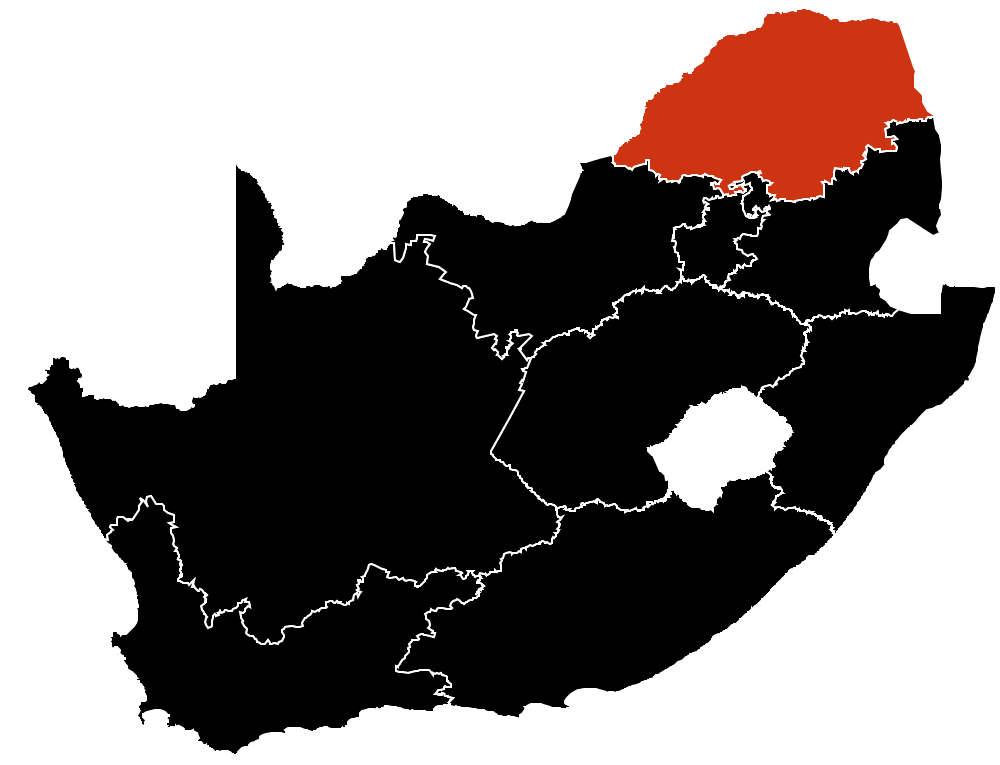
On April 29, South Africa reported two possible cases of swine flu from two women who had recently travelled in Mexico. On June 18, the first case was confirmed. Later, on 29 June the South African National Department of Health confirmed 7 cases of swine influenza in the country.
The first death in South Africa was confirmed on 3 August. The victim was a student at the University of Stellenbosch. A few days later the second confirmed death was announced: a male in Durban, Mount Edgecombe As of December 14, 2009, South Africa had 12631 cases with 91 deaths.
The H1N1 virus was a concern for the 2010 FIFA World Cup, which took place in June 2010 but there were not any major issues with the flu during the tournament.
Sudan
The first case of swine flu in Sudan was confirmed in mid-July 2009. At the end of November the first case was confirmed in Southern Sudan.
As of December 28, 2009, there were five deaths and over 150 confirmed cases of swine flu in Sudan.
Zambia
An emergency task force was set up by the Zambian government.
Timeline
| 2009 | A(H1N1) Outbreak and Pandemic Milestones in Africa | 2010 | A(H1N1) Outbreak and Pandemic Milestones in Africa |
|---|---|---|---|
| 2 June | Egypt First case confirmed in Egypt. | ||
| 12 June | Morocco First case confirmed in Morocco. | ||
| 18 June | South Africa First case confirmed in South Africa. | ||
| 19 June | Ethiopia First case confirmed in Ethiopia. | ||
| 20 June | Algeria First case confirmed in Algeria. | ||
| 22 June | Tunisia First case confirmed in Tunisia. | ||
| 24 June | Cape Verde First case confirmed in the Cape Verde Islands. | ||
| Côte d'Ivoire First case confirmed in Côte d'Ivoire. | |||
| 29 June | Kenya First case confirmed in Kenya. | ||
| Mauritius First case confirmed in Mauritius. | |||
| 30 June | Egypt Community outbreaks confirmed in Egypt. | ||
| 2 July | Uganda First case confirmed in Uganda. | ||
| 6 July | Libya First case confirmed in Libya. | ||
| 8 July | Seychelles First case confirmed in Seychelles. | ||
| 9 July | Tanzania First case confirmed in Tanzania. | ||
| 10 July | Botswana First case confirmed in Botswana. | ||
| Réunion First case confirmed in Reunion. | |||
| Zimbabwe First case confirmed in Zimbabwe. | |||
| 16 July | Sudan First case confirmed in Sudan. | ||
| Morocco **Community outbreaks** confirmed in Morocco. | |||
| 19 July | Egypt First **death** confirmed in Egypt, thus Africa. | ||
| 20 July | Namibia First case confirmed in Namibia. | ||
| 25 July | South Africa **Community outbreaks** confirmed in South Africa. | ||
| 28 July | Zambia First case confirmed in Zambia. | ||
| 29 July | Swaziland First case confirmed in Swaziland. | ||
| 30 July | Gabon First case confirmed in Gabon. | ||
| 1 August | Mayotte First case confirmed in Mayotte. | ||
| 3 August | South Africa First **death** confirmed in South Africa. | ||
| 6 August | Ghana First case confirmed in Ghana. | ||
| 9 August | Algeria **Community outbreaks** confirmed in Algeria. | ||
| 10 August | Mauritius First **death** confirmed in Mauritius. | ||
| 14 August | Cameroon First case confirmed in Cameroon. | ||
| Madagascar First case confirmed in Madagascar. | |||
| 15 August | DR Congo First case confirmed in Democratic Republic of the Congo. | ||
| 17 August | Mozambique First case confirmed in Mozambique. | ||
| 26 August | Angola First case confirmed in Angola. | ||
| 31 August | Djibouti First case confirmed in Djibouti. | ||
| 1 September | Lesotho First case confirmed in Lesotho. | ||
| Réunion First **death** confirmed in Reunion. | |||
| 7 September | Namibia First **death** confirmed in Namibia. | ||
| 8 September | Madagascar First **death** confirmed in Madagascar. | ||
| 10 September | Malawi First case confirmed in Malawi. | ||
| 14 September | Mozambique First **death** confirmed in Mozambique. | ||
| 6 October | Tanzania First **death** confirmed in Tanzania. | ||
| 12 October | Rwanda First case confirmed in Rwanda. | ||
| São Tomé and Príncipe First case confirmed in São Tomé and Príncipe. | |||
| 15 October | Mayotte First **death** confirmed in Mayotte. | ||
| 18 October | Sudan First **death** confirmed in Sudan. | ||
| 25 October | São Tomé and Príncipe First **death** confirmed in São Tomé and Príncipe. | ||
| 29 October | Congo First case confirmed in the Republic of the Congo. | ||
| Nigeria First case confirmed in Nigeria. | |||
| 1 November | Morocco **Mass vaccinations** in Morocco begins | ||
| 3 November | Egypt **Mass vaccinations** in Egypt begins | ||
| 11 November | Burundi First case confirmed in Burundi. | ||
| 13 November | Somalia First case confirmed in Somalia. | ||
| 16 November | Tunisia First **death** confirmed in Tunisia. | ||
| Morocco First **death** confirmed in Morocco. | |||
| 27 November | Algeria First **death** confirmed in Algeria. | ||
| 30 November | Libya First **death** confirmed in Libya. | ||
| 5 January | Nigeria First **death** confirmed in Nigeria. | ||
| 11 January | Mali First case confirmed in Mali. | ||
| 29 January | Chad First case confirmed in Chad. | ||
| 3 February | Mauritania First case confirmed in Mauritania. | ||
| 9 February | Senegal First case confirmed in Senegal. | ||
| 25 February | Niger First case confirmed in Niger. | ||
| 12 April | Guinea First case confirmed in Guinea. |
References
References
- "Swine Flu Symptoms - What Is Swine Flu - H1N1 Influenza A - Swine Flu Treatment". WebMD.
- (2009-11-04). "Pandemic (H1N1) 2009 in the African Region: Update 63". WHO AFRO.
- (2009-11-06). "ECDC Daily Update - Pandemic (H1N1) 2009 - 06 November 2009".
- (2009-09-19). "Latest situation in the Region". WHO EMRO.
- "اليوم السابع {{!}} وفاة 4 حالات جديدة بأنفلونزا الخنازير".
- "Ennahar Online - First case of swine flu identified in Algeria". ennaharonline.com.
- [http://www.thetimes.co.za/News/Article.aspx?id=991159 Swine flue confirmed in Benin], The Times, May 2, 2009. Accessed 2009-08-03. [https://web.archive.org/web/20090505004342/http://www.thetimes.co.za/News/Article.aspx?id=991159 Archived] 2009-09-08.
- [https://news.bbc.co.uk/1/hi/world/americas/8022516.stm The world response to flu crisis], BBC News, 2009-04-28. Retrieved on 2009-04-30.
- [https://web.archive.org/web/20090501001515/http://www.abc.net.au/news/stories/2009/04/30/2556545.htm?section=justin Egypt orders pig cull], ABC News, 2009-04-30. Retrieved on 2009-04-30. [https://web.archive.org/web/20090924070245/http://www.abc.net.au/news/stories/2009/04/30/2556545.htm?section=justin Archived] 2009-09-08.
- (April 28, 2009). "OIE position on safety of international trade of pigs and products of pig origin". World Organisation for Animal Health.
- (2009-04-03). "Iraq culls three wild pigs at Baghdad zoo".
- (2009-05-05). "Egypt: swine destruction threatens coptic-run industry". Compass Direct News.
- (2009-05-03). "Clashes erupt over Egypt pig cull". BBC News.
- Stewart, Phil. (2009-04-29). "UN agency slams Egypt order to cull all pigs". Reuters.
- (2 June 2009). "Egypt detects first H1N1 flu case: WHO official". Reuters.
- "Toddler latest swine flu case in Egypt".
- "A/H1N1 flu death toll reaches 258 in Egypt". xinhuanet.com.
- "Ethiopians infected with H1N1 flu receive treatment : ministry". ReliefWeb.
- Malone, Barry. (2009-06-19). "Ethiopia confirms first cases of H1N1". Reuters.
- "WHO {{!}} Pandemic (H1N1) 2009 - update 58".
- Ghana Broadcasting Corporation. (2009-04-28). "Ghana bans importation of pork and pork products". Ghana Broadcasting Corporation.
- (28 April 2009). "Kenya mounts swine flu alert". nation.co.ke.
- (3 July 2009). "Kenya confirms first swine flu case". Wikinews.
- "Swine Flu".
- [https://archive.today/20120630052747/http://www.google.com/hostednews/afp/article/ALeqM5jlzMvITjfWhY0IePXScfbIeaoToA]
- Hamid Ould Ahmed. (2009-07-05). "Libya reports first case of new H1N1 flu". Reuters.
- Reuters, [https://www.reuters.com/article/americasCrisis/idUSLC292881 "Morocco confirms first H1N1 flu case -ministry"], 12 June 2009 (accessed 14 June 2009)
- "Influenza A (H1N1): Eastern Mediterranean Region - WHO latest update, 05 Dec 2009".
- SABC. "SABC News - Breaking news, special reports, world, business, sport coverage of all South African current events. Africa's news leader.". sabcnews.com.
- Associated Press, [http://fr.news.yahoo.com/3/20090622/twl-grippe-a-h1n1-tunisie-1be00ca.html "Grippe A/H1N1: deux premiers cas en Tunisie"] {{Webarchive. link. (2009-06-25 , 22 June 2009 (accessed 22 June 2009))
- [http://www.news24.com/News24/South_Africa/News/0,,2-7-1442_2508746,00.html 2 suspected swine flu cases in SA] {{Webarchive. link. (2009-07-03 , News24, April 29, 2009)
- [http://www.mg.co.za/article/2009-06-29-seven-confirmed-cases-of-swine-flu-in-sa Seven Confirmed Cases of Swine Flu in SA], Mail & Guardian, June 29, 2009. Accessed 2009-08-03. [https://web.archive.org/web/20090701072302/http://www.mg.co.za/article/2009-06-29-seven-confirmed-cases-of-swine-flu-in-sa Archived] 2009-09-08.
- "Cape Times".
- "iafrica.com Winter raises H1N1 fears". iAfrica.com.
- "FINISHED: World Cup 2010: Swine Flu Threat In Mind - Goal.com". Goal.com.
- "WHO confirms first case of swine influenza in South Sudan". sudantribune.com.
- "Sudan confirms five swine flu deaths". sudantribune.com.
This article was imported from Wikipedia and is available under the Creative Commons Attribution-ShareAlike 4.0 License. Content has been adapted to SurfDoc format. Original contributors can be found on the article history page.
Ask Mako anything about 2009 swine flu pandemic in Africa — get instant answers, deeper analysis, and related topics.
Research with MakoFree with your Surf account
Create a free account to save articles, ask Mako questions, and organize your research.
Sign up freeThis content may have been generated or modified by AI. CloudSurf Software LLC is not responsible for the accuracy, completeness, or reliability of AI-generated content. Always verify important information from primary sources.
Report