From Surf Wiki (app.surf) — the open knowledge base
2008 Central Asia energy crisis
Energy shortage in Central Asia
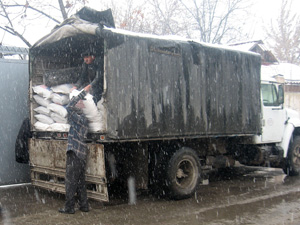
Energy shortage in Central Asia
World Bank debt and price hikes

At the beginning of January 2008, officials announced an electricity price hike of 20 percent to allow the "government [to] repay its debt to the World Bank." According to an official at Barqi Tojik, a national power company, limits will become stricter, and the price for electricity is expected to rise until 2010.
In April 2008, Pradeep Mitra, World Bank chief economist for Europe and Central Asia, issued an uncharacteristic statement, urging the worse-hit countries to spend more on social assistance and "top up" their social programs.
Nonetheless, Mitra focus remained centred "on inflation management," suggesting that the affected countries "especially refrain from imposing controls on trade" (measures recently undertaken by many countries to protect their populations from food price inflation and keep food available domestically), arguing that "it could work against the food supply in the longer term."
Power shortages
Starting on January 13, 2008, many villages received only one to three hours of electricity per day, and the capital Dushanbe cut power to residential areas overnight. There were only few exemptions to the restrictions which included government offices, hospitals, and certain industrial cities, such as Tursunzoda, which had a large aluminium plant. Because of inoperable central heating systems in Dushanbe and other cities, residents in apartment blocks had no means other than electricity to heat their homes.
Harsh winter
The situation was exacerbated by the cold winter, with temperatures reaching -20 degrees Celsius. Dushanbe residents reported wearing several jackets and overcoats to sleep and all family members sleeping under a single blanket to share warmth.
Allegations of media suppression
As of mid-January 2008, the state-run media did not discuss the problem. The Tajik government has appealed for international aid. Meanwhile, aid workers and diplomats urged the government to declare a state of emergency.
Famine warning
On March 3, 2008, it was reported that the crisis in Tajikistan has eased: "From now on (at least till the next winter) Dushanbe is not going to have problems with electricity and the tough schedule introduced in the beginning of this winter was abandoned on March 1, 2008 in Dushanbe by the decision of Barqi Tojik." The Christian Science Monitor, neweurasia, and other media observers predicted that a nascent hunger crisis will erupt into a full famine as a consequence of the energy shortages, which subsequently happened. UN experts announced on 10 October that almost one-third of Tajikistan's 6.7 million inhabitants did not have enough to eat for the winter of 2008–09.
Kyrgyzstan

In Kyrgyzstan, also rich in hydroelectric resources, the cold weather had made demand 10% higher than in the winter of 2006/2007, which depleted the main Toktogul reservoir for hydroelectric power.
Uzbekistan
Beginning in late December 2007, the unusually harsh weather had frozen the gas supply to numerous homes and businesses across Uzbekistan. As a result, there had been numerous demonstrations and protests against the government, in favor of an insured uninterrupted supply of gas and electricity. The government response was varied, and in Karakalpakstan, they met protesters and promised to rectify the situation, while the local government head of Hazarasp responded to a complaint by one woman by cutting off gas altogether to all the houses on her street.
Some in Uzbekistan were able to turn to "traditional methods" for heating, and it was reported that some villages which had no trees left because villagers have cut them down to heat their homes and cook food. This had an expected negative effect on the economy, because the leaves are essential to the local silk industry, and the fruit grown on these trees are the main source of income for many villagers.
Turkmenistan
In some provinces of Turkmenistan, villagers were burning saxaul plants, a traditional Turkmen way to heat homes, since in the cities, the central heating pipes have been neglected and failed to produce adequate heat.
References
References
- GHCN Climate data for Tashkent 1880 to 2008
- Farangis Najibullah. (January 13, 2008). "Tajikistan: Energy shortages, extreme cold create crisis situation". [[EurasiaNet]].
- [https://web.archive.org/web/20110521063044/http://ochaonline.un.org/OchaLinkClick.aspx?link=ocha&docId=1086738 Situation Report No. 4 – Tajikistan – Cold Wave/Compound crisis (25 February 2008)] United Nations Office for the Coordination of Humanitarian Affairs
- "Tajikistan: Almost One-Third of the Population Is in Danger of Going Hungry This Winter {{!}} EurasiaNet.org".
- [http://unian.net/eng/news/news-246839.html ], ''[[Ukrainian Independent Information Agency. UNIAN]]'', April 16, 2008
- Nafisa Pisarejeva. (February 1, 2008). "Tajiks Pull the Plug on Cafés". [[Institute for War and Peace Reporting]].
- (February 7, 2008). "Severe energy crisis leaves Tajikistan without heat and water". [[CARE International]].
- Jyldyz Mamytova and Yaroslav Razumov. (January 31, 2008). "Cold Snap Wreaks Havoc on Central Asian Power". Institute for War and Peace Reporting.
- Vadim. (March 3, 2008). "Electricity crisis solved in Dushanbe". neweurasia.
- Vadim. (March 4, 2008). "Hunger to replace energy crisis". neweurasia.
- (January 25, 2008). "Uzbekistan Sees Rare Protests Over Gas Shortage". Institute for War and Peace Reporting.
This article was imported from Wikipedia and is available under the Creative Commons Attribution-ShareAlike 4.0 License. Content has been adapted to SurfDoc format. Original contributors can be found on the article history page.
Ask Mako anything about 2008 Central Asia energy crisis — get instant answers, deeper analysis, and related topics.
Research with MakoFree with your Surf account
Create a free account to save articles, ask Mako questions, and organize your research.
Sign up freeThis content may have been generated or modified by AI. CloudSurf Software LLC is not responsible for the accuracy, completeness, or reliability of AI-generated content. Always verify important information from primary sources.
Report