From Surf Wiki (app.surf) — the open knowledge base
2000s in fashion
none
.jpg)
none
The **fashion in the 2000s **were often described as a global mash up, where trends saw the fusion of vintage styles, global and ethnic clothing (e.g. boho), as well as the fashions of numerous music-based subcultures. Hip-hop fashion generally was the most popular among young people of both sexes, followed by the retro-inspired indie look later in the decade. Celebrities had a huge impact on 2000s fashion, people like Paris Hilton, Britney Spears, and Beyoncé inspired many of the decade's trends and styles to follow and “hop on”.
Men and women aged 25 and older adopted a dressy casual style which was popular throughout the decade. Globalization also influenced the decade's clothing trends, with the incorporation of Middle Eastern and Asian dress into mainstream European, American, and Australasian fashion. Furthermore, eco-friendly and ethical clothing, such as recycled fashions, were prominent in the decade.
In the early 2000s, many mid and late 1990s fashions remained fashionable around the globe, while simultaneously introducing newer trends. The later years of the decade saw a large-scale revival of clothing designs, primarily from the 1960s, 1970s, and 1980s.
General trends
The rise of fast fashion
Main article: Fast fashion
The early to mid-2000s saw a rise in the consumption of fast fashion: affordable off-the-peg high street clothing based on the latest high fashion designs. With its low-cost appeal driven by trends straight off the runway, fast fashion was a significant factor in the fashion industry's growth. As affordable clothing became even more important in the entrance to the new age, brands started to develop strategies to keep up with consumers' new spending habits.
In 1999, department stores in the US such as Macy's, J.C. Penney, Kohl's and more had sales totaling $230 billion. In the years that followed, that number began to fall. By the early 2000s, the rise of online retail and in-store fast fashion caused department store sales to dwindle as retailers offered new styles quicker than ever before. Retail giants of the new millennium included H&M, Forever 21, and Zara. Target found major success in collaborating with various fashion designers to create affordable designer pieces, making them available to the average consumer.
This trend in fast fashion allowed shoppers to own designer items at lower prices and also allowed the production and public normalization of copycat styles. Designers noticed that their designs were being copied, and many designers began to adapt; in 2004, the retailer H&M, a prominent fast fashion brand, collaborated with fashion designer Karl Lagerfeld to introduce a one-time collection that proved to be a huge success, as women flocked to H&M stores to own a piece of the designer's 30 selections available in the collection.
Stores such as Wet Seal and American Apparel are said to be "American precursors to the fast fashion empire".
Ethics
The ethics of fast fashion has been the topic of numerous debates and questioning of business practices. Producing fashion at such fast rates involves less secure working conditions/or wages. It also involves a lot of waste. Americans throw out 14 million tons of clothing a year, with the help of fast fashion. Retailers like Forever 21 and H&M have come under fire, not only for their wasteful fast fashion practices that have grown steadily since the beginning of 2000 but for the involvement of cheap labor. The appeal of fast fashion lies in the copying of higher-end brands; however, after something is no longer trendy it is on to the next, leaving clothes to go to waste, and workers to continue to live on unlivable wages.
The logo purse
At the same time that fast fashion became able to supply vast quantities of imitation luxury goods, Western income inequalities had risen steadily. To create an image of belonging to a higher income group, people sought real or copied branded "high fashion" items. In haute couture, designers were becoming increasingly inspired by pop culture and street style. These designs could succeed in high fashion because some top percentile earners wanted to present as being less wealthy to communicate "street cred" or equality ideals. In addition, designer street style enabled the few social climbers that did exist (such as in the entertainment industry), to show that they valued their roots. The tensions of income inequalities and fast fashion therefore led to the blending of street style and haute couture. The designer's logo was seen boldly printed on all types of clothing, particularly items that needed to be replaced less often, such as purses or sunglasses. A logoed purse was a visual unifier, worn by celebrities, models and "middle class" shoppers (who, because of growing income inequalities, earned increasingly less than habitual haute couture customers). Thanks to outlet stores and plentiful supplies of fast fashion "knockoffs", a logoed purse became available to everyone. For the majority of shoppers, a branded purse was a form of escapism; a unifying factor that let people forget how much money they made, and present themselves as being more financially well-off.
Vintage clothing
As the decade went on, it became increasingly popular in the UK and America to mix designer and fast fashion clothing. In response, vintage and thrifted clothing asserted itself, growing in popularity after the 2008/9 recession.
Women's fashion
Early 2000s (2000–2002)
Y2K fashion
American, British and Western European Fashion in the 2000s was profoundly influenced by technology. Around this time, there was a monochromatic futuristic approach to fashion, with metallics, shiny blacks, heavy use of gray, straps, and buckles becoming commonplace. Y2K fashion, as it came to be known, aimed to reflect the sleek appearance of its era's new technology. When the original iPod was introduced in 2001, the white earbuds, as well as the gadget itself, became something of an accessory for early adopters. Styles such as tracksuits, low-rise jeans, and huge sunglasses and more of the sort became popular mainly because celebrities wore them in magazines, music videos, and red carpet events.
Fashion also influenced technology; in January 2015, Google's president Eric Schmidt cited the massive attention to the dress Jennifer Lopez wore to the 2000 Grammy Awards as the motivation for the creation of Google Images search. In 2000, Google Search results were limited to simple pages of text with links, but the developers worked on developing this further, realizing that an image search was required to answer "the most popular search query" they had seen to date: Jennifer Lopez's green dress.
Other pieces of Y2K clothing included mesh tops, wraparound sunglasses, wireframe rectangle glasses, box-pleated skirts, handkerchief tops (often in a metallic pattern such as silver or gold for a disco feel), satin or leather skirts, concert t-shirts or band merch with rhinestones, sparkling shoes, halter tops, sequined pants (popularized by Peter Morrissey), and embroidered and sequined tops (inspired by Easton Pearson), along with the famous pearl printed black dress cocktail dress by Karen Walker—which was successful worldwide.
In 2000, some examples of casual women's and girl's fashion trends were oversized sunglasses, mini shoulder handbags/purses, aviator sunglasses, oversized hoop earrings, jeans worn in various ways (such as mid-rise, boot-cut, fabric accents down the sides, fabric accents sewn into the flares, lace-up sides and tie-dye), wedge flip flops, hot pants, denim jackets, chunky sweaters, pashmina scarves, Skechers, belly shirts, and tube tops. Researchers explained that the 2000s created a shift toward “celebrity-driven consumer identity,” where fans copied the looks of famous performers and reality-TV stars, this has all to do with social media and technology today and NIL deals in college, brands promote there product with a celebrity or someone that the people like or they know are famous. This is because it gives customers the idea that "Well, if this person is wearing it, or if this person has it, then it must work, and I have to have it."
Casual chic
In Africa, Europe, North America, East Asia, South America, and Oceania, the early 2000s saw the continuation of many mid and late 1990s fashions due to the continued influence of teen pop stars such as Britney Spears and Christina Aguilera, such as the military look, while introducing newer more vaguely dystopian post modern trends. From 2001 onwards, women wore long-sleeved shirts with bell sleeves, cowl-neck tops, crop tops, Burberry, hoodies, flare jeans, hip-huggers, low rise pants, white jeans, whale tails, cargo pants (especially ones made out of silk, satin, and velvet) hip-hop inspired sweatpants, daisy dukes, thong underwear, and solid bright-colored tights.
9/11 and the mortgage crisis of 2008 impacted fashion by bringing in a new wave of conservatism. This created a rise in denim, the American fabric of the working person. Jeans became acceptable in every situation, from the supermarket to the red carpet. This slow shift to conservatism can be observed in jeans started low-rise in reflection of the free-spirited Y2K style and moved through various waistlines and leg widths. The sense of unity in the country because all kinds of people were buying the same brands and sporting the same American companies furthermore established corporate logos as a form of stability and comfort in fashion.
Possibly in reaction to the streamlined, futuristic, outer space-themed Y2K styles of the year 2000, distressed denim became popular in America from 2001 to 2008. Pants became lower waisted and significantly more flared than they were previously, and often featured elaborate embroidery rather than the utilitarian, no-frills style of before. In the UK, it was popular for women to wear skirts over trousers, floral print shift dresses, and colors like black, purple and pink. Big, chunky shoes and chunky sandals were popular, with thick wedge heels and imitation leather straps decorated with floral embroidery, while previously successful sneaker brands like Skechers declined in popularity.
First-wave 1980s revival
Although the 1980s fashion revival wasn't in full swing until 2001, the first movement started in the late 1990s and continued into the early 2000s. This first wave primarily focused on the early 1980s. Such trends that emerged during this period included denim miniskirts, ripped "distressed" jeans, denim jackets, tracksuits, trench coats (often in pleather), puffy jackets (revived by Hip-Hop artists), and preppy polo shirts with popped collars. These remained popular until about 2008 when the revival of later 1980s fashions occurred.
European and American women and girls wore low-top sneakers such as Skechers, Heelys, Adidas shoes, Reebok shoes, and Nike, as well as knee-high boots with spiked heels and pointed toes (or conversely, thick low heels and round or square toes). Popular accessories of the early 2000s include white belts, aviator sunglasses, trucker hats, hoop earrings, block heeled mary janes, leg warmers (worn with mini skirts), ugg boots, flip-flops, jelly shoes, lace-up sandals, newsboy caps, ponchos, and jelly bracelets.
''Sex and the City''
The American television series Sex and the City impacted how women cared about fashion and how they shopped. The show depicted women as empowered consumers, each with their own independent styles that shopped based on what they wanted, not what they were told to wear. The main characters became fashion icons, inspiring window displays, fashion lines, magazines, and women globally. Carrie Bradshaw, the main character, is credited for making Manolo Blahnik a household name from her obsession with the Spanish designer's high-heeled shoes. Trends inspired by the show include stilettos, designer handbags (with two episodes centered around the latest "It bag"), large fabric flowers, and berets.
Mid-2000s (2003–2006)
It items and 1960s revival
Main article: Boho-chic
It items were very popular in the 2000s, particularly the early and middle years. Examples of some highly sought-after It items of the mid-2000s included Kate Spade wallets, Prada sneakers, Dior saddle bags, designer-brand jeans such as True Religion low-rise boot-cut jeans and 7 for all Mankind skinny jeans, Juicy Couture velour tracksuits, Balenciaga cargo pants, Von Dutch trucker hats, and Takashi Murakami's collaboration with Louis Vuitton for their iconic It bag.{{cite web|last=Brillson |first=Leila |url=http://www.refinery29.com/millennial-trends#page-4- |title=Millennial Trends – Clothing Popular in the 2000s |publisher=refinery29.com |date=26 February 2013 |access-date=8 June 2014 |url-status=dead |archive-url=https://web.archive.org/web/20140328105310/http://www.refinery29.com/millennial-trends |archive-date=28 March 2014}}
Popular mid-2000s trends for women were embroidered low-rise jeans, yoga pants, thong underwear, cowl-neck tops, tube tops, denim jackets, bell-sleeved shirts, jean shorts, crop tops, whale tails, tracksuits, cargo pants, capri pants, trench coats, puffy jackets, longer tank tops worn with a main blouse or shirt, infantile dresses, 1940s inspired New Look dresses and sandals, leggings, 1960s style peacoats, tunics worn with wide or thin belts, and "vintage clothing" including hippie and Boho inspired dresses with paisley patterns. Crocs were a brief fad for all sexes in the summer of 2006, despite their kitsch connotations, and in 2006 the minidress made a comeback with the hemlines being unusually short.
Introduced in 2005, skinny jeans became popular in 2006. High heeled shoes were replaced with ballet flats, Sperry Top-Siders, Converse Chucks, and the Keds popularized by Mischa Barton.
Popular accessories included trucker hats, aviator sunglasses, small red glass or pearl drop earrings rather than the large hoop earrings of the early 2000s, jelly bracelets, knee-high boots with pointed toes, uggs, Heelys, platform boots, ballet flats, mary janes, studded belts, shutter shades, crucifixes and rosaries, large silver belt buckles with rhinestones, black nail polish, fairtrade African bangles, Native American beaded jewelry, Indian and Middle Eastern slave bracelets, purity rings, small leather handbags, small scarves, and simple jewelry made from recycled eco friendly materials like hemp, wood, sea shells, glass, seeds, and white metal.
Military influences
From 2005 until the end of the decade, more elaborate military-inspired clothing became a unisex trend in Britain. Due to the popularity of the Pirates of the Caribbean films and a resurgence of interest in 1980s fashion, teen and college age women frequently wore cavalier boots, Greek fisherman's caps, jewelry with anchor motifs, leather look drainpipe trousers, frilly satin poet shirts, sashes, harem pants, braided hussar jackets, and dress uniforms with epaulets inspired by female pop stars, British indie/garage rock band The Libertines and MCR's The Black Parade. Small epaulets also became popular on men's shirts.
African clothing
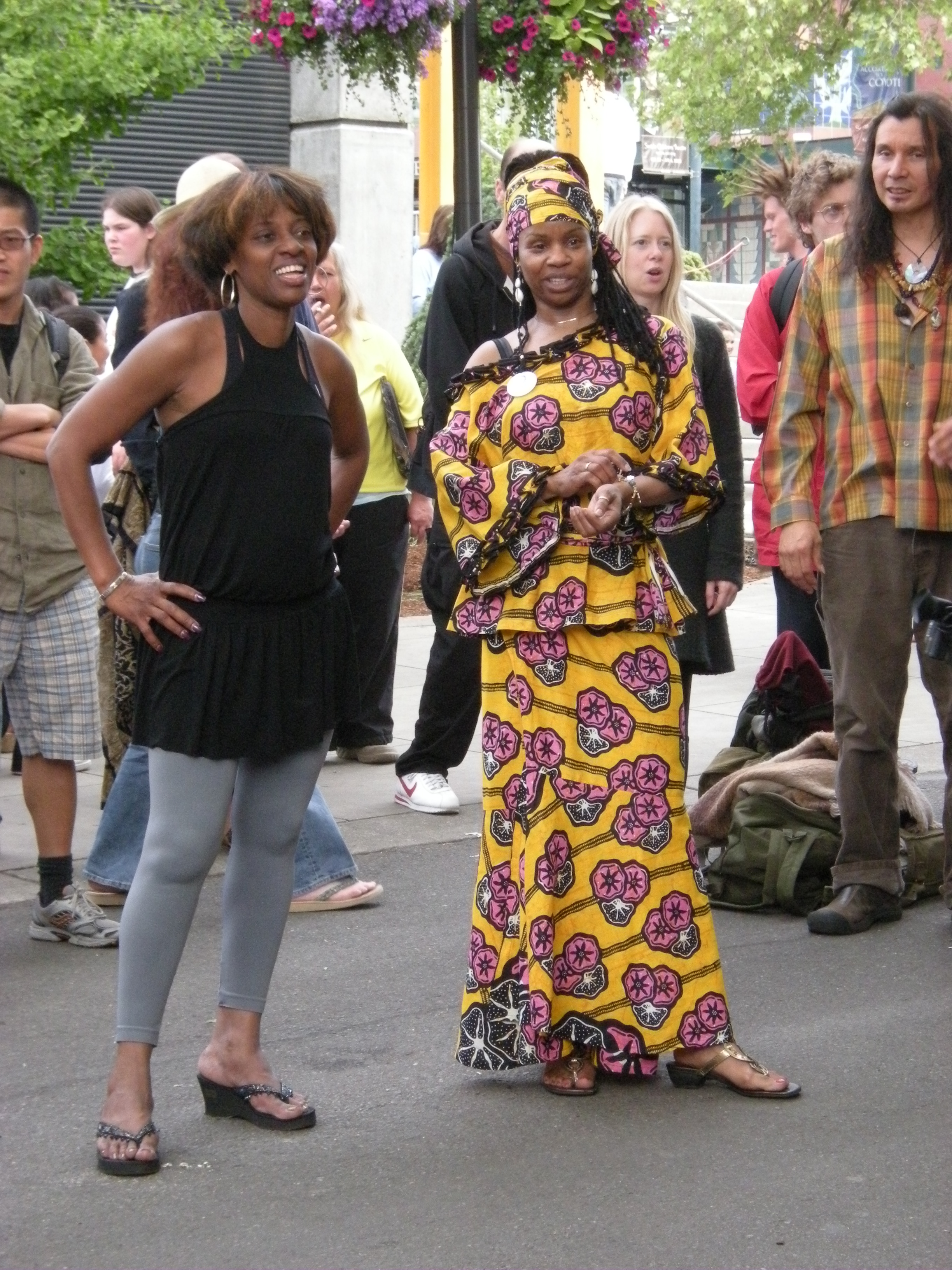
Throughout the mid and late 2000s, women's clothing in Africa comprised either brightly colored kente cloth or mudcloth traditional dress such as the boubou, pagne, and doek, or secondhand Western dress donated and distributed by British and American charities. Mitumba clothing had been imported into Tanzania and Kenya since the economic liberalisation of the early 1990s, and was more desirable than newly made Chinese textiles due to its higher quality of construction and recognizable brand labels.
Late 2000s (2007–2009)

Carry-over styles
Many early and mid-2000s fashions remained fashionable until 2008 while at the same time introducing new trends. This included items such as denim miniskirts, whale tail, hip-huggers, boot-cut jeans, tank-tops, ripped jeans, Low Waisted Pants, hoodies, cargo pants, white belts, cropped jackets, capris, infantile dresses, boho-chic styles, and Crocs.
Second-wave 1980s revival

In the late 2000s, there was a large scale 1980s revival in Europe and the US, which incorporated general items of late 1980s and early 1990s streetwear, such as neon colors, gladiator sandals, boat shoes like Sperrys, animal print or polka dot headbands, knitted sweater dresses, Nike Tempo shorts, jean skirts with tights or capri leggings, Wonderbra and sloggi underwear, sundresses, geometric pattern tops, slap bracelets, ballet flats, black spandex leggings, pale denim jeggings, oversized shirts, sweaters, and sweatshirts worn with leggings, light, translucent tartan shirts worn with a camisole underneath, kinky boots, riding boots, ripped acid wash skinny jeans, and neon leg warmers worn with bare legs and a dress or skirt. In America, the crop tops that exposed the navel were replaced with longer camisole tops, boat neck blouses and mid rise pants, and miniskirts were replaced with longer dresses like the babydoll, bubble skirt, skater dress, and sweater dress popularly worn with ankle or capri length leggings or tights and ballet flats or sometimes Keds, low cut Converse Chucks or Uggs. Long, baggy empire line shirts were taken in at the bustline and often paired with a belt. Fur coats made a comeback, although many women used "fish fur" due to real fur's association with animal cruelty.
The canary yellow dress Reese Witherspoon wore to the Golden Globes helped establish that hue as a signature color in 2007.
Eastern and fairtrade fashion
Summer 2007 saw a resurgence of interest in ethnic fashion from India and the Middle East, including harem pants, embroidered kurti, silk sashes, sarongs, gypsy tops, and the saree as young British and American women discovered Bollywood cinema and belly dancing, popularized by Shakira.
In Britain and the US, some younger women and teen girls, especially those affiliated with the scene subculture and geek chic, became influenced by Japanese street fashion due to the media coverage of Japanese popular culture and J-pop music from 2005 to 2009. Although a small minority wore anime or manga inspired sailor dresses, kawaii or full Gothic Lolita outfits, most incorporated a single garment such as striped neon knee socks, petticoats, rainbow dresses, knitted leg warmers, hair bows, silk floral kimono pajamas, unisex brands like A Bathing Ape, and cupcake, cherry or Hello Kitty jewelry for an ageless, child or doll-like appearance.
Activist chic
In Britain and Australia, Middle Eastern shemaghs were worn as scarves as a protest against the Iraq War and demonstration of solidarity with the Palestinians.
In 2007, Che Guevara chic was popular in Europe and Latin America, with olive green fatigue jackets, boonie hats, berets, and T-shirts featuring red stars or the face of the famous revolutionary.
Men's fashion
Early 2000s (2000–2002)
Y2K fashion
Y2K clothing was mostly made in black, though silver was also fashionable especially in the UK. An example of this would be a tracksuit, Rockport boots, a dress shirt, a pair of pants, a camp shirt, or a jacket in a fancy metallic pattern for going out; while also including of items such as leather coats and pants, puffy vests, jackets, ribbed sweaters, shirts, and chunky dress shoes, usually in futuristic colors such as black, silver, light gray, and white. It lasted from the late 90's until late 2002.
Leisurewear
After the events of 9/11, fashion in America became more conservative, forgoing the futuristic styles of before. Distressed denim made a comeback, with sandblasted highlights, frosted jeans, ripped jeans, and whiskering becoming commonplace. A lower rise jean had emerged during this part of the decade, effectively getting rid of the high-waisted styles of the 1990s.
Generally, many fashion trends from 1995 onwards continued to be worn in the early years of the decade. Newer fashion trends in the early 2000s included wearing sportswear and military wear as everyday clothes. This included tracksuits, light-colored polo shirts (sometimes striped and with collars popped), cargo pants (even ones made out of linen during warmer months), khaki chinos, bootcut jeans, corduroy pants, and rugby shirts. Practical hiking jackets (of the type made by Berghaus), fleeces, puffer jackets, and padded tartan lumberjack-type shirts were worn as winter outerwear along with brown, grey, burgundy, rust, maroon, or forest green turtleneck sweaters, and odd navy blue, stone grey, beige, or natural linen sportcoats that fastened with three buttons. These fashions continued into 2003–2008.
Men's accessories of the early 2000s included white belts, Aviator sunglasses, trucker hats, flip-flops, oxford shoes, argyle socks (usually worn over tracksuit bottoms), Rockport boots, sneakers from brands such as Nike, Adidas, and Puma, baseball caps (bearing the logos of football, soccer, basketball, and baseball teams), and jelly bracelets.
Asian fashions
From 2001 onwards, Astrakhan caps, kufis and the pakol were fashionable among Muslim men in Afghanistan, Pakistan, France and Italy. In India, traditional rustic male attire such as the dhoti and Lungi declined in popularity among the younger generation in favor of Westernised fashions such as Levi Strauss or Arvind Mills jeans, cargo pants, shorts, tracksuits, and sneakers.
Mid-2000s (2003–2006)
1960s revival
In the mid-2000s, retro fashions inspired by British indie pop, garage rock revivalist groups, and the 1960s mod culture gained mainstream popularity. From 2003 to 2006, common items of clothing in the US and Europe included bootcut jeans with a light wash, wide-leg pants, cargo pants, cargo shorts, camp shirts with elaborate designs, vintage Classic rock T-shirts, throwback uniforms, T-shirts bearing retro pre-1980 advertisements or street art, army surplus dress uniforms, paisley shirts, Mod-style velvet sportcoats, parkas, windbreakers Harris tweed jackets, and fitted 1970s-style Western shirts with pearl snaps (popularized by blues-rock band the White Stripes).
Retro movie inspirations
In 2003, men's fashion in the US was inspired by movies from the 1960s and 1980s. Of particular inspiration were the movies Top Gun, Bullitt, and Midnight Cowboy. The clothes which were derived from these movies included Henley shirts, muscle shirts, hoodies, cargo pants, American football shirts, aviator jackets, cable-knit sweaters, khakis, seersucker suits, western shirts, blazers, and peacoats.
Popular men's accessories of the mid-2000s included black brogue shoes, square-toed Steve Madden ankle boots, Adidas sneakers, loafers, casual shoes, Oxford dress shoes, Converse All Stars, winklepickers (taken to extremes by individuals within the Mexican cholo and lowrider subcultures), flip-flops, chokers, puka shell necklaces, shell bracelets, hemp jewelry, charity bracelets, trucker hats, and earrings.
Business suits
In the UK workplace, black, navy or charcoal pinstripe three-buttoned office suits remained common, but Nehru suits or mandarin collar shirts inspired by the Beatles, James Bond, and science fiction movies like the Matrix, were a popular alternative from 2003 to 2006. In the US, men favored the smart casual look, with striped purple dress shirts, flat front charcoal chinos, beige cardigans, argyle pullovers, black or brown leather blazers, and houndstooth sportcoats.
Late 2000s (2007–2009)
Throwback fashions
In the late 2000s, 1950s and 1980s fashions became popular: Letterman jackets, black leather jackets like the Perfecto, windbreakers, dashiki or Hawaiian shirts, ski jackets, slim and straight leg jeans, wool topcoats, Ed Hardy T-shirts with low necklines, neon colors inspired by the rave scene, roll sleeve tartan flannel shirts worn with white T-shirts, cardigans and knitted V-neck sweaters.
In the late 2000s, common accessories worn by men included retro Patek Philippe, Casio G-Shock and Rolex wristwatches, Ray Ban Wayfarers and Aviator sunglasses, and geek chic inspired horn rimmed glasses. Desirable footwear in Europe and America included Sperry Top-Siders, Keds, motorcycle boots, Nike Air Jordans, checkerboard pattern Vans, and Converse All-Stars.
Ed Hardy
Due to the mainstream acceptance of body modification, T-shirts, baseball caps and hoodies featuring vintage tattoo designs were desirable items in the US, Britain and India, where they were worn with black leather jackets, oversized belt buckles, gold chains, and dark slim-fit jeans by celebrity trendsetters such as Jon Gosselin or the cast of Jersey Shore. V-neck T-shirts and graphic printed hoodies became popular among younger British men, in contrast to the designer brands with prominent logos previously worn by the chav subculture. Ed Hardy T-shirts, often embellished with rhinestones, were fashionable from late 2008 until the mid-2010s, when they fell out of favour due to their unintended popularity among young clubgoers stereotyped for being thugs, jocks or guidos.
Slim-fit suits
In the European workplace, the cut of suits changed, as the three-buttoned jackets popular in the 1990s were replaced with 1950s-inspired suits comprising a two-buttoned blazer and matching trousers while in the US the power suit made a comeback. Single-breasted European suits sometimes featured contrasting Edwardian style piping on the lapels and were often worn with slim ties and waistcoats.
Youth fashion
Youth fashion was strongly influenced by many music-based subcultures such as emo, indie kids, scene kids, psychobilly, preppy, skater, goth, nu metal (known as moshers in the UK), ravers and hip hop, including the British chav, US gangsta rapper and Mexican Cholo styles of the early 2000s.
Hip-hop
Main article: Hip-hop fashion
The clothing of American hip-hop fans underwent an evolution from the sagging baggy gangster jeans of the late 1990s to a more retro look by the end of the decade. Popular items of clothing included wide leg jeans, baseball jackets, Nike Air Jordans, tracksuits, sweatpants, bucket hats, stunna shades, fur-lined puffer jackets, and flat-brim trucker hats or baseball caps (often retaining the store label). During the early 2000s, many wealthy white jocks and preppies imitated the gangsta lifestyle, eschewing the semi-formal conservative look of the 1980s and 90s in favor of gold bling, expensive designer clothes, sneakers, dark jeans, and sweatpants. Rich girls who dressed this way were known as Queen Bees, plastics, or airheads, and believed their designer clothing was key to being popular.
Another common American subculture were the cholos and chicanos who wore baggy khaki slacks, gold chains, white T-shirts, and slicked back hair or shaved heads in imitation of Mexican prison gangs.
After hip-hop fashion went mainstream in the early 2000s, it never lost its core spirit of rebellion and self-expression. Artists such as Nigo, the originator of A Bathing Ape (BAPE), and Pharrell Williams were essential in fusing hip-hop with skate culture, which expanded the fashion influence of the music. Baggy clothes gained popularity, probably as a result of inner-city hand-me-downs being ill-fitting. This creative fusion of streetwear and inventiveness laid the groundwork for hip-hop's aesthetic expression, highlighting uniqueness and fortitude in the face of societal, economic, and cultural obstacles.
In the mid to late 2000s, artists such as Kanye West challenged the conventional ideas of masculinity in hip-hop fashion by presenting a more varied selection of ensemble options, such as shutter sunglasses and pink polo shirts. Hip-hop and high fashion saw a dramatic crossover during this time, with Kanye West's partnership with Louis Vuitton signifying a new degree of collaboration between the two industries. Hip-hop's growing interest in luxury clothes was highlighted by A$AP Rocky's name-dropping of high-end labels in his songs, which established designers like Rick Owens and Raf Simons as mainstays of the genre's lexicon.
Chavs and moshers
Main article: Chav
In the early 2000s, the most common British subcultures were the chavs and skate punks who had a (sometimes violent) rivalry. Chavs favored cheap sportswear and fake designer clothing like tracksuits, burberry baseball caps, white Nike or Reebok trainers, and cheap sportswear made by Reebok or Kappa. Common haircuts included the french crop or (for girls) a Croydon facelift.
The skaters (nicknamed grebos or moshers) had long hair or dreadlocks and wore grunge inspired padded flannel overshirts and baggy pants as these were less likely to rip when skateboarding. Popular clothing included No Fear T-shirts, webbing belts, army surplus patrol caps, band T-shirts, dog tags, shark tooth necklaces, camouflage cargo pants, carpenter jeans, tuques, and fingerless gloves in dark colors like black, olive drab, burgundy, and navy blue. From 2001 to 2008, brands favoured by British skaters and their American counterparts included Quiksilver, Inc., Bape hoodies, Volcom, Element Skateboards, Billabong International Limited, Zoo York Skateboard Company, O'Neill, Bullhead jeans, Vans sneakers, Pacific Sunwear and Journeys.
Nu metal, rave, and goth
Main article: Goth subculture
In America, common subcultures of the early 2000s included the nu metal fans and goths who wore black leather duster coats and Tripp pants.
In the rave subculture, fashion trends that had developed in the 1990s persisted. Some ravers favored spiky hair and phat pants, while members of the cybergoth and rivethead subcultures opted for shaved heads, synthetic neon dreadlocks, camouflage, tight leather pants, chains, platform boots, stretched body piercings, sleeve tattoos, goggles, corsets, PVC or leather skirts, and black trenchcoats decorated with metal studs.
Psychobilly and rockabilly
Main article: Raggare
From the early-mid-2000s, black leather jackets, cowboy boots and Levi's jeans were popular in Scandinavia, Russia and Germany among the hot rod, psychobilly and rockabilly subcultures. Common hairstyles included the quiff, pompadour, and psychobilly mohican.
Later in the decade, it was popular for women to dress like 1950s pin-up girls in polkadot dresses, pencil skirts, sheath dresses, capri pants, platform heels, 1940s style sandals, retro lingerie like garter belts, stockings, babydolls, petticoats, slips, and corsets, and (real or fake) old school tattoos. This trend, popularised by models like Dita Von Teese, gave rise to the popularity among all sexes of Ed Hardy clothing which lasted from 2007 until 2012.
Indie and emo
Main article: Indie kid, emo
In 2005, indie pop fashions went mainstream in Europe and North America, prompting a revival of 1960s mod and British Invasion fashions, vintage or thrift store clothing, and the popularization of activist fashions like the keffiyeh. The closely related hipster subculture, which wore vintage clothing ironically rather than as a counterculture statement, emerged in America in the late 2000s to early 2010s. Other subcultures, including American preppies and even rappers like Kanye West, imitated indie fashions or combined them with elements of Japanese street style, like the Harajuku and Lolita fashion popularized by Gwen Stefani.
The other notable youth group of the mid-late 2000s were the emo kids, identifiable by their black or purple hoodies, T-shirts featuring rock bands like Fall Out Boy, My Chemical Romance, or Taking Back Sunday. Lowrise skinny jeans, snakebites, silver jewellery, and checkerboard pattern Vans. Hair was thin, flat and straight, with long, matte bangs (US) or fringe (UK), usually dyed black.
Scene kids

Main article: Scene (subculture)
By early 2009 the most conspicuous subculture in the UK, Australasia and US was the "scene kids." The style, originally comprising tripp pants, stripes, tartan, spiky hair, Chucks, Vans, and trucker hats derived from grunge and skate punk fashion, evolved to incorporate androgynous, matted, flat and straight hair sometimes dyed bright colors, tight jeans, cartoon print hoodies, shutter shades, promise rings, checked shirts, and many bright colors. The name was originally derived from "scene queen", a derogatory term within the 1970s glam rock scene for a heterosexual musician who pretended to be gay and later applied to poseurs within the UK goth, heavy metal and punk subcultures. Later, "scene queen" itself was adopted by leading female members of the modern subculture who were unaware of its original meaning, like supermodel Audrey Kitching.
Preppy
Main article: Preppy
Items seen in the late 2000s for American preppy girls included ballet flats, Converse Chucks, Uggs, flip flops, riding boots often with knee socks or legwarmers slouched at the top of the boots, Abercrombie & Fitch pleated skirts, babydoll dresses, bubble skirts, jeans skirts, 2fer leggings and skirt combo, sweater dresses, skimp dresses and belted shirt dresses with ankle or capri leggings, footless or footed opaque tights. Other desirable items included American apparel or aeropostale oversized shirts, sweaters and sweatshirts worn with leggings, argyle print clothing including sweaters, knee socks, headbands, and cardigans, skinny jeans and colored jeans, translucent tartan shirts worn with a camisole underneath, cropped sweaters, jeggings, neon and pastel colored socks, dressy shorts, headbands and headwraps.
Preppy guys wore polo shirts sometimes layered with a long sleeved shirt underneath, baseball jackets, red and blue cardigan sweaters, madras plaid shirts, sweater vests, oxford shirts, khaki chino pants, Nike Tempo shorts, Sperrys, Keds, Hunter rain boots, designer brands like Hollister or Old Navy, and white casual sneakers like Nikes or Converse.
2000s beauty trends
Hairstyles
Women
In the early 2000s, women's hair was often long and straight. The early 2000s featured "zig-zag partings", in which the hairline is parted in a zig-zag fashion. Hair lengths varied from below the earlobes at the shortest to just below the shoulders at the longest. From 1995 until 2008 highlights and lowlights made of blonde, red, and light brown went mainstream. In 2000, highlights were soft and subtle for a sun-kissed look. In 2002 bold and unblended highlights called "chunky highlights" burst onto the scene. This trend was kickstarted by Kelly Clarkson during her time on American Idol, lasting until 2006. The early 2000s also continued the Farrah Fawcett hairstyle revival of the late 1990s. Crimped hair was popular in the early and mid-2000s.
For black women, cornrows, dreadlocks and curly weaves were popular until the late 2000s, when toned-down versions of the Afro, Jheri curl and short pixie cuts were popularized by artists like Janet Jackson and Rihanna. Another popular hairstyle throughout the decade was the braid, rejuvenated by the likes of Alicia Keys and Lauren Conrad. Throughout the early and middle years braids and plaits would often be meticulously put in intricate patterns and would purposely be styled as a way to blend in better with women's clothing styles.
In the mid-2000s, many women favored the bob haircut, as well as its longer version, the long bob or "the lob". By the late 00's, it became unfashionable to center-part one's hair, and the side-swept Bangs of the 1980s made a comeback.
In the late 2000s, dark haired women (and even light-haired ones) favored the jet black hair, as worn by Katy Perry or Amy Winehouse with her trademark beehive hairstyle. Textured hair with volume, natural wavy hair, and the bob cut became popular from 2007 onwards in both Britain and the USA. In 2009, many women sought to imitate the hairstyle Kate Gosselin had that year, briefly bringing back blended highlights into the mainstream. This look ended up only being a fad. Other popular late 2000s trends included Headbands, headwraps and Scrunchies, side ponytails, and braiding on one side of the head.
Men
For European men aged 25–40, shorter hair styles that usually took the form of a quiff were fashionable in the early 2000s, as well as spiked hair and fauxhawks for men aged 18–30. Dark-haired young British men often had dyed-blonde weaves and streaks until the late 2000s when a natural hair color became the norm again. A common haircut among American men and boys was the frosted spiky hair popularized by boybands and pop punk bands from 1997 through 2004, 2005–2008.
Long, shaggy Mod or surfer hair became popular among many young men between 2003 and 2006 in the UK as many bands moved away from punk rock and rap metal in favor of a 1960s inspired indie or garage rock sound pioneered by groups like The Strokes, Jet, The Killers, The Hives, The Vines, Coldplay, and The White Stripes. These hairstyles gradually replaced the shaggy, grown out curtained hair popular since the late 1990s among American celebrities like Tom Cruise, Jim Adkins of Jimmy Eat World, Alex Band, Jason Wade, Mehmet Okur and Hanno Möttölä.
By the late 2000s, many young British men opted for a clean-cut 1950s inspired hairstyle, kept in place with pomade. Shaved and bald hairstyles along with beards, moustaches, stubble, sideburns, and the goatee became popular in Europe and North America in reaction to the effeminate early and mid-2000s metrosexual look, with charitable events like Movember further increasing their acceptability.
Children and teenagers

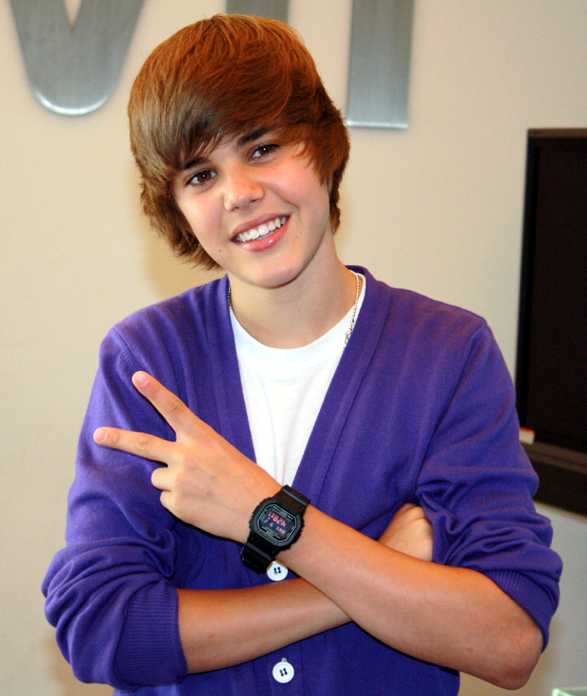
For boys, short haircuts such as the quiff, the buzzcut, curtains, crew cut, and Caesar cut were popular in the early 2000s till mid 2000s. Girls favored straight hair extensions and chunky highlights. It also became fashionable to sport curly hair with a "zig-zag" side parting and blended highlights around 2002/03. Back in the late 90s and early 2000s, butterfly hair clips and crimped hair became extremely popular for preteens and teenage girls.
In the mid-2000s, longer hair on teenage boys became popular in the UK and America, including the wings haircut, influenced by the 1960s Mod subculture, and British indie pop stars. Hairstyles among teenage girls experienced little change, being largely the same as they were in the early 2000s. Curly hair became less popular in Britain, while straight hair grew more dominant. Highlights remained popular, as well as extensions. Hair was often tied into a ponytail and incorporated long bangs or a fringe.
In 2009, the androgynous Harajuku inspired scene hairstyles (often dyed bright colors) and eyeliner were popular among girls and boys alike: first in Japan, and later in the US and Europe. As an alternative to the scene hairstyles, many teenage girls in the US and Australasia opted for a preppy hairstyle that involved long, straight hair, side-swept and regular bangs and a side part, while boys wore basic skater hair. Many girls wore headbands, headwraps and 80s inspired scrunchies with either a side ponytail or french braid falling over one shoulder.
In between 2006 and 2008, Middle Eastern teenage boys in Australia, namely those of Lebanese descent, acquired the high and tight haircut. Some had the cut with a mullet.
Makeup and cosmetic trends
The year 2000, was based on the glittery Y2K inspired makeup of the late 1990s. With the turn of the millennium, the idea was for women to capture a futuristic, space-age style, with makeup including bronze specks for a metallic shine with ecstatic colors. An alternative for those who did not like metallics was a purple and brown color scheme. Lip gloss was more popular than lipstick among both women and girls. By the spring/summer season of 2001, this look took a backseat in favor of a more low-maintenance, natural style that showed off ones features. However, the glittery looks continued to be popular. In 2002, mineral makeup broke into the mainstream with Bare Minerals, a product of Bare Escentuals. This fueled the trend for natural looking makeup, and became the standard of the 2000s. By 2004, the glittery looks had disappeared.
By around 2005/06, retro-styled makeup from the 1940s had made a comeback, such as bright red lips and cat eyes. In the mid and late 2000s, lip gloss remained popular, and the "Smoky Eye" emerged, with more emphasis on eyeliner, mascara, and eyeshadow. Another emerging trend was a more natural "less is more" approach to makeup around the same time. Also around the second half of the decade, there was an increasing amount of emphasis on the perfection of complexions, with illuminators and shimmer products becoming must-have items. In the late 2000s, there was a craze for fake eyelashes, started by Lady Gaga. This resulted in lash tinting, lash extensions, and fake lashes. Makeup styles generally became simpler and more individualistic with the rise of How-to YouTube videos.
Body care and grooming
The year 2000 featured natural-colored skin as the most desirable, and did not feature many body care trends other than the rise of hair removal, teeth whitening, and anti-aging creams. In the summer of 2001, the sunless tanning trend broke into the mainstream for all genders, prompted by Jennifer Lopez and Christina Aguilera. This included both self-tanners and spray tans. Cosmetic contacts also became more widespread among all genders this year. In 2002, botox was approved for public use and became hugely popular with women and men. By 2009, fake tanning had gone out of style in favor a pale complexion, inspired by the Twilight film.
The 2000s, continued the unisex trend of bikini waxing which had started in the 1990s. Although waxing in general had been popular among women for several years, it was in the 1990s that complete male body hair removal went mainstream. Being considered suggestive and indecent in the 90s, male waxing became ubiquitous as a result of the metrosexual trend in the early and mid-2000s. Also during this time, it was popular to have a completely clean-shaven face, as if to make one look underage. Male hair removal declined in the late 2000s.
Tattoos and piercings

The 2000s continued the trend of tattoos and piercings among both genders which had begun during the 1990s. Commonplace tattoos in Europe, Australasia, Hong Kong, and North America included tramp stamps and tribal arm tattoos from the early to mid-2000s, and Hindu Sanskrit or Chinese Hanzi words from 2007 to 2010. Old school tattoos depicting hearts, skulls, flowers or female figures were considered unfashionable and unsophisticated for much of the decade, especially among women. However, these made a comeback in 2008 at the same time Ed Hardy accessories and the pin-up girl look were becoming popular. Getting a mustache tattoo on a finger, as a "fingerstache", was an ironic tattoo trend starting in around 2003.
In the early 2000s, navel piercings reached their peak, as did tongue rings. Other popular piercings throughout the decade include labret piercings, nostril piercings, nipple piercings, and eyebrow piercings. Piercings and tattoos reached the height of their popularity during the mid-2000s and continued to remain popularity throughout the 2010s and beyond.
Gallery
A selection of images related to the period.
File:Sportskor. Grå sko från Dockers och röd sko från Lipstick, hösten 2000 - Nordiska Museet - NMA.0034894.jpg|Chunky sneakers of the early 2000s. File:Helena Mattsson & Chris Ajaxon 2002.jpg|Swedish actors in 2002 sporting various early 2000s fashions and hairstyles. File:Leann Tweeden US Army.jpg|Leeann Tweeden, 2003, wearing an off-the-shoulder top and cargo pants. She also sports highlights on her hair. File:Young Woman Reads a Book Overlooking Santiago de Cuba - Cuba.jpg|Young woman in 2003 wearing a horizontal striped shirt and boot-cut jeans. File:Woman with braids (Jamaica, September 2002).jpg|Jamaican woman with cornrows, 2002. File:Chav scally.jpg|British "Chav" wearing tracksuit and baseball cap. File:Vladimir Putin 28 December 2004-2.jpg|The flared jeans of the late 1990s remained fashionable throughout the early and mid-2000s. File:Miranda-Kerr.jpg|Miranda Kerr in 2004 modeling for Obar Jeans. File:Peter Andre.jpg|English-Australian singer Peter Andre in 2004 wearing ripped and sandblasted baggy jeans influenced by surfer and hip-hop fashion. File:FEMA - 20682 - Photograph by Robert Kaufmann taken on 10-10-2005 in Louisiana.jpg|Female tourists in 2005 sporting colorful mid-2000s athletic fashions. File:Beatle boots-125090930.jpg|Winklepicker boots fashionable in England, Italy and Mexico from 2005 onwards. File:Slim Fit Indie Tweed.jpg|Slim-fit tweed popular in the late 2000s File:Pretty brunette.jpg|Girl with curly brown hair sporting an off-the-shoulder top, a carry over from the early 2000s. File:VeraBradleyBag.jpg|Paisley handbag associated with the boho-chic look. File:Scene kid2008.jpg|German Mosher, the more punk-like incarnation of scene, early to mid-2000s. File:Vintage printed thin tees.jpg|Close-fitting vintage printed T-shirt File:Plaidstarlumberjack.jpg|Slim-fitting plaid Western shirt gained popularity in the UK in the late 2000s File:Kat Von D 3.jpg|Tattoos and extreme body piercings went mainstream in the late 2000s. File:Skaters1.jpg|Chinese skaters, 2007. File:Crowd wearing jeans at a bike parade in Christchurch, New Zealand; 2007.jpg|People wearing loose jeans in New Zealand, 2007. File:Emo boy 02 with Girl.jpg|Ecuadorian emo kids from the late 2000s. File:A Hussein Chalayan Scarf Neckprint Dress (Spring 2009).jpg|Young woman wearing sundress and Christian Louboutin shoes, 2009. File:Chakchai 2suit.jpg|Example of the two button slim-fit suit popular in the late 2000s in the UK, US and China. File:CSD 2006 Cologne sexy 6.jpg|Woman wearing backless top and microskirt at Cologne Pride, 2006.
References
References
- Rindfuss, Bryan. (30 December 2009). "Arts: What ought to wear". San Antionio Current.
- (8 June 2016). "Fashion History Lesson: The Origins of Fast Fashion".
- (21 February 2017). "Can America's Department Stores Survive?".
- (12 June 2012). "The Top 20 Designer Collaborations: A Timeline".
- (13 October 2010). "Chasing a Fast-Fashion Knockoff".
- (15 November 2004). "Truly Fast Fashion: H&M's Lagerfeld Line Sells Out in Hours".
- (1 September 2016). "Fast Fashion is Creating an Environmental Crisis".
- (21 September 2012). "The Wasteful Culture of Forever 21, H&M, and 'Fast Fashion'".
- "U.S. household income distribution, by Gini-coefficient 2020".
- Francis-Devine, Brigid. (2022-10-02). "Income inequality in the Knurl=https://commonslibrary.parliament.uk/research-briefings/cbp-7484/". House of Commons Library.
- "Gini index (World Bank estimate) {{! Data". link
- Lowe, Elizabeth D.. (2010). "The United States and Canada".
- "The Rise of Vintage Fashion and the Vintage Consumer".
- (23 December 2000). "The Year That Was: Style".
- Brillson, Leila. (26 February 2013). "Millennial Trends – Clothing Popular in the 2000s". refinery29.com.
- Schmidt, Eric. (23 January 2015). "The Tinkerer's Apprentice". ETC.
- (21 September 2019). "Jennifer Lopez revives dress behind the invention of Google Images". BBC News.
- "Y2K fashion just run-of-the-millenium".
- (13 October 2000). "Fashion variety the ticket". CNN.
- (14 February 2000). "Spring Fashion 2000".
- "Powerhouse Museum Fashion of the Year 2000".
- "Powerhouse Museum – Women's outfit".
- (14 December 2013). "Looking Back at the Best of 2000". collegecandy.com.
- "Skechers U.S.A. Inc.".
- "The way we wore: 2002's fashion trends". Seattle Post-Intelligencer.
- "Hip Huggers".
- (26 February 2013). "Millennial Trends – Clothing Popular in the 2000s". refinery29.com.
- "All about Spring 2001".
- (2 December 2009). "The Short-Lived Trends of the Decade – The 00's Issue – New York Magazine".
- "Lookin' good in cargo pants".
- "Top 8 Fashion Trends and People of 2003".
- (20 February 2003). "Silky cargo pants all the rage". CNN.
- "The Most Okay Fashions of 2003".
- (27 February 2013). "From Uggs To Y2K, What The '00s Meant To Us {{!}} Oye! Times".
- "Leg Warmers".
- Moore, Booth. (30 May 2003). "Jammin' jellies". [[Los Angeles Times]].
- Mikkelson, Barbara. (2003-11-14). "Sex Bracelets".
- Cunningham, Patricia. (2010). "The United States and Canada".
- (2010). "Visual Media and Dress".
- "All of the Trends That Sex and the City Predicted and Perfected". Vogue.
- Tortora, Phyllis G. and Keith Eubank. ''Survey of Historic Costume''. 4th Edition, 2005. Fairchild Publications.
- Tell, Caroline. (20 December 2006). "Tunic".
- Tell, Caroline. (20 December 2006). "Wide Belt".
- Madden, Mike. (27 July 2009). "Admit it – you used to wear Crocs – The Brand Graveyard". Salon.com.
- Luscombe, Belinda. (10 July 2008). "10 Questions for Tim Gunn".
- Oloffson, Kristi. (27 May 2010). "The 50 Worst Inventions".
- Tell, Caroline. (20 December 2006). "Miniskirt and Minidress".
- Maxwell, Alison. (16 April 2006). "Skinny legs and all: Jeans get slender". USA Today.
- Tell, Caroline. (20 December 2006). "Skinny Jean".
- Tell, Caroline. (20 December 2006). "Platform Boot".
- Tell, Caroline. (20 December 2006). "Ballet Flats".
- Tell, Caroline. (20 December 2006). "Black Nail Polish".
- Pardue, Diana F.. (2007). "Contemporary Southwestern Jewelry". Gibbs Smith.
- Tell, Caroline. (20 December 2006). "Thomas Wylde".
- Patner, Josh. (8 October 2010). "Military Chic During Wartime? Yes, Sir!". The Wall Street Journal.
- "Sonia Rykiel". sofeminine.com.
- Bella, Laura La. (2008). "My Chemical Romance". The Rosen Publishing Group, Inc.
- Frazier Tharpe. (May 27, 2014). "10 Clothing Items That Will Definitely Make You Look Dated".
- (14 October 2003). "Driving a hard bargain at the Mitumba Market". The Daily Telegraph.
- (17 July 2013). "Mitumba 101: The Second Hand Clothing Trade in Kenya".
- (24 June 2005). "Tanzania: A Second-Hand Economy?".
- "Secondhand Clothes Business Thrives in Kenya – Business Insider".
- (14 November 2009). "On The Road: The East African market where the brands come cheap".
- "Three black girls young teenage women watching something strange at street with awe curious surprise, Rotterdam Netherlands 2008 Stock Photo - Alamy".
- Jurga_v. (2008-01-08). "Britney Spears Gas Station January 8, 2008".
- "Kim Kardashian Burbank Airport September 7, 2008 – Star Style".
- Rastogi, Nina Shen. (2010-01-05). "A Hairy Situation". Slate.
- "The Best of 2007: Reese Witherspoon". InStyle.
- "Deepika always wanted to wear saree at international do". Movies.ndtv.com.
- (17 June 2010). ""Ravan's star-studded premiere in London," ''The Indian Express''". The Indian Express.
- (12 September 2008). "Saree jahan se achha, ''The Times of India''". [[The Times of India]].
- "Firang babes in saree-Ashley Judd". indiatimes.com.
- (28 May 2007). "Ashley Judd Is So Very Sari". TMZ.
- "Around the world in 9 yards". Hindustan Times.
- PTI. (14 May 2010). ""Deepika walks Cannes red carpet in saree," ''The Hindu''". The Hindu.
- (21 August 2005). "Japan's bizarre music industry {{pipe}} Music {{pipe}} The Guardian".
- (18 July 2014). "Unraveling a fantasy: A beginner's guide to Japanese idol pop".
- (3 April 2008). "COMME DES GARCONS FOR H&M".
- (19 July 2013). "Fashion Sensei".
- (10 March 2002). "Shopping Rebellion".
- "Hello Kitty jewelry".
- (24 June 2010). "The Last Keffiyeh Factory in Palestine". Palestinemonitor.org.
- (14 October 2007). "Che chic: you've ignored the horrors, now buy the T-shirt".
- "Bloomingdale's I Fall/Winter 1999".
- "Bloomingdale's I Fall/Winter 2000".
- "BBC Inside Out - Charvers Webchat".
- Eldor, Karin. "Summer's Back: Look Great This Season".
- "The Fashion Of Fall 2003".
- "The Styles Of Summer 2003".
- "Style".
- "Fall 2001". Uk.askmen.com.
- "Winter style 2002". Uk.askmen.com.
- Thomspson, Carolyn. "That ball cap is a head giveaway". Seattle Post-Intelligencer.
- (3 January 2014). "From Alexander the Great to Ahmad Shah Massoud: A Social History of the Pakol {{pipe}} Afghanistan Analysts Network".
- (25 March 2015). "Hamid Karzai's Famous Hat Made From Aborted Lamb Fetuses".
- Son, Junghwa. (2000). "Indian Consumer Purchase Behavior of Foreign Brand Jeans". Oklahoma State University.
- Heal, Geoffrey. (2008). "When Principles Pay: Corporate Social Responsibility and the Bottom Line". Columbia University Press.
- (2010). "Global Denim". Berg.
- (13 October 2006). "If it's cool, creative and different, it's indie". CNN.
- "DKNY Men Summer 2005".
- (2007-12-01). "AskMen.com - T-shirt trends".
- "Summer 2003 trends". Uk.askmen.com.
- "2004 trends". Uk.askmen.com.
- "Ralph Lauren Western shirt". Uk.askmen.com.
- Eldor, Karin. "Western shirts, Spring 2005". Uk.askmen.com.
- (24 October 2003). "U.S. Male, Delivered".
- (24 October 2003). "U.S. Male, Delivered".
- (24 October 2003). "U.S. Male, Delivered".
- Tell, Caroline. (20 December 2006). "Barker Black Brogue Shoe".
- "Men's shoes: 5 Trends For Spring 2006".
- "Men's shoes: 5 Trends For Spring 2006 (Page 2)".
- (2012-01-13). "Nehru jacket on Time 'global fashion statement' list". BBC News.
- "Summer 2003". Uk.askmen.com.
- "Fall fashions, 2005". Uk.askmen.com.
- "2004 trends". Uk.askmen.com.
- "Mens fashions, fall 2005". Uk.askmen.com.
- "Leather coats". Uk.askmen.com.
- "Tweed jacket, 2004". Uk.askmen.com.
- Averill, Farah. "Top 10 hype worthy 2009 fashion trends". Uk.askmen.com.
- Averill, Farah. "Jay-Z: Style icon". Uk.askmen.com.
- "Jackets for fall 2007". Uk.askmen.com.
- Anyiam, Thony C. (2007), Jumping the Broom in Style, Authorhouse, {{ISBN. 1-4259-8638-2.
- Eldor, Karin. "Beach clothing".
- "Ski jackets, fall 2009". Uk.askmen.com.
- Dyce, Brandon. "Denim labels you should own". Uk.askmen.com.
- Michael A. Lubarsky. "2008 winter overcoats". Uk.askmen.com.
- "Bang Face – The Rebirth of Rave, Part One".
- "Geek chic". USA TODAY.
- Michael A. Lubarsky. "Throwback writstwatches". Uk.askmen.com.
- Dyce, Brandon. "2008 sunglasses". Uk.askmen.com.
- "Sneaker Archive". Sneakers.bz.
- "Sneaker Files". Sneaker Files.
- (January 2014). "The 11 Most Embarrassing Fashion Trends Ever - Minq.com".
- (5 October 2013). "Ed Hardy Founder Christian Audigier – I HATE Jon Gosselin".
- Fox, Adam. "Fall '09 Fashion: What Not To Wear".
- (6 September 2013). "Ed Hardy Confirms Christian Audigier As The Douchebag We All Know He Is".
- (22 January 2016). "How men can dress their age – Times of India".
- Averill, Farah. "Two button or three button suit?". Uk.askmen.com.
- Averill, Farah. "Power dressing". Uk.askmen.com.
- Berger, Jeremy. "Timeless men's lines". Uk.askmen.com.
- "The Scene Kid Subculture vs. Emos - News Article". Absolute Punk.
- (8 August 2005). "Moshing and Moshers".
- [Keyes, Cheryl. Rap Music and Street Consciousness, p. 152]
- (Autumn 2003). "Cloth-Wrapped People, Trouble, and Power: Pachuco Culture in the Greater Southwest". Journal of the Southwest.
- Krishnamurthy, Sowmya. "Hip-Hop Style".
- Wilbekin, Emil. "Great Aspirations: Hip Hop and Fashion Dress for Excess and Success." The Vibe History of Hip Hop. Three Rivers Press 1999. Page 280.
- (2010-01-10). "Under the Boards : Jeffrey Lane : Excerpts".
- Hayes, Britt. (18 October 2013). "The Meanest High School Girls in Movies".
- (24 October 2002). "the Book of Lists for Teens". Houghton Mifflin Harcourt.
- Kolbrener, Charlie. (2020-03-31). "The History of Hip Hop Fashion from 2000 to 2020".
- Shackelford, Caroline. (2022-02-25). "The Evolution of Hip-Hop Fashion: Origins to Now".
- (2011-06-03). "Why is 'chav' still controversial?". BBC News.
- Peterson, Brian (2009). Burning Fight: The Nineties Hardcore Revolution in Ethics, Politics, Spirit, and Sound. Revelation Books. {{ISBN. 978-1-889703-02-2.
- "Denim guide". Uk.askmen.com.
- "Ryan Shckler interview". Askmen.com.
- (2002-09-13). "Dead fashionable".
- [Lauren M. E. Goodlad, Michael Bibby: Goth. Undead subculture, Duke University Press, 2007, {{ISBN. 978-0-8223-3921-2, p. 47]
- "Rivethead fashion". Voices.yahoo.com.
- [Baddeley, Gavin (2002). Goth Chic: A Connoisseur's Guide to Dark Culture. London: Plexus Publishing, p. 204.]
- (2009-10-01). "Raggare: the Swedish rock'n'roll cult comes of age". The Guardian.
- Buszek, Maria Elena (2006). Pin-up grrrls: feminism, sexuality, popular culture. Duke University Press. {{ISBN. 0-8223-3746-0.
- "Designer T Shirts". Ed Hardy shop.
- "Ed Hardy hat". Uk.askmen.com.
- "Dress like an indie frontman". Uk.askmen.com.
- Petridis, Alexis. (2006-10-24). "The birth of uncool". The Guardian.
- (30 July 2009). "Society: Hipster Subculture Ripe for Parody - TIME".
- Averill, Farah. "Stealing Onscreen Styles: Kanye West".
- Grillo, Ioan. "Mexico's Emo-Bashing Problem - TIME".
- "Switch". BBC.
- Haight, Travis. (23 May 2007). "New Haights: Scene kids ought to receive a crash course on their group".
- Yakhnis, Marina. (14 December 2006). "'Scene kids' will destroy democracy". The Times-Delphic.
- "Apparel". Hottopic.com.
- ^ a b Haenfler, Ross (2006). Straight Edge: Hardcore Punk, Clean Living Youth, and Social Change (p. 11). Piscataway: Rutgers University Press. {{ISBN. 0-8135-3851-3
- Marcus, Caroline. (2008-03-30). "Inside the clash of the teen subcultures".
- Urban, Robert. "Ragged Blade Reviews: Queen's Freddie Mercury and his Legacy".
- "Audrey Kitching's website". Audrey.buzznet.com.
- (2009-04-06). "Stylist's Day Off: Audrey Kitching".
- (2009-04-11). "Justice - Looks you luv for less!".
- (2009-03-31). "Justice - Looks you luv for less!".
- Overstock. "Overstock.com: Online Shopping - Bedding, Furniture, Electronics, Jewelry, Clothing & more".
- (15 September 2014). "These 7 Limited Too Catalog Pages Will Remind You Why It Was The Absolute Coolest Store In The Mall".
- (2010-04-05). "Girls Clothing {{!}} Clothes {{!}} Sweaters {{!}} ShopJustice.com".
- (2009-10-03). "Girls Clothing {{!}} Jeans {{!}} Skinny {{!}} Justice Girls Clothing".
- (2009-10-02). "Girls Clothing {{!}} Jeans {{!}} Colored Jeans {{!}} Justice Girls Clothing".
- (2010-01-14). "Girls Clothing {{!}} Jeans {{!}} Skinny {{!}} ShopJustice.com".
- (2010-02-12). "Girls Clothing {{!}} Clothes {{!}} Camis {{!}} ShopJustice.com".
- (2010-09-10). "Girls Clothing {{!}} Accessories {{!}} Socks & Tights {{!}} Socks {{!}} ShopJustice.com".
- (2009-09-30). "Girls Clothing {{!}} Shoes {{!}} All Shoes {{!}} Justice Girls Clothing".
- Kle. (2009-08-18). "Preppy and Loving It: Fall Fashion 2009: Children Are Our Future".
- (2011-01-01). "abercrombie kids: girls".
- "Top 10 beauty trends of the '00s".
- "Top Hair Trends For 2000".
- "Beauty Trends of the 2000s".
- "Farrah Fawcett Look".
- (29 July 2022). "The 25 Best Fashion Trends of the Early 2000sRapper Clothing Brands".
- "Appearance".
- "'Here come the mirror men' by Mark Simpson – first usage of the word 'metrosexual'". Marksimpson.com.
- "2002 Hair – Beautiful Hairstyles".
- "skater Haircut Retrieved 2008-10-18". Hair-style-salon.org.
- "Metropolis – Tokyo feature stories: Face to face with Harajuku – Pictures of Japanese youth". Metropolis.co.jp.
- "Top 10 Sports".
- (8 June 1999). "Make-Up For The Year 2000". CBS News.
- "COSMETICMALL.COM's SUMMER BEAUTY TRENDS 2001".
- "Trends in the Beauty Industry Over the Past 10 Years".
- "Waxing For Men".
- Jones, Ed. (11 December 2009). "Hong Kong women shrug off tattoo taboo". The Daily Telegraph.
- "David Beckham Chinese Tattoo, Proverb Tattoo Meaning".
- "Chinese tattoos popular in West".
- (9 October 2007). "So why do 'normal' people get tattoos?".
- (8 September 2009). "Sony Ericsson launches W595 Ed Hardy Edition".
- (13 November 2009). "Ed Hardy's Tattoo Art Is Booty for Digital Pirates – The New York Times". The New York Times.
- (8 October 2010). "No longer taboo for women, tattoos are the new cover-up {{pipe}} The Star".
- Zaragoza, Alex. (April 7, 2020). "The 'Fingerstache' Ruled the 00s, But Many Still Have to Live With It".

This article was imported from Wikipedia and is available under the Creative Commons Attribution-ShareAlike 4.0 License. Content has been adapted to SurfDoc format. Original contributors can be found on the article history page.
Ask Mako anything about 2000s in fashion — get instant answers, deeper analysis, and related topics.
Research with MakoFree with your Surf account
Create a free account to save articles, ask Mako questions, and organize your research.
Sign up freeThis content may have been generated or modified by AI. CloudSurf Software LLC is not responsible for the accuracy, completeness, or reliability of AI-generated content. Always verify important information from primary sources.
Report