From Surf Wiki (app.surf) — the open knowledge base
1997 Qayen earthquake
Earthquake in Iran
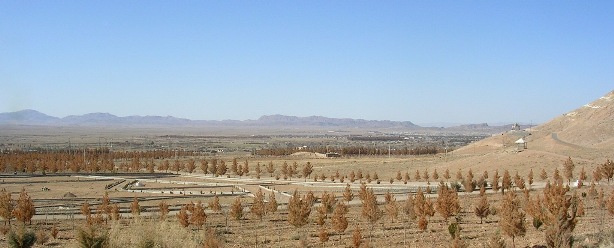
Earthquake in Iran
| Field | Value | |||||||
|---|---|---|---|---|---|---|---|---|
| timestamp | 1997-05-10 07:57:29 | |||||||
| anss-url | usp000820p | |||||||
| isc-event | 1026215 | |||||||
| caption | Map showing the earthquake's epicenter | |||||||
| map2 | {{Location map+ | Iran | ||||||
| {{Location map~ | Iran | lat | 36.3 | long=59.6 | label_size=100 | label=Mashhad | position=left | mark=Green pog.svg}} |
| {{Location map~ | Iran | lat | 30.28 | long=57.08 | label_size=100 | label=Kerman | mark=Green pog.svg}} | |
| {{Location map~ | Iran | lat | 31.9 | long=54.37 | label_size=100 | label=Yazd | position=left | mark=Green pog.svg}} |
| {{Location map~ | Iran | lat | 33.82 | long=59.8 | mark=Bullseye1.png | marksize=40}} | ||
| relief | yes | |||||||
| width | 250 | |||||||
| float | right | |||||||
| caption | }} | |||||||
| local-date | ||||||||
| local-time | 12:57 | |||||||
| magnitude | 7.3 | |||||||
| depth | 10 km | |||||||
| location | ||||||||
| type | Strike-slip | |||||||
| damages | US$100 million | |||||||
| intensity | ||||||||
| casualties | At least 1,567 dead, 2,300 injured, and around 50,000 homeless | |||||||
| title | 1997 Qayen earthquake | |||||||
| map alt | The earthquake's epicenter is shown in northeastern Iran. Just next to the earthquake is a mountain ridge. To the west is the Afghan border. | |||||||
| countries affected | Iran | |||||||
| Afghanistan |
| anss-url = usp000820p | isc-event = 1026215 | local-date = | local-time = 12:57 Afghanistan
An earthquake struck northern Iran's Khorasan Province in the vicinity of Qaen on May 10, 1997, at 07:57 UTC (12:57 local time). Some 155 aftershocks caused further destruction and drove away survivors. The earthquake was later discovered to have been caused by a rupture along a fault that runs underneath the Iran–Afghanistan border.
Damage was eventually estimated at $100 million, and many countries responded to the emergency with donations of blankets, tents, clothing, and food. Rescue teams were also dispatched to assist local volunteers in finding survivors trapped under the debris. The destruction around the earthquake's epicenter was, in places, almost total; this has been attributed to poor construction practices in rural areas, and imparted momentum to a growing movement for changes in building codes for earthquake-safe buildings. With 1 in 3,000 deaths in Iran attributable to earthquakes, a US geophysicist has suggested that a country-wide rebuilding program would be needed to address the ongoing public safety concerns.
Background and geology
Iran experiences regular earthquakes, with 200 reported in 1996 alone. It occurred on Saturday, May 10, 1997, at 12:57 IRST in the Sistan region, one of the most seismically active areas of the country. The first major earthquake in that region since 1979, it registered 7.3 on the moment magnitude scale (), 7.2 on the surface-wave magnitude scale (), 7.7 on the energy magnitude scale (Me), and had a maximum perceived intensity of X (Extreme) on the Mercalli intensity scale.
The earthquake was caused by a rupture along the Abiz Fault, part of the Sistan suture zone of eastern Iran. Located northeast of the main collision zone between the Arabian and Eurasian tectonic plates, the Sistan zone marks the eastern boundary of the Iranian microplate where it intersects with the Afghan crustal block. In addition to the dominant strike-slip displacement, there was also local evidence of reverse faulting. The average displacement of about 2 m indicates a low static stress drop, more consistent with an interplate earthquake than an intraplate event. The ground rupture for the earthquake extended for 110 km, which was longer than would be expected given the earthquake's magnitude. There were at least 155 aftershocks, reaching a magnitude of up to 5.5 on the Richter magnitude scale. Many of the aftershocks occurred along the rupture up to 24 km below the surface.
The earthquake's epicenter was within the village of Ardekul The village is isolated between mountains and hills. Although the Iranian government had distributed more than 800 seismographs throughout the country, few had been placed in the Qayen region due to its desert climate and the remoteness of the area.
As a result of the dry climate, timber—a main component in building earthquake-resistant homes—is scarce in Qayen; homes are instead constructed of adobe. The inhabitants of the poverty-stricken region rely on subsistence farming, raising livestock and crops such as wheat and saffron. When the earthquake struck, much of the population was already working in the fields; for the most part, these people survived. Many of those treated for injuries were found to be undernourished.
Damage and casualties
The earthquake was felt over an area of 500000 km2, including in the cities of Mashhad, Kerman and Yazd. Destruction was most severe within a 60 mi strip between the epicenter and Birjand. The tremors triggered landslides across the region and proved highly destructive to the region's mud-hut buildings. Entire streets were reduced to rubble, and in one village, 110 young girls were killed when their elementary school collapsed.
An initial report in The New York Times claimed that more than 2,000 people had died in the worst-affected area, with a further 394 in Birjand and two in the small town of Khavaf. The earthquake was also said to have caused five fatalities in Afghanistan.
Many villages lost both power and water, leaving survivors unable to fend for themselves. The extensive aftershocks prompted survivors to leave the vicinity of their homes and take to tents. Several days later, another earthquake of magnitude 4.8 struck. In the wake of the earthquake and its aftershocks, every one of the 700 houses in the tiny village of Abiz, 90 km east of Qayen, was destroyed, and 400 of its 1,200 residents killed.
According to an Iranian radio station report, 200 villages sustained severe damage or were totally destroyed. Local officials initially estimated the cost of the damage at $67 million 1997 US$ (roughly 89.5 million 2008 USD).
Many of the more seriously damaged homes were of simple construction, with walls made of mud, adobe, or brick packed 40 – thick. These materials are generally more vulnerable to the force of the earthquake, but some of the traditionally constructed homes sustained little or no damage. This was due to a range of factors, possibly including the height-to-width ratio, the lack of windows, and the quality of the materials used. In general, reinforced concrete-framed homes, built after the 1979 earthquake, were better able to withstand the earthquake. Those near the epicenter still sustained severe damage due to the weight of the roofs and the weak joint connections between major structural elements of the buildings.
Relief efforts
| Organization/country | Amount donated |
|---|---|
| United Nations-related agencies | $525,000 |
| Japan | $300,000 |
| OPEC countries | $300,000 |
| Germany | $235,000 |
| United Kingdom | $200,000 |
| Norway | $90,000 |
| Denmark | $35,000 |
| International Red Cross and Red Crescent Organizations | $33,800 |
| United States | $25,000 |
Several thousand volunteers were brought in to join the search for survivors buried under mounds of brick and cement debris. Many volunteers used their hands. Local organizations, including the Iranian Red Crescent, sent 9,000 tents, more than 18,000 blankets, canned food, rice, and dates.
The United Nations Secretary-General, Kofi Annan, pleaded that the international community "respond promptly and with generosity". A specialist British disaster rescue organisation, the International Rescue Corps, offered to send a team but were refused visas (with the reasoning that "enough rescue crews had already arrived at the disaster site"), and a Swiss offer of additional assistance was also turned down. Several countries within the Persian Gulf political region sent condolences to the families of victims and the government in the area.
Because the affected area is extremely remote, distributing the relief supplies was difficult. Reaching some villages would require a five-hour drive over unpaved roads, some of which had collapsed or had been covered by landslides during the earthquake. Helicopters were used to provide supplies to some otherwise inaccessible areas.
Although aid operations continued for some time, the Iranian government ceased rescue work on May 14. No more survivors were expected to be found in the rubble.
Future threats
Iran was listed as "the worst offender" in a 2004 report on countries with poor earthquake engineering. Professor Roger Bilham of the University of Colorado at Boulder, a geophysicist who specializes in earthquake-related deformation and hazards, blames construction practices for the fact that since the start of the 20th century, 1 in 3,000 Iranians has died in an earthquake-related incident. Bilham argues that "Most of Iran needs rebuilding." An analysis of the performance of traditional buildings during the earthquake concluded that several factors, including high construction costs, poor materials, a shortage of skills in rural areas, and a lack of building regulations governing traditional construction techniques, have led to a deterioration in the quality of such buildings. The study recommended regulations to govern the construction of traditional arches and domes.
The earthquakes of Iran are a large concern to the populace and are an impediment to economic development. Twelve earthquakes with a Richter magnitude of over seven have occurred within the last century. Three-quarters of the major cities of Iran are in areas prone to major earthquakes. The 1990 Manjil–Rudbar earthquake, with at least 42,000 fatalities, cost Iran roughly 7.2 percent of its Gross National Product (GNP) for that year and wiped out two years of economic growth.
In 2007, the Asian Centre on Seismic Risk Reduction was formed in response to the regular earthquakes experienced by the southern, southwestern, and central Asian areas. This organization exists to "encourage regional and inter-regional networking and partnerships to reduce seismic damage". Earthquakes account for 73 percent of natural disaster deaths in the area.
Footnotes
References
References
- (April 22, 2004). "Magnitude 7.3 Northern Iran 1997 May 10 07:57:29 UTC Preliminary Earthquake Report". United States Geological Survey.
- (May 2, 2004). "Earthquake Information for 1997". United States Geological Survey.
- Amir Mansour Farahbod. "Aftershock Analysis for the 1997 Ghaen–Birjand (Ardekul earthquake)". [[Harvard University]].
- Berberian, M.. (1999). "The 1997 May 10 Zirkuh (Qa'enat) earthquake (Mw 7.2): faulting along the Sistan suture zone of eastern Iran". Geophysical Journal International.
- Hakuno, Motohiko. (1997). "Preliminary Report of The Damage Due To The Qayen Earthquake of 1997, Northeast Iran". Journal of Natural Disaster Science.
- (May 5, 1999). "The Ardekul, Iran earthquake—May 10, 1997 Description of earthquake and area of impact". [[Lamont Doherty Earth Observatory]] ([[Columbia University]]).
- (May 12, 1997). "Earthquake Toll in Iran Estimated to Climb to 2,400". The New York Times.
- (May 12, 1997). "Earthquake Toll in Iran Estimated to Rise to 2,400". The New York Times.
- "7.1 Quake Levels Iranian Villages; Thousands Killed; Plea For Aid Issued". Daily News.
- Mahdi,T.. (2004). "Performance of Traditional Arches and Domes in Recent Iranian Earthquakes". 13th World Conference on Earthquake Engineering.
- (May 15, 1997). "Search for quake survivors closes". [[The Herald-Sun (Durham, North Carolina).
- (December 28, 2004). "Contractor Ignorance Kills Earthquake Victims in Sesmic (sic) Zones, Says U. Of Colorado Professor". LiveScience.
- (August 2003). "United Nations Common Country Assessment for the Islamic Republic of Iran". United Nations.
- (May 9, 2007). "Iran, UN agencies launch first regional seismic risk reduction centre". United Nations.
This article was imported from Wikipedia and is available under the Creative Commons Attribution-ShareAlike 4.0 License. Content has been adapted to SurfDoc format. Original contributors can be found on the article history page.
Ask Mako anything about 1997 Qayen earthquake — get instant answers, deeper analysis, and related topics.
Research with MakoFree with your Surf account
Create a free account to save articles, ask Mako questions, and organize your research.
Sign up freeThis content may have been generated or modified by AI. CloudSurf Software LLC is not responsible for the accuracy, completeness, or reliability of AI-generated content. Always verify important information from primary sources.
Report