From Surf Wiki (app.surf) — the open knowledge base
1980s in video games
Video game-related events in 1980s
Video game-related events in 1980s
The 1980s was the second decade in the industry's history. It was a decade of highs and lows for video games. The decade began amidst a boom in the arcade video game business with the golden age of arcade video games, the Atari 2600's dominance of the home console market during the second generation of video game consoles, and the rising influence of home computers. However, an oversatuation of low quality games led to an implosion of the video game market that nearly destroyed the industry in North America. Most investors believed video games to be a fad that had since passed, up until Nintendo's success with its Nintendo Entertainment System (NES, Famicom) revived interest in game consoles and led to a recovery of the home video game industry. In the remaining years of the decade, Sega ignites a console war with Nintendo, developers that had been affected by the crash experimented with PC games, and Nintendo released the Game Boy, which would become the best-selling handheld gaming device for the next two decades. Other consoles released in the decade included the Intellivision, ColecoVision, TurboGrafx-16 (PC Engine) and Sega Genesis (Mega Drive).
Notable games of the 1980s included Pac-Man, Ms. Pac-Man, Donkey Kong, Super Mario Bros., Super Mario Bros. 3, Mario Bros., Duck Hunt, Tetris, The Legend of Zelda, Metroid, Castlevania, Mega Man, Final Fantasy, Dragon Quest, Double Dragon, Punch-Out!!, Contra, Mega Man 2, SimCity, Prince of Persia, Gauntlet, Gradius, Out Run, Defender, Missile Command, Frogger, Qbert*, Dig Dug, Pitfall!, Elite, and Maniac Mansion.
Consoles of the 1980s
The 1980s opened with popular holdovers like the Atari 2600, alongside newer machines chasing “arcade-at-home” fidelity such as ColecoVision (launched mid-1982 with Donkey Kong as a pack-in) and the self-contained, vector-display Vectrex.

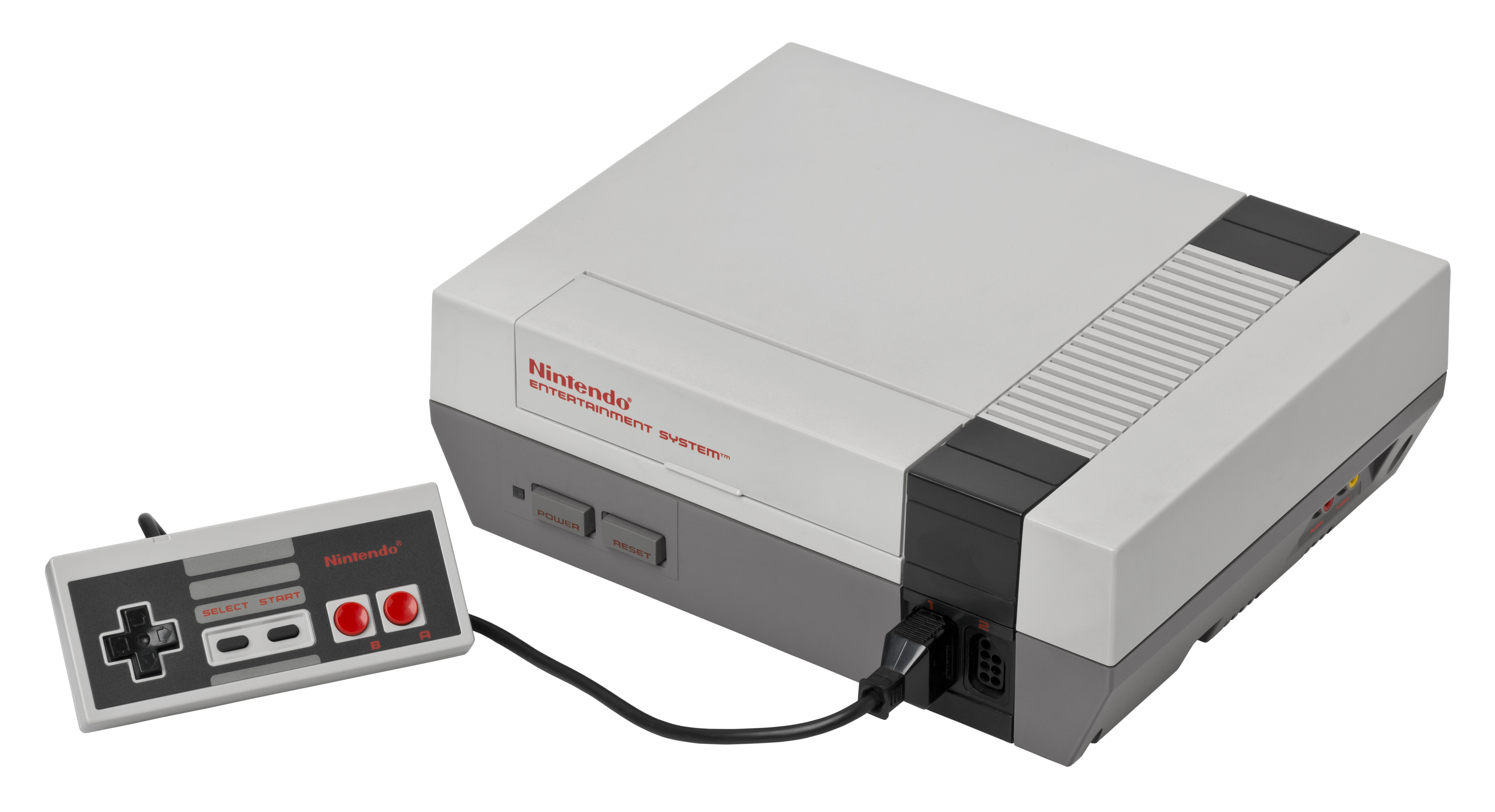
In Japan, Nintendo’s Family Computer (Famicom) arrived in 1983, setting the stage for the company’s U.S. push two years later with the Nintendo Entertainment System. However it wasn't an easy transition to the United States as the market had just crashed the same year as Nintendo launched their own system, the Famicom, in Japan. Thus the American debut began in New York City on Oct. 18, 1985, marketed as a toy (with R.O.B. the Robot and the Zapper Gun) to win back skeptical retailers after the market crash—an approach that helped spark a broader recovery.
Through the second half of the decade, Nintendo consolidated its lead in North America while refining a stricter publishing model: the 10NES lockout chip and licensing rules that shaped third-party game releases and distribution. https://study.sagepub.com/sites/default/files/O%E2%80%99Donnell%2C%20C.%20%282011%29.%20The%20Nintendo%20entertainment%20system%20and%20the%2010NES%20chip.pdf?utm_source=chatgpt.com
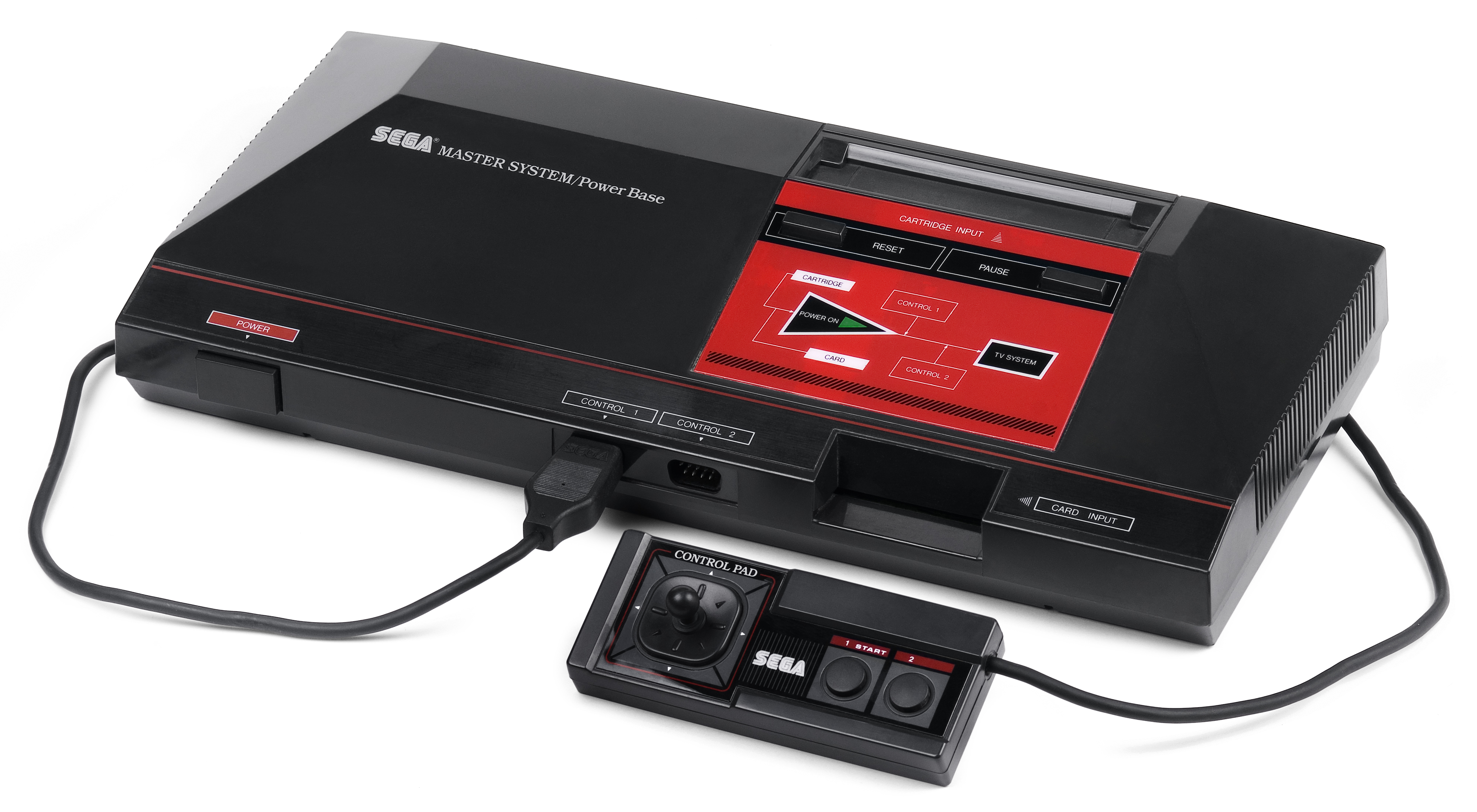


Sega mounted the most persistent challenge with the Master System (sold as Mark III in Japan). While it lagged in the U.S., it carved out lasting strength in places like Brazil, where local partner TecToy kept variants on store shelves for decades—an unusual longevity for an ’80s console.
Atari returned with the 7800, emphasizing affordability and backward compatibility with 2600 cartridges—an early nod to preserving players’ libraries. (Modern reissues even highlight that cross-compatibility today.)
By the late 1980s, the conversation shifted toward higher performance: NEC and Hudson’s PC Engine (1987, Japan) and Sega’s Mega Drive/Genesis (1988 Japan; 1989 U.S.) ushered in faster scrolling, bigger sprites, and more elaborate sound, signaling the next wave of competition that would define the early 1990s.
Behind the scenes, the decade also standardized features we now take for granted—battery-backed saves and rewritable media (e.g., Nintendo’s Disk Writer service for the Famicom Disk System)—and elevated hardware engineers like Masayuki Uemura to quiet renown for the designs that reshaped living-room entertainment.
History
Golden age of arcade games
Main article: Golden age of arcade video games
In the early-1980s, arcade games were a vibrant industry. The arcade video game industry in the US alone was generating $5 billion of revenue annually in 1981 and the number of arcades doubled between 1980 and 1982. The effect video games had on society expanded to other mediums as well such as major films and music. In 1982, "Pac-Man Fever" charted on the Billboard Hot 100 charts and Tron became a cult classic.
Third-party development and an oversaturated market
Following a dispute over recognition and royalties, several of Atari's key programmers split and founded their own company Activision in late 1979. Activision was the first third-party developer for the Atari 2600. Atari sued Activision for copyright infringement and theft of trade secrets in 1980, but the two parties settled on fixed royalty rates and a legitimizing process for third parties to develop games on hardware.
In the aftermath of the lawsuit, an oversaturated market resulted in companies that had never had an interest in video games before beginning to work on their own promotional games; brands like Purina Dog Food. The market was also flooded with too many consoles and too many poor quality games, elements that would contribute to the collapse of the entire video game industry in 1983.
American video game crash of 1983
Main article: Video game crash of 1983
By 1983, the video game bubble created during the golden age had burst and several major companies that produced computers and consoles had gone into bankruptcy. Atari reported a $536 million loss in 1983. Some entertainment experts and investors lost confidence in the medium and believed it was a passing fad. A game often given poster child status to this era, E.T. the Extra-Terrestrial had such bad sale figures that the remaining unsold cartridges were buried in the deserts of New Mexico.
Rise of computer gaming
The brunt of the crash was felt mainly across the home console market. Home computer gaming continued to thrive in this time period, especially with lower-cost machines such as the Commodore 64, ZX Spectrum and IBM Personal Computer. Some computer companies adopted aggressive advertising strategies to compete with gaming consoles and to promote their educational appeal to parents as well. Home computers also allowed motivated users to develop their own games, and many notable titles were created this way, such as Jordan Mechner's Karateka, which he wrote on an Apple II while in college.
In the late 1980s, IBM PC compatibles became popular as gaming devices, with more memory and higher resolutions than consoles, but lacking in the custom hardware that allowed the slower console systems to create smooth visuals.
Rejuvenation
By 1985, the home market console in North America had been dormant for nearly two years. Elsewhere, video games continued to be a staple of innovation and development. After seeing impressive numbers from its Famicom system in Japan, Nintendo decided to jump into the North American market by releasing the Nintendo Entertainment System, or NES for short. After release it took several years to build up momentum, but despite the pessimism of critics it became a success. Nintendo is credited with reviving the home console market.
One innovation that led to Nintendo's success was its ability to tell stories on an inexpensive home console; something that was more common for home computer games, but had only been seen on consoles in a limited fashion. Nintendo also took measures to prevent another crash by requiring third-party developers to adhere to regulations and standards, something that has existed on major consoles since then. One requirement was a "lock and key" system to prevent reverse engineering. It also forced third parties to pay in full for their cartridges before release, so that in case of a flop, the liability will be on the developer and not the provider.
Notable video-game franchises established in the 1980s
Arcades
- 1942 (1984)
- After Burner (1987)
- Altered Beast (1988)
- Arkanoid (1986)
- Balloon Fight (1984)
- Baraduke (1985)
- Battlezone (1980)
- Berzerk (1980)
- Bionic Commando (1987)
- Bomb Jack (1984)
- Bubble Bobble (1986)
- BurgerTime (1982)
- Centipede (1981)
- Contra (1987)
- Darius (1987)
- Defender (1981)
- Dig Dug (1982)
- Donkey Kong (1981)
- Double Dragon (1987)
- Dragon's Lair (1983)
- Fantasy Zone (1986)
- Final Fight (1989)
- Frenzy (1982)
- Frogger (1981)
- Gauntlet (1985)
- Ghosts 'n Goblins (1985)
- Golden Axe (1989)
- Golden Tee Golf (1989)
- Gradius (1985)
- Hang-On (1985)
- Joust (1982)
- Jungle King (1982)
- Kunio-kun (1986)
- Ikari Warriors (1986)
- Mappy (1983)
- Missile Command (1980)
- Mr. Do! (1982)
- Ms. Pac-Man (1982)
- Ninja Gaiden (1988)
- OutRun (1986)
- Pac-Man (1980)
- Paperboy (1985)
- Pocky & Rocky (1986)
- Pole Position (1982)
- Punch-Out!! (1984)
- Qbert* (1982)
- Qix (1981)
- Rally-X (1980)
- Rampage (1986)
- Red Baron (1981)
- Robotron: 2084 (1982)
- R-Type (1987)
- Rush'n Attack (1985)
- Shinobi (1987)
- Space Harrier (1985)
- Spy Hunter (1983)
- Street Fighter (1987)
- Strider (1989)
- Super Cobra (1981)
- Tempest (1981)
- Track & Field (1983)
- Tron (1982)
- TwinBee (1985)
- Wonder Boy (1986)
- World Stadium (1988)
- Xevious (1982)
- Zaxxon (1982)
Consoles and home computers
- Adventure Island (1986)
- Alien (1982)
- Alternate Reality (1985)
- Alex Kidd (1986)
- The Bard's Tale (1985)
- Batman (1986)
- BattleTech (1988)
- Blaster Master (1988)
- Bomberman (1983)
- Bonk (1989)
- Boulder Dash (1984)
- Carmen Sandiego (1985)
- Castlevania (1986)
- Choplifter (1982)
- Dizzy (1987)
- Dragon Ball (1986)
- Dragon Quest (1986)
- Dragon Slayer (1984)
- Dungeons & Dragons (1988)
- Dungeon Explorer (1989)
- Dungeon Master (1987)
- Elite (1984)
- Excitebike (1984)
- Famicom Detective Club (1988)
- Family Stadium (1986)
- Final Fantasy (1987)
- Fire Pro Wrestling (1989)
- G.I. Joe (1983)
- Godzilla (1983)
- Horace (1982)
- James Bond (1983)
- Jetpac (1983)
- Kid Icarus (1986)
- King's Quest (1980)
- Last Ninja (1987)
- The Legend of Heroes (1989)
- The Legend of Zelda (1986)
- Leisure Suit Larry (1987)
- Lode Runner (1983)
- Madden NFL (1988)
- Maniac Mansion (1987)
- Manic Miner (1983)
- MechWarrior (1989)
- Mega Man (1987)
- Megami Tensei (1987)
- Metal Gear (1987)
- Metroid (1986)
- Microsoft Flight Simulator (1982)
- Middle-earth (1982)
- Might and Magic (1986)
- Mother (1989)
- Parodius (1988)
- Phantasie (1985)
- Phantasy Star (1987)
- Pitfall! (1982)
- Police Quest (1987)
- Populous (1989)
- Prince of Persia (1989)
- The Prisoner (1980)
- RealSports (1982)
- RoboCop (1988)
- Rocky's Boots (1982)
- Romance of the Three Kingdoms (1985)
- SaGa (1989)
- Shadow of the Beast (1989)
- SimCity (1989)
- Space Quest (1986)
- Spider-Man (1982)
- Star Raiders (1980)
- Star Soldier (1986)
- Super Mario (1985)
- Teenage Mutant Ninja Turtles (1989)
- Test Drive (1987)
- Tetris (1985)
- Thunder Force (1983)
- Ultima (1981)
- Wasteland (1988)
- Wizardry (1981)
- Wolfenstein (1981)
- X-Men (1989)
- Ys (1987)
Notes:
- Game franchises that also accompany major film or television franchises.
- Game franchises that are considered spin-offs of previously established franchises.
Financial performance
Highest-grossing arcade games of the decade
The following titles were the highest-grossing arcade video games of each year in the 1980s, in terms of coin drop earnings.
| Year | Market | Chart(s) | Title | Revenue | Inflation | Developer | Manufacturer(s) | Genre | Ref | [1980](1980-in-video-games) | [1981](1981-in-video-games) | [1982](1982-in-video-games) | [1983](1983-in-video-games) | [1984](1984-in-video-games) | [1985](1985-in-video-games) | [1986](1986-in-video-games) | [1987](1987-in-video-games) | [1988](1988-in-video-games) | [1989](1989-in-video-games) | |||||||
|---|---|---|---|---|---|---|---|---|---|---|---|---|---|---|---|---|---|---|---|---|---|---|---|---|---|---|
| Worldwide | rowspan="3" | *Pac-Man* | Namco | Namco / Midway | Maze | |||||||||||||||||||||
| Worldwide | *Pole Position* | colspan="2" | Namco | Namco / Atari | Racing | |||||||||||||||||||||
| UK | *Track & Field* | colspan="2" | Konami | Konami | Olympic sports | date=January 1986 | title=Commando: Soldier of Fortune | url=https://archive.org/details/your-sinclair-01/page/n53 | magazine=Your Sinclair | issue=1 | page=54}} | |||||||||||||||
| USA | AMOA | *Pole Position* | colspan="2" | Namco | Atari | Racing | ||||||||||||||||||||
| *RePlay* | *Pole Position II* | colspan="2" | Namco | Atari | Racing | title=Top Hits of Last 5 Years | magazine=RePlay | date=March 1987}} | ||||||||||||||||||
| UK | *Commando* | colspan="2" | Capcom | Capcom | Run-and-gun | |||||||||||||||||||||
| USA | *Play Meter* | *Hang-On* | colspan="2" | Sega | Sega | Racing | date=December 1994 | title=1985 | url=https://archive.org/details/play-meter-volume-20-number-13-december-1994/Play%20Meter%20-%20Volume%2020%2C%20Number%2013%20-%20December%201994/page/74 | magazine=Play Meter | volume=20 | issue=13 | page=74}} | |||||||||||||
| *RePlay* | *Karate Champ* | colspan="2" | Technōs | Data East | Fighting | |||||||||||||||||||||
| Japan | *Game Machine* | *Hang-On* | colspan="2" | Sega | Sega | Racing | ||||||||||||||||||||
| UK | Electrocoin (London) | *Nemesis* (*Gradius*) | colspan="2" | Konami | Konami | Scrolling shooter | ||||||||||||||||||||
| USA | *Play Meter* | *Gauntlet* | colspan="2" | Atari Games | Atari Games | Hack-and-slash | ||||||||||||||||||||
| *RePlay* | *Hang-On* | colspan="2" | Sega | Sega | Racing | |||||||||||||||||||||
| Japan | *Gamest / Game Machine* | *Out Run* | colspan="2" rowspan="2" | Sega | Sega | Driving | ||||||||||||||||||||
| USA | *Play Meter* | Sega | Sega | Driving | ||||||||||||||||||||||
| Japan | *Gamest / Game Machine* | *After Burner* | colspan="2" | Sega | Sega | Air combat | title=第2回ゲーメスト大賞 | trans-title=2nd Gamest Awards | magazine=Gamest | date=December 27, 1988 | volume=29 (February 1989) | url=http://www.netlaputa.ne.jp/~dummy/gamest/magazine/gamest/v029.html | pages=26–41 | language=ja}} | ||||||||||||
| Hong Kong | Bondeal | *RoboCop* | colspan="2" | Data East | Data East | Action | ||||||||||||||||||||
| UK | *Operation Wolf* | colspan="2" | Taito | Taito | Light gun shooter | title=Coin-Ops: SU Awards '88 | magazine=Sinclair User | date=18 December 1988 | issue=82 (January 1989) | pages=98–9 | url=https://archive.org/details/sinclair-user-magazine-082/page/n97}} | |||||||||||||||
| USA | *Play Meter* | *Double Dragon* | colspan="2" | Technōs | Taito | Beat 'em up | ||||||||||||||||||||
| Japan | Dedicated cabinet | *Final Lap* | colspan="2" | Namco | Namco | Racing | date=15 January 1990 | title=Videos of The Year; "Tetris", "Chase H.Q." | url=https://onitama.tv/gamemachine/pdf/19900115p.pdf#page=14 | magazine=Game Machine | publisher=Amusement Press, Inc. | issue=372 | page=26 | lang=ja}} | ||||||||||||
| Conversion kit | *Tetris* | colspan="2" | Sega | Sega | Puzzle | date=December 27, 1989 | title=第3回 ゲーメスト大賞 | trans-title=3rd Gamest Awards | url=http://www.netlaputa.ne.jp/~dummy/gamest/magazine/gamest/v041.html | magazine=Gamest | language=ja | volume=41 (February 1990) | pages=52–79}} | |||||||||||||
| USA | AMOA (dedicated) | *Double Dragon* | colspan="2" | Technōs | Taito | Beat 'em up | ||||||||||||||||||||
| AMOA (conversion kit) | *Capcom Bowling* | colspan="2" | Strata | Capcom | Sports | |||||||||||||||||||||
| *RePlay* (dedicated) | *Super Off Road* | colspan="2" | Leland | Leland | Racing | |||||||||||||||||||||
| *RePlay* (conversion kit) | *Ninja Gaiden* | colspan="2" | Tecmo | Tecmo | Beat 'em up |
Best-selling home video games of the decade
The following table lists the top 20 best-selling home video games of the 1980s. Note that video game sales numbers were not as widely reported during the 1980s, with the exception of titles published by Nintendo and Atari, Inc.
| No. | Title | Units sold | Initial release date | Platform(s) | Genre | Developer | Publisher(s) | Ref | 1 | 2 | 3 | 4 | 5 | 6 | 7 | 8 | 9 | 10 | 11 | 12 | 13 | 14 | 15 | 16 | 17 | |
|---|---|---|---|---|---|---|---|---|---|---|---|---|---|---|---|---|---|---|---|---|---|---|---|---|---|---|
| *Super Mario Bros.* | 40.24 million | NES | Platformer | Nintendo R&D4 | Nintendo | |||||||||||||||||||||
| *Tetris* (Game Boy) | 35 million | Game Boy | Puzzle | Nintendo R&D1 | Nintendo | |||||||||||||||||||||
| *Duck Hunt* | 28.31 million | NES | Light gun shooter | Nintendo R&D1 | Nintendo | |||||||||||||||||||||
| *Super Mario Land* | 18.14 million | Game Boy | Platformer | Nintendo R&D1 | Nintendo | |||||||||||||||||||||
| *Super Mario Bros. 3* | 17.28 million | NES | Platformer | Nintendo EAD | Nintendo | |||||||||||||||||||||
| *Donkey Kong* | 15.05 million | G&W, Coleco, Atari, NES | Platformer | Nintendo R&D1 | Coleco, Atari Corporation | |||||||||||||||||||||
| *Pac-Man* | 11.15 million | VCS, Coleco, NES, PC | Maze | Namco | Atari, Coleco, Namco, Thunder Mountain | {{efn | *Pac-Man*: | |||||||||||||||||||
| *Tetris* (NES) | 8 million | NES | Puzzle | Nintendo R&D1 | Nintendo | |||||||||||||||||||||
| *Super Mario Bros. 2* | 7.46 million | NES | Platformer | Nintendo EAD | Nintendo | |||||||||||||||||||||
| *The Legend of Zelda* | 6.51 million | NES | Action-adventure | Nintendo EAD | Nintendo | |||||||||||||||||||||
| *Space Invaders* | 6.09 million | Atari VCS | Shoot 'em up | Taito | Atari, Inc. | |||||||||||||||||||||
| *The Last Ninja 2* | 5.5 million | Computers | Action-adventure | System 3 | Activision | |||||||||||||||||||||
| *Pitfall!* | 5 million | Multi-platform | Platformer | Activision | Activision | |||||||||||||||||||||
| *Zelda II: The Adventure of Link* | 4.38 million | NES | Action role-playing | Nintendo EAD | Nintendo | |||||||||||||||||||||
| *Excitebike* | 4.16 million | NES | Racing | Nintendo R&D1 | Nintendo | |||||||||||||||||||||
| *Frogger* | 4.1 million | Atari VCS, Computers | Action | Konami | Parker Brothers, Sierra On-Line | |||||||||||||||||||||
| *Where in the World Is Carmen Sandiego?* | 4 million | Multi-platform | Educational | Broderbund | Broderbund | |||||||||||||||||||||
| *The Last Ninja* | 4 million | Commodore 64 | Action-adventure | System 3 | Activision | |||||||||||||||||||||
| *Teenage Mutant Ninja Turtles* | 4 million | NES | Action-platformer | Konami | Ultra Games | |||||||||||||||||||||
| *Populous* | 4 million | Multi-platform | God game | Bullfrog Productions | Electronic Arts |
Best-selling home systems of the decade
The following table lists the top 20 best-selling home systems in the 1980s, including home video game consoles, handheld game consoles, handheld electronic games, and personal computers.
| No. | System(s) | Manufacturer | Type | Generation | Release | Hardware sales | Software sales | Japan | USA | Europe | Korea | Worldwide | As of | USA | As of | 1 | 2 | 3 | 4 | 5 | 6 | 7 | 8 | 9 | 10 | 11 | 12 | 13 | 14 | 15 | 16 | 17 | 18 | 19 | 20 | ||||||||||||||||||||||
|---|---|---|---|---|---|---|---|---|---|---|---|---|---|---|---|---|---|---|---|---|---|---|---|---|---|---|---|---|---|---|---|---|---|---|---|---|---|---|---|---|---|---|---|---|---|---|---|---|---|---|---|---|---|---|---|---|---|
| Famicom / NES | Nintendo | Console | Third | [1983](1983-in-video-games) | last=小川 (Ogawa) | first=純生 (Sumio) | date=2010-12-14 | title=テレビゲーム機の変遷 —ファミコン、スーパーファミコン、プレステ、プレステ2、Wiiまで— | trans-title=Recent Developments in Video Game Technology in Japan — Famicom, Super Famicom, Play Station, Play Station 2 and Wii — | url=http://www.toyo.ac.jp/uploaded/attachment/3049.pdf | journal=経営論集 (Keiei Ronshū) | language=ja | publication-date=March 2011 | issue=77 | pages=1-17 (2) | issn=0286-6439 | archive-url=https://web.archive.org/web/20150725185700/http://www.toyo.ac.jp/uploaded/attachment/3049.pdf | archive-date=2015-07-25 | access-date=2021-12-06 | via=Toyo University Academic Information Repository (Toyo University)}} | + | title=Europe: consoles contre micros | trans-title=Europe: consoles against microphones | magazine=Tilt | pages=[23](http://i.imgur.com/qUXeIkm.jpg) to [24](http://i.imgur.com/jjoQFzm.jpg) | lang=fr}} | title=게임월드 | date=1994 | trans-title=Game World | lang=ko}} | 36,450,000 | [1989](1989-in-video-games) | 101,500,000 | 1989 | |||||||||||||||||||||||
| Game & Watch | Nintendo | Handheld | [1980](1980-in-video-games) | + | [1982](1982-in-video-games) | ||||||||||||||||||||||||||||||||||||||||||||||||||||
| Atari 2600 (Atari VCS) | Atari | Console | Second | [1977](1977-in-video-games) | + | [1986](1986-in-video-games) | rowspan="10" | rowspan="10" | |||||||||||||||||||||||||||||||||||||||||||||||||
| Commodore 64 | Commodore | Computer | [8-bit](8-bit) | [1982](1982-in-video-games) | last=Reimer | first=Jeremy | date=2005-12-15 | title=Total share: 30 years of personal computer market share figures | url=https://arstechnica.com/features/2005/12/total-share/ | access-date=2021-11-27 | website=Ars Technica | language=en-us}} | 1989 | ||||||||||||||||||||||||||||||||||||||||||||
| IBM PC | IBM | Computer | [8](8-bit)/[16-bit](16-bit) | [1981](1981-in-video-games) | 6,952,600+ | 1989 | |||||||||||||||||||||||||||||||||||||||||||||||||||
| ZX81 / ZX Spectrum | Sinclair | Computer | 8-bit | 1981 | 5,000,000 | [1985](1985-in-video-games) | |||||||||||||||||||||||||||||||||||||||||||||||||||
| Apple II | Apple Inc. | Computer | 8-bit | 1977 | 4,487,000 | 1989 | |||||||||||||||||||||||||||||||||||||||||||||||||||
| NEC UltraLite / PC-88 / PC-98 | NEC | Computer | 8/16-bit | 1981 | 4,040,000 | date=8 January 1990 | title=Amid industry pessiminism, micro sales rose | url=https://books.google.com/books?id=FMbci6pHoa0C&pg=PA34 | magazine=Computerworld | publisher=IDG Enterprise | volume=24 | issue=2 | page=34 | issn=0010-4841}} | 4,251,000+ | 1989 | |||||||||||||||||||||||||||||||||||||||||
| Famicom Disk System | Nintendo | Console | 8-bit | [1986](1986-in-video-games) | last=Sheff | first=David | url=https://archive.org/details/0966961706 | title=Game Over: How Nintendo conquered the world | date=1994 | publisher=Vintage Books | isbn=9780307800749 | edition=1st Vintage books | location=New York | oclc=780180879 | access-date=July 27, 2019}} | 4,000,000 | 1989 | ||||||||||||||||||||||||||||||||||||||||
| MSX | ASCII Corp. | Computer | 8-bit | 1983 | 4,000,000 | 1989 | |||||||||||||||||||||||||||||||||||||||||||||||||||
| Sega Mark III/Master System | Sega | Console | Third | [1985](1985-in-video-games) | last1=Tanaka | first1=Tatsuo | url=http://www.stat.go.jp/english/info/meetings/iaos/pdf/tanaka.pdf#page=2 | title=Network Externality and Necessary Software Statistics | date=August 2001 | publisher=Statistics Bureau of Japan | page=2}} | + | 700,000 | 130,000 | 3,935,000+ | 1989 | |||||||||||||||||||||||||||||||||||||||||
| Macintosh | Apple Inc. | Computer | [16-bit](16-bit) | 1984 | 3,502,000 | 1989 | |||||||||||||||||||||||||||||||||||||||||||||||||||
| Intellivision | Mattel | Console | Second | [1979](1979-in-video-games) | 3,000,000+ | [1983](1983-in-video-games) | |||||||||||||||||||||||||||||||||||||||||||||||||||
| Coleco Mini-Arcade | Coleco | Dedicated | 1982 | date=January 30, 1983 | title=More Mini-Arcades Coming From Coleco | volume=1 | page=2 | work=Arcade Express | issue=13 | url=http://www.digitpress.com/library/newsletters/arcadeexpress/arcade_express_v1n13.pdf#page=2}} | 3,000,000 | 1982 | |||||||||||||||||||||||||||||||||||||||||||||
| PC Engine/TurboGrafx-16 | NEC | Console | 8/16-bit | [1987](1987-in-video-games) | 2,350,000 | last=Rothstein | first=Edward | date=1990-04-26 | title=Electronics Notebook; Adventures in Never-Never Land | language=en-US | work=The New York Times | url=https://www.nytimes.com/1990/04/26/garden/electronics-notebook-adventures-never-never-land-revenge-shinobi-ninja-without.html | access-date=2021-12-09 | issn=0362-4331}} | 2,650,000+ | 1989 | colspan="2" rowspan="7" | ||||||||||||||||||||||||||||||||||||||||
| Game Boy | Nintendo | Handheld | 8-bit | [1989](1989-in-video-games) | 1,480,000 | 1,000,000 | 2,500,000 | 1989 | |||||||||||||||||||||||||||||||||||||||||||||||||
| ColecoVision | Coleco | Console | Second | 1982 | last1=McFerran | first1=Damien | date=18 September 2010 | title=Feature: How ColecoVision Became the King of Kong | work=Nintendo Life | url=https://www.nintendolife.com/news/2010/09/feature_how_colecovision_became_the_king_of_kong | access-date=2 April 2021}} | 2,000,000+ | 1984 | ||||||||||||||||||||||||||||||||||||||||||||
| Amstrad CPC | Amstrad | Computer | 8-bit | [1984](1984-in-video-games) | date=December 1989 | title=Guerre Dans Le Salon | trans-title=War in the Living Room | url=https://abandonware-magazines.org/affiche_mag.php?mag=48&num=2280&album=oui | magazine=Science & Vie Micro | issue=67 | pages=126–8 | lang=fr}} | 2,000,000+ | 1989 | |||||||||||||||||||||||||||||||||||||||||||
| Atari 8-bit computers | Atari | Computer | 8-bit | 1979 | 1,900,000 | 1989 | |||||||||||||||||||||||||||||||||||||||||||||||||||
| Amiga | Commodore | Computer | 16-bit | 1985 | 1,600,000 | 1989 |
Hardware timeline
The following gallery highlights hardware used to predominantly play games throughout the 1980s. File:Nintendo-TV-Game-Computer.jpg|Computer TV-Game (1980) File:Game and Watch - FLAGMAN.jpg|Game & Watch (1980) ColecoVision-wController-L.jpg|ColecoVision (1982) File:Atari-5200-4-Port-wController-L.jpg|Atari 5200 (1982) File:C64c system.jpg|Commodore 64 (1982) File:Iie-system.jpg|Apple IIe (1983) File:Nintendo-Famicom-Console-Set-FL.jpg|Famicom/Nintendo Entertainment System (1983) File:Nintendo-Entertainment-System-NES-Zapper-Orange-L.jpg|NES Zapper/Video Shooting Series light gun (1985) File:Sega-Master-System-Set.jpg|Mark III/Master System (1985) File:Bubble Bobble arcade machine.jpg|Bubble Bobble (1986) File:Atari-7800-Console-Set.jpg|Atari 7800 (1986) File:PC-Engine-Console-Set.jpg|TurboGrafx-16/PC Engine (1987) File:Sega-Mega-Drive-JP-Mk1-Console-Set.jpg|Mega Drive/Genesis (1988) File:Game-Boy-Original.jpg|Game Boy (1989) File:Atari-Lynx-I-Handheld.jpg|Atari Lynx (1989)
Notes
References
References
- "The Video Game Crash of 1983".
- "Top 10 Embarrassing Moments in Video Game History".
- "A 20-Year Old Legend".
- "Ten Facts about the Great Video Game Crash of '83".
- "Nintendo's DS family becomes best selling gaming handheld in history".
- "Colecovision game release dates, Atari Archive".
- Brown, Marcel. (2025-07-15). "Nintendo Releases Famicom".
- Chauveau, Philippe. (2022-02-01). "Still doing what “Nintendon’t”: The saga of the SEGA Master System in Brazil". Publications.
- Jovanée, Alice. (2024-08-20). "Atari just announced its second retro-inspired console".
- shmuplations. (2022-01-03). "The History of the PC Engine (1987/2003) - shmuplations.com".
- Kohler, Chris. "Oct. 18, 1985: Nintendo Entertainment System Launches". Wired.
- Wolf, Mark J.P.. (2008). "The video game explosion: a history from PONG to PlayStation and beyond". [[ABC-CLIO]].
- Wolf, Mark J.P.. (2008). "The video game explosion: a history from PONG to PlayStation and beyond". [[ABC-CLIO]].
- (1982-04-05). "Pac-Man Fever".
- (17 August 2006). "Top 20 cult films, according to our readers". The Boston Globe.
- John Hubner. (1983-11-28). "What went wrong at Atari".
- "Classic Gaming Expo: ALAN MILLER".
- "The History Of Activision".
- Beller, Peter C.. (2 February 2009). "Activision's Unlikely Hero". Forbes.
- "Chase the Chuck Wagon".
- "History of the Video Game Console : 1980s".
- "A History of Video Game Consoles".
- "Five Million E.T. Pieces".
- "All Your History: The Video Game Crash of 1983".
- "10 Ridiculous Old-School Video Game Rumors (That Were Actually True)".
- "The Video Game Crash of 1983".
- "80's Radio Shack Color Computer Commercial".
- "Commodore VIC-20 ad with William Shatner".
- "Jordan Mechner's Karateka remake looks to modernize a classic story".
- "Why Do Dedicated Game Consoles Exist?".
- "Striking a BalanceIs Nintendo digging its grave with shovelware?".
- (September 1999). "Uncle John's Legendary Lost Bathroom Reader". [[Portable Press]].
- (November 2012). "Uncle John's Legendary Lost Bathroom Reader". [[Simon and Schuster]].
- (2008). "[[Guinness World Records Gamer's Edition]]". Little Brown Books.
- (January 1986). "Commando: Soldier of Fortune".
- (November 10, 1984). "Michael Jackson Sweeps AMOA Awards; 'Pole Position' Wins In Games Division".
- (March 1987). "Top Hits of Last 5 Years".
- (December 1994). "1985".
- (November 1985). "1985 Operator Survey: This Poll Says Go Gettum!".
- (15 July 1986). "Game Machine's Best Hit Games 25: '86 上半期". [[:ja:アミューズメント通信社.
- (15 January 1987). "Game Machine's Best Hit Games 25: '86 下半期". [musement Press, Inc..
- (February 1987). "1986 Top Ten Coin-Ops".
- (December 1994). "1986".
- (July–August 1987). "Top 20 of 1986". Amusement Players Association.
- (December 28, 1987). "87' ゲーメスト大賞".
- (15 January 1988). "Game Machine's Best Hit Games 25: '87". [[:ja:アミューズメント通信社.
- (December 1994). "1987".
- (December 27, 1988). "第2回ゲーメスト大賞".
- (15 January 1989). "Game Machine's Best Hit Games 25: '88 ''/ "Game of the Year '88" By Game Machine''". [[:ja:アミューズメント通信社.
- (6 April 1989). "The World's Largest Arcade".
- (18 December 1988). "Coin-Ops: SU Awards '88".
- (December 1994). "1988".
- (15 January 1990). "Videos of The Year; "Tetris", "Chase H.Q."". [[:ja:アミューズメント通信社.
- (December 27, 1989). "第3回 ゲーメスト大賞".
- (1989-09-30). "AMOA Jukebox, Games & Cigarette Vending Awards Winners". Cash Box Pub. Co..
- (January 1990). "Special Report: 1989's Best Videos and Pins".
- Stewart, Keith. (September 13, 2010). "Super Mario Bros: 25 Mario facts for the 25th anniversary". [[The Guardian]].
- Saltzman, Marc. (June 12, 2009). "'Tetris' by the numbers". USA Today.
- Welch, Hanuman. (April 23, 2013). "1984: Duck Hunt - The Best Selling Video Game Of Every Year Since 1977".
- O'Malley, James. (September 11, 2015). "30 Best-Selling Super Mario Games of All Time on the Plumber's 30th Birthday".
- (27 June 2019). "[[Range: Why Generalists Triumph in a Specialized World]]". [[Pan Macmillan]].
- (18 September 2010). "Feature: How ColecoVision Became the King of Kong". [[Nintendo Life]].
- (March 5, 2010). "Expert Report of Garry E. Kitchen". [[United States District Court for the Southern District of Ohio]].
- Vendel, Curt. (May 28, 2009). "Site News".
- (September 26, 2006). "Japan Sales". Nintendojo.
- (August 10, 2003). "Cartridge Sales Since 1980". [[Atari Corp.]]}} Via {{cite episode.
- (August 15, 1982). "Coleco Mini-Arcades Go Gold". Arcade Express.
- (20 December 1982). "Shrinking Pac-Man leads game-wristwatch market". [[InfoWorld Media Group, Inc.]].
- (March 1, 2020). "Game Search (based on Famitsu data)".
- Worley, Joyce. (December 1989). "Mega Hits: The Best of the Best". [[Video Games & Computer Entertainment]].
- (2004). "Tetris: From Russia With Love".
- (March 25, 2004). "March 25, 2004". The Magic Box.
- (October 2005). "Mark Cale interrogation". [[Retro Gamer]].
- (1998). "Pitfall Harry to Life for Activision". A/S/M Communications..
- Parton, Rob. (March 31, 2004). "Xenogears vs. Tetris". RPGamer.
- "CESA Games White Papers". [[Computer Entertainment Supplier's Association]].
- (May–June 2003). "Ed English: 2600 (Frogger, Mr. Do!, Roc 'n Rope)". Digital Press.
- (1990). "The Computer Industry Almanac 1990". Brady.
- (May 1, 1995). "That's Edutainment". [[Nielsen Business Media]].
- Kent, Steven L.. (June 16, 2010). "The Ultimate History of Video Games: From Pong to Pokémon and Beyond... The Story Behind the Craze That Touched Our Lives and Changed the World". [[Crown Publishing Group.
- "About Lionhead Studios". [[Lionhead Studios]].
- 小川 (Ogawa), 純生 (Sumio). (2010-12-14). "テレビゲーム機の変遷 —ファミコン、スーパーファミコン、プレステ、プレステ2、Wiiまで—". 経営論集 (Keiei Ronshū).
- Ramirez, Anthony. (1990-12-08). "Waiting for the Zapping of Nintendo". [[The New York Times]].
- "Europe: consoles contre micros".
- (1994). "게임월드".
- Vogel, Harold L.. (2010-12-20). "Entertainment Industry Economics: A Guide for Financial Analysis". Cambridge University Press.
- "昔(1970年代)のテレビゲームは何台売れた?".
- (1982). "Japan Company Handbook". [[Toyo Keizai]].
- (6 March 1986). "Where every home game turns out to be a winter". [[The Guardian]].
- Rubin, Michael. (2006). "Droidmaker: George Lucas and the Digital Revolution". Triad Publishing Company.
- Dixon, Bradford N.. (May 1986). "Pulse Train: Fine Times in Fort Worth".
- The Bandito. (September 1989). "Roomers: Number Crunching".
- (January 2000). "Videogaming: The Odyssey". [[Future plc]].
- (8 January 1990). "Amid industry pessiminism, micro sales rose". [[IDG Enterprise]].
- Sheff, David. (1994). "Game Over: How Nintendo conquered the world". Vintage Books.
- Watanabe, Teresa. (1990-06-10). "Toward Creativity In Japan : 'Steve Jobs of Japan' Dispels Old Myths".
- (August 2001). "Network Externality and Necessary Software Statistics". [[Statistics Bureau of Japan]].
- (February 1987). "Comparing the New Videogame Systems".
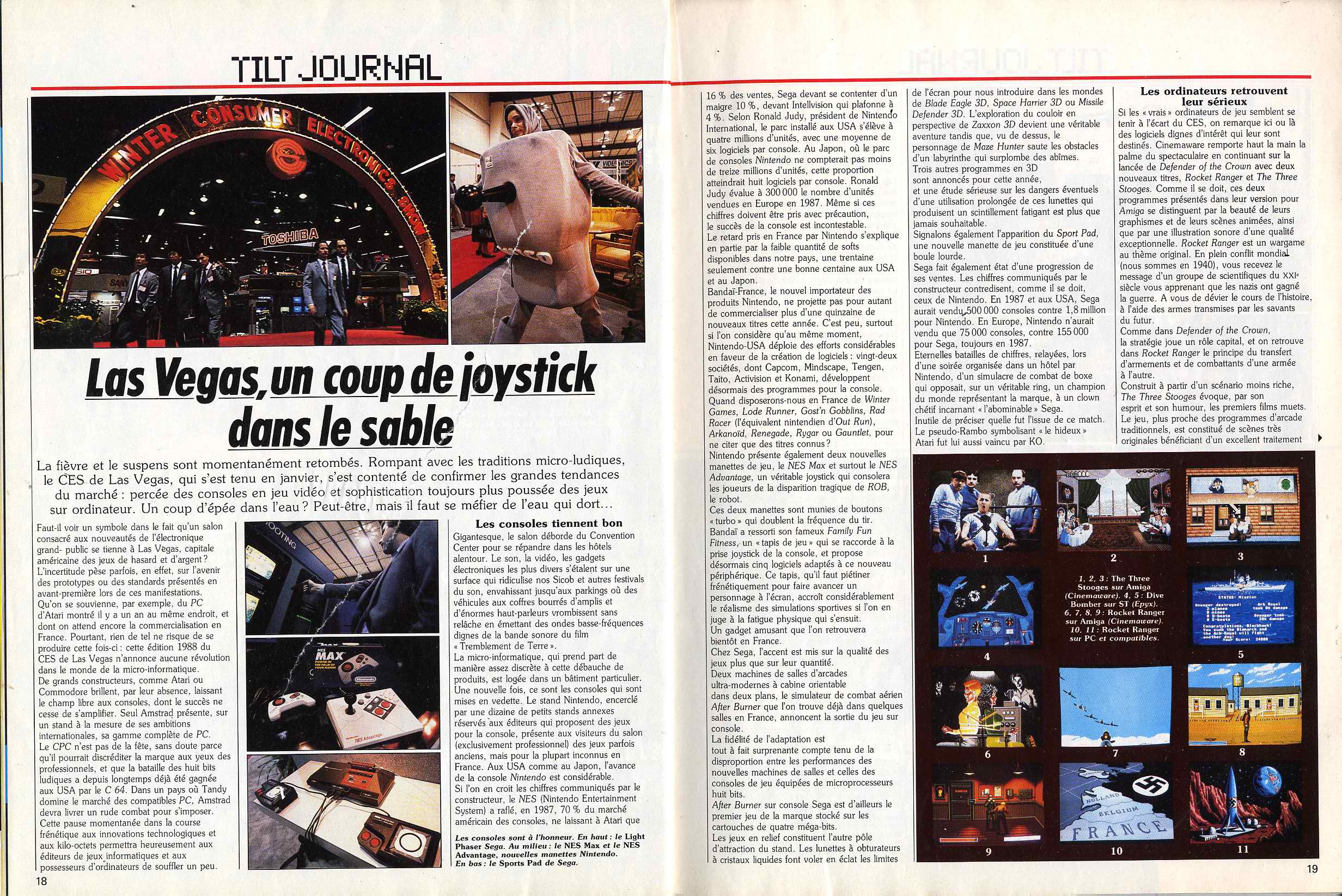
- (March 1988). "Las Vegas, un coup de joystick dans le sable".
- (1 December 1988). "Holiday Gift Guide: Fantasy Games Remain Popular With Young Video Fans". [[Aiken Standard]].
- Hayes, Thomas C.. (1984-02-04). "Mattel Is Counting on Its Toys". [[The New York Times]].
- (January 30, 1983). "More Mini-Arcades Coming From Coleco". Arcade Express.
- Rothstein, Edward. (1990-04-26). "Electronics Notebook; Adventures in Never-Never Land". [[The New York Times]].
- (1991). "Asiaweek".
- (18 September 2010). "Feature: How ColecoVision Became the King of Kong". [[Nintendo Life]].
- (December 1989). "Guerre Dans Le Salon".
This article was imported from Wikipedia and is available under the Creative Commons Attribution-ShareAlike 4.0 License. Content has been adapted to SurfDoc format. Original contributors can be found on the article history page.
Ask Mako anything about 1980s in video games — get instant answers, deeper analysis, and related topics.
Research with MakoFree with your Surf account
Create a free account to save articles, ask Mako questions, and organize your research.
Sign up freeThis content may have been generated or modified by AI. CloudSurf Software LLC is not responsible for the accuracy, completeness, or reliability of AI-generated content. Always verify important information from primary sources.
Report