From Surf Wiki (app.surf) — the open knowledge base
1976 Conference of Communist and Workers Parties of Europe
International meeting of communist parties in East Berlin
International meeting of communist parties in East Berlin
| Field | Value | |
|---|---|---|
| summit_name | Conference of Communist and Workers Parties of Europe | |
| alt | East German stamp commemorating the conference | |
| caption | East German stamp commemorating the conference | |
| country | German Democratic Republic | |
| date | June 29–30, 1976 | |
| venues | Interhotel Stadt Berlin, Alexanderplatz, East Berlin | |
| participants | {{flatlist | |
| follows | [1969 International Meeting of Communist and Workers Parties](1969-international-meeting-of-communist-and-workers-parties) | |
| website |
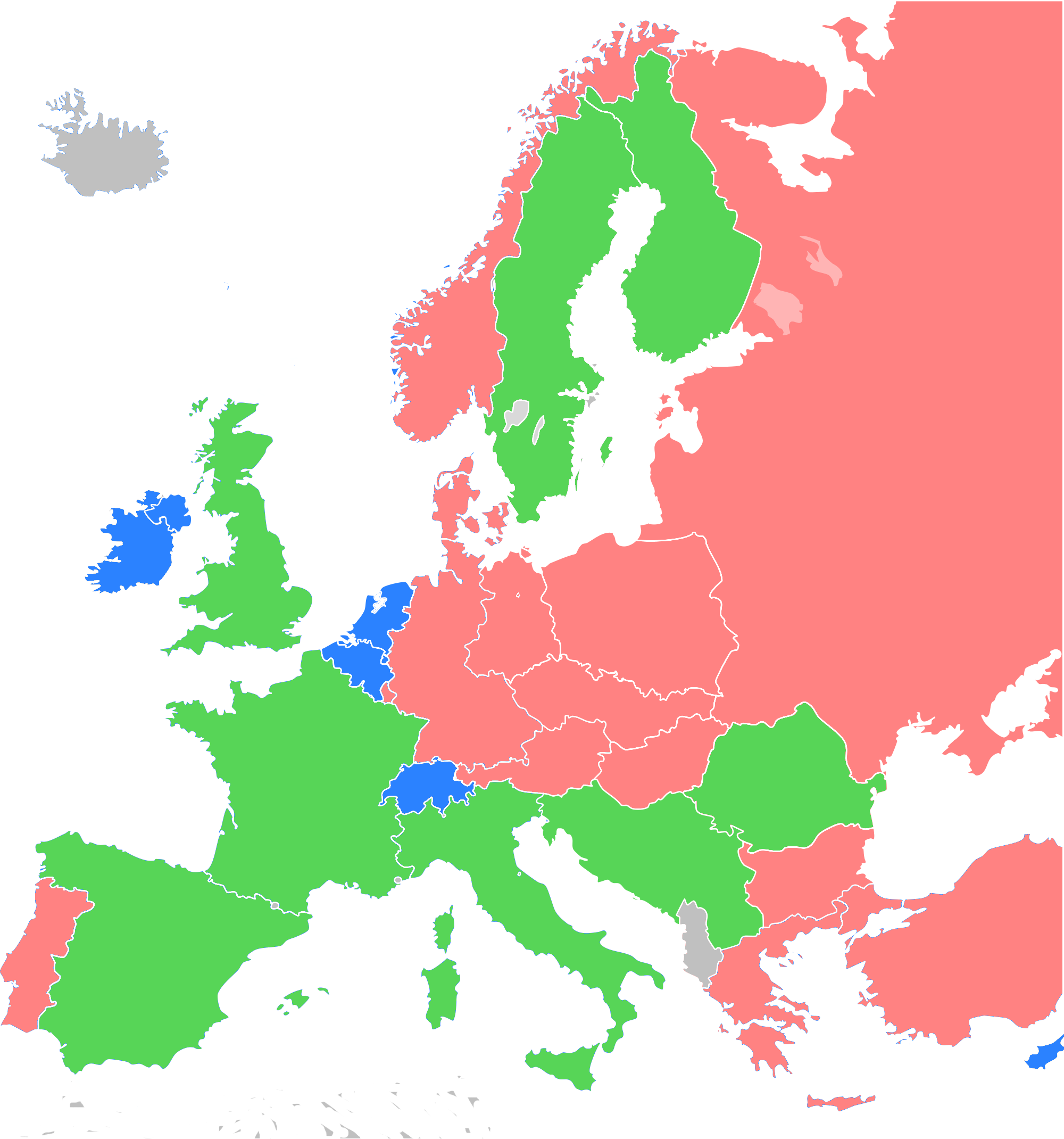
;Eastern Europe : Brezhnev : Ceauşescu : Gierek : Husák : Honecker : Kádár : Tito : Zhivkov }}{{flatlist| ;Western Europe : Carrillo : Berlinguer : Marchais : Cunhal The Conference of Communist and Workers Parties of Europe was an international meeting of communist parties, held in the city of East Berlin, capital of the communist-governed East Germany, on 29–30 June 1976. In all, 29 parties from all Europe (except Albania, Iceland and some microstates) participated in the conference.
The conference highlighted several important changes in the European communist movement. It exhibited the declining influence of the Communist Party of the Soviet Union and a widening gap between the independent and orthodox camps amongst European communist parties, with the ascent of a new political trend, Eurocommunism.
Background
Held in Moscow, the 1969 International Meeting of Communist and Workers Parties was a debacle for its Soviet hosts, as several parties (most notably the Workers' Party of Korea and the Workers Party of Vietnam), had boycotted the event, whilst others had used the meeting as a platform to condemn the Soviet Union's 1968 military intervention in Czechoslovakia. Following the 1969 colloquium, proposals were put forward for another international conference, with the Communist Party of the Soviet Union hoping to regain its lost prestige through such an event. However, many constituents of the world communist movement, primarily in Asia but also in Europe, were opposed to the holding of another international conference. Rather than holding a meeting representing the global communist movement, by the mid-1970s, most of the main communist parties in Europe had expressed an interest in holding a specifically European conference instead. During that decade, several political changes had occurred in Western Europe that various communist parties wanted to take advantage of; notably, Spain and Portugal had witnessed the transition from Fascist regimes to representative democracies, while the parliamentary isolation faced by the French and Italian communist parties had come to an end.
During the 1970s, a new theoretical trend had emerged in several Western European communist parties that came to be known as Eurocommunism. Rejecting the domination of the Soviet Communist Party, it emphasized the development of theories and practices that were more applicable to Western Europe. The Soviet government disliked this Eurocommunist trend, and hoped that through holding a conference, they could achieve a document constituting a de facto charter of the European communist movement which would maintain their dominant role. Soviet discourse did at the time emphasize the importance of a united communist movement across the continent, denying differences between parties and labelling the distinction between Eastern and Western Europe as artificial.
Preparations
There was a prolonged process of preparation before the conference convened. Intense negotiations took place between October 1974 and June 1976, although accounts vary as to how many meetings actually took place, with claims ranging from 12 to 16. The first preparatory meeting was held in Warsaw, capital of Poland. Throughout the preparatory process, the Spanish, Italian, French, Romanian and Yugoslav parties pressed for recognition of the autonomy of each party, whilst the Czechoslovaks, Polish, Hungarians, Bulgarians and East Germans rallied to the defense of Soviet positions. The disagreements during the preparatory process delayed the conference for a year.
At an early stage, an agreement was reached that any document approved by the conference would have to be adopted by consensus. Another agreement was that the agenda of the conference would be limited to themes relating to peace, security, disarmament and the struggle for social progress. The last two editorial meetings for the drafting of the conference resolution were held in East Berlin on June 10–11 and June 24, 1976.
Unlike the previous International Meetings of Communist and Workers Parties, the League of Communists of Yugoslavia participated in the preparations and the conference (however, the Party of Labour of Albania did not participate). The Communist Party of Greece (Interior), a Eurocommunist splinter group, was barred from participating in the conference. The Icelandic People's Alliance boycotted the conference.
Parallel to the conference preparations, the Italian Communist Party organized two bilateral events with its two main Eurocommunist counterparts; a meeting with the Communist Party of Spain in Livorno in July 1975 and a summit with the French Communist Party in Rome in the summer 1976. The Eurocommunists were not a solid bloc, and sharp differences between the parties were manifested during the preparatory process. The French party, whilst criticizing the lack of civil liberties in the Soviet Union, was hesitant to give up proletarian internationalism for the concept of international solidarity proposed by the Italians. Differences on how to analyze the situation in Portugal following the Carnation Revolution divided the French and Italian parties. The French voiced their support for the strategy of the Portuguese Communist Party whilst the Italians publicly criticized the Portuguese party.
Debates and document
On the other hand, there were also interventions from other delegates whom re-affirmed their adherence to the line of the Soviet party. The Bulgarian communist leader Todor Zhivkov, in his intervention, took a firmer stand than the Soviets in upholding the notion of general laws of socialist development (as opposed to the idea that each party should develop its own way of building socialism), denouncing revisionism and underlining the dual responsibility of the individual communist party (both to its own people and the world communist movement). Gustáv Husák of Czechoslovakia and the East German host, Erich Honecker, were also amongst the prominent spokespersons of the orthodox camp. Other parties that voiced their support for the Soviets, in varying degrees, were the Greek, Portuguese, West German, Luxembourgish, Danish, West Berlin, Turkish, Norwegian and Austrian parties.
The Soviet party leader Leonid Brezhnev adopted a more conciliatory tone than his orthodox colleagues. He urged the conference to reaffirmation its commitment to proletarian internationalism, but without references to dual responsibility and mutual assistance (which had been cornerstones of Soviet discourse on the subject). Edward Gierek of Poland and János Kádár of Hungary also placed themselves within the orthodox camp in their speeches to the conference, but kept a lower profile and expressed certain individual nuances.
Apart from the main antagonists at the Berlin meeting, there was also a grouping of parties that were reluctant to choose either the Eurocommunist or the orthodox side. This grouping included the Cypriot, Belgian, Dutch, Irish and Swiss delegates.
The final document of the conference was titled "For Peace, Security, Cooperation and Social Progress in Europe". The document contained several novelties compared to previous practices in the world communist movement. One of the most prominent features of the document was the recognition of the principle of "equality and independence of all communist parties and their right to decide their own policies without external interference". The Soviet party had thus, at least in theory, conceded to the Eurocommunist demands for the principle of non-interference in the affairs of other parties. The document carried no mention of Marxism-Leninism, instead there was a reference to the 'great ideas' of Karl Marx, Friedrich Engels and V. I. Lenin. References to 'proletarian internationalism' were substituted with the term 'international solidarity'. Moreover, the document stated that fraternal criticism between communist parties would not constitute anti-communism (implying that criticism of Soviet policies would not be considered as 'anti-Sovietism', as the official Soviet discourse had argued). The document was not approved through signature or a vote, it was simply issued, a fact later criticized by the Yugoslavs.
The conference also endorsed the Helsinki process and international human rights covenants.
Unlike the declaration of the 1969 meeting, the Berlin conference document did not contain any condemnation of China. The Soviets had pushed for a condemnation of China ahead of the conference, but the Yugoslavs, the French and the Italians resisted these moves.
At the Berlin conference, the French Communist Party rejected the possibility of holding future conferences on the same lines.
Aftermath
The verbatim of the speeches at the conference were presented in full in Neues Deutschland, the central organ of the Socialist Unity Party of Germany, whilst the more critical aspects were censored out in the reports in the Soviet newspaper Pravda. In particular the speech of Carrillo was very difficult for the Soviets to digest. Pravda sought to portray the conference as a victory for proletarian internationalism and communist unity, downplaying the divisions that had appeared at the meeting. Other Socialist Bloc newspapers also censored the speeches from the conference.
Following the Berlin conference the Eurocommunists would step up their critiques of Soviet policies further. They began to foster relations with dissidents inside the Socialist Bloc and, occasionally, defended them against state repression.
Soviet party at times responded in kind to Eurocommunist critiques through veiled ideological counter-accusations. A notable counter-attack by the orthodox camp was an article by Zhivkov in Problems of Peace and Socialism in December 1976, which decried Eurocommunism as an anti-Soviet 'subversion against proletarian internationalism'.
The Yugoslav party on its side claimed that the Soviets had corrupted the conference documentation, that the Soviets had tried to portray a greater degree of unity between the parties than what had actually been the case at the conference.
In April 1980 a new European conference was held in Paris, but under different terms. The principle of consensus was gone at the Paris conference, and the Italian, Romanian, Spanish, Yugoslav, Icelandic, British, Dutch and Sammarinese communist parties boycotted the event. The French Communist Party, co-sponsors of the meeting together with the Polish United Workers' Party, rejected the notion that the Paris meeting would have been of a similar kind as the Berlin conference as no common positions on strategy had been approved.
Participants
| Country | Party | Head of Delegation | Ruling/ | |||||||||||||||||||||||||||||||
|---|---|---|---|---|---|---|---|---|---|---|---|---|---|---|---|---|---|---|---|---|---|---|---|---|---|---|---|---|---|---|---|---|---|---|
| Parliamentary | Membership | % of pop. | ||||||||||||||||||||||||||||||||
| as members | Ref(s) | Communist Party of Austria | Communist Party of Belgium | Bulgarian Communist Party | Progressive Party of Working People | Communist Party of Czechoslovakia | Communist Party of Denmark | Communist Party of Finland | French Communist Party | Socialist Unity Party of Germany | German Communist Party | Communist Party of Greece | Communist Party of Great Britain | Hungarian Socialist Workers' Party | Communist Party of Ireland | Italian Communist Party | Communist Party of Luxembourg | Communist Party of the Netherlands | Communist Party of Norway | Polish United Workers' Party | Portuguese Communist Party | Romanian Communist Party | Sammarinese Communist Party | Communist Party of the Soviet Union | Communist Party of Spain | Left Party - Communists | Swiss Party of Labour | Communist Party of Turkey | Socialist Unity Party of West Berlin | League of Communists of Yugoslavia | ||||
| Austria | Franz Muhri | |||||||||||||||||||||||||||||||||
| Chairman | [1975 election](1975-austrian-legislative-election) | 20,000 | 0.25% | |||||||||||||||||||||||||||||||
| Belgium | ||||||||||||||||||||||||||||||||||
| Vice Chairman | [1974 election](1974-belgian-general-election) | 15,000 | 0.15% | |||||||||||||||||||||||||||||||
| Bulgaria | Todor Zhivkov | |||||||||||||||||||||||||||||||||
| First Secretary | *Ruling* | |||||||||||||||||||||||||||||||||
| Cyprus | ||||||||||||||||||||||||||||||||||
| Politburo Member | [1970 election](1970-cypriot-legislative-election) | 14,000 | 2.33% | |||||||||||||||||||||||||||||||
| Czechoslovakia | Gustáv Husák | |||||||||||||||||||||||||||||||||
| General Secretary | *Ruling* | |||||||||||||||||||||||||||||||||
| Denmark | Knud Jespersen | |||||||||||||||||||||||||||||||||
| Chairman | [1975 election](1975-danish-parliamentary-election) | 8,000 | 0.16% | |||||||||||||||||||||||||||||||
| Finland | Aarne Saarinen | |||||||||||||||||||||||||||||||||
| Chairman | [1975 election](1975-finnish-parliamentary-election), figures for SKDL | 50,000 | 1% | |||||||||||||||||||||||||||||||
| France | George Marchais | |||||||||||||||||||||||||||||||||
| General Secretary | [1973 election](1973-french-legislative-election) | 700,000 | 1.32% | |||||||||||||||||||||||||||||||
| German Democratic Republic | Erich Honecker | |||||||||||||||||||||||||||||||||
| General Secretary | *Ruling* | |||||||||||||||||||||||||||||||||
| Federal Republic of Germany | Herbert Mies | |||||||||||||||||||||||||||||||||
| Chairman | [1972 election](1972-west-german-federal-election) | 40,000 | 0.07% | |||||||||||||||||||||||||||||||
| Greece | Charilaos Florakis | |||||||||||||||||||||||||||||||||
| First Secretary | [1974 election](1974-greek-legislative-election) | |||||||||||||||||||||||||||||||||
| Great Britain | Gordon McLennan | |||||||||||||||||||||||||||||||||
| General Secretary | 1974 election | 25,000 | 0.05% | |||||||||||||||||||||||||||||||
| Hungary | János Kádár | |||||||||||||||||||||||||||||||||
| First Secretary | *Ruling* | |||||||||||||||||||||||||||||||||
| Ireland | Michael O'Riordan | |||||||||||||||||||||||||||||||||
| General Secretary | [1973 election](1973-irish-general-election) (South) 1975 election (North) | 600 | 0.01% | |||||||||||||||||||||||||||||||
| Italy | Enrico Berlinguer | |||||||||||||||||||||||||||||||||
| General Secretary | [1976 election](1976-italian-general-election) | 2,000,000 | 3.57% | |||||||||||||||||||||||||||||||
| Luxembourg | Dominique Urbany | |||||||||||||||||||||||||||||||||
| Chairman | [1974 election](1974-luxembourg-general-election) | 1,000 | 0.25% | |||||||||||||||||||||||||||||||
| Netherlands | Henk Hoekstra | |||||||||||||||||||||||||||||||||
| Chairman | [1972 election](1972-dutch-general-election) | 14,000 | 0.1% | |||||||||||||||||||||||||||||||
| Norway | Martin Gunnar Knutsen | |||||||||||||||||||||||||||||||||
| Chairman | [1973 election](1973-norwegian-parliamentary-election) | 2,500 | 0.06% | |||||||||||||||||||||||||||||||
| Poland | Edward Gierek | |||||||||||||||||||||||||||||||||
| First Secretary | *Ruling* | |||||||||||||||||||||||||||||||||
| Portugal | Álvaro Cunhal | |||||||||||||||||||||||||||||||||
| General Secretary | [1976 election](1976-portuguese-legislative-election) | 160,000 | 1.6% | |||||||||||||||||||||||||||||||
| Romania | Nicolae Ceaușescu | |||||||||||||||||||||||||||||||||
| General Secretary | *Ruling* | |||||||||||||||||||||||||||||||||
| San Marino | Ermenegildo Gasperoni | |||||||||||||||||||||||||||||||||
| Chairman | [1974 election](1974-sammarinese-general-election) | 1,000 | 5.26% | |||||||||||||||||||||||||||||||
| Soviet Union | Leonid Brezhnev | |||||||||||||||||||||||||||||||||
| General Secretary | *Ruling* | |||||||||||||||||||||||||||||||||
| Spain | Santiago Carrillo | |||||||||||||||||||||||||||||||||
| General Secretary | *Illegal* | 200,000 | 0.56% | |||||||||||||||||||||||||||||||
| Sweden | Lars Werner | |||||||||||||||||||||||||||||||||
| Chairman | [1973 election](1973-swedish-general-election) | 17,000 | 0.21% | |||||||||||||||||||||||||||||||
| Switzerland | Jakob Lechleiter | |||||||||||||||||||||||||||||||||
| Secretary of the Central Committee | [1975 election](1975-swiss-federal-election) | 7,000 | 0.12% | |||||||||||||||||||||||||||||||
| Turkey | İsmail Bilen | |||||||||||||||||||||||||||||||||
| General Secretary | *Illegal* | 2,000 | 0.005% | |||||||||||||||||||||||||||||||
| West Berlin | Erich Ziegler | |||||||||||||||||||||||||||||||||
| Vice Chairman | [1975 election](1975-elections-to-the-abgeordnetenhaus-von-berlin) | 5,000 | 0.25% | |||||||||||||||||||||||||||||||
| Yugoslavia | Josip Broz Tito | |||||||||||||||||||||||||||||||||
| Chairman | *Ruling* |
References
References
- ''[https://books.google.com/books?id=BKXsAAAAMAAJ Comparative communist foreign policy, 1965–1976]''. Rand Corporation, 1976. p. 99
- Loeber, Dietrich André. ''[https://books.google.com/books?id=69woVmAqZfgC&pg=PA226 Ruling Communist Parties and Their Status Under Law]''. Dordrecht [u.a.]: Nijhoff, 1986. p. 226
- Braun, Aurel. ''[https://books.google.com/books?id=AzFpAAAAMAAJ Romanian Foreign Policy Since 1965: The Political and Military Limits of Autonomy]''. New York: Praeger, 1978. p. 41
- Sharma, Prem Mohan. ''[https://books.google.com/books?id=C4sx5JYpR_IC&pg=PA106 Politics of Peace and UN General Assembly]''. New Delhi: Abhinav Publications, 1977. p. 106
- Shore, Cris. ''[https://books.google.com/books?id=BliKAAAAMAAJ Italian Communism: The Escape from Leninism : an Anthropological Perspective]''. London: Pluto Press, 1990. p. 113
- Wishnick, Elizabeth. ''[https://books.google.com/books?id=pq0P8G4O8M8C&pg=PA52 Mending Fences: The Evolution of Moscow's China Policy from Brezhnev to Yeltsin]''. Seattle [u.a.]: University of Washington Press, 2001. p. 52
- Bracke, Maud. ''[https://books.google.com/books?id=hZYCNkngLe8C&pg=PA347 Which Socialism, Whose Détente?: West European Communism and the Czechoslovak Crisis, 1968]''. Budapest: Central European University Press, 2007. p. 324
- ''[https://books.google.com/books?id=d2STAAAAIAAJ Eurocommunism between East and West]''. Bloomington: Indiana University press, 1980. p. 7
- Valdez, Jonathan C. ''[https://books.google.com/books?id=vXS9iL543D8C&pg=PA71 Internationalism and the Ideology of Soviet Influence in Eastern Europe]''. Cambridge u.a: Cambridge University Press, 1993. p. 71
- Dougherty, James E., and Diane K. Pfaltzgraff. ''[https://books.google.com/books?id=OlQYAAAAIAAJ Eurocommunism and the Atlantic Alliance]''. Cambridge, Mass: Institute for Foreign Policy Analysis, 1977. p. 33
- Leonhard, Wolfgang. ''[https://books.google.com/books?id=1NwEAQAAIAAJ Eurocommunism: Challenge for East and West]''. New York: Holt, Rinehart, and Winston, 1978. p. 145
- ''[https://books.google.com/books?id=bSJtQwAACAAJ Europas väg till socialismen]''. Stockholm: Arbetarkultur, 1980. pp. 17–18
- Clogg, Richard. ''[https://books.google.com/books?id=kXm-cEJkvy4C&pg=PA178 Parties and Elections in Greece: The Search for Legitimacy]''. Durham: Duke University Press, 1987. p. 178
- Tannahill, R. Neal. ''[https://books.google.com/books?id=teYEAQAAIAAJ The Communist Parties of Western Europe: A Comparative Study]''. Westport: Greenwood Press, 1978. p. 80
- Dunphy, Richard. ''[https://books.google.com/books?id=8ILv-HBTlf8C&pg=PA26 Contesting Capitalism?: Left Parties and European Integration]''. Manchester [u.a.]: Manchester University Press, 2004. p. 26
- Machin, Howard. ''[https://books.google.com/books?id=6-8NAAAAQAAJ&pg=PA95 National communism in Western Europe]''. London: Methuen, 1983. p. 95
- Bracke, Maud. ''[https://books.google.com/books?id=hZYCNkngLe8C&pg=PA347 Which Socialism, Whose Détente?: West European Communism and the Czechoslovak Crisis, 1968]''. Budapest: Central European University Press, 2007. p. 347
- Ouimet, Matthew J. ''[https://books.google.com/books?id=aFSwrUcuDWsC&pg=PA85 The Rise and Fall of the Brezhnev Doctrine in Soviet Foreign Policy]''. Chapel Hill: University of North Carolina Press, 2003. pp. 85–87
- Leonhard, Wolfgang. ''[https://books.google.com/books?id=1NwEAQAAIAAJ Eurocommunism: Challenge for East and West]''. New York: Holt, Rinehart, and Winston, 1978. pp. 146–147
- Valdez, Jonathan C. ''[https://books.google.com/books?id=vXS9iL543D8C&pg=PA75 Internationalism and the Ideology of Soviet Influence in Eastern Europe]''. Cambridge u.a: Cambridge University Press, 1993. pp. 75–77
- ''[https://books.google.com/books?id=UqrS4U6VfYEC&pg=PA9 The Language of Foreign Affairs]''. Department of State Library, 1978. p. 9
- Urban, Joan Barth. ''[https://books.google.com/books?id=8HDEhJQON1AC&pg=PA275 Moscow and the Italian Communist Party: From Togliatti to Berlinguer]''. London: Tauris, 1986. p. 275
- Thomas, Daniel Charles. ''[https://books.google.com/books?id=UPym2WAzDuEC&pg=PA182 The Helsinki Effect: International Norms, Human Rights, and the Demise of Communism]''. Princeton: Princeton University Press, 2001. p. 182
- Ross, George. ''[https://books.google.com/books?id=QpRVV071D0wC&pg=PA251 Workers and Communists in France: From Popular Front to Eurocommunism]''. Berkeley: University of California Press, 1982. p. 251
- Kapur, Harish. ''[https://books.google.com/books?id=wmDEYFCU03QC&pg=PA210 The End of Isolation: China After Mao]''. Dordrecht: Martinus Nijhoff, 1985. p. 210
- In his speech to the conference, Carrillo stated that "The past and present sufferings of our parties and the time spent in the catacombs have created among our rank and file an alloy made out of scientific socialism and a kind of mysticism based on sacrifice and a sense of predestination. We have built a new kind of church with our own martyrs and prophets. Moscow, where our dreams first began to come true, was for a long time a kind of Rome for us. We spoke of the Great October Socialist Revolution as if it were our Christmas. This was the period of our infancy. Today we have grown up." See East, Roger. ''[https://books.google.com/books?id=IHsEAQAAIAAJ Communist and Marxist Parties of the World]'' (Harlow, Essex: Longman [u.a.], 1990. p. 559).
- [[Carl Boggs
- Urban, Joan Barth. ''[https://books.google.com/books?id=8HDEhJQON1AC&pg=PA283 Moscow and the Italian Communist Party: From Togliatti to Berlinguer]''. London: Tauris, 1986. p. 283
- Garthoff, Raymond L. ''[https://books.google.com/books?id=mGG-x_tuNUcC&pg=PA546 Détente and Confrontation: American-Soviet Relations from Nixon to Reagan]''. Washington, D.C.: Brookings Inst, 1994. p. 546
- Machin, Howard. ''[https://books.google.com/books?id=6-8NAAAAQAAJ&pg=PA36 National communism in Western Europe]''. London: Methuen, 1983. p. 36
- Urban, Joan Barth. ''[https://books.google.com/books?id=8HDEhJQON1AC&pg=PA311 Moscow and the Italian Communist Party: From Togliatti to Berlinguer]''. London: Tauris, 1986. p. 311
- Machin, Howard. ''[https://books.google.com/books?id=6-8NAAAAQAAJ&pg=PA104 National communism in Western Europe]''. London: Methuen, 1983. p. 104
- ''[https://books.google.com/books?id=xEUyAQAAIAAJ Blätter für deutsche und internationale Politik, Volume 21, Issues 7-12]''. Paul-Rugenstein Verlag., 1976. pp. 832-833
- The membership figures of West European communists parties are all rough approximations compiled by Alec Carlberg in ''[https://books.google.com/books?id=bSJtQwAACAAJ Europas väg till socialismen]'' (Stockholm: Arbetarkultur, 1980. pp. 347-351). The percentage of party members in comparison with the total population is calculated on the basis of Carlberg's numbers and population figures as per 1976 encountered in the 1978 ''[https://books.google.com/books?id=S2W9jZcp6M0C&pg=PA21 World Development report]'' (World Bank, 1978. pp. 21, 28), the ''[https://books.google.com/books?id=M9QYndAPmuQC&pg=PA555 Regional Survey of the World: Western Europe 2003]'' (London: Europa Publications, 2002. p. 555, in the case of San Marino), ''[http://www.nisra.gov.uk/archive/demography/population/midyear/NI_Home_Pop_sya(1961-%202010).xls Home Population by sex & single year of age 1961-2010]'' (Northern Ireland Statistics and Research Agency, used for Northern Ireland) and ''[https://books.google.com/books?id=8AvsAAAAMAAJ Wochenbericht, Vol. 64]'' (Deutsches Institut für Wirtschaftsforschung, 1997. p. 765, used for West Berlin). Thus neither the presented membership figures nor calculated percentages of populations are exact, but the presentation does provide an overview of the relative strengths of the different parties during this period.
- In the 1973 election the Communist Party managed to get its then chairman [[Reidar T. Larsen]] elected from [[Hedmark]], as part of the [[Socialist Electoral League]]. See Staar, Richard Felix, Milorad M. Drachkovitch, and Lewis H. Gann. ''[https://books.google.com/books?id=fbDmAAAAMAAJ Yearbook on International Communist Affairs]'' (Stanford, Calif: Hoover Institution Press, 1991. p. 619; [[Yearbook on International Communist Affairs]] series) and ''[https://books.google.com/books?id=fvI4AQAAIAAJ Zenit]'' (1973. p. 57)
This article was imported from Wikipedia and is available under the Creative Commons Attribution-ShareAlike 4.0 License. Content has been adapted to SurfDoc format. Original contributors can be found on the article history page.
Ask Mako anything about 1976 Conference of Communist and Workers Parties of Europe — get instant answers, deeper analysis, and related topics.
Research with MakoFree with your Surf account
Create a free account to save articles, ask Mako questions, and organize your research.
Sign up freeThis content may have been generated or modified by AI. CloudSurf Software LLC is not responsible for the accuracy, completeness, or reliability of AI-generated content. Always verify important information from primary sources.
Report