From Surf Wiki (app.surf) — the open knowledge base
1969 Irish general election
Election to the 19th Dáil
Election to the 19th Dáil
| Field | Value |
|---|---|
| election_name | 1969 Irish general election |
| country | Ireland |
| type | parliamentary |
| ongoing | no |
| previous_election | 1965 Irish general election |
| previous_year | 1965 |
| election_date | 18 June 1969 |
| next_election | 1973 Irish general election |
| next_year | 1973 |
| seats_for_election | 144 seats in Dáil Éireann |
| majority_seats | 73 |
| turnout | 76.9% 1.8 pp |
| previous_mps | 18th Dáil |
| elected_mps | 19th Dáil |
| image1 | |
| leader1 | Jack Lynch |
| party1 | Fianna Fáil |
| leader_since1 | [9 November 1966](1966-fianna-fail-leadership-election) |
| leaders_seat1 | Cork City North-West |
| last_election1 | 72 seats, 47.7% |
| seats1 | **75** |
| seat_change1 | 3 |
| popular_vote1 | **602,234** |
| percentage1 | **45.7%** |
| swing1 | 2.0 pp |
| image2 | |
| leader2 | Liam Cosgrave |
| leader_since2 | 21 April 1965 |
| party2 | Fine Gael |
| leaders_seat2 | Dún Laoghaire and Rathdown |
| last_election2 | 47 seats, 34.1% |
| seats2 | 50 |
| seat_change2 | 3 |
| popular_vote2 | 449,749 |
| percentage2 | 34.1% |
| swing2 | 0.0 pp |
| image3 | |
| leader3 | Brendan Corish |
| leader_since3 | 2 March 1960 |
| party3 | Labour Party (Ireland) |
| leaders_seat3 | Wexford |
| last_election3 | 22 seats, 15.4% |
| seats3 | 18 |
| seat_change3 | 4 |
| popular_vote3 | 224,498 |
| percentage3 | 17.0% |
| swing3 | 1.6 pp |
| map_image | Irish_general_election_1969.png |
| map_size | 300px |
| map_caption | Percentage of seats gained by each of the three major parties, and number of seats gained by smaller parties and independents. |
| title | Taoiseach |
| before_election | Jack Lynch |
| before_party | Fianna Fáil |
| posttitle | Taoiseach after election |
| after_election | Jack Lynch |
| after_party | Fianna Fáil |
The 1969 Irish general election to the 19th Dáil was held on Wednesday, 18 June, following the dissolution of the 18th Dáil on 22 May by President Éamon de Valera on the request of Taoiseach Jack Lynch. The general election took place in 42 Dáil constituencies throughout Ireland for 144 seats in Dáil Éireann, the house of representatives of the Oireachtas, with boundary changes under the Electoral (Amendment) Act 1969. The governing Fianna Fáil won its fourth successive election.
The 19th Dáil met at Leinster House on 21 April to nominate the Taoiseach for appointment by the president and to approve the appointment of a new government of Ireland. Lynch was re-appointed Taoiseach, forming the 13th government of Ireland, a single-party majority Fianna Fáil government.
Campaign
The general election of 1969 saw two new leaders of the two main parties fight their first general election. Jack Lynch of Fianna Fáil had become Taoiseach in 1966 and was attempting to win his first election. Liam Cosgrave had taken charge of Fine Gael in 1965 and now leading his party into his first election. Brendan Corish was fighting his third general election as leader of the Labour Party.
Fianna Fáil had been in office since 1957, and in spite of media predictions, the party was still very popular with the voters. Its leader Jack Lynch proved to be the party's biggest electoral asset. His quiet, easy-going and reassuring style, coupled with the catchy slogan "Let's back Jack!", attracted many new voters to Fianna Fáil. The party had introduced many innovative pieces of legislation during the 1960s and was now looking for a fresh mandate. Fianna Fáil were also helped by a deeply divided opposition.
Fine Gael had internal divisions. There was tension between the older conservative members, who wanted to keep the party as it was, and the younger deputies who wanted to move the party to the left. One of the party's policies proposed to abolish compulsory Irish for State examinations and civil service jobs.
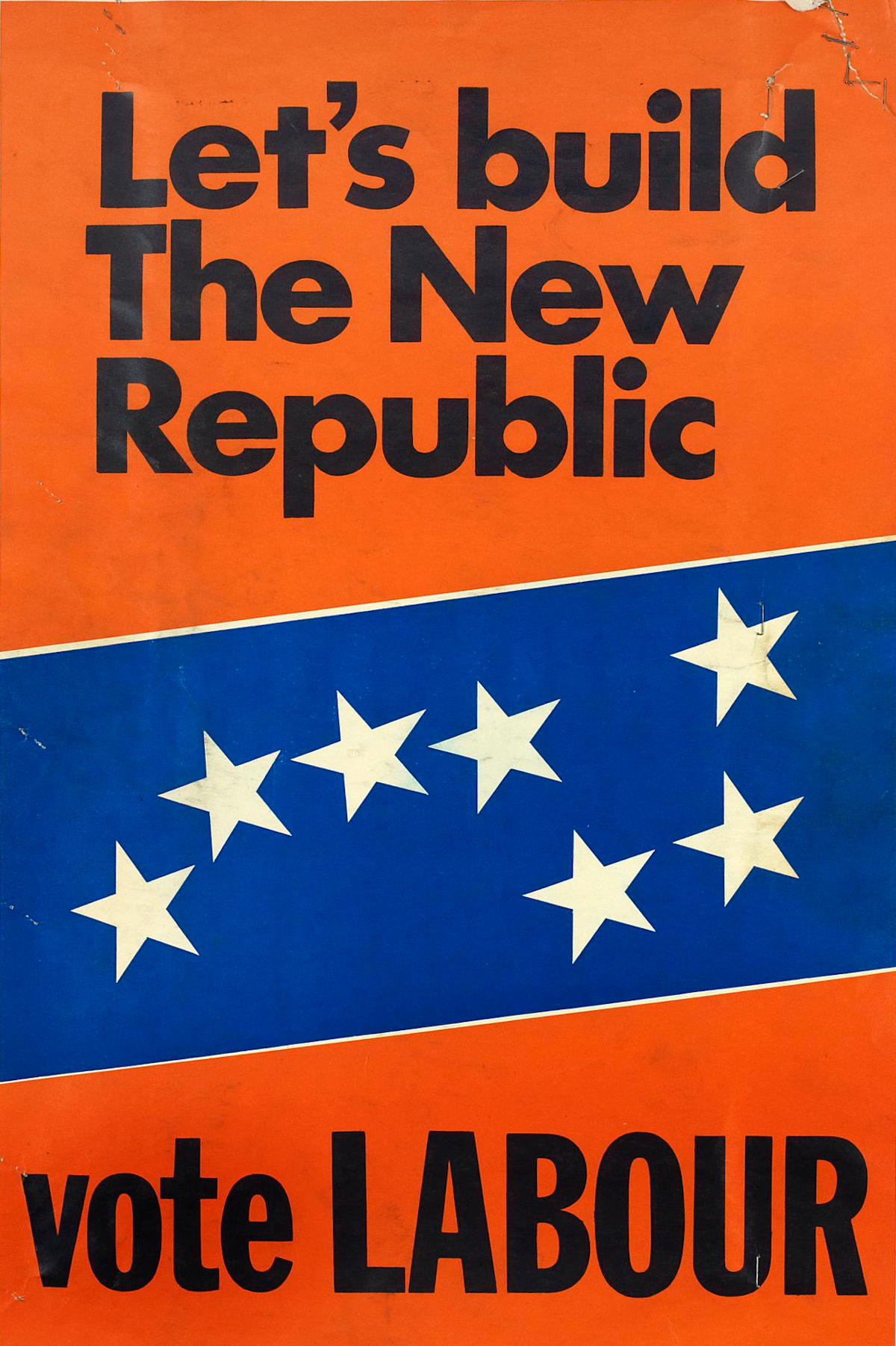
The Labour Party on the other hand were predicted to make gains after firmly ruling out a pre-election pact with Fine Gael. The party fielded a number of new, high-profile candidates, including Justin Keating, Conor Cruise O'Brien, David Thornley and Noël Browne. The slogan "The Seventies will be Socialist" was popular with Labour supporters; however, Fianna Fáil played the "red card", linking the Labour Party with communism. The tactic worked successfully.
Result
|seats_% = 52.1 |fpv_% = 45.7 |seats_% = 34.7 |fpv_% = 34.1 |seats_% = 12.5 |fpv_% = 17.0 |seats_% = 0 |fpv_% = 0.0 |seats_% = 0.7 |fpv_% = 3.2 |}
; Notes
- Independents include Gluaiseacht Chearta Sibhialta na Gaeltachta (1,522 votes).
The result marked a third successive victory for Fianna Fáil, led by Jack Lynch. Fianna Fáil and Fine Gael each lost votes, yet gained seats. Labour gained votes, yet lost seats. It was the last election for thirty-three years at which a government was returned to office—until the Fianna Fáil–Progressive Democrats government was returned with an increased majority in the 2002 general election.
Voting summary
Seats summary
Government formation
Fianna Fáil formed the 13th government of Ireland, a majority government, led by Jack Lynch as Taoiseach.
Changes in membership
First time TDs
A total of 37 TDs were elected for the first time:
- Peter Barry
- Michael Begley
- Seán Brosnan
- John Bruton
- Liam Burke
- Richard Burke
- Hugh Byrne
- Edward Collins
- John Conlan
- Ger Connolly
- Gerard Cott
- Bernard Cowen
- Kieran Crotty
- Conor Cruise O'Brien
- Noel Davern
- Barry Desmond
- Tom Enright
- Martin Finn
- Garret FitzGerald
- Paddy Forde
- Billy Fox
- Michael Herbert
- Thomas Hussey
- Liam Kavanagh
- Justin Keating
- Bill Loughnane
- Gerard Lynch
- Ray MacSharry
- Tom McEllistrim
- Michael J. Noonan
- Michael O'Kennedy
- John O'Sullivan
- Paddy Power
- Michael Smith
- Frank Taylor
- David Thornley
- Jim Tunney
Re-elected TDs
- Eugene Timmons
Retiring TDs
- Lionel Booth
- Paddy Clohessy
- John A. Costello
- Edward Cotter
- James Dillon
- Nicholas Egan
- John Fanning
- Denis Larkin
- Seán Lemass
- Seán MacEntee
- Patrick Tierney
Defeated TDs
- Seán Collins
- Patrick McAuliffe
- Michael O'Higgins
Seanad election
The Dáil election was followed by an election to the 12th Seanad.
Notes
References
References
- {{cite Irish legislation. (1963). (12 July 1963)
- {{cite Irish legislation. (1969). (26 March 1969)
- "19th Dáil 1969: Donegal–Leitrim".
- Kagachi, Chihiro. (2002). "History of Irish Politics".
- O’Keeffe, Donal. (24 October 2024). "Nostalgia: Jack Lynch’s slogan was ‘Let’s Back Jack’ and the voters of 1969 did". [[The Echo (Cork).
- (January 1970). "Election results and transfer of votes in general election (June, 1969) for nineteenth Dáil and bye-elections to eighteenth Dáil (1965–1969)". Dublin Stationery Office.
- "19th Dáil 1969 General Election". ElectionsIreland.org.
- "Dáil elections since 1918". ARK Northern Ireland.
- (2010). "Elections in Europe: A data handbook". Nomos.
This article was imported from Wikipedia and is available under the Creative Commons Attribution-ShareAlike 4.0 License. Content has been adapted to SurfDoc format. Original contributors can be found on the article history page.
Ask Mako anything about 1969 Irish general election — get instant answers, deeper analysis, and related topics.
Research with MakoFree with your Surf account
Create a free account to save articles, ask Mako questions, and organize your research.
Sign up freeThis content may have been generated or modified by AI. CloudSurf Software LLC is not responsible for the accuracy, completeness, or reliability of AI-generated content. Always verify important information from primary sources.
Report