From Surf Wiki (app.surf) — the open knowledge base
1968 Democratic Party presidential primaries
Selection of Democratic US presidential candidate
Selection of Democratic US presidential candidate
| Field | Value | |
|---|---|---|
| election_name | 1968 Democratic Party presidential primaries | |
| country | United States | |
| type | primary | |
| ongoing | no | |
| previous_election | 1964 Democratic Party presidential primaries | |
| previous_year | 1964 | |
| election_date | March 12 to June 11, 1968 | |
| next_election | 1972 Democratic Party presidential primaries | |
| next_year | 1972 | |
| votes_for_election | 2,607 delegates to the [Democratic National Convention](1968-democratic-national-convention) | |
| needed_votes | 1,304 (majority) | |
| <!-- Eugene J. McCarthy --> | image1 | File:1964 Portrait Eugene McCarthy (cropped).jpg |
| image_size | 160x160px | |
| candidate1 | Eugene McCarthy | |
| color1 | 37c837 | |
| home_state1 | Minnesota | |
| delegate_count1 | 379.2 | |
| 487.5 | ||
| states_carried1 | **6** | |
| popular_vote1 | **2,914,933** | |
| percentage1 | **38.7%** | |
| <!-- Robert F. Kennedy --> | image2 | File:Portrait of Robert Kennedy (cropped2).jpg |
| candidate2 | Robert F. Kennedy† | |
| color2 | 80b3ff | |
| home_state2 | New York | |
| delegate_count2 | 340.5 | |
| 393.5 | ||
| states_carried2 | 5 | |
| popular_vote2 | 2,305,148 | |
| percentage2 | 30.6% | |
| <!-- Hubert Humphrey --> | image4 | File:Hubert Humphrey in New York, 1968 (3x4 crop1).jpg |
| candidate4 | **Hubert Humphrey** | |
| color4 | FFA500 | |
| home_state4 | Minnesota | |
| delegate_count4 | 258 | |
| **1,159.5** | ||
| states_carried4 | 0 | |
| popular_vote4 | 166,463 | |
| percentage4 | 2.2% | |
| <!-- Lyndon B. Johnson --> | image5 | File:Lyndon B. Johnson Dec. 1967 (cropped 3x4).jpg |
| candidate5 | Lyndon B. Johnson | |
| color5 | 3333ff | |
| home_state5 | Texas | |
| delegate_count5 | 12 | |
| states_carried5 | 1 | |
| popular_vote5 | 383,590 | |
| percentage5 | 5.1% | |
| title | Democratic nominee | |
| before_election | Lyndon B. Johnson | |
| after_election | Hubert Humphrey | |
| map_image | {{switcher | |
| map_size | 300px | |
| map_caption | ||
487.5
393.5
1,159.5
|[[File:Democratic presidential primary map, 1968.svg|350px]] | Results by popular vote | [[File:Democratic presidential primary delegate map, 1968.svg|350px]] | First place by delegate allocation | [[File:Roll-Call Results for 1968 Democratic National Convention.svg|350px]] | Results by convention roll call
From March to July 1968, Democratic Party voters elected delegates to the 1968 Democratic National Convention for the purpose of selecting the party's nominee for president in the upcoming election. Delegates, and the nominee they were to support at the convention, were selected through a series of primary elections, caucuses, and state party conventions. This was the last time that state primary elections formed a minority (12 states) of the selection process, as the McGovern–Fraser Commission, which issued its recommendations in time for the 1972 Democratic Party presidential primaries, would dramatically reform the nomination process to expand the use of popular primaries rather than caucuses.
After an inconclusive and tumultuous campaign focused on the Vietnam War and marred by the June assassination of Robert F. Kennedy, incumbent Vice President Hubert Humphrey was nominated at the 1968 Democratic National Convention held from August 26 to August 29, 1968, in Chicago, Illinois.
The campaign for the nomination began with incumbent President Lyndon B. Johnson expected to win re-nomination for a second consecutive election, despite low approval ratings following the Tet Offensive in January 1968. His only significant challenger was Eugene McCarthy, an anti-war Senator from Minnesota. After McCarthy nearly won the New Hampshire primary on March 12, Senator Robert F. Kennedy, another critic of the war and the brother of the late President John F. Kennedy, entered the race on March 16. On March 31, Johnson announced that he would not seek re-election. In April, Vice President Hubert H. Humphrey joined the race as the establishment candidate; he did not criticize the administration's conduct of the war and avoided the popular contests for delegates.
McCarthy and Kennedy traded primary victories while Humphrey collected delegates through the closed caucus and convention systems in place in most states. Many other delegates were selected without a formal commitment to support any particular candidate. The race was upended on June 5, the night of the California and South Dakota primaries. Both races went for Kennedy, but he was assassinated after his victory speech at the Ambassador Hotel. At the moment of his assassination, Kennedy trailed Humphrey in the pledged delegate count with McCarthy third. Without any obligation to vote for any candidate, most Kennedy delegates backed Humphrey over McCarthy or fell behind Kennedy supporter George McGovern.
At the convention, Humphrey secured the nomination easily despite anti-war riots outside the convention center; he went on to lose the presidential election narrowly to Richard Nixon. Humphrey would be the last Democratic nominee to be nominated despite not actively campaigning in the primaries until Kamala Harris in the 2024 United States presidential election.
Background
1960 and 1964 presidential elections
In 1960, John F. Kennedy won the Democratic nomination over Lyndon B. Johnson. After he secured the nomination at the party convention, Kennedy offered Johnson the vice presidential nomination; the offer was a surprise, and some Kennedy supporters claimed that the nominee expected Johnson to decline. Robert F. Kennedy, the nominee's brother and campaign manager, reportedly went to Johnson's hotel suite to dissuade Johnson from accepting. Johnson accepted, and the Kennedy-Johnson ticket was narrowly elected, but the 1960 campaign intensified the personal enmity between Robert F. Kennedy and Lyndon B. Johnson, which dated to as early as 1953. President Kennedy named his brother to his cabinet as United States Attorney General.
President Kennedy was assassinated on November 22, 1963; Johnson succeeded him with tremendous national popularity amid a wave of mourning and sympathy. Robert Kennedy remained in the cabinet for several months, creating what Johnson staffers began to refer to as "the Bobby problem": despite the personal hatred between the two, Democratic voters overwhelmingly favored Kennedy as Johnson's running mate in the 1964 election. Kennedy began to plan for a nationwide campaign, and in the informal New Hampshire vice-presidential primary, Kennedy defeated Hubert H. Humphrey in a landslide.
In July 1964, Johnson issued an official statement ruling out any cabinet member for the vice presidency. In search of a way out of the dilemma, Kennedy asked speechwriter Milton Gwirtzman to write a memo comparing two offices: 1) governor of Massachusetts and 2) U.S. senator from New York, and "which would be a better place from which to make a run for the presidency in future years?" In September, Kennedy resigned as attorney general, and ran for and won election to the U.S. Senate. Johnson was elected in a landslide.
Vietnam War
United States involvement in the Vietnam War began shortly after the end of World War II. Beginning in 1964, President Johnson dramatically escalated American military presence after the Gulf of Tonkin incident. On the recommendation of General William C. Westmoreland, whom Johnson had appointed to command American troops in Vietnam, U.S. manpower in Southeast Asia expanded from 16,000 in 1964 to more than 553,000 by 1969.
As U.S. involvement escalated throughout 1964 to 1966, protests against the war escalated in proportion. Several anti-war groups were founded or expanded during the period.
1966 midterms and "Dump Johnson" movement
Amid criticism of U.S. handling of the war from both parties, President Johnson's approval rating sank from a high above 70 percent to below 40 percent by the 1966 midterm elections. The Democratic Party had already begun to split between anti-war "doves" and pro-war "hawks," and the Republican Party gained dozens of seats in Congress.
As opposition grew in 1967, anti-war Democrats led by Allard Lowenstein and Curtis Gans formed the Dump Johnson movement, which sought to challenge the President's re-election. Their first choice was Robert Kennedy, who had sufficiently established himself as a critic of the war and an effective popular campaigner. He declined, as did a series of lesser-known candidates, including Senator George McGovern. Lowenstein finally found a candidate in October 1967, when Minnesota Senator Eugene McCarthy agreed to challenge the President. At first, McCarthy merely expressed his interest, telling Lowenstein, "Somebody has to raise the flag." On November 30, 1967, McCarthy publicly announced his campaign for the nomination.
Kennedy continued to demur, despite pressure from his aides to enter the race and worry that anti-war allies, like George McGovern, would begin to make commitments to McCarthy. On January 30, he again indicated to the press that he had no plans to campaign against Johnson.
In early February 1968, after the Tet Offensive in Vietnam, Kennedy received an anguished letter from writer Pete Hamill, noting that poor people in the Watts area of Los Angeles had hung pictures of Kennedy's brother, President John F. Kennedy, in their homes. Hamill's letter reminded Robert Kennedy that he had an "obligation of staying true to whatever it was that put those pictures on those walls." There were other factors that influenced Kennedy's decision to enter the presidential primary race. On February 29, 1968, the Kerner Commission issued a report on the racial unrest that had affected American cities during the previous summer. The Kerner Commission blamed "white racism" for the violence, but its findings were largely dismissed by the Johnson administration.
On March 10, Kennedy told his aide, Peter Edelman, that he had decided to run and had to "figure out how to get McCarthy out of it." Nevertheless, Kennedy hesitated to publicly enter the race with McCarthy still in and agreed to McCarthy's request to delay an announcement of his intentions until after the New Hampshire primary.
Candidates
The following political leaders were candidates for the 1968 Democratic presidential nomination:
Nominee
| Candidate | Born | Most recent office | Home state | Campaign | Popular vote | Contests won | Delegates won | Running mate | Hubert Humphrey |
|---|---|---|---|---|---|---|---|---|---|
| [[File:Hubert Humphrey in New York, 1968 (3x4 crop1).jpg | frameless | 127x127px]] | May 27, 1911 | ||||||
| (age 57) | |||||||||
| Wallace, South Dakota | **Vice President of the United States** | ||||||||
| (1965–1969) | Minnesota | [[File:Humphrey 1968.png | frameless | 152x152px]] | |||||
| (Campaign) | |||||||||
| **Secured nomination:** **August 29, 1968** | **166,463** | ||||||||
| (2.2%) | **0** | **1759.25** | |||||||
| (67.4%) | Edmund Muskie |
Eliminated at convention
| Candidate | Born | Most recent office | Home state | Campaign | Popular vote | Contests won | Delegates won | Running mate | Eugene McCarthy | [[File:1964 Portrait Eugene McCarthy (cropped).jpg | 150x150px]] | George McGovern | [[File:George McGovern (D-SD) (3x4-1).jpg | 152x152px]] |
|---|---|---|---|---|---|---|---|---|---|---|---|---|---|---|
| March 29, 1916 | ||||||||||||||
| (age 52) | ||||||||||||||
| Watkins, Minnesota | **U.S. Senator** | |||||||||||||
| **from Minnesota** | ||||||||||||||
| (1959–1971) | Minnesota | [[File:Eugene McCarthy 1968 presidential campaign logo.svg | 152x152px]] | |||||||||||
| (Campaign) | ||||||||||||||
| **Declared:** November 30, 1967 | ||||||||||||||
| **Defeated at convention:** August 29, 1968 | 2,914,933 | |||||||||||||
| (38.7%) | 6 | 601 | ||||||||||||
| (23.0%) | *None* | |||||||||||||
| July 19, 1922 | ||||||||||||||
| (age 45) | ||||||||||||||
| Avon, South Dakota | **U.S. Senator** | |||||||||||||
| **from South Dakota** | ||||||||||||||
| (1963–1981) | South Dakota | (Campaign) | ||||||||||||
| **Announced:** July 23, 1968 | ||||||||||||||
| **Defeated at convention:** August 29, 1968 | 0 | |||||||||||||
| (0%) | 0 | 146.5 | ||||||||||||
| (5.6%) | *None* |
Other major candidates
These candidates participated in multiple state primaries or were included in multiple major national polls.
| Candidate | Born | Most recent office | Home state | Campaign | Popular vote | Contests won | Running mate | Lyndon B. Johnson | [[File:Lyndon B. Johnson Dec. 1967 (cropped 3x4).jpg | 150x150px]] | Robert F. Kennedy | [[File:Robert F Kennedy cropped.jpg | 150x150px]] |
|---|---|---|---|---|---|---|---|---|---|---|---|---|---|
| August 27, 1908 | |||||||||||||
| (age 59) | |||||||||||||
| Stonewall, Texas | **President of the United States** | ||||||||||||
| (1963–1969) | Texas | (Campaign) | |||||||||||
| **Withdrew:** March 31, 1968 | |||||||||||||
| *(endorsed Humphrey)* | 383,590 | ||||||||||||
| (5.10%) | 1 | Hubert Humphrey | |||||||||||
| November 20, 1925 | |||||||||||||
| (age 42) | |||||||||||||
| Brookline, Massachusetts | **U.S. Senator** | ||||||||||||
| **from New York** | |||||||||||||
| (1965–1968) | New York | [[File:Kennedy 1968.png | 152x152px]] | ||||||||||
| (Campaign) | |||||||||||||
| **Declared:** March 16, 1968 | |||||||||||||
| **Assassinated:** June 5, 1968 | 2,305,148 | ||||||||||||
| (30.6%) | 5 | *None* |
ImageSize = width:800 height:auto barincrement:30 PlotArea = top:10 bottom:25 right:10 left:10 AlignBars = early
Colors = id:canvas value:gray(0.9) id:lightline value:gray(0.8) id:darkline value:gray(0.3) id:Active value:Red # Active campaign id:Planning value:Yellow # Exploratory committee id:Withdrawn value:rgb(0.70,0.30,0.30) # Withdrawn candidate id:State value:blue
- Link to more colors: http://ploticus.sourceforge.net/doc/color.html
Define $today =
DateFormat = mm/dd/yyyy Period = from:11/08/1966 till:11/05/1968 TimeAxis = orientation:horizontal ScaleMinor = gridcolor:lightline unit:month increment:1 start:12/01/1966 ScaleMajor = gridcolor:darkline unit:year increment:1 start:01/01/1967
Backgroundcolors = canvas:canvas
BarData = bar:Humphrey bar:Kennedy† bar:McCarthy bar:McGovern bar:Primaries
PlotData= width:15 fontsize:S textcolor:black anchor:till shift:(10,-4)
bar:Humphrey from:04/27/1968 till:08/29/1968 color:Active text:"Humphrey" bar:Kennedy† from:03/16/1968 till:06/04/1968 color:Active text:"Kennedy†" bar:McCarthy from:11/30/1967 till:08/29/1968 color:Active text:"McCarthy" bar:McGovern from:07/23/1968 till:08/29/1968 color:Active text:"McGovern" bar:Primaries from:03/12/1968 till:06/28/1968 color:State
LineData= layer:front at:11/08/1966 width:1 color:purple layer:front at:08/29/1968 width:4 color:pink
Favorite sons
The following candidates ran only in their home state or district's primary or caucuses for the purpose of controlling its delegate slate at the convention and did not appear to be considered national candidates by the media.
- Governor Roger D. Branigin of Indiana (endorsed Humphrey)
- Governor Richard J. Hughes of New Jersey (endorsed Humphrey)
- State Attorney General Thomas C. Lynch of California (endorsed Humphrey)
- Governor Robert Evander McNair of South Carolina
- Governor Dan Moore of North Carolina
- Senator Edmund Muskie of Maine
- Representative Joseph Resnick of Westchester County, New York
- Senator George Smathers of Florida (endorsed Humphrey)
- Senator Stephen M. Young of Ohio (endorsed Humphrey)
Declined to run
The following persons were listed in two or more major national polls or were the subject of media speculation surrounding their potential candidacy, but declined to actively seek the nomination.
- Senator Ted Kennedy of Massachusetts
- Former Governor George Wallace of Alabama (ran third-party campaign)
Polling
Nationwide polling
| Poll source | Publication | ||||
|---|---|---|---|---|---|
| url=https://www.ourcampaigns.com/RaceDetail.html?RaceID=47021&ShowAllMUPoll=Y | title=US President - D Primaries, Polling | date=16 Nov 2004 | access-date=25 Apr 2020 | publisher=OurCampaigns.com}} | Feb. 1966 |
| Gallup | Aug. 1966 | ||||
| Gallup | Jan. 1967 | ||||
| Gallup | Sep. 1967 | ||||
| Newsweek | Jan. 7, 1968 | ||||
| Theodore H. White | Jan. 10, 1968 | ||||
| Newsweek | Jan. 21, 1968 | ||||
| U.S. News & World Report | Jan. 22, 1968 | ||||
| Newsweek | Jan. 28, 1968 | ||||
| New York Times/CBS | Feb. 1, 1968 | ||||
| Theodore H. White | Feb. 10, 1968 | ||||
| Newsweek | Feb. 25, 1968 | ||||
| U.S. News & World Report | Feb. 26, 1968 | ||||
| New York Times/CBS | Feb. 29, 1968 | ||||
| Newsweek | Mar. 3, 1968 | ||||
| U.S. News & World Report | Mar. 5, 1968 | ||||
| Theodore H. White | Mar. 10, 1968 | ||||
| **March 12: New Hampshire primary** | |||||
| **March 16: Robert F. Kennedy enters the race** | |||||
| New York Times/CBS | Mar. 21, 1968 | ||||
| U.S. News & World Report | Mar. 24, 1968 | ||||
| **March 31: Johnson withdraws** | |||||
| New York Times/CBS | Apr. 4, 1968 | ||||
| Gallup | Apr. 9, 1968 | ||||
| Gallup | Apr. 23, 1968 | ||||
| **April 27: Hubert Humphrey enters the race** | |||||
| Gallup | May 7, 1968 | ||||
| **June 5: Robert F. Kennedy is assassinated** | |||||
| Gallup | July 23, 1968 |
Campaign
March: New Hampshire, Kennedy enters, Johnson withdraws
Main article: Withdrawal of Lyndon B. Johnson from the 1968 United States presidential election
Running as an antiwar candidate in the New Hampshire presidential primary, McCarthy hoped to pressure the Democrats into publicly opposing the Vietnam War. Trailing badly in national polls and with little chance to influence delegate selection absent primary wins, McCarthy decided to pour most of his resources into New Hampshire, the first state to hold a primary election. He was boosted by thousands of young college students who volunteered throughout the state, who shaved their beards and cut their hair to "Get Clean for Gene."
On March 12, McCarthy was the only person on the ballot, as Johnson had not filed, and was only a write in candidate. McCarthy won 42% of the primary vote to Johnson's 50%, an extremely strong showing for such a challenger which gave McCarthy's campaign legitimacy and momentum. In addition, McCarthy's superior coordination led to a near sweep of the state's twenty-four pledged delegates; since Johnson had no formal campaign organization in the state, a number of competing pro-Johnson delegate candidates split his vote, allowing McCarthy to take twenty delegates.
Despite his desire to oppose Johnson directly and the fear that McCarthy would split the anti-war vote, Kennedy pushed forward with his planned campaign. On March 16, Kennedy declared, "I am today announcing my candidacy for the presidency of the United States. I do not run for the presidency merely to oppose any man, but to propose new policies. I run because I am convinced that this country is on a perilous course and because I have such strong feelings about what must be done, and I feel that I'm obliged to do all I can." However, due to his late entry, Kennedy's name would not appear on a state ballot until the Indiana primary on May 7.
In their January 27, 1968 phone conservation, Daley and Johnson detailed how they had initially intended to feed Kennedy's ego and make it seem like his campaign was creating a "revolution." Johnson at the time had agreed to accept Daley's proposal to either stay in the race or drop out and run as Hubert Humphrey's Vice President.
Johnson now had two strong challengers, sitting members of the Senate with demonstrated popularity. To make matters worse, polling in Wisconsin showed McCarthy beating Johnson badly, with the latter getting only 12% of the vote. Facing declining health and bleak political forecasts in the upcoming primaries, Johnson concluded that he could not win the nomination without a major political and personal struggle. On March 31, 1968, at the end of a televised address on Vietnam, he shocked the nation by announcing that he would not seek re-election. By withdrawing, he could avoid the stigma of defeat and could keep control of the party machinery to support Vice President Hubert Humphrey. As the year developed, it also became clear that Johnson believed he could secure his place in the history books by ending the war before the election in November, which would give Humphrey the boost he would need to win.
April: McCarthy triumphant, Humphrey enters
After Johnson's withdrawal, Vice President Hubert Humphrey announced his candidacy on April 27. Humphrey's campaign concentrated on winning the delegates in non-primary states, where party leaders controlled the delegate votes. Humphrey did not compete in the primaries, leaving favorite sons to win delegates as surrogates, notably Senator George A. Smathers from Florida, Senator Stephen M. Young from Ohio, and Indiana Governor Roger D. Branigin.
The Wisconsin primary on April 2 was effectively uncontested. McCarthy received 56% of the vote. Kennedy received 6% as a write-in candidate. Kennedy was ineligible for the ballot because he entered the race following the filing deadline. The Pennsylvania primary on April 23 was similarly a rout for McCarthy, who took 71% of the vote.{{Citation |url-status=dead |archive-url=https://web.archive.org/web/20120321123818/http://digitalnewspapers.libraries.psu.edu/Default/Skins/BasicArch/Client.asp?Skin=BasicArch&&AppName=2&enter=true&BaseHref=DCG%2F1968%2F04%2F24&EntityId=Ar00100 |archive-date=March 21, 2012
- Humphrey gained the support of labor unions and big-city bosses, such as Chicago Mayor Richard J. Daley.
- McCarthy rallied students and intellectuals, who had been the early activists against the war in Vietnam.
- Kennedy gained support from the poor, Catholics, African Americans, Hispanic Americans, and other racial and ethnic minorities.
- Conservative "Dixiecrats" tended to support either Humphrey or former Alabama Governor George C. Wallace, who was running in a third-party campaign for the general election.
In the Massachusetts primary on April 30 neither Humphrey nor Kennedy were formally listed on the ballot. As a result, McCarthy won the popular vote easily, and by the rules in place at the time, all 72 of the commonwealth's delegates were pledged to him on the first ballot. Some analysts viewed Humphrey's unexpectedly strong showing (44,156 write-in votes, or 18% of the total) as a clear victory over Kennedy, a Brookline, Massachusetts native, who polled a meager 28% write-in vote in his family's home state.
May: Kennedy momentum, McCarthy in Oregon
On March 27, 1968, Kennedy announced his intention to run against McCarthy in the Indiana primary, although aides told him that a race in Indiana would be extremely tight and advised him against it. At the Indiana Statehouse, Kennedy told a cheering crowd that the state was important to his campaign: "If we can win in Indiana, we can win in every other state, and win when we go to the convention in August." The Indiana primary thus marked the first open entry of Kennedy into the field and pitted him against McCarthy and Governor Roger Branigin, a favorite son who had backed Johnson and now impliedly supported Humphrey.
During his first campaign stop in Indiana, Kennedy delivered two of a trio notable speeches. First, on April 4, he spoke at Ball State University in Muncie. In this speech, Kennedy suggested the election would "determine the direction that the United States is going to move" and that the American people should "examine everything. Not take anything for granted." Kennedy expressed concerns about poverty and hunger, lawlessness and violence, jobs and economic development, and foreign policy. He emphasized that Americans had a "moral obligation" and should "make an honest effort to understand one another and move forward together." After leaving the stage at Ball State, Kennedy boarded a plane for Indianapolis. When he arrived, he was informed of the assassination of Martin Luther King Jr. Addressing a crowd gathered for a political rally on the black north side of the city, Kennedy gave a heartfelt impromptu speech to the crowd, calling for peace and compassion. The next day in Cleveland, he delivered prepared remarks entitled "On the Mindless Menace of Violence," elaborating the themes he had addressed in Indianapolis. After attending King's funeral in Atlanta, Kennedy resumed campaigning in Indiana on April 10.
Branigin campaigned in nearly all of the state's 92 counties, while McCarthy's campaign strategy concentrated on Indiana's rural areas and small towns. According to Kennedy's campaign advisor, John Bartlow Martin, the campaign gained momentum with Kennedy's visits to central and southern Indiana on April 22 and 23, which included a memorable whistle-stop railroad trip aboard the Wabash Cannonball. Martin urged the candidate to speak out against violence and rioting, emphasize his "law enforcement experience" as former U.S. Attorney General, and promote coordination between the government and private sector to solve domestic issues. Kennedy continued to speak out against the war and in support of the cessation of hostilities and reallocating war funds to domestic programs. To appeal to conservative voters, Kennedy "toned down his rhetoric" as well. McCarthy, meanwhile, contrasted his approach to conflict of "call[ing] upon everyone ... to be as fully responsible as [they] can be" against Humphrey's ("run[ning] things together indiscriminately") and Kennedy's (a "combination of separate interests ... or groups").
On May 7, Kennedy won with 42 percent of the vote; Branigan was second with 31 percent of the vote; and McCarthy, earning 27 percent, came in third. In response to the defeat, McCarthy remarked, "We've tested the enemy now, and we know his techniques ... we know his weaknesses."
Campaigning vigorously in the Nebraska primary, Kennedy hoped for a major win to give him momentum going into the crucial California primary in June. While McCarthy made only one visit to Nebraska, Kennedy made numerous appearances. Though Kennedy's advisors had been worried about his chances in Nebraska, given his lack of credibility on ranching and agriculture policy and the short amount of time to campaign in the state after the Indiana primary, Kennedy won on May 14 with 51.4 percent of the vote to McCarthy's 31 percent. Kennedy won 24 of the 25 counties that he visited ahead of the vote; of those, the sole county he lost by two votes was home to the University of Nebraska, where a plurality of students favored McCarthy. Kennedy declared that the results, where two anti-war candidates collectively earned over 80 percent of the vote, were "a smashing repudiation" of the Johnson-Humphrey administration.
A Newsweek delegate survey, taken after the Nebraska primary, showed 1,280 delegates (1,312 delegates needed to win the nomination) solid or leaning toward Humphrey, 714 leaning to Kennedy, and 280 favoring McCarthy.
In contrast to Nebraska, the Oregon primary posed several challenges to Kennedy's campaign. His campaign organization, run by U.S. Congresswoman Edith Green, was not strong and his platform emphasizing poverty, hunger, and minority issues did not resonate with Oregon voters. About Kennedy's calls for unity amongst Americans, Mills wrote that "As far as Oregonians were concerned, America had not fallen apart." The Kennedy campaign circulated material on McCarthy's record; McCarthy had voted against a minimum wage law and repeal of the poll tax in the Voting Rights Act of 1965. The McCarthy campaign responded with charges that Kennedy illegally taped Martin Luther King Jr. as United States Attorney General. Ten days ahead of the vote, Kennedy admitted his message did not appeal well to Oregonians: "This state is like one giant suburb. I appeal best to people who have problems." During a speech he gave in California, Kennedy also admitted, "I think that if I get beaten in any primary, I am not a very viable candidate," further raising the stakes in Oregon. Following that comment, Kennedy campaigned for sixteen hours a day; in the weeks before the election, his campaign canvased 50,000 homes.
On May 28, McCarthy won the Oregon primary with 44.7 percent; Kennedy received 38.8 percent of votes. After Kennedy's loss was confirmed, he sent a terse congratulatory message to McCarthy but asserted that he would remain in the race. According to Kennedy biographer Larry Tye, the defeat in Oregon proved to Kennedy that he needed to take risks and convinced voters that Kennedy was vulnerable to electoral defeat. Observers remarked that McCarthy was "back in the race as a real contender."
Meanwhile, in the Florida primary (also on May 28), a slate of Humphrey delegates led by favorite son George A. Smathers easily swept aside McCarthy, who managed only four delegates from two Miami congressional districts.{{Citation
June 4: California, South Dakota, and New Jersey; Kennedy assassinated
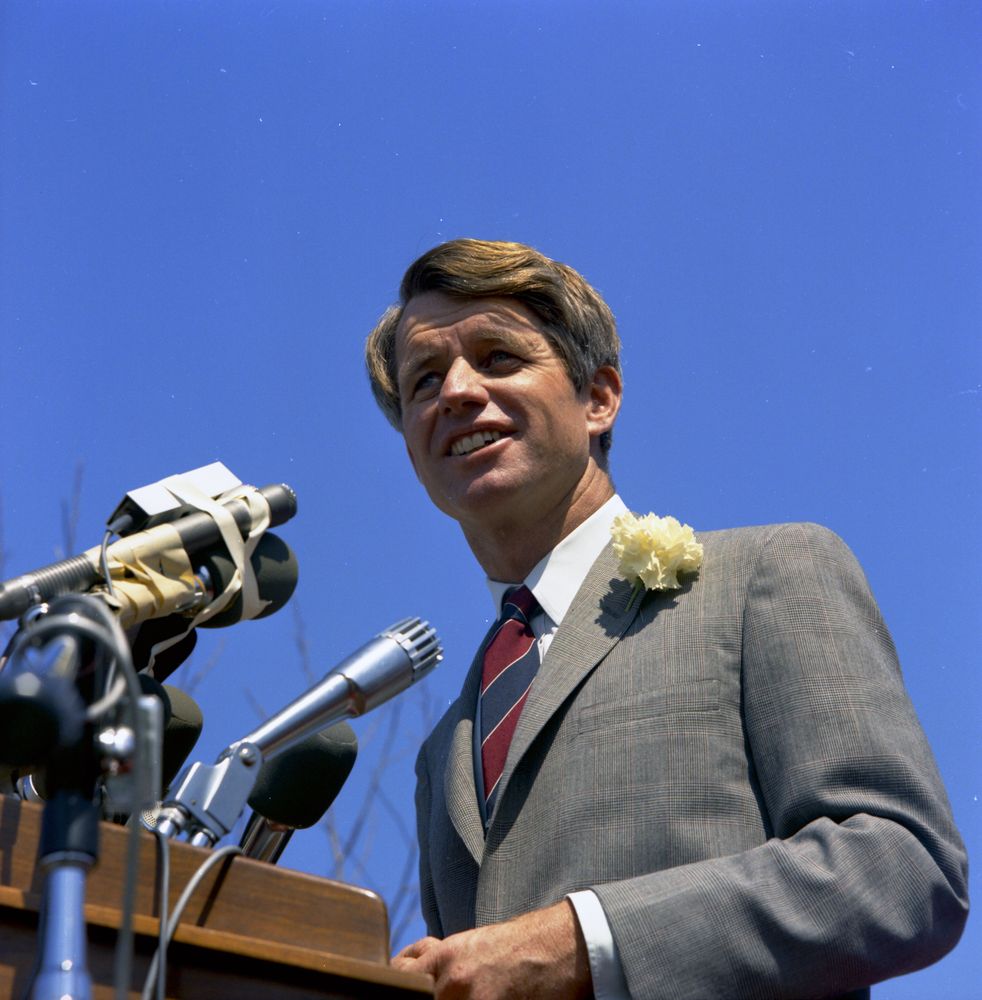
McCarthy and Kennedy vigorously campaigned throughout California in the beginning of June, with the latter announcing he would exit the race if he lost the state's primary. California's winner-take-all primary became crucial to both Kennedy and McCarthy's campaigns. McCarthy stumped the state's many colleges and universities, where he was treated as a hero for being the first presidential candidate to oppose the war. Kennedy campaigned in the ghettos and barrios of the state's larger cities, where he was mobbed by enthusiastic supporters. In the South Dakota primary, Kennedy also hoped to simultaneously pull off an upset victory over McCarthy and Humphrey, both from neighboring Minnesota (Humphrey was also a native of Wallace, South Dakota).
On June 1, Kennedy and McCarthy met in a televised debate on ABC's Issues and Answers, which observers generally considered a draw. "It was a conversation rather than a debate," said The New York Times, "and it demonstrated that the two rivals are in substantial agreement on every major issue." Though Kennedy considered the debate "indecisive and disappointing," subsequent polling showed that undecided voters favored his performance by a margin of two-to-one.
On June 3, Kennedy made a "final dash" through the state's major urban centers, San Francisco, Los Angeles, and San Diego; along with suburban Long Beach, in a single day. As his motorcade moved slowly through cheering crowds in San Francisco's Chinatown, gun shots appeared to ring out. However, it was just the sound of celebratory firecrackers. The campaign entourage and traveling press were all "scared to death," recalled Bill Eppridge, a Life magazine photographer in the car just ahead of the Kennedys.
On June 4, Kennedy privately expressed his hope to Theodore H. White that victories in the California and South Dakota primaries could persuade party insiders that he was more electable than Humphrey and thus win him crucial support from unpledged delegates. Kennedy won the California primary with 46 percent of the vote to McCarthy's 42 percent. Author Joseph Palermo referred to the victory as Kennedy's "greatest." Kennedy also won the South Dakota primary, winning approximately 50 percent of the vote.
McCarthy, who that same night defeated Kennedy in the New Jersey primary (with 36% of the write-in vote), made it clear that he would contest the upcoming New York primary on June 18 in Kennedy's adopted state.
Kennedy assassination
Main article: Assassination of Robert F. Kennedy
After giving his victory speech at the Ambassador Hotel in Los Angeles, Kennedy was assassinated in the kitchen service pantry in the early morning of June 5. Sirhan Sirhan, a 24-year-old Palestinian-born Jordanian, was arrested. Kennedy died 26 hours later at Good Samaritan Hospital.
At the moment of Kennedy's death, the delegate totals were estimated to be:
- Hubert Humphrey – 561
- Robert F. Kennedy – 393
- Eugene McCarthy – 258
Kennedy's death threw the Democratic Party into disarray. Shaken by the event, Humphrey took off two weeks from campaigning. He met with President Johnson, and the two talked about "everything" during a three-hour meeting. The assassination all but guaranteed Humphrey the nomination. He commented that he "was doing everything I could to win the nomination ... but God knows I didn't want it that way." A large number of Kennedy delegates switched to Humphrey, but he lost money from Republican donors concerned about a Kennedy nomination, and popular opinion polls shifted in favor of Senator McCarthy.{{Citation | author-link2= Jack Anderson (columnist) | author-link=Ralph McGill
Schedule and results
Statewide results by winner
.svg)
| | | | | | | | | | | | | | | | | | | | | | | | | | | | | | | | | | | | | ]]
Tablemaker's Note:
| Date | Total pledged | ||||||||||||||||||||||||||||||||||||||||||||||||||||||||||||||||||||||||||||||||
|---|---|---|---|---|---|---|---|---|---|---|---|---|---|---|---|---|---|---|---|---|---|---|---|---|---|---|---|---|---|---|---|---|---|---|---|---|---|---|---|---|---|---|---|---|---|---|---|---|---|---|---|---|---|---|---|---|---|---|---|---|---|---|---|---|---|---|---|---|---|---|---|---|---|---|---|---|---|---|---|---|---|
| delegates | Contest | ||||||||||||||||||||||||||||||||||||||||||||||||||||||||||||||||||||||||||||||||
| and total popular vote | Delegates won and popular vote | Hubert | |||||||||||||||||||||||||||||||||||||||||||||||||||||||||||||||||||||||||||||||
| Humphrey | Eugene | ||||||||||||||||||||||||||||||||||||||||||||||||||||||||||||||||||||||||||||||||
| McCarthy | Robert | ||||||||||||||||||||||||||||||||||||||||||||||||||||||||||||||||||||||||||||||||
| Kennedy | Lyndon | ||||||||||||||||||||||||||||||||||||||||||||||||||||||||||||||||||||||||||||||||
| Johnson | Favorite | ||||||||||||||||||||||||||||||||||||||||||||||||||||||||||||||||||||||||||||||||
| Son(s) | Uncommitted | Other(s) | March 12 | March 16 | March 28 | March 30 | April 2 | April 8 | April 20 | April 23 | April 29 | April 30 | May 7 | May 11 | May 12 | May 14 | May 16 | May 18 | May 25 | May 26 | May 28 | June 1 | June 2 | June 4 | June 6 | June 11 | June 12 | June 14 | June 15 | June 17 | June 18 | June 22 | June 27 | June 28 | June 29 | July 2 | July 6 | July 13 | July 27 | 258 | |||||||||||||||||||||||||||||||||||||||||
| 166,463 | |||||||||||||||||||||||||||||||||||||||||||||||||||||||||||||||||||||||||||||||||
| (2.26%) | 379.2 | ||||||||||||||||||||||||||||||||||||||||||||||||||||||||||||||||||||||||||||||||
| 2,915,565 | |||||||||||||||||||||||||||||||||||||||||||||||||||||||||||||||||||||||||||||||||
| (39.63%) | 340.5 | ||||||||||||||||||||||||||||||||||||||||||||||||||||||||||||||||||||||||||||||||
| 2,273,322 | |||||||||||||||||||||||||||||||||||||||||||||||||||||||||||||||||||||||||||||||||
| (30.90%) | 12 | ||||||||||||||||||||||||||||||||||||||||||||||||||||||||||||||||||||||||||||||||
| 383,590 | |||||||||||||||||||||||||||||||||||||||||||||||||||||||||||||||||||||||||||||||||
| (5.21%) | 601 | ||||||||||||||||||||||||||||||||||||||||||||||||||||||||||||||||||||||||||||||||
| 1,024,082 | |||||||||||||||||||||||||||||||||||||||||||||||||||||||||||||||||||||||||||||||||
| (13.92%) | 968.8 | ||||||||||||||||||||||||||||||||||||||||||||||||||||||||||||||||||||||||||||||||
| 521,046 | |||||||||||||||||||||||||||||||||||||||||||||||||||||||||||||||||||||||||||||||||
| (7.08%) | 0 | ||||||||||||||||||||||||||||||||||||||||||||||||||||||||||||||||||||||||||||||||
| 72,770 | |||||||||||||||||||||||||||||||||||||||||||||||||||||||||||||||||||||||||||||||||
| (0.99%) | **561.5 | ||||||||||||||||||||||||||||||||||||||||||||||||||||||||||||||||||||||||||||||||
| (21.41%)** | **255 | ||||||||||||||||||||||||||||||||||||||||||||||||||||||||||||||||||||||||||||||||
| (9.73%)** | **393.5 | ||||||||||||||||||||||||||||||||||||||||||||||||||||||||||||||||||||||||||||||||
| (15.01%)** | **-** | **310 | |||||||||||||||||||||||||||||||||||||||||||||||||||||||||||||||||||||||||||||||
| (11.82%)** | **99 | ||||||||||||||||||||||||||||||||||||||||||||||||||||||||||||||||||||||||||||||||
| (3.78%)** | **2 | ||||||||||||||||||||||||||||||||||||||||||||||||||||||||||||||||||||||||||||||||
| (0.08%)** | **1,159.5 | ||||||||||||||||||||||||||||||||||||||||||||||||||||||||||||||||||||||||||||||||
| (44.22%)** | **487.5 | ||||||||||||||||||||||||||||||||||||||||||||||||||||||||||||||||||||||||||||||||
| (18.59%)** | **-** | **-** | **179.5 | ||||||||||||||||||||||||||||||||||||||||||||||||||||||||||||||||||||||||||||||
| (6.85%)** | **727 | ||||||||||||||||||||||||||||||||||||||||||||||||||||||||||||||||||||||||||||||||
| (27.73%)** | **51.5 | ||||||||||||||||||||||||||||||||||||||||||||||||||||||||||||||||||||||||||||||||
| (1.96%)** | |||||||||||||||||||||||||||||||||||||||||||||||||||||||||||||||||||||||||||||||||
| 0 (of 24) | [New Hampshire | ||||||||||||||||||||||||||||||||||||||||||||||||||||||||||||||||||||||||||||||||
| Pres. Primary](1968-new-hampshire-democratic-presidential-primary) | |||||||||||||||||||||||||||||||||||||||||||||||||||||||||||||||||||||||||||||||||
| 55,464 | - | 23,263 | |||||||||||||||||||||||||||||||||||||||||||||||||||||||||||||||||||||||||||||||
| (41.94%) | 606 WI | ||||||||||||||||||||||||||||||||||||||||||||||||||||||||||||||||||||||||||||||||
| (1.09%) | **27,520 WI | ||||||||||||||||||||||||||||||||||||||||||||||||||||||||||||||||||||||||||||||||
| (49.62%)** | - | - | 4,075 | ||||||||||||||||||||||||||||||||||||||||||||||||||||||||||||||||||||||||||||||
| (7.35%) | |||||||||||||||||||||||||||||||||||||||||||||||||||||||||||||||||||||||||||||||||
| 24 (of 24) | New Hampshire | ||||||||||||||||||||||||||||||||||||||||||||||||||||||||||||||||||||||||||||||||
| Del. Primary | |||||||||||||||||||||||||||||||||||||||||||||||||||||||||||||||||||||||||||||||||
| ? | - | **20 Del. | |||||||||||||||||||||||||||||||||||||||||||||||||||||||||||||||||||||||||||||||
| 16,315 ** | - | 4 Del. | |||||||||||||||||||||||||||||||||||||||||||||||||||||||||||||||||||||||||||||||
| 17,444 | - | - | - | ||||||||||||||||||||||||||||||||||||||||||||||||||||||||||||||||||||||||||||||
| 22 (of 22) | Nevada | ||||||||||||||||||||||||||||||||||||||||||||||||||||||||||||||||||||||||||||||||
| State Convention | - | - | - | - | - | **22 Del.** | - | ||||||||||||||||||||||||||||||||||||||||||||||||||||||||||||||||||||||||||
| 28 (of 28) | South Carolina | ||||||||||||||||||||||||||||||||||||||||||||||||||||||||||||||||||||||||||||||||
| State Convention | - | - | - | - | **28 Del.** | - | - | ||||||||||||||||||||||||||||||||||||||||||||||||||||||||||||||||||||||||||
| 38 (of 38) | Kansas | ||||||||||||||||||||||||||||||||||||||||||||||||||||||||||||||||||||||||||||||||
| State Convention | - | - | - | - | - | **38 Del.** | - | ||||||||||||||||||||||||||||||||||||||||||||||||||||||||||||||||||||||||||
| 60 (of 60) | Wisconsin | ||||||||||||||||||||||||||||||||||||||||||||||||||||||||||||||||||||||||||||||||
| Primary | |||||||||||||||||||||||||||||||||||||||||||||||||||||||||||||||||||||||||||||||||
| 733,002 | 3,605 WI | ||||||||||||||||||||||||||||||||||||||||||||||||||||||||||||||||||||||||||||||||
| (0.49%) | **52 Del. | ||||||||||||||||||||||||||||||||||||||||||||||||||||||||||||||||||||||||||||||||
| 412,160 | |||||||||||||||||||||||||||||||||||||||||||||||||||||||||||||||||||||||||||||||||
| (56.23%)** | 46,507 WI | ||||||||||||||||||||||||||||||||||||||||||||||||||||||||||||||||||||||||||||||||
| (6.35%) | 8 Del. | ||||||||||||||||||||||||||||||||||||||||||||||||||||||||||||||||||||||||||||||||
| 253,696 | |||||||||||||||||||||||||||||||||||||||||||||||||||||||||||||||||||||||||||||||||
| (34.61%) | - | 11,861 | |||||||||||||||||||||||||||||||||||||||||||||||||||||||||||||||||||||||||||||||
| (1.62%) | 5,173 WI | ||||||||||||||||||||||||||||||||||||||||||||||||||||||||||||||||||||||||||||||||
| (0.71%) | |||||||||||||||||||||||||||||||||||||||||||||||||||||||||||||||||||||||||||||||||
| 22 (of 22) | Alaska | ||||||||||||||||||||||||||||||||||||||||||||||||||||||||||||||||||||||||||||||||
| State Convention | - | - | - | - | - | **22 Del.** | - | ||||||||||||||||||||||||||||||||||||||||||||||||||||||||||||||||||||||||||
| 19 (of 19) | Arizona | ||||||||||||||||||||||||||||||||||||||||||||||||||||||||||||||||||||||||||||||||
| State Convention | - | - | - | - | - | **19 Del.** | - | ||||||||||||||||||||||||||||||||||||||||||||||||||||||||||||||||||||||||||
| 0 (of 130) | Pennsylvania | ||||||||||||||||||||||||||||||||||||||||||||||||||||||||||||||||||||||||||||||||
| Pres. Primary | |||||||||||||||||||||||||||||||||||||||||||||||||||||||||||||||||||||||||||||||||
| 599,966 | 51,998 WI | ||||||||||||||||||||||||||||||||||||||||||||||||||||||||||||||||||||||||||||||||
| (8.67%) | **428,891 | ||||||||||||||||||||||||||||||||||||||||||||||||||||||||||||||||||||||||||||||||
| (71.49%)** | 65,430 WI | ||||||||||||||||||||||||||||||||||||||||||||||||||||||||||||||||||||||||||||||||
| (10.91%) | 21,265 WI | ||||||||||||||||||||||||||||||||||||||||||||||||||||||||||||||||||||||||||||||||
| (3.54%) | - | - | 32,382 | ||||||||||||||||||||||||||||||||||||||||||||||||||||||||||||||||||||||||||||||
| (5.40%) | |||||||||||||||||||||||||||||||||||||||||||||||||||||||||||||||||||||||||||||||||
| 130 (of 130) | Pennsylvania | ||||||||||||||||||||||||||||||||||||||||||||||||||||||||||||||||||||||||||||||||
| Del. Primary | - | 18 Del. | 1.5 Del. | - | - | **110.5 Del.** | - | ||||||||||||||||||||||||||||||||||||||||||||||||||||||||||||||||||||||||||
| 49 (of 49) | Maryland | ||||||||||||||||||||||||||||||||||||||||||||||||||||||||||||||||||||||||||||||||
| State Convention | - | - | - | - | - | **49 Del.** | - | ||||||||||||||||||||||||||||||||||||||||||||||||||||||||||||||||||||||||||
| 72 (of 72) | Massachusetts | ||||||||||||||||||||||||||||||||||||||||||||||||||||||||||||||||||||||||||||||||
| Primary | |||||||||||||||||||||||||||||||||||||||||||||||||||||||||||||||||||||||||||||||||
| 248,903 | 44,156 WI | ||||||||||||||||||||||||||||||||||||||||||||||||||||||||||||||||||||||||||||||||
| (17.74%) | **72 Del. | ||||||||||||||||||||||||||||||||||||||||||||||||||||||||||||||||||||||||||||||||
| 122,697 | |||||||||||||||||||||||||||||||||||||||||||||||||||||||||||||||||||||||||||||||||
| (49.30%)** | 68,604 WI | ||||||||||||||||||||||||||||||||||||||||||||||||||||||||||||||||||||||||||||||||
| (27.56%) | 6,890 WI | ||||||||||||||||||||||||||||||||||||||||||||||||||||||||||||||||||||||||||||||||
| (2.77%) | - | - | 6,556 | ||||||||||||||||||||||||||||||||||||||||||||||||||||||||||||||||||||||||||||||
| (2.63%) | |||||||||||||||||||||||||||||||||||||||||||||||||||||||||||||||||||||||||||||||||
| 32 (of 32) | Alabama | ||||||||||||||||||||||||||||||||||||||||||||||||||||||||||||||||||||||||||||||||
| Del. Primary | - | - | - | - | - | **32 Del.** | 0 Del. | ||||||||||||||||||||||||||||||||||||||||||||||||||||||||||||||||||||||||||
| 63 (of 63) | Indiana | ||||||||||||||||||||||||||||||||||||||||||||||||||||||||||||||||||||||||||||||||
| Primary | |||||||||||||||||||||||||||||||||||||||||||||||||||||||||||||||||||||||||||||||||
| 776,513 | - | 209,695 | |||||||||||||||||||||||||||||||||||||||||||||||||||||||||||||||||||||||||||||||
| (27.01%) | **59 Del. | ||||||||||||||||||||||||||||||||||||||||||||||||||||||||||||||||||||||||||||||||
| 328,118 | |||||||||||||||||||||||||||||||||||||||||||||||||||||||||||||||||||||||||||||||||
| (42.26%)** | - | 4 Del. | |||||||||||||||||||||||||||||||||||||||||||||||||||||||||||||||||||||||||||||||
| 238,700 | |||||||||||||||||||||||||||||||||||||||||||||||||||||||||||||||||||||||||||||||||
| (30.74%) | - | - | |||||||||||||||||||||||||||||||||||||||||||||||||||||||||||||||||||||||||||||||
| 115 (of 115) | Ohio | ||||||||||||||||||||||||||||||||||||||||||||||||||||||||||||||||||||||||||||||||
| Primary | |||||||||||||||||||||||||||||||||||||||||||||||||||||||||||||||||||||||||||||||||
| 549,140 | - | 3 Del. | - | - | **112 Del. | ||||||||||||||||||||||||||||||||||||||||||||||||||||||||||||||||||||||||||||
| 549,140 | |||||||||||||||||||||||||||||||||||||||||||||||||||||||||||||||||||||||||||||||||
| (100.00%)** | - | - | |||||||||||||||||||||||||||||||||||||||||||||||||||||||||||||||||||||||||||||||
| 23 (of 23) | Washington D.C. | ||||||||||||||||||||||||||||||||||||||||||||||||||||||||||||||||||||||||||||||||
| Primary | |||||||||||||||||||||||||||||||||||||||||||||||||||||||||||||||||||||||||||||||||
| 92,114 | 34,559 | ||||||||||||||||||||||||||||||||||||||||||||||||||||||||||||||||||||||||||||||||
| (37.52%) | - | **23 Del. | |||||||||||||||||||||||||||||||||||||||||||||||||||||||||||||||||||||||||||||||
| 57,555 | |||||||||||||||||||||||||||||||||||||||||||||||||||||||||||||||||||||||||||||||||
| (62.48%)** | - | - | - | - | |||||||||||||||||||||||||||||||||||||||||||||||||||||||||||||||||||||||||||||
| 22 (of 22) | Delaware | ||||||||||||||||||||||||||||||||||||||||||||||||||||||||||||||||||||||||||||||||
| State Convention | **16 Del.** | - | 6 Del. | - | - | - | - | ||||||||||||||||||||||||||||||||||||||||||||||||||||||||||||||||||||||||||
| 9 (of 52) | Minnesota | ||||||||||||||||||||||||||||||||||||||||||||||||||||||||||||||||||||||||||||||||
| 7th and 8th | |||||||||||||||||||||||||||||||||||||||||||||||||||||||||||||||||||||||||||||||||
| District Conventions | **9 Del.** | - | - | - | - | - | - | ||||||||||||||||||||||||||||||||||||||||||||||||||||||||||||||||||||||||||
| 22 (of 22) | Wyoming | ||||||||||||||||||||||||||||||||||||||||||||||||||||||||||||||||||||||||||||||||
| State Convention | - | - | - | - | - | **22 Del.** | - | ||||||||||||||||||||||||||||||||||||||||||||||||||||||||||||||||||||||||||
| 26 (of 26) | Hawaii | ||||||||||||||||||||||||||||||||||||||||||||||||||||||||||||||||||||||||||||||||
| State Convention | - | - | - | - | - | **26 Del.** | - | ||||||||||||||||||||||||||||||||||||||||||||||||||||||||||||||||||||||||||
| 0 (of 30) | last1= | first1= | last2= | first2= | date=May 16, 1972 | title=KENNEDY GETS MOST DELEGATES | trans-title= | url=https://www.newspapers.com/image/988971687 | language=English | work=The Grand Island Independent | location=Grand Island, Nebraska | access-date=October 5, 2023 | via= | quote=}} | |||||||||||||||||||||||||||||||||||||||||||||||||||||||||||||||||||
| 162,611 | 12,087 WI | ||||||||||||||||||||||||||||||||||||||||||||||||||||||||||||||||||||||||||||||||
| (7.43%) | 50,655 | ||||||||||||||||||||||||||||||||||||||||||||||||||||||||||||||||||||||||||||||||
| (31.15%) | **84,102 | ||||||||||||||||||||||||||||||||||||||||||||||||||||||||||||||||||||||||||||||||
| (51.72%)** | 9,187 | ||||||||||||||||||||||||||||||||||||||||||||||||||||||||||||||||||||||||||||||||
| (5.65%) | - | - | 6,580 WI | ||||||||||||||||||||||||||||||||||||||||||||||||||||||||||||||||||||||||||||||
| (4.04%) | |||||||||||||||||||||||||||||||||||||||||||||||||||||||||||||||||||||||||||||||||
| 28 (of 30) | Nebraska | ||||||||||||||||||||||||||||||||||||||||||||||||||||||||||||||||||||||||||||||||
| Del. Primary | 1 Del. | 3 Del. | **20 Del.** | - | - | 4 Del. | - | ||||||||||||||||||||||||||||||||||||||||||||||||||||||||||||||||||||||||||
| 36 (of 38) | West Virginia | ||||||||||||||||||||||||||||||||||||||||||||||||||||||||||||||||||||||||||||||||
| Del. Primary | - | - | - | - | - | **36 Del. ** | - | ||||||||||||||||||||||||||||||||||||||||||||||||||||||||||||||||||||||||||
| 43 (of 43) | Georgia | ||||||||||||||||||||||||||||||||||||||||||||||||||||||||||||||||||||||||||||||||
| State Convention | - | - | - | - | - | **43 Del. ** | - | ||||||||||||||||||||||||||||||||||||||||||||||||||||||||||||||||||||||||||
| 27 (of 27) | Maine | ||||||||||||||||||||||||||||||||||||||||||||||||||||||||||||||||||||||||||||||||
| State Convention | - | - | - | - | **27 Del.** | - | - | ||||||||||||||||||||||||||||||||||||||||||||||||||||||||||||||||||||||||||
| 6 (of 35) | Colorado | ||||||||||||||||||||||||||||||||||||||||||||||||||||||||||||||||||||||||||||||||
| 1st District Convention | - | **3 Del.** | **3 Del.** | - | - | - | - | ||||||||||||||||||||||||||||||||||||||||||||||||||||||||||||||||||||||||||
| 46 (of 46) | Iowa | ||||||||||||||||||||||||||||||||||||||||||||||||||||||||||||||||||||||||||||||||
| State Convention | 9.5 Del. | 5 Del. | **25 Del.** | - | - | 6.5 Del. | - | ||||||||||||||||||||||||||||||||||||||||||||||||||||||||||||||||||||||||||
| 13.5 (of 52) | Minnesota | ||||||||||||||||||||||||||||||||||||||||||||||||||||||||||||||||||||||||||||||||
| 3rd, 4th and 5th | |||||||||||||||||||||||||||||||||||||||||||||||||||||||||||||||||||||||||||||||||
| District Conventions | - | **13.5 Del.** | - | - | - | - | - | ||||||||||||||||||||||||||||||||||||||||||||||||||||||||||||||||||||||||||
| 22 (of 22) | Vermont | ||||||||||||||||||||||||||||||||||||||||||||||||||||||||||||||||||||||||||||||||
| State Convention | |||||||||||||||||||||||||||||||||||||||||||||||||||||||||||||||||||||||||||||||||
| 996 | **10 Del. | ||||||||||||||||||||||||||||||||||||||||||||||||||||||||||||||||||||||||||||||||
| 399 | |||||||||||||||||||||||||||||||||||||||||||||||||||||||||||||||||||||||||||||||||
| (40.06%)** | 5 Del. | ||||||||||||||||||||||||||||||||||||||||||||||||||||||||||||||||||||||||||||||||
| 270 | |||||||||||||||||||||||||||||||||||||||||||||||||||||||||||||||||||||||||||||||||
| (27.11%) | 7 Del. | ||||||||||||||||||||||||||||||||||||||||||||||||||||||||||||||||||||||||||||||||
| 327 | |||||||||||||||||||||||||||||||||||||||||||||||||||||||||||||||||||||||||||||||||
| (32.83%) | - | - | - | - | |||||||||||||||||||||||||||||||||||||||||||||||||||||||||||||||||||||||||||||
| 13.5 (of 52) | Minnesota | ||||||||||||||||||||||||||||||||||||||||||||||||||||||||||||||||||||||||||||||||
| 1st, 2nd and 6th | |||||||||||||||||||||||||||||||||||||||||||||||||||||||||||||||||||||||||||||||||
| District Conventions | **13.5 Del.** | - | - | - | - | - | - | ||||||||||||||||||||||||||||||||||||||||||||||||||||||||||||||||||||||||||
| 61 (of 63) | Florida | ||||||||||||||||||||||||||||||||||||||||||||||||||||||||||||||||||||||||||||||||
| Primary | |||||||||||||||||||||||||||||||||||||||||||||||||||||||||||||||||||||||||||||||||
| 512,357 | - | 4 Del. | |||||||||||||||||||||||||||||||||||||||||||||||||||||||||||||||||||||||||||||||
| 147,216 | |||||||||||||||||||||||||||||||||||||||||||||||||||||||||||||||||||||||||||||||||
| (28.73%) | - | - | **57 Del. | ||||||||||||||||||||||||||||||||||||||||||||||||||||||||||||||||||||||||||||||
| 236,242 | |||||||||||||||||||||||||||||||||||||||||||||||||||||||||||||||||||||||||||||||||
| (46.11%)** | 128,899 | ||||||||||||||||||||||||||||||||||||||||||||||||||||||||||||||||||||||||||||||||
| (25.16%) | - | ||||||||||||||||||||||||||||||||||||||||||||||||||||||||||||||||||||||||||||||||
| 35 (of 35) | Oregon | ||||||||||||||||||||||||||||||||||||||||||||||||||||||||||||||||||||||||||||||||
| Primary | |||||||||||||||||||||||||||||||||||||||||||||||||||||||||||||||||||||||||||||||||
| 373,070 | 12,421 WI | ||||||||||||||||||||||||||||||||||||||||||||||||||||||||||||||||||||||||||||||||
| (3.33%) | **35 Del. | ||||||||||||||||||||||||||||||||||||||||||||||||||||||||||||||||||||||||||||||||
| 163,990 | |||||||||||||||||||||||||||||||||||||||||||||||||||||||||||||||||||||||||||||||||
| (43.96%)** | 141,631 | ||||||||||||||||||||||||||||||||||||||||||||||||||||||||||||||||||||||||||||||||
| (37.96%) | 45,174 | ||||||||||||||||||||||||||||||||||||||||||||||||||||||||||||||||||||||||||||||||
| (12.11%) | - | - | 9,854 WI | ||||||||||||||||||||||||||||||||||||||||||||||||||||||||||||||||||||||||||||||
| (2.64%) | |||||||||||||||||||||||||||||||||||||||||||||||||||||||||||||||||||||||||||||||||
| 27 (of 27) | Rhode Island | ||||||||||||||||||||||||||||||||||||||||||||||||||||||||||||||||||||||||||||||||
| State Committee | - | - | - | - | - | **27 Del.** | - | ||||||||||||||||||||||||||||||||||||||||||||||||||||||||||||||||||||||||||
| 60 (of 60) | Missouri | ||||||||||||||||||||||||||||||||||||||||||||||||||||||||||||||||||||||||||||||||
| State Convention | - | - | - | - | - | **60 Del.** | - | ||||||||||||||||||||||||||||||||||||||||||||||||||||||||||||||||||||||||||
| 96 (of 96) | Michigan | ||||||||||||||||||||||||||||||||||||||||||||||||||||||||||||||||||||||||||||||||
| State Convention | - | - | - | - | - | **96 Del.** | - | ||||||||||||||||||||||||||||||||||||||||||||||||||||||||||||||||||||||||||
| 172 (of 174) | California | ||||||||||||||||||||||||||||||||||||||||||||||||||||||||||||||||||||||||||||||||
| Primary | |||||||||||||||||||||||||||||||||||||||||||||||||||||||||||||||||||||||||||||||||
| 3,181,753 | - | 1,329,301 | |||||||||||||||||||||||||||||||||||||||||||||||||||||||||||||||||||||||||||||||
| (41.78%) | **172 Del. | ||||||||||||||||||||||||||||||||||||||||||||||||||||||||||||||||||||||||||||||||
| 1,472,166 | |||||||||||||||||||||||||||||||||||||||||||||||||||||||||||||||||||||||||||||||||
| (46.27%)** | - | - | 380,286 | ||||||||||||||||||||||||||||||||||||||||||||||||||||||||||||||||||||||||||||||
| (11.95%) | - | ||||||||||||||||||||||||||||||||||||||||||||||||||||||||||||||||||||||||||||||||
| 0 (of 82) | last1= | first1= | last2= | first2= | date=June 5, 1972 | title=REGULAR DEMS KO OPPONENTS | trans-title= | url=https://www.newspapers.com/image/907729169/ | language=English | work=The Jersey Journal | location=Jersey City, New Jersey | access-date=October 5, 2023 | via= | quote=}} | |||||||||||||||||||||||||||||||||||||||||||||||||||||||||||||||||||
| 27,446 | 5,578 WI | ||||||||||||||||||||||||||||||||||||||||||||||||||||||||||||||||||||||||||||||||
| (20.32%) | **9,906 WI | ||||||||||||||||||||||||||||||||||||||||||||||||||||||||||||||||||||||||||||||||
| (36.09%)** | 8,603 WI | ||||||||||||||||||||||||||||||||||||||||||||||||||||||||||||||||||||||||||||||||
| (31.35%) | 380 WI | ||||||||||||||||||||||||||||||||||||||||||||||||||||||||||||||||||||||||||||||||
| (1.39%) | - | - | 2,979 | ||||||||||||||||||||||||||||||||||||||||||||||||||||||||||||||||||||||||||||||
| (10.85%) | |||||||||||||||||||||||||||||||||||||||||||||||||||||||||||||||||||||||||||||||||
| 80 (of 82) | last1= | first1= | last2= | first2= | date=June 7, 1972 | title=GOV. HUGHES SLATE WINS 60 DELEGATES | trans-title= | url=https://www.newspapers.com/image/920100885 | language=English | work=The Press of Atlantic City | location=Atlantic City, New Jersey | access-date=October 9, 2023 | via= | quote=}} | - | 20 Del. | - | - | **60 Del.** | - | - | ||||||||||||||||||||||||||||||||||||||||||||||||||||||||||||
| 24 (of 24) | South Dakota | ||||||||||||||||||||||||||||||||||||||||||||||||||||||||||||||||||||||||||||||||
| Primary | |||||||||||||||||||||||||||||||||||||||||||||||||||||||||||||||||||||||||||||||||
| 64,287 | - | 13,145 | |||||||||||||||||||||||||||||||||||||||||||||||||||||||||||||||||||||||||||||||
| (20.45%) | **24 Del. | ||||||||||||||||||||||||||||||||||||||||||||||||||||||||||||||||||||||||||||||||
| 31,826 | |||||||||||||||||||||||||||||||||||||||||||||||||||||||||||||||||||||||||||||||||
| (49.51%)** | 19,316 | ||||||||||||||||||||||||||||||||||||||||||||||||||||||||||||||||||||||||||||||||
| (30.05%) | - | - | - | ||||||||||||||||||||||||||||||||||||||||||||||||||||||||||||||||||||||||||||||
| 59 (of 59) | North Carolina | ||||||||||||||||||||||||||||||||||||||||||||||||||||||||||||||||||||||||||||||||
| State Convention | - | - | - | - | **59 Del.** | - | - | ||||||||||||||||||||||||||||||||||||||||||||||||||||||||||||||||||||||||||
| 0 (of 118) | Illinois | ||||||||||||||||||||||||||||||||||||||||||||||||||||||||||||||||||||||||||||||||
| Pres. Primary | |||||||||||||||||||||||||||||||||||||||||||||||||||||||||||||||||||||||||||||||||
| 12,038 | 2,059 WI | ||||||||||||||||||||||||||||||||||||||||||||||||||||||||||||||||||||||||||||||||
| (17.10%) | **4,646 WI | ||||||||||||||||||||||||||||||||||||||||||||||||||||||||||||||||||||||||||||||||
| (38.59%)** | - | 162 WI | |||||||||||||||||||||||||||||||||||||||||||||||||||||||||||||||||||||||||||||||
| (1.35%) | - | - | 5,171 | ||||||||||||||||||||||||||||||||||||||||||||||||||||||||||||||||||||||||||||||
| (42.96%) | |||||||||||||||||||||||||||||||||||||||||||||||||||||||||||||||||||||||||||||||||
| 48 (of 118) | Illinois | ||||||||||||||||||||||||||||||||||||||||||||||||||||||||||||||||||||||||||||||||
| Del. Primary | - | 2 Del. | - | - | - | **46 Del.** | - | ||||||||||||||||||||||||||||||||||||||||||||||||||||||||||||||||||||||||||
| 104 (of 104) | Texas | ||||||||||||||||||||||||||||||||||||||||||||||||||||||||||||||||||||||||||||||||
| State Convention | - | - | - | - | **104 Del.** | - | - | ||||||||||||||||||||||||||||||||||||||||||||||||||||||||||||||||||||||||||
| 5 (of 5) | Panama Canal Zone | ||||||||||||||||||||||||||||||||||||||||||||||||||||||||||||||||||||||||||||||||
| Territorial Convention | - | - | - | - | - | **5 Del.** | - | ||||||||||||||||||||||||||||||||||||||||||||||||||||||||||||||||||||||||||
| 36 (of 36) | Louisiana | ||||||||||||||||||||||||||||||||||||||||||||||||||||||||||||||||||||||||||||||||
| State Convention | - | - | - | - | **36 Del.** | - | - | ||||||||||||||||||||||||||||||||||||||||||||||||||||||||||||||||||||||||||
| 25 (of 25) | Idaho | ||||||||||||||||||||||||||||||||||||||||||||||||||||||||||||||||||||||||||||||||
| State Convention | - | - | - | - | - | **25 Del.** | - | ||||||||||||||||||||||||||||||||||||||||||||||||||||||||||||||||||||||||||
| 26 (of 26) | Montana | ||||||||||||||||||||||||||||||||||||||||||||||||||||||||||||||||||||||||||||||||
| State Convention | **24 Del.** | 2 Del. | - | - | - | - | - | ||||||||||||||||||||||||||||||||||||||||||||||||||||||||||||||||||||||||||
| 6 (of 35) | Colorado | ||||||||||||||||||||||||||||||||||||||||||||||||||||||||||||||||||||||||||||||||
| 2nd District Convention | - | **5 Del.** | - | - | - | 1 Del. | - | ||||||||||||||||||||||||||||||||||||||||||||||||||||||||||||||||||||||||||
| 123 (of 190) | New York | ||||||||||||||||||||||||||||||||||||||||||||||||||||||||||||||||||||||||||||||||
| Del. Primary | 19 Del. | **62 Del.** | - | - | - | 42 Del. | - | ||||||||||||||||||||||||||||||||||||||||||||||||||||||||||||||||||||||||||
| 44 (of 44) | Connecticut | ||||||||||||||||||||||||||||||||||||||||||||||||||||||||||||||||||||||||||||||||
| State Convention | - | 0 Del. | - | - | - | **44 Del.** | - | ||||||||||||||||||||||||||||||||||||||||||||||||||||||||||||||||||||||||||
| 13.5 (of 52) | Minnesota | ||||||||||||||||||||||||||||||||||||||||||||||||||||||||||||||||||||||||||||||||
| State Convention | **14 Del.** | - | - | - | - | - | - | ||||||||||||||||||||||||||||||||||||||||||||||||||||||||||||||||||||||||||
| 33 (of 33) | Arkansas | ||||||||||||||||||||||||||||||||||||||||||||||||||||||||||||||||||||||||||||||||
| State Committee | - | - | - | - | - | **33 Del.** | - | ||||||||||||||||||||||||||||||||||||||||||||||||||||||||||||||||||||||||||
| 68 (of 118) | Illinois | ||||||||||||||||||||||||||||||||||||||||||||||||||||||||||||||||||||||||||||||||
| State Convention | - | - | - | - | - | **68 Del.** | - | ||||||||||||||||||||||||||||||||||||||||||||||||||||||||||||||||||||||||||
| 65 (of 190) | New York | ||||||||||||||||||||||||||||||||||||||||||||||||||||||||||||||||||||||||||||||||
| State Committee | - | 15.5 Del. | - | - | - | **49.5 Del.** | - | ||||||||||||||||||||||||||||||||||||||||||||||||||||||||||||||||||||||||||
| 51 (of 51) | Tennessee | ||||||||||||||||||||||||||||||||||||||||||||||||||||||||||||||||||||||||||||||||
| State Convention | - | - | - | - | **51 Del.** | - | - | ||||||||||||||||||||||||||||||||||||||||||||||||||||||||||||||||||||||||||
| 26 (of 26) | New Mexico | ||||||||||||||||||||||||||||||||||||||||||||||||||||||||||||||||||||||||||||||||
| State Convention | **15 Del.** | 11 Del. | - | - | - | - | - | ||||||||||||||||||||||||||||||||||||||||||||||||||||||||||||||||||||||||||
| 25 (of 25) | North Dakota | ||||||||||||||||||||||||||||||||||||||||||||||||||||||||||||||||||||||||||||||||
| State Convention | **17 Del.** | 7 Del. | - | - | - | 1 Del. | - | ||||||||||||||||||||||||||||||||||||||||||||||||||||||||||||||||||||||||||
| 41 (of 41) | Oklahoma | ||||||||||||||||||||||||||||||||||||||||||||||||||||||||||||||||||||||||||||||||
| State Convention | **37 Del.** | 2.7 Del. | - | - | - | 1.3 Del. | - | ||||||||||||||||||||||||||||||||||||||||||||||||||||||||||||||||||||||||||
| 24 (of 24) | Mississippi | ||||||||||||||||||||||||||||||||||||||||||||||||||||||||||||||||||||||||||||||||
| State Convention | - | - | - | - | - | **24 Del.** | - | ||||||||||||||||||||||||||||||||||||||||||||||||||||||||||||||||||||||||||
| 6 (of 35) | Colorado | ||||||||||||||||||||||||||||||||||||||||||||||||||||||||||||||||||||||||||||||||
| 3rd District Convention | **3 Del.** | 2 Del. | - | - | - | 1 Del. | - | ||||||||||||||||||||||||||||||||||||||||||||||||||||||||||||||||||||||||||
| 6 (of 35) | Colorado | ||||||||||||||||||||||||||||||||||||||||||||||||||||||||||||||||||||||||||||||||
| State Convention | - | 2 Del. | - | - | - | **4 Del.** | - | ||||||||||||||||||||||||||||||||||||||||||||||||||||||||||||||||||||||||||
| 6 (of 35) | Colorado | ||||||||||||||||||||||||||||||||||||||||||||||||||||||||||||||||||||||||||||||||
| 4th District Convention | **6 Del.** | - | - | - | - | - | - | ||||||||||||||||||||||||||||||||||||||||||||||||||||||||||||||||||||||||||
| 47 (of 47) | Washington | ||||||||||||||||||||||||||||||||||||||||||||||||||||||||||||||||||||||||||||||||
| State Convention | **32.5 Del.** | 9.5 Del. | - | - | - | 5 Del. | - | ||||||||||||||||||||||||||||||||||||||||||||||||||||||||||||||||||||||||||
| 46 (of 46) | Kentucky | ||||||||||||||||||||||||||||||||||||||||||||||||||||||||||||||||||||||||||||||||
| State Convention | **41 Del.** | 5 Del. | - | - | - | - | - | ||||||||||||||||||||||||||||||||||||||||||||||||||||||||||||||||||||||||||
| 26 (of 26) | Utah | ||||||||||||||||||||||||||||||||||||||||||||||||||||||||||||||||||||||||||||||||
| State Convention | **20 Del.** | - | - | - | - | 6 Del. | - | ||||||||||||||||||||||||||||||||||||||||||||||||||||||||||||||||||||||||||
| 63 (of 63) | Virginia | ||||||||||||||||||||||||||||||||||||||||||||||||||||||||||||||||||||||||||||||||
| State Convention | - | - | - | - | **63 Del.** | - | - | ||||||||||||||||||||||||||||||||||||||||||||||||||||||||||||||||||||||||||
| **Total** | |||||||||||||||||||||||||||||||||||||||||||||||||||||||||||||||||||||||||||||||||
| 2,622 pledged delegates | |||||||||||||||||||||||||||||||||||||||||||||||||||||||||||||||||||||||||||||||||
| 7,356,838 votes | |||||||||||||||||||||||||||||||||||||||||||||||||||||||||||||||||||||||||||||||||
| **Suspected Delegate Count | |||||||||||||||||||||||||||||||||||||||||||||||||||||||||||||||||||||||||||||||||
| June 5, 1968** | |||||||||||||||||||||||||||||||||||||||||||||||||||||||||||||||||||||||||||||||||
| **Suspected Delegate Count | |||||||||||||||||||||||||||||||||||||||||||||||||||||||||||||||||||||||||||||||||
| August 27, 1968** |
Total popular vote:
- Eugene McCarthy – 2,914,933 (38.73%)
- Robert F. Kennedy – 2,305,148 (30.63%)
- Lyndon B. Johnson – 383,590 (5.10%)
- Hubert Humphrey – 166,463 (2.21%)
- Unpledged – 161,143 (2.14%) Johnson/Humphrey surrogates:
- Stephen M. Young – 549,140 (7.30%)
- Thomas C. Lynch – 380,286 (5.05%)
- Roger D. Branigin – 238,700 (3.17%)
- George Smathers – 236,242 (3.14%)
- Scott Kelly – 128,899 (1.71%) Minor candidates and write-ins:
- George Wallace – 34,489 (0.46%)
- Richard Nixon – 13,610 (0.18%)
- Ronald Reagan – 5,309 (0.07%)
- Ted Kennedy – 4,052 (0.05%)
- Paul C. Fisher – 506 (0.01%)
- John G. Crommelin – 186 (0.00%)
Democratic Convention and antiwar protests
When the 1968 Democratic National Convention opened in Chicago, thousands of young antiwar activists from around the nation gathered in the city to protest the Vietnam War. In a clash covered on live television, Americans were shocked to see Chicago Police officers brutally beating antiwar protesters. While the protesters chanted "the whole world is watching," the police used clubs and tear gas to beat back the protesters, leaving many of them bloody and dazed. The tear gas even wafted into numerous hotel suites. In one of them, Humphrey was watching the proceedings on television. Meanwhile, the convention itself was marred by the strong-armed tactics of Chicago Mayor Richard J. Daley, who was seen on television angrily cursing Connecticut Senator Abraham Ribicoff, who had made a speech at the convention denouncing the excesses of the Chicago police in the riots.
In the end, the nomination itself was anticlimactic, with Humphrey handily beating McCarthy and McGovern on the first ballot. The convention then chose Senator Edmund Muskie of Maine as Humphrey's running mate. However, the tragedy of the antiwar riots crippled the Humphrey campaign from the start, and it never fully recovered. (White, pp. 377–378;)
| Presidential tally | Vice Presidential tally | Hubert Humphrey | 1759.25 | Edmund S. Muskie | 1942.5 | Eugene McCarthy | 601 | Not Voting | 604.25 | George S. McGovern | 146.5 | Julian Bond | 48.5 | Channing Phillips | 67.5 | David Hoeh | 4 | Daniel K. Moore | 17.5 | Edward M. Kennedy | 3.5 | Edward M. Kennedy | 12.75 | Eugene McCarthy | 3.0 | Paul E. "Bear" Bryant | 1.5 | Others | 16.25 | James H. Gray | 0.5 | George Wallace | 0.5 |
|---|
Source: Keating Holland, "All the Votes... Really," CNN
Endorsements
Notes
References
Sources cited
References
- Nash, Knowlton. (1984). "History on the Run: The Trenchcoat Memoirs of a Foreign Correspondent". McClelland & Stewart.
- Donaldson, Gary. (2003). "Liberalism's Last Hurrah: The Presidential Campaign of 1964". M.E. Sharpe.
- Bohrer, John R.. (May 24, 2017). "Robert Kennedy's Secret Campaign to Become Lyndon Johnson's Vice President". [[Daily Beast]].
- Donaldson, Gary. (2003). "Liberalism's Last Hurrah: The Presidential Campaign of 1964". M.E. Sharpe.
- Sabato, Larry J.. (2014). "The Kennedy Half-Century: The Presidency, Assassination, and Lasting Legacy of John F. Kennedy". Bloomsbury USA.
- (1998). "Mutual Contempt: Lyndon Johnson, Robert Kennedy, and the Feud that Defined a Decade". W. W. Norton.
- Gould, Lewis L. ''1968: The Election That Changed America'' (Chicago 1993), pp. 20–21.
- Sandbrook, Dominic. (2007-12-18). "Eugene McCarthy: The Rise and Fall of Postwar American Liberalism". Knopf Doubleday Publishing Group.
- Thomas, p. 357.
- Clark, Thurston. (June 2008). "The Last Good Campaign".
- (September 6, 2013). "LBJ and Richard Daley, 1/27/68, 10.58A.".
- (16 Nov 2004). "US President - D Primaries, Polling". OurCampaigns.com.
- "McCarthy nearly upsets LBJ in New Hampshire primary: March 12, 1968".
- Kennedy, Robert F., [http://www.4president.org/Speeches/rfk1968announcement.htm "Robert F. Kennedy's Announcement of his candidacy for president"] {{webarchive. link. (2012-02-05 (speech, Washington, D.C., 1968-03-16). Retrieved 31 Dec 2022.)
- "Could Trump Lose the Republican Nomination? Here's the History of Primary Challenges to Incumbent Presidents".
- Cook, Rhodes. (2000). "United States Presidential Primary Elections 1968–1996: A Handbook of Election Statistics". CQ Press.
- Solberg, Carl. (1984). "Hubert Humphrey: A Biography". W.W. Norton.
- (April 3, 1968). "McCarthy Wins Easily in Wisconsin Primary".
- (2002). "A Nation Divided: The 1968 Presidential Campaign".
- Herbers, John. (March 28, 1968). "Kennedy to Enter Indiana's Primary". The New York Times.
- Wicker, Tom. (June 2023). ["New Kennedy Emphasis On View in India"](https://news.google.com/newspapers?id=HOANAAAAIBAJ&pg=4051,1784842&dq=eugene+mccarthy+1968}}{{Dead link). Pittsburgh Post-Gazette.
- PBS, "American Experience". "Shock Year: 1968 – May 7, Indiana Primary". PBS.
- (May 17, 1968). "Tarot Cards, Hoosier Style".
- Dooley, Brian. (1996). "Robert Kennedy: The Final Years". St. Martin's Press.
- (1969). "RFK: A Memoir".
- (2002). "A Nation Divided: The 1968 Presidential Campaign".
- Dooley, p. 129.
- Schlesinger, p. 906.
- (July 5, 2016). "New Robert F. Kennedy biography examines historic loss in Oregon presidential primary". oregonlive.com.
- Richardson, Darcy (2002). ''A Nation Divided: The 1968 Presidential Campaign''. iUniverse. p. 100.
- Korman, Seymour. (May 29, 1968). "McCarthy Defeats Bobby". Chicago Tribune.
- Oregonian/OregonLive, Douglas Perry | The. (May 16, 2016). "Robert F. Kennedy's epic battle for Oregon: Historic photos".
- Marder, George. (June 2023). ["Kennedy's campaign strategy damaged seriously by Oregon primary defeat"](https://news.google.com/newspapers?id=08ASAAAAIBAJ&pg=3174,5693225&dq=oregon+primary}}{{Dead link). [[The Bulletin (Bend).
- (2018). "Hubert Humphrey: The Conscience of the Country". Yale University Press.
- (2012). "Election Year 1968: The Turning Point".
- (2012). "Election Year 1968: The Turning Point".
- Solberg, p. 343
- "Remembering Robert F. Kennedy".
- (2002). "A Nation Divided: The 1968 Presidential Campaign".
- (June 5, 1972). "STATE'S 'NATIVE SON' TAKES SOUND LICKING". The Lead Daily Call.
- (2012). "Election Year 1968: The Turning Point". Enigma Books.
- Schlesinger, pp. 910–912.
- (2012). "Election Year 1968: The Turning Point". Enigma Books.
- Schlesinger, p. 912.
- Thomas, pp. 24–25.
- Clarke, Thurston (2008). ''The Last Campaign: Robert F. Kennedy and 82 Days That Inspired America.'' Henry Holt and Co. p. 268.
- (2001). "In His Own Right: The Political Odyssey of Senator Robert F. Kennedy". Columbia University Press.
- Clarke, Thurston (2008). ''The Last Campaign: Robert F. Kennedy and 82 Days That Inspired America.'' Henry Holt and Co. p. 266.
- "Primaries, caucuses and conventions: Classic races for the presidential nomination". Oocities.com.
- (2002). "A Nation Divided: The 1968 Presidential Campaign".
- Smith, Jeffrey K. (2010). ''Bad Blood: Lyndon B. Johnson, Robert F. Kennedy, and the Tumultuous 1960s.'' p. 266.
- Solberg, p. 341
- Solberg, p. 340
- (March 16, 1972). "JOHNSON MARGIN CUT TO 230 VOTES". The New York Times.
- (March 18, 1968). "NEVADA DEMOCRATS ELECT PRO-JOHNSON DELEGATION TO CONVENTION". The Reno Gazette-Journal.
- (March 28, 1968). "SOUTH CAROLINA DEMOCRATS PICK NEGRO DELEGATES". The New York Times.
- (April 11, 1968). "CAROLINA DELEGATES GIVEN TO GOV. M'NAIR". The New York Times.
- (March 31, 1968). "KANSAS SKIRMISH WON BY KENNEDY". The New York Times.
- (April 3, 1972). "M'CARTHY WINS WISCONSIN; POLLS 57% TO JOHNSON'S 35; G.O.P. GIVES 80% TO NIXON". The New York Times.
- (March 31, 1968). "KANSAS SKIRMISH WON BY KENNEDY". The New York Times.
- (April 21, 1968). "HUMPHREY WINS STATE DELEGATES". The Arizona Republic.
- (April 26, 1968). "MCCARTHY GETS 24 DELEGATES". The Philadelphia Inquirer.
- (April 30, 1968). "HUMPHREY'S CAMP BUOYED BY UNIT RULE". The Baltimore Sun.
- (May 1, 1972). "ROCKY UPSETS VOLPE, NIXON; MCCARTHY TOPS JFK RECORD". The Boston Globe.
- (June 5, 1968). "WALLACE DELEGATES IN LEAD". The Birmingham Post-Herald.
- (August 27, 1968). "ALABAMANS LOSE ACTION ON SEATING". The Dothan Eagle.
- (May 8, 1972). "KENNEDY WINS IN INDIANA; BRANIGIN AHEAD OF M'CARTHY; NIXON DRAWS STRONG VOTE". The New York Times.
- (May 9, 1972). "MCCARTHY DELEGATES". The New York Times.
- (May 8, 1972). "KENNEDY CAPTURES CAPITAL'S DELEGATES". The New York Times.
- (May 12, 1968). "16 DELAWARE VOTES PLEDGED TO HUMPHREY". The New York Times.
- (July 7, 1968). "HUMPHREY SLATES WIN 2 DISTRICTS". The St. Cloud Times.
- (May 12, 1968). "WYOMING HOLDS TWO CONVENTIONS". The Fort Collins Coloradoan.
- (May 13, 1968). "HUMPHREY DEFEATS RIVALS' BLOC TO WIN MOST HAWAII DELEGATES". The New York Times.
- (May 16, 1972). "KENNEDY GETS MOST DELEGATES". [[The Grand Island Independent]].
- (May 15, 1968). "WEST VIRGINIA VOTING IS CLOSE; JOHN ROCKEFELLER 4TH IS VICTOR". The New York Times.
- (May 17, 1968). "UNPLEDGED SLATE VOTED IN GEORGIA". The New York Times.
- (May 19, 1968). "HUMPHREY GAINS VICTORY IN MAINE". The New York Times.
- (May 26, 1968). "DENVER DEMOCRATS SELECT MCCARTHY-KENNEDY SLATE". The Fort Collins Coloradoan.
- (May 26, 1968). "KENNEDY WINNER IN IOWA CONTEST". The New York Times.
- (May 27, 1968). "HUMPHREY SCORES IN 3 DISTRICTS". The St. Cloud Times.
- (May 27, 1968). "HUMPHREY WINS DELEGATE PLURALITY AT CONVENTION". The Burlington Free Press.
- (May 29, 1972). "COLLINS TAKES LEAD IN FLORIDA SENATORIAL CONTEST". The New York Times.
- (May 29, 1972). "GENE UPSETS BOBBY; NIXON GETS 73%". The Capital Journal.
- (May 29, 1968). "RFK TO GET 12 VOTES FROM STATE DELEGATES". The Newport Daily News.
- (May 17, 1968). "HUMPHREY WINS MISSOURI VOTES". The New York Times.
- (May 17, 1968). "DEMOCRATS PICK MICHIGAN SLATE". The New York Times.
- (June 5, 1972). "STATE VICTORY GAVE KENNEDY POWERFUL DELEGATE STRENGTH". The Stockton Evening and Sunday Record.
- (June 5, 1972). "REGULAR DEMS KO OPPONENTS". The Jersey Journal.
- (June 7, 1972). "GOV. HUGHES SLATE WINS 60 DELEGATES". The Press of Atlantic City.
- (June 7, 1968). "HHH COMES OUT TOPS AS STATE DEMO'S CHOICE". The Robesonian.
- (June 13, 1972). "REGULAR DEMS KO OPPONENTS". The New York Times.
- (June 12, 1968). "FREE HAND GIVEN CONNALLY ON VOTES". [[Fort Worth Star-Telegram]].
- (June 14, 1968). "PRO-HUMPHREY DELEGATION IS SELECTED BY CANAL ZONE". The New York Times.
- (June 13, 1968). "LOUISIANA'S CONVENTION DELEGATES ARE SOLIDLY BEHIND BIDS OF NIXON, HUMPHREY". The Town Talk.
- (June 16, 1968). "DELEGATES TO CONVENTION AT DEMOCRATIC ASSEMBLY VOICE HUBERT SENTIMENT". The Idaho Statesman.
- (June 16, 1968). "HUBERT NETS 24 OF 26 DELEGATES". The Montana Standard.
- (June 18, 1968). "PRO-MCCARTHY DELEGATES CHOSEN BY SECOND DISTRICT". The Daily Sentinel.
- (June 19, 1972). "MCCARTHY DELEGATES WIN MAJORITY OF RACES HERE; O'DWYER BEATS NICKERSON". The New York Times.
- (June 29, 1972). "300 MCCARTHYITES STAGE A WALKOUT AT STATE MEETING". The New York Times.
- (June 23, 1968). "200 M'CARTHY MEN BOLT IN HARTFORD". The New York Times.
- (June 23, 1968). "HUMPHREY GAINS 14 IN MINNESOTA DELEGATE TEST". The New York Times.
- (June 28, 1968). "DEMO DELEGATE BATTLE FIZZLES". The Courier News.
- (June 29, 1972). "UNCOMMITTED SLATE OF DELEGATES PICKED BY STATE DEMOCRATS". The Chicago Tribune.
- (July 29, 1968). "ELLINGTON WINS NOD FOR HHH". The Tennessean.
- (June 30, 1968). "N.M. DEMOCRATS GIVE EDGE TO HUMPHREY". The Albuquerque Journal.
- (June 30, 1968). "SEVEN OF N.D. DELEGATES ARE MCCARTHY MEN". The Bismarck Tribune.
- (June 30, 1968). "HUMPHREY'S BACKERS CONTROL CONVENTION, BUT PREVENT WALKOUT". The Daily Oklahoman.
- (July 3, 1968). "STATE DEMOS FACING THREAT OF CHALLENGE". The Sun Herald.
- (July 7, 1968). "COLORADO THIRD DISTRICT DEMOCRATS OKAY UNITY SLATE". The Fort Collins Coloradoan.
- (July 14, 1968). "MCCARTHY WINS DELEGATE VICTORY AT STATE DEMOCRATIC CONVENTION". The Daily Sentinel.
- (July 14, 1968). "FOURTH DISTRICT BACKS VICE PRESIDENT". The Fort Collins Coloradoan.
- (July 14, 1968). "HUMPHREY GROUP GAINS IN TACOMA". The Spokesman-Review.
- (July 28, 1968). "HUMPHREY BEATS MCCARTHY, 41-5, IN STATE DELEGATE FIGHT". The Courier News.
- (July 30, 1968). "UTAH DEMOS SUPPORT HUMPHREY". The Ogden Standard-Examiner.
- (July 28, 1968). "MODERATES, LIBERALS SCORE AT STATE DEMOCRATIC CONVENTION". The Danville Register and Bee.
- (June 6, 1968). "A PALL SETTLES OVER CAMPAIGN". The Chicago Tribune.
- (June 6, 1968). "HUBERT RIDES ON GROWING VICTORY TIDE". The Chicago Tribune.
- "US President - D Primaries Race - Mar 12, 1968". Our Campaigns.
- Not eligible to serve as Vice President because he was only 28 years old
- "AllPolitics - 1996 GOP NRC - All The Votes...Really". Cnn.com.
- "SD US President - D Primary Race - Jun 04, 1968". Our Campaigns.
- "Candidate - Harold Everett Hughes". Our Campaigns.
- "JESSE UNRUH, A CALIFORNIA POLITICAL POWER, DIES". The New York Times.
- "CA US President - D Primary Race - Jun 04, 1968". Our Campaigns.
- (26 June 1968). "Eugene McCarthy Benefit (1968)".
- "US President - D Convention Race - Aug 26, 1968". Our Campaigns.
- The Rise of a Prairie Statesman: The Life and Times of George McGovern, p. 405
This article was imported from Wikipedia and is available under the Creative Commons Attribution-ShareAlike 4.0 License. Content has been adapted to SurfDoc format. Original contributors can be found on the article history page.
Ask Mako anything about 1968 Democratic Party presidential primaries — get instant answers, deeper analysis, and related topics.
Research with MakoFree with your Surf account
Create a free account to save articles, ask Mako questions, and organize your research.
Sign up freeThis content may have been generated or modified by AI. CloudSurf Software LLC is not responsible for the accuracy, completeness, or reliability of AI-generated content. Always verify important information from primary sources.
Report