From Surf Wiki (app.surf) — the open knowledge base
1964 Savage Mountain B-52 crash
Nuclear bomber accident
Nuclear bomber accident
| Field | Value | |||||||
|---|---|---|---|---|---|---|---|---|
| name | Savage Mountain B-52 crash | |||||||
| occurrence_type | Accident | |||||||
| image | Boeing B-52D-80-BO (SN 56-0620).jpg | |||||||
| image_upright | 1.15 | |||||||
| caption | A Boeing B-52D, similar to the accident aircraft | |||||||
| alt | The test of B-52H 61-0023 demonstrated the loss of vertical stabilizer in strong winds. | |||||||
| date | ||||||||
| type | Structural failure | |||||||
| site | Savage Mountain, Garrett County (near Frostburg, Maryland) | |||||||
| coordinates | ||||||||
| crew | 5: | |||||||
| fatalities | 3 | |||||||
| survivors | 2 (Pilot, copilot) | |||||||
| aircraft_type | Boeing B-52D Stratofortress | |||||||
| operator | [484th Bombardment Wing, Heavy](484th-air-expeditionary-wing-strategic-air-command) (SAC, United States Air Force) | |||||||
| tail_number | 55-0060 | |||||||
| (c/n 464012, call sign "Buzz 14") | ||||||||
| origin | Westover Air Force Base | |||||||
| destination | Turner Air Force Base | |||||||
| <!-- Fit this in prose: {{Unbulleted list | Recovery/SAR teams:<ref name | "playground19640114"/ | Maryland Civil Air Patrol (lead) | 15-man bomb disposal team (28th OD) | 35-man Andrews AFB team (rescue)}} -- | |||
| {{Location map+ | USA Maryland | width | 230 | caption=Crash site in Maryland | float=center | places= | ||
| {{Location map~ | USA Maryland | lon_dir | W | lat_dir=N | lat_deg=39.565278 | lon_deg=79.075833 | label=Crash site | position=top}} |
| {{Location map~ | USA Maryland | lon_dir | W | lat_dir=N | lat_deg=39.531667 | lon_deg=79.016944 | label=Barton, MD | position=bottom}} |
(c/n 464012, call sign "Buzz 14")
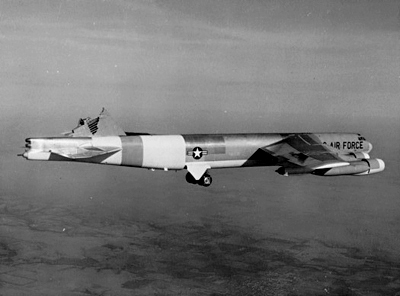
The 1964 Savage Mountain B-52 crash was a U.S. military nuclear accident in which a Cold War bomber's vertical stabilizer broke off in winter storm turbulence. The two nuclear bombs being ferried were found "relatively intact in the middle of the wreckage", according to a later U.S. Department of Defense summary, and after Fort Meade's 28th Ordnance Detachment secured them, the bombs were removed two days later to the Cumberland Municipal Airport.
Accident description
The B-52D was returning to Georgia from Massachusetts after an earlier Chrome Dome airborne alert to Europe. It carried two B53-0 Y1 nuclear bombs in ferry configuration, with no electrical connections between the bombs and the aircraft. Near Meyersdale, Pennsylvania, on a path east of Salisbury, Pennsylvania; and after altitude changes to evade severe turbulence; the vertical stabilizer broke off. The aircraft was left uncontrollable as a result; the pilot ordered the crew to bail out, and the aircraft crashed. The wreckage of the aircraft was found on the Stonewall Green farm. Today, the crash site is in a private meadow of Elbow Mountain within Savage River State Forest, along the public Savage Mountain Trail just north of the Pine Swamp Road crossing.
While the official DOD description of the accident says that the two weapons "were relatively intact in the approximate center of the wreckage area," an account from William L. Stevens, a safety engineer at Sandia National Laboratories, says that "both bombs broke apart on impact." Stevens further said that an Explosive Ordnance Demolition team from the military was planning to remove the bombs quickly "to reduce media coverage", under the protest of Sandia engineers who felt it was unsafe to do so until the state of the bombs was fully known. The U.S. Atomic Energy Commission eventually developed a "carefully considered process" for removing the bomb pieces to an AEC facility.
Later accounts by residents, and at least one local media accounts from the time, indicate that the bombs were removed from the site using construction equipment supplied from local businesses to the municipal airport.
Crew
As the only crew member who did not eject, the radar bombardier died in the crash and was not located until more than 24 hours afterward. The navigator and tail gunner died of exposure in the snow. The navigator's frozen body was found two days after the accident, 6 mi from the crash and 3 mi away from where his orange parachute was found high in a tree near Poplar Lick Run. Unable to disentangle his chute he released the Koch fittings and fell over 30 ft through the tree, suffering injuries from the branches; his survival tent and other gear remained in the tree. He then attempted to find shelter and "meandered", eventually falling down a steep slope in the dark into a river basin. After landing in the "Dye Factory field", the tail gunner trekked in the dark with a broken leg and other injuries over 100 yd to the embankment of Casselman River – in which his legs were frozen when his body was found five days later, 800 yd from a Salisbury street light.
The pilot parachuted onto Maryland's Meadow Mountain ridge near the Mason–Dixon line and, after being driven to the Tomlinson Inn on the National Road in Grantsville, notified the United States Air Force of the crash. The co-pilot landed near New Germany Road, remained where he landed, and stayed "cozy warm" until rescued.
References
References
- Cenciotti, David. (2021-01-11). "That Time A B-52H Stratofortress Bomber Lost Its Tail Over New Mexico But Managed To Land 6 Hours Later.".
- Sandia National Laboratories. (December 14, 1978). "Summary of Nuclear Weapon/Material Accidents and Related EOD Activities". U.S. Department of Energy (via Government Attic).
- Shriver, Bucky. (19 February 2021). "Buzz One Four & the Nuclear-armed B 52 Crash of 1964".
- Johnson, Richard Riley. (1995). "Twenty Five Milk Runs (And a few others): To Hell's Angels and back". Trafford Publishing.
- Baugher, Joseph F.. "1955 USAF Serial Numbers".
- Sagan, Scott Douglas. (1995). "The Limits of Safety: Organizations, Accidents, and Nuclear Weapons". Princeton University Press.
- "Narrative Summaries of Accidents Involving U.S. Nuclear Weapons: 1950–1980". [[United States Department of Defense]].
- Dearth, Dan. (10 November 2010). "Soldier secured nukes at B-52 crash in 1964". [[Herald News]].
- Stevens, William. (2001). "The Origins and Evolution of S2C at Sandia National Laboratories: 1949 to 1996". Sandia National Laboratories.
- Whetzel, Dan. (2002). "A Night to Remember". Mountain Discoveries.
- "Accident Description". AviationSafetyNetwork.net.
- Wood, David. "B-52 Crash". Newhouse News Service.
- (14 January 1964). "Crew Bails Out As Jet Crashes". Playground Daily News.
- Dreisbach, Mike. (11 November 2009). "visitor information".
- (14 January 1964). "Secrecy Still Shrouds Plane Crash". Utica Observer-Dispatch.
- Beitler, Stu. (6 August 2009). "Cumberland, MD (near) Bomber Crash, Jan 1964".
This article was imported from Wikipedia and is available under the Creative Commons Attribution-ShareAlike 4.0 License. Content has been adapted to SurfDoc format. Original contributors can be found on the article history page.
Ask Mako anything about 1964 Savage Mountain B-52 crash — get instant answers, deeper analysis, and related topics.
Research with MakoFree with your Surf account
Create a free account to save articles, ask Mako questions, and organize your research.
Sign up freeThis content may have been generated or modified by AI. CloudSurf Software LLC is not responsible for the accuracy, completeness, or reliability of AI-generated content. Always verify important information from primary sources.
Report