From Surf Wiki (app.surf) — the open knowledge base
1956 Summer Olympics medal table
| Field | Value | |
|---|---|---|
| name | 1956 Summer Olympics medals | |
| location | {{unbulleted list | |
| image | File:Ágnes Keleti 1960 (cropped).jpg | |
| caption | Ágnes Keleti of Hungary was the most successful competitor at the games, winning four gold medals and two silver medals in women's gymnastics. | |
| alt | Gymnast Ágnes Keleti assisting another gymnast | |
| award2_type | Most total medals | |
| award2_winner | URS | |
| award1_type | Most gold medals | |
| award1_winner | URS | |
| award3_type | Medalling NOCs | |
| award3_winner | 38 | |
| previous | [1952](1952-summer-olympics-medal-table) | |
| main | Olympics medal tables | |
| next | [1960](1960-summer-olympics-medal-table) |
- Melbourne, AUS The 1956 Summer Olympics, officially known as the Games of the XVI Olympiad, and officially branded as Melbourne 1956, were an international multi-sport event held from 22 November to 8 December in Melbourne, Australia, with the equestrian events being held from 10 to 17 June 1956 in Stockholm, Sweden, due to Australian quarantine regulations that required a six-month pre-shipment quarantine on horses. Medals awarded in these cities bore different designs. A total of 3,314 athletes representing 72 National Olympic Committees (NOCs) participated, which was a record for the most NOCs at a single Olympics at the time. This figure included first-time entrants Cambodia, Ethiopia, Fiji, Kenya, Liberia, Malaya, North Borneo, and Uganda. The games featured 151 events in 17 sports across 23 disciplines.
The 1956 Summer Games were the first to be held in the Southern Hemisphere and Oceania, and the first games to hold events in two different countries, continents, and seasons. Multiple boycotts were enacted by nine teams against the games, though five of them competed in the equestrian events. Egypt, Iraq, and Lebanon boycotted the games in response to the Suez Crisis. Cambodia, Liechtenstein, the Netherlands, Spain, and Switzerland boycotted the games in response to the Hungarian Uprising, when the Soviet Union invaded the country. China continued its boycott of the games, which began in 1952 and lasted until 1980, over the participation of Taiwan.
Athletes representing 38 NOCs received at least one medal, and 25 NOCs won at least one gold medal. The Soviet Union won the most gold medals and the most overall medals, with 37 and 98 respectively. and Bulgaria won their first Olympic gold medals. The Bahamas, Iceland, and Pakistan won their first Olympic medals.
Gymnast Ágnes Keleti of Hungary was the most successful competitor of the games, winning four gold medals and two silver medals for a total of six medals. Gymnast Larisa Latynina of the Soviet Union tied with Keleti for the most gold and overall medals for a competitor at the games, winning six medals with four gold medals, one silver medal, and one bronze medal.
Medal table
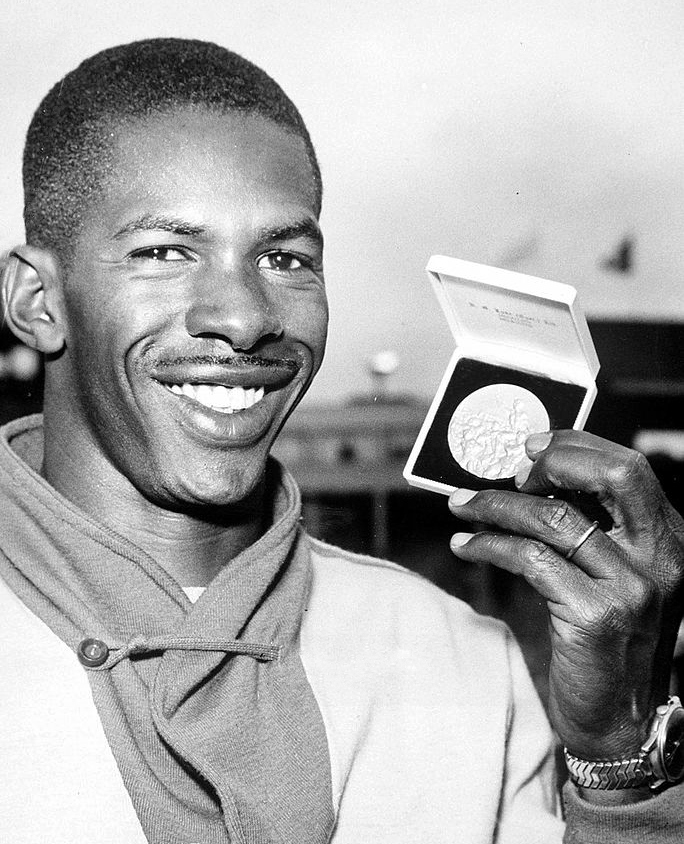
The medal table is based on information provided by the International Olympic Committee (IOC) and is consistent with IOC conventional sorting in its published medal tables. The table uses the Olympic medal table sorting method. By default, the table is ordered by the number of gold medals the athletes from a nation have won. The number of silver medals is considered next, followed by the number of bronze medals. Two bronze medals were awarded in each boxing event to the losing semi-finalists, instead of the competitors fighting in a third place tiebreaker.
In the gymnastics events, there were eight ties for medals. Two gold medals and no silver medal were awarded in the men's vault and women's floor exercise due to a first-place tie in both events. No bronze medals were awarded in the men's floor exercise and women's balance beam due to a second-place tie in both events, with the former being a three-way tie and all second-place athletes awarded a silver medal. Two bronze medals were awarded in the men's parallel bars, men's rings, women's team portable apparatus, and women's vault due to third-place ties in these events. In athletics, two silver medals and no bronze medals were awarded in the women's high jump due to a second-place tie. Two bronze medals were awarded in the men's 400 metres due to a third-place tie.
Notes
References
Citations
Bibliography
References
- (24 February 2020). "Equestrian at the Olympics: 1948-1956". [[International Federation for Equestrian Sports]].
- "Melbourne 1956 Olympic Medals - Design, History & Photos". [[International Olympic Committee]].
- (27 April 1956). "72 Nations Now On Olympic List". [[The Des Moines Register]].
- (26 July 2021). "NOC Cambodia calls for support back home". [[Olympic Council of Asia]].
- "Ethiopia - Profile". [[International Olympic Committee]].
- (11 August 2016). "Fiji Wins Its First Medal: a Gold in Rugby". [[The New York Times]].
- (1 August 2024). "Africa's fastest man, Omanyala carries Kenya's hopes for first Olympic gold in 100 meters". [[Voice of America]].
- (30 July 2021). "Liberia's athletes came to perform at the Tokyo Olympics, beginning with designer outfits". [[Australian Broadcasting Corporation]].
- "Malaya Overview". [[Olympedia]].
- (10 April 1956). "North Borneo in Olympic Games". [[Staten Island Advance]].
- (2 September 2016). "Untold story of Uganda's first Olympic gold medal". [[Daily Monitor]].
- (20 June 2024). "Factsheet The Games of the Olympiad". [[International Olympic Committee]].
- (15 June 2012). "1956: Melbourne, Australia". [[Canadian Broadcasting Corporation]].
- "Melbourne 1956 Summer Olympics - Athletes Medals & Results". [[International Olympic Committee]].
- (6 October 2009). "The A to Z of the Eisenhower Era". [[Rowman & Littlefield.
- Büchel, Donat. (31 December 2011). "Kalter Krieg". Historisches Lexikon.
- (23 March 2020). "Past boycotts and cancellations". [[Reuters]].
- (10 December 2021). "What, exactly, is a 'diplomatic boycott' of the Beijing Olympics?".
- (2023-02-03). "Olympic bans and boycotts go back a century".
- (28 May 2024). "Iran's first Olympics gold medal winner Habibi turns 93". [[Tehran Times]].
- (13 July 2009). "Former wrestler Stanchev dies". [[ESPN]].
- "Bahamas Overview". [[Olympedia]].
- (15 August 2008). "Great Moments In Icelandic History: Iceland gets its first Olympic Medal". [[The Reykjavík Grapevine]].
- "1956 Olympic Silver Medalist and 1958 Asian Gold Medalist Qazi Musarrat Passes Away". [[Asian Hockey Federation]].
- "1956 Melbourne Summer Games". [[Sports Reference]].
- "Adhemar Ferreira Da Silva". [[International Olympic Committee]].
- (7 August 2021). "US finds its own way to top the medal table at Tokyo Olympics". [[The Guardian]].
- (18 August 2016). "How does the Olympic medal table work?".
- (1 August 2021). "Explained: Two bronze medals are awarded in the Olympics boxing competition". [[International Olympic Committee]].
- "Artistic Gymnastics at the 1956 Summer Olympics". [[Olympedia]].
- "Athletics at the 1956 Summer Olympics". [[Olympedia]].
- "Melbourne 1956 Olympic Medal Table - Gold, Silver & Bronze". [[International Olympic Committee]].
- (18 June 1956). "German Riders Take Olympic Team Title". [[Chicago Tribune]].
- (8 August 2021). "Why the Olympic Athletes Don't March Behind Their Own Flag at the Closing Ceremony". [[NPR]].
- "Germany Overview". [[Olympedia]].
- (November 2009). "'The Continuation of Politics by Other Means': Britain, the Two Germanys and the Olympic Games, 1949–1972". [[Contemporary European History]].
This article was imported from Wikipedia and is available under the Creative Commons Attribution-ShareAlike 4.0 License. Content has been adapted to SurfDoc format. Original contributors can be found on the article history page.
Ask Mako anything about 1956 Summer Olympics medal table — get instant answers, deeper analysis, and related topics.
Research with MakoFree with your Surf account
Create a free account to save articles, ask Mako questions, and organize your research.
Sign up freeThis content may have been generated or modified by AI. CloudSurf Software LLC is not responsible for the accuracy, completeness, or reliability of AI-generated content. Always verify important information from primary sources.
Report