From Surf Wiki (app.surf) — the open knowledge base
1954 Finnish parliamentary election
General election
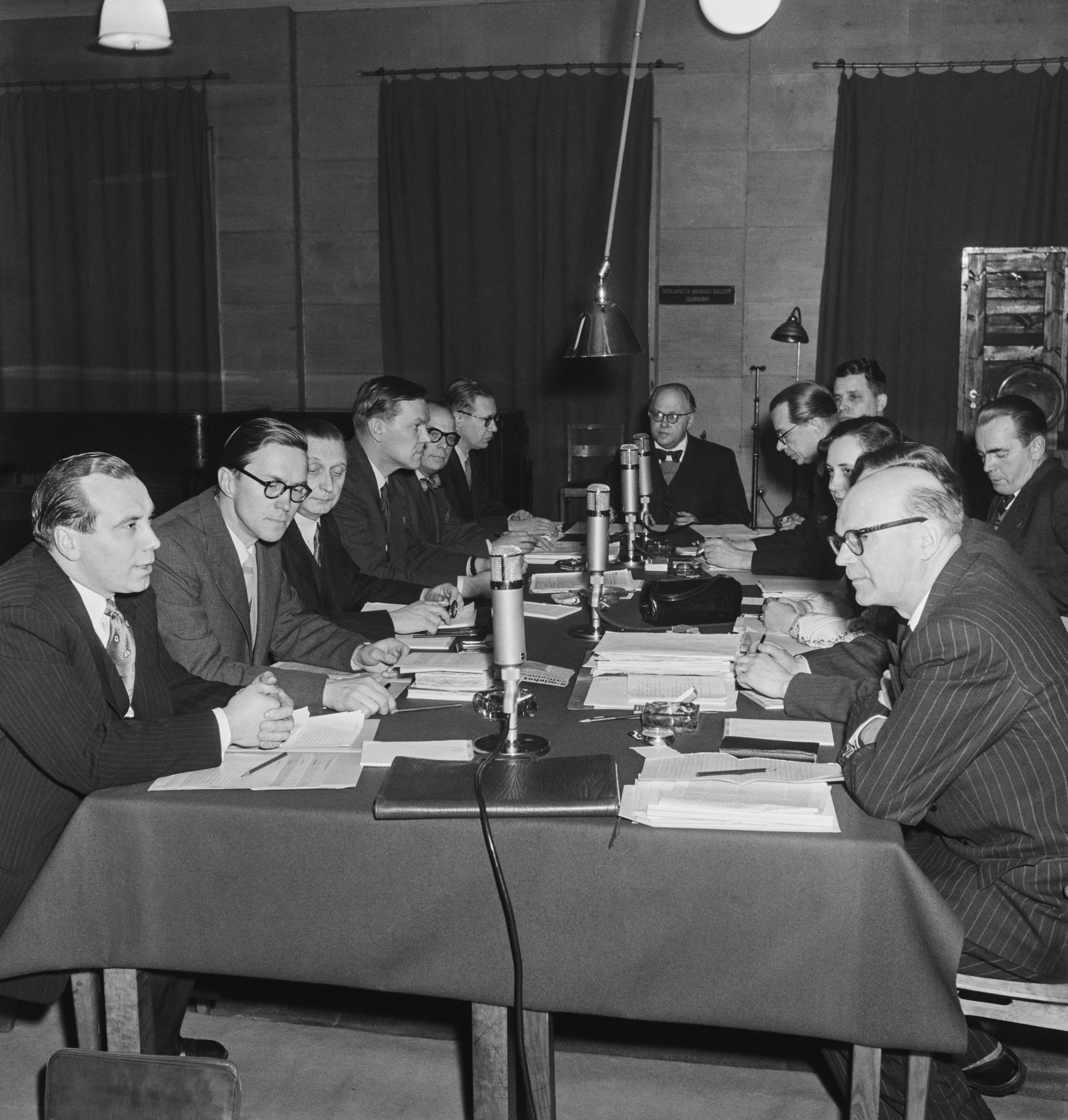
General election
| Field | Value |
|---|---|
| country | Finland |
| flag_year | state-1920 |
| type | parliamentary |
| previous_election | 1951 Finnish parliamentary election |
| previous_year | 1951 |
| next_election | 1958 Finnish parliamentary election |
| next_year | 1958 |
| seats_for_election | All 200 seats in the Parliament of Finland |
| majority_seats | 101 |
| election_date | 7–8 March 1954 |
| image_size | 130x130px |
| image1 | Emil-Skog-1957.jpg |
| leader1 | Emil Skog |
| party1 | Social Democratic Party of Finland |
| last_election1 | 26.52%, 53 seats |
| seats1 | **54** |
| popular_vote1 | **527,094** |
| percentage1 | **26.25%** |
| seat_change1 | 1 |
| swing1 | 0.27pp |
| image2 | Vieno Johannes Sukselainen.jpg |
| leader2 | V. J. Sukselainen |
| party2 | Agrarian League (Finland) |
| last_election2 | 23.26%, 51 seats |
| seats2 | 53 |
| popular_vote2 | 483,958 |
| percentage2 | 24.10% |
| seat_change2 | 2 |
| swing2 | 0.84pp |
| image3 | Kulo (cropped).JPG |
| leader3 | Kusti Kulo |
| party3 | SKDL |
| last_election3 | 21.58%, 43 seats |
| seats3 | 43 |
| popular_vote3 | 433,251 |
| percentage3 | 21.57% |
| seat_change3 | |
| swing3 | 0.01pp |
| image4 | Arvo Salminen (cropped).jpg |
| leader4 | Arvo Salminen |
| party4 | National Coalition Party |
| last_election4 | 14.57%, 28 seats |
| seats4 | 24 |
| popular_vote4 | 257,025 |
| percentage4 | 12.80% |
| seat_change4 | 4 |
| swing4 | 1.77pp |
| image5 | Eino Saari in 1961 (cropped).jpg |
| leader5 | Eino Saari |
| party5 | People's |
| last_election5 | 5.68%, 10 seats |
| seats5 | 13 |
| popular_vote5 | 158,323 |
| percentage5 | 7.88% |
| seat_change5 | 3 |
| swing5 | 2.20pp |
| image6 | Ralf Törngren1.jpg |
| leader6 | Ralf Törngren |
| party6 | Swedish People's Party of Finland |
| last_election6 | 7.27%, 14 seats |
| seats6 | 12 |
| seat_change6 | 2 |
| popular_vote6 | 135,768 |
| percentage6 | 6.76% |
| swing6 | 0.51pp |
| party7 | Åland Coalition |
| last_election7 | 0.31%, 1 seat |
| seats7 | 1 |
| seat_change7 | |
| popular_vote7 | 4,651 |
| percentage7 | 0.23% |
| swing7 | 0.08pp |
| before_election | Sakari Tuomioja |
| title | Prime Minister |
| before_party | Liberal League |
| posttitle | Prime Minister after election |
| after_election | Ralf Törngren |
| after_party | Swedish People's Party of Finland |
Parliamentary elections were held in Finland on 7 and 8 March 1954.
Background
In June 1953, Prime Minister Urho Kekkonen had presented a simultaneous deflationary program, which tried to lower wages, prices and public expenditures to the level of the export industry's profitability. Among other proposals, the deflationary program aimed to remove the Finnish parents' family allowances for their first children, reduce income, sales and corporate taxes, cut the interest rate, and reduce wages by 10%. Finance Minister Juho Niukkanen (Agrarian League) presented an austerity budget to Parliament in September 1953, which proposed cutting all major government expenditures by 15%. The Social Democratic Party and People's Party of Finland opposed the austerity budget. Since Parliament refused to approve the government's planned changes to the state-subsidized apartment buildings' and other residences' construction, Kekkonen resigned in November 1953. Despite President Juho Kusti Paasikivi's urgings (in his opinion, Kekkonen was a valuable prime minister because he managed Finnish-Soviet relations skilfully), the Social Democrats refused to allow Kekkonen to continue as prime minister.
Sakari Tuomioja, a member of the Liberal League who had earlier served in the government, for example as foreign minister, and had been governor of the Bank of Finland since 1945, formed a centre-right caretaker government. Tuomioja's government wanted to keep rationing wages, but wanted to dismantle other types of rationing. Coffee was released from rationing in March 1954. Finnish exports grew, and the government's expenditures increased by over 20% compared to Kekkonen's fourth government's proposal. Various right-wingers and Social Democrats preferred early elections to boost their number of deputies, and to prevent Kekkonen from becoming prime minister again. Given President Paasikivi's advanced age (83 years) and close relations with Kekkonen, the latter could well succeed Paasikivi as president, should Paasikivi suddenly die or resign.
The Social Democrats went to the election campaign trail with the lofty slogan: "Kekkonen Kampinkadulle" ( Kekkonen Back to Camp Street (Kampinkatu), his home of 25 years before his premiership & which was subsequently renamed after him). To their surprise and to that of right-wingers, the Agrarians gained two seats, while the Social Democrats, National Coalition Party and Swedish People's Party suffered a net loss of four seats. Ralf Törngren of the Swedish People's Party formed a centre-left government in May 1954, with Kekkonen as foreign minister. The Central Organisation of Finnish Trade Unions favoured the lowering of living costs, through subsidies, to the start level of the economic stabilization period. The Social Democrats and Agrarians agreed and, dissatisfied with Prime Minister Törngren's economic compromises, caused Törngren to resign and Kekkonen to become prime minister for the fifth time in October 1954.
Results
By electoral district
| Electoral district | Total | ||||||||||||||||||||||||||||||||||||||||||||||||||||||||||||||
|---|---|---|---|---|---|---|---|---|---|---|---|---|---|---|---|---|---|---|---|---|---|---|---|---|---|---|---|---|---|---|---|---|---|---|---|---|---|---|---|---|---|---|---|---|---|---|---|---|---|---|---|---|---|---|---|---|---|---|---|---|---|---|---|
| seats | Seats won | SDP | ML | SKDL | Kok | SK | RKP | ÅS | Social Democratic Party of Finland}};" | Agrarian League (Finland)}};" | Finnish People's Democratic League}};" | National Coalition Party}};" | National Progressive Party (Finland)}};" | Swedish People's Party of Finland}};" | Åland Coalition}};" | Åland | 1 | Central Finland | 12 | Häme | 14 | Helsinki | 19 | Kymi | 15 | Lapland | 9 | North Karelia | 11 | North Savo | 13 | North Vaasa | 8 | Oulu | 18 | Pirkanmaa | 13 | Satakunta | 14 | South Savo | 12 | South Vaasa | 10 | Uusimaa | 15 | Varsinais-Suomi | 16 | Total | 200 | 54 | 53 | 43 | 24 | 13 | 12 | 1 | |||||||
| 1 | |||||||||||||||||||||||||||||||||||||||||||||||||||||||||||||||
| 4 | 4 | 2 | 1 | 1 | |||||||||||||||||||||||||||||||||||||||||||||||||||||||||||
| 5 | 3 | 3 | 2 | 1 | |||||||||||||||||||||||||||||||||||||||||||||||||||||||||||
| 6 | 4 | 3 | 3 | 3 | |||||||||||||||||||||||||||||||||||||||||||||||||||||||||||
| 6 | 4 | 2 | 2 | 1 | |||||||||||||||||||||||||||||||||||||||||||||||||||||||||||
| 1 | 4 | 3 | 1 | ||||||||||||||||||||||||||||||||||||||||||||||||||||||||||||
| 4 | 4 | 2 | 1 | ||||||||||||||||||||||||||||||||||||||||||||||||||||||||||||
| 2 | 5 | 4 | 1 | 1 | |||||||||||||||||||||||||||||||||||||||||||||||||||||||||||
| 1 | 3 | 1 | 1 | 2 | |||||||||||||||||||||||||||||||||||||||||||||||||||||||||||
| 2 | 8 | 6 | 1 | 1 | |||||||||||||||||||||||||||||||||||||||||||||||||||||||||||
| 5 | 1 | 4 | 2 | 1 | |||||||||||||||||||||||||||||||||||||||||||||||||||||||||||
| 4 | 4 | 3 | 3 | ||||||||||||||||||||||||||||||||||||||||||||||||||||||||||||
| 4 | 5 | 1 | 1 | 1 | |||||||||||||||||||||||||||||||||||||||||||||||||||||||||||
| 1 | 3 | 1 | 2 | 3 | |||||||||||||||||||||||||||||||||||||||||||||||||||||||||||
| 5 | 2 | 3 | 1 | 1 | 3 | ||||||||||||||||||||||||||||||||||||||||||||||||||||||||||
| 4 | 3 | 4 | 2 | 2 | 1 | ||||||||||||||||||||||||||||||||||||||||||||||||||||||||||
| Source: Statistics Finland |
References
References
- [[Dieter Nohlen]] & Philip Stöver (2010) ''Elections in Europe: A data handbook'', p606 {{ISBN. 978-3-8329-5609-7
- Seppo Zetterberg et al., eds., A Small Giant of the Finnish History / Suomen historian pikkujättiläinen, Helsinki: WSOY, 2003, pages 786, 811, 817-821
- "SUOMEN PANKKI - Historia".
- [https://web.archive.org/web/20071002064254/http://pxweb2.stat.fi/sahkoiset_julkaisut/vuosikirja2004_suppea/excel/vaali_02.xls 595. Eduskuntavaalit 1927–2003] (Tilastokeskus 2004)
- (1954). "Suomen virallinen tilasto XXIX A:24: Eduskuntavaalit vuonna 1954". Statistics Finland.
This article was imported from Wikipedia and is available under the Creative Commons Attribution-ShareAlike 4.0 License. Content has been adapted to SurfDoc format. Original contributors can be found on the article history page.
Ask Mako anything about 1954 Finnish parliamentary election — get instant answers, deeper analysis, and related topics.
Research with MakoFree with your Surf account
Create a free account to save articles, ask Mako questions, and organize your research.
Sign up freeThis content may have been generated or modified by AI. CloudSurf Software LLC is not responsible for the accuracy, completeness, or reliability of AI-generated content. Always verify important information from primary sources.
Report