From Surf Wiki (app.surf) — the open knowledge base
1953 London to Christchurch air race
Last Great Air Race
Last Great Air Race
The 1953 London to Christchurch air race, the "Last Great Air Race", was about 12000 mi long, from London Airport (now London Heathrow) to Christchurch International Airport in New Zealand, and took place in October 1953 after Christchurch declared their airport as international in 1950. It was intended to mark the centenary of Christchurch, also in 1950, and 50 years since the Wright brothers' first powered flight in 1903.
As part of the festivities, Air New Zealand sponsored a beauty pageant on October 19, 1953. The winner was Patsy Lloyd, followed by 1st runner up Patricia Boswell (Cantwell) and Shirley Cutler.
Race description
.jpg)


Canterbury International Air Race Council was formed in Christchurch in 1948 to plan the race, together with the British Royal Aero Club. It was divided into an outright Speed Section, and a Handicap Section for commercial-type transport aircraft. Each plane was allowed to select its own route, as long as it was generally south-east, and any necessary intermediate stops. Several planes dropped out before it began; this left five military turbojet bombers and three propeller-driven transport planes.
The race started on Thursday 8 October at 16:30 GMT. The time in New Zealand was 12 hours ahead, as British Summer Time had ended four days earlier, and New Zealand didn't use daylight saving time then. The three transport planes took off at five-minute intervals. The military jets followed, again at five-minute intervals, starting at 17:35; they were delayed by an hour, to avoid a photo finish in the dark about 24 hours later. Each plane was allowed 168 hours of elapsed time from the final plane's takeoff.
The planes flew direct from London to the Middle East, except the DC-6A (via Italy) and the Hastings (via Greece). After that, most of the routes were broadly similar, flying in almost a straight line via Ceylon, Cocos (Keeling) Islands and southern Australia. Canberra number "1" even managed to fly past Cocos without stopping. However, the DC-6A flew further north, via Pakistan (West), Burma, Indonesia and northern Australia. A great circle route would have been a few hundred miles shorter, over Finland and Japan.
The prizes for each Section were the same: 1st £10,000; 2nd £3000; 3rd £1000; 4th £500. These are New Zealand pounds, which matched UK pounds at the time. The Handicap Section, rather than a race, was intended to be a trial based on a formula aimed at rewarding commercial efficiency over a long-haul route.
The Speed Section was won by a Royal Air Force English Electric Canberra PR3 flown by Flight Lieutenant Roland (Monty) Burton and navigated by Flight Lieutenant Don Gannon. The plane touched down at Christchurch (Harewood) Airport at 05:37 local time during a heavy storm, 40 minutes quicker than its closest rival, after , including 83 minutes on the ground. This record still held in 2025, and is equivalent to 494 mph around a great circle separation of 11791 mi. The Harewood Gold Cup was awarded to the winners, and the prize of £10,000 was paid to the RAF Benevolent Fund. Second in the Speed Section was Squadron Leader Peter Raw of No. 1 Long Range Flight RAAF in an Australian-built Canberra. The distance, by the route followed, was quoted as 12270 mi, so that the speed in the air for all five jets was 544–548 mph, with an average overall speed (including intermediate stops) of 402 mph.
The Canberras were all fitted with extra fuel tanks in the bomb bays. To deal with the extra weight, the two PR3 planes' engines were tweaked to give more thrust, and larger main-wheel hubs and brakes fitted. Any wingtip fuel tanks or pods seen on the Canberras were absent during the race. The three RAF Canberras were built as photo-reconnaissance planes. The Canberras flew with a pilot and navigator; the RAAF planes also included a co-pilot.
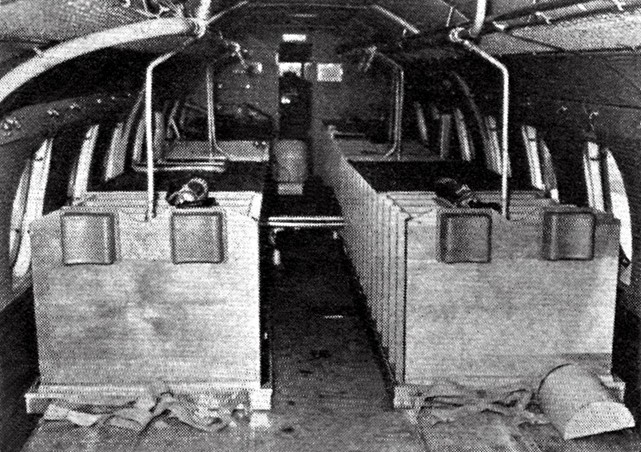
In the transport Handicap Section, a BEA Vickers Viscount finished first, followed by a Douglas DC-6A of KLM Royal Dutch Airlines which was declared the winner on handicap. A Royal New Zealand Air Force Handley Page Hastings also took part. The Viscount was fitted with extra fuel tanks in place of seats, enabling it to fly in five stages, as opposed to eight for the DC-6A; the Hastings had also expected to fly in eight stages. The handicap deductions were well-known before leaving London, meaning the Viscount was almost bound to lose, but BEA and Vickers welcomed the publicity from the race. The DC-6A's adjusted time was 49:57 − 44:30 = 5:27 (this is often misquoted as 37:30, but that was the elapsed time to Darwin).
The Douglas DC-6A, "21", carried 64 passengers, including many Dutch women emigrating to marry or join their husbands. The same passengers left Schiphol (Amsterdam) for London on the day before, on a KLM Douglas DC-6B, PH-TFN "Abel Tasman". The race plane was labelled "DC-6A", built as a dual-purpose or convertible plane, with some seats, and cargo doors. It carried the name "Dr. Ir. M.H. Damme", plus "Trade Wings". Dokter Ingenieur was a Dutch engineer, aviation businessman and politician. DC-6A planes were also called "Liftmaster". A Dutch "bride flight" in July 1952 is sometimes confused with this one.
The Handley Page Hastings, "22", carried cargo for the New Zealand Air Force. After stopping at Athens (Greece), Shaibah (near Basra, Iraq) and Masirah Island (Oman), an engine was ruined by a storm near Ceylon, then the flaps were damaged while landing at Negombo (Ceylon), causing the plane to withdraw from the race. It remained stranded there for ten days. The Hastings has been described as the world's last four-engine tail-wheel transport giant.
The Vickers Viscount, "23", was loaned from the British Ministry of Supply to BEA, with BEA livery applied, and named "RMA Endeavour", for "Royal Mail Aircraft" and Captain James Cook's ship HMS Endeavour. Among the crew was John Profumo, Parliamentary Secretary to the Ministry of Civil Aviation. It made four stops, averaging only 18 minutes each, at Bahrein, Negombo, Cocos and Melbourne (Australia). At Melbourne, after flying non-stop for 3530 mi, it had to be towed from the runway, having run out of fuel. Its lack of passengers and cargo led to it being declared second for this Section, behind the DC-6A. The Viscount was the world's first turboprop-powered airliner.
During the race, the time of arrival and departure of each plane at each airport was logged on a pair of "tally boards", located at the headquarters of Australia's Department of Civil Aviation in Melbourne. The press and public were present to witness the progress. Unfortunately the boards omitted five of the times.
Competitors
| Time (h:min) | Speed (mph, km/h) | (h:min) | Number | Result | Pilot | Operator | Aircraft | Identity | Stops | Elapsed | Ground | Overall | Flying | Note | Speed Section | Handicap Section | ||||
|---|---|---|---|---|---|---|---|---|---|---|---|---|---|---|---|---|---|---|---|---|
| 1 | 4 | Wing Commander Hodges | 540 Squadron Royal Air Force | Canberra PR7 | WH773 | 3 | 35:32 | 13:06 | 345 mph | 546 mph | Bad generator at Perth (12:19) | |||||||||
| 2 | 3 | Flight Lieutenant Furze | 540 Squadron Royal Air Force | Canberra PR3 | WE142 | 4 | 24:35 | 2:02 | 499 mph | 544 mph | Bad starter in Iraq (1:10). | |||||||||
| 3 | 1 | Flight Lieutenant Burton | 540 Squadron Royal Air Force | Canberra PR3 | WE139 | 4 | 23:52 | 1:23 | 514 mph | 545 mph | The "speed" winner | |||||||||
| 4 | 5 | Wing Commander Cuming | No. 1 Long Range Flight Royal Australian Air Force | Canberra B20 | A84-202 | 4 | url=https://trove.nla.gov.au/newspaper/article/96406693?searchTerm=Laverton%20elapsed | title=Last Jet Finishes Air Race | newspaper=The Northern Star (NSW) | date=1953-10-13 | page=5}} Refers to previous day as "today" and "this morning". Tally board final arrival was blank. | 57:47 | 153 mph | 548 mph | Burst tyre at Cocos (55:00) | |||||
| 5 | 2 | Squadron Leader Raw | No. 1 Long Range Flight Royal Australian Air Force | Canberra B20 | A84-201 | 4 | 24:32 | 2:05 | 500 mph | 546 mph | Frozen nose wheel at Woomera (1:26) | |||||||||
| 21 | 1 | Captain Kooper | KLM | Douglas DC-6A | PH-TGA | 7 | 49:57 | 3:03 | 261 mph | 278 mph | 44:30 handicap deduction. | |||||||||
| 22 | _ | Wing Commander Watson | 41 Squadron Royal New Zealand Air Force | Handley Page HP.95 Hastings C3 | NZ5804 | _ | _ | _ | _ | _ | 35:00 handicap deduction. | |||||||||
| 23 | 2 | Captain Baillie | British European Airways | Vickers Viscount 700 | G-AMAV | 4 | 40:42 | 1:12 | 301 mph | 310 mph | No handicap deduction |
Airports
| Country | City | Airport | 1 | 2 | 3 | 4 | 5 | 21 | 22 | 23 |
|---|---|---|---|---|---|---|---|---|---|---|
| UK | London | London | dep. | dep. | dep. | dep. | dep. | dep. | dep. | dep. |
| Italy | Rome | Ciampino | 0:22 | |||||||
| Greece | Athens | Ellinikon | 0:27 | |||||||
| Iraq | Baghdad | Baghdad West Airport | 0:17 | |||||||
| Iraq | Basra | RAF Shaibah | 0:30 | 1:10 | 0:30 | 0:29 | ||||
| Bahrein | Bahrein | Bahrein | 0:12 | 0:15 | 0:15 | |||||
| Oman | Masirah | RAF Masirah | 0:25 | |||||||
| Pakistan (West) | Karachi | Karachi | 0:25 | |||||||
| Ceylon | Colombo | RAF Negombo | 0:17 | 0:30 | end | 0:18 | ||||
| Ceylon | Colombo | Ratmalana | 0:14 | 0:14 | 0:14 | |||||
| Burma | Rangoon | Rangoon | 0:31 | |||||||
| (Indian Ocean) | Cocos (Keeling) | Cocos Island | 0:11 | 0:22 | 55:00 | 0:10 | 0:22 | |||
| Indonesia | Djakarta | Kemayoran | 0:26 | |||||||
| Australia | Perth | Perth | 12:19 | 0:11 | 0:17 | |||||
| Australia | Darwin | Darwin | 0:25 | |||||||
| Australia | Woomera | RAAF Base Woomera | 1:26 | |||||||
| Australia | Brisbane | Eagle Farm | 0:37 | |||||||
| Australia | Melbourne | Essendon | 0:17 | |||||||
| Australia | Melbourne | RAAF Base Laverton | 2:21 | |||||||
| New Zealand | Christchurch | Harewood | arr. | arr. | arr. | arr. | arr. | arr. | arr. |
In popular culture
The drama film Bride Flight was released in 2008.
Notes
References
;Citations ;Bibliography
References
- Bennett, p. 259.
- (October 1953). "Christchurch City Council Archives CCC/ARC/700".
- Bennett, p. 260.
- "When is British Summer Time (BST) in Force?".
- "1953 London to Christchurch Air Race".
- (1953-10-08). "London–Christchurch Air Race Speed Section". The Queensland Times.
- Bennett, p. 261.
- "Great Circle Mapper".
- (2025). "NAA Record Detail". National Aeronautic Association.
- (2006-10-24). "Flight Lieutenant Don Gannon". The Times.
- (2020). "British Military Aviation in 1953".
- (2012). "BAC Canberra PR. 3 WE 139/8369M Museum Accession Number 69/A/695". Royal Air Force Museum.
- (2018-10-02). "The Last Great Air Race: London to Christchurch 1953".
- (1953-10-08). "Air Race a Battle Between Canberras". Kalgoorlie Miner (WA).
- "(untitled)".
- (1953-10-06). "Air Race is Result of Five Years' Planning: Routes Planned". Examiner (Launceston).
- (2025). "Viscount c/n3".
- (1953-10-11). "KLM Racing to Brisbane". Sunday Times (Perth).
- Ballantine, p. 16.
- (2025). "Douglas C-47A Skytrain (DC-3) – BEA – British European Airways".
- (December 1953). "London–Christchurch Air Race".
- (1995). "England–Christchurch (N.Z.) Air Race, 1953". Christchurch Video Camera Club.
- (1997). "1953 London to Christchurch Air Race". Christchurch Video Camera Club.
- (2023-12-13). "The Vickers Viscount That Became an Air Racer".
- (2020-07-16). "Turbine Times: The Viscount and BEA".
- (1953-10-15). "Records Go in Air Race". The Chronicle (Adelaide).
- (November 1953). "The Centenary Air Race, London to Christchurch". American Air Mail Society.
- (1969). "50 This Golden Age of the Flying Dutchman".
- (1953-10-10). "Raw Loses Lead in Air Race". Newcastle Morning Herald and Miners' Advocate (NSW).
- (1953-10-13). "Last Jet Finishes Air Race". The Northern Star (NSW).
- (1953-10-09). "Air Race Canberras Flying at 700 MPH". Lithgow Mercury.
- (1953-10-10). "RAAF and RAF Fight Out Air Race: Handicap Section". The Sydney Morning Herald.
- (1953-10-10). "Fierce Contest in Air Race: Progress of Planes in Race". The Advertiser (Adelaide, SA).
- (1953-10-12). "'Flying Dutchman' Wins Transport Section". Warwick Daily News (Qld).
- (1953-10-12). "Jet Missed Race Because of 1000/1 Chance". The Daily News (Perth).
- "Bride Flight". IMDb.
This article was imported from Wikipedia and is available under the Creative Commons Attribution-ShareAlike 4.0 License. Content has been adapted to SurfDoc format. Original contributors can be found on the article history page.
Ask Mako anything about 1953 London to Christchurch air race — get instant answers, deeper analysis, and related topics.
Research with MakoFree with your Surf account
Create a free account to save articles, ask Mako questions, and organize your research.
Sign up freeThis content may have been generated or modified by AI. CloudSurf Software LLC is not responsible for the accuracy, completeness, or reliability of AI-generated content. Always verify important information from primary sources.
Report