From Surf Wiki (app.surf) — the open knowledge base
1950 FIFA World Cup qualification
Football tournament
Football tournament
| Field | Value |
|---|---|
| tourney_name | 1950 FIFA World Cup Qualification |
| dates | 2 June 1949 – 15 April 1950 |
| num_teams | 34 |
| confederations | 3 |
| matches | 26 |
| goals | 121 |
| top_scorer | ENG Jack Rowley |
| MEX Horacio Casarín | |
| MEX Luis de la Fuente | |
| YUG Željko Čajkovski | |
| (4 goals each) | |
| prevseason | [1938](1938-fifa-world-cup-qualification) |
| nextseason | [1954](1954-fifa-world-cup-qualification) |
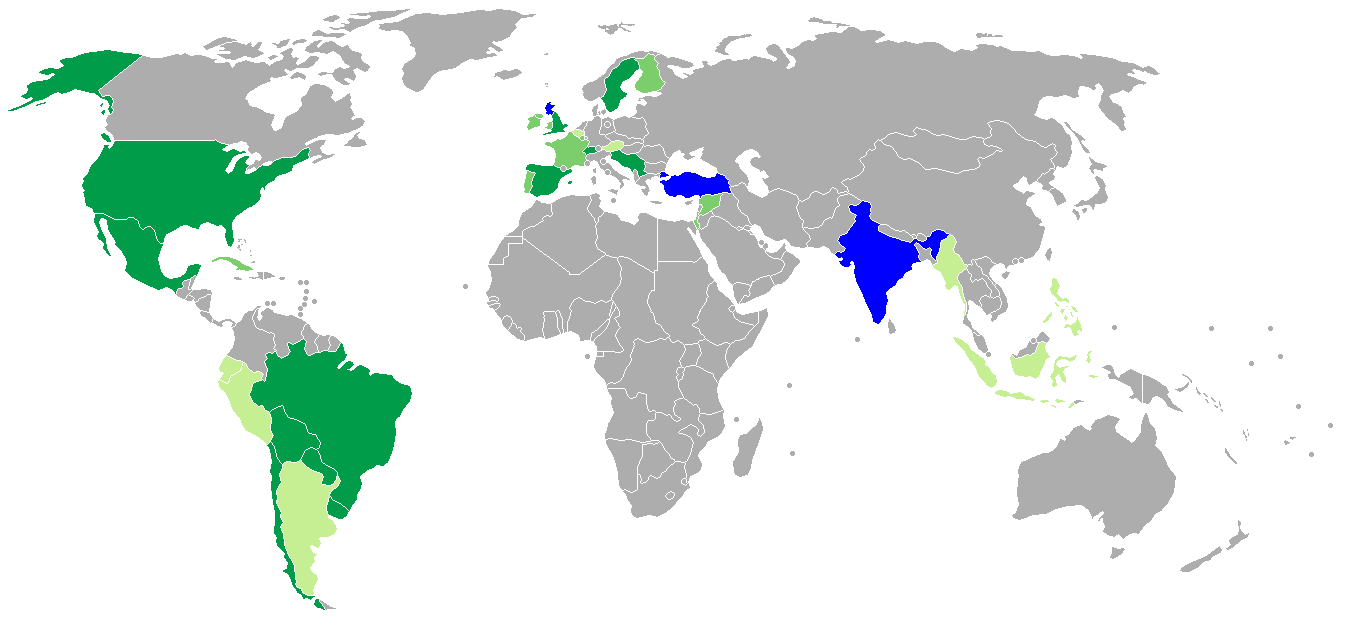
MEX Horacio Casarín MEX Luis de la Fuente YUG Željko Čajkovski (4 goals each) A total of 34 teams entered the qualification rounds of the 1950 FIFA World Cup, competing for a total of 16 spots in the final tournament. Brazil, as the hosts, and Italy, as the defending champions, qualified automatically, leaving 14 spots open for competition.
The remaining 32 teams were divided into 10 groups, based on geographical considerations, as follows:
- Groups 1 to 6 – Europe: 7 places, contested by 18 teams (including Israel and Syria).
- Groups 7 to 9 – The Americas: 6 places, contested by 10 teams.
- Group 10 – Asia: 1 place, contested by 4 teams. However, due to the withdrawals of India, Scotland and Turkey after qualifying, only 13 teams actually competed in the final tournament.
A total of 19 teams played at least one qualifying match. A total of 26 qualifying matches were played, and 121 goals were scored (an average of 4.65 per match).
Listed below are the dates and results of the qualification rounds.
Groups
The 10 groups had different rules, as follows:
- Group 1 had 4 teams. The teams played against each other once. The group winner and runner-up would qualify.
- Groups 2, 3 and 4 had 3 teams each. The strongest team of each group was seeded. There would be two rounds of play:
- First Round: The seeded team received a bye and advanced to the final round directly. The 2 unseeded teams played against each other on a home-and-away basis. The winner would advance to the final round.
- Final Round: The seeded team played against the winner of the First Round on a home-and-away basis. The winner would qualify.
- Group 5 had 3 teams. The teams played against each other on a home-and-away basis. The group winner would qualify.
- Group 6 had 2 teams. The teams played against each other on a home-and-away basis. The group winner would qualify.
- Group 7 had 3 teams. The group winner and runner-up would qualify.
- Group 8 had 4 teams. The group winner and runner-up would qualify.
- Group 9 had 3 teams. The teams played against each other twice. The group winner and runner-up would qualify.
- Group 10 had 4 teams. The group winner would qualify.
Group 1
Waddell Steel Reilly Mason
Milburn
Linwood
Froggatt Mortensen Pearson Brennan
England qualified. Scotland also qualified, but declined to participate.
Group 2
First round
Eken Kücükandonyadis Keskin Kilic
Syria withdrew after the first match, and the remaining match was not played.
Turkey advanced to the Final Round.
Final round
Austria withdrew, so Turkey qualified automatically. But Turkey later also withdrew, and FIFA offered the place to Portugal, the runner-up of Group 6, but they declined. FIFA decided not to allow anyone else to qualify, leaving the World Cup two teams short.
Group 3
First round
Senčar Že. Čajkovski Bobek
Bobek Zl. Čajkovski Že. Čajkovski
Yugoslavia advanced to the Final Round.
Final round
France 2–2 Yugoslavia on aggregate, and a play-off on neutral ground was played to decide who would qualify.
Že. Čajkovski Luciano
Yugoslavia qualified while France were also offered a place by FIFA. France initially accepted, but later declined.
Group 4
First round
Fatton Ballaman Antenen Reuter
Kremer Friedländer Fatton
Switzerland advanced to the Final Round.
Final round
Belgium withdrew, so Switzerland qualified automatically.
Group 5
Jeppson Liedholm
Martin
Rydell Palmér Jakobsson
Sweden qualified. Finland withdrew before the group was completed. Ireland (FAI) were subsequently invited to enter competition but declined the opportunity because of travelling costs.
Sweden beat Finland 8–1 on 2 October 1949 in Malmö. However, FIFA's website does not include this match in the list of matches or in the group standings. RSSSF's website lists the match with the note "Sweden played B-team", and does not provide group standings.
Group 6
Basora Panizo Molowny
Correia Gaínza
Spain qualified. Portugal were also invited to take part but they declined.
Group 7
Argentina withdrew, so Bolivia and Chile qualified automatically.
Group 8
Ecuador and Peru withdrew, so Uruguay and Paraguay qualified automatically.
Group 9
Luna de la Fuente Septién
Casarín
Casarín de la Fuente Ochoa Wattman
Souza Matevich Wallace Veiga
Flores
Mexico and the United States qualified.
Group 10
Burma, Indonesia and the Philippines all withdrew before the draw, so India qualified automatically. But India later also withdrew "because of the expense of travelling such a long way to play," and the AIFF wanted to concentrate on the 1952 Olympics. Although according to some reports, it was caused by a FIFA ruling that players were not allowed to play barefoot. FIFA decided not to invite anyone else, leaving the World Cup three teams short.
Qualified teams

| Team | Finals appearance | Streak | Last appearance |
|---|---|---|---|
| 2nd | 1 | [1930](1930-fifa-world-cup) | |
| **(H)** | 4th | 4 | [1938](1938-fifa-world-cup) |
| 2nd | 1 | [1930](1930-fifa-world-cup) | |
| 1st | 1 | — | |
| 1st | 1 | — | |
| **(C)** | 3rd | 3 | [1938](1938-fifa-world-cup) |
| 2nd | 1 | [1930](1930-fifa-world-cup) | |
| 2nd | 1 | [1930](1930-fifa-world-cup) | |
| 2nd | 1 | [1934](1934-fifa-world-cup) | |
| 1st | 1 | — | |
| 3rd | 3 | [1938](1938-fifa-world-cup) | |
| 3rd | 3 | [1938](1938-fifa-world-cup) | |
| 1st | 1 | — | |
| 3rd | 1 | [1934](1934-fifa-world-cup) | |
| 2nd | 1 | [1930](1930-fifa-world-cup) | |
| 2nd | 1 | [1930](1930-fifa-world-cup) |
- , and withdrew after qualifying.
- (H) – qualified automatically as hosts
- (C) – qualified automatically as defending champions
Goalscorers
;4 goals
- ENG Jack Rowley
- MEX Horacio Casarín
- MEX Luis de la Fuente
- YUG Željko Čajkovski
;3 goals
- ENG Jackie Milburn
- ENG Stan Mortensen
- IRE Sammy Smyth
- IRL Con Martin
- SCO Henry Morris
- SPA Telmo Zarra
- SWE Karl-Erik Palmér
- SUI Jacques Fatton
- TUR Fahrettin Cansever
- YUG Stjepan Bobek
- YUG Milutin Pajević
;2 goals
- ENG Stan Pearson
- FRA Henri Baillot
- ISR Yehoshua Glazer
- MEX Antonio Flores
- MEX Luis Luna
- MEX José Naranjo
- SCO William Waddell
- SUI René Maillard
- USA Pete Matevich
- USA John Souza
- USA Frank Wallace
- YUG Prvoslav Mihajlović
- YUG Marko Valok
;1 goal
- CUB Jacinto Barquín
- CUB José Gómez
- CUB Santiago Veiga
- ENG Roy Bentley
- ENG Jack Froggatt
- FIN Jorma Vaihela
- FRA Jean Luciano
- FRA Marius Walter
- IRE Bobby Brennan
- IRL Peter Farrell
- IRL Johnny Gavin
- IRL Davy Walsh
- LUX Jim Kremer
- LUX Armand Müller
- LUX Michel Reuter
- LUX Camille Wagner
- MEX Mario Ochoa
- MEX Héctor Ortiz
- MEX Carlos Septién
- POR Fernando Cabrita
- POR António Jesus Correia
- POR José Travassos
- SCO Alec Linwood
- SCO Jimmy Mason
- SCO John McPhail
- SCO Lawrie Reilly
- SCO Billy Steel
- SPA Estanislau Basora
- SPA Agustín Gaínza
- SPA Luis Molowny
- SPA José Luis Panizo
- SWE Sune Anderson
- SWE Hasse Jeppson
- SWE Nils Liedholm
- SUI Kiki Antenen
- SUI Robert Ballaman
- SUI Hans-Peter Friedländer
- USA Walter Bahr
- USA Ben Wattman
- TUR Bülent Eken
- TUR Erol Keskin
- TUR Gündüz Kılıç
- TUR Lefter Kücükandonyadis
- WAL Mal Griffiths
- YUG Zlatko Čajkovski
- YUG Božidar Senčar
Notes
- At the start of 1950 there were, in effect, two Ireland teams, chosen by two rival associations. Both associations, the Northern Ireland-based IFA and the Republic of Ireland-based FAI claimed jurisdiction over the whole of Ireland and selected players from the whole island. As a result, several notable Irish players from this era played for both teams. Four players – Tom Aherne, Reg Ryan, Davy Walsh and Con Martin – actually played for both the FAI XI and the IFA XI in these qualifying rounds. FIFA intervened, after complaints from the FAI, and subsequently restricted players' eligibility based on the political border. In 1953 FIFA ruled neither team could be referred to as Ireland, decreeing that the FAI team be officially designated as the Republic of Ireland, while the IFA team was to become Northern Ireland.
- For the third qualifying tournament in a row, the South American teams qualified automatically after withdrawals. In Group 7, Bolivia and Chile did play two matches between them, but they were not classified as official World Cup qualifiers by FIFA.
- Burma, the Philippines and Indonesia all withdrew, so India qualified automatically. However, India withdrew later because of "disagreements over team selection and insufficient practice time.". India had never been able to qualify for the World Cup before and have never been able to do since then, which means they are the only team to have qualified for the World Cup and that never played a World Cup match.
- Germany and Japan were both banned because of their actions during World War II, Italy, despite originally being a member of the Axis powers, was allowed to participate because its government was overthrown in 1943 and the new government sided with the Allies.
References
References
- https://www.espn.com/soccer/story/_/id/37364595/a-tournament-unlike-other
- [http://www.independent.ie/sport/soccer/invitation-to-world-cup-turned-down-477575.html Invitation to World Cup turned down] {{webarchive. link. (30 April 2011 www.independent.ie, February 22, 2004)
- "WORLD CUP 1950".
- "1950 FIFA World Cup Brazil - Groups".
- "World Cup 1950 Qualifying".
- Lisi, C. A. (2015:47). ''A History of the World Cup: 1930-2014''. United States: Rowman & Littlefield Publishers.
- Lisi, C. A. (2015:47). A History of the World Cup: 1930-2014. United States: Rowman & Littlefield Publishers.
- (2 June 2010). "World Cup: US v England match recalls 1950 upset". BBC.
- (19 July 2011). "Did India withdraw from the 1950 World Cup because they were not allowed to play barefoot?". Los Angeles Times.
- [http://www1.sportschau.de/sportschau_specials/fussball/wm2014/wm_historie/index_29.html WM 1950. Brasilien. sportschau.de] {{webarchive. link. (10 January 2013)
- Ryan, Sean. (1997). "The Boys in Green: the FAI international story". Mainstream Publishing.
This article was imported from Wikipedia and is available under the Creative Commons Attribution-ShareAlike 4.0 License. Content has been adapted to SurfDoc format. Original contributors can be found on the article history page.
Ask Mako anything about 1950 FIFA World Cup qualification — get instant answers, deeper analysis, and related topics.
Research with MakoFree with your Surf account
Create a free account to save articles, ask Mako questions, and organize your research.
Sign up freeThis content may have been generated or modified by AI. CloudSurf Software LLC is not responsible for the accuracy, completeness, or reliability of AI-generated content. Always verify important information from primary sources.
Report